15 Trees That Grow in Water (Details, With Pictures)
Most trees drown when their roots sit in water. Roots need oxygen, and flooded soil has almost none. So when I first saw a bald cypress standing calmly in a swamp, I found it hard to believe.
Yet some trees do more than survive in water. They thrive there. Over thousands of years, these species have developed special roots, tough bark and clever survival tricks.
This guide covers 15 trees that grow in water. You will learn how each one works, where it grows best, and what to know before planting.
Can Trees Really Grow in Water?
Yes, but the answer needs care. Very few trees live fully submerged all year. Most on this list handle seasonal flooding, saturated soil or tidal water.
Michigan State University Extension explains that trees vary more in flood tolerance than in almost any other trait. Floodplain trees such as cottonwoods can withstand months of flooding. Many upland trees suffer after a week or less.
The key is oxygen. Water-loving trees get it through knees, raised roots, special pores or the ability to slow their own metabolism. Some also grow new roots near the surface when the water rises.
The 15 Trees That Grow in Water
1. Bald Cypress (Taxodium distichum)

Bald cypress is the classic swamp tree. It is a deciduous conifer, which means it has needles but drops them each fall. It is native to the southeastern United States. The feathery leaves turn a lovely copper in autumn.
Its roots send up woody “knees” in wet soil. Scientists call them pneumatophores. They are thought to help the tree collect oxygen, though research continues. Knees usually do not form in well-drained soil.
It may be the most flood-tolerant tree in North America. Trees planted at an Oregon reservoir stay under water for several months each year. The University of Florida notes one catch: it establishes slowly when planted directly in water. Be patient with young trees.
ALSO READ: Bald Cypress Tree Pros and Cons: What to Know Before You Plant
2. Pond Cypress (Taxodium ascendens)
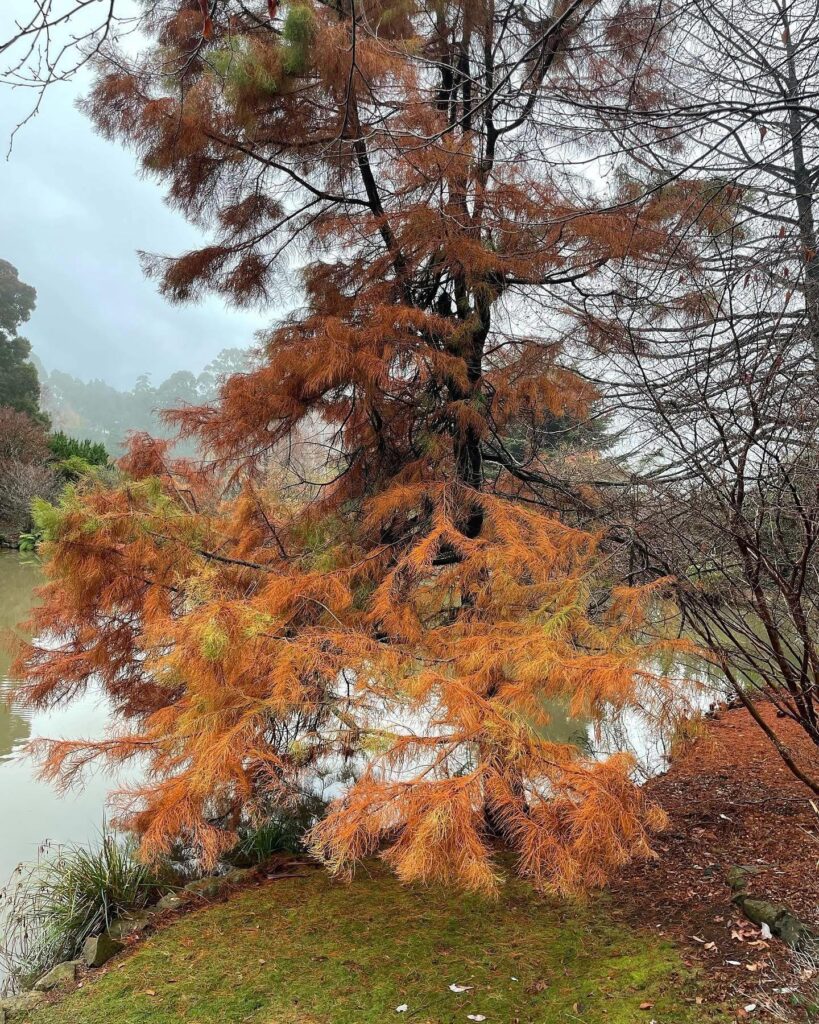
Pond cypress is a close cousin of bald cypress. It grows mainly on the southeastern coastal plain, from North Carolina to Louisiana. Its needles are short and press close to the twig.
It often grows in shallow ponds and wet depressions. The trunk flares at the base, and the crown can look slim and upright. Knees appear here too, but they are often shorter.
This tree suits blackwater swamps and acidic wet soils. I like it for its wild, sculpted shape. Choose it for large wet gardens where you want a native, long-lived specimen.
3. Water Tupelo (Nyssa aquatica)
Water tupelo is a tall swamp tree with a swollen, buttressed base. The word “tupelo” is said to come from a Creek word meaning “swamp tree.” Its name suits it.
The U.S. Forest Service says it grows in southern swamps and floodplains, where roots are often under water. Flooding that falls just short of continuous may give near-ideal moisture for growth. It also sprouts freely from stumps.
It gives us the famous tupelo honey. Bees love its flowers. University of Florida Extension notes that male trees can be very allergenic, while female trees cause few problems. Plant it at the edge of a lake or pond.
4. Swamp Tupelo or Black Gum (Nyssa sylvatica var. biflora)
Swamp tupelo is the tougher sibling of water tupelo. It grows in low, wet forests and along streams. Its glossy leaves turn bright red in autumn, which makes it a real showpiece.
The numbers are impressive. In a U.S. Forest Service study, about 95 percent of swamp tupelo seedlings survived more than two years of continuous root flooding. Seedlings of swamp chestnut oak and cherrybark oak did not survive even one year.
Michigan State University Extension also lists black gum among the best flood-tolerant trees. It handles wet yards well. Keep in mind that it grows slowly and dislikes being moved when mature.
5. Red Mangrove (Rhizophora mangle)
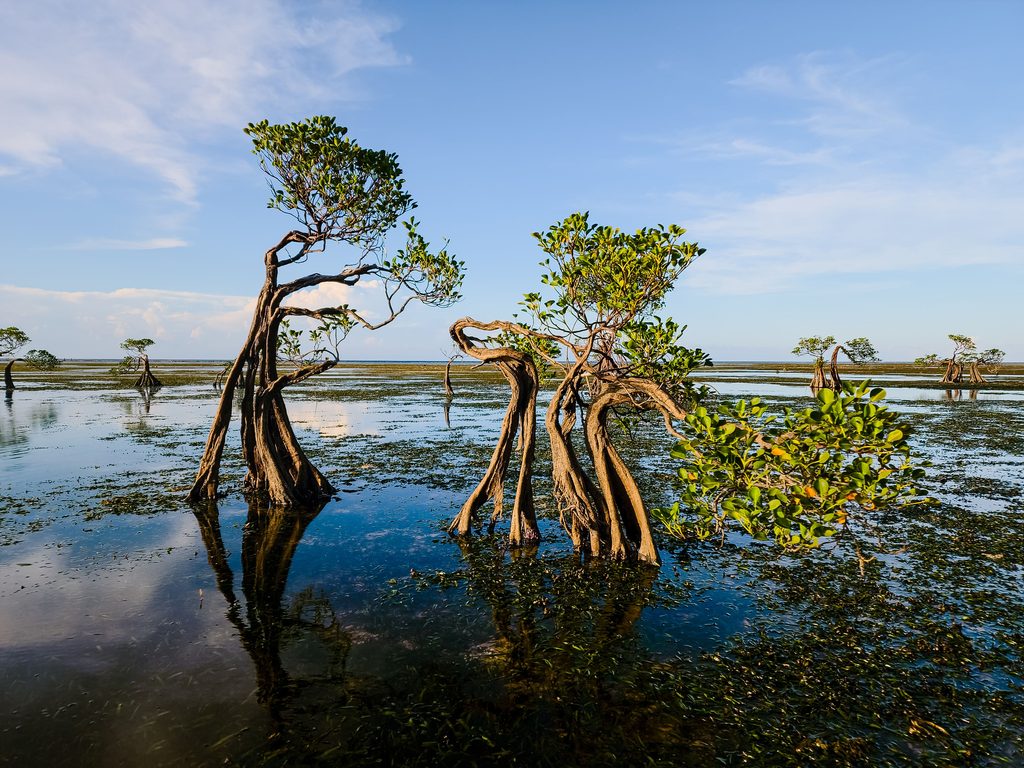
Red mangrove is the tree that truly stands in the sea. Its tall, arching prop roots make it look as if it walks on stilts. It lives where tides flood the roots daily.
NOAA reports that most mangroves are flooded at least twice a day. The tangled roots slow moving water. Sediment settles and builds up land. The roots also shelter young fish, crabs and oysters.
Red mangroves are the first line of coastal defense. They reduce erosion from waves and storm surges. The National Park Service notes they trap sediment and improve offshore water quality. They grow only in warm climates, because freezing weather kills them.
6. Black Mangrove (Avicennia germinans)
Black mangrove grows slightly inland from the red mangrove. It is covered by water only at higher tides. Instead of prop roots, it has hundreds of pencil-like roots that poke up from the mud.
These roots are called pneumatophores. They work like snorkels and bring air to the buried roots. Look closely at the leaves, and you may see tiny salt crystals. The tree pushes extra salt out through its leaf surface.
It copes with both salt and low oxygen. The National Park Service notes that black and white mangroves grow in sandy soil and sediment upland from red mangroves. They are often found around salt ponds.
7. White Mangrove (Laguncularia racemosa)
White mangrove usually grows at the highest elevation of the three main mangroves. It sits farther back from open water. The leaves are pale green and round. Two small glands at the leaf base release salt.
It has no obvious prop roots. But if the soil becomes starved of oxygen, it can grow short peg roots. That flexibility helps it survive changing water levels.
Mangrove forests are far larger than most people think. NOAA says there are about 80 mangrove species worldwide, and they line over 1,800 miles of shoreline within the Florida Keys National Marine Sanctuary alone.
8. Black Willow (Salix nigra)
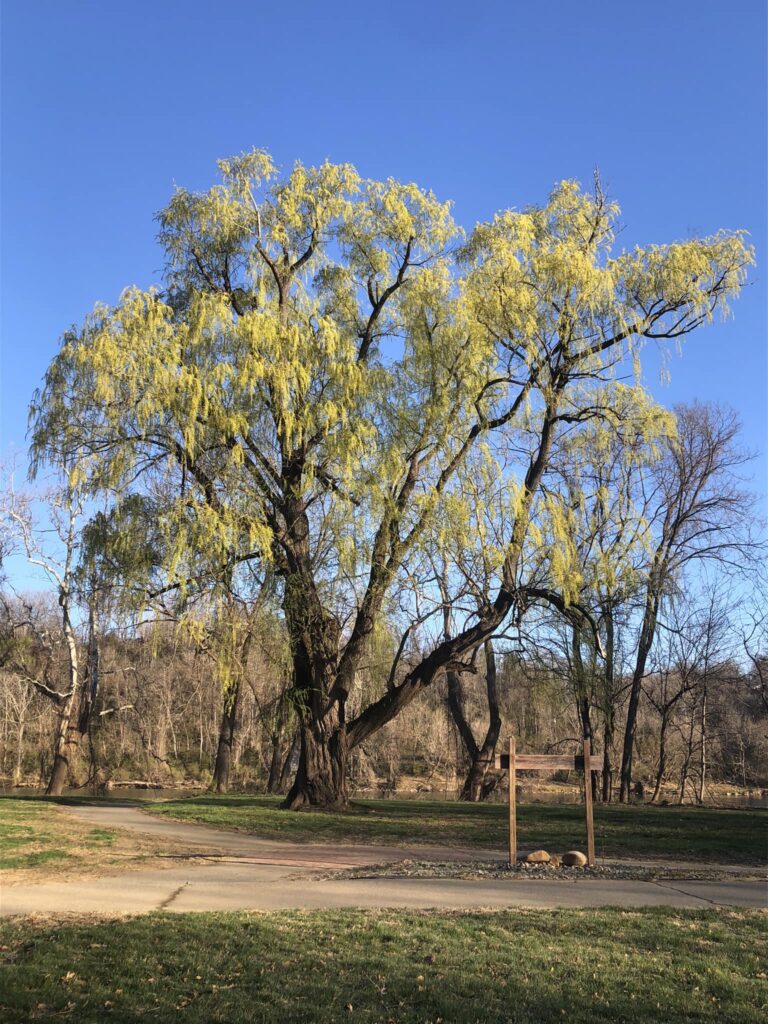
Black willow is the largest native willow in North America. It grows along rivers, lakes and ditches. The leaves are long and narrow, and the bark is dark and deeply furrowed.
Michigan State University Extension lists it among the most flood-tolerant trees. South Dakota forestry guidance places it in the highest tolerance group. Those trees can withstand more than a month of flooding.
It roots from broken twigs almost anywhere damp. That makes it great for stream banks and erosion control. The downside is brittle wood, so do not plant it near buildings or power lines.
9. River Birch (Betula nigra)
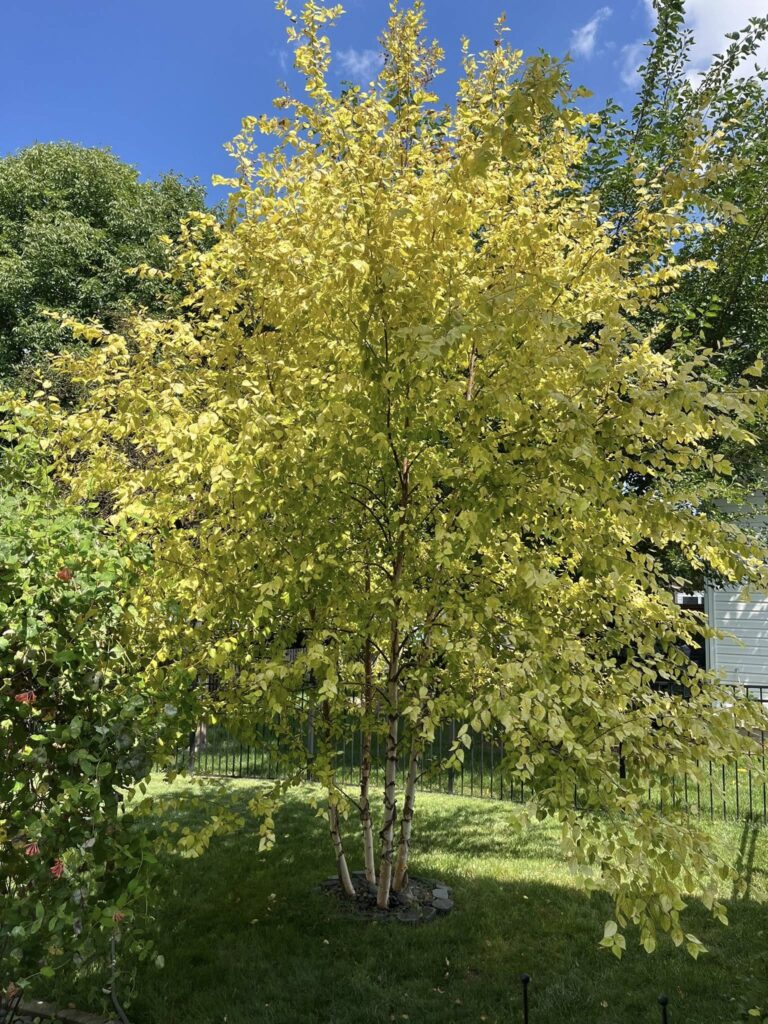
River birch brings beauty to wet places. Its bark peels in curling sheets of cinnamon, cream and brown. Many people plant it as a clump with several trunks.
Iowa State University Extension says it grows 50 to 60 feet tall and is found in moist to wet areas along rivers. It resists the bronze birch borer better than white-barked birches. It prefers acidic soil.
It tolerates both wet soil and summer heat. Michigan State lists it as a good choice for periodically wet land. South Dakota guidance rates it as intermediate, so avoid sites that stay flooded for long periods.
10. Red Maple (Acer rubrum)
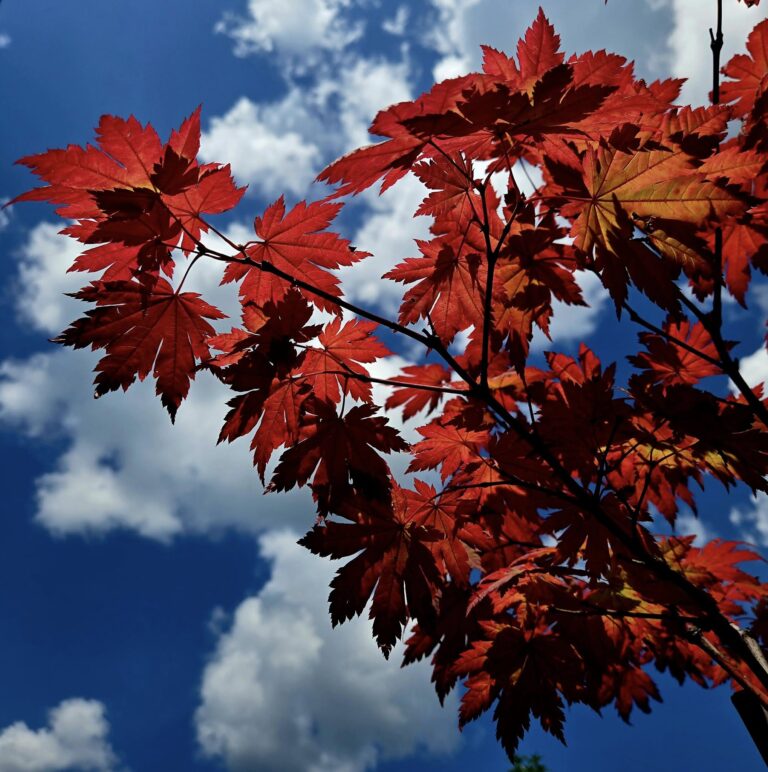
Red maple is common in swamps and wet woods across eastern North America. Its flowers and twigs are red in spring. In autumn, the leaves flame scarlet and orange.
South Dakota forestry guidance places red maple in the high flood tolerance group. Iowa State lists it as a tree that does well in wet soils. It grows in moist yards and along pond edges.
It adapts to many soil types. I would pick it for a home landscape that floods now and then. Avoid very alkaline soil, as leaves may yellow.
11. Silver Maple (Acer saccharinum)
Silver maple grows quickly along rivers and wet lowlands. The leaves are deeply cut and silvery underneath. Iowa State Extension notes it can reach 100 feet tall.
It is one of the most flood-tolerant maples. Wet soil does not bother it. However, Iowa State also warns that silver maples are weak-wooded. Branches break in storms.
Plant it only where space allows. Roots can lift paving and clog pipes. It works best on large rural properties, not near houses.
12. Sweetgum (Liquidambar styraciflua)
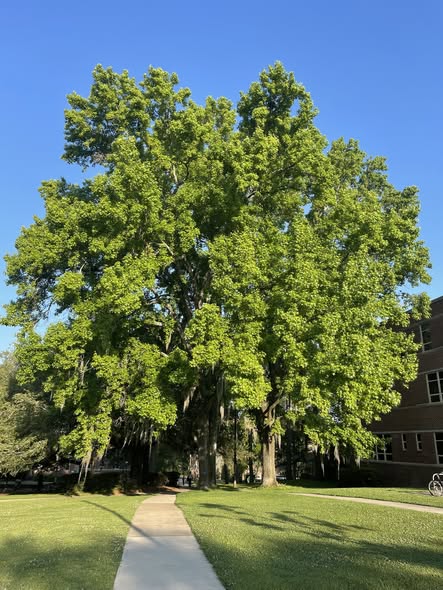
Sweetgum is a tall native tree of bottomlands and moist forests. Its star-shaped leaves turn purple, red and gold. Spiky seed balls fall in autumn, so some people dislike the mess.
The same U.S. Forest Service study found about 95 percent of sweetgum seedlings survived more than two years of continuous flooding. In that study, flood tolerance ranked as swamp tupelo, then sweetgum, then swamp chestnut oak and cherrybark oak.
Iowa State lists sweetgum as a good wet-soil tree. It handles clay and seasonal ponding. Use it in large lawns or parks, away from walkways.
13. Swamp White Oak (Quercus bicolor)
Swamp white oak is a strong, long-lived oak for wet ground. The leaves are dark green above and pale below. It also produces acorns that wildlife enjoy.
South Dakota guidance places swamp white oak with bur oak in the high flood tolerance group. Iowa State also lists it as a tree that grows well in wet soils. It handles heavy clay too.
It gives you oak majesty in a wet yard. Most oaks hate flooding, so this is a rare exception. Plant it young, because large oaks resent transplanting.
14. Black Alder (Alnus glutinosa)
Black alder is a fast-growing tree native to Europe. It thrives along streams, ponds and wet meadows. The leaves are round with a notched tip, and small cone-like fruits hang on the branches.
Iowa State Extension lists it among shade trees that tolerate wet soils. Alders also host bacteria in their roots that fix nitrogen. That improves poor, soggy soil.
It is a useful pioneer tree. It stabilizes banks and feeds the soil. In some regions it can spread beyond gardens, so check local guidance before planting.
15. Eastern Cottonwood (Populus deltoides)
Eastern cottonwood is a giant of riverbanks. The leaves are triangular and rustle in the slightest breeze. In spring, cottony seeds drift through the air like snow.
Michigan State University Extension notes that floodplain natives such as cottonwoods can withstand months of flooding. South Dakota forestry guidance also places cottonwoods and poplars in the high tolerance group.
It grows very fast but lives a short time. Branches drop often, and roots seek water. Plant it only on open, wet land far from septic lines and buildings.
How to Plant Trees in Wet or Flooded Areas
Start with the right species for your site. Check whether the water is fresh, brackish or salty. Mangroves need salt or brackish water. Cypress and tupelo need fresh water.
Plant in spring when water levels are lower. Young trees need a chance to root before deep flooding. Mulch gently, but keep it away from the trunk.
Expect slow growth in standing water. The University of Florida notes bald cypress establishes slowly when planted in water. Water the first season in dry spells. Protect seedlings from deer and beavers.
Why These Trees Matter for the Environment
Water-loving trees do more than look good. They protect shorelines and clean runoff. The University of Idaho Extension reports that riparian trees can remove and store as much as 89 percent of nutrients before they reach waterways.
They also provide habitat. Fish benefit from shade and leaf litter. Birds nest in the branches, and crabs, sponges and young fish shelter among mangrove roots.
Finally, they hold soil together. Roots lock banks in place during floods. For me, that quiet work is the best reason to plant them.
Final Thoughts
Trees that grow in water are remarkable survivors. Some, like mangroves, live with salt and tides. Others, like bald cypress and tupelo, thrive in freshwater swamps.
Choose with care. Match the tree to your water level, soil, climate and space. A wet problem spot can become your most beautiful corner.
If you are unsure, ask your local extension office. They can recommend native species that fit your region.
References
- NOAA Florida Keys National Marine Sanctuary. “Mangroves.” https://floridakeys.noaa.gov/plants/mangroves.html
- University of Florida IFAS. “Taxodium distichum, Baldcypress.” https://hort.ifas.ufl.edu/woody/Pages/taxdis/taxdis.shtml
- U.S. Forest Service. “Water Tupelo” (Silvics of North America). https://research.fs.usda.gov/silvics/water-tupelo
- U.S. Forest Service Treesearch. “Long- and short-term flooding effects on survival and sink-source relationships of swamp-adapted tree species.” https://research.fs.usda.gov/treesearch/1046
- Michigan State University Extension. “Trees and flooding FAQs.” https://www.canr.msu.edu/news/trees_and_flooding_faqs
- Iowa State University Extension and Outreach. “Trees and Shrubs for Wet Soils.” https://yardandgarden.extension.iastate.edu/how-to/trees-and-shrubs-wet-soils
- University of Idaho Extension. “Riparian Zone Tree Plantings.” https://www.uidaho.edu/-/media/UIdaho-Responsive/Files/Extension/topic/forestry/TPC3_Riparian-Zone-Tree-Plantings.pdf

Tim M Dave is a gardening expert with a passion for houseplants, particularly cacti and succulents. With a degree in plant biology from the University of California, Berkeley, he has vast experience in gardening. Over the years, he has cultivated a vast collection of desert plants and learned a great deal about how to grow and care for these unique companions.