15 Best Shade Trees for Your Front Yard (With Planting Details)
A front-yard tree is one of the few landscaping decisions you cannot easily reverse. A shrub can be moved in an afternoon, but a tree that has outgrown its spot may need a permit, a crew, and sometimes a crane.
Most of the regrets I hear about do not come from bad trees. They come from good trees planted in the wrong place.
This guide covers 15 trees that suit front yards, grouped by size. For each one, you will find the hardiness zone, the height you can realistically expect, and the drawback that nobody mentions at the garden center.
Large Shade Trees for Roomy Front Yards
1. Northern Red Oak (Quercus rubra)
Zones: 4–8 | Mature size: 60–75 feet tall | Growth: Moderate to fast

Northern red oak is the fastest of the common oaks, and that makes it a practical choice for people who want real shade within their lifetime. Young trees in good soil can add about two feet a year. Within ten to fifteen years, the rounded crown is broad enough to cool a patio or a driveway.
The fall color is a big part of its appeal. Leaves turn a deep, brick red that holds for weeks. The acorns feed squirrels, jays, and deer, though they also roll underfoot and can jam a mower. If you dislike that kind of mess, keep the tree away from paths.
Give it a large, open space and slightly acidic to neutral soil. In areas where oak wilt is present, avoid pruning between spring and midsummer, because fresh cuts attract the beetles that spread the disease. Late fall and winter are safer times to prune.
2. White Oak (Quercus alba)
Zones: 3–9 | Mature size: 50–80 feet tall | Growth: Slow to moderate
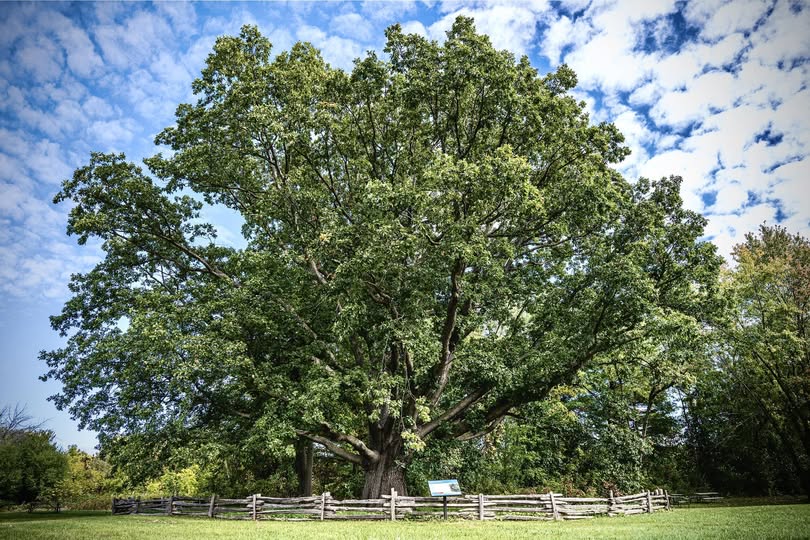
White oak rewards patience more than any other tree on this list. It grows slowly in its first decade, then gradually builds a wide, muscular crown that can outlive several generations of owners. If you are planting for the long term, this is the tree to choose.
Its value to wildlife is remarkable. Birds, insects, and mammals all rely on white oak, and its acorns are among the sweetest of any oak. The leaves turn a muted wine red or brown, and many cling to the branches into winter, which softens the bare season.
Transplanting is the tricky part, because the deep taproot resents disturbance. Buy a small, container-grown tree rather than a large balled specimen. It may look modest for a few years, but a young white oak usually catches up faster than you expect.
3. Willow Oak (Quercus phellos)
Zones: 5–9 | Mature size: 60–75 feet tall | Growth: Moderate to fast
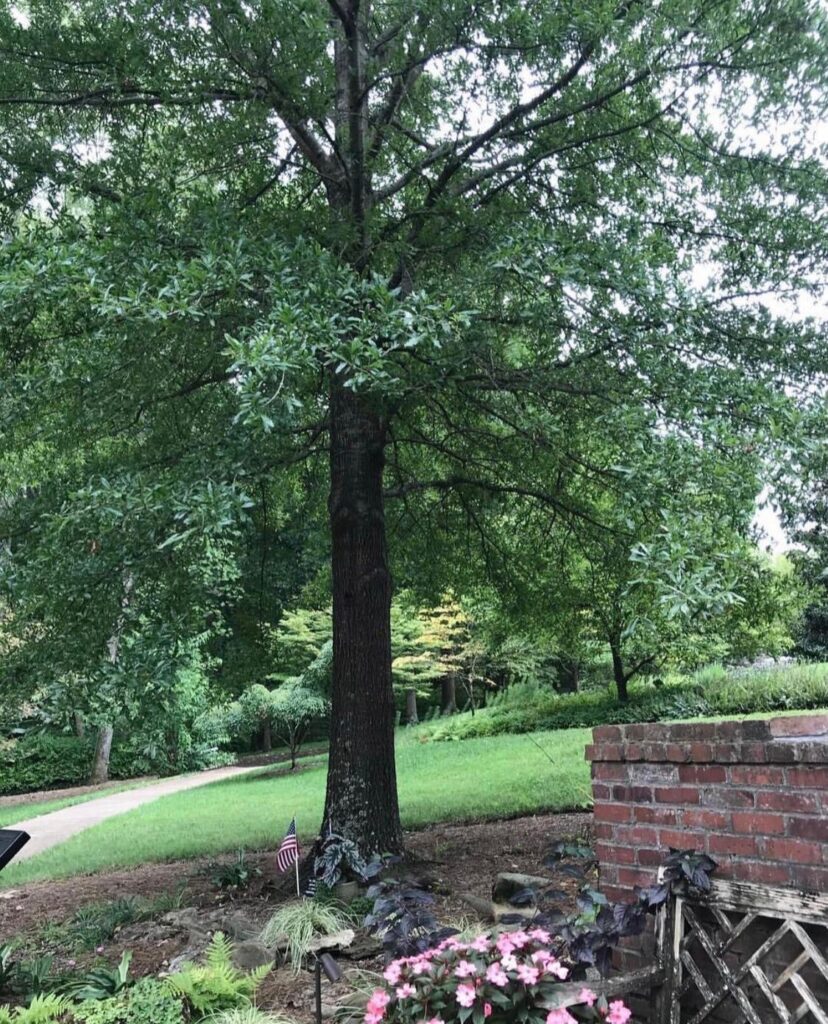
Willow oak does not look like an oak at first glance. Its leaves are narrow and smooth-edged, closer to a willow’s than to the lobed leaf most people picture. The result is a lighter, more refined canopy that filters the sun without feeling heavy.
This is one of the best oaks for a neat yard. The small leaves break down quickly, so autumn cleanup is easier than with big-leaved oaks. Its acorns are small, too. Many southern cities plant it along streets because it tolerates compacted soil, city heat, and occasional wet feet.
Keep in mind that it still reaches a great height. Plant it well away from the house and from overhead lines. In a large front yard, it can serve as the main shade tree for decades.
4. Southern Live Oak (Quercus virginiana)
Zones: 8–10 | Mature size: 40–80 feet tall, often wider than tall | Growth: Moderate
Live oak is the signature shade tree of the warm South, and it dominates any space it occupies. Its heavy limbs sweep outward and sometimes touch the ground. In old age, one tree can cover more than 100 feet of ground.
The leaves stay on through most of the year, so the shade never disappears. The wood is dense, and the tree has a strong reputation for surviving hurricanes. Spanish moss often drapes over the branches, which adds a soft, atmospheric look.
Because of this width, live oak suits only large lots. Plan for its spread, not just its height, and leave at least 40 to 50 feet of open space around the trunk. On a small lot, the tree will overwhelm the house and crowd its neighbors.
ALSO READ: 25 Best Shade Trees for Backyard (With Pictures)
5. Disease-Resistant American Elm (Ulmus americana ‘Princeton’)
Zones: 4–9 | Mature size: 60–80 feet tall | Growth: Moderate to fast
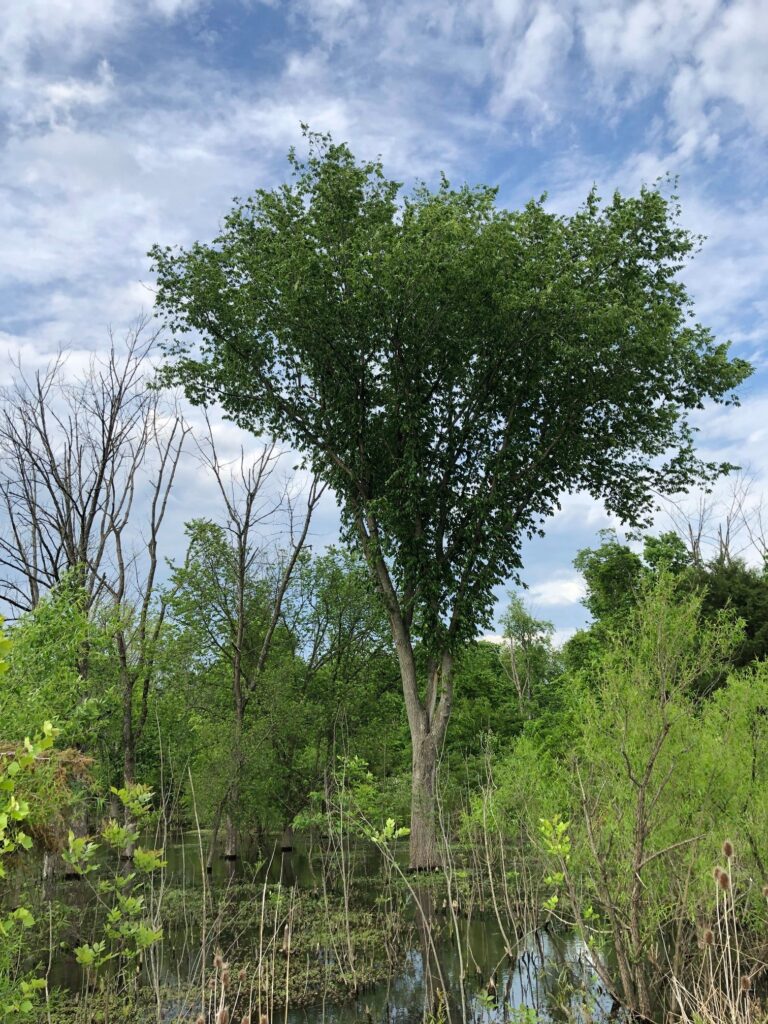
The American elm used to line town streets across the country until Dutch elm disease killed millions of them. Breeders have since selected cultivars with better resistance, and ‘Princeton’ is among the best known. It brings back the classic vase shape that made the species famous.
Its branches arch upward and outward, then meet overhead in a graceful canopy. The shade it casts is wide and airy rather than dark. In fall, the leaves turn a clear yellow. It also adapts to many soils and tolerates urban stress better than most large trees.
Resistance does not mean immunity, so buy from a reputable nursery and keep the tree healthy. Water it during dry spells and protect the trunk from mower damage. A healthy, well-sited elm remains one of the finest street trees you can plant.
6. Ginkgo (Ginkgo biloba)
Zones: 3–9 | Mature size: 50–80 feet tall | Growth: Slow to moderate
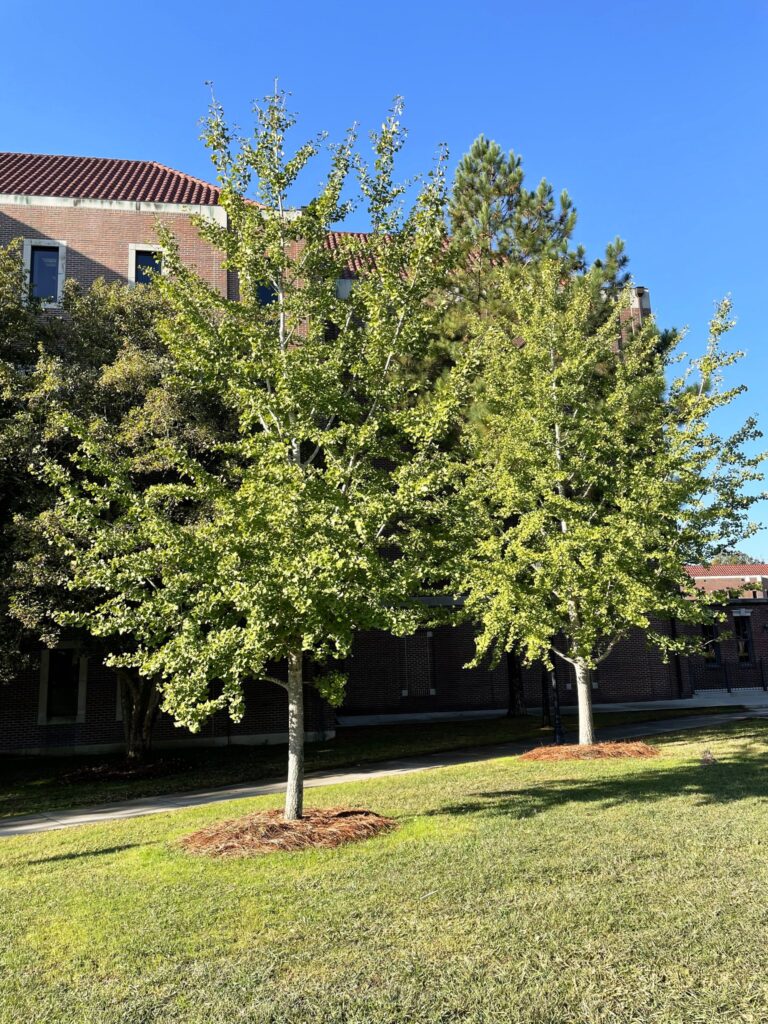
Ginkgo has been growing on Earth for an extraordinarily long time, and it looks unlike any other tree in the yard. The fan-shaped leaves turn a clean, brilliant gold each fall. Then, often within a day or two, they drop together and leave a bright yellow carpet.
It is also remarkably tough. Ginkgo tolerates air pollution, road salt, compacted soil, and summer heat, and pests almost never bother it. That combination makes it a strong pick for a front yard beside a busy street.
There is one important warning. Choose a male cultivar, such as ‘Autumn Gold’ or ‘Princeton Sentry’, because female trees drop fruit with a smell that many people compare to rancid butter. Ask the nursery to confirm the sex before you pay.
7. Japanese Zelkova (Zelkova serrata)
Zones: 5–8 | Mature size: 50–80 feet tall | Growth: Moderate to fast
Zelkova is often used as a stand-in for the American elm, and the resemblance is real. It has the same graceful vase shape, though it is more tolerant of Dutch elm disease. The bark also peels in patches as the tree matures, which gives the trunk an attractive, mottled look.
It casts broad, comfortable shade, and the leaves turn orange to rusty red in fall. Zelkova handles wind, drought, and city conditions with little complaint. Cultivars such as ‘Green Vase’ keep an especially upright, tidy form.
Young trees need regular watering to establish, but growth is quick once the roots settle. Prune early to encourage one strong central leader and avoid weak forks later. A little attention in the first five years pays off for decades.
Medium Shade Trees for Average-Sized Lots
8. Red Maple (Acer rubrum)
Zones: 3–9 | Mature size: 40–60 feet tall | Growth: Moderate to fast
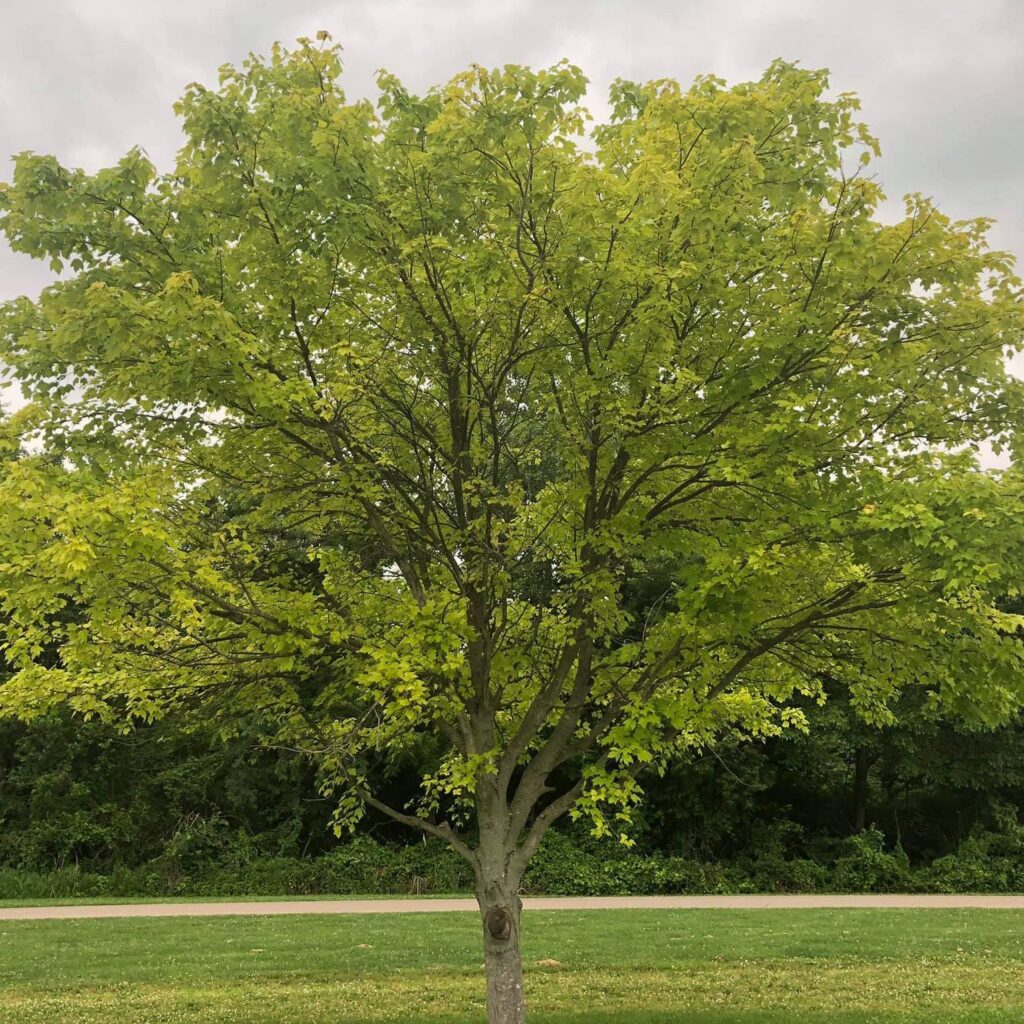
Red maple is popular for good reasons. It grows quickly, adapts to both wet and dry soils, and produces some of the strongest fall color of any shade tree. Cultivars such as ‘October Glory’ and ‘Red Sunset’ are especially reliable and turn a deep scarlet.
The tree is also useful early in the year. Small red flowers open in late winter, providing pollen for bees when few other plants are in bloom. Later, the dense summer canopy gives cool, even shade over a lawn or driveway.
There are two drawbacks. The roots stay close to the surface, so keep the tree away from sidewalks and pipes. In alkaline soil, the leaves may turn yellow from iron deficiency. A simple soil test before planting can save you a lot of frustration.
9. Chinese Pistache (Pistacia chinensis)
Zones: 6–9 | Mature size: 30–40 feet tall | Growth: Moderate
Chinese pistache suits hot, dry climates better than almost any other shade tree. Once established, it needs little supplemental water and keeps a full, rounded canopy through the worst of summer. Its size also makes it comfortable near a house.
Fall color is its best feature. In regions where most trees fade to dull brown, pistache turns orange, scarlet, and crimson. It is a rare example of dependable autumn color in a mild-winter climate.
Buy a named male cultivar if you can, because female trees carry clusters of small berries that can stain paving. Plant it in full sun with good drainage. Young trees are slow to start, but they speed up once the roots are established.
ALSO READ: 15 Invasive Trees You Should Avoid Planting Near Your Home
10. Hackberry (Celtis occidentalis)
Zones: 2–9 | Mature size: 40–60 feet tall | Growth: Moderate
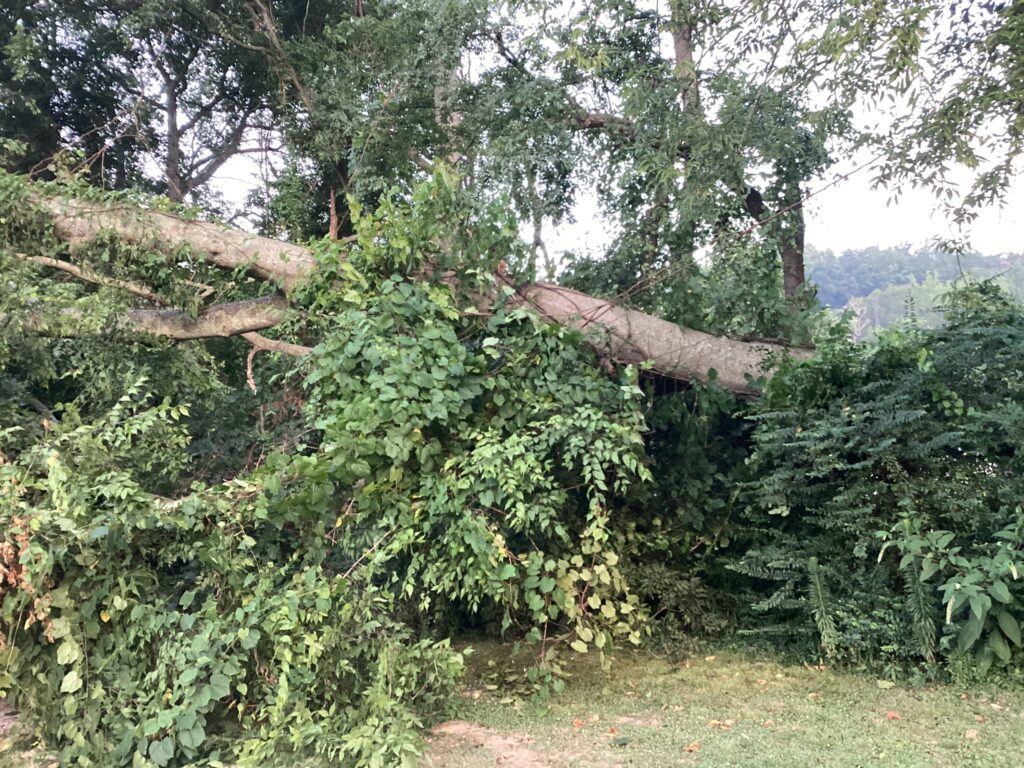
Hackberry does not get much attention, but it deserves more. It survives wind, drought, poor soil, and urban stress that would kill more fashionable trees. If a spot seems impossible for anything else, hackberry often succeeds there.
The bark is corky and warty, which looks especially good in winter. Birds eat the small purple berries in fall, so the tree draws wildlife. The leaves turn a soft yellow, though the color is modest compared with maples or oaks.
You may notice small bumps on the leaves, known as nipple galls. They look odd but do little harm to the tree. Choose hackberry for its toughness rather than its showiness, especially in the northern and central plains.
11. Thornless Honey Locust (Gleditsia triacanthos var. inermis)
Zones: 3–9 | Mature size: 30–70 feet tall | Growth: Fast
Honey locust casts a different kind of shade from most trees. Its tiny leaflets let sunlight filter through in soft, moving patterns, so grass can grow beneath the canopy. If your priority is a healthy lawn under a tree, this is one of the best options.
Fall cleanup is remarkably light. The small leaflets drop in autumn and disappear into the turf, so there is little raking. They also turn a bright, clean yellow before falling, which gives the tree a brief but attractive finish.
Always choose a thornless, podless cultivar, such as ‘Skyline’ or ‘Shademaster’. The wild form has long thorns that can puncture tires and shoes. Modern selections have removed that danger and are far tidier as a result.
12. Littleleaf Linden (Tilia cordata)
Zones: 3–7 | Mature size: 50–70 feet tall | Growth: Moderate
Littleleaf linden grows into a compact, pyramidal shape that looks tidy in every season. The dark green, heart-shaped leaves are dense, so the shade underneath is cool and deep. In a formal front yard, few trees look as composed.
In early summer, the branches fill with small, pale yellow flowers that smell sweet. Bees swarm to them, and you can often hear the tree humming from across the yard. Beekeepers prize linden honey, and the fragrance can carry through open windows.
Aphids sometimes feed on the leaves and drop sticky honeydew onto whatever sits below. Avoid planting linden over a parked car or a patio table. The cultivar ‘Greenspire’ has a strong central leader and is widely planted.
13. River Birch (Betula nigra)
Zones: 4–9 | Mature size: 40–70 feet tall | Growth: Fast
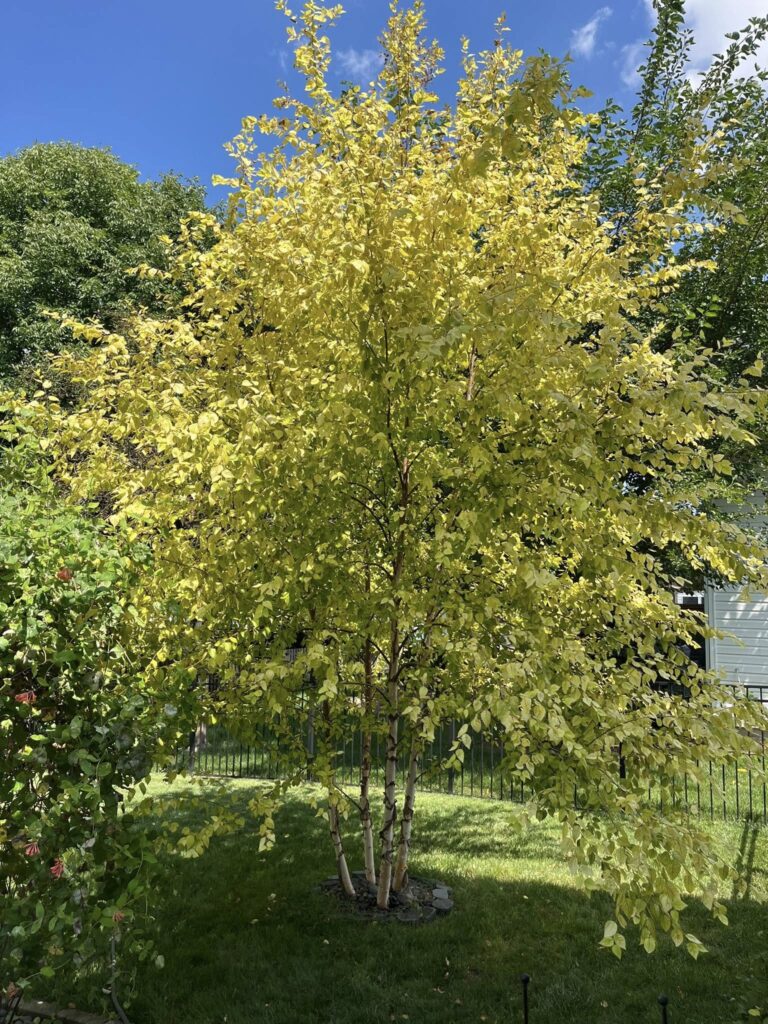
River birch is grown as much for its bark as for its shade. The outer layers peel away in papery curls of cream, salmon, and cinnamon, and the effect is most striking in winter. Multi-stemmed forms look especially natural near a corner of the house.
Unlike most birches, it tolerates heat and wet soil. The cultivar ‘Heritage’ is popular because it holds up well to pests and shows richly colored bark. In autumn, the leaves turn a soft, buttery yellow before they fall.
Young trees need steady moisture, so it works best in a spot that stays damp or can be watered easily. In dry, alkaline soil, the leaves may yellow and the tree may struggle. Plant it where drainage is slow, and it will thrive.
ALSO READ: 15 Small Trees with Non-Invasive Roots: Perfect for Compact Yards and Landscaping
Small Shade Trees for Tight Spaces
14. Crape Myrtle (Lagerstroemia)
Zones: 6–9 | Mature size: 15–30 feet tall | Growth: Moderate

Crape myrtle brings both shade and color to smaller yards. From midsummer into fall, large clusters of pink, red, white, or lavender flowers cover the branches. In hot regions, it is one of the few trees that blooms happily through the hottest weeks.
The smooth bark peels to reveal shades of cinnamon and gray, so the tree remains attractive when it is bare. Fall leaves often turn orange or red. Because it stays small, it fits beside a walkway or near a porch without crowding either.
Please avoid heavy topping, sometimes called “crape murder.” It weakens the tree and ruins the natural form. Instead, choose a cultivar sized for your space and let it grow. Mildew-resistant types, such as ‘Natchez’, are worth seeking out.
15. Eastern Redbud (Cercis canadensis)
Zones: 4–9 | Mature size: 20–30 feet tall | Growth: Moderate

Redbud gives light, pleasant shade and one of the best spring displays of any small tree. Before the leaves open, the bare branches burst into pink to magenta flowers, sometimes right on the trunk. It is one of the earliest signs that winter is finally over.
The heart-shaped leaves look attractive all summer and turn yellow in fall. Redbud grows well at the edge of larger trees or close to a house. Bees and other early pollinators use the flowers heavily, so the tree is lively in April.
It does not live as long as an oak, and many redbuds last only 20 to 30 years. Still, it is easy to grow and inexpensive to replace. Plant one where you can see it from a window in March.
Why a Shade Tree Is Worth the Trouble
Shade is the obvious benefit, but the financial side is just as strong. The U.S. Department of Energy reports that carefully positioned trees can save up to 25% of the energy a typical household uses. The savings are largest where summers are long and air conditioning runs for months.
Trees also raise what a house is worth. A USDA Forest Service study in Portland, Oregon, found that a single street tree added an average of $12,828 to the combined value of all the houses within 100 feet.
On a national scale, a report backed by the Arbor Day Foundation and the USDA Forest Service estimated that trees add more than $31.5 billion a year to private home values.
Where to Plant: Placement Matters as Much as Species
The sun moves, and your tree should follow that logic. Utah State University Extension advises that trees reaching at least 25 feet should go 10 to 20 feet east and west of the house. That placement blocks the harsh morning and late-afternoon sun, when your walls and windows heat up the most.
The south side needs more care. The same source recommends keeping trees no closer than 2½ times their mature height to the south of a building, because even bare branches cast winter shade. In cold climates, that free winter sunlight lowers your heating bill, so do not block it.
The Size Problem Nobody Warns You About
Almost every homeowner underestimates the final size of a tree. The University of Georgia notes that many trees are sold as “fast growing,” yet the seller rarely mentions the mature size and the buyer rarely asks. A three-foot sapling in a pot tells you nothing about the 60-foot tree it may become.
A simple rule helps. University of Nebraska–Lincoln Extension recommends planting trees at least half of their mature canopy width away from the home. Doing so protects the roof and keeps gutters clear of debris. Before you buy, look up the mature width, and then measure your yard with a tape.
Five Questions to Ask Before You Buy
- How much space is overhead and underground? Check power lines and buried pipes first.
- What is my hardiness zone? Choose a tree rated for your coldest winters.
- Is the tree the right size? Most front yards suit a medium tree better than a giant.
- How is my soil? Wet, compacted, or alkaline ground limits the choices.
- What will it drop? Fruit, pods, and seeds all mean extra cleanup.
How to Pick the Right Tree for Your Yard
Begin with your space. Most front yards are modest, so a medium tree is usually the safest choice. Missouri Extension explains that the most useful shade tree on a home lot is usually placed near the southwest corner of the house, where it shades the building during summer afternoons. That spot is a good default.
Next, match the tree to your climate. Chinese pistache and live oak do well in the heat of the South and Southwest, while linden, white oak, and hackberry handle northern winters. Check your zone on the USDA map before you buy, and confirm your choice with a local nursery that knows your soil.
Finally, decide how much maintenance you are willing to accept. Some trees drop fruit, seeds, or sticky sap, and others shed small leaves that vanish into the lawn. Being honest about that now will save you frustration later.
Planting and Care Tips That Make a Difference
Depth is the most common planting error. The root flare, where the trunk widens near the base, should sit at or slightly above ground level. If you bury it, the trunk can rot, and the tree may decline slowly over years.
Water deeply and steadily through the first two or three growing seasons. Spread a 2–3 inch layer of mulch in a wide ring around the tree, but keep it a few inches away from the trunk. Mulch holds moisture and protects the bark from mowers and string trimmers.
Prune lightly while the tree is young. Remove dead or crossing branches and aim for one strong central leader. Good early structure prevents most of the heavy, expensive pruning that older trees need.
Frequently Asked Questions
How far from the house should I plant a shade tree?
A safe rule is at least half the mature canopy width. For large trees, that usually means 20 feet or more. Small trees can be closer.
What is the fastest-growing shade tree on this list?
Red maple, river birch, and honey locust grow quickly. Fast growth often means weaker wood, so balance speed against long-term strength.
Which shade tree is best for a small front yard?
Crape myrtle and eastern redbud are the best choices here. Both stay under 30 feet and offer flowers, fall color, and attractive bark.
Final Thoughts
A good shade tree cools your home, adds value to your property, and shelters birds and insects for many years. It also changes how a front yard feels, making it more settled and more welcoming. The hard part is choosing well, because the mistakes are slow to appear and expensive to fix.
My advice is to plan for the tree’s final size, not its size at purchase. Match it to your climate, plant it in the right spot, and care for it carefully in the early years. Do that, and it will repay you every summer.
References
- U.S. Department of Energy. Energy-Efficient Landscaping. https://www.energy.gov/energysaver/energy-efficient-landscaping?nrg_redirect=311746
- USDA Forest Service, Pacific Northwest Research Station. Calculating the Green in Green: What’s an Urban Tree Worth? https://research.fs.usda.gov/treesearch/50539
- University of Nebraska–Lincoln. Study: Trees Have $31.5 Billion Impact on Home Values Each Year. https://news.unl.edu/article/study-trees-have-315-billion-impact-on-home-values-each-year
- Utah State University Extension. Planting Trees for Energy Conservation: The Right Tree in the Right Place. https://extension.usu.edu/forestry/trees-cities-towns/tree-selection/plant-trees-energy-conservation
- University of Nebraska–Lincoln Extension. Trees in the Home Landscape (NebGuide G1747). https://extensionpublications.unl.edu/assets/html/g1747/build/g1747.htm
- University of Georgia Cooperative Extension. Shade Trees for Georgia (C1013). https://extension.uga.edu/publications/detail.html?number=C1013&title=shade-trees-for-georgia
- University of Missouri Extension. Selecting Shade Trees (G6900). https://extension.missouri.edu/media/wysiwyg/Extensiondata/Pub/pdf/agguides/hort/g06900.pdf

Tim M Dave is a gardening expert with a passion for houseplants, particularly cacti and succulents. With a degree in plant biology from the University of California, Berkeley, he has vast experience in gardening. Over the years, he has cultivated a vast collection of desert plants and learned a great deal about how to grow and care for these unique companions.