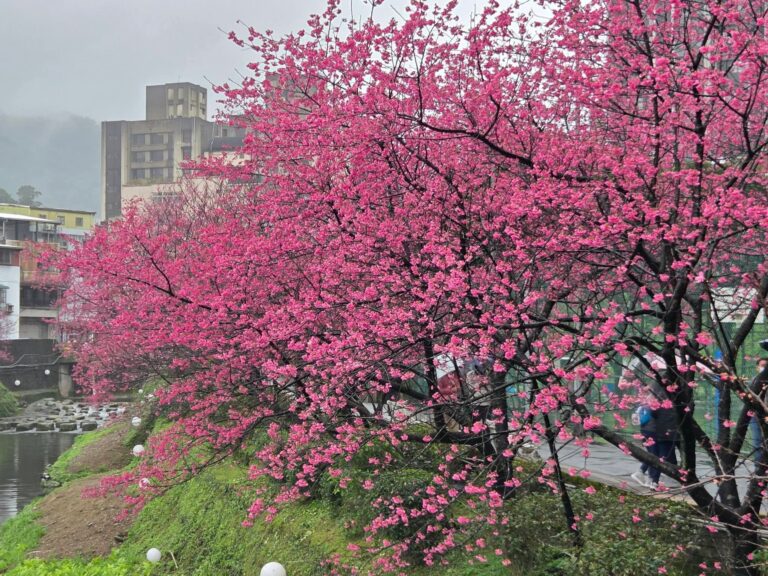
15 Stunning Trees With Blue Leaves (With Pictures)
Blue is a color you rarely expect to see on a tree. The first time I stood beside a mature Blue Atlas Cedar, I honestly paused, because the silvery-blue needles looked almost artificial against a gray winter sky.
True blue foliage is one of nature’s rarer tricks. Unlike orange or red leaves, blue coloring isn’t caused by pigment breakdown in autumn. It comes from a waxy coating that bends and scatters light, and it usually lasts all year round.
Researchers at the Royal Horticultural Society note that fewer than 3% of ornamental tree cultivars worldwide display a true blue or blue-gray foliage color. That rarity is exactly why these trees are so prized by landscapers and collectors.
This guide walks through 15 standout trees with blue leaves, covering their size, growing zones, and what makes each one worth planting. Let’s dig in.
15 Trees With Blue Leaves
Now let’s look at the 15 species that showcase this rare trait best.
1. Colorado Blue Spruce (Picea pungens)
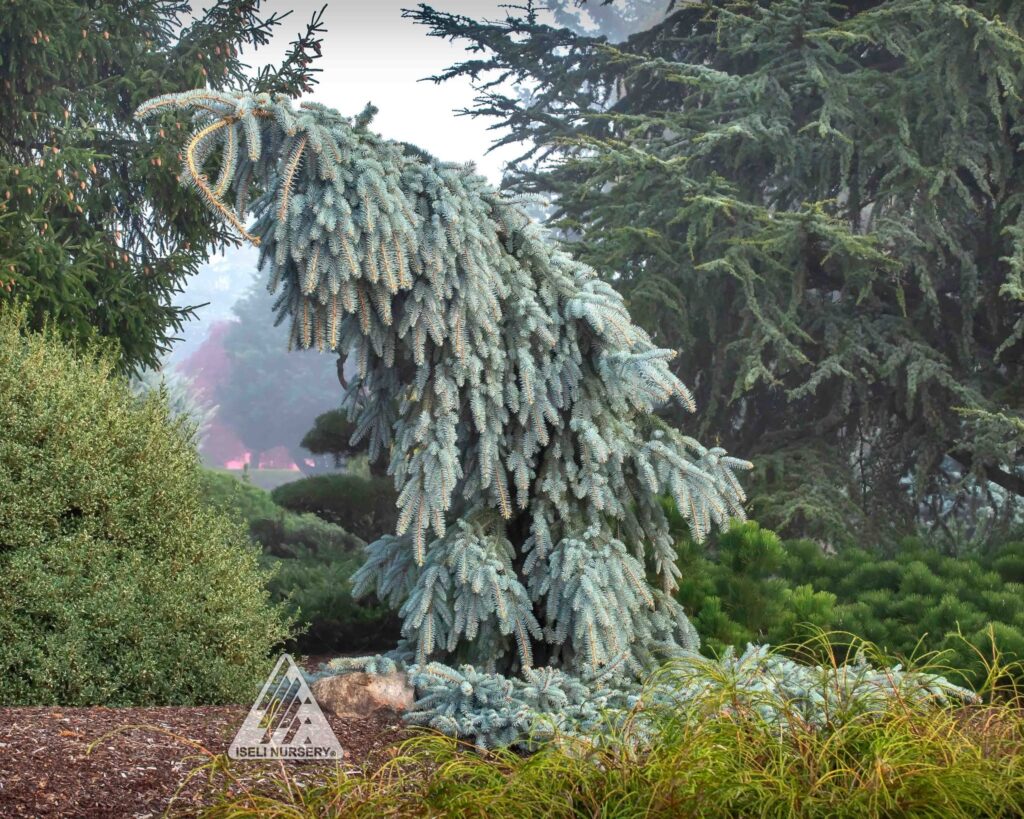
The Colorado Blue Spruce is the most recognizable blue-leaved tree in North America, and it is the state tree of both Colorado and Utah. Its stiff, silvery-blue needles make it a favorite for both landscaping and holiday decoration.
This tree grows 50-75 feet tall and thrives in USDA zones 2 through 7. It prefers full sun and well-drained soil, and it tolerates cold winters exceptionally well.
Cultivars such as ‘Hoopsii’ and ‘Fat Albert’ were bred specifically to intensify the blue tone, making them some of the bluest conifers commercially available today.
I have never seen a tree hold its color as consistently through winter as this one. Even under snow, the blue tone remains sharp and vivid.
2. Blue Atlas Cedar (Cedrus atlantica ‘Glauca’)
Blue Atlas Cedar is often considered the gold standard of ornamental blue conifers. Its widely spaced, upward-sweeping branches carry powder-blue needles that shimmer noticeably when the wind moves through them.
Native to the Atlas Mountains of Morocco, this tree grows 40-60 feet tall in USDA zones 6 through 9. It needs full sun and well-drained soil, and it does not tolerate soggy roots well.
This tree is a common centerpiece in botanical gardens because of its dramatic form. Its horizontal branching pattern gives it a sculptural quality even without the striking color.
Mature specimens can live well over 200 years, so planting one is genuinely a gift to future generations.
ALSO READ: 15 Stunning Trees with Blue Flowers: A Complete Guide
3. Weeping Blue Atlas Cedar (Cedrus atlantica ‘Glauca Pendula’)
This cultivar takes everything striking about the Blue Atlas Cedar and adds a dramatic weeping habit. Its branches cascade downward rather than spreading outward, creating a living sculpture rather than a traditional tree shape.
It typically reaches 10-15 feet tall but can spread significantly wider, depending on how it’s trained. It grows in USDA zones 6 through 9 and shares the same sun and soil preferences as its parent species.
Because of its unusual form, this tree is often trained over an arbor or against a wall, where its blue, trailing branches create a striking focal point.
No two specimens ever look quite alike, since the weeping growth pattern responds heavily to how each tree is staked and pruned when young.
4. Blue Gum Eucalyptus (Eucalyptus globulus)
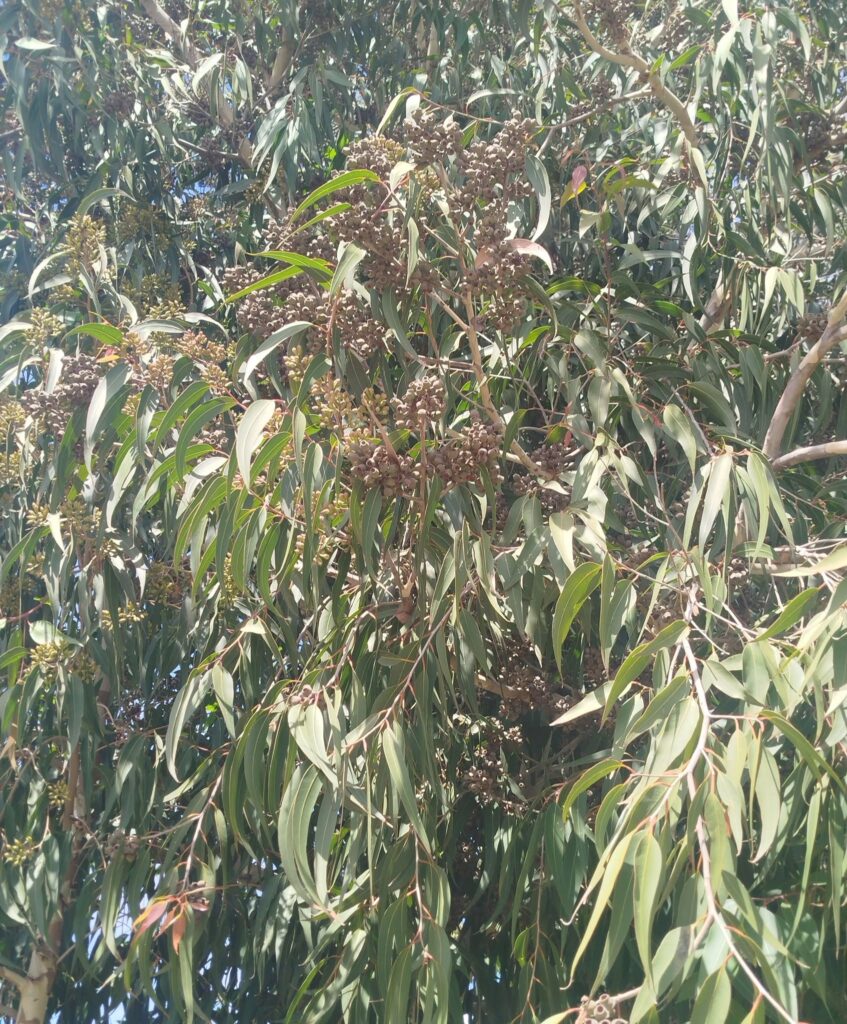
Blue Gum Eucalyptus produces rounded, silvery-blue juvenile leaves that later mature into narrower, less blue adult foliage. This two-stage leaf transformation makes it one of the more visually interesting trees on this list.
Native to Australia, this fast-growing tree can reach 150-180 feet tall in ideal conditions and grows in USDA zones 8 through 11. It’s known for extremely rapid growth, often exceeding 6 feet per year when young.
The essential oil extracted from its leaves is widely used in medicine and cleaning products. Australia remains the largest natural habitat, though the species has been introduced to California, South America, and parts of Africa.
Because of its size, this tree suits large properties or farms far better than typical residential yards.
5. Silver Dollar Gum (Eucalyptus cinerea)
Silver Dollar Gum is prized specifically for its rounded, coin-shaped blue-gray leaves, which are a favorite in the floral industry for bouquets and wreaths. Florists harvest branches from this tree more than almost any other foliage plant worldwide.
This tree grows 20-50 feet tall in USDA zones 8 through 11. It tolerates drought well once established and prefers full sun with well-drained soil.
Unlike Blue Gum Eucalyptus, this species tends to retain its rounded, silvery juvenile leaves throughout its life, which is exactly why the floral trade favors it so heavily.
If you’ve ever received a bouquet with soft, round blue-green leaves mixed in, there’s a strong chance it came from this tree.
ALSO READ: 25 Stunning Trees With Purple Leaves (With Pictures)
6. Concolor Fir / White Fir (Abies concolor)
Concolor Fir carries soft, blue-green needles that are notably softer to the touch than most spruces, making it a popular choice for families with children who want a blue-toned Christmas tree without sharp needles.
This tree grows 30-50 feet tall in USDA zones 3 through 7. It handles heat and drought better than many other firs, making it more adaptable across varied climates.
Its needles also release a citrus-like fragrance when crushed, an unusual trait among conifers that adds a sensory element beyond visual appeal.
Because of its manageable size and adaptability, this fir works well in both large estates and modest suburban yards.
7. Blue Spanish Fir (Abies pinsapo ‘Glauca’)
Blue Spanish Fir is one of the most strikingly symmetrical conifers available, with short, stiff needles arranged in a bottlebrush pattern around each branch. The intense blue coloring makes it stand out even among other blue conifers.
Native to southern Spain, this tree grows 60-100 feet tall in its native range but stays more compact, around 30-40 feet, in typical landscape settings. It grows in USDA zones 6 through 8.
This species is considered rare and somewhat vulnerable in its native habitat, with wild populations limited to a few isolated mountain ranges in Andalusia.
Its formal, geometric shape makes it a favorite for landscape designers seeking a strong architectural statement.
8. Korean Fir ‘Silberlocke’ (Abies koreana)
This cultivar curls its needles upward, revealing a silvery-blue underside that creates a two-toned effect unlike any other tree on this list. From certain angles, the tree appears almost frosted, even in summer heat.
It grows slowly to 15-30 feet tall and thrives in USDA zones 5 through 6. It prefers cooler climates and struggles in areas with hot, humid summers.
Interestingly, this tree produces purple cones even while quite young, adding another unexpected color contrast against its blue-tinted needles.
Because of its slow growth and compact size, it’s an excellent choice for smaller gardens that still want a striking conifer specimen.
9. Noble Fir (Abies procera)
Noble Fir is widely known as one of the most popular Christmas tree species, prized for its sturdy, upward-curving branches and blue-green needles that hold up well under the weight of ornaments.
Native to the Pacific Northwest, it grows 90-200 feet tall in the wild, though cultivated specimens are typically kept much smaller. It thrives in USDA zones 5 through 6.
The National Christmas Tree Association notes that Noble Fir consistently ranks among the top three most purchased Christmas tree species in the United States each year.
Its long-lasting needles and excellent form explain why so many households choose it during the holiday season.
10. Arizona Cypress ‘Blue Ice’ (Cupressus arizonica ‘Blue Ice’)
This cultivar delivers some of the brightest, most consistent blue foliage of any tree on this list, holding its intense silvery-blue color through every season without fading. It is a standout even among other blue conifers.
It grows 20-40 feet tall in USDA zones 7 through 9 and is remarkably drought-tolerant once established, making it a strong choice for xeriscaping and water-conscious landscaping.
Native to the arid Southwest, this tree naturally developed its waxy blue coating as protection against intense desert sun, a trait later selected and enhanced through cultivation.
Its narrow, pyramidal shape also makes it useful as a privacy screen or windbreak in dry climates.
ALSO READ: 10 Beautiful Trees with Yellow Leaves in Fall
11. Blue Palo Verde (Parkinsonia florida)
Blue Palo Verde is unusual because its blue-green color comes from its bark and small leaflets alike, giving the whole tree a cohesive blue-toned appearance even when leafless during drought.
Native to the Sonoran Desert, this tree grows 15-30 feet tall in USDA zones 8 through 11. It is the official state tree of Arizona and is exceptionally well adapted to extreme heat and minimal rainfall.
During drought, the tree can shed its leaves entirely and photosynthesize through its green-blue bark instead, an adaptation that allows it to survive conditions few other trees could handle.
Its bright yellow spring flowers create a striking contrast against the blue-green bark, drawing pollinators across the desert each spring.
12. Deodar Cedar ‘Feelin’ Blue’ (Cedrus deodara)
This dwarf cultivar packs the same silvery-blue color of full-sized Deodar Cedars into a compact, ground-hugging form, making it ideal for smaller gardens or rock landscaping.
It typically stays under 3 feet tall but spreads several feet wide, and it grows in USDA zones 6 through 9. It prefers full sun and well-drained soil, much like its larger relatives.
The parent species, native to the western Himalayas, can reach over 150 feet tall, making this cultivar a dramatic size reduction while keeping the signature blue needles intact.
For gardeners who love the Deodar Cedar look but lack the space, this cultivar solves that problem entirely.
13. Cedar of Lebanon ‘Glauca’ (Cedrus libani ‘Glauca’)
Cedar of Lebanon ‘Glauca’ carries deep blue-green needles on the same iconic, flat-topped silhouette that made this species famous throughout ancient history, referenced repeatedly in religious and historical texts.
This tree grows 40-60 feet tall in USDA zones 5 through 7. It requires full sun and well-drained soil, and it can live for well over a thousand years in ideal conditions.
Wild Cedar of Lebanon populations have declined significantly, with conservation groups estimating less than 2% of the original ancient forests remain today, mostly protected within reserves in Lebanon.
Planting the ‘Glauca’ cultivar allows gardeners to enjoy a piece of this historic species’ beauty while supporting broader awareness of its conservation status.
14. Blue Willow (Salix alba var. sericea)
Blue Willow stands out with narrow, silvery-blue leaves that shimmer and flutter dramatically in even light wind, creating constant movement that few other blue-leaved trees offer.
This tree grows 40-70 feet tall in USDA zones 4 through 8. It prefers moist soil and is often planted near ponds, streams, or low-lying wet areas where many other trees struggle.
Its fast growth rate, often over 3 feet per year, makes it a popular choice for gardeners wanting quick shade or screening, though its size does require adequate planning.
Watching this tree’s leaves catch light on a breezy afternoon is genuinely one of the more calming sights in a home landscape.
15. Himalayan Blue Pine (Pinus wallichiana)
Himalayan Blue Pine rounds out this list with long, soft, blue-green needles that drape gracefully from its branches, giving the tree a relaxed, almost weeping appearance compared to stiffer conifers.
Native to the Himalayas, it grows 100-150 feet tall in its native range, though cultivated specimens typically stay closer to 40-50 feet. It thrives in USDA zones 6 through 8.
This species holds cultural significance across Nepal, Bhutan, and northern India, where it has long been used for construction lumber, given its combination of strength and manageable weight.
Its graceful form and soft blue needles make it a favorite among collectors seeking a more relaxed alternative to the stiffer blue spruces and firs.
Why Do Some Trees Have Blue Leaves?
Blue foliage is an optical effect, not a pigment. Certain conifers and broadleaf trees coat their needles or leaves in a fine, waxy layer called “glaucous bloom.” This layer scatters blue wavelengths of light while absorbing others, giving the leaf its silvery-blue look.
This wax also serves a practical purpose. It reflects intense sunlight and reduces water loss, which is why so many blue-leaved trees originate from high-altitude or arid regions where sun exposure is extreme.
Interestingly, if you rub the wax off a blue spruce needle, the leaf underneath is simply green. The blue effect disappears the moment that coating is damaged, which is why these trees can look duller after heavy rain or handling.
How to Choose the Right Blue-Leaf Tree for Your Landscape
Start by matching the tree’s native climate to your own. Desert species like Blue Palo Verde and Arizona Cypress need heat and dry soil, while Colorado Blue Spruce and Cedar of Lebanon prefer cooler, temperate conditions.
Think carefully about mature size before planting. Blue Gum Eucalyptus and Himalayan Blue Pine can eventually tower over a property, while dwarf cultivars like ‘Feelin’ Blue’ Deodar Cedar stay compact for decades.
Consider soil moisture needs as well. Blue Willow thrives in wet, low-lying areas, while most blue conifers strongly prefer well-drained soil and struggle if roots stay waterlogged.
Finally, think about what role the tree will play. Some, like Silver Dollar Gum, work best as accent or cutting plants, while others, like Blue Atlas Cedar, function as long-term landscape centerpieces.
Final Thoughts
Blue-leaved trees remain one of the rarest and most rewarding choices in ornamental landscaping. Their color comes from a genuinely fascinating biological adaptation, not artificial selection alone, which makes them feel a little more special every time I encounter one.
Whether you want the bold, sculptural presence of a Blue Atlas Cedar or the soft, coin-shaped leaves of a Silver Dollar Gum, there’s a blue-toned tree suited to nearly every climate and yard size.
Plant one of these 15 species, and you’ll add a color to your landscape that very few neighbors or passersby will have seen done quite so well.

Tim M Dave is a gardening expert with a passion for houseplants, particularly cacti and succulents. With a degree in plant biology from the University of California, Berkeley, he has vast experience in gardening. Over the years, he has cultivated a vast collection of desert plants and learned a great deal about how to grow and care for these unique companions.