25 Stunning Trees With Purple Leaves (With Pictures)
Purple foliage has a way of stopping people mid-walk. I remember the first time I saw a Copper Beech towering over a quiet English garden, its deep burgundy canopy looking almost painted against a gray sky.
Purple leaves are far more common than blue ones, and unlike orange autumn color, many of these trees hold their purple tone from spring through fall. This makes them a favorite for gardeners wanting season-long drama rather than a brief autumn show.
According to horticultural surveys from the American Nursery and Landscape Association, purple-leaf ornamental trees rank among the top five most requested specialty plantings in residential landscape design across North America.
This guide covers 25 trees with purple foliage, explaining their size, growing zones, and what sets each one apart. Let’s get started.
25 Trees With Purple Leaves
Here are 25 trees that showcase purple foliage exceptionally well.
1. Purple-Leaf Plum (Prunus cerasifera ‘Atropurpurea’)
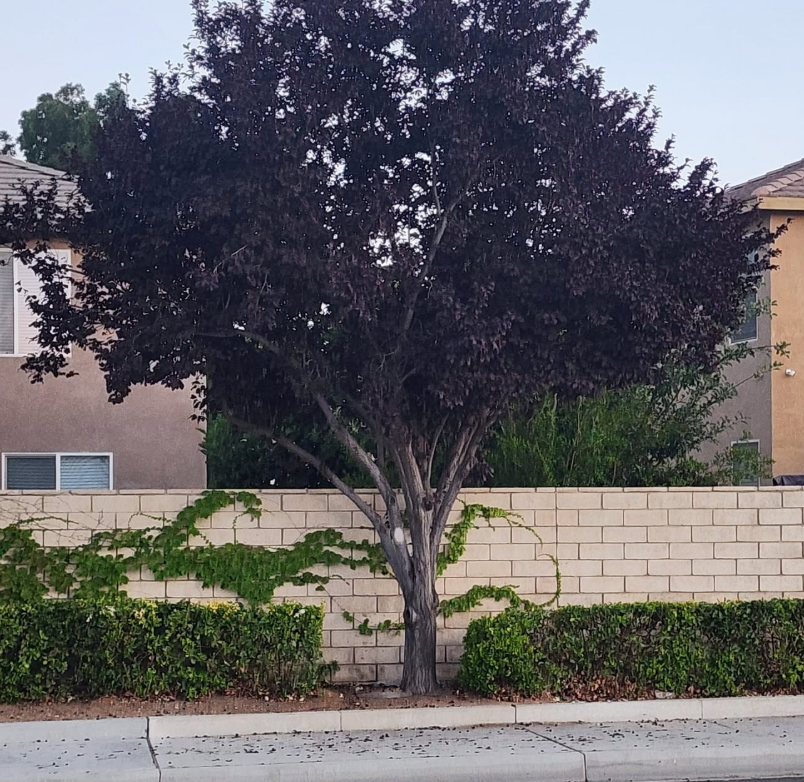
Purple-Leaf Plum is one of the most widely planted ornamental trees in North America, prized for its deep maroon foliage that appears almost as soon as spring buds open. Delicate pink or white blossoms precede the leaves, creating a striking two-stage display.
This tree grows 15-25 feet tall and thrives in USDA zones 4 through 8. It prefers full sun, since shade tends to fade the purple color toward green.
Its compact size makes it a popular choice for smaller yards, street plantings, and driveway borders where a large shade tree wouldn’t fit.
2. Thundercloud Plum (Prunus cerasifera ‘Thundercloud’)
Thundercloud Plum offers an even deeper, near-black shade of purple than its parent species, along with a rounder, denser canopy shape. Fragrant pink flowers bloom in early spring before the foliage darkens fully.
This tree reaches 15-20 feet tall in USDA zones 5 through 8. It tolerates urban pollution and compacted soil reasonably well, which explains its popularity along city streets.
Bees are strongly drawn to its spring blossoms, making it a useful early-season pollinator plant despite its primarily ornamental purpose.
3. Royal Purple Smoke Tree (Cotinus coggygria ‘Royal Purple’)
This tree earns its name from wispy, smoke-like seed clusters that appear above its rounded purple leaves in summer, creating a hazy, almost surreal visual effect from a distance.
It typically grows 10-15 feet tall in USDA zones 5 through 8. It handles poor, rocky soil far better than most ornamental trees, making it useful in low-maintenance landscapes.
I find that this tree looks best planted where afternoon sun can pass through the “smoke,” lighting it up from behind like a soft purple cloud.
4. Grace Smoke Bush (Cotinus ‘Grace’)
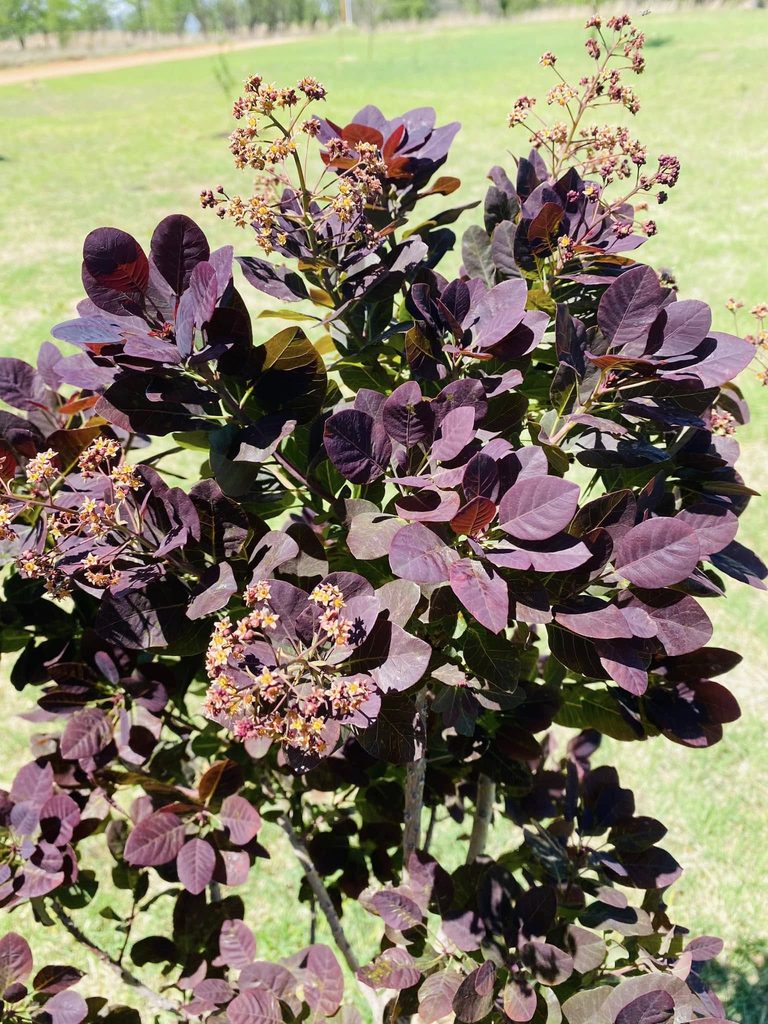
A hybrid smoke bush, ‘Grace’ produces larger leaves and a more vigorous growth habit than the standard Royal Purple variety, while keeping the same rich plum-purple coloring throughout the growing season.
This variety reaches 12-15 feet tall in USDA zones 5 through 9. It prefers full sun and adapts to a range of soil types, including clay.
In autumn, its leaves often shift toward scarlet-orange before dropping, giving it a second, distinct seasonal color display.
5. American Smoketree (Cotinus obovatus)
Unlike its purple-leaved cousins, American Smoketree starts out with blue-green summer leaves that transform into a rich mix of orange, red, and purple each autumn, making it a native alternative for seasonal color lovers.
Native to the southeastern United States, it grows 20-30 feet tall in USDA zones 4 through 8. It’s notably drought-tolerant once established and rarely suffers from pests.
Because it’s native, this species supports local pollinators and wildlife better than many of its European or Asian-bred purple relatives.
ALSO READ: 25 Stunning Shrubs With Purple Flowers: Identification and Pictures
6. Forest Pansy Redbud (Cercis canadensis ‘Forest Pansy’)
Forest Pansy Redbud produces heart-shaped leaves in a rich, glossy reddish-purple, emerging shortly after clusters of bright pink spring flowers appear directly on bare branches.
This tree grows 20-30 feet tall in USDA zones 5 through 9. It performs best with morning sun and afternoon shade, since intense heat can scorch its delicate leaves.
Its unusual flowering habit, called cauliflory, produces blossoms straight from the trunk and older branches rather than only new growth, adding visual interest even before the purple leaves emerge.
7. Copper Beech (Fagus sylvatica ‘Purpurea’)
Copper Beech is one of the most majestic purple-leaf trees in cultivation, capable of forming a massive, dome-shaped canopy that can dominate an entire landscape once mature. Its leaves shift from deep purple in spring to a bronzed copper tone by late summer.
This tree grows 50-60 feet tall in USDA zones 4 through 7. It requires ample space, as its canopy can spread just as wide as it grows tall.
Some documented specimens in Europe are recorded as over 200 years old, with trunks exceeding 6 feet in diameter, showing just how long-lived this species can be.
8. Purple Fountain Weeping Beech (Fagus sylvatica ‘Purpurea Pendula’)
This cultivar combines the deep purple foliage of Copper Beech with a graceful, weeping growth habit, creating a striking, umbrella-like silhouette in any garden setting.
It typically reaches 15-25 feet tall in USDA zones 4 through 7, staying more compact than its towering parent species. It prefers full sun for the richest color intensity.
Because of its unique shape, this tree is often used as a single dramatic specimen rather than part of a larger planting scheme.
9. Tricolor Beech (Fagus sylvatica ‘Roseomarginata’)
Tricolor Beech stands apart with leaves that combine purple, pink, and cream in irregular patterns, making each leaf look almost hand-painted. This unusual coloring makes it one of the most visually complex trees on this list.
This tree grows 25-40 feet tall in USDA zones 5 through 7. It requires some afternoon shade in hot climates, since intense sun can scorch its delicate pink margins.
Its slower growth rate compared to standard beech varieties makes it a better fit for smaller or medium-sized gardens.
ALSO READ: 15 Stunning Flowering Trees with Purple Blooms: Spring Through Summer
10. Crimson King Norway Maple (Acer platanoides ‘Crimson King’)
Crimson King is one of the most widely planted purple-leaf shade trees in North America, valued for its deep maroon foliage that holds its color from spring through fall better than most competing cultivars.
This tree grows 35-45 feet tall in USDA zones 3 through 7. It tolerates urban pollution, compacted soil, and road salt well, explaining its popularity as a street tree.
Some regions now discourage new plantings, since Norway Maple has become invasive in parts of the northeastern United States, outcompeting native tree seedlings.
11. Royal Red Norway Maple (Acer platanoides ‘Royal Red’)
Royal Red offers a slightly darker, more saturated purple than Crimson King, along with a denser, more symmetrical canopy shape that many landscapers prefer for formal plantings.
This tree reaches 35-40 feet tall in USDA zones 4 through 7. It grows at a moderate pace and adapts well to a wide range of soil conditions.
As with other Norway Maple cultivars, some U.S. states have placed restrictions on new plantings due to invasive spread concerns.
12. Bloodgood Japanese Maple (Acer palmatum ‘Bloodgood’)
Bloodgood is arguably the most popular purple-leaf Japanese Maple cultivar sold worldwide, prized for its deeply cut, burgundy-red leaves that hold color better through summer heat than many other cultivars.
This tree stays compact, typically 15-20 feet tall, and grows in USDA zones 5 through 8. It prefers partial shade in hotter regions and full sun in cooler climates.
Its manageable size makes it a favorite for Japanese-style gardens, courtyards, and container planting on patios.
13. Purple-Leaf Sand Cherry (Prunus x cistena)
This small ornamental tree packs vivid reddish-purple foliage into a compact frame, making it one of the most practical choices for small yards or foundation plantings near a home.
It typically grows 7-10 feet tall in USDA zones 2 through 8, making it one of the most cold-hardy purple-leaf trees available.
Fragrant white to pink flowers appear in spring, followed by small, dark purple fruit that attracts birds later in the season.
14. Royalty Crabapple (Malus ‘Royalty’)
Royalty Crabapple produces some of the darkest purple foliage of any crabapple cultivar, paired with deep crimson-purple spring blossoms that create a strikingly uniform color scheme.
This tree grows 15-20 feet tall in USDA zones 4 through 8. It prefers full sun and well-drained soil, and it’s relatively resistant to common apple scab disease.
Its small, dark red fruit persists into winter, providing a valuable food source for birds when other resources are scarce.
15. Purple Prince Crabapple (Malus ‘Purple Prince’)
Purple Prince offers a more upright growth habit than many crabapple cultivars, with rich purple foliage and deep pink-purple flowers that bloom heavily each spring.
This tree reaches 20-25 feet tall in USDA zones 4 through 8. It’s known for strong disease resistance, particularly against fire blight and cedar apple rust.
Its structured, upright form makes it a good option for narrower planting spaces where a rounder crabapple variety wouldn’t fit comfortably.
16. Royal Beauty Weeping Crabapple (Malus ‘Royal Beauty’)
This cultivar combines a graceful weeping form with rich purple-red foliage, creating a cascading effect that few other crabapples can match. Deep pink flowers bloom along the drooping branches each spring.
It typically grows 10-15 feet tall in USDA zones 4 through 8. Its compact, weeping shape makes it ideal as a specimen tree near patios or entryways.
Small persistent fruit adds winter interest once the leaves have dropped, extending its seasonal appeal well beyond spring and summer.
ALSO READ: 15 Stunning Trees with Red Leaves Year-Round
17. Black Diamond Crape Myrtle (Lagerstroemia ‘Black Diamond’)
Black Diamond Crape Myrtle features near-black purple foliage that intensifies as summer progresses, providing dramatic contrast against its bright red, white, or pink blooms depending on the specific variety.
This tree grows 10-15 feet tall in USDA zones 7 through 9. It thrives in hot, humid climates and blooms most heavily in full sun.
Because of its heat tolerance, this tree is especially popular across the southern United States, where it’s often planted along streets and commercial properties.
18. Purple Hazel (Corylus maxima ‘Purpurea’)
Purple Hazel produces large, deep burgundy leaves alongside edible hazelnuts encased in equally purple-tinted husks, making it one of the few trees on this list offering both ornamental value and a harvestable crop.
This tree grows 15-20 feet tall in USDA zones 4 through 8. It tolerates a range of soil types and prefers full sun for the richest leaf color.
Its dangling purple catkins in late winter provide early seasonal interest before the leaves even emerge.
19. Purple-Leaf Birch (Betula pendula ‘Purpurea’)
This uncommon birch cultivar combines classic white, peeling bark with unusually dark purple foliage, creating a striking contrast rarely seen in the birch family.
It grows 20-30 feet tall in USDA zones 2 through 7. It prefers cooler climates and consistently moist, well-drained soil.
Because straight birch bark rarely pairs with purple leaves in nature, this tree tends to draw more attention and questions from visitors than almost any other on this list.
20. Black Lace Elderberry (Sambucus nigra ‘Black Lace’)
Black Lace Elderberry offers deeply cut, almost fern-like near-black foliage, paired with pale pink, lemon-scented flower clusters that bloom in early summer against the dark leaves.
This large shrub or small tree grows 6-8 feet tall in USDA zones 4 through 7. It adapts to both full sun and partial shade, though color intensifies with more sunlight.
Its dark purple-black berries, produced after flowering, are a valuable late-summer food source for songbirds.
21. Black Beauty Elderberry (Sambucus nigra ‘Black Beauty’)
Black Beauty shares the same near-black foliage as Black Lace but with broader, less finely cut leaves and a slightly larger overall size, giving it a bolder visual presence in the landscape.
This variety grows 6-10 feet tall in USDA zones 4 through 7. It shares the same sun and soil preferences as other elderberry cultivars.
Its pink flower clusters and dark berries make it just as valuable for pollinators and birds as its more finely textured relative.
22. Diablo Ninebark (Physocarpus opulifolius ‘Diabolo’)
Diablo Ninebark produces deep reddish-purple leaves on a hardy, adaptable shrub-tree that tolerates far harsher conditions than most other purple-leaf plants on this list, including poor soil and urban pollution.
It grows 8-10 feet tall in USDA zones 3 through 7, making it one of the most cold-hardy options available.
Clusters of small white or pink flowers appear in early summer, followed by reddish seed capsules that add additional textural interest through fall.
23. Purple Diamond Loropetalum (Loropetalum chinense ‘Purple Diamond’)
This compact evergreen produces rich burgundy-purple leaves year-round, along with fringe-like magenta flowers that bloom intermittently, especially in spring and again in fall.
It typically grows 4-6 feet tall in USDA zones 7 through 10, staying more compact than many other trees on this list.
Because it’s evergreen, this plant offers consistent color through winter in mild climates, unlike most deciduous purple-leaf species that go bare seasonally.
24. Purple Osier Willow (Salix purpurea)
Purple Osier Willow gets its name from its purple-tinted stems and subtly blue-purple young leaves, creating a soft, muted color effect that’s more understated than the bold burgundy of other trees on this list.
This large shrub or small tree grows 8-15 feet tall in USDA zones 4 through 7. It thrives in wet soil and is often planted along streambanks for erosion control.
Its flexible stems have historically been used in traditional basket weaving, adding a practical use beyond ornamental planting.
25. Purple Robe Locust (Robinia pseudoacacia ‘Purple Robe’)
Purple Robe Locust rounds out this list with cascading clusters of deep purple-pink flowers set against fern-like green foliage that takes on a subtle purplish tint during cooler spring temperatures.
This tree grows 30-40 feet tall in USDA zones 4 through 8. It’s remarkably drought-tolerant and fixes nitrogen in the soil, improving conditions for surrounding plants.
Its fragrant flowers attract bees heavily each spring, and the tree’s fast growth rate makes it a popular choice for quickly establishing shade in new landscapes.
Why Do Some Trees Have Purple Leaves?
Purple foliage comes from high concentrations of anthocyanin, the same pigment responsible for red and purple in fruits like blueberries and plums. Unlike orange carotenoids, anthocyanins are actively produced by the plant rather than simply revealed once chlorophyll fades.
In purple-leaf trees, this pigment is present all season, not just in autumn. It often masks the green chlorophyll almost entirely, giving leaves their signature burgundy, maroon, or near-black appearance.
Interestingly, many purple-leaf trees were selectively bred or found as natural mutations, called “sports,” from ordinary green-leaved parent species. Nurseries then propagate these mutations through grafting and cuttings to preserve the trait.
How to Choose the Right Purple-Leaf Tree for Your Yard
Start by considering how much space you actually have. Large specimens like Copper Beech and Crimson King Norway Maple need 40 feet or more of clearance, while Purple-Leaf Sand Cherry and Loropetalum fit comfortably into tight spaces.
Pay close attention to sun exposure. Most purple-leaf trees, including Bloodgood Japanese Maple and Forest Pansy Redbud, hold their richest color in full sun and tend to fade toward green in heavy shade.
Factor in your regional climate carefully. Cold-hardy options like Purple-Leaf Sand Cherry and Diablo Ninebark handle harsh winters well, while Black Diamond Crape Myrtle and Purple Diamond Loropetalum prefer warmer, milder regions.
Finally, think about what extra value you want. Purple Hazel offers edible nuts, elderberry cultivars support birds, and crabapples provide both flowers and persistent winter fruit.
Final Thoughts
Purple-leaf trees offer something few other plant categories can: bold, season-long color that doesn’t wait for autumn to arrive. From towering beeches to compact ninebarks, this list covers options for nearly every yard size and climate zone.
I always tell people that a single well-placed purple tree can completely change how a garden feels, adding depth and contrast that green foliage alone simply can’t provide.
Whichever of these 25 trees you choose, you’re adding a genuinely rare and striking element to your landscape, one that will likely become the most talked-about feature in your yard.

Tim M Dave is a gardening expert with a passion for houseplants, particularly cacti and succulents. With a degree in plant biology from the University of California, Berkeley, he has vast experience in gardening. Over the years, he has cultivated a vast collection of desert plants and learned a great deal about how to grow and care for these unique companions.