25 Best Shade Trees for Backyard (With Pictures)
A bare backyard in July is rough. No relief from the heat, no place to sit outside without squinting, and a cooling bill that climbs every August. A good shade tree fixes all of that, slowly but permanently.
I’ve watched empty yards transform over a decade into shaded retreats, just from one well-placed tree. It’s one of the few home improvements that actually gets better with age instead of wearing out.
This guide covers 25 of the best shade trees for backyards, with details on size, growth speed, and care needs. Whether you have a small suburban lot or acres of open space, there’s a tree here that fits.
1. Red Maple (Acer rubrum)
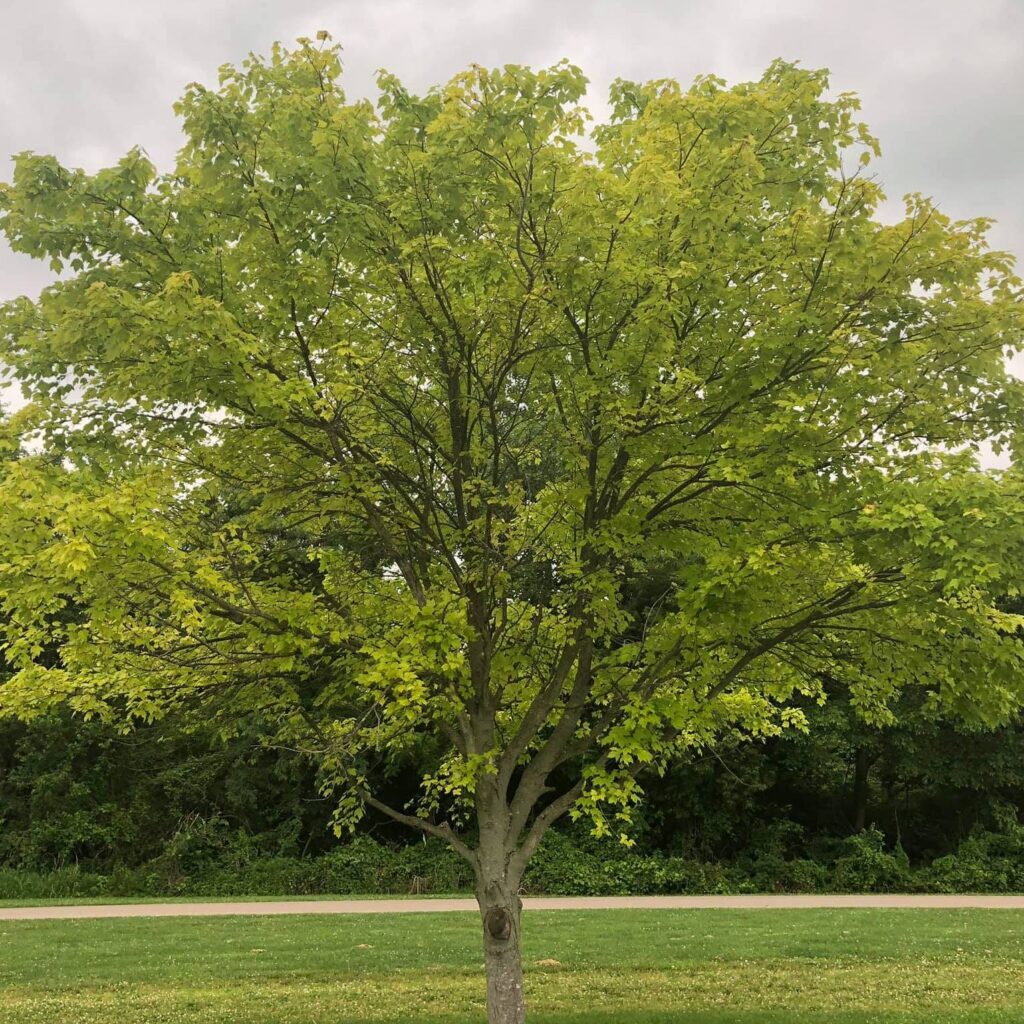
Red Maple is one of the most widely planted shade trees in North America, and for good reason. It grows at a moderate to fast pace, often 2 feet per year, reaching 40 to 60 feet at maturity with a rounded, symmetrical canopy.
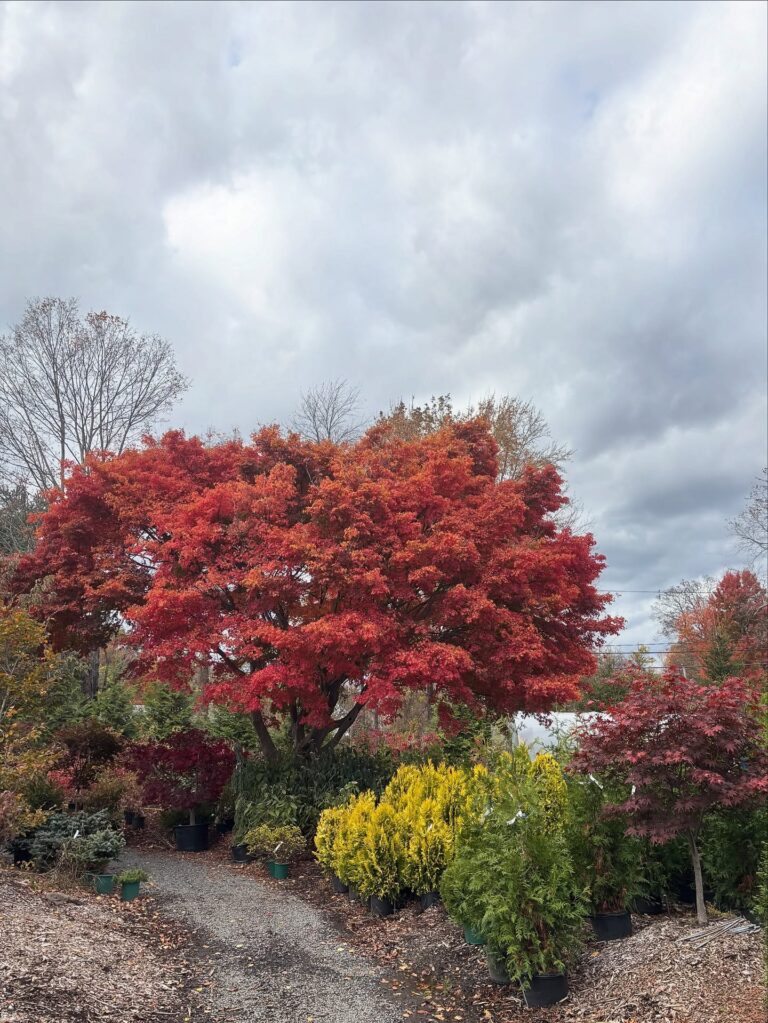
Its real star quality shows up in autumn, when the leaves turn brilliant shades of red and orange. In spring, small red flowers appear before the leaves, giving the tree a subtle burst of color even in the bare season.
Red Maple adapts to a wide range of soils, though it prefers slightly acidic, moist conditions. It’s a dependable, low-fuss choice for most backyards, and its dense canopy provides excellent summer shade within 10 to 15 years.
2. Sugar Maple (Acer saccharum)
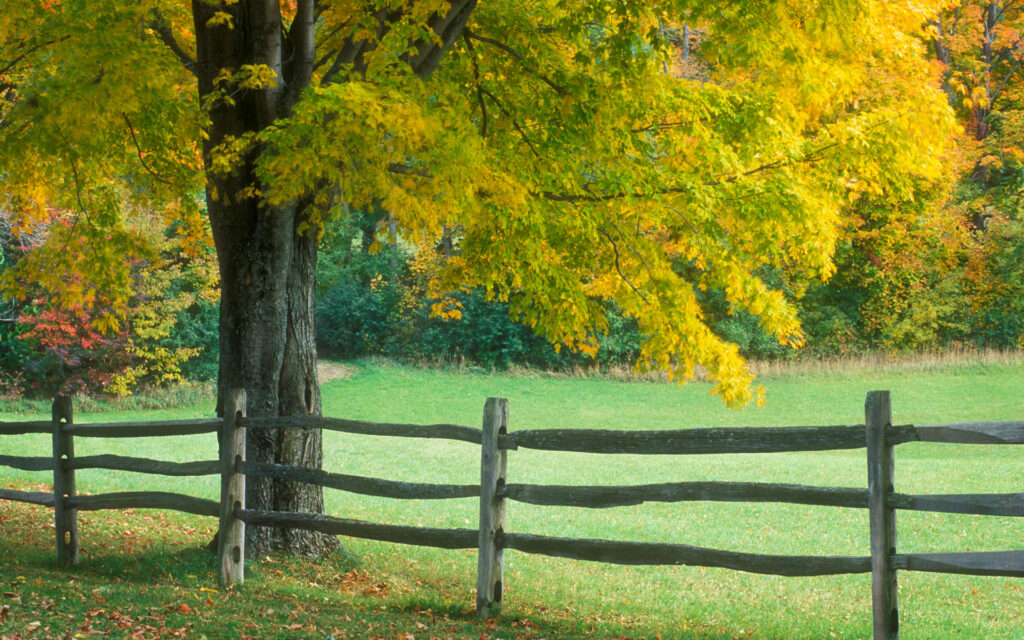
Sugar Maple is famous for two things: spectacular fall color and maple syrup production. Its dense, rounded canopy can reach 60 to 75 feet, offering some of the deepest, coolest shade of any deciduous tree.
This tree grows more slowly than Red Maple, typically 1 to 2 feet per year, which means patience is required. But the payoff is a long-lived, sturdy shade tree that can stand for well over a century in the right conditions.
Sugar Maple prefers well-drained soil and struggles in compacted or salty urban environments. For larger rural or suburban backyards with room to spread, it remains one of the most rewarding long-term shade investments available.
3. Northern Red Oak (Quercus rubra)
Red Oak grows faster than most other oaks, often adding 2 feet per year once established, eventually reaching 60 to 75 feet with a broad, rounded crown. Its leaves turn a deep russet-red in autumn.
This tree is remarkably adaptable, tolerating a wide range of soils, pollution, and urban stress better than many other oak species. That resilience makes it a popular choice for both residential yards and street plantings.
Red Oak’s acorns feed squirrels, deer, and birds throughout fall and winter. Its strong wood and sturdy branch structure also make it less prone to storm damage compared to faster, weaker-wooded shade trees.
4. White Oak (Quercus alba)
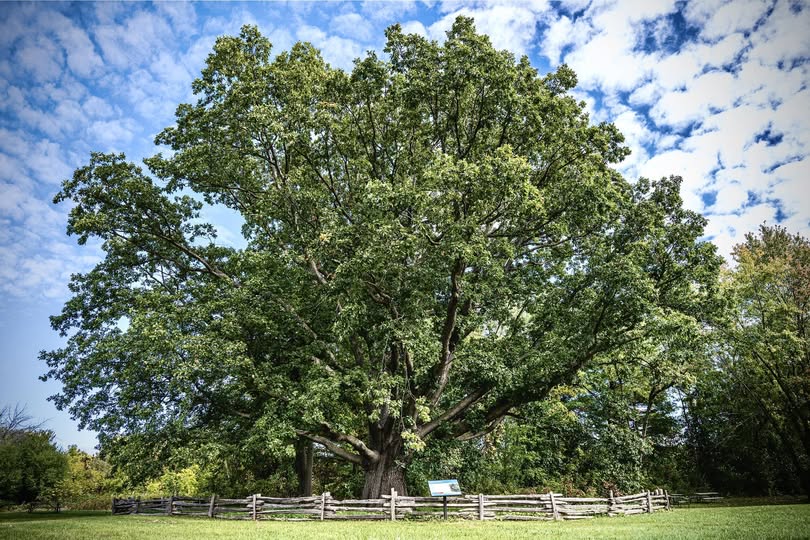
White Oak is a majestic, long-lived native tree, capable of living several hundred years and reaching 80 feet or more with a wide, spreading canopy. Its leaves have rounded lobes, turning a rich burgundy in fall.
Growth is slow, typically under a foot per year, which means this tree is a true investment in the future rather than an instant fix. Many homeowners plant it knowing their grandchildren will enjoy its full shade.
White Oak has deep, wide-ranging roots and needs plenty of undisturbed space. Once established, it tolerates drought reasonably well. For a legacy tree that defines a landscape for generations, few species compare.
5. Southern Live Oak (Quercus virginiana)
Live Oak keeps most of its leaves through winter and produces one of the widest canopies of any shade tree, sometimes spreading over 100 feet across in mature specimens. Its low, sprawling branches create dramatic, sculptural shapes.
This tree is a defining feature of southern landscapes, often draped in Spanish moss along wide lawns and boulevards. It handles heat, humidity, and even coastal salt spray better than most large shade trees.
Live Oak needs considerable horizontal space to reach its full potential. It’s not suited to small city lots, but for a large southern backyard, nothing else delivers the same combination of shade, character, and longevity.
6. Willow Oak (Quercus phellos)
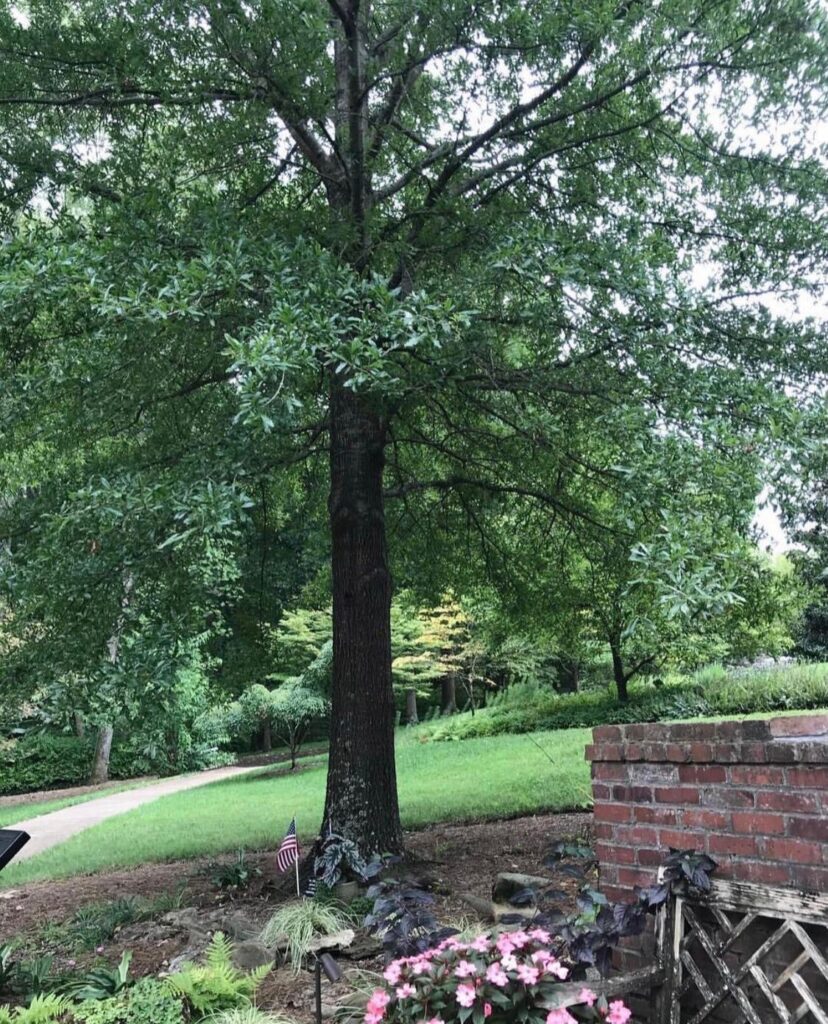
Willow Oak stands out among oaks for its narrow, willow-like leaves, giving it a softer, finer texture than typical broad-lobed oak foliage. It grows into a neat, pyramidal shape when young, becoming more rounded with age.
This tree grows faster than many other oaks, often gaining 2 feet a year, and can reach 60 to 75 feet at maturity. Its smaller leaves also mean less raking effort in autumn compared to trees with larger foliage.
Willow Oak tolerates urban conditions and wet soils better than most oak species, making it a popular street and park tree across the southern and mid-Atlantic United States. It’s a smart pick for moderately sized backyards.
7. Shumard Oak (Quercus shumardii)
Shumard Oak is prized for its fast growth relative to other oaks and brilliant red fall color that rivals maples. It typically reaches 40 to 60 feet, with a strong central trunk and broad, rounded canopy.
This tree tolerates heat, drought, and compacted urban soil better than many oak relatives, which has made it increasingly popular as a street and landscape tree across the southern and central United States.
Shumard Oak’s acorns provide reliable food for wildlife, and its strong wood resists storm damage well. For homeowners wanting oak-quality shade without decades of waiting, this species offers a good balance of speed and durability.
8. Bur Oak (Quercus macrocarpa)
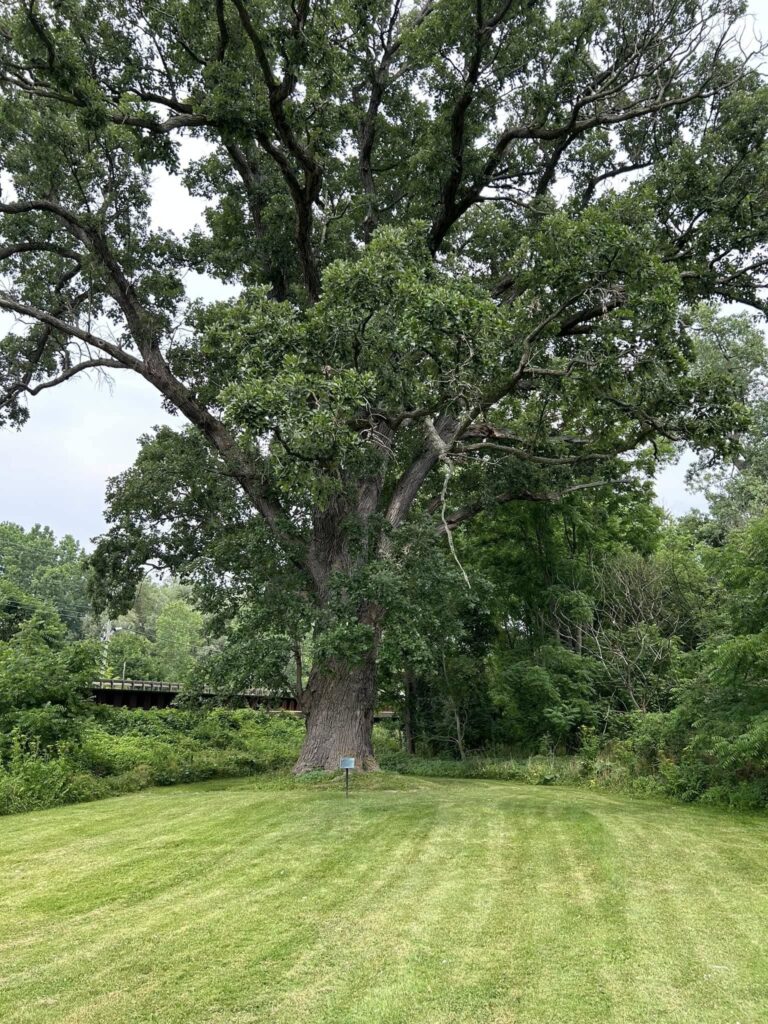
Bur Oak is one of the toughest native shade trees in North America, tolerating drought, wind, poor soil, and extreme cold better than almost any other large tree. Its thick, corky bark gives it a rugged, weathered look.
This tree grows slowly but steadily, eventually reaching 70 to 80 feet with a broad, massive canopy. Its acorns are among the largest of any native oak, capped with a distinctive shaggy, fringed cup.
Bur Oak can live for several centuries, making it a true multi-generational planting. For prairie and Midwest climates where other shade trees struggle, this oak consistently proves to be one of the most reliable choices available.
9. American Sycamore (Platanus occidentalis)
American Sycamore is one of the largest deciduous trees native to North America, capable of reaching 75 to 100 feet with a massive, spreading canopy. Its most striking feature is bark that peels away in patches, revealing white, tan, and olive-green layers beneath.
This tree grows quickly, often 2 to 3 feet per year, and provides dense shade within just a couple of decades. Large, maple-like leaves add to its bold, dramatic presence in bigger backyards.
Sycamore needs plenty of room and consistent moisture, often thriving near streams or low-lying areas. It’s not the tidiest tree, dropping bark, leaves, and seed balls, but its scale and character are hard to match.
10. Tulip tree (Liriodendron tulipifera)

Tulip tree, also called Tulip Poplar, is among the tallest native hardwoods in eastern North America, often exceeding 90 feet in maturity. Its distinctive four-lobed leaves resemble a tulip’s outline, and it produces greenish-yellow, tulip-shaped flowers in late spring.
This tree grows remarkably fast, sometimes 3 feet or more per year when young, making it one of the quickest routes to substantial shade. Its straight trunk and high canopy leave plenty of usable space beneath it.
Tuliptree prefers deep, moist, well-drained soil and full sun. It needs a large yard to accommodate its eventual height. For fast, towering shade in a spacious backyard, few native trees grow quite this quickly.
11. Thornless Honeylocust (Gleditsia triacanthos var. inermis)
Honeylocust offers something different from most shade trees: light, filtered shade rather than dense cover, thanks to its small, fern-like compound leaves. This makes it ideal for growing grass or a garden bed beneath its canopy.
This tree grows quickly, often reaching 30 to 70 feet depending on the cultivar, and adapts to a wide range of soils, including compacted or alkaline conditions common in urban and suburban yards.
Modern thornless, seedless cultivars have removed the messy pods and sharp thorns of the wild species. Because its small leaflets decompose quickly, raking is minimal, an underrated perk for anyone tired of autumn cleanup.
12. River Birch (Betula nigra)
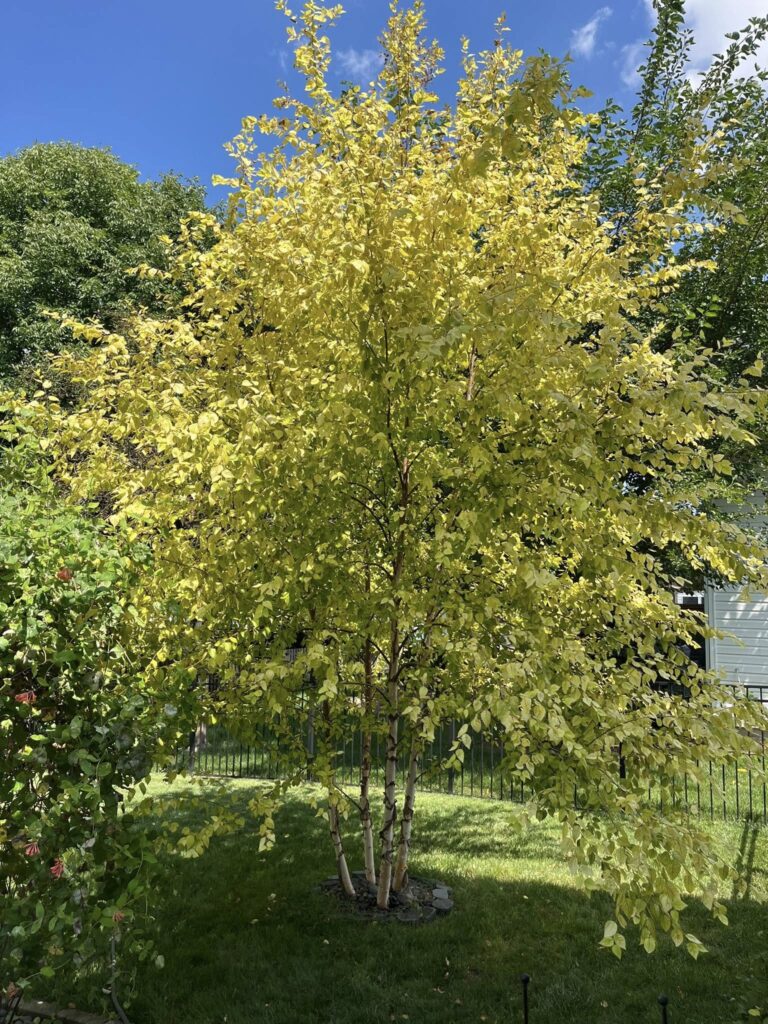
River Birch is loved for its peeling, multicolored bark, which curls away in salmon, cream, and cinnamon tones, adding visual interest even in winter. It’s often grown with multiple trunks for extra dramatic effect.
This tree grows fast, sometimes 1.5 to 2 feet a year, reaching 40 to 70 feet with an open, airy canopy. Unlike many birches, it resists the bronze birch borer, a pest that devastates other birch species.
River Birch tolerates wet, poorly drained soil better than most shade trees, making it a strong choice for low spots in the yard. It thrives in full sun and needs regular moisture, especially while young.
13. Princeton Elm (Ulmus americana ‘Princeton’)
Princeton Elm revives the classic, vase-shaped silhouette that once lined American streets before Dutch elm disease wiped out most native elms. This resistant cultivar recaptures that elegant form with far better disease tolerance.
It grows quickly, often 3 feet a year, eventually reaching 60 to 70 feet with wide, arching branches that create a graceful, umbrella-like canopy. That shape provides broad ground-level shade with high overhead clearance.
Princeton Elm adapts to a wide range of soils and urban conditions. For anyone wanting the nostalgic elm-lined look without the disease risk of the past, this cultivar is one of the safest modern choices.
14. Bald Cypress (Taxodium distichum)
Bald Cypress is unusual among conifers because it’s deciduous, dropping its soft, feathery needles each fall despite being a cone-bearing tree. It turns a warm copper-orange before shedding, adding late-season color.
This tree grows at a moderate pace, reaching 50 to 70 feet, with a straight trunk and a pyramidal to irregular crown as it matures. It’s famously tolerant of wet soil and even standing water, unlike most shade trees.
Bald Cypress also handles normal, well-drained soil just fine, making it more versatile than its swampy reputation suggests. For a backyard with drainage issues, it’s one of the few large shade trees that thrives rather than struggles.
15. Kentucky Coffeetree (Gymnocladus dioicus)
Kentucky Coffeetree has a bold, architectural presence, with thick, dark branches and huge, doubly compound leaves that can stretch 2 to 3 feet long. In winter, its stark, coarse branching gives it a striking silhouette.
This tree grows at a moderate rate, reaching 60 to 75 feet, and tolerates urban pollution, drought, and poor soil remarkably well. It’s increasingly recommended by extension foresters as a durable alternative to declining ash trees.
Kentucky Coffeetree is relatively pest and disease free, a rare trait among large shade trees. For a hardy, low-maintenance option with real visual character, it deserves far more attention than it typically gets.
16. American Beech (Fagus grandifolia)
American Beech is known for its smooth, silvery-gray bark, which stays strikingly smooth even on massive, century-old trunks. Its dense, oval canopy provides some of the deepest, most complete shade of any native tree.
Growth is slow, often under a foot per year, and this tree can live for several centuries once established. Its golden-bronze fall leaves sometimes cling to young branches well into winter, an effect called marcescence.
American Beech needs undisturbed soil and struggles with construction damage or heavy foot traffic near its roots. In a large, stable backyard setting, though, it becomes one of the most elegant, long-term shade trees available.
17. Silver Maple (Acer saccharinum)
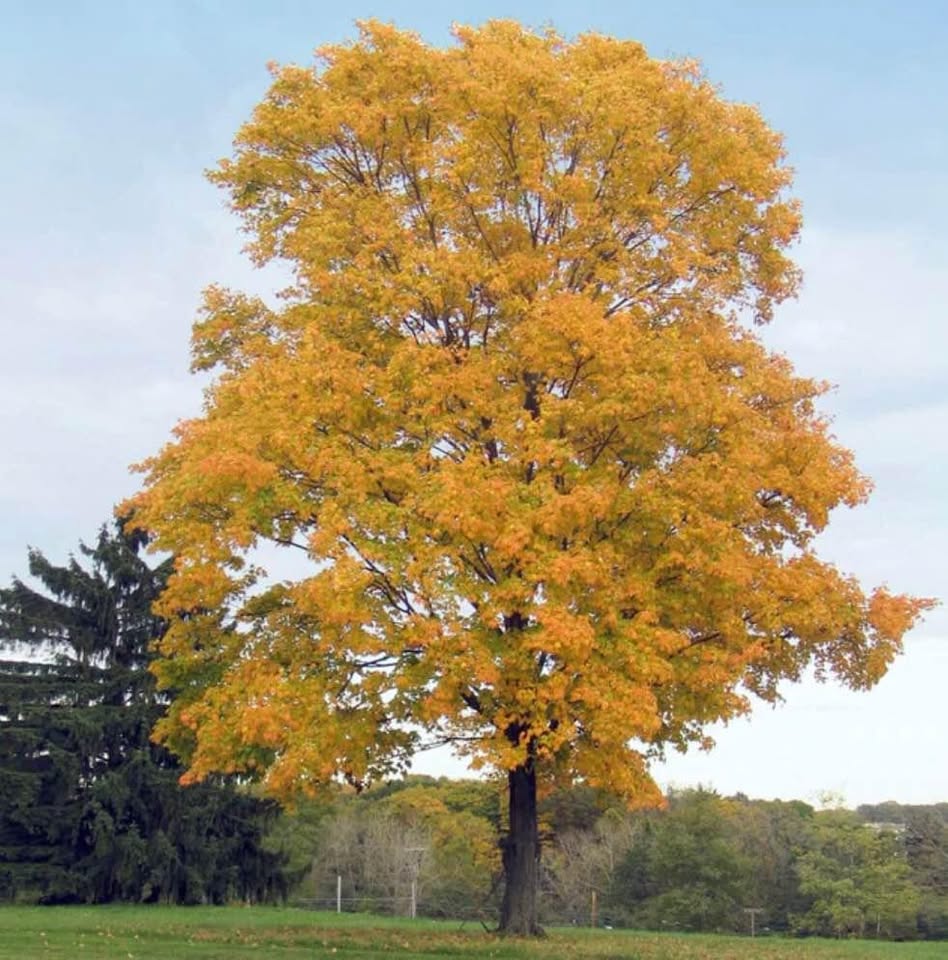
Silver Maple is one of the fastest-growing large shade trees, capable of adding 3 to 5 feet per year, reaching 50 to 80 feet within just a few decades. Its leaves show silvery undersides that flash attractively in the wind.
This rapid growth comes with tradeoffs. The wood is softer and more prone to storm breakage than slower-growing oaks or maples, and its shallow, aggressive roots can interfere with sidewalks, driveways, or nearby pipes.
For homeowners who want quick shade and are willing to plant it well away from structures and hardscaping, Silver Maple remains a practical, budget-friendly option that delivers noticeable cooling within just a handful of summers.
18. London Planetree (Platanus x acerifolia)
London Planetree is a tough hybrid related to sycamore, known for tolerating urban pollution, compacted soil, and heavy pruning better than almost any other large shade tree. Its mottled, peeling bark adds year-round texture.
This tree grows quickly, often reaching 70 to 100 feet, with a broad, spreading canopy that provides excellent shade over patios and large lawns. It’s a common choice for parks, boulevards, and spacious residential properties.
London Planetree needs significant room to grow and isn’t well suited to small yards. Where space allows, though, its combination of toughness and dramatic scale makes it one of the most dependable large shade trees around.
19. Ginkgo (Ginkgo biloba)
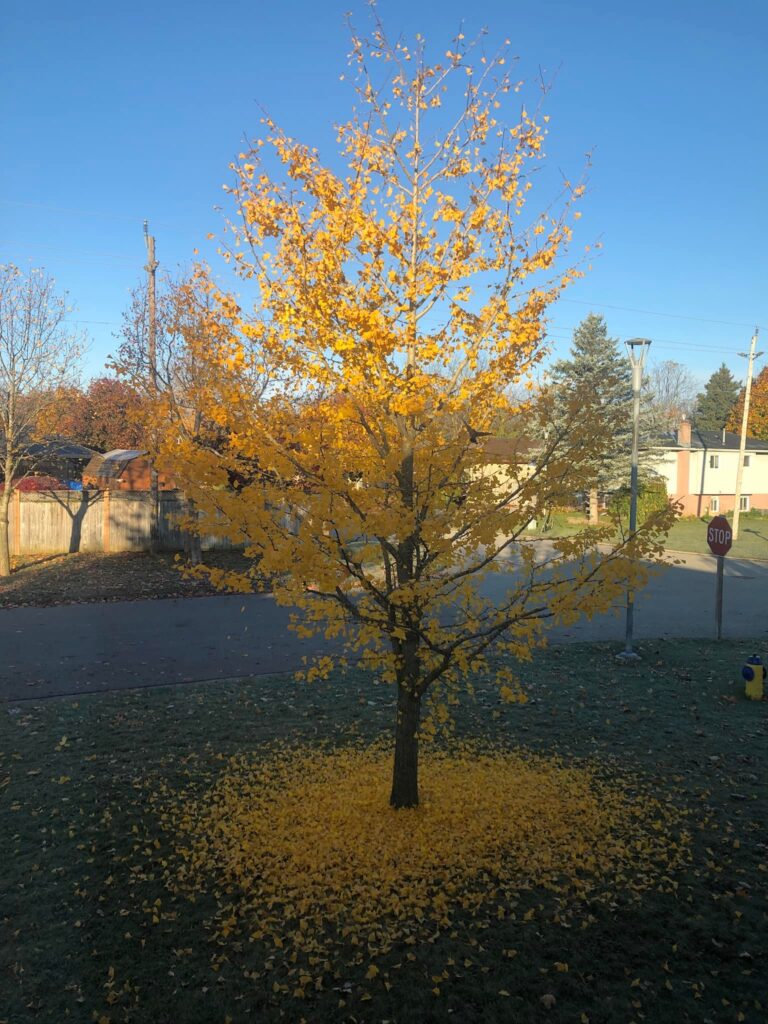
Ginkgo is often called a living fossil, with a lineage tracing back over 200 million years, largely unchanged in appearance since long before dinosaurs went extinct. Its fan-shaped leaves turn a brilliant, uniform gold each autumn.
This tree grows slowly to moderately, eventually reaching 50 to 80 feet with an upright, spreading form. It’s remarkably resistant to pests, disease, pollution, and even fire, making it one of the toughest urban shade trees available.
Always choose a male cultivar when planting Ginkgo, since female trees produce foul-smelling fruit that most homeowners find unpleasant. With that one precaution handled, Ginkgo offers decades of trouble-free shade and stunning fall color.
20. Chinese Pistache (Pistacia chinensis)
Chinese Pistache is valued for its reliable, vivid fall color, ranging from orange to deep red, even in warmer climates where many other trees fail to color well. Its compound leaves give it a fine, refined texture.
This tree grows at a moderate pace, typically reaching 30 to 40 feet with a rounded, symmetrical canopy. It’s notably drought tolerant once established, making it a smart choice for hotter, drier regions of the country.
Chinese Pistache tolerates poor, alkaline soil and urban stress well. For a mid-sized backyard that needs reliable shade without excessive size or maintenance, this tree offers a strong balance of beauty and practicality.
21. Katsura Tree (Cercidiphyllum japonicum)
Katsura Tree offers a distinctive sensory bonus: its heart-shaped leaves release a sweet, cinnamon-like fragrance as they fall in autumn, a detail that surprises most people the first time they notice it.
This tree grows at a moderate rate, reaching 40 to 60 feet, with a graceful, often multi-trunked form. Its blue-green summer foliage transitions to soft yellow, apricot, or pink tones before dropping in fall.
Katsura prefers consistent moisture and struggles during prolonged drought, especially while young. Once established in the right spot, it becomes an elegant, fragrant shade tree that adds sensory interest beyond simple visual appeal.
22. Sweetgum (Liquidambar styraciflua)
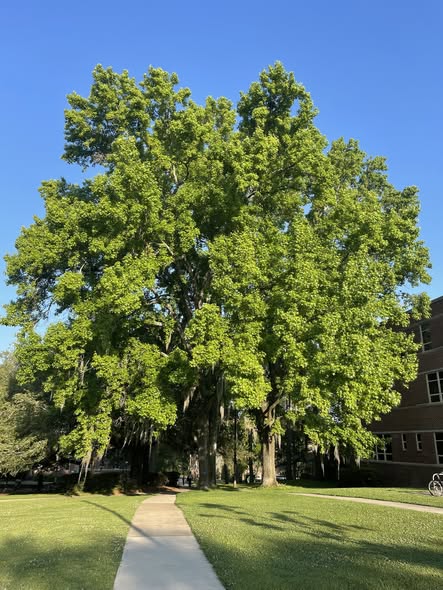
Sweetgum is instantly recognizable by its star-shaped leaves and spiky, round seed pods that some homeowners love and others find messy underfoot. Its fall color ranges dramatically from yellow to purple on a single tree.
This tree grows at a moderate to fast pace, reaching 60 to 75 feet with a pyramidal to rounded canopy. It tolerates a wide range of soils and climates, from the humid Southeast to cooler northern regions.
Newer fruitless cultivars have solved the seed pod litter problem while keeping the excellent fall color. For anyone wanting bold autumn display alongside solid summer shade, Sweetgum remains a rewarding, widely adaptable choice.
23. Japanese Zelkova (Zelkova serrata)
Japanese Zelkova was developed partly as a substitute for the American Elm, offering a similar vase-shaped canopy with much stronger disease resistance. It grows into a graceful, wide-spreading shade tree over time.
This tree grows moderately fast, reaching 50 to 80 feet, with an upright form when young that broadens gracefully with age. Its small, serrated leaves turn shades of yellow, orange, and reddish-bronze in autumn.
Zelkova tolerates urban pollution, heat, and a range of soil types, making it a popular street and park tree. For anyone missing the classic elm silhouette, this species offers a reliable, disease-resistant alternative.
24. Littleleaf Linden (Tilia cordata)
Littleleaf Linden forms a dense, uniform, pyramidal canopy that provides some of the neatest, most consistent shade of any street or shade tree. Its small, heart-shaped leaves create fine, even texture throughout the crown.
This tree grows at a moderate pace, typically reaching 50 to 70 feet, and is prized for fragrant, pale yellow summer flowers that attract bees in large numbers. That bloom period adds a subtle seasonal charm most shade trees lack.
Littleleaf Linden tolerates urban conditions, pollution, and moderate drought reasonably well. Its tidy, formal shape makes it a favorite for structured landscapes, though the bee activity during bloom is worth considering near patios.
25. Weeping Willow (Salix babylonica)
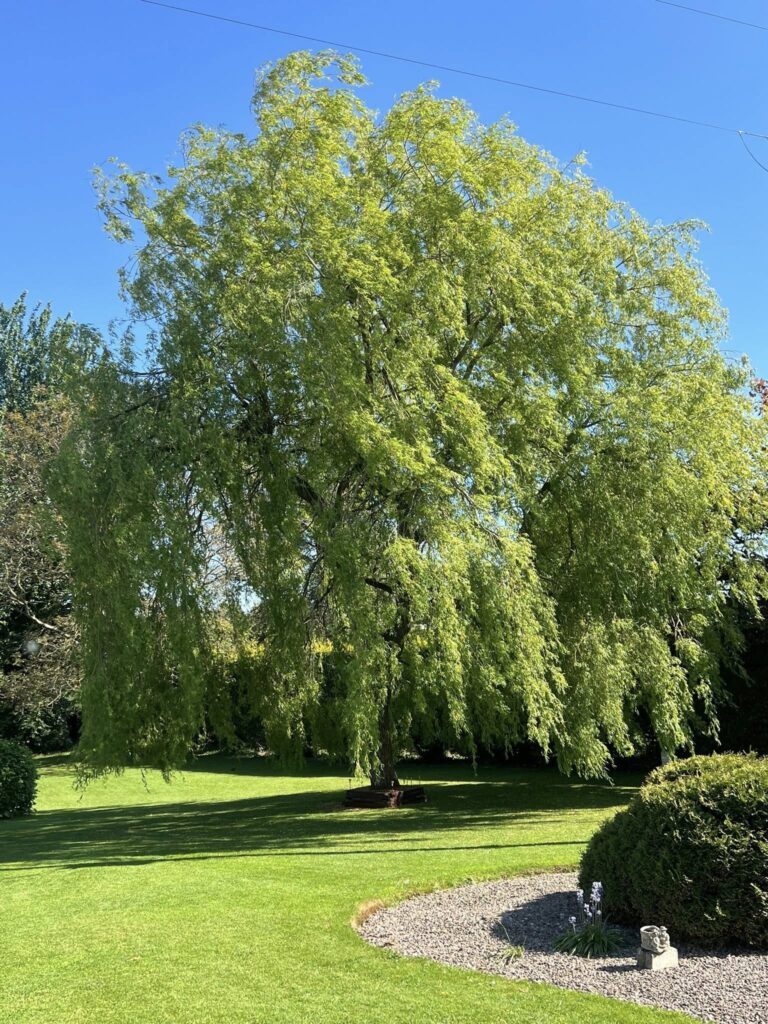
Weeping Willow is one of the most visually distinctive shade trees available, with long, cascading branches that sweep gracefully toward the ground. Few trees create the same dramatic, romantic silhouette near a pond or open lawn.
This tree grows extremely fast, often 3 to 8 feet per year, quickly reaching 30 to 50 feet with a wide, rounded canopy. That speed makes it one of the fastest routes to significant shade of any tree on this list.
Weeping Willow needs consistent moisture and has aggressive, water-seeking roots, so it should be planted well away from septic systems, pipes, and foundations. Near a pond or low, wet area, though, few trees look quite as striking.
How Much Shade Actually Saves You
The numbers here are worth repeating. The U.S. Department of Energy has found that properly placed shade trees can reduce residential cooling costs by roughly 15 to 35 percent annually, depending on placement and climate.
A separate analysis published through the USDA Forest Service estimated that a single 25-foot tree can lower a typical home’s combined heating and cooling costs by 8 to 12 percent each year, translating to real, compounding savings over decades.
Placement matters as much as species selection. Large trees positioned on the south, east, and west sides of a home block the most direct summer sun, while leaving winter sunlight relatively unobstructed once leaves drop.
Choosing the Right Shade Tree for Your Yard
Start with mature size. A Bur Oak and a Chinese Pistache serve very different roles, and planting a 100-foot tree ten feet from your house is a mistake that’s expensive to fix later.
Think about growth speed versus wood strength too. Fast growers like Silver Maple or Weeping Willow deliver quicker shade but often have weaker branches, while slower trees like White Oak reward patience with far greater longevity.
Soil and moisture conditions narrow the list further. Low, wet spots favor Bald Cypress or River Birch, while dry, compacted urban soil suits Honeylocust or Bur Oak better than moisture-loving species.
Final Thoughts
A backyard without shade always feels unfinished to me, no matter how nice the furniture or landscaping looks otherwise. The right tree changes how a space actually gets used, turning a hot, empty yard into somewhere people want to linger.
Whether you choose the fast relief of a Silver Maple or the generational legacy of a White Oak, the trees on this list represent some of the most reliable, well-documented choices for backyard shade across the country.
References
- Iowa Department of Natural Resources — Landscaping for Energy Conservation
- USDA Forest Service — Energy Conservation Potential of Urban Tree Planting
- Mississippi State University Extension — Energy Savings from Landscape Trees
- Iowa State University Extension — Good Native Shade Trees for Your Landscape
- University of Minnesota Extension — Trees and Shrubs for Minnesota Landscapes
- Colorado State University Extension (Arapahoe County) — Finding the Perfect Shade Tree
- University of Missouri Extension — Selecting Landscape Trees

Tim M Dave is a gardening expert with a passion for houseplants, particularly cacti and succulents. With a degree in plant biology from the University of California, Berkeley, he has vast experience in gardening. Over the years, he has cultivated a vast collection of desert plants and learned a great deal about how to grow and care for these unique companions.