Understanding Autumn Sage (History, Size, Growth, and Problems)
Autumn sage (Salvia greggii) is a small, bushy perennial in the mint family, Lamiaceae. It is often described as a sub-shrub because the lower stems turn woody with age. Gardeners love it for one simple reason: it flowers for months.
Despite the name, it does not bloom only in autumn. In most climates, flowers open in spring, slow down in the summer heat, and return strongly in fall. Some gardeners also call it cherry sage.
I first noticed this plant in a dry, sun-baked border where little else was thriving. It was covered in small red flowers. That memory is why I recommend it so often to people who want colour without constant work.
The plant is also known for its evergreen to semi-evergreen leaves in mild areas. In colder zones, it may lose some foliage in winter. It usually returns when the weather warms.
Origin and Native Habitat
Autumn sage is native to Texas and northern Mexico. It grows naturally on rocky slopes, limestone hills and dry, open ground. These sites drain quickly and get plenty of sunshine.
This origin explains almost everything about its care. The plant expects bright light, sharp drainage and little fuss. It does not expect heavy clay or soggy roots.
The species name honours Josiah Gregg, a 19th-century explorer and naturalist who collected plants in the American Southwest. Botanists later described the plant, and it spread into gardens across the United States and beyond.
Today, extension services in Texas, Oklahoma, California and Florida all list it as a useful landscape plant. That wide acceptance shows how adaptable it has become. Still, it performs best when you copy its native conditions.
Appearance: Leaves, Flowers and Size
The leaves are small, glossy and oval, usually dark green. They are often slightly aromatic when crushed. The stems are thin, upright and become woody near the base.
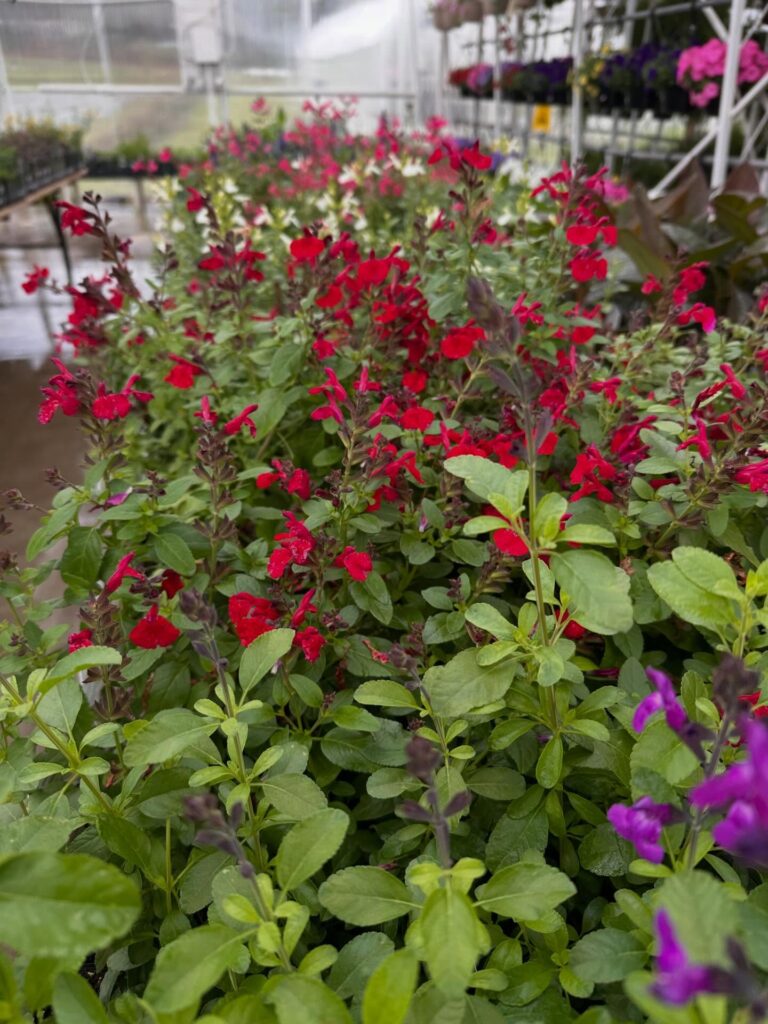
The flowers are tubular and two-lipped, which makes them perfect for hummingbirds. Colours include red, pink, coral, orange, purple, white and yellow. Some varieties carry two tones on the same plant.
Most plants form a rounded mound. Oklahoma State University Extension describes the plant as growing into a mound of about two to three feet. That size suits borders, foundations and large pots.
In my experience, the flowers look best in warm, low light. A red variety glows in the evening sun. It is a small detail, but it adds real charm to a garden.
Autumn Sage Summary Table
The table below gives the key facts in one place.
| Feature | Details |
| Botanical name | Salvia greggii |
| Common names | Autumn sage, cherry sage, cherry salvia |
| Family | Lamiaceae (mint family) |
| Plant type | Perennial sub-shrub, evergreen to semi-evergreen |
| Native range | Texas and northern Mexico |
| Mature size | About 2–3 feet tall and wide |
| USDA hardiness zones | About 6–9 (varies by cultivar) |
| Sunlight | Full sun (6+ hours daily) |
| Soil | Well-drained; tolerates sand, loam and some alkaline soils |
| Water needs | Low to moderate once established |
| Bloom time | Spring to fall, with a strong autumn flush |
| Flower colours | Red, pink, coral, orange, purple, white, yellow |
| Spacing | 18–24 inches apart |
| Wildlife value | Attracts hummingbirds, bees and butterflies |
| Maintenance | Low; one main pruning each year |
Popular Autumn Sage Varieties
There are many cultivars of autumn sage, so choose by colour and hardiness. Some are tougher than others. Always check the plant tag for the zone rating.
‘Furman’s Red’ is a classic with bright red flowers and good cold tolerance. ‘Pink Preference’ is a well-known pink selection. Oklahoma State University lists it as an Oklahoma Proven plant, rated for USDA Zone 6.
‘Wild Thing’ has pale pink blooms and a vigorous habit. ‘Maraschino’ offers cherry-red flowers on a compact plant. White types, such as ‘White’, are popular for evening gardens.
Be aware that some garden “autumn sages” are hybrids. For example, Salvia × jamensis is a cross between S. greggii and S. microphylla. Hybrids can look alike but may differ in hardiness. When in doubt, ask the nursery.
Best Climate and Hardiness Zones
Autumn sage grows best in USDA Zones 6 to 9. Texas A&M AgriLife Extension (through its Master Gardener plant library) lists the zone range as 6–9 for a white cultivar. Many gardeners push this range a little with careful siting.
Zone 6 winters can drop to roughly -23 to -18°C (-10 to 0°F). That is cold for a plant of Mexican origin. Good drainage is what lets it survive.
Heat is rarely a problem. The plant handles dry summers very well. It dislikes hot, humid weather combined with wet soil, which can cause root rot.
If you live outside these zones, do not give up. In colder areas, grow it in a pot and move it indoors for winter. In very humid regions, plant it on a raised bed or mound.
ALSO READ: 45 Different Types of Sage Plants (With Pictures, Uses, and Care Tips)
When and How to Plant Autumn Sage
The best time to plant is spring or early fall. Spring gives roots a full season to settle. Fall planting works in mild areas, if it is done early enough for roots to establish before frost.
Choose a sunny site. Dig a hole as deep as the root ball and about twice as wide. Loosen the roots gently if they circle the pot.
Set the plant at the same level it grew in the container. Do not bury the crown. Fill the hole, press the soil lightly, and water well.
Space plants 18 to 24 inches apart, as recommended by University of Florida IFAS Extension. This gives airflow and prevents crowding. Good airflow also lowers the risk of fungal problems.
Sunlight Requirements
Autumn sage needs full sun. Aim for at least six hours of direct light each day. More is better, especially in cool climates.
In shade, the plant becomes leggy and flowers poorly. The stems stretch toward the light and flop open. I have seen this many times in gardens where nearby trees grew larger over the years.
In very hot, dry regions, a little afternoon shade can help. This is only a small adjustment. The plant still wants bright light for most of the day.
If your plant is not blooming, check the light first. It is the most common cause. Moving the plant to a sunnier spot often fixes the problem within one season.
Soil and Drainage
Drainage is the single most important factor. Autumn sage tolerates sand, loam and even poor, rocky soil. It does not tolerate soil that stays wet.
The Texas A&M AgriLife Extension plant library warns that the plant cannot take shrink-swell clay soils. In clay, mix in organic matter, or plant on a slope or raised bed. This simple step can save the plant.
The ideal soil pH is neutral to slightly alkaline, though the plant adapts well. A heavy compost dose is not needed. Rich soil can lead to soft growth and fewer flowers.
If you are unsure about drainage, run a quick test. Dig a hole, fill it with water, and let it drain. If water remains after several hours, choose another spot or build a raised mound.
Watering Autumn Sage
Newly planted autumn sage needs regular water. Water deeply once or twice a week for the first growing season. This helps the roots grow down into the soil.
Once established, the plant is drought-tolerant. A deep soak every two to three weeks is often enough in summer. Rainfall may cover the rest.
Always check the soil before watering. Push a finger about two inches down. If it feels dry, water. If it is damp, wait.
Overwatering kills more autumn sage than drought does. Yellow leaves and soft stems often signal wet roots. Cut back on watering and improve drainage.
Fertilizing and Mulching
This plant needs very little fertilizer. The Texas A&M AgriLife Extension plant library notes that, once established, it should not be fertilized. Too much nitrogen makes leaves grow at the cost of flowers.
If your soil is very poor, add a thin layer of compost in spring. That is usually enough. A light touch gives the best results.
Mulch can help, but choose it carefully. Gravel or a thin layer of fine mulch suits dry climates. Keep mulch away from the stem base so the crown stays dry.
In wet climates, skip thick organic mulch. It holds moisture against the plant and invites rot. I prefer a light gravel mulch for this reason.
How to Prune Autumn Sage
Pruning keeps the plant compact, dense and floriferous. Without it, stems can grow long and woody. The centre may open up over time.
Prune in early spring, just as new growth appears, before flower buds form. Oklahoma State University Extension suggests cutting the plant back to about six inches each spring to keep it full. In milder areas, UC Davis Arboretum advises reducing leafy growth by half to two-thirds.
Avoid cutting into old, leafless wood. It usually does not sprout again. Always cut just above a leaf node or green growth.
You can also give a light trim after the first big bloom flush. Remove spent flowers and the longest stems. This often encourages a second wave of colour in fall.
Growing Autumn Sage in Containers
Autumn sage does very well in pots. This is a great choice for patios, balconies and cold climates. Containers also give you full control over drainage.
Use a gritty, well-draining potting mix. A mix of potting soil, coarse sand or perlite works well. Choose a pot with several drainage holes.
A 12 to 16-inch pot suits most varieties. Water when the top inch of soil is dry. Empty any saucer so water does not stand around the roots.
In cold zones, move the pot to a bright, cool spot in winter. An unheated garage with a window can work. Water only lightly until spring.
Propagation: Cuttings and Seeds
The easiest way to make more plants is from softwood cuttings. Take them in late spring or early summer. Choose healthy, non-flowering shoots about four inches long.
Strip the lower leaves and dip the end in rooting hormone. Place the cutting in a moist, gritty mix. Keep it in bright light but out of harsh sun.
Roots usually form in three to six weeks. Then you can pot each cutting on. Plant them out the following spring.
Seeds are possible, but results vary. Many cultivars do not come true from seed. If you want a particular colour, cuttings are the safer method.
Pests and Diseases
Autumn sage is generally pest-free. Deer and rabbits usually leave it alone because of the aromatic foliage. That is a major reason many gardeners choose it.
Occasional visitors include aphids, spider mites and whiteflies. A strong spray of water often removes them. Insecticidal soap is a gentle next step if needed.
The main disease issue is root rot from poor drainage. Powdery mildew can appear in humid, crowded conditions. Good spacing and sun lower the risk.
Prevention is simple. Use well-drained soil, avoid overhead watering, and give each plant room. Healthy plants rarely need chemical treatment.
ALSO READ: 25 Best Flowers to Grow in Autumn (With Care Details)
Benefits for Wildlife and Pollinators
The tubular flowers are a hummingbird favourite. Red and orange types seem especially attractive. Oklahoma State University Extension notes that the plant draws hummingbirds and butterflies.
Bees also visit the flowers for nectar. Because the plant blooms for so many months, it provides food when other plants have stopped. This is valuable in late summer and fall.
Autumn sage supports pollinators at a time when they need it most. Migrating hummingbirds, for example, benefit from late-season nectar. I always plant a few near a window so I can watch them.
For a pollinator garden, group several plants together. Mix with other native perennials. This creates a richer feeding area and a more attractive display.
Winter Care
In Zones 8 and 9, little winter care is needed. The plant may stay green. Leave the stems in place until spring.
In Zones 6 and 7, apply a light mulch after the ground begins to cool. Use gravel or a thin layer of straw. Keep it loose and away from the crown.
Do not prune hard in fall in cold regions. New growth can be damaged by frost. Wait until the weather warms in spring.
If leaves drop or stems look dead in early spring, be patient. Scratch the bark lightly. Green tissue underneath means the plant is alive and will recover.
Landscape Uses and Companion Plants
Autumn sage fits many garden styles. It is excellent in borders, rock gardens, cottage gardens and xeriscapes. It also works as a low, informal hedge.
Pair it with other sun-loving, drought-tolerant plants. Good companions include lavender, yarrow, coneflower, salvias and ornamental grasses. These share similar needs for sun and drainage.
Use contrasting colours for impact. A red autumn sage looks stunning beside silver foliage. Pink varieties go well with purple catmint.
Plant in groups of three or five for a natural look. Odd numbers feel more relaxed. In my own planting, this simple rule has never failed.
Common Problems and Quick Fixes
- No flowers: Usually too much shade or too much fertilizer. Move the plant to full sun and stop feeding.
- Leggy growth: Often due to low light or skipped pruning. Cut back in early spring and increase sunlight.
- Yellow leaves: A sign of overwatering or poor drainage. Let the soil dry and improve the site.
- Plant dies in winter: Wet soil and cold are a deadly combination. Choose a hardy cultivar and ensure sharp drainage.
Final Thoughts
Autumn sage is one of the most rewarding low-maintenance shrubs you can grow. It offers months of colour, supports hummingbirds and handles dry weather well. Few plants give so much for so little effort.
Remember the key points: full sun, excellent drainage, light feeding and annual pruning. Follow these, and your plant should thrive for years. Start with one or two plants and watch how they perform.
Whether you garden in a large yard or a small pot on a balcony, there is likely a place for this tough little sage. I hope this guide helps you grow it with confidence.
References
- Oklahoma State University Extension. “Autumn Sage.” Plant Profiles. https://extension.okstate.edu/programs/plant-id/plant-profiles/autumn-sage
- Oklahoma State University Extension. “Salvia greggii ‘Pink Preference’.” Oklahoma Proven. https://extension.okstate.edu/programs/oklahoma-proven/plant-profiles/pink-preference-autumn-sage
- UC Davis Arboretum and Public Garden. “Autumn Sage.” Arboretum All-Stars. https://arboretum.ucdavis.edu/all-stars/autumn-sage
- University of Florida IFAS Extension. “Salvia greggii: Cherry Sage, Autumn Sage, Cherry Salvia” (FPS524). https://edis.ifas.ufl.edu/publication/FP524/pdf
- Texas A&M AgriLife Extension Service (Texas Master Gardener Plant Library). “Salvia greggii ‘White’ (White Autumn Sage).” https://txmg.org/hendersonmg/plant-library/salvia-greggii-white/
- Texas Tech University. “Autumn Sage (Salvia greggii).” Landscape Plant Information Sheets. https://www.depts.ttu.edu/plantresources/Pages/directories/landscape-info-sheets/herbaceous-info/Salvia_greggii.php
- University of California Agriculture and Natural Resources (UC Master Gardeners). Small-leaf salvias: Salvia greggii and Salvia microphylla. https://ucanr.edu/node/116238

Tim M Dave is a gardening expert with a passion for houseplants, particularly cacti and succulents. With a degree in plant biology from the University of California, Berkeley, he has vast experience in gardening. Over the years, he has cultivated a vast collection of desert plants and learned a great deal about how to grow and care for these unique companions.