25 Types of Peas (Common Varieties, With Pictures)
I have always believed that peas are one of the most underrated foods in the kitchen and the garden. Most people picture a single small green seed. In reality, “peas” covers a surprisingly wide family.
Some peas are eaten fresh and sweet. Others are dried for soups, or grown to feed the soil. A few are not edible at all. Knowing the difference helps you buy, cook and grow them with confidence.
Botanically, most of the peas people know belong to one species, Pisum sativum. The centers of origin for this species are Ethiopia, the Mediterranean and central Asia. That long history explains why so many forms exist today.
This guide covers 25 types of peas, grouped by how people use them.
Fresh Garden Peas and Edible-Pod Peas
1. Garden Pea (English Pea, Green Pea)
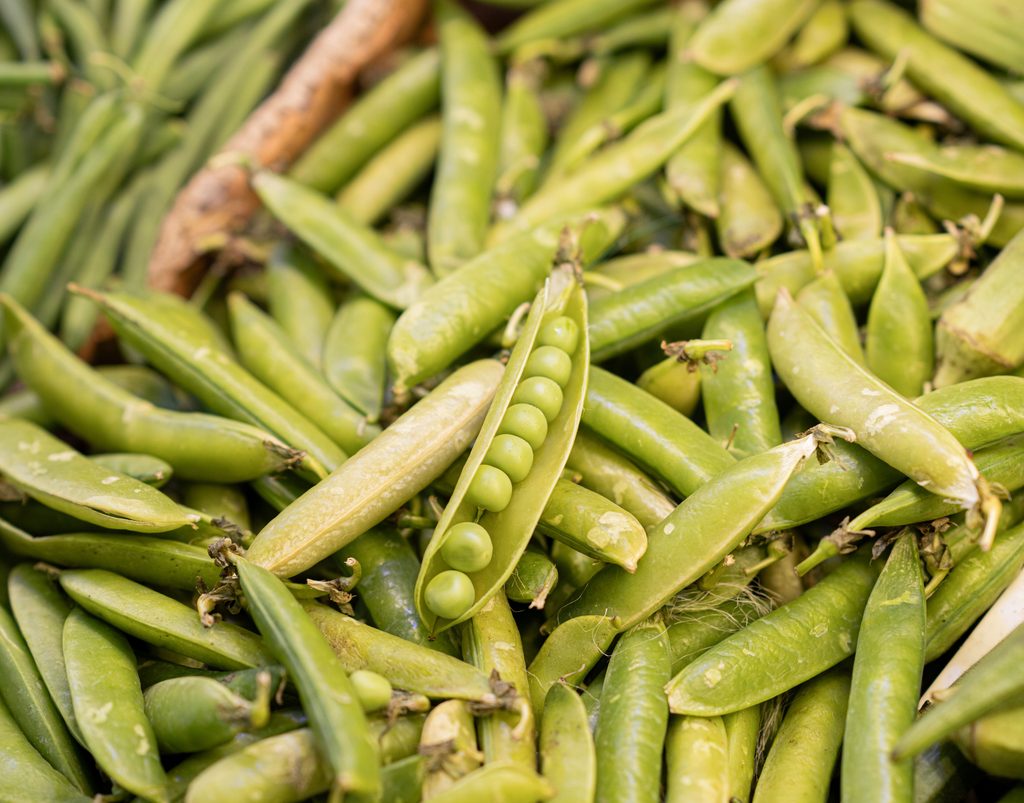
The garden pea is the classic. You split open the pod and eat the round green seeds inside. The pod is tough and not eaten.
Flavor is sweet and slightly grassy when picked young. Sugar turns to starch quickly after harvest. For that reason I always shell them as close to cooking time as possible.
Garden peas like cool weather. University of Minnesota Extension notes that good growing temperatures are between 55°F and 65°F. Most varieties need around 60 days from planting to harvest, and growth stops once temperatures climb above 85°F.
2. Snow Pea (Mange Tout)
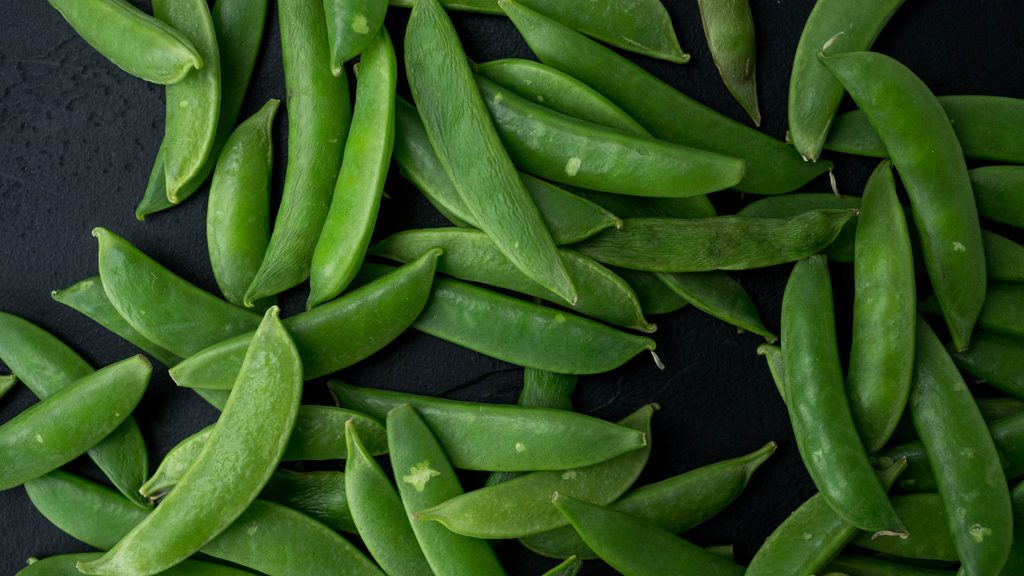
Snow peas are grown for their flat, tender pods. You eat the whole pod, including the tiny seeds. They are harvested when the pods are long and thin, just as the seeds begin to develop.
They taste mild and fresh, and they stay crisp when cooked briefly. Stir-fries are their natural home. A minute in a hot wok is enough.
Some varieties have a tough string along the edge of the pod. Remove it before cooking. Pick snow peas while the pods are still flat, because mature pods turn tough.
3. Sugar Snap Pea
Sugar snap peas are my personal favorite. They are a cross between the garden pea and the edible-pod pea. The pod is round, plump, sweet and crunchy.
Snap peas were developed from garden peas to have low-fiber pods that can be snapped and eaten with the immature peas inside. That makes them a perfect raw snack.
Pick them when the peas inside are plump. Eat them raw in salads, or steam them for two minutes. They also freeze well.
4. Petit Pois
Petit pois are the “little peas” of French cooking. They are picked early, so the seeds stay small, tender and very sweet. Many people prefer them to larger peas.
They are often sold frozen, which is a good thing. Freezing locks in sweetness soon after harvest. I find frozen petit pois often taste better than “fresh” peas that sat in a shop for days.
Use them in risottos, light soups and spring salads. Cook them very briefly. Overcooking turns them dull and soft.
ALSO READ: 20 Types of Mustard Greens (With Pictures, and Growing Tips)
5. Pea Shoots and Tendrils
Pea shoots are the young leaves, stems and curling tendrils of the pea plant. They taste like fresh peas, but lighter and greener. Many chefs use them as a delicate garnish.
Growers also raise them on purpose. Some pea varieties are bred especially for harvesting as shoots. They grow quickly and can be cut within a few weeks.
Add them raw to salads or sandwiches. You can also wilt them in a pan with garlic. Their flavor is gentle, so avoid heavy dressings.
Named Garden Varieties Worth Knowing
6. Little Marvel
Little Marvel is a dependable shelling pea. Gardeners like it because it ripens early and gives a concentrated yield. That means most pods are ready around the same time.
North Dakota State University lists it, along with ‘Early Frosty,’ as a good variety for freezing. Picking everything at once makes freezing easy.
It suits small gardens well. Plant it as soon as the soil can be worked in spring. Pick often to keep the plants producing.
7. Early Frosty
Early Frosty is another early shelling variety. As its name suggests, it handles cool spring weather well. It gives a good crop before summer heat arrives.
The pods are filled with sweet, medium-sized peas. Like Little Marvel, it ripens in a tight window. This is useful if you want a big batch for the freezer.
I recommend sowing it twice. Make a second planting two weeks after the first. That stretches your harvest.
8. Sugar Ann
Sugar Ann is a snap pea with a strong reputation in cold regions. North Dakota State University calls it the finest snap pea for North Dakota. That is high praise from a state with short growing seasons.
It matures early and does not need tall support. This makes it easier for beginners. The pods are sweet and crisp.
Pick when the pods are full and glossy. Waiting too long makes them fibrous. Taste one every day once the pods swell.
9. Oregon Sugar Pod II
Oregon Sugar Pod II is a well-known snow pea. The UC Master Gardeners of Santa Clara County list it as a recommended snow pea, based on trials, taste tests and local grower feedback.
The plants are compact and productive. Flat pods grow in pairs and stay tender if picked young. They are excellent in Asian-style dishes.
Harvest every two or three days. Frequent picking encourages more pods. A missed week can leave you with tough pods.
10. Maestro
Maestro is a shelling pea recommended for warm, mild regions. The same Santa Clara County growers list it as their recommended shelling variety. It shows that peas can succeed outside cold climates.
Plants are sturdy and the pods are well filled. The peas taste sweet and hold their color when cooked. That makes them attractive on the plate.
Sow in autumn or very early spring in mild areas. Heat is the enemy of all peas. Give them every cool week you can.
11. Super Sugar Snap
Super Sugar Snap is probably the most famous snap pea. It is a tall-vined variety that needs trellising, grows vigorously and gives high yields.
You will need a sturdy support, such as netting or a fence. Without it, the vines flop and tangle. With it, you get a heavy crop in a small space.
The pods are sweet and juicy. I like to eat them straight from the vine. Few garden snacks compare.
12. Oregon Giant
Oregon Giant is grown for its very large pods. North Dakota State University says nothing beats it for large pods. It is an edible-pod type, usually treated as a snow pea.
The big pods stay sweet and tender when harvested at the right time. They are good for stir-fries and quick sautés. A few pods make a generous portion.
Give the vines support. Pick regularly, before the pods become leathery. Large size does not mean you can wait longer.
Dried and Field Peas
13. Green Split Pea
Green split peas are dried peas with the skin removed and the seed split in half. They cook faster than whole dried peas. They also break down easily into a thick soup.
The flavor is earthy and mildly sweet. They are rich in protein and fiber. I think a bowl of split pea soup on a cold day is hard to beat.
You do not need to soak them. Simmer for 30 to 45 minutes, and stir now and then. Add salt near the end.
14. Yellow Split Pea
Yellow split peas come from a yellow-seeded pea variety. They are milder and slightly sweeter than green split peas. They are a staple across South Asia, Scandinavia and the Caribbean.
In Indian cooking, they appear in dal. In Swedish kitchens, they make traditional pea soup. In both cases, they become soft and creamy.
They are also a smart pantry item. Dried peas keep for a long time. Store them in a sealed jar away from heat and light.
15. Marrowfat Pea
Marrowfat peas are large, mature green peas left to dry in the field. They are best known in the United Kingdom. There they are soaked and simmered into “mushy peas.”
They have a thick, starchy texture and a rich flavor. Fish-and-chip shops serve them as a classic side. Many families also eat them with pies and sausages.
Soak them overnight before cooking. Some cooks add a pinch of bicarbonate of soda to soften them. Simmer gently until they collapse.
ALSO READ: 25 Types of Melons (Different Varieties, With Pictures)
16. Maple Pea (Carlin Pea)
Maple peas have brown, speckled seeds. They are sometimes called carlin peas. They are a traditional dried pea in parts of northern England.
Cooks soak and boil them, then serve them hot with butter and vinegar. Some regions link them to a Lenten tradition. The taste is nutty and savory.
They are also grown as a fodder and field crop. As a result, you may see them in seed catalogs for farmers. For the kitchen, look for specialist food suppliers.
17. Austrian Winter Pea
Austrian winter pea is mainly a farm and conservation crop. Farmers plant it to protect soil and add nitrogen. The NRCS lists it as a form of pea, Pisum sativum var. arvense, used for conservation.
Peas are legumes, so they feed the soil. In Montana, nitrogen credits after a pea grain crop averaged near 10 pounds per acre. That is a real saving on fertilizer.
Gardeners also use it as a winter cover crop. It is tolerant of cold and good for green manure. Livestock and wildlife also feed on it.
Southern Peas and Cowpeas
18. Black-Eyed Pea
Black-eyed peas are not true Pisum peas. They belong to a different species, Vigna unguiculata. They are cream-colored with a dark spot, and they are a favorite across the American South and West Africa.
A half cup of cooked black-eyed peas has about 99 calories, 7 grams of protein and 6 grams of fiber. That makes them a filling, low-fat food.
Many families eat them on New Year’s Day for luck, often in a dish called Hoppin’ John. The flavor is earthy and creamy. I find they need little more than onion, smoked meat or garlic.
19. Purple Hull Pea
Purple hull peas are a southern pea named for their purple pods. The seeds are pale, with a pink or purple eye. They are creamier and milder than black-eyed peas.
University of Florida sources describe them as a milder, creamier alternative to the usual black-eyed pea. The cooked peas turn a light green.
They are popular in southern home gardens. Heat does not bother them, unlike garden peas. Plant them after the last frost, when the soil is warm.
20. Crowder and Cream Peas
Crowder peas get their name from seeds packed tightly in the pod. The crowding gives each seed a blunt end. An Oklahoma State extension report defines a crowder pea as one whose seeds are crowded in the pod, causing them to be blunt at the end.
Cream peas are a related group. They are pale green, small, tender and milder than black-eyed peas. They cook quickly and taste delicate.
Both are warm-season crops. They grow well in sandy soil and fix nitrogen, so they improve the ground. Shell them soon after picking, since they spoil quickly.
Other Legumes Called “Peas”
21. Pigeon Pea
Pigeon pea is a tropical legume grown across India, Africa and the Caribbean. It is a woody shrub, not a vine, and it handles drought well. The seeds can be eaten green or dried.
Cooks in India use dried pigeon peas for toor dal. In the Caribbean, green pigeon peas go into rice dishes. The flavor is nutty and slightly sweet.
It is valuable for small farms. The plant gives food, firewood and soil improvement. Few crops do so many jobs.
22. Chickpea (Garbanzo Bean)
Chickpeas are often called garbanzo beans. Despite the “pea” in the name, they are a separate species, Cicer arietinum. They have a round, beige seed and a nutty taste.
Hummus is the best-known use. They also go into curries, stews and roasted snacks. Chickpea flour is popular in gluten-free baking.
The trend is clear in U.S. farming. Reports on USDA estimates put 2025 chickpea production at 337,020 tonnes, compared with 255,460 tonnes the year before. Demand for plant protein keeps growing.
23. Asparagus Pea (Winged Pea)
The asparagus pea is an unusual plant, Lotus tetragonolobus. It has small red flowers and pods with four wavy “wings.” It is not a true pea, but gardeners treat it like one.
You eat the pods whole, when they are very young, about an inch long. They taste mildly like asparagus. Older pods become tough and stringy.
It is a conversation starter in the vegetable garden. The plants are low and attractive. Pick often to avoid disappointment.
24. Grass Pea (Chickling Pea)
Grass pea, Lathyrus sativus, is a hardy crop grown in South Asia and East Africa. It survives drought better than many crops. For that reason, it has fed people during famines.
There is a caution. Eating it in large amounts over long periods can cause a nerve disorder called lathyrism. I would not recommend growing it for food without proper guidance.
Modern breeders are developing low-toxin varieties. Used carefully, it could be a useful food crop. For home cooks, it is best avoided.
25. Sweet Pea (Ornamental)
The sweet pea, Lathyrus odoratus, is grown for its beautiful, fragrant flowers. Despite the name, it is not an edible pea. The seeds and pods can be harmful if eaten.
Gardeners love it for color and perfume. It climbs fences and trellises with ease. Cut flowers last well in a vase.
I include it here to prevent a common mistake. Keep sweet pea seeds away from children and pets. Always check the Latin name before you eat any “pea.”
How to Choose the Right Pea
The right pea depends on your goal. For a sweet snack, choose sugar snap peas. For stir-fries, pick snow peas. For soup, use split peas.
For warm climates, grow southern peas such as black-eyed or purple hull. They love heat. For cold springs, garden peas are better.
Here are a few quick rules I follow:
- Cool-season peas: Garden, snow and snap peas. Plant them early.
- Warm-season peas: Cowpeas, pigeon peas and related legumes. Plant after frost.
- Dried peas: Split, marrowfat and maple peas. Store them dry.
- Ornamental only: Sweet peas. Do not eat them.
Cool peas right after picking. University of Minnesota Extension says they keep in the refrigerator for a week or more. That small step protects flavor.
Conclusion
Peas are far more varied than most people realize. From the sweet crunch of a snap pea to the creamy depth of a split pea soup, each type has its place. The family stretches from home gardens to large farms and global kitchens.
I hope this list helps you choose with confidence. Start with one or two types and add more each season. You may find, as I did, that peas are quietly among the most rewarding foods to grow and cook.
References
- University of Minnesota Extension. Growing peas in home gardens. https://extension.umn.edu/vegetables/growing-peas-home-gardens
- University of Illinois Extension. Peas. https://extension.illinois.edu/gardening/peas
- Iowa State University Extension and Outreach. How do the various types of peas differ? https://yardandgarden.extension.iastate.edu/faq/how-do-various-types-peas-differ
- North Dakota State University Extension. Dakota Gardener: The best peas for North Dakota. https://www.ag.ndsu.edu/news/columns/dakota-gardener/dakota-gardener-the-best-peas-for-north-dakota
- UC Master Gardeners of Santa Clara County. Peas. https://mgsantaclara.ucanr.edu/garden-help/vegetables/peas
- USDA Economic Research Service. Vegetables and Pulses Outlook: July 2025 (VGS-376). https://ers.usda.gov/sites/default/files/_laserfiche/outlooks/113070/VGS-376.pdf
- USDA NRCS Plant Materials Program. Plant Guide: Pea (Pisum sativum L.) (archived copy). https://webarchive.library.unt.edu/web/20161224231214/https://www.nrcs.usda.gov/Internet/FSE_PLANTMATERIALS/publications/wapmcpg11190.pdf

Tim M Dave is a gardening expert with a passion for houseplants, particularly cacti and succulents. With a degree in plant biology from the University of California, Berkeley, he has vast experience in gardening. Over the years, he has cultivated a vast collection of desert plants and learned a great deal about how to grow and care for these unique companions.