30 Types of Pepper Plants (With Growing Details)
Peppers fascinated me long before I understood why. The same plant family somehow produces a sweet, crunchy bell pepper and a chili so hot it needs a hazard warning. That range is genuinely unmatched in the vegetable world.
This guide covers 30 types of pepper plants, spanning sweet, mild, and blisteringly hot varieties. Each entry includes flavor, Scoville heat rating, and growing tips.
Quick heat reference: peppers are measured using the Scoville Scale, which ranges from zero units for bell peppers up to a little over 2 million units for the hottest cultivars on Earth, according to LSU AgCenter.
Understanding Pepper Heat Before You Plant
All peppers belong to the genus Capsicum, but they split across several distinct species. Capsicum annuum is the most commercially important species, covering everything from bell peppers to jalapeños, according to Britannica’s horticultural reference.
Other species bring their own specialties. Capsicum chinense produces the world’s hottest peppers, Capsicum frutescens includes Tabasco-type chilies, and Capsicum baccatum is known for citrusy South American types, per Pepper Geek’s cultivation research.
Heat comes from capsaicin, a compound concentrated mainly in the seeds and the white membrane inside the fruit, according to LSU AgCenter Extension. Removing both will noticeably reduce a pepper’s bite without changing its flavor much.
With the basics covered, here are 30 pepper plant types worth knowing.
1. Bell Pepper
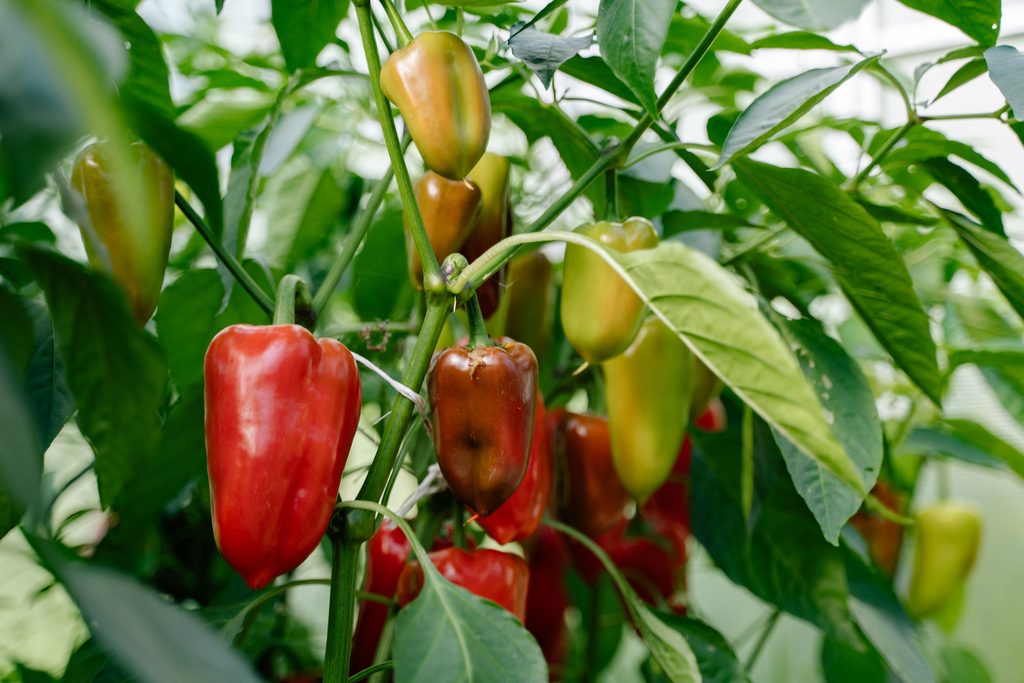
Bell peppers are the mildest and most widely grown type in home gardens, with a Scoville rating of exactly zero heat units, according to LSU AgCenter. Their blocky shape and thick walls make them ideal for stuffing, roasting, and fresh salads.
They ripen through a color sequence, usually starting green and maturing to red, yellow, or orange, with sweetness increasing as the color develops. Green bells are simply less ripe than their colorful counterparts.
This is the pepper most beginners should start with. It’s forgiving to grow and rewards patience, since the flavor genuinely improves the longer you leave it on the plant to ripen.
2. Jalapeño
Jalapeño is arguably the most recognizable hot pepper in North America, with a Scoville range of roughly 5,000 to 10,000 units, according to Pepper Geek’s cultivar research. Its bullet shape and reliable heat make it a garden staple.
Unlike many hot peppers that are best picked red, jalapeños are traditionally harvested green, according to Oregon State University Extension. Left to ripen further, they turn red and develop a sweeter, slightly hotter flavor.
I’ve grown jalapeños for years, and they remain the pepper I recommend most to first-time hot pepper gardeners. The plant is productive and forgiving, even for gardeners without much chili-growing experience.
3. Serrano
Serrano peppers are smaller and noticeably hotter than jalapeños, generally running from about 10,000 to 25,000 Scoville units. The flavor is bright and slightly grassy, making it a favorite for fresh salsa.
The plant tends to be compact and highly productive, often outproducing jalapeño plants of similar size in a home garden setting.
Serranos are usually used fresh rather than dried, since their thin walls don’t hold up as well to dehydration as thicker-walled peppers like poblano.
4. Poblano
Poblano peppers are large, dark green, and notably mild for a chili, with a Scoville range of roughly 1,000 to 2,000 units, according to Pepper Geek. Their size and mild heat make them ideal for stuffing, as in the classic chile relleno.
When dried, poblano peppers become ancho chilies, a completely different name for the same pepper in its dried form. This dual identity often confuses new gardeners and cooks alike.
The plant grows well in warm climates and produces heavily through a full growing season, rewarding gardeners with a steady supply for both fresh and dried use.
5. Cayenne
Cayenne is a classic hot pepper, typically rated around 50,000 Scoville units, according to Pepper Geek’s cultivation data. Long, thin, and tapering to a point, it’s most often dried and ground into the familiar red spice found in kitchens worldwide.
The plant is a member of the Longum Group within Capsicum annuum, according to North Carolina State University Extension, and tolerates heat and drought reasonably well once established.
Birds are immune to capsaicin, an interesting fact confirmed by NC State Extension, which means cayenne and other pepper plants often attract birds even while remaining untouched by most mammals.
6. Habanero
Habanero belongs to Capsicum chinense and delivers serious heat, generally landing in the 100,000 to 350,000 Scoville range. Its fruity, almost tropical aroma sets it apart from the sharper, more vegetal flavor of Capsicum annuum peppers.
Oregon State University Extension notes that C. chinense peppers originate from the Amazon region and can be genuinely difficult to grow outdoors in cooler climates without extra warmth from mulch or microclimates.
The heat can mask a genuinely lovely aroma. If you’ve never smelled a fresh habanero before cutting into it, you’re missing one of the more pleasant surprises in the pepper world.
7. Scotch Bonnet
Scotch bonnet is closely related to habanero and shares a similarly intense heat range, often between 100,000 and 350,000 Scoville units, according to Oregon State University Extension. Its squat, lantern-like shape distinguishes it visually from habanero’s more tapered form.
This pepper is a staple in Caribbean cooking, particularly Jamaican jerk seasoning, where its fruity heat provides both flavor depth and serious spice.
Like habanero, Scotch bonnet belongs to Capsicum chinense and shares that species’ need for warm, humid growing conditions to thrive outdoors.
8. Ghost Pepper (Bhut Jolokia)
Ghost pepper held the world’s hottest title for years, testing between roughly 855,000 and just over 1 million Scoville units, according to University of Arkansas Cooperative Extension. It’s a hybrid cross of Capsicum chinense and Capsicum frutescens.
This pepper is genuinely no joke. At its minimum heat level, it’s still more than 100 times hotter than a jalapeño, according to University of Arkansas Extension figures comparing the two.
It’s rarely found in regular supermarkets, showing up mostly at farmers markets or specialty grocers instead, largely due to how difficult and risky it is to handle at commercial scale.
9. Carolina Reaper
Carolina Reaper is one of the hottest peppers ever bred, reaching between 1.4 million and 2.2 million Scoville units, according to University of Arkansas Cooperative Extension. It’s a cross between a ghost pepper and a habanero.
At its upper range, Carolina Reaper can be roughly 880 times hotter than a jalapeño, based on University of Arkansas Extension’s comparative Scoville figures. That’s an extraordinary jump in intensity from a familiar garden pepper.
Oregon State University Extension notes it belongs to the same Capsicum chinense group responsible for most of the world’s hottest cultivars, alongside ghost pepper and Trinidad scorpion.
ALSO READ: 30 Types of Herbs (With Growing Details)
10. Trinidad Scorpion
Trinidad Scorpion is another superhot cultivar within Capsicum chinense, commonly cited alongside Carolina Reaper and ghost pepper as among the world’s most intense peppers, according to Oregon State University Extension.
Its name references the curled, stinger-like tip on the fruit, a distinctive visual trait that separates it from the rounder shapes of habanero and Scotch bonnet.
Handling precautions genuinely matter here. Gardeners growing superhot varieties like this one should wear gloves when harvesting, since skin contact alone can cause a painful, lingering burn.
11. Tabasco Pepper
Tabasco pepper belongs to Capsicum frutescens and is best known through the hot sauce that bears its name, with a Scoville range of 30,000 to 50,000 units. The plant grows in a distinctly bushy form.
Unlike most peppers, tabasco fruits point upward rather than hanging down from the stem, a trait shared across the entire Capsicum frutescens species.
A major portion of tabasco pepper stock was wiped out by tobacco mosaic virus in the 1960s, and the first resistant variety wasn’t cultivated again until around 1970.
12. Hungarian Wax Pepper
Hungarian wax pepper has a notably wide heat range, running from 1,000 to 15,000 Scoville units, meaning individual peppers can vary considerably in spiciness even from the same plant.
It’s typically harvested while still yellow, before ripening further to orange and finally red as it matures on the plant. Its appearance closely resembles banana peppers, though the two are genuinely distinct cultivars.
Home gardeners often favor this pepper for its ease of cultivation and strong productivity, making it a reliable choice even for less experienced growers.
13. Banana Pepper
Banana pepper is a mild, tangy pepper commonly used pickled on sandwiches and pizza. Its elongated, curved yellow shape closely resembles a banana, giving the variety its common name.
The heat level stays low, generally comparable to the milder end of Hungarian wax pepper’s range, making it approachable even for people who avoid spicy food entirely.
The plant is highly productive and forgiving, which explains why it remains such a common sight in home vegetable gardens across a wide range of climates.
14. Anaheim Pepper
Anaheim pepper is a mild, long green chili commonly used in roasting and stuffing, closely related to the New Mexico chile varieties bred at New Mexico State University’s Chile Pepper Institute.
Its heat level stays gentle, generally in a similar low range to poblano, which makes it a good entry point for gardeners curious about growing chilies without much spice.
When dried, Anaheim peppers develop a deep, slightly smoky flavor, similar to how poblano transforms into ancho, adding versatility beyond fresh use alone.
15. New Mexico Chile (Hatch Chile)
New Mexico chiles, often marketed as Hatch chiles, were developed largely through breeding programs at New Mexico State University. They range from mild to moderately spicy, roughly 500 to 10,000 Scoville units, according to Pepper Geek.
These chiles are typically harvested while still green and unripe, then roasted, a tradition closely tied to New Mexican cuisine and regional harvest festivals held every autumn.
NMSU’s Chile Pepper Institute continues breeding new cultivars today, including nutrition-focused varieties studied for their flavonoid and phenolic acid content in recent university research.
16. Pepperoncini
Pepperoncini is a mild, slightly sweet and tangy pepper, commonly pickled and served on salads or sandwiches. Its thin walls and wrinkled skin make it easy to identify at a glance.
Heat stays low across this variety, generally comparable to banana peppers, which is exactly why it appeals to people who want pepper flavor without real spice.
The plant produces heavily over a long season, making it a practical, low-maintenance choice for gardeners focused on pickling and preserving.
17. Shishito
Shishito is a thin-walled, mild Japanese pepper typically served blistered in a hot pan with a bit of oil and salt. Most fruits stay mild, though a small percentage on any given plant turn out surprisingly hot.
This unpredictability has turned shishito peppers into something of a party game at restaurants, where diners bite into a plate of them hoping to avoid the occasional spicy one.
The plant is compact and well suited to container growing, making it a popular choice for gardeners with limited outdoor space.
18. Aji Amarillo
Aji Amarillo belongs to Capsicum baccatum, a species known for its bright, citrusy heat, according to Pepper Geek’s species overview. It’s a cornerstone ingredient in Peruvian cooking.
The heat is moderate to hot, with a distinctive fruity flavor that sets it apart from the more straightforward heat of Capsicum annuum varieties like jalapeño or cayenne.
Growers outside South America may find this species less familiar, but it’s gaining popularity among home gardeners interested in expanding beyond the usual Capsicum annuum lineup.
19. Rocoto Pepper
Rocoto belongs to Capsicum pubescens, a distinct species known for thick pepper walls, black seeds, and unusual purple flowers, according to Pepper Geek’s species breakdown.
This species tolerates cooler temperatures better than most other Capsicum types, since it originates from higher-altitude regions of South America where lowland tropical heat isn’t available.
The thick flesh and notable heat make rocoto a favorite in Andean cuisine, particularly in stuffed pepper dishes similar to how poblano is used in Mexican cooking.
20. Cherry Pepper (Pimiento)
Pimiento, also called cherry pepper, is a mild, heart-shaped red chili with a Scoville rating of just 100 to 500 units. It’s sweet, succulent, and notably more aromatic than standard bell pepper.
This variety grows across an unusually wide hardiness range, from USDA zones 4 through 12, making it more adaptable to cooler climates than many other peppers on this list.
Pimiento is widely used in stuffed olives and as a mild garnish, valued more for its color and gentle sweetness than for any real heat.
21. Ancho Pepper
Ancho is simply the dried form of the poblano pepper, though it’s often treated as a separate ingredient entirely in Mexican cooking due to its distinct, raisin-like sweetness once dehydrated.
Like fresh poblano, ancho stays on the milder end of the heat spectrum, generally in the same 1,000 to 2,000 Scoville range as its fresh counterpart.
Growers harvesting for drying should let poblano peppers ripen fully to a dark red-brown before picking, since this maximizes the deep flavor ancho is known for.
ALSO READ: 15 Best Companion Plants for Yellow Squash (And Those to Avoid)
22. Peter Pepper
Peter pepper is a rare heirloom chili best known for its distinctive, unusual shape, occurring in both red and yellow forms. Its Scoville range runs roughly 10,000 to 23,000 units, making it hotter than a standard jalapeño.
This variety is most commonly grown in East Texas, Louisiana, and parts of Mexico, and remains something of a novelty crop among heirloom pepper enthusiasts rather than a mainstream commercial variety.
Its rarity and unusual appearance make it a popular choice for collectors interested in unique or conversation-starting additions to a home pepper garden.
23. Black Pearl Pepper
Black Pearl is an ornamental pepper cultivar developed by USDA Agricultural Research Service scientists, notable for its striking black leaves and black fruit that ripen to crimson red.
Despite its primary role as an ornamental plant, Black Pearl is genuinely edible, with a citrus undertone and heat measuring four to twelve times hotter than a jalapeño.
This cultivar won an All-America Selections award in 2006 for its beauty, proving that pepper breeding can succeed on visual appeal just as much as flavor or heat.
24. Aji Dulce
Aji Dulce is a Caribbean pepper closely related to habanero in appearance and aroma but bred to remove nearly all the heat, according to Oregon State University Extension’s low-heat cultivar list.
It carries the same fruity, tropical fragrance associated with Capsicum chinense peppers, making it popular in Caribbean cooking for flavor depth without overwhelming spice.
This is a smart choice for gardeners who love habanero’s aroma but not its burn. It delivers that signature scent profile in a much more approachable, family-friendly form.
25. Habanada
Habanada is a heatless habanero cultivar, bred specifically to retain the classic tropical, fruity aroma of habanero while removing nearly all of its capsaicin, according to Oregon State University Extension.
This makes it a genuinely unusual pepper: it smells and tastes like habanero but carries almost none of the fire, appealing to cooks who want the flavor complexity without the intensity.
It’s part of a broader trend in modern pepper breeding, where flavor and aroma are increasingly separated from raw heat as breeding goals in their own right.
26. NuMex Suave
NuMex Suave is a low-heat habanero-type cultivar developed through New Mexico breeding programs, available in yellow, orange, and red forms, according to Oregon State University Extension’s cultivar list.
Like Habanada and Aji Dulce, it prioritizes the tropical, fruity flavor characteristic of Capsicum chinense while dialing the heat down dramatically compared to standard habanero.
These milder habanero-type peppers have grown in popularity among home cooks who want authentic Caribbean and Latin flavor profiles without habanero’s typical intensity.
27. Trinidad Perfume
Trinidad Perfume is another low-heat, high-aroma pepper within the Capsicum chinense group, prized for its floral, fruity scent rather than any real spiciness, according to Oregon State University Extension.
It’s commonly used in Caribbean cooking as a seasoning pepper, added early in cooking to infuse dishes with fragrance without contributing significant heat to the final result.
This variety highlights just how much flavor diversity exists within Capsicum chinense beyond the blistering heat most people associate with the species.
28. Biquinho Yellow
Biquinho is a small, sweet, teardrop-shaped Brazilian pepper with essentially no significant heat, according to Oregon State University Extension’s low-heat cultivar recommendations for home gardens.
Its name translates roughly to “little beak,” referencing the pointed tip characteristic of the fruit’s shape, and it’s commonly pickled or used fresh in Brazilian cooking.
The plant tends to be compact and highly ornamental, producing an abundance of small, glossy fruit that makes it as attractive in a garden bed as it is useful in the kitchen.
29. Chiltepin
Chiltepin is considered one of the wild ancestors of many cultivated Capsicum annuum peppers, native to the southwestern United States and Mexico, according to Pepper Geek’s species research.
The tiny, round fruit packs significant heat relative to its size, reflecting a broader pattern in chili peppers where smaller varieties tend to run hotter than larger ones, per University of Arkansas Extension.
Because it grows wild across Texas, Arizona, and New Mexico, chiltepin represents a direct genetic link back to the earliest domesticated pepper plants roughly 6,000 to 7,000 years ago.
30. Ornamental Christmas Pepper
Christmas pepper is a compact, decorative Capsicum annuum cultivar grown primarily for its colorful, upright fruit rather than culinary use, according to North Carolina State University Extension.
The small fruits display an attractive mix of colors as they ripen, often shown off in containers or as festive houseplants during the winter holiday season.
While technically edible, the fruit carries noticeable heat and is generally treated as an ornamental accent rather than a serious cooking ingredient.
ALSO READ: 35 Yellow Vegetables You Should Know (With Pictures, and Nutrition Facts)
Choosing the Right Pepper for Your Garden
If mild flavor is your priority, bell pepper, poblano, banana pepper, and pimiento offer solid options with little to no heat, suited to salads, stuffing, and everyday cooking.
For moderate heat with real flavor payoff, jalapeño, serrano, and cayenne deliver the classic spicy kick most recipes call for, without venturing into extreme territory.
If you’re chasing serious heat, habanero, ghost pepper, and Carolina Reaper represent escalating tiers of intensity, though I’d genuinely recommend gloves and caution before handling the top end of that list.
A Few Growing Basics Worth Knowing
Most peppers are frost-tender and need warm soil to thrive, so seedlings are typically started indoors before transplanting once the danger of frost has passed, according to Britannica’s horticultural summary.
Storage life is short for fresh peppers, generally just one to two weeks, according to Oregon State University Extension. Cool, moist conditions between 45°F and 50°F with high humidity extend that window somewhat.
Peppers can be preserved through canning, drying, freezing, or pickling, giving gardeners flexibility to enjoy a harvest well beyond the short window fresh peppers typically last on the counter.
Frequently Asked Questions
What makes some peppers hotter than others? Heat comes from capsaicin, concentrated mainly in the seeds and internal white membrane, according to LSU AgCenter Extension. Genetics, growing conditions, and ripeness stage all influence final heat levels.
What is the world’s hottest pepper? Carolina Reaper has tested as high as 2.2 million Scoville units, according to University of Arkansas Cooperative Extension, making it one of the hottest cultivars ever officially measured.
Are small peppers always hotter than large ones? Generally, yes. Chile heat varies widely, but smaller varieties tend to run hotter than larger ones, according to University of Arkansas Cooperative Extension research.
What is the best remedy for pepper heat burn? Whole milk, rinsed well in the mouth or eaten with the food, works better than water, since capsaicin is only slightly water-soluble, per University of Arkansas Extension guidance.
References
- LSU AgCenter. Peppers. Publication 2132. https://www.lsuagcenter.com/~/media/system/5/5/6/4/55646c0ef9404ad2073c46b006e13b51/peppers%20rev%204-17%20lsupdf.pdf
- Oregon State University Extension Service. Grow Your Own Peppers. EC 1227. https://extension.oregonstate.edu/catalog/ec-1227-grow-your-own-peppers
- University of Arkansas Division of Agriculture Cooperative Extension. Unless You Are a Chile Expert You May Be Confused by Pepper Varieties. https://www.uaex.uada.edu/counties/miller/news/fcs/miscellaneous/Unless%20You%20Are%20a%20Chile%20Expert%20You%20May%20be%20Confused%20by%20Pepper%20Varieties.aspx
- University of Florida IFAS Extension / EDIS. Jalapeño and Other Hot Pepper Varieties for Florida. HS1241. https://journals.flvc.org/edis/article/view/131879
- North Carolina State University Extension Gardener Plant Toolbox. Capsicum annuum. https://plants.ces.ncsu.edu/plants/capsicum-annuum/
- North Carolina State University Extension Gardener Plant Toolbox. Capsicum annuum Longum Group. https://plants.ces.ncsu.edu/plants/capsicum-annuum-longum-group/
- New Mexico State University, Chile Pepper Institute. Widely Targeted Metabolomics Reveals Metabolite Diversity in Jalapeño and Serrano Chile Peppers. National Institutes of Health, PMC. https://www.ncbi.nlm.nih.gov/pmc/articles/PMC9967468/

Tim M Dave is a gardening expert with a passion for houseplants, particularly cacti and succulents. With a degree in plant biology from the University of California, Berkeley, he has vast experience in gardening. Over the years, he has cultivated a vast collection of desert plants and learned a great deal about how to grow and care for these unique companions.