25 Types of Determinate Tomatoes (Varieties Explained, With Care Tips)
If you have ever planted a tomato vine that grew taller than your fence and never seemed to stop, you already know why determinate tomatoes exist. I have grown both kinds, and there is something satisfying about a plant that knows when to quit.
Determinate tomatoes are bred to stay compact. They flower, set fruit, and ripen within a short window, usually one to two months, according to Iowa State University Extension. That makes them ideal for gardeners short on space, patience, or both.
This guide walks through 25 types of determinate tomatoes, grouped by how you would actually use them: slicing, sauce-making, snacking, and container growing.
By the end, you should be able to match a variety to your climate, your kitchen counter, and the size of your garden bed, without guessing.
What Makes a Tomato “Determinate”?
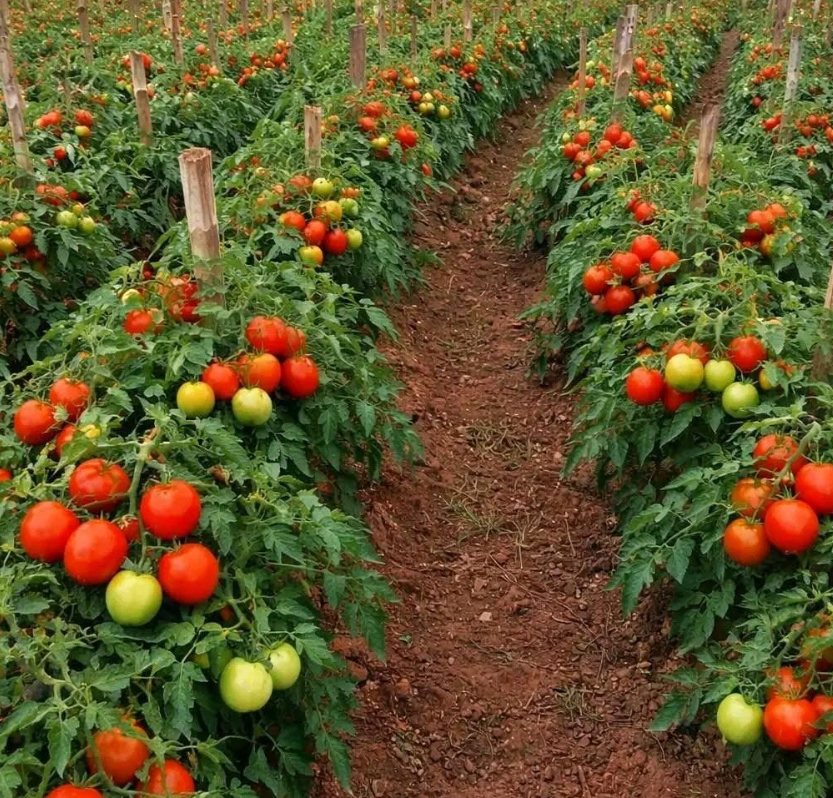
Determinate tomato plants grow to a fixed height, usually between two and four feet, then stop growing altogether. Once they reach that point, they focus all their energy on flowering and fruiting rather than adding new stems.
This is different from indeterminate varieties, which climb and produce fruit continuously until frost kills them. Indeterminate vines can reach six feet or more and keep flowering all summer long.
The University of Georgia Extension notes that determinate plants need minimal staking and little to no pruning, since heavy pruning can actually reduce yield. Removing suckers on a determinate plant often removes future fruiting branches too.
Because the whole crop ripens close together, determinate types are the top pick for canning, freezing, and sauce-making. You get one big harvest instead of a trickle spread across the summer.
There is also a middle category worth knowing about. Some cultivars, like Celebrity, are sometimes labeled semi-determinate, since they set a defined crop but keep producing a bit longer than a true bush type.
ALSO READ: 25 Types of Heirloom Tomatoes (Popular Varieties, Flavor, and Growing Tips)
Let’s now look at different types of determinate tomatoes
Classic Slicers and All-Purpose Varieties
1. Celebrity
Celebrity is often the first name that comes up when extension agents talk determinate tomatoes. It produces medium to large red fruit with an oblate shape and strong resistance to common diseases.
Iowa State University Extension lists Celebrity as a top recommendation for home gardens because it balances yield, flavor, and hardiness well. It is a forgiving choice for first-time growers, and it usually matures in about 70 days from transplant.
The plant itself grows to roughly three feet, a touch taller than most true bush types, which is part of why it is sometimes called semi-determinate. A basic cage is still enough support in most gardens.
Disease resistance is a genuine selling point here. Celebrity carries resistance codes for verticillium wilt, fusarium wilt, and root-knot nematodes, which is a fuller lineup than many older varieties offer.
In the kitchen, Celebrity works well sliced fresh on sandwiches, and it holds together decently in chunky salsas. I would not call it the most flavorful tomato on this list, but it is one of the most consistent.
2. Rutgers
Rutgers has a long history as a reliable, all-purpose tomato bred at Rutgers University in New Jersey. The fruit is medium-sized, deep red, and holds its shape nicely for slicing or canning.
I like recommending Rutgers to gardeners who want a classic tomato taste without chasing newer hybrids. It has earned its reputation over decades, and older gardeners often grew up with this exact variety in a family plot.
Rutgers was originally developed in the 1930s as a partnership between Rutgers University and a major seed company, aiming for a tomato suited to New Jersey’s canning industry. That commercial origin still shows in its firm texture.
The plant typically matures in around 75 days and stays close to three feet tall, making it easy to manage without elaborate staking. Fruit size runs medium, usually six to eight ounces.
Flavor-wise, Rutgers leans balanced rather than sweet, with a classic tomato tang that works equally well raw or cooked down into a simple pasta sauce.
3. Bella Rosa
Bella Rosa is bred for heat tolerance and disease resistance, particularly against fusarium wilt and bacterial spot. The fruit is firm, uniform, and holds up well after picking.
Commercial growers in the Southeast favor this variety because it keeps producing even when summer temperatures climb past 90 degrees, a point when many other slicers stop setting fruit.
Bella Rosa was actually bred with commercial growers in mind first, then trickled down into home garden catalogs once its reliability became well known. It is often grown alongside Amelia in university trial plots.
The fruit runs large for a determinate type, frequently reaching eight to ten ounces, with a deep red color and a fairly thick skin that resists cracking during sudden rain.
Because it tolerates heat stress better than most, Bella Rosa is a strong candidate if you garden somewhere with long, punishing summers and short, mild springs.
4. Amelia
Amelia is a compact, disease-resistant hybrid with excellent resistance to root-knot nematodes and tomato spotted wilt virus. The fruit is large, deep red, and slightly flattened.
This is a smart pick if nematodes have been a recurring problem in your soil, since fewer options offer this specific combination of resistances in a determinate frame.
Amelia typically reaches around 75 to 80 days to maturity, slightly later than Celebrity, but the extra wait usually rewards you with a heavier total yield per plant.
The plant itself stays fairly stocky, rarely exceeding three feet, and the foliage tends to stay healthier through the season than many comparable hybrids.
Home gardeners who have struggled with nematode-damaged roots in prior seasons often name Amelia as the variety that finally broke the cycle of stunted, yellowing plants.
5. Mountain Fresh
Bred for cooler climates, Mountain Fresh sets fruit reliably even when nighttime temperatures dip below 55 degrees. The tomatoes are large, firm, and crack-resistant.
Gardeners in northern regions often turn to this one when heat-loving varieties struggle to perform, especially during unpredictable early-summer cold snaps.
The Mountain series was developed at North Carolina State University, aimed specifically at growers dealing with shorter, cooler seasons in the Appalachian region and similar climates.
Fruit size on Mountain Fresh runs large, often eight ounces or more, with a classic round shape that slices evenly for sandwiches and burgers.
It matures in roughly 74 days, which puts it in the mid-season category, neither the earliest nor the latest option among the slicers covered here.
6. Mountain Spring
A close cousin to Mountain Fresh, this variety ripens slightly earlier and produces smooth, blemish-free fruit. It handles humid conditions better than many similar hybrids.
It is a dependable second option if you want two staggered harvests of similar-tasting tomatoes without switching families entirely.
Maturing in about 70 days, Mountain Spring beats its sibling to the table by roughly four to five days, which matters more than it sounds like in a short growing season.
The plant carries good resistance to verticillium and fusarium wilt, so it holds up reasonably well even in soil that has grown tomatoes for several consecutive years.
Some gardeners plant Mountain Spring and Mountain Fresh side by side deliberately, using the earlier variety for a first wave of sandwiches and the later one for a bigger canning batch.
7. Carolina Gold
Carolina Gold stands out with its golden-orange, oblate fruit and mild, less acidic flavor. The University of Illinois Extension lists it among recommended determinate cultivars for home gardens.
If you find red tomatoes too tangy, this variety is worth trying, particularly in salads where a softer acidity works well.
Beyond flavor, Carolina Gold offers a visual change of pace in the garden and on the plate, since its golden-orange fruit stands out sharply against green foliage and red neighbors.
The plant tends to stay compact, similar in size to Celebrity, and it produces reliably through a single main harvest window rather than trickling out fruit gradually.
Lower acidity also means this variety is gentler on sensitive stomachs, which is worth knowing if a family member avoids red tomatoes for that reason.
ALSO READ: Tomato Plant Average Lifespan: How Long Do Tomato Plants Live?
Paste and Sauce Tomatoes
8. Roma
Roma is probably the most recognized paste tomato in the world. It grows on a compact determinate bush and produces oblong, meaty fruit with very few seeds.
Roma tomatoes have low moisture content, which is exactly what you want for sauces, pastes, and sun-drying, since less water means less time reducing on the stove.
The plant matures in about 75 days and stays compact, usually under three feet, which makes it a practical choice even for gardeners who mainly grow slicers but want a few plants dedicated to sauce.
Yield tends to be heavy for the plant size, often producing dozens of fruit per bush across the harvest window, which is part of why Roma remains a staple in home canning.
I have found Roma forgiving of minor watering lapses compared to juicier slicing tomatoes, since its lower water content makes it somewhat less prone to splitting.
9. San Marzano (Bush Type)
The bush-type San Marzano keeps the deep, sweet flavor of the Italian original while staying compact enough for smaller gardens. It is a favorite among home cooks who make their own marinara.
Compared to the traditional indeterminate San Marzano, the bush form sacrifices a little total yield in exchange for a much smaller footprint.
The original San Marzano hails from volcanic soil near Naples, Italy, and its reputation in sauce circles is hard to overstate. Breeders adapted a determinate version specifically to bring that flavor to smaller gardens.
Fruit shape stays true to type: long, narrow, and pointed at the blossom end, with thick flesh and relatively dry interior walls.
If you only have room for one paste tomato and want something with a story behind it, this variety offers both practicality and a bit of culinary heritage.
10. Health Kick
Health Kick is a Roma-type hybrid bred with elevated lycopene content. It resists disease well and produces heavy clusters of oblong fruit ideal for sauces.
It is a good option for anyone who wants a nutritional edge alongside the usual paste-tomato practicality.
Lycopene is the compound responsible for tomatoes’ red color and much of their antioxidant reputation, and Health Kick was specifically bred to boost that content beyond standard Roma-type levels.
The plant matures in around 74 days and stays compact, similar in habit to standard Roma, so no special growing adjustments are needed if you have grown paste tomatoes before.
Flavor is slightly more intense than a plain Roma, with a touch more sweetness, which some home cooks prefer for fresh salsas rather than long-cooked sauces.
11. Window Box Roma
True to its name, Window Box Roma stays small enough for a windowsill container while still producing classic paste-tomato fruit. It is a smart option for balcony gardeners who still want to can their own sauce.
Even at a fraction of the size of a full Roma plant, it produces a surprisingly usable harvest by midsummer.
The plant typically stays under 20 inches tall, making it one of the smallest true paste tomatoes available, well suited to a single large pot rather than a garden bed.
Because of its size, fruit count per plant is naturally lower than standard Roma, so most apartment gardeners grow two or three plants if sauce-making is the goal.
Its small scale also makes it a practical option for teaching children about growing food, since the whole life cycle fits neatly on a balcony railing.
12. Marglobe
Marglobe is an heirloom-style determinate variety developed decades ago at a USDA research station. It produces smooth, round, red fruit with good disease resistance for its era.
I think of Marglobe as a bridge between old-fashioned heirloom flavor and modern disease tolerance, which explains why seed catalogs still carry it today.
Marglobe was released in the early 1920s as an improvement on the older Globe variety, specifically bred to resist fusarium wilt at a time when that disease devastated many commercial fields.
The fruit matures in about 73 days and grows to a medium size, generally six to seven ounces, with a smooth skin and few noticeable seed cavities.
Because it predates most modern hybrids, Marglobe is sometimes grown by gardeners who want open-pollinated seed they can save and replant year after year.
ALSO READ: Roma Tomatoes Identification: Are Roma Tomatoes Determinate or Indeterminate?
Cherry and Small-Fruited Varieties
13. Patio
Patio is one of the original container tomatoes, bred specifically for small-space growing. The plant stays under two feet tall and produces small, round, red fruit steadily through the season.
It remains a benchmark variety that newer patio-type hybrids are still compared against.
Patio was one of the earliest tomatoes bred deliberately for container life, appearing in seed catalogs decades ago when apartment gardening first started gaining popularity.
The fruit runs small to medium, generally two to three ounces, with a fairly firm texture that holds up well in lunchbox portions or quick pan sauces.
Because the plant rarely exceeds two feet, it pairs comfortably with herbs like basil in the same container, a combination many small-space gardeners lean on every summer.
14. Patio Choice Yellow
This compact hybrid reaches about 18 inches tall and produces bright yellow cherry tomatoes weighing roughly half an ounce each, according to Clemson University’s Home and Garden Information Center.
Its color makes it an easy way to add visual variety to a container garden without adding much footprint.
Yellow cherry tomatoes generally carry a milder, sweeter flavor than red ones, with noticeably less acidity, which makes Patio Choice Yellow popular with children and acid-sensitive eaters alike.
The plant matures quickly, often within 55 to 60 days, so it is one of the faster-producing options among determinate types on this list.
Because of its compact size and steady output, it also works well tucked between larger vegetables in a raised bed, filling space that would otherwise go unused.
15. Cherry Falls
Cherry Falls has a cascading habit, which makes it a top performer in hanging baskets. Clusters of bright red cherry tomatoes spill over the container edge through the whole harvest window.
It pairs well visually with trailing herbs like thyme in a mixed container arrangement.
Because the stems trail downward rather than upright, Cherry Falls needs a hanging basket or elevated container to show off its full habit; planted in the ground, it sprawls untidily.
Fruit sweetness tends to run high, a common trait among cascading cherry types, and the thin skin makes them best eaten fresh rather than cooked down.
A single well-fed hanging basket can produce a steady trickle of ripe cherries for weeks, which makes this variety popular on porches and balconies alike.
16. Micro-Tom
Micro-Tom might be the smallest tomato plant you can grow, often reaching only six to eight inches tall. It is popular in classrooms and tight apartment spaces, and yes, it still produces real, edible fruit.
Researchers also use Micro-Tom in genetics studies precisely because of its short, predictable life cycle.
Its entire life cycle, from seed to ripe fruit, can wrap up in under 90 days, and the plant fits comfortably in a four-inch pot on a sunny windowsill.
Fruit size stays tiny, usually under an inch across, but flavor is surprisingly concentrated given the plant’s small scale.
I would not grow Micro-Tom for a serious harvest, but for a first gardening project with kids, or a bit of greenery on a desk, it is hard to beat.
17. Tumbling Tom
Similar in habit to Cherry Falls, Tumbling Tom trails over the sides of hanging baskets and window boxes. The fruit is sweet, small, and produced in heavy clusters.
It comes in both red and yellow forms, so you can plant one of each for a two-tone display.
The plant stays under 20 inches tall but can spread nearly as wide, so a hanging basket at least 12 inches across gives it enough room to fill out properly.
Maturity comes fast, generally within 60 to 65 days, making it one of the earliest producers among the small-fruited varieties covered here.
Because the fruit hangs in small, tight clusters, harvesting is quick and mess-free, which matters if you are picking straight into a bowl for snacking.
18. Florida Petite
Bred for Florida’s warm, humid climate, Florida Petite is a small-fruited variety recommended by the University of Florida IFAS Extension for home gardens in the Florida Keys.
Its short stature and quick maturity make it well suited to areas with a compressed cool-season planting window.
The plant rarely exceeds 18 inches, which suits the shallow, sandy soils common across the Florida Keys, where deep-rooted varieties often struggle.
Fruit runs small, generally cherry to golf-ball size, with a firm texture that resists the cracking common in more humid, rain-heavy regions.
Because it was developed with local conditions in mind, Florida Petite tends to outperform imported mainland varieties in the specific climate it was bred for.
ALSO READ: Tomato Companion: Can you Plant Tomatoes and Peppers Together?
Disease-Resistant and Regional Hybrids
19. Defiant
True to its name, Defiant was bred for strong resistance to late blight and other common wilts. It is a solid choice for regions where blight tends to wipe out a season’s harvest.
Home gardeners in wet, humid climates often report noticeably fewer losses with this variety compared to older slicing types.
Defiant carries the late blight resistance gene identified as Ph-3, a trait bred into it specifically after major blight outbreaks damaged tomato crops across the Northeast in past growing seasons.
The fruit is medium-sized, red, and round, maturing in around 70 days, with flavor generally described as solid rather than exceptional.
Given how destructive late blight can be within days of infection, many extension programs recommend Defiant as a default choice in regions with a known blight history.
20. Biltmore
Biltmore is a hybrid bred for strong disease resistance and consistent yield. It handles a range of climates reasonably well, which makes it a flexible pick for less experienced growers.
It is often sold alongside Defiant and Celebrity as part of a beginner-friendly disease-resistant lineup.
Biltmore matures in roughly 72 days and produces medium to large fruit, generally seven to eight ounces, with a shape and texture close enough to Celebrity that the two are often confused on seed shelves.
Its resistance package typically covers verticillium wilt, fusarium wilt races one and two, and some nematode pressure, giving it broad protection against common soil-borne problems.
Growers who rotate crops imperfectly, or garden in the same bed year after year, often find Biltmore more forgiving of that inconsistency than less resistant hybrids.
21. Bush Early Girl
A compact spin on the popular Early Girl, this variety stays under three feet tall while still producing early, round, red fruit up to four inches across, per Clemson HGIC guidance.
Its early maturity makes it a favorite for gardeners who want tomatoes on the table before the rest of the garden catches up.
Standard Early Girl is indeterminate and can sprawl for months, so Bush Early Girl exists specifically to bring that same fast, reliable fruit set into a container-friendly frame.
Maturity typically lands around 65 days from transplant, among the quickest on this entire list, which is a real advantage in areas with short frost-free windows.
Flavor stays close to the original Early Girl, described by many gardeners as tangy and well-balanced, a step up from some purely utilitarian bush varieties.
22. Floradade
Also written as Flora-dade, this Florida-bred variety handles heat and humidity well and was historically popular with commercial growers before newer hybrids took over.
It still shows up in seed catalogs today, largely thanks to its dependable performance in sticky summer conditions.
Floradade was developed at a University of Florida research station, aimed squarely at growers dealing with the state’s combination of intense heat, high humidity, and heavy rainfall.
The fruit is medium to large, deep red, and firm enough to ship reasonably well, which explains its earlier popularity with commercial operations before newer disease-resistant hybrids arrived.
Home gardeners in similarly humid climates outside Florida, including parts of the Gulf Coast and lower Southeast, often find it performs just as reliably outside its original home range.
23. Homestead
Homestead is another heat-tolerant Southern classic. It sets fruit reliably even during hot, humid stretches when many other tomatoes stop flowering.
Older gardeners in the Gulf Coast region often name Homestead as one of the few varieties that never let them down.
Bred in the mid-20th century for exactly this kind of heat tolerance, Homestead was one of the first widely grown varieties able to set fruit reliably above 90 degrees, a threshold that stops pollen viability in many other cultivars.
Fruit size runs medium to large, with a classic round shape and a flavor most gardeners describe as robust rather than delicate.
Because it was bred before many modern disease-resistance genes were introduced, Homestead benefits from good crop rotation and mulching to keep soil-borne disease pressure manageable.
24. Red Pride
Red Pride is a later-season determinate variety that matures around 70 days from sowing. It produces ten-ounce, vibrant red fruit on vines that spread only about 18 inches wide, making it a strong container candidate.
Because it matures later than most on this list, it pairs well with early cherry varieties to stretch out your total harvest window.
Red Pride carries solid resistance to wilts, stem canker, and leaf spot, a combination that helps it perform consistently across a range of summer climates, from Canada down to Texas.
Its vines spread only about 18 inches, which keeps the plant tidy in a cage while still producing a respectable number of good-sized fruit per season.
For gardeners who like staggering harvests deliberately, planting Red Pride alongside an early type like Bush Early Girl gives fresh tomatoes from early summer well into fall.
25. New Yorker
New Yorker was bred at Cornell University for short growing seasons. It ripens early, tolerates cooler soil, and produces medium-sized, tangy red fruit that many gardeners in the Northeast still rely on.
For anyone gardening above the 42nd parallel, this is often one of the few slicers that reliably ripens before the first fall frost arrives.
Cornell’s breeding program focused on cold-soil germination and early fruit set, both critical traits for regions where the growing season can run under 100 frost-free days.
The fruit itself is medium-sized, firm, and holds its shape well, which makes New Yorker a practical choice for both fresh eating and light canning.
Because it matures in as little as 63 to 68 days, gardeners at higher elevations or in mountain valleys often rely on it as their one dependable slicing tomato each year.
ALSO READ: Watering Tomatoes: How much Water do Tomato Plants Need?
Why Determinate Tomatoes Matter More Than You Think
Tomatoes are not a small crop in the United States. In 2024, tomatoes ranked among the largest vegetable crops by total production in the country, according to USDA’s National Agricultural Statistics Service.
California alone reported contracted production near 11 million tons of processing tomatoes in 2024, most from determinate, machine-harvestable bush varieties, USDA reports show. That scale exists because determinate plants ripen uniformly, which makes mechanical harvesting possible in the first place.
The same USDA data shows average yields around 50 tons per acre on California processing farms, a figure that has stayed remarkably stable for over a decade. Uniform ripening is a big reason why.
For home gardeners, the appeal is more personal. A determinate plant fits in an 18-inch pot, needs a simple cage instead of a trellis, and rewards you with tomatoes on a predictable schedule.
Fresh-market tomato production carries real economic weight too. USDA’s Agricultural Marketing Resource Center notes that fresh tomatoes are grown commercially in about 20 states, with Florida and California together supplying over two-thirds of total fresh-market acreage.
Determinate vs. Indeterminate: A Quick Comparison
Gardeners new to tomatoes often ask which type they actually have on hand. The differences are easier to spot once you know what to look for.
Plant height is the first clue. Determinate types stop at two to four feet, while indeterminate vines keep climbing past six feet if left unsupported.
Harvest timing differs too. Determinate plants ripen most of their fruit within a few weeks. Indeterminate plants trickle out fruit over two to three months, according to Iowa State University Extension.
Pruning needs are almost opposite. Determinate plants resent heavy pruning, since it removes future fruiting wood. Indeterminate plants often benefit from regular sucker removal to manage size and airflow.
Support requirements also vary. A cage suits most determinate plants fine. Indeterminate vines usually need a tall stake, string trellis, or heavy-duty cage to stay upright through the season.
Knowing which category a seed packet falls into before you plant saves a lot of frustration later, especially if you have already built your garden around a specific trellis system or container size.
ALSO READ: 10 Reasons Tomato Flowers Are Not Setting Fruit (And What to Do)
How to Choose the Right Determinate Variety for You
Start by asking what you actually want to do with the tomatoes. Canning and sauce-making call for Roma-type varieties, while fresh eating favors slicers like Celebrity or Rutgers.
Next, think about space. If you are growing in containers or on a balcony, look for names that include words like “patio,” “bush,” or “tumbling.” These are almost always bred for compact growth.
Consider your season length too. Short-season gardeners benefit from early varieties like New Yorker or Bush Early Girl, while longer, hotter regions can afford to grow later types like Red Pride.
Finally, factor in your climate. Southern gardeners should lean toward heat-tolerant types like Bella Rosa or Floradade, while northern growers often do better with early varieties like New Yorker or Mountain Fresh.
A Few Honest Growing Tips
Determinate tomatoes still need support, even though they stay compact. A simple tomato cage is usually enough; heavy staking is rarely necessary.
Avoid pruning suckers aggressively on determinate types. Unlike indeterminate vines, removing too much growth here can genuinely cut your total yield, since each sucker often carries its own fruiting cluster.
Water consistently once fruit starts to set. Since the whole crop ripens close together, uneven watering during this window is more likely to cause cracking or blossom end rot across many fruits at once, not just a few.
Spacing matters more than gardeners expect. Most determinate varieties do well at 18 to 24 inches apart, close enough to save space, but wide enough to keep air moving and reduce fungal disease pressure.
Frequently Asked Questions
Do determinate tomatoes need a cage or a stake?
A basic cage works for almost every variety on this list. Staking is only necessary for taller semi-determinate types like Celebrity, and even then, a single stake is usually enough.
Can determinate tomatoes be grown in five-gallon buckets?
Yes, most compact varieties, including Patio, Bush Early Girl, and Micro-Tom, perform well in containers as small as five gallons, provided drainage is good and watering stays consistent.
Do determinate tomatoes produce all their fruit at once?
Mostly, yes. They ripen within a concentrated window, which is why they suit canning so well, though a few semi-determinate types will keep producing lightly afterward.
Are determinate tomatoes less flavorful than indeterminate ones?
Not inherently. Flavor depends far more on the specific cultivar and growing conditions than on growth habit. Many gardeners find Rutgers and Celebrity just as flavorful as popular indeterminate heirlooms.
How many determinate tomato plants do I need for canning?
A rough guide from extension services is two to three determinate plants per person if you plan to can sauce for the year. Roma-type varieties tend to give the best yield-to-effort ratio for this purpose.
Can I grow determinate tomatoes from seed indoors?
Yes, and most varieties on this list transplant well. Start seeds indoors roughly six to eight weeks before your last expected frost date, then harden off seedlings gradually before moving them outside.
Final Thoughts
I will admit a soft spot for the sprawling, unruly indeterminate vines that take over a garden by August. But for anyone who wants a manageable plant, a predictable harvest, and a container that fits on a patio, determinate tomatoes are hard to beat.
With 25 varieties to choose from here, ranging from tiny Micro-Tom to hardy Homestead, there is likely a determinate tomato suited to your climate, your space, and your kitchen plans.
Whichever variety you settle on, keep a short note of how it performed this season. Soil, rainfall, and heat vary enough from year to year that even a proven cultivar can behave differently, and your own records will beat any guide, including this one, over time.
References
- Iowa State University Extension and Outreach. Recommended Cultivars and Types of Tomatoes for the Home Garden. Yard and Garden. https://yardandgarden.extension.iastate.edu/how-to/recommended-cultivars-and-types-tomatoes-home-garden
- Iowa State University Extension and Outreach. What Are Some Good Tomato Varieties for the Home Garden? Yard and Garden. https://yardandgarden.extension.iastate.edu/faq/what-are-some-good-tomato-varieties-home-garden
- Utah State University Extension. Varietal Selection: Tomato, Pepper, Eggplant. https://extension.usu.edu/vegetableguide/tomato-pepper-eggplant/varietal-selection
- University of Florida IFAS Extension. Tomato Varieties to Try in the Florida Keys. https://blogs.ifas.ufl.edu/monroeco/?p=97
- Clemson University Home and Garden Information Center. Tomatoes in Containers. https://hgic.clemson.edu/tomatoes-in-containers/
- United States Department of Agriculture, National Agricultural Statistics Service. Vegetables 2024 Summary. https://www.nass.usda.gov/Publications/Todays_Reports/reports/vegean25.pdf
- United States Department of Agriculture, National Agricultural Statistics Service. 2024 California Processing Tomato Report. https://www.nass.usda.gov/Statistics_by_State/California/Publications/Specialty_and_Other_Releases/Tomatoes/2024/202408ptom.pdf

Tim M Dave is a gardening expert with a passion for houseplants, particularly cacti and succulents. With a degree in plant biology from the University of California, Berkeley, he has vast experience in gardening. Over the years, he has cultivated a vast collection of desert plants and learned a great deal about how to grow and care for these unique companions.