15 Best Companion Plants for Yellow Squash (And Those to Avoid)
If you have ever watched a healthy yellow squash plant collapse overnight from a squash bug invasion, you already know why companion planting matters. I have lost a squash bed to this exact problem, and it changed how I plan my garden every single year.
That first ruined harvest taught me something that’s always overlooked: a squash plant is only as healthy as what grows around it. The wrong neighbors compete for water and nutrients. The right ones bring in pollinators, confuse pests, and quietly feed the soil while your squash does the work of producing fruit.
Yellow squash is generous. One healthy plant can produce 6 to 10 pounds of fruit over a season. But it is also a magnet for cucumber beetles, squash bugs, and vine borers, and it depends entirely on insect pollination to set fruit.
The right neighbors in your garden bed can change all of that. This guide walks through 15 companion plants for yellow squash, what each one actually does, and how far apart to plant them.
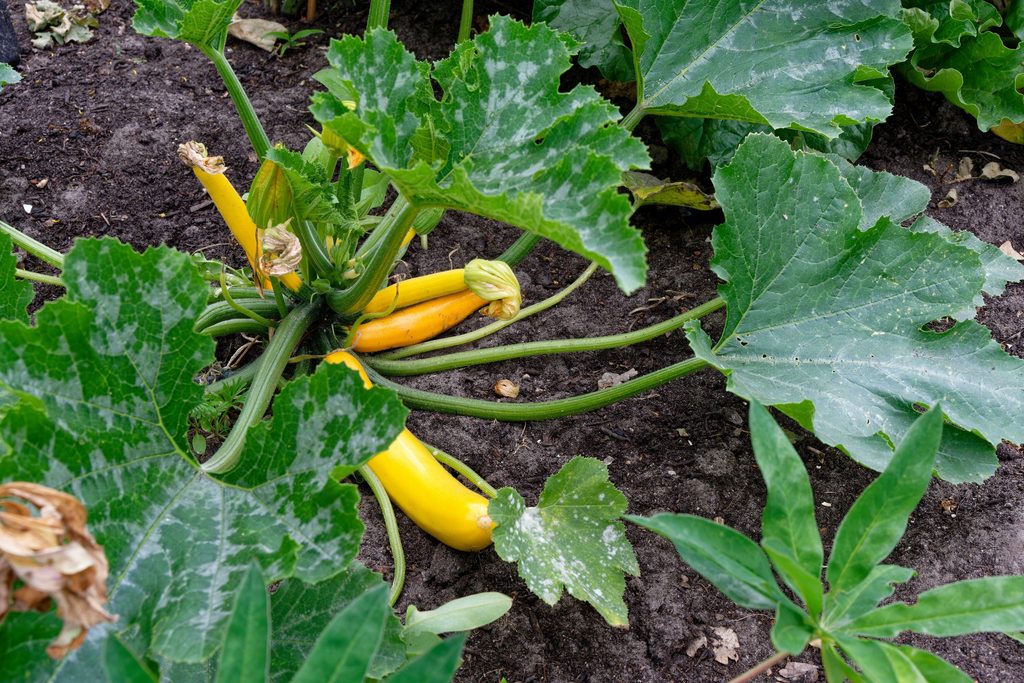
Short on time? Here is the summary.
The strongest companions for yellow squash are nasturtium, marigold, borage, radish, corn, pole beans, dill, oregano, sunflowers, zinnias, calendula, catnip, sweet alyssum, parsley, and mint (grown in a container).
Together, they cover three jobs: pulling in pollinators, luring pests away from your fruit, and feeding the soil. Keep reading for the specifics on each one.
1. Nasturtium
Nasturtium is the classic squash companion, and for good reason.
Its leaves release a peppery scent when damaged, which can help mask the smell squash bugs use to locate host plants. University of Minnesota Extension cites an Iowa study showing that nasturtium reduced damage from squash bugs and cucumber beetles when grown near cucurbits.
It also acts as a trap crop. Aphids strongly prefer nasturtium foliage, so they tend to cluster there instead of on your squash leaves.
Planting tip: Space nasturtium about 18 to 24 inches from your squash plants. Close enough to help, far enough that pest problems on the nasturtium do not spread directly onto your crop.
Bonus: the leaves and flowers are edible, so you get a pretty salad topping out of the deal.
2. Marigold
French marigolds are a garden workhorse, and I plant them around almost everything.
Their roots produce natural compounds that can suppress root-knot nematodes in the soil over time. Clemson HGIC lists marigold among the bedding plants that resist root-knot nematode damage.
Marigolds also attract ladybugs, hoverflies, and other beneficial insects that prey on aphids and beetle larvae.
Planting tip: Ring the outer edge of your squash bed with marigolds. French marigolds work better than African varieties here because they are more compact and more strongly scented.
3. Borage
I consider borage the single best flower for a squash bed, and most gardeners overlook it.
Borage blooms constantly from early summer through frost, producing star-shaped blue flowers that bees find almost impossible to resist. More bee traffic means better fruit set and fewer small, misshapen squash.
It also self-seeds readily, so once you plant it, it tends to come back on its own.
Planting tip: One or two borage plants at the corner of a squash bed is usually enough to draw steady pollinator traffic to the whole area.
4. Radish
Radishes are fast, cheap, and genuinely useful as a trap crop.
Flea beetles and some cucumber beetles are drawn to radish foliage, which can pull pressure away from young squash seedlings when the plants are most vulnerable.
Radishes also mature in as little as 25 to 30 days, so they are harvested and gone long before squash vines need the space.
Planting tip: Scatter radish seed directly around squash seedlings at planting time. Harvest them promptly once mature so they do not compete for water.
5. Corn
Corn is one-third of the legendary Three Sisters planting system, developed by Indigenous farmers across North America centuries ago.
Corn provides a physical trellis for climbing beans and creates dappled afternoon shade that can ease heat stress on squash during peak summer.
The USDA National Agricultural Library describes how this trio worked together traditionally: corn supported beans, beans fed the soil with nitrogen, and squash provided ground cover that suppressed weeds and locked in soil moisture.
Planting tip: Plant corn first. Once it reaches 6 inches tall, add beans, then squash a week or two later around the outer ring.
6. Pole Beans
Beans complete the nitrogen side of the Three Sisters equation.
As legumes, beans host bacteria on their roots that pull nitrogen from the air and convert it into a form other plants can use. West Virginia University Extension confirms that this fixed nitrogen becomes available to corn and squash growing nearby.
Squash is a heavy feeder, so this steady nitrogen supply genuinely helps.
Planting tip: Choose pole beans, not bush beans, so they climb the corn instead of sprawling into your squash vines.
7. Dill
Dill’s flat, umbrella-shaped flower clusters are a beneficial-insect magnet.
They attract parasitic wasps, hoverflies, and tachinid flies, several of which prey on squash bug eggs and aphids. Clemson HGIC recommends dill as one of several compact herbs that fit easily around the edges of vegetable beds without crowding them.
Planting tip: Let a few dill plants bolt and flower on purpose. The flowers are where the pest-control benefit actually happens, not the leaves.
8. Oregano
Oregano works differently than most entries on this list. It is a low, spreading ground cover.
Planted at the base of squash, it shades the soil, helps retain moisture, and its strong scent can add another layer of confusion for pests hunting by smell.
It is also a perennial, so once established, it comes back reliably every year with almost no maintenance.
Planting tip: Keep oregano trimmed low so it does not compete for light with young squash seedlings.
9. Sunflowers
Sunflowers do double duty in a squash bed.
Their large, pollen-rich blooms pull in bees and other pollinators, and their height can act as a light windbreak for sprawling squash vines. Some gardeners also use them as a sacrificial trap for aphids, which cluster heavily on sunflower stalks.
Planting tip: Plant sunflowers on the north side of your squash bed so their height does not shade the squash during peak growing hours.
10. Zinnias
Zinnias are one of the easiest, longest-blooming flowers you can add to a vegetable garden.
Clemson HGIC lists zinnia among the bedding plants that show resistance to root-knot nematode damage, alongside marigold and salvia.⁸
Their bright, flat blooms are also excellent at attracting butterflies and native bees throughout the entire squash growing season.
Planting tip: Mix zinnia colors along a border row for continuous bloom from early summer through the first frost.
11. Calendula
Calendula, also called pot marigold, is often confused with true marigold but belongs to a different genus entirely.
It shares similar pest-repelling reputation and produces cheerful orange and yellow blooms that draw in beneficial insects. Home gardening guides commonly note that calendula can help repel certain nematodes in the surrounding soil.
It is also edible and frequently used in skin-care preparations, so it earns its space even beyond the vegetable patch.
Planting tip: Direct-sow calendula seed along pathways near your squash. It tolerates light shade better than most companion flowers on this list.
12. Catnip
Catnip has a mixed reputation, and I want to be honest about it rather than oversell it.
Many garden blogs claim catnip repels squash bugs outright. University extension entomologists are more cautious. New Mexico State University Extension notes that claims about catnip, mint, and similar aromatic herbs repelling squash bugs remain largely anecdotal rather than proven.
That said, catnip flowers do attract beneficial pollinators, and it is a low-maintenance perennial. Just do not plant it expecting a guaranteed pest shield.
Planting tip: Grow catnip in a container near the bed. It spreads aggressively in open soil and can take over quickly.
13. Sweet Alyssum
Sweet alyssum is a small, low-growing flower that punches well above its size.
Its tiny blooms are especially attractive to hoverflies and parasitic wasps, which are among the most effective natural predators of aphids.
A Florida field study cited by university extension researchers found that planting alyssum near squash increased populations of natural aphid predators and had a modest positive effect on yield.
Planting tip: Use sweet alyssum as a living border around the entire squash bed. It stays low enough to never compete for light.
14. Parsley
Parsley is another quiet performer in the squash companion lineup.
Left to flower in its second stage, it attracts the same beneficial wasps and hoverflies that dill and sweet alyssum bring in. It also draws swallowtail butterflies, which are harmless to squash and pleasant to have around.
Planting tip: Tuck parsley into unused corners of the bed. It tolerates partial shade from taller squash leaves better than most herbs.
15. Mint (In a Container)
Mint belongs on this list with one firm condition: grow it in a pot, never in open soil.
Its strong scent can add to the aromatic confusion that makes it harder for some pests to locate squash by smell, and its flowers attract bees when allowed to bloom. But mint spreads through underground runners and will overrun a garden bed within a single season if left unchecked.
Planting tip: Sink a container of mint into the soil near your squash bed, or simply set potted mint alongside it. This gives you the benefit without the invasion.
Plants to Avoid Near Yellow Squash
A few neighbors work against your squash instead of for it.
Potatoes compete heavily for nutrients and can increase disease pressure when grown too close to squash.
Fennel releases root compounds that can inhibit the growth of many nearby vegetables, squash included.
Other cucurbits — cucumbers, melons, and additional squash varieties — share the same pests and diseases. Crowding them together concentrates squash bugs, cucumber beetles, and powdery mildew instead of spreading the risk out.
Give each cucurbit plant proper spacing, generally 3 to 4 feet, regardless of what else surrounds it.
Why Companion Planting Matters for Yellow Squash
Yellow squash flowers are unisexual. That means a bee has to physically carry pollen from a male flower to a female flower for fruit to form at all.
According to the USDA Agricultural Research Service, squash and pumpkin are collectively a half-billion-dollar crop in the United States, and every bit of that value depends on insect pollinators such as honeybees and native squash bees.
Without enough pollinator visits, you get small, curled, or aborted fruit. Utah State University Extension notes that inadequate pollen transfer in vine crops like squash directly causes small or misshapen fruit.
So companion planting for yellow squash is not just about pest control. It is also about filling your garden with flowers that keep bees coming back all season long.
There is a pest side to this too. Squash bugs (Anasa tristis) are one of the most searched garden pests in the country, and a single egg mass can hatch into dozens of nymphs within weeks. No single plant repels them completely, and I would rather tell you that up front than promise something companion planting cannot deliver.
What the right neighbors can do is stack the odds in your favor. Trap crops pull pests toward a sacrificial plant instead of your squash. Flowering herbs draw in the predatory insects that hunt pest eggs and larvae.
Nitrogen-fixing plants keep the soil strong enough that your squash can shrug off minor damage instead of collapsing from it.
ALSO READ: 10 Effective Squash Vine Borer Prevention Strategies That Actually Works
How to Design a Companion Planting Layout for Yellow Squash
You do not need a complicated blueprint to get real results. A simple layout works better than an overcrowded one.
Start with squash at the center of the bed, since it needs the most room to sprawl. Ring the outer edge with marigold, zinnia, or calendula for steady pest deterrence and pollinator support.
Add borage or sunflowers at one corner to anchor pollinator traffic. Tuck dill, parsley, or sweet alyssum along the edges where their flowers can attract beneficial predator insects without shading the squash.
Finally, use radish or nasturtium as fast, expendable trap crops near young seedlings, when squash is at its most vulnerable stage.
This layered approach, mixing trap crops, pollinator plants, and beneficial-insect habitat, consistently outperforms relying on a single companion species.
Quick-Reference Companion Chart
| Companion Plant | Main Benefit | Ideal Distance from Squash |
| Nasturtium | Trap crop, pest masking | 18–24 inches |
| Marigold | Nematode suppression, beneficial insects | Bed border |
| Borage | Pollinator magnet | 1–2 plants per bed |
| Radish | Flea beetle trap crop | Interplanted at seeding |
| Corn | Shade, structure | Three Sisters layout |
| Pole beans | Nitrogen fixation | Three Sisters layout |
| Dill | Beneficial predator attraction | Bed edge |
| Oregano | Living mulch | Base of plant |
| Sunflower | Pollinator draw, windbreak | North side of bed |
| Zinnia | Nematode-resistant, pollinator draw | Border row |
| Calendula | Beneficial insects | Pathway edges |
| Catnip | Pollinator support (mild) | Container nearby |
| Sweet alyssum | Aphid predator habitat | Living border |
| Parsley | Beneficial wasp attraction | Bed corners |
| Mint | Aromatic confusion | Contained pot |
Frequently Asked Questions
What is the best flower to plant with yellow squash? Borage and nasturtium are generally the top picks. Borage keeps pollinators returning all season, while nasturtium doubles as a trap crop for aphids and squash bugs.
Can I plant yellow squash with tomatoes? You can, but it is not ideal. Both are heavy feeders competing for the same nutrients and water, so results are often better with more space or richer soil if you combine them.
Does marigold really repel squash bugs? Research findings are mixed on direct repellence, but marigold reliably helps with root-knot nematodes and draws in beneficial predator insects, which is valuable on its own.
How far apart should companion plants be from squash? Most flowers and herbs work best 18 to 24 inches away. This is close enough for pest-masking benefits but far enough to prevent pest problems from spreading directly onto the squash.
Is it okay to plant squash near corn and beans? Yes. This is the traditional Three Sisters method, and it remains one of the most well-documented companion planting systems for squash today.
How many companion plants should I actually use? Two or three working together is usually enough. Pick one pollinator plant, one trap crop, and one beneficial-insect attractor rather than trying to fit all fifteen into a single bed.
Do companion plants replace the need to check for pests? No, and this is worth repeating. Even the best companion layout works alongside regular scouting. Checking leaf undersides for squash bug eggs once a week remains the single most effective habit a home gardener can build.
Final Thoughts
Companion planting will not make squash bugs disappear overnight, and I would rather tell you that honestly than oversell it.
What it does deliver is steadier pollination, fewer concentrated pest outbreaks, and healthier soil over the course of a season. Combine two or three of these companions rather than relying on just one, and check your plants regularly regardless of what is growing nearby.
Start with nasturtium, marigold, and borage if you are planting a squash bed for the first time. From there, build outward based on what your garden actually needs.
Every garden is a little different. Soil, climate, and the pest pressure already living in your yard all shape which companions perform best for you. Treat this list as a starting map, not a rigid formula, and adjust it season by season based on what you actually see happening in the bed.
If one companion does not seem to be pulling its weight after a season, swap it out rather than forcing it. Gardening rewards patience more than perfection, and a squash bed built around a few reliable neighbors will almost always outperform one crammed with every plant on this list at once.
References
- USDA Agricultural Research Service — Squash Pollination https://www.ars.usda.gov/pacific-west-area/logan-ut/pollinating-insect-biology-management-systematics-research/docs/squash-pollination/
- Utah State University Extension — Pollination https://extension.usu.edu/vegetableguide/production/pollination
- University of Minnesota Extension — Companion Planting in Home Gardens https://extension.umn.edu/garden-and-home/yard-and-garden/gardening-in-minnesota/companion-planting-in-home-gardens
- Clemson Cooperative Extension, Home & Garden Information Center — Root-Knot Nematodes in the Vegetable Garden https://hgic.clemson.edu/factsheet/root-knot-nematodes-in-the-vegetable-garden/
- USDA National Agricultural Library — The Three Sisters of Indigenous American Agriculture https://www.nal.usda.gov/collections/stories/three-sisters
- West Virginia University Extension — Three Sisters Gardening Method https://extension.wvu.edu/lawn-gardening-pests/news/2022/08/01/three-sisters-gardening-method
- Clemson Cooperative Extension, Home & Garden Information Center — Plant Partners: 5 Benefits of Companion Planting https://hgic.clemson.edu/plant-partners-5-benefits-of-companion-planting/

Tim M Dave is a gardening expert with a passion for houseplants, particularly cacti and succulents. With a degree in plant biology from the University of California, Berkeley, he has vast experience in gardening. Over the years, he has cultivated a vast collection of desert plants and learned a great deal about how to grow and care for these unique companions.