30 Types of Herbs (With Growing Details)
There’s something almost meditative about brushing past a rosemary bush and catching that first waft of pine and citrus. I’ve never quite gotten over how much flavor and fragrance a few small leaves can pack in.
Herbs are some of the most rewarding plants a gardener can grow. Most need little space, minimal fuss, and reward you generously all season long. This guide covers 30 types of herbs, spanning culinary staples, fragrant ornamentals, and a few lesser-known plants worth adding to your garden.
Each entry below includes flavor notes, growing habits, and practical tips, drawn from university extension research. Whether you’re planting your first container herb garden or expanding a mature backyard plot, there’s something here for you.
What Actually Counts as an Herb?
The definitions vary more than you’d expect. In the strict botanical sense, an herb is a herbaceous plant without a woody stem that dies back to the ground each winter, according to University of Illinois Extension.
More broadly, though, herbs are simply defined as any plant historically used for culinary, medicinal, or fragrance purposes. Under that wider definition, hundreds of plants technically qualify.
Herbs also split into two useful categories: robust herbs like rosemary, thyme, and sage stand up well to cooking, while fine herbs like basil, dill, and parsley are milder and best added near the end, per University of Illinois Extension.
With that framework in place, here are 30 types of herbs worth knowing.
1. Basil
Basil is likely the most beloved culinary herb in home gardens, and for good reason. Sweet basil (Ocimum basilicum) grows 18 to 24 inches tall and produces fresh, pesto-worthy leaves all summer long, according to North Carolina Cooperative Extension.
There’s real variety within this one herb. Cinnamon basil carries a spiced note, Thai basil (Siam Queen) leans slightly toward licorice, and Purple Ruffles brings vivid color while tasting much like standard sweet basil.
Pinch the growing tips regularly. This keeps the plant bushy and compact, and delays flowering, which extends how long you get quality leaves before the flavor turns bitter.
2. Rosemary
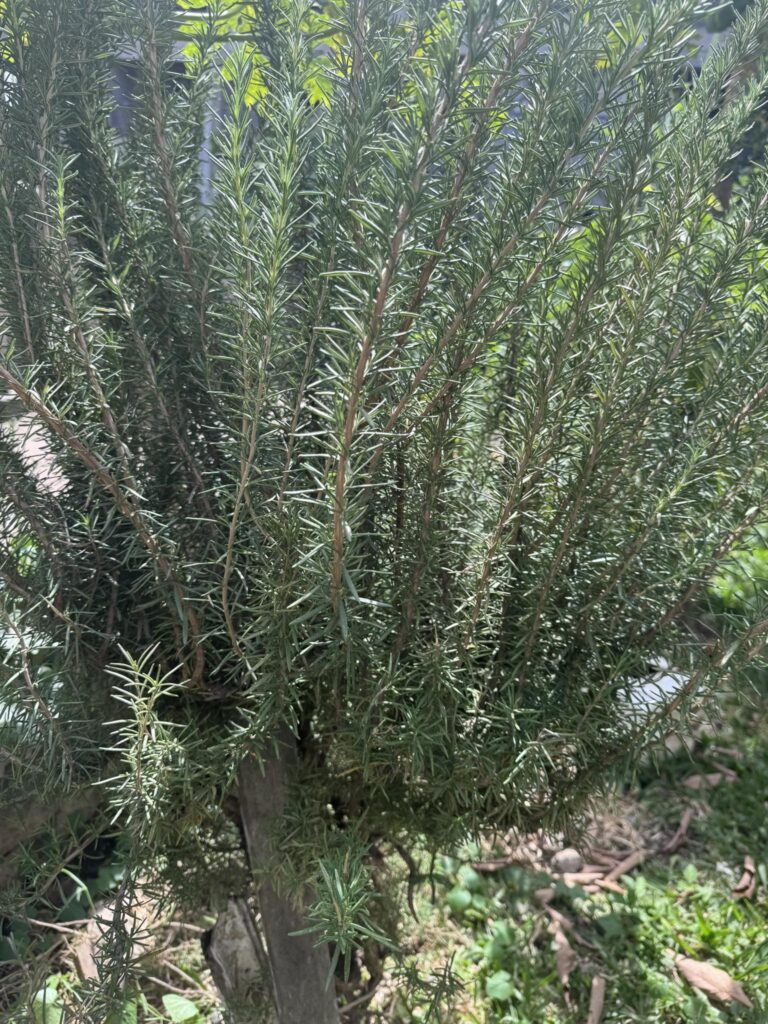
Rosemary is a woody, evergreen perennial that rewards patience. Once established, a single plant will produce fragrant, needle-like leaves for years, according to University of Florida IFAS Extension.
This herb belongs to the “robust” category, standing up well to roasting, braising, and grilling, per University of Illinois Extension. It pairs naturally with potatoes, lamb, and roasted vegetables.
Rosemary prefers dry, sunny conditions and doesn’t appreciate soggy soil. Pruning it back in early spring encourages the tender new growth that’s best for harvesting, according to Oklahoma State University Extension.
3. Thyme
Thyme is a low-growing, often evergreen herb with dozens of species available, ranging from nearly flat groundcovers to varieties just over a foot tall, according to Clemson Cooperative Extension.
Flavor and form vary considerably across thyme species. Some are grown mainly for their ornamental habit and flowers rather than culinary use, while others are prized specifically for cooking.
It needs full sun and very well-drained soil that stays on the dry side. Taller, smooth-leaved varieties generally tolerate heat and humidity better than the low-growing, fuzzy types.
4. Oregano
Oregano is a hardy perennial that comes in two broad types: Mexican and European, each with a distinct flavor profile suited to different cuisines, according to University of Florida IFAS Extension.
It’s a robust herb, commonly used in Italian and Mexican dishes and tomato-based sauces, standing up well to longer cooking times without losing its punch.
Both types can be propagated easily from cuttings, and oregano generally tolerates dry conditions well once it’s established in the garden.
5. Sage
Sage is a woody perennial herb with soft, silvery-green leaves and a distinctly earthy, slightly peppery flavor. Like rosemary, it belongs to the mint family and thrives in similar dry, sunny conditions.
It benefits from an early spring pruning, according to Oklahoma State University Extension, which encourages tender new growth better suited for cooking than older, tougher leaves.
Sage is a classic pairing for poultry, stuffing, and rich, fatty dishes, where its assertive flavor cuts through and balances heavier ingredients.
6. Mint
Mint is a fast, aggressive spreader, and nearly every extension guide agrees on one point: grow it in a container. Left unchecked, mint will take over a garden bed within a season or two.
Unlike most herbs, mint tolerates as little as two to three hours of sun and doesn’t mind wet soil, according to North Carolina Cooperative Extension, making it more forgiving than sun-loving Mediterranean herbs.
Its cooling, familiar flavor pairs beautifully with carrots, fruit salads, and tea. Regular trimming keeps the plant at a manageable 8 to 10 inches tall.
7. Parsley
Parsley is a biennial herb typically grown as an annual, valued both for fresh use and as a classic garnish. It’s considered a “fine” herb, best added at the very end of cooking or sprinkled on raw.
The plant tolerates light shade better than many other herbs, according to University of Maryland Extension, making it a flexible choice for gardens without full sun all day.
Flat-leaf and curly-leaf varieties both exist, with flat-leaf generally considered to have a stronger, more genuine parsley flavor preferred by many cooks.
8. Cilantro (Coriander)
Cilantro is the same plant as coriander; the leaves are called cilantro while the seeds are called coriander. It belongs to the carrot family, alongside dill, fennel, and parsley, according to University of Minnesota Extension.
This herb has a notably upright, leggy growth habit and needs deeper, looser soil with more consistent moisture than Mediterranean herbs like rosemary or thyme.
Cilantro bolts quickly in hot weather, meaning it flowers and sets seed fast once temperatures rise, so many gardeners succession-plant it every few weeks for a steady fresh supply.
9. Dill
Dill is another member of the carrot family, grown for both its feathery leaves and its seeds. Like cilantro, it doesn’t transplant well and should be sown directly into the garden.
Dill leaves belong firmly in the “fine herb” category, best added in the last minute or two of cooking or sprinkled fresh over finished dishes, according to North Carolina Cooperative Extension.
It’s a classic pairing for fish, pickles, and potato salads, and the plant’s tall, airy form also adds a soft, feathery texture to the garden.
10. Chives
Chives are a grass-like herb with a mild onion flavor, typically growing 8 to 10 inches tall. They belong to the Alliaceae family, distinct from most other common culinary herbs.
This is one of the easiest herbs to grow, tolerating a range of conditions and returning reliably as a perennial year after year with very little maintenance required.
Chives work well snipped fresh over eggs, potatoes, and soups, and their purple flowers are edible too, adding a mild onion note and a pop of color to salads.
11. Tarragon
Tarragon has a distinctive anise-like flavor that sets it apart from nearly every other herb on this list. Botanically, it belongs to the aster family rather than the mint or carrot families most herbs fall into.
It’s one of the few herbs best propagated by division rather than seed, according to University of Maryland Extension, since named French tarragon varieties rarely produce viable seed.
This herb is a classic component of French cooking, particularly in béarnaise sauce, and pairs especially well with chicken, eggs, and fish.
12. Marjoram
Marjoram is closely related to oregano but carries a sweeter, more delicate flavor. It belongs to the same mint family as basil, rosemary, and thyme.
Its fine seeds need special handling at planting time; mixing them with sand before sowing helps them spread more evenly across the soil surface, according to University of Maryland Extension.
Marjoram is often used interchangeably with oregano in cooking, though its milder flavor makes it a gentler choice for dishes where you don’t want oregano’s stronger bite.
13. Bay Laurel
Bay laurel is a slow-growing, evergreen shrub or small tree, and its leaves are a staple in soups, stews, and braises. Unlike most herbs on this list, it can eventually grow into a substantial woody plant.
The leaves are typically added whole during cooking and removed before serving, since they remain tough and unpleasant to eat even after hours of simmering.
In cooler climates, bay laurel is often grown in containers so it can be brought indoors before frost, since it isn’t reliably cold-hardy outside warmer zones.
14. Lavender
Lavender is prized as much for its fragrance and striking purple blooms as for culinary use. It belongs to the mint family and shares the same preference for dry, sunny, well-drained sites as rosemary and thyme.
This herb is best propagated from cuttings, according to University of Maryland Extension, rather than division, which sets it apart from herbs like chives or tarragon.
Beyond cooking, lavender is widely used in cosmetics, perfumes, and potpourri, reflecting how herbs often serve purposes well beyond the kitchen.
15. Fennel
Fennel is a tall, licorice-flavored herb from the carrot family, grown for its feathery foliage, aromatic seeds, and sometimes its edible bulb, depending on the variety planted.
Like its carrot-family relatives dill and cilantro, fennel prefers moist, deep, loose soil and doesn’t transplant particularly well once its taproot has developed.
The seeds are commonly used in Italian sausage and baking, while the fresh fronds add a light anise note to salads and fish dishes.
16. Chervil
Chervil is a delicate, mild herb sometimes described as a subtler cousin of parsley, with a faint anise undertone. It’s a classic component of the French “fines herbes” blend.
This herb tolerates light shade, according to University of Maryland Extension, alongside mint, chives, and cilantro, making it a good option for gardens without consistent full sun.
Chervil is best used fresh and added late in cooking, since its delicate flavor fades quickly when exposed to prolonged heat.
17. Lovage
Lovage is a tall, robust perennial from the carrot family with a flavor often compared to a stronger, more intense celery. It’s less commonly grown than its cousins but rewards gardeners with serious height and presence in the garden.
The leaves, stems, and seeds are all usable in the kitchen, lending a deep, savory note to soups and stocks that celery alone can’t quite replicate.
Because the plant can grow quite tall and wide, lovage needs more space than most herbs on this list, making it better suited to garden beds than small containers.
18. Lemongrass
Lemongrass is a tall, grass-like tropical herb with a bright, citrusy aroma and flavor, central to much of Southeast Asian cooking. It grows in dense clumps and can reach several feet tall in warm climates.
In cooler regions, lemongrass is typically grown as an annual or brought indoors over winter, since it isn’t cold-hardy outside consistently warm, frost-free zones.
The lower, tender stalks are the usable part, typically bruised or minced to release their fragrant oils before being added to soups, curries, and teas.
19. Lemon Balm
Lemon balm is a member of the mint family with a bright, citrusy fragrance and flavor, despite bearing no relation to actual lemons. Like mint, it spreads aggressively and is best confined to a container.
It’s commonly used fresh in teas and cold drinks, where its light lemon note provides a refreshing, calming quality that’s especially popular in herbal tea blends.
Lemon balm tolerates a range of light conditions similarly to mint, and like its relative, benefits from frequent trimming to keep growth in check.
20. Catnip
Catnip is another member of the aromatic mint family, best known for its effect on cats rather than culinary use, though humans have historically brewed it as a calming tea.
The plant grows vigorously and produces small, fragrant leaves along with delicate white or lavender flowers that attract pollinators throughout the growing season.
Gardeners with cats should expect some enthusiastic attention paid to this particular plant, since the response many cats have to catnip is well documented and hard to miss.
21. Borage
Borage is a bristly annual herb with striking, star-shaped blue flowers and a flavor often compared to cucumber. It belongs to the Boraginaceae family, distinct from most other common culinary herbs.
Both the leaves and flowers are edible, with the flowers frequently used to garnish salads and drinks thanks to their vivid color and mild, fresh flavor.
Borage is also a strong pollinator attractor, drawing bees reliably throughout the season, which makes it a useful companion plant near vegetables that need pollination.
22. Sorrel
Sorrel is a tangy, lemony-flavored perennial herb from the Polygonaceae family, valued for its bright, sour leaves that add a distinctive acidity to soups and sauces.
It grows relatively easily in a range of conditions and returns reliably each year once established, requiring comparatively little maintenance beyond regular harvesting.
The sharp, citrus-like flavor comes from oxalic acid naturally present in the leaves, the same compound responsible for the tartness found in rhubarb.
23. Summer Savory
Summer savory is a peppery, slightly spicy annual herb often described as a bridge between thyme and mint in flavor. It’s a traditional pairing for beans, lentils, and other legumes.
As an annual, it needs to be replanted each year, unlike its close relative winter savory, which returns as a hardy perennial.
The plant tends to be more tender and delicately flavored than winter savory, making it a slightly gentler choice for dishes where you don’t want an overpowering herbal note.
24. Winter Savory
Winter savory is a woody, evergreen perennial relative of summer savory, sharing a similar peppery flavor but in a more robust, intensely flavored form suited to heartier cooking.
This herb benefits from the same early spring pruning recommended for rosemary and sage, according to Oklahoma State University Extension, encouraging fresh, tender new growth.
Its perennial nature and hardiness make it a lower-maintenance option than summer savory for gardeners who don’t want to replant every year.
25. Stevia
Stevia is a tender perennial grown specifically for its intensely sweet leaves, used as a natural, calorie-free sugar substitute in teas, drinks, and some baked goods.
Unlike most herbs on this list, stevia’s appeal lies almost entirely in sweetness rather than aromatic or savory flavor, setting it apart from the mint- and carrot-family herbs that dominate most gardens.
It requires warm, frost-free conditions to thrive outdoors and is often grown in containers so it can be moved indoors before cold weather arrives.
26. Chamomile
Chamomile is a low-growing, daisy-flowered herb best known for its calming tea, made from the small, apple-scented flower heads rather than the leaves.
Two main types exist: German chamomile, an annual, and Roman chamomile, a low-growing perennial often used as a fragrant, walkable groundcover.
Both types attract pollinators readily and add a soft, cottage-garden feel wherever they’re planted, alongside their well-known use in soothing herbal tea blends.
27. Echinacea
Echinacea, also called coneflower, is a hardy perennial herb widely recognized for its purple, daisy-like blooms and long history of use in traditional herbal preparations.
Its root and above-ground parts have been studied extensively for their properties, and it remains one of the most researched medicinal herbs in Western herbal traditions.
Beyond any potential health use, echinacea is a genuinely striking garden perennial, drawing bees and butterflies while tolerating heat and drought better than many showier flowering plants.
28. Feverfew
Feverfew is a bushy perennial herb with small, daisy-like white flowers and a notably bitter, aromatic scent when the leaves are crushed. It’s related to chrysanthemums and chamomile.
Historically, feverfew has been used in traditional herbal preparations, and the plant remains popular today largely for its abundant, long-lasting blooms as much as any other use.
It self-seeds readily in favorable conditions, so gardeners who want to keep it contained should deadhead spent flowers before they have a chance to scatter seed.
29. Anise
Anise is an annual herb from the carrot family, grown primarily for its licorice-flavored seeds, which are widely used in baking, candy, and spirits like ouzo and sambuca.
Like its relatives dill and fennel, anise doesn’t transplant well and should be sown directly where it will grow, preferring the same loose, moist soil favored by other carrot-family herbs.
The feathery foliage adds a soft texture to the garden, while the seeds, harvested once the flower heads dry, provide the herb’s most commonly used culinary component.
30. Holy Basil (Tulsi)
Holy basil, or tulsi, is a distinct relative of common sweet basil, with a spicier flavor carrying notes of mint, clove, and classic basil, according to North Carolina Cooperative Extension.
Its flowers are shorter-lived than sweet basil’s, and the plant holds particular cultural and traditional significance in South Asian herbal practices, most often brewed as a fragrant tea.
This is a good pick for gardeners wanting basil’s family resemblance with a different flavor profile. It grows under similar conditions to sweet basil but brings its own distinct character to the table.
Choosing Herbs for Your Garden Style
If you’re short on space, basil, chives, sage, and thyme are among the best herbs for container growing, according to Clemson Cooperative Extension, and adapt well to windowsills or patios.
For a low-maintenance perennial bed, rosemary, sage, thyme, and winter savory reward you for years once established, needing only an early spring pruning to stay productive.
If pollinators are a priority, borage, chamomile, and echinacea reliably draw bees and butterflies while still offering genuine culinary or traditional herbal use.
A Few Growing Basics That Apply Broadly
Drainage matters more than almost anything else. Most herbs, especially Mediterranean types like basil, thyme, rosemary, and lavender, will not tolerate consistently wet soil, according to University of Maryland Extension.
Timing your harvest matters too. Many herbs develop their best flavor just before flowering, and mid-morning is the ideal picking window, since oil content peaks after the dew dries but before the day’s heat sets in, according to University of Minnesota Extension.
Finally, remember that aggressive spreaders like mint, lemon balm, and catnip genuinely need containment. Planting them in pots, even when placed directly in garden soil, prevents them from crowding out neighboring plants.
Frequently Asked Questions
What is the difference between an annual and perennial herb? Annual herbs like basil, dill, and cilantro complete their life cycle in one season, while perennial herbs like rosemary, thyme, and sage return year after year once established.
When is the best time to harvest herbs for maximum flavor? Mid-morning, after the dew has dried but before the heat of the day, is generally best, since oil content in the leaves is highest then, according to University of Minnesota Extension.
Which herbs tolerate shade? Chervil, mint, chives, and cilantro can grow in light shade, according to University of Maryland Extension, unlike most Mediterranean herbs that need full sun.
Do all herbs need well-drained soil? Most do, and drainage is considered the most important single factor in successful herb growing, per University of Maryland Extension. Mint is a notable exception, tolerating wetter soil than most.
References
- University of New Hampshire Extension. The Herb Garden. Chapter 16. https://extension.unh.edu/sites/default/files/migrated_unmanaged_files/Resource003548_Rep5083.pdf
- University of Minnesota Extension. Growing Herbs in Home Gardens. https://extension.umn.edu/vegetables/growing-herbs
- Oklahoma State University Extension. Culinary Herbs for Oklahoma Gardens: Culture, Use and Preservation. https://extension.okstate.edu/fact-sheets/culinary-herbs-for-oklahoma-gardens
- University of Maryland Extension. Care of Herbs and Starting Herbs from Seed. https://extension.umd.edu/resource/care-herbs-and-starting-herbs-seed
- University of Florida IFAS Extension. Herbs. UF/IFAS Gardening Solutions. https://gardeningsolutions.ifas.ufl.edu/plants/edibles/vegetables/herbs/
- Clemson Cooperative Extension. Herbs. Home & Garden Information Center. https://hgic.clemson.edu/factsheet/herbs/
- University of Illinois Extension. Herbs. https://extension.illinois.edu/herbs

Tim M Dave is a gardening expert with a passion for houseplants, particularly cacti and succulents. With a degree in plant biology from the University of California, Berkeley, he has vast experience in gardening. Over the years, he has cultivated a vast collection of desert plants and learned a great deal about how to grow and care for these unique companions.