15 Grasses That Look Like Wheat (With Pictures)
Wheat is one of the most recognizable cereal crops in the world. Its golden seed heads and tall, upright stalks are a familiar sight across farmland everywhere.
But wheat belongs to a massive plant family, and many wild grasses share its general shape. Seed heads, stem height, and color can all overlap enough to confuse a casual observer.
I have walked past a field edge and assumed I was looking at stray wheat, only to realize later it was a completely different grass species growing wild along the border.
This guide covers 15 grasses that look like wheat. Each one has distinct traits that separate it once you know where to look.
Grasses That Resemble Wheat
Wheat belongs to the Poaceae family, commonly known as the grass family. This family is enormous, containing over 12,000 species spread across nearly every climate on Earth.
Wheat itself is part of the genus Triticum, which shares close evolutionary ties with barley, rye, and many wild grasses. This shared ancestry explains the frequent visual overlap.
Because cereal grains were domesticated from wild grasses thousands of years ago, several undomesticated relatives still resemble their cultivated cousins closely, sometimes strikingly so.
Let’s get into the details.
1. Barley (Hordeum vulgare)
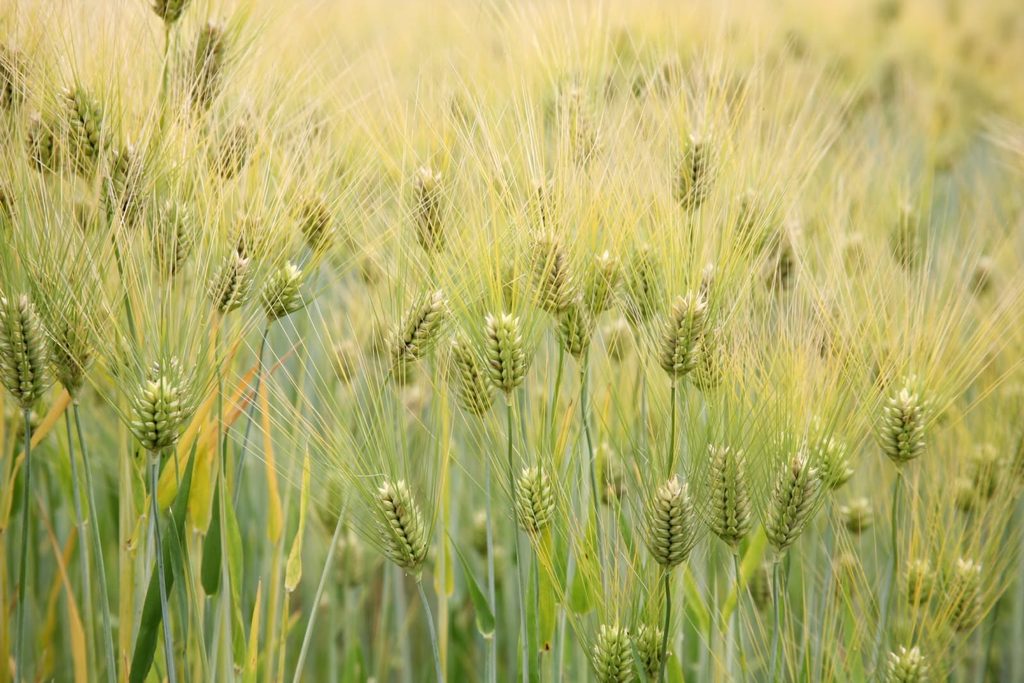
Barley is one of the closest visual matches to wheat, since both crops are grown side by side in many regions. Their seed heads share a similar upright, bristled appearance.
I find the awns, the long bristles extending from the seed head, the easiest way to tell them apart quickly. Barley awns are typically longer and more pronounced than wheat’s shorter bristles.
Barley also ripens slightly earlier than most wheat varieties. Its seed head tends to nod or droop more noticeably as it matures, unlike wheat’s generally straighter, upright form.
2. Rye (Secale cereale)
Rye shares such a close resemblance to wheat that the two are sometimes accidentally cross-planted in mixed grain fields. Both produce tall, slender stalks topped with narrow seed heads.
I have needed a closer look more than once to confirm which grain I was actually standing in front of. The overall silhouette from a distance is genuinely difficult to separate.
Rye typically grows taller than wheat, often reaching up to 5 feet, compared to wheat’s more common 2 to 4 foot range. This height difference becomes the clearest field identifier.
3. Triticale (x Triticosecale)
Triticale is a man-made hybrid between wheat and rye, deliberately bred to combine traits from both parent grains. Unsurprisingly, it looks remarkably similar to both species simultaneously.
I think this hybrid grain represents one of the trickiest identification challenges on this list. Its seed head structure genuinely blends characteristics from both wheat and rye in unpredictable ways.
Triticale was first developed in the late 19th century and has since grown into a significant global crop. It is now cultivated on millions of hectares worldwide, primarily for livestock feed.
4. Quackgrass (Elymus repens)
Quackgrass is a persistent, spreading weed that produces slender seed heads closely resembling young wheat. Its narrow leaf blades and upright growth habit add to the visual confusion in field margins.
I have battled this weed in garden beds for years, since it spreads aggressively through underground rhizomes. Removing it completely often requires digging out the entire root system by hand.
The seed head lacks the dense, bristled awns typical of wheat. Instead, quackgrass produces a flatter, more spike-like arrangement, which becomes obvious once you compare the two side by side.
5. Foxtail Barley (Hordeum jubatum)
Foxtail barley earns its name from the soft, drooping, bristly seed heads that resemble a fox’s tail. From a distance, young plants can still pass for a wheat or barley relative.
I find this grass particularly striking in late summer, when the seed heads catch the light and sway dramatically in open fields, wetlands, and roadside ditches across North America.
The awns on foxtail barley are notably longer and softer than wheat’s stiffer bristles. This grass is also considered mildly toxic to livestock if consumed in large, concentrated quantities.
6. Wild Oats (Avena fatua)
Wild oats are a widespread agricultural weed that competes directly with cultivated wheat crops. Their upright stems and narrow seed heads create a passing resemblance, especially before the panicles fully open.
This weed causes serious economic damage worldwide. Agricultural studies estimate wild oat infestations can reduce wheat yields by up to 25 percent in heavily affected, poorly managed fields.
The seed head structure differs once it matures, branching outward into a looser, more open panicle. Wheat, by contrast, keeps its grains tightly clustered along a single, compact spike.
ALSO READ: 15 Weeds That Look Like Grass: How to Identify and Deal With Each One
7. Cheatgrass (Bromus tectorum)
Cheatgrass, also called downy brome, is an aggressive invasive grass found throughout the western United States. Its slender green stalks can resemble young wheat shoots before the seed heads fully develop.
I have seen entire hillsides overtaken by this grass, turning a deep reddish-brown as it dries out in summer. It is a major contributor to increased wildfire risk across dry, western landscapes.
The seed heads are softer and more drooping than wheat’s firmer spikes. Cheatgrass also completes its life cycle much faster, often finishing growth weeks before nearby wheat crops mature.
8. Timothy Grass (Phleum pratense)
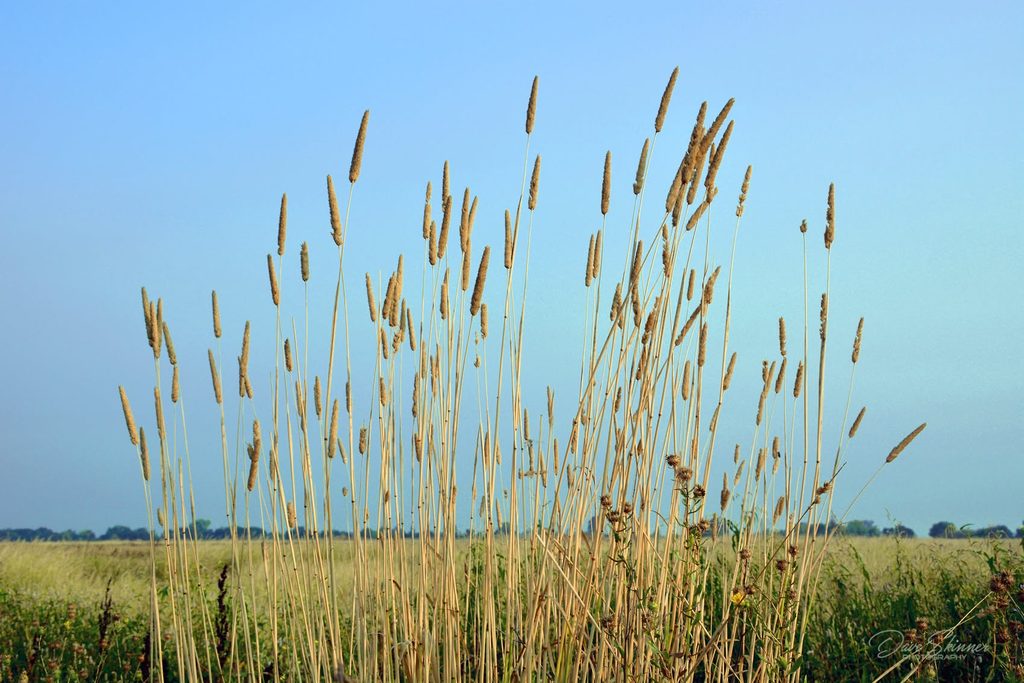
Timothy grass produces a dense, cylindrical seed head that can resemble a compact wheat spike from a distance, particularly in hay fields where the two are sometimes grown near each other.
I have used this grass for livestock forage, since it is highly valued as hay across much of North America and Europe. Its nutritional value makes it a popular pasture choice.
Unlike wheat, timothy grass lacks any awns or bristles on its seed head. The compact, cigar-shaped cluster remains smooth, which is the fastest way to rule out a wheat mix-up.
9. Orchard Grass (Dactylis glomerata)
Orchard grass grows in dense clumps with narrow, blue-green blades. While its overall growth habit differs from wheat, young shoots in early spring can create momentary confusion in mixed pastures.
I find this grass easy to identify once it flowers, since the seed head branches into a loose, open cluster rather than forming wheat’s characteristic tight, single spike.
Orchard grass is widely used for hay and pasture across temperate regions. It tolerates shade better than wheat, making it a common choice for orchards and partially wooded grazing areas.
10. Smooth Brome (Bromus inermis)
Smooth brome is a cool-season perennial grass that spreads through underground rhizomes, much like quackgrass. Its upright stems and narrow leaves can resemble young wheat shoots early in the growing season.
I have noticed this grass thriving in disturbed soil and roadside areas, where it often outcompetes native vegetation. It was originally introduced from Europe for erosion control and forage purposes.
The seed head is a loose, open panicle rather than a compact spike. This branching structure becomes the clearest way to distinguish smooth brome from true wheat once flowering begins.
11. Annual Ryegrass (Lolium multiflorum)
Annual ryegrass produces slender, upright stems topped with narrow seed spikes. Despite its name, it is unrelated to true rye, yet its overall shape can still be mistaken for young wheat.
I have used this grass for temporary lawn cover and erosion control, since it establishes quickly. Its fast germination rate makes it popular for overseeding both pastures and residential yards.
The seed head lacks wheat’s characteristic bristled awns entirely. Instead, small spikelets attach directly to the stem in an alternating pattern, without the fuller, bushier appearance wheat typically shows.
12. Jointed Goatgrass (Aegilops cylindrica)
Jointed goatgrass is a particularly troublesome wheat lookalike, since it belongs to a closely related genus and can even cross-pollinate with cultivated wheat in some conditions.
This weed poses a genuine challenge for farmers. Research from agricultural extension programs shows it can reduce wheat yields by 10 to 30 percent in severely infested fields, depending on density.
The seed head is more cylindrical and jointed in appearance, hence the common name. Distinguishing it from wheat often requires close inspection of the individual spikelet structure.
13. Canary Grass (Phalaris canariensis)
Canary grass produces a dense, oval-shaped seed head that can resemble a short, compact wheat spike from certain angles. It is primarily cultivated for birdseed rather than human consumption.
I have grown this grass specifically to feed backyard birds, since the seeds are a popular ingredient in commercial birdseed mixes sold throughout North America and Europe.
The seed head shape is noticeably rounder and more compact than wheat’s elongated spike. This distinct oval silhouette becomes obvious once the two are compared directly, side by side.
ALSO READ: 25 Types of Lawn Weeds (With Photos, and Expert Control Tips)
14. Reed Canary Grass (Phalaris arundinacea)
Reed canary grass is a tall, aggressive wetland grass that can reach heights rivaling or exceeding wheat. Its upright growth and narrow leaves contribute to occasional confusion in mixed field margins.
I have encountered this grass dominating wetland edges and ditches, where it spreads rapidly through both seed and rhizomes. It is considered invasive in numerous wetland restoration projects across North America.
Unlike wheat, its seed head forms a branching, plume-like panicle rather than a tight, single spike. This looser structure is the clearest giveaway once the plant reaches full maturity.
15. Bearded Darnel (Lolium temulentum)
Bearded darnel, sometimes called poison ryegrass, has a long, troubling history as a wheat field contaminant. Its seed head closely mimics wheat, making manual removal historically difficult before modern seed cleaning.
I find this weed’s history genuinely fascinating, since ancient texts reference it as a symbol of deception, given how easily it hides among cultivated wheat crops without careful inspection.
The seeds are toxic, containing a fungus that can cause dizziness and other symptoms if consumed in contaminated grain. Modern seed cleaning has made contamination rare in commercial wheat today.
How to Tell Wheat and Lookalike Grasses Apart
The clearest identifier is awn length and structure. Wheat produces moderate, relatively even bristles, while many lookalikes show either much longer, softer awns or none at all.
Seed head shape matters too. True wheat keeps grains tightly clustered along a single, compact spike, while several lookalikes branch outward into looser, more open panicle formations.
Finally, check growth timing and height. Many wheat lookalikes mature earlier or grow noticeably taller or shorter than cultivated wheat, which typically ranges between 2 and 4 feet.
Managing Wheat Lookalike Weeds in Farm Fields and Gardens
If you suspect a wild grass has crept into your wheat field, inspect the seed head closely before assuming it belongs. Awn structure and spikelet arrangement offer the fastest confirmation.
I recommend checking field margins early in the season, before seed heads fully mature. Catching invasive grasses at the seedling stage prevents them from cross-pollinating with nearby cultivated wheat.
Crop rotation also helps significantly. Alternating wheat with unrelated crops disrupts the life cycle of many persistent grass weeds, reducing their populations naturally over consecutive growing seasons.
Final Thoughts
Wheat shares its grass family with an enormous range of lookalikes, from close relatives like barley and rye to unrelated invasive weeds that merely mimic its shape. These 15 grasses each carry distinct clues once examined closely.
Paying attention to awn length, seed head structure, and overall plant height makes identification far more reliable over time. I hope this guide helps you recognize true wheat with greater confidence, whether in a farm field or a wild roadside patch.

Tim M Dave is a gardening expert with a passion for houseplants, particularly cacti and succulents. With a degree in plant biology from the University of California, Berkeley, he has vast experience in gardening. Over the years, he has cultivated a vast collection of desert plants and learned a great deal about how to grow and care for these unique companions.