Perennial Ryegrass vs Annual Ryegrass – Comparisons + Which to Choose for Your Winter Lawn
There is a moment of quiet confusion that many homeowners experience standing in the grass seed aisle of a garden center. Two bags look almost identical. Both say “ryegrass.” One says perennial. One says annual. The price might be slightly different. The label descriptions sound similar. And yet the choice between them matters more than most people realize — not just for how your lawn looks this season, but for what happens to it over the years that follow.
Perennial ryegrass (Lolium perenne) and annual ryegrass (Lolium multiflorum, also called Italian ryegrass) are closely related grasses that serve different purposes. Confusing one for the other — or choosing the wrong one for your situation — can lead to real problems: unexpected die-off, poor overseeding results, or a lawn that simply does not perform the way you expected.
This guide gives you a thorough, honest, and practical comparison of the two. It covers their origins, appearance, growth behavior, ideal uses, maintenance requirements, climate suitability, advantages, and limitations.
Whether you are establishing a new lawn, overseeding a dormant warm-season lawn for winter color, or selecting grass for a pasture or athletic field, this guide will help you make the right call with confidence.
Understanding the Ryegrass Family
Both perennial ryegrass and annual ryegrass belong to the genus Lolium and the family Poaceae — the true grasses. They are cool-season grasses, meaning they grow most vigorously when temperatures are between 50°F and 65°F (10°C–18°C). They germinate quickly, establish fast, and produce lush green growth in spring and autumn when many other grasses slow down.
Their shared traits make them look almost interchangeable to the untrained eye. Their differences, however, are significant — in lifespan, texture, durability, seasonal behavior, and the conditions each handles best. Getting to know those differences is the first real step toward using them effectively.
Perennial Ryegrass: An Overview
Perennial ryegrass is one of the most important cool-season turfgrasses in the world. It is used on golf courses, athletic fields, home lawns, and in overseeding programs across North America, Europe, Australia, and beyond. Its combination of fast germination, fine texture, dark color, and durability has made it a go-to grass for turf professionals and serious homeowners alike.
Origins
Perennial ryegrass is native to Europe, western Asia, and northern Africa, where it has been used in agriculture and turf for centuries. It was one of the first grasses deliberately cultivated for pasture and lawn use. European settlers introduced it to North America, and it has been widely grown in cool, temperate regions ever since. Modern turf-type cultivars have been extensively bred to improve texture, disease resistance, heat tolerance, and endophyte content — making today’s varieties considerably superior to older types.
Appearance
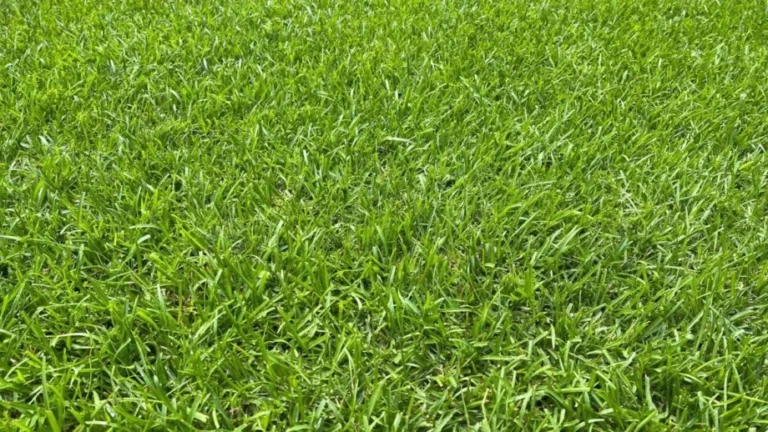
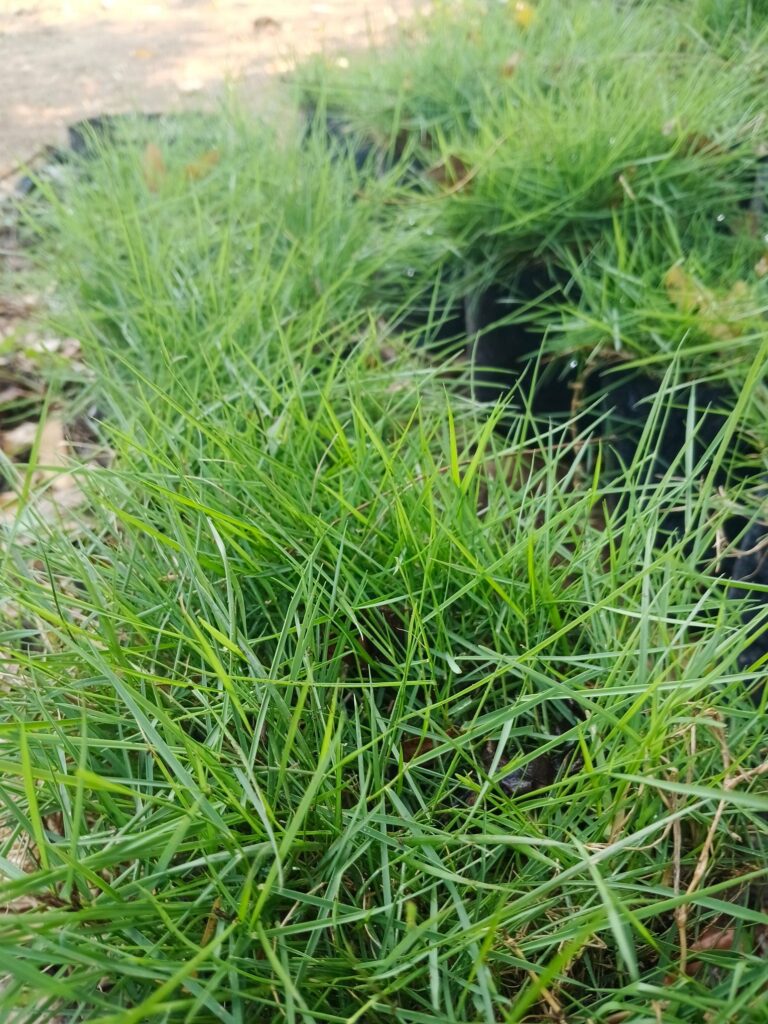
Perennial ryegrass has a fine to medium texture with narrow, bright to dark green blades. The leaves have a distinctive glossy underside, which gives the lawn a subtle sheen in sunlight — a characteristic many homeowners find attractive. The grass forms a dense, upright growth habit that, when mowed at the right height, produces a uniform, refined appearance.
Turf-type perennial ryegrass cultivars are particularly impressive visually. They have been bred for finer leaf texture, greater density, and darker green color than older varieties. On a well-maintained athletic field or home lawn, turf-type perennial ryegrass produces results that genuinely stand out.
Lifespan and Persistence
As its name implies, perennial ryegrass is a perennial — it lives for more than one year. Under appropriate climate conditions, a properly established perennial ryegrass lawn will return year after year without reseeding. In cool, humid climates such as the Pacific Northwest, the northern United States, the United Kingdom, and New Zealand, it can persist indefinitely with proper management.
However, perennial ryegrass has an important limitation: it does not tolerate extreme heat well. In regions with hot summers — particularly the transition zone of the United States — it often thins or dies out during the hottest months. This is why it is frequently used in overseeding programs in the South: planted in autumn to provide winter color over dormant warm-season grasses, it declines and gives way as temperatures rise in late spring and summer.
Germination and Establishment Speed
Perennial ryegrass germinates faster than almost any other cool-season grass. Under favorable conditions — soil temperatures between 50°F and 65°F, adequate moisture — germination can occur in as little as 3 to 7 days. This speed is one of its most practical advantages. It establishes quickly enough to suppress weeds during the establishment window and begins contributing to the lawn’s appearance within days rather than weeks.
This fast germination also makes perennial ryegrass a valued companion grass in seed mixes. It establishes rapidly alongside slower-germinating species like Kentucky bluegrass, providing early ground cover while the slower grass develops.
Climate and Adaptation
Perennial ryegrass is best suited to USDA Hardiness Zones 3 through 7 as a permanent turf grass. In cooler coastal climates — particularly the Pacific Northwest, coastal New England, and maritime regions — it thrives year-round. It also performs well in transitional climates when used seasonally.
It prefers well-drained soils with good fertility and is not well adapted to sandy, low-nutrient soils. It performs best with a soil pH between 6.0 and 7.0.
Annual Ryegrass: An Overview
Annual ryegrass — also known as Italian ryegrass — is a different grass in character and purpose. It grows faster, more aggressively, and more coarsely than perennial ryegrass. It is cheaper, easier to produce in quantity, and widely used in situations where fast, temporary ground cover is the primary goal.
Origins
Annual ryegrass is native to the Mediterranean region and southwestern Europe. Like perennial ryegrass, it was introduced to North America through early European settlement. It has been widely used in agriculture as a cover crop, in pasture mixes, for erosion control, and as a temporary overseeding grass for dormant warm-season lawns. It is also grown extensively in Australia and New Zealand for pasture purposes.
Appearance
Annual ryegrass has a coarser, wider leaf blade than perennial ryegrass. The blades are flat, bright green, and noticeably less refined in texture. Up close, the difference between the two grasses is reasonably apparent — annual ryegrass has a bolder, rougher look. In a mixed lawn setting or viewed from a distance, casual observers may not notice, but the textural difference becomes obvious when the two are placed side by side.
The overall appearance of an annual ryegrass lawn is decent — green, reasonably dense, and serviceable — but it does not match the refined quality of a well-maintained perennial ryegrass or Kentucky bluegrass lawn. For utility purposes, this matters little. For a high-quality residential lawn, it matters considerably.
Lifespan and Behavior
Annual ryegrass completes its life cycle within a single year — typically germinating in autumn or early spring, growing through the cooler months, setting seed, and then dying. In warm climates, it dies as summer temperatures rise. In cold climates, it may be killed by severe winter conditions before completing its cycle, or it may persist into a second season in mild winters — leading to some confusion about whether it is truly “annual” in all situations.
The key practical point is this: annual ryegrass should not be relied upon as a permanent lawn grass. It is a temporary solution. When homeowners plant annual ryegrass expecting it to establish a permanent lawn, they are often disappointed the following season when large areas thin out or die and must be reseeded.
Germination and Establishment Speed
Annual ryegrass germinates even faster than perennial ryegrass — sometimes in as few as 3 to 5 days under ideal conditions. It emerges quickly, covers ground rapidly, and begins growing with notable vigor almost immediately. This speed is one of the main reasons it is widely used for erosion control, cover cropping, and situations where fast, temporary coverage is the primary need.
Climate and Adaptation
Annual ryegrass is broadly adaptable to a wide range of climates, which contributes to its widespread use. It handles both cool and mild conditions and can be grown across a wide geographic range. It is less picky about soil conditions than perennial ryegrass, tolerating moderate fertility, slightly acidic soils, and even brief periods of poor drainage.
In the southern United States, it is commonly used for winter overseeding of dormant Bermuda grass, St. Augustine grass, and other warm-season lawns because it is inexpensive and establishes quickly. However, it transitions out of the lawn in spring more abruptly than perennial ryegrass — sometimes dying unevenly and leaving a patchy appearance before the warm-season grass fully wakes up.
Perennial Ryegrass vs Annual Ryegrass: A Head-to-Head Comparison
1. Lifespan and Permanence
This is the most fundamental difference between the two grasses and the one with the greatest practical consequences.
Perennial ryegrass lives for multiple years in suitable climates. In cool, temperate regions with mild summers, it will persist indefinitely, returning each year and forming the backbone of a permanent lawn. It is a genuine, long-term turf investment.
Annual ryegrass lives for a single season. It germinates, grows, sets seed, and dies — typically within 12 months or less. It is not suitable for permanent lawn establishment under most circumstances. Homeowners who seed with annual ryegrass hoping for a lasting lawn will need to reseed each year, which is neither cost-effective nor desirable in most settings.
For permanent lawns, perennial ryegrass is almost always the correct choice. Annual ryegrass belongs in temporary, seasonal, or utility applications.
Winner: Perennial Ryegrass
2. Grass Quality and Appearance
Perennial ryegrass, particularly modern turf-type cultivars, produces a significantly finer, more attractive lawn than annual ryegrass. Its narrow leaf blades, dark green color, glossy sheen, and dense growth habit create a lawn with genuine visual appeal. High-end turf mixes for golf courses, athletic fields, and premium home lawns rely heavily on turf-type perennial ryegrass for exactly this reason.
Annual ryegrass has broader, coarser blades and a less refined appearance. It is green and serviceable, but it does not produce the same quality of turf. In residential lawn settings where appearance matters, the difference is meaningful. In utility contexts — erosion control, cover cropping, temporary winter color — appearance is secondary and annual ryegrass performs its function perfectly well.
Winner: Perennial Ryegrass
3. Germination Speed
Both grasses germinate fast — faster than most other lawn grasses. Annual ryegrass has a slight edge, sometimes emerging in 3 to 5 days compared to perennial ryegrass’s typical 3 to 7 days under ideal conditions. In practical terms, this difference is small. Both grasses establish considerably faster than Kentucky bluegrass, fine fescues, or Bermuda grass.
For homeowners who need rapid ground cover in an urgent situation — preventing erosion after construction, covering bare soil before rain, or establishing a temporary surface quickly — annual ryegrass wins on speed alone.
Winner: Annual Ryegrass (slight edge)
4. Cost
Annual ryegrass seed is significantly less expensive than perennial ryegrass seed. It is produced in large quantities, primarily for agricultural and pasture use, and is widely available at a low cost per pound. For large areas where budget is a primary concern — erosion control on slopes, temporary cover on construction sites, or overseeding large pastures — annual ryegrass offers meaningful cost savings.
Perennial ryegrass seed, particularly turf-type cultivars, costs noticeably more. The investment is justified for permanent lawns where quality and longevity matter, but it makes little sense for short-term temporary applications.
Winner: Annual Ryegrass
5. Overseeding Warm-Season Lawns
In the southern United States, overseeding dormant warm-season lawns — Bermuda grass, Zoysia grass, and others — with ryegrass is a widely practiced technique for maintaining green color through winter. Both perennial and annual ryegrass are used for this purpose, and the choice between them is a genuine and important one.
Annual ryegrass is cheaper, establishes quickly, and dies or fades relatively neatly as warm-season grasses begin to wake up in spring. However, its transition out of the lawn in late spring can be abrupt and uneven, sometimes leaving patchy bare areas before the warm-season grass fills back in. It also competes with the warm-season grass as temperatures rise, which can delay spring green-up.
Perennial ryegrass produces a more attractive winter lawn — finer texture, darker color, and more uniform density. In warm-winter climates like Florida and coastal Texas, it may persist longer than annual ryegrass before declining. However, it also competes more stubbornly with warm-season grasses in spring, potentially delaying green-up more than annual ryegrass.
Turf professionals and serious homeowners generally prefer perennial ryegrass for winter overseeding of high-quality residential lawns. Annual ryegrass is adequate for utility lawns where winter appearance is a secondary concern and cost savings are a priority.
Winner: Perennial Ryegrass (for quality); Annual Ryegrass (for economy)
6. Wear and Traffic Tolerance
Perennial ryegrass has excellent wear tolerance for a cool-season grass. Its tough, fibrous leaves and dense growth habit allow it to handle moderate to heavy foot traffic without deteriorating quickly. It is used on professional soccer fields, rugby pitches, golf course tees and fairways, and high-use recreational areas across the globe. Its relatively quick recovery from wear — compared to Kentucky bluegrass or fine fescues — makes it a reliable choice for active lawns and sports surfaces.
Annual ryegrass is less durable under sustained foot traffic. It handles light to moderate use adequately, but its coarser growth habit and shorter lifespan mean it does not hold up as well under repeated, heavy wear. For athletic fields and high-traffic home lawns, perennial ryegrass is the better-suited option by a considerable margin.
Winner: Perennial Ryegrass
7. Disease Resistance
Modern turf-type perennial ryegrass cultivars have been bred with improved resistance to several important diseases, particularly through the use of endophytes — naturally occurring fungi that live within the grass plant and produce compounds that deter insect and disease pressure.
Endophyte-enhanced perennial ryegrass cultivars show improved resistance to leaf spot, gray leaf spot, and various fungal pathogens, as well as reduced damage from above-ground insects such as sod webworms and billbugs.
Annual ryegrass generally lacks the endophyte enhancement of modern perennial ryegrass cultivars and has fewer disease-resistance traits built into commonly available varieties. It can develop crown rust (Puccinia coronata) — a fungal disease that creates orange-red pustules on leaf blades — which is both unsightly and weakening to the plant.
Winner: Perennial Ryegrass
8. Heat Tolerance
Neither grass handles prolonged, intense summer heat well. This is a shared limitation of cool-season grasses. However, annual ryegrass is generally more tolerant of brief warm periods during its growing cycle — which makes practical sense given its origins in the milder Mediterranean climate.
Perennial ryegrass thins and may die out during hot summers in the transition zone, which is why it is not planted as a permanent grass in states like Georgia, Alabama, or Arkansas. In those regions, it is used only seasonally.
In cool climates where summer temperatures remain moderate — the Pacific Northwest, New England, the Upper Midwest, northern Europe — perennial ryegrass persists through summer without significant difficulty and performs at its best.
Winner: Annual Ryegrass (modest advantage in warm transitional conditions)
9. Cold Tolerance
Perennial ryegrass has reasonable cold tolerance for a cool-season grass and handles winter conditions in Zones 3 through 7 reliably. It can go semi-dormant during the coldest periods but recovers well as temperatures moderate in late winter or early spring.
Annual ryegrass is also cold-tolerant and can survive light frosts, but it may be killed by hard, extended freezes in colder climates — which further reinforces its status as a temporary, seasonal grass rather than a permanent one. In mild-winter climates, it may survive through the cold season without difficulty.
Winner: Perennial Ryegrass
10. Use in Seed Mixes
Both grasses appear in seed mixes, but they serve different purposes within those blends.
Perennial ryegrass is a standard component in high-quality cool-season seed mixes — typically blended with Kentucky bluegrass and fine fescues. It germinates quickly and provides early coverage while slower-germinating species establish, then becomes a permanent, complementary component of the lawn. This is one of its most valued roles in practical lawn establishment.
Annual ryegrass occasionally appears in lower-cost seed mixes — sometimes labeled as “nurse grass” because its rapid germination provides quick ground cover while companion grasses establish.
However, turf professionals generally advise against mixes that contain annual ryegrass as a primary component for permanent lawns, since the annual ryegrass will die and potentially leave bare patches. Reading seed labels carefully is important: a mix described as “ryegrass blend” may contain annual ryegrass unless the label specifically states “perennial ryegrass.”
Winner: Perennial Ryegrass
11. Environmental and Erosion Control Uses
Annual ryegrass has a genuine, important role in environmental management that deserves recognition. Its fast germination, vigorous early growth, and deep fibrous root system make it highly effective for erosion control on disturbed soils — construction sites, highway embankments, newly graded land. It establishes ground cover rapidly, holds soil in place during vulnerable periods, and then dies, decomposing to add organic matter to the soil.
It is also widely used as a cover crop in agricultural systems. Its ability to suppress weeds, fix some atmospheric nitrogen through associated microbial activity, and protect soil structure through winter makes it valuable in vegetable gardens and crop rotations. Many organic growers rely on annual ryegrass as a winter cover crop between growing seasons.
Perennial ryegrass also has erosion control applications but is less commonly chosen for this purpose because its higher seed cost and permanent persistence make it less practical for short-term soil stabilization projects.
Winner: Annual Ryegrass (for erosion control and cover cropping)
Common Mistakes to Avoid
Understanding the differences between these two grasses helps prevent several common and costly mistakes.
Planting annual ryegrass expecting a permanent lawn. This is the single most frequent error homeowners make. Annual ryegrass is not a permanent lawn grass. When it dies, it will leave bare areas that require reseeding. If you want a lasting cool-season lawn, use perennial ryegrass or a quality blend that includes it.
Buying cheap seed mixes without reading the label. Many budget seed blends contain annual ryegrass, which may not be obvious from the product name. Always read the species listed on the seed tag. The tag is required by law in the United States to list all grass species and their percentages. Look for “perennial ryegrass” specifically.
Over-applying annual ryegrass in overseeding programs. Using too much annual ryegrass when overseeding warm-season lawns in autumn can result in excessive competition with the warm-season grass the following spring, delaying green-up and thinning the permanent lawn.
Expecting either ryegrass to thrive in full summer heat. Both are cool-season grasses. Neither is appropriate for establishing a permanent warm-season lawn in the South. They can supplement and complement warm-season lawns seasonally, but they cannot replace them.
Suggested For You:
When Does Annual Ryegrass Die? (Know When to Plant It)
15 Best Ornamental Grasses for Pots: A Complete Container Growing Guide
15 Best Ornamental Grasses for Shade: A Complete Growing Guide
15 Low Maintenance Ornamental Grasses: Beauty Without the Work
Centipede Grass vs Bermuda Grass: A Complete Comparison for Southern Lawn Owners
Which Should You Choose?
Choose Perennial Ryegrass if:
- You want a permanent, high-quality cool-season lawn in USDA Zones 3 through 7.
- You are overseeding a warm-season lawn for winter color and quality matters to you.
- Your lawn experiences moderate to heavy foot traffic.
- You are creating a seed mix alongside Kentucky bluegrass or fine fescues.
- Disease resistance and long-term turf performance are priorities.
- You are seeding an athletic field, golf course, or professional sports surface.
Choose Annual Ryegrass if:
- You need fast, temporary ground cover for erosion control or construction site stabilization.
- You are using it as a winter cover crop in a garden or agricultural rotation.
- Budget is your primary concern and appearance is secondary.
- You are overseeding a warm-season utility lawn for winter color at the lowest possible cost.
- You need a nurse grass for quick establishment alongside slower-germinating species.
Recommended Cultivars
Perennial Ryegrass Cultivars
- Manhattan 5 — Industry-leading variety; fine texture, high density, excellent disease resistance; widely used on sports fields and premium home lawns.
- Catalina II — Outstanding heat and drought tolerance relative to other perennial ryegrass varieties; performs well in transitional climates.
- Paragon GT — Strong endophyte enhancement; excellent insect resistance; good wear tolerance.
- Silver Dollar — Dark green color and fine texture; performs well in overseeding programs in mild-winter climates.
Annual Ryegrass Cultivars
- Gulf — One of the most widely used annual ryegrass varieties for overseeding in the South; reliable germination and winter color.
- Marshall — Primarily used in pasture and cover crop applications; vigorous growth and high biomass production.
- Attain — Used in erosion control and cover cropping applications; rapid establishment and effective ground cover.
Summary Comparison Table
| Feature | Perennial Ryegrass | Annual Ryegrass |
| Scientific name | Lolium perenne | Lolium multiflorum |
| Lifespan | Perennial (multiple years) | Annual (single season) |
| Texture | Fine to medium | Medium to coarse |
| Color | Dark, glossy green | Bright to medium green |
| Germination speed | 3–7 days | 3–5 days |
| Establishment | Moderate to fast | Very fast |
| Lawn quality | High | Moderate |
| Wear tolerance | High | Moderate |
| Disease resistance | Good (endophyte varieties) | Moderate |
| Heat tolerance | Low | Low to moderate |
| Cold tolerance | Good (Zones 3–7) | Moderate |
| Best use | Permanent lawns, overseeding, sports turf | Erosion control, cover crops, temporary cover |
| Overseeding quality | High | Adequate |
| Seed cost | Moderate to high | Low |
| Invasiveness | Low | Low |
| Endophyte availability | Yes (many cultivars) | Limited |
Final Thoughts
Perennial ryegrass and annual ryegrass occupy different places in the world of lawn and turf management. One is a permanent, refined, high-performing turf grass with a place on the world’s finest sports fields and residential lawns. The other is a fast, practical, economical grass that does an important job well — temporarily.
The confusion between them is understandable, given their similar names and appearance. But making the distinction clearly before you buy seed or commit to a lawn care plan is what separates a good outcome from a frustrating one.
If permanence, quality, and traffic tolerance matter to you, perennial ryegrass is the right investment. If speed, low cost, and temporary function are your priorities, annual ryegrass is the appropriate tool. Used correctly, both grasses have real value. The key is knowing which one belongs in which situation.
When in doubt, speak with your local cooperative extension office. They can advise on cultivar selection, local soil conditions, and overseeding timing specific to your region — insight that no general guide can fully replace.
References
- Stier, J. C., Horgan, B. P., & Bonos, S. A. (Eds.) (American Society of Agronomy) — Turfgrass: Biology, Use, and Management — Chapter on Ryegrass Species. https://acsess.onlinelibrary.wiley.com/doi/book/10.2134/agronmonogr56
- Hannaway, D. B., Fransen, S., Cropper, J., Teel, M., Chaney, M., Griggs, T., … & Morrow, L. (Oregon State University Extension Service) — Perennial Ryegrass (Lolium perenne L.). https://forages.oregonstate.edu/php/fact_sheet_print_grass.php?SpecID=3&use=Turf
- Young, W. C. III, Chilcote, D. O., & Youngberg, H. W. (Oregon State University Extension Service) — Annual Ryegrass — Agronomy and Management. https://extension.oregonstate.edu/crop-production/grass-seed/annual-ryegrass
- Patton, A. J., & Reicher, Z. J. (Purdue University Extension) — Overseeding Warm-Season Grasses with Ryegrass for Winter Color. https://www.extension.purdue.edu/extmedia/AY/AY-340-W.pdf
- Christians, N. E., Patton, A. J., & Law, Q. D. (Iowa State University) — Fundamentals of Turfgrass Management — Cool-Season Grasses and Ryegrass Species. https://www.extension.iastate.edu/smallfarms/fundamentals-turfgrass-management

Tim M Dave is a gardening expert with a passion for houseplants, particularly cacti and succulents. With a degree in plant biology from the University of California, Berkeley, he has vast experience in gardening. Over the years, he has cultivated a vast collection of desert plants and learned a great deal about how to grow and care for these unique companions.