45 Different Types of Sage Plants (With Pictures, Uses, and Care Tips)
Sage belongs to the genus Salvia, part of the mint family, Lamiaceae, alongside basil, rosemary, and thyme. The genus includes more than 900 recognized species, with Mexico alone home to roughly 500 of them.
That number alone explains the confusion around the word “sage.” Botanists use it loosely, and it gets applied to plants that are only distantly related to the kitchen herb most people know.
Salvia is derived from the Latin word salvare, meaning “to save,” a nod to the plant’s long medicinal history. Ancient physicians in the Mediterranean and Middle East relied on it for digestive, respiratory, and skin ailments long before it became a Thanksgiving stuffing staple.
Most sage species share a few traits regardless of their differences. They have square stems, opposite leaves, and aromatic foliage, even when their flowers look nothing alike.
Growth habits vary enormously across the genus. Some sages stay under a foot tall as ground cover, while others grow into shrubs several feet high, and a handful even climb toward tree-like proportions in ideal climates.
Flower color is where sage truly shows off. Blooms range through blue, purple, pink, scarlet, and white, and some cultivars even shift color as they mature on the stem.
Sages are also famously easy-care plants. Most tolerate drought, resist deer and rabbits, and thrive in full sun with well-drained soil, which is a big reason gardeners keep adding new varieties to their beds.
This guide covers 45 distinct types of sage, grouped by how people actually use them: cooking, fragrance, ornamental color, wild native habitat, and medicinal history.
Culinary Sage Varieties (Salvia officinalis and Its Cultivars)
These are the sages you cook with. All trace back to Salvia officinalis, the common garden sage native to the Mediterranean region.
1. Common Sage (Salvia officinalis)
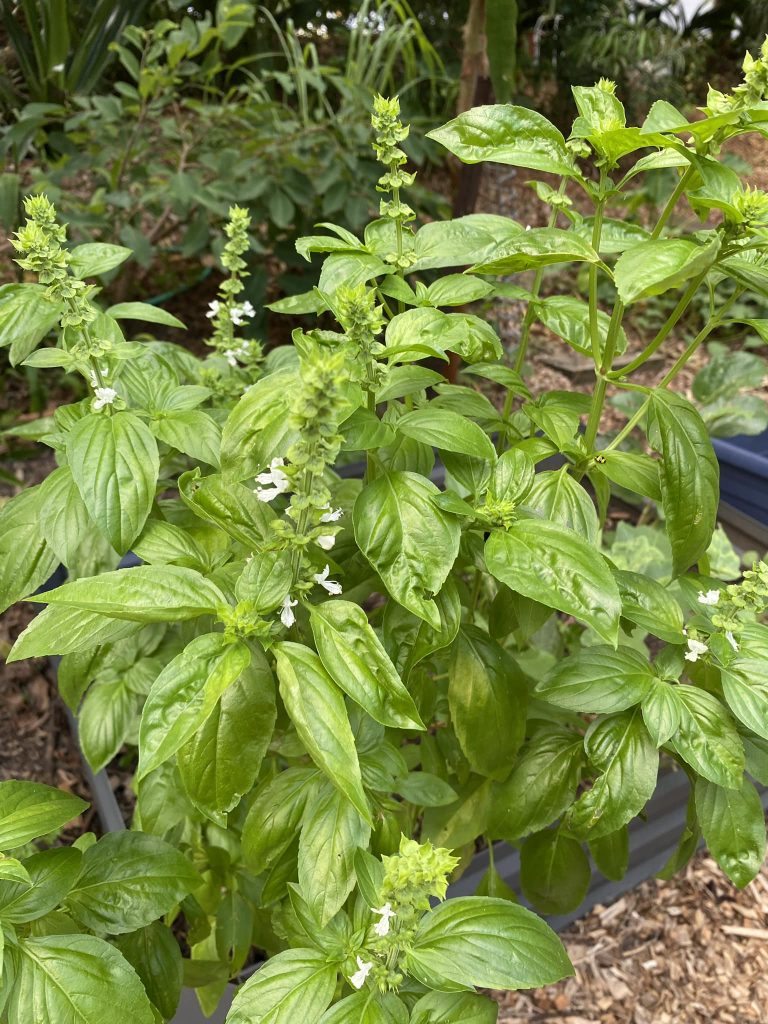
Common sage is the standard kitchen variety, with soft gray-green leaves and a strong, earthy flavor. It grows as a woody evergreen subshrub, reaching about two feet tall, and produces lavender-blue flowers in late spring.
This is the sage most people picture in stuffing, sausage seasoning, and brown butter sauce. It also happens to be one of the oldest cultivated herbs in Western history, with documented medicinal use stretching back centuries.
2. Purple Sage (Purpurascens)
Purple sage is a striking cultivar with deep purple-tinted young leaves that mellow toward gray-green as they mature. The flavor is nearly identical to common sage, just with better visual interest in a garden bed.
I like using this one in ornamental herb borders where I still want something edible, since it does double duty as both a spice and a decorative accent.
3. Tricolor Sage
Tricolor sage layers cream, pink, and green into each leaf, making it one of the prettiest culinary sages available. It is slightly less cold-hardy than plain common sage, so gardeners in colder zones often grow it as an annual.
Its flavor is milder than common sage, which makes it a gentler introduction for cooks who find straight sage overpowering.
4. Golden Sage (Icterina)
Golden sage, also sold as Icterina, has variegated green and yellow-gold leaves that brighten up any herb garden. It shares the same earthy, slightly peppery flavor as common sage, just with a more compact growth habit.
Because of its color, golden sage often gets used more for landscaping than cooking, though the leaves are perfectly edible.
5. Berggarten Sage
Berggarten sage produces larger, rounder leaves than standard common sage, with a slightly milder, sweeter flavor. It rarely flowers, which means the plant channels its energy into thick, flavorful foliage instead.
Because the leaves are broader, Berggarten sage is a favorite for wrapping saltimbocca or frying whole leaves into crispy garnishes.
6. Broadleaf Sage
Broadleaf sage is prized specifically for its size and productivity, producing more usable leaf material per plant than most other culinary types. Commercial herb growers often favor it for exactly that reason.
The flavor leans slightly milder than common sage, which some chefs prefer for delicate cream sauces and stuffing recipes.
7. Extrakta Sage
Extrakta sage was bred specifically for its high essential oil content, making it the variety most often used for sage oil extraction and medicinal preparations. The leaves are smaller but intensely aromatic.
If you have ever bought a bottle of sage essential oil, there is a good chance Extrakta was the source plant behind it.
8. Dwarf Sage (Compacta)
Dwarf sage stays under a foot tall, making it ideal for container gardens, window boxes, or small raised beds. Despite its size, it produces the same classic sage flavor as its larger relatives.
I recommend this variety to anyone renting an apartment with just a sunny balcony, since it barely needs any room to thrive.
ALSO READ: 35 Different Types of Tea: (Green, Black, Oolong, White, Herbal, and More)
Fruit and Flavor-Scented Sages
This group breaks the rules of what people expect from sage. Instead of the classic earthy scent, these varieties smell like fruit, candy, or dessert.
9. Pineapple Sage (Salvia elegans)
Pineapple sage lives up to its name, releasing a genuine pineapple scent whenever the leaves are brushed or crushed. It produces bright red tubular flowers in fall, which hummingbirds find irresistible.
The leaves work well steeped into tea or muddled into fruity cocktails, and the late-season blooms make it a favorite for extending color in the garden after other flowers fade.
10. Tangerine Sage
Tangerine sage is a cultivar of pineapple sage bred for a citrusy twist on the original fruity scent. The foliage carries a bright orange fragrance that works beautifully in iced teas and fruit salads.
Like its pineapple sage parent, it blooms with red flowers late in the season, giving pollinators a reliable nectar source into autumn.
11. Honeydew Melon Sage
Honeydew melon sage carries a soft, sweet melon fragrance that surprises most people the first time they smell it. It shares pineapple sage’s growth habit and red autumn flowers.
Gardeners often plant this one near patios and walkways specifically so visitors brush against the leaves and catch that unexpected melon scent.
12. Fruit-Scented Sage (Salvia dorisiana)
Also called peach sage, this variety has some of the largest leaves in the flavored-sage group and a fragrance reminiscent of ripe stone fruit. It is a tender perennial, best suited to warm climates or container growing.
Its pink flower spikes bloom in winter, which makes it a valuable addition for gardeners in frost-free regions who want color during the cooler months.
13. Grape-Scented Sage (Salvia melissodora)
Grape-scented sage releases a fragrance close to concord grape juice when its leaves are crushed. It produces clusters of lavender-blue flowers and grows into a medium-sized shrub in warmer climates.
This variety tends to attract a steady stream of bees, making it a solid pollinator plant alongside its novelty scent.
14. Blackcurrant Sage (Salvia microphylla)
Blackcurrant sage carries a tart, fruity aroma close to its namesake berry. It blooms prolifically with small red or pink flowers over a long season, often from late spring through the first frost.
Its compact size and heavy bloom output make it a popular choice for pollinator gardens, especially in warmer USDA zones.
15. Baby Sage
Baby sage is a dwarf form of Salvia microphylla, staying small and tidy while still producing the same fruity fragrance and long bloom season. It suits rock gardens and border edges especially well.
Because of its size, it also thrives in containers, giving apartment gardeners another flavored-sage option beyond dwarf culinary sage.
Ornamental Flowering Sages
This is the largest and most visually diverse group. These sages are grown almost entirely for their blooms, which range from electric blue to deep scarlet.
16. Mexican Bush Sage (Salvia leucantha)
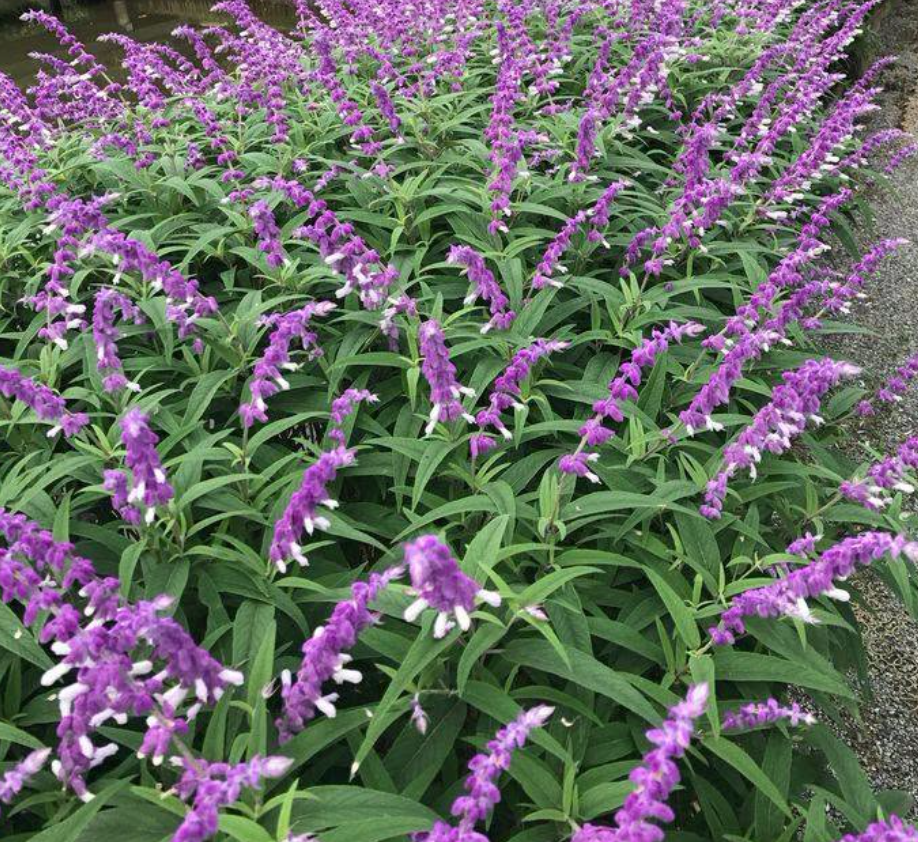
Mexican bush sage produces long, velvety purple flower spikes that look almost fuzzy to the touch. It grows into a rounded shrub and blooms heavily from late summer into fall, right when many other perennials are winding down.
Its texture and color make it one of the most photographed ornamental sages in fall garden displays.
17. Autumn Sage (Salvia greggii)
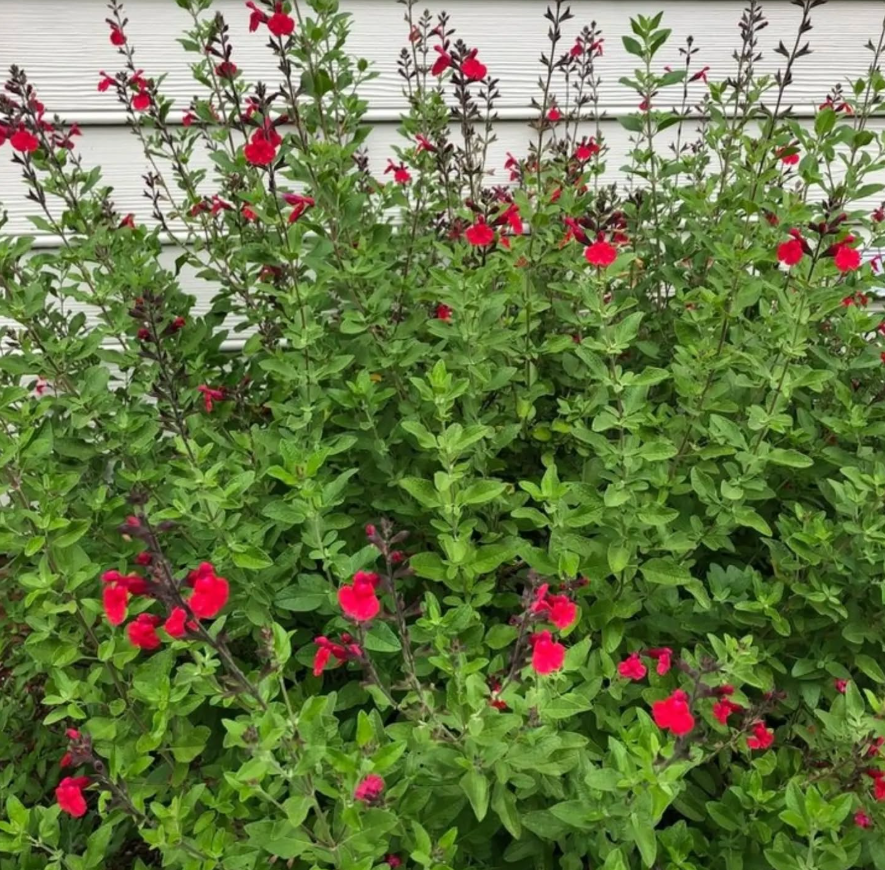
Autumn sage is a hardy shrublet available in dozens of cultivars, ranging from red to pink to white. It blooms from spring through fall in warm climates, giving gardens months of continuous color.
Its drought tolerance and long bloom window make it one of the most recommended sages for xeriscaping projects across the American Southwest.
18. Hummingbird Sage (Salvia guaranitica)
Hummingbird sage produces deep blue, tubular flowers that live up to the plant’s name by drawing hummingbirds from surprisingly far away. It grows tall, often reaching four feet, and spreads readily in warm climates.
I have watched hummingbirds ignore every other flower in a garden just to visit this one repeatedly through summer.
19. Black and Blue Sage
Black and Blue is a cultivar of hummingbird sage with near-black stems that dramatically contrast its cobalt blue flowers. It has become one of the most popular pollinator plants sold at nurseries in recent years.
The color contrast alone makes it worth growing, even before considering how much wildlife activity it brings to a yard.
20. Bog Sage (Salvia uliginosa)
Bog sage is unusual among sages because it actually tolerates and even prefers moist soil, unlike most drought-loving relatives in this genus. It produces sky-blue flowers on tall, airy stems through late summer.
This makes it a rare option for gardeners with a damp corner of the yard where typical sages would struggle.
21. Mealycup Sage (Salvia farinacea)
Mealycup sage gets its name from the fine, mealy texture on its flower stems, which produce dense spikes of blue or purple blooms. It is widely grown as an annual in containers and bedding displays.
Its long bloom season and reliable color have made it a staple in commercial landscaping across the country.
22. Victoria Blue Sage
Victoria Blue is a compact cultivar of mealycup sage, prized for its uniform height and deep violet-blue flower spikes. It is a favorite for mass plantings along walkways and in municipal flower beds.
Its tidy, predictable growth habit makes it especially popular with landscapers who need consistent results across large plantings.
ALSO READ: 35 Different Types of Coffee Drinks (Flavors, and How They are Brewed)
23. Scarlet Sage (Salvia splendens)
Scarlet sage produces some of the most vivid red flower spikes in the entire genus, making it an instantly recognizable bedding plant. It is typically grown as a summer annual outside of tropical climates.
Its bold color has made it a fixture in patriotic and holiday-themed garden displays for generations.
24. Woodland Sage (Salvia nemorosa)
Woodland sage is a hardy perennial that produces dense spikes of purple, blue, or pink flowers from late spring through summer. Deadheading spent blooms encourages a strong second flush later in the season.
It tolerates a wide range of soils and climates, which has made it one of the most reliable perennial sages for northern gardens.
25. May Night Sage
May Night is a popular cultivar of woodland sage known for its nearly black-purple flower spikes and compact, tidy growth. It has won multiple garden awards for its reliability and long bloom time.
Its dark color pairs beautifully with silver-leaved companion plants like lamb’s ear in a mixed perennial border.
26. Gentian Sage (Salvia patens)
Gentian sage produces some of the largest, most intensely blue flowers in the entire genus, rivaling true gentians in color depth. It grows from tuberous roots and often needs winter protection outside of mild climates.
Gardeners chasing true blue in a flower bed frequently turn to this species, since true blue blooms are rare across the plant kingdom.
27. Cardinal Sage (Salvia fulgens)
Cardinal sage produces fuzzy, bright red flowers that stand out sharply against its soft green foliage. Like many red-flowered sages, it draws hummingbirds reliably throughout its blooming period.
Its velvety flower texture sets it apart visually from the smoother blooms of other red sage varieties on this list.
28. Roseleaf Sage (Salvia involucrata)
Roseleaf sage produces large, showy pink to magenta flower clusters wrapped in decorative bracts. It grows into a substantial shrub in warm climates, often reaching four to six feet tall.
Its bold, tropical appearance makes it a striking focal point plant rather than a background border filler.
29. Blue Sage (Salvia azurea)
Blue sage is a native North American wildflower with soft powder-blue flowers on tall, wispy stems. It thrives in prairie and meadow settings, tolerating poor soil and drought with ease.
Its airy growth habit makes it a favorite for naturalistic garden designs that mimic native grassland plantings.
30. California Hummingbird Sage (Salvia spathacea)
This California native produces deep rose-red flowers and large, fragrant leaves that release a fruity scent when touched. It spreads via rhizomes, making it useful as a groundcover in native plant gardens.
Its drought tolerance and wildlife value have made it a go-to recommendation in California native landscaping programs.
31. Silver Sage (Salvia argentea)
Silver sage is grown mainly for its enormous, felted silver-white leaves rather than its modest white or pink flowers. The foliage alone can make this plant a centerpiece in any garden bed.
It is a biennial, meaning it typically flowers in its second year before completing its life cycle, so many gardeners grow it purely for the foliage effect.
32. Indigo Spires Sage
Indigo Spires is a tall hybrid sage known for its long, twisting flower spikes in deep violet-blue. It blooms almost continuously from summer through fall in warm climates.
Its dramatic height, often exceeding four feet, makes it a strong vertical accent at the back of a mixed perennial border.
33. Mystic Spires Sage
Mystic Spires is a more compact version of Indigo Spires, bred specifically to stay shorter and tidier for smaller garden spaces. It keeps the same intense blue flower color in a more manageable size.
This makes it a popular choice for container gardens and smaller flower beds where the taller Indigo Spires would overwhelm the space.
ALSO READ: 70 Beautiful Flowers That Start With D (With Photos, and Care Tips)
Wild, Native, and Regional Sages
This group includes species valued for their history, native habitat role, or use outside typical American cooking and landscaping.
34. Clary Sage (Salvia sclarea)
Clary sage has a long history in perfumery and aromatherapy, prized for its musky, herbaceous essential oil. It produces tall spikes of pale purple and white flowers with showy bracts.
Historically, it was also used to flavor wine and beer before hops became the standard bittering agent in brewing.
35. Wild Chia (Salvia columbariae)
Wild chia is a California native annual that produces small blue flowers and edible seeds once used extensively by Indigenous peoples of the Southwest. It thrives in dry, disturbed soils and blooms in early spring.
Its seeds share the same mucilage-forming property as commercial chia seeds, though it is a different species from the chia most people buy in stores.
36. Chia (Salvia hispanica)
True chia is the source of the seeds sold widely as a health food today. The plant produces small purple flowers, but it is grown almost entirely for its nutrient-dense seeds rather than its ornamental value.
Its seeds form a gel-like coating when soaked in liquid, a trait shared with several other Salvia species whose nutlets behave the same way.
37. White Sage (Salvia apiana)
White sage is a California and Baja California native known for its pale, silvery leaves and strong resinous fragrance. It has deep cultural significance in Indigenous ceremonial practices across the region.
Because of overharvesting concerns tied to its popularity, conservation groups now encourage buying only responsibly cultivated white sage rather than wild-harvested plants.
38. Greek Sage (Salvia fruticosa)
Greek sage, sometimes called trilobed sage, is closely related to common sage and shares much of its culinary and medicinal use across Mediterranean cuisine. Its leaves often show a distinctive three-lobed shape.
It remains a popular herbal tea ingredient throughout Greece and the eastern Mediterranean, valued for its slightly milder, sweeter flavor than common sage.
39. Spanish Sage (Salvia lavandulifolia)
Spanish sage has narrow, lavender-like leaves and a milder flavor and aroma than common sage. It has been studied alongside common sage for potential memory and cognitive benefits in small clinical trials.
Its lower thujone content compared to common sage has made it a preferred option in some herbal supplement formulations.
40. Mojave Sage (Salvia pachyphylla)
Mojave sage is a desert native with thick, silvery leaves and dense purple flower clusters wrapped in showy bracts. It tolerates extreme heat and drought better than almost any other ornamental sage on this list.
Its compact, mounding shape makes it a natural fit for rock gardens and desert-style landscaping.
41. Vermilion Bluffs Mexican Sage (Salvia darcyi)
This variety produces bright red-orange flowers on a plant bred specifically for cold tolerance beyond what most Mexican sage species can handle. It has become popular in regions that previously could not grow tender red sages outdoors.
Its extended bloom period through summer and fall makes it a valuable late-season nectar source for migrating hummingbirds.
Specialty and Medicinal Sages
This final group includes sages known primarily for chemical, medicinal, or historical significance rather than typical garden use.
42. Rosemary (Salvia rosmarinus)
Rosemary was formally reclassified from its own genus into Salvia based on genetic evidence, making it a true sage botanically, even though it looks nothing like common sage. It remains one of the most widely used culinary herbs worldwide.
This reclassification surprised many gardeners and cooks, since rosemary had been marketed and sold separately from sage for so long.
43. Chinese Sage (Salvia miltiorrhiza)
Chinese sage, also called danshen, has been used in traditional Chinese medicine for centuries, primarily for cardiovascular health. Its roots, not its leaves, are the part valued medicinally.
Modern research continues to investigate compounds found in its roots, making it one of the most scientifically studied members of the entire Salvia genus.
44. Diviner’s Sage (Salvia divinorum)
Diviner’s sage is a psychoactive species historically used in specific Indigenous Mexican spiritual practices. Its legal status varies significantly by country and by U.S. state, so regulations should always be checked before considering cultivation.
It looks unremarkable compared to other sages on this list, which makes its potent chemical properties somewhat surprising to first-time researchers.
45. Furman’s Red Sage
Furman’s Red is a cold-hardy cultivar of autumn sage bred specifically to survive winters that would kill standard Salvia greggii varieties. It produces the same vivid red flowers on a plant tough enough for far colder regions.
Its extended hardiness has made it a recommended pick for gardeners just outside the usual range where autumn sage typically thrives.
Sage by the Numbers: What the Research Shows
Sage’s reputation is not just folklore. Research has repeatedly linked compounds in common sage, including rosmarinic acid and carnosic acid, to antioxidant and anti-inflammatory activity.
Small clinical studies have explored sage’s effect on memory and attention, with some healthy adults showing improved test performance after taking standardized sage extract. The evidence remains preliminary, but it is enough to keep researchers interested.
Other trials have looked at sage’s impact on blood cholesterol and blood sugar levels in people with type 2 diabetes, again with modest but inconsistent results. No health claim about sage has been considered definitively proven by major health authorities.
One safety note matters here. Common sage contains a compound called thujone, which has been linked to seizures in animal studies and in a small number of human cases tied to concentrated sage essential oil. Culinary amounts in food are considered safe, but high-dose or long-term supplement use deserves caution.
How to Choose the Right Sage for Your Needs
If you are cooking, stick with common sage, Berggarten, or purple sage for the most reliable, classic sage flavor. These varieties hold up best in stuffing, meat rubs, and brown butter sauces.
If you want pollinators and hummingbirds visiting your yard, hummingbird sage, cardinal sage, or autumn sage deliver the strongest results. Red and blue tubular flowers are especially attractive to hummingbirds specifically.
If you are gardening somewhere hot and dry, Mojave sage, autumn sage, or blue sage handle drought and poor soil better than most ornamental perennials on the market.
If novelty and fragrance matter most to you, pineapple sage, tangerine sage, or grape-scented sage offer scents you simply will not find in any other common garden herb.
Frequently Asked Questions
Is all sage edible? No. Many ornamental and wild sages are not intended for cooking, and some, like diviner’s sage, carry legal restrictions. Stick to Salvia officinalis and its direct culinary cultivars for kitchen use.
Why does my sage plant have different colored leaves than the one I bought before? Sage cultivars vary widely even within the same species. Purple, golden, and tricolor sage are all forms of Salvia officinalis bred specifically for different leaf coloring.
Which sage attracts the most hummingbirds? Red and deep blue tubular varieties tend to perform best, including hummingbird sage, cardinal sage, and Black and Blue sage. Their flower shape is specifically suited to a hummingbird’s long beak.
Is rosemary really a type of sage? Yes, botanically. Genetic research led to rosemary being reclassified from its own genus into Salvia, making Salvia rosmarinus its current scientific name, even though it is still sold and used as rosemary.
Can sage be grown indoors? Culinary varieties, especially dwarf sage, can succeed indoors with a bright, sunny window and well-drained soil. Most ornamental flowering sages need outdoor conditions to bloom properly.
Final Thoughts
Forty-five varieties barely scratches the surface of a genus with over 900 species worldwide. Yet this list covers the ones most likely to show up in your kitchen, your garden, or a passing conversation about herbs.
I still remember the surprise of smelling pineapple on a sage leaf for the first time. That is really the appeal of this plant family: familiarity and surprise, sitting right next to each other in the same genus.
Whether you grow one pot of common sage on a windowsill or fill an entire border with hummingbird-attracting cultivars, you are working with one of the most versatile plant families available to any gardener.
References
- National Center for Complementary and Integrative Health (NIH) — Sage: https://www.nccih.nih.gov/health/sage
- National Center for Complementary and Integrative Health (NIH) — Spotlight on Herbs and Other Botanicals: What the Science Says: https://www.nccih.nih.gov/health/providers/digest/spotlight-on-herbs-and-other-botanicals-science
- North Carolina State University Extension Gardener Plant Toolbox — Salvia (Sage): https://plants.ces.ncsu.edu/plants/salvia/
- Colorado State University Extension, PlantTalk Colorado — Salvia: https://planttalk.colostate.edu/topics/annuals-perennials/1058-salvia/
- National Institutes of Health, PubChem — Salvia officinalis (garden sage): https://pubchem.ncbi.nlm.nih.gov/taxonomy/38868
- National Institutes of Health, National Library of Medicine (PMC) — Essential Oil of Common Sage: Antifungal and Anti-Inflammatory Potential: https://www.ncbi.nlm.nih.gov/pmc/articles/PMC3809930/
- United States Department of Agriculture — Plants Database, Salvia officinalis Profile: https://plants.usda.gov/plant-profile/SAOF2

Tim M Dave is a gardening expert with a passion for houseplants, particularly cacti and succulents. With a degree in plant biology from the University of California, Berkeley, he has vast experience in gardening. Over the years, he has cultivated a vast collection of desert plants and learned a great deal about how to grow and care for these unique companions.