35 Different Types of Tea: (Green, Black, Oolong, White, Herbal, and More)
Tea is quietly everywhere. It’s the second most consumed beverage on the planet, right behind water.
I didn’t fully appreciate how vast the tea world was until I started reading labels more closely at a local shop. What I thought was “just tea” turned out to be dozens of distinct plants, processing styles, and traditions.
According to the U.S. Census Bureau, over 159 million Americans drink tea on any given day, and tea can be found in almost 80 percent of U.S. households. That’s a staggering reach for one humble leaf.
This guide walks through 35 popular types of tea, covering true teas from the Camellia sinensis plant and caffeine-free herbal infusions. By the end, you’ll know exactly what separates a Darjeeling from a Dragonwell, and why that distinction actually matters in your cup.
What Counts as “Real” Tea?
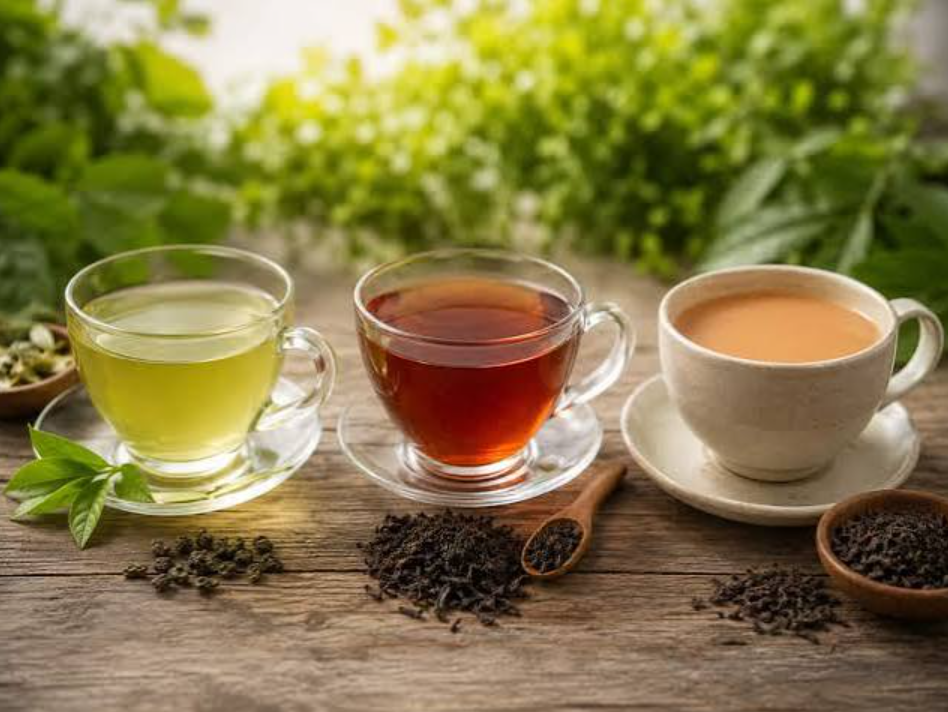
Technically, only beverages made from the Camellia sinensis plant qualify as true tea. Everything else is an herbal infusion, or tisane, brewed from flowers, roots, bark, or leaves of other plants entirely.
Oregon State University’s Linus Pauling Institute confirms that white, green, oolong, black, and pu-erh teas all come from the same Camellia sinensis plant, with different processing methods producing each distinct type.
That single fact clears up a lot of confusion. Chamomile and peppermint are wonderful drinks, but they aren’t technically “tea” in the strict botanical sense, no matter how often the label says otherwise.
Still, common usage lumps them all together under one word, and grocery store shelves rarely bother with the distinction. This guide follows that everyday convention, covering both camps in full.
The Six Core Tea Categories
Before jumping into all 35 varieties, it helps to understand the six broad families true teas fall into: white, green, yellow, oolong, black, and dark tea.
Oxidation level is what separates them. White tea barely oxidizes at all, while black tea oxidizes fully, and oolong sits somewhere in the middle depending on how long the leaves are exposed to air.
The processing choices made at harvest, from withering to rolling to firing, shape everything about the final cup. Two teas picked from the very same bush can taste worlds apart once processed differently.
Now, let’s explore the individual varieties within and beyond these families, starting with the true teas and working outward into the herbal world.
True Teas From Camellia Sinensis
1. Green Tea
Green tea leaves are heated quickly after picking, either through steaming or pan-firing, to halt oxidation almost immediately. This step locks in their fresh, grassy character and preserves the pale green color that gives the tea its name.
The result carries a light, vegetal flavor with moderate antioxidant content, largely thanks to compounds called catechins. Chinese green teas tend toward a nuttier, toastier profile from pan-firing, while Japanese versions lean grassier and more vegetal from steaming.
Green tea brews best with slightly cooled water, since boiling water tends to scorch the delicate leaves and pull out unwanted bitterness. I’ve ruined more than one cup by rushing this step before the kettle had a chance to cool.
It remains one of the most studied teas in nutrition research, largely because of its high catechin concentration. That reputation has made it a staple far beyond its countries of origin.
2. Black Tea
Black tea is fully oxidized, a process that darkens the leaves and deepens their flavor into something bold and robust. This oxidation also gives black tea its noticeably longer shelf life compared to green or white varieties.
It remains the most popular tea in Western countries, forming the base of countless everyday blends and iced tea recipes. Its flavor ranges from brisk and citrusy to deeply malty, depending on where the leaves were grown.
The Census Bureau reports that black tea accounts for about 84 percent of all tea consumed in the United States. That single figure explains why it dominates grocery shelves far more than any specialty variety.
Black tea also holds up remarkably well with milk and sugar, unlike more delicate teas that lose their character under heavy additions. That resilience is part of why it became the backbone of British tea culture.
3. White Tea
White tea undergoes the least processing of any true tea. Young leaves and unopened buds are simply withered in natural air and then dried, without the rolling or firing steps other teas go through.
The result is a delicate, subtly sweet flavor, often described as having notes of melon or fresh hay. Its caffeine content tends to run lower than most other tea types, though this varies more by leaf age than people often assume.
Because the leaves are handled so gently, white tea is particularly sensitive to brewing temperature. Water that’s too hot flattens its subtlety almost instantly, turning a delicate cup into something flat and dull.
It’s a gentle introduction for anyone new to tea drinking, and honestly one of my favorite quiet afternoon choices. There’s something calming about a tea that asks so little of the leaf itself.
4. Oolong Tea
Oolong sits between green and black tea, partially oxidized anywhere from 10 to 80 percent depending on the style. That wide range creates enormous flavor diversity within a single tea category.
Lighter oolongs, oxidized closer to 10 or 20 percent, taste closer to green tea with floral, grassy notes. Darker oolongs, oxidized toward 70 or 80 percent, edge toward black tea’s boldness, often carrying roasted or fruity undertones.
Many oolongs are rolled into tight balls rather than left loose, which allows the leaves to slowly unfurl across multiple steeps. Getting several distinct infusions from the same leaves is part of what makes oolong so rewarding to brew slowly.
It’s genuinely one of the most complex tea categories to explore, and I still find new favorites within it every year. No two oolong producers seem to interpret the style quite the same way.
5. Yellow Tea
Yellow tea is rare and labor-intensive to produce, which explains why it remains one of the least common true teas outside specialty shops. It undergoes a unique “sealed yellowing” step, where slightly oxidized leaves are wrapped and allowed to rest.
That resting period mellows the tea’s grassy edge in a way green tea processing never achieves. The flavor becomes smoother and sweeter, without the vegetal sharpness that sometimes defines green tea.
Historically, yellow tea was reserved for Chinese imperial courts, which adds a certain mystique to tracking it down today. Few producers still bother with the extra steps required to make it properly.
Genuine yellow tea remains hard to find, and prices reflect that scarcity. If you spot one at a specialty shop, it’s worth trying at least once for the sheer rarity of the experience.
6. Pu-erh Tea
Pu-erh is a fermented, aged dark tea from China’s Yunnan province, made through a microbial fermentation process unlike any other tea category. Some batches age for years, even decades, deepening in complexity the entire time.
There are two main styles: raw pu-erh, which ferments naturally and slowly over time, and ripe pu-erh, which undergoes accelerated fermentation to mimic aged flavor more quickly. Each style produces a noticeably different drinking experience.
Its flavor is earthy, smooth, and sometimes slightly woody, with older cakes often developing a mellow sweetness that younger pu-erh lacks entirely. The aging process genuinely transforms the tea over time.
Tea collectors often treat aged pu-erh cakes the way wine enthusiasts treat vintage bottles, storing them carefully and tracking their development. It’s the closest thing the tea world has to a true collector’s market.
7. Matcha
Matcha is a finely ground powder made from shade-grown green tea leaves, whisked directly into hot water rather than steeped and strained. Unlike regular steeped tea, you consume the entire leaf when drinking matcha.
That’s why it delivers a more concentrated dose of antioxidants and caffeine compared to a standard cup of green tea. The shading process before harvest also boosts chlorophyll, giving matcha its striking, almost neon green color.
Traditional preparation involves a bamboo whisk and a specific whisking motion to create a light foam on top. Modern versions are far more casual, often blended into lattes or smoothies without much ceremony at all.
Its vivid color and umami-rich taste have made it a favorite in cafes well beyond Japan. I’ll admit the ceremony around proper matcha preparation initially felt intimidating, but it’s genuinely simple once you try it a few times.
8. Sencha
Sencha is Japan’s most commonly consumed green tea, and it’s typically what people picture when they imagine Japanese tea culture. Its leaves are steamed almost immediately after picking, then rolled into thin, needle-like shapes and dried.
The flavor is grassy, slightly sweet, and refreshing, with a clean finish that doesn’t linger too long. Steaming time varies by producer, which changes how bold or subtle the final cup turns out.
Most Japanese households drink sencha as their everyday tea, reserving rarer teas like gyokuro for special occasions. It sits at a nice middle ground between affordability and genuine quality.
Brewing sencha at slightly cooler temperatures brings out its natural sweetness without tipping into bitterness. It’s a forgiving tea, even for someone still learning proper steeping times.
9. Gyokuro
Gyokuro is a premium shaded Japanese green tea, grown under cover for several weeks before harvest to limit direct sunlight. That shading process fundamentally changes the leaf’s chemistry before it’s ever picked.
Reduced sunlight boosts chlorophyll and amino acid content, particularly an amino acid called L-theanine, which contributes to tea’s calming, umami-rich character. The result is a tea that tastes noticeably different from ordinary sencha.
It produces a rich, sweet, umami flavor unlike typical green tea, often compared to seaweed or fresh-cut grass in the best possible sense. Brewed properly, gyokuro is remarkably smooth with almost no bitterness at all.
Gyokuro is often considered Japan’s finest and most expensive green tea grade, and the price tag reflects the extra labor involved in shading and hand-harvesting. It’s a worthwhile splurge for anyone serious about green tea.
10. Dragonwell (Longjing)
Dragonwell, or Longjing, is one of China’s most famous green teas, named after a well near Hangzhou where legend says a dragon once lived. Its flat, sword-shaped leaves are pan-fired by hand in small batches, a labor-intensive process that few machines replicate well.
The taste is nutty, chestnut-like, and smooth, with almost no bitterness when brewed correctly. Genuine Dragonwell has a distinct flattened leaf shape that’s easy to spot even before you brew it.
Authentic Dragonwell from Hangzhou’s protected growing region commands premium prices among collectors, similar to how Champagne is protected in France. Cheaper imitations exist, but they rarely match the real thing’s smoothness.
I find Dragonwell one of the more approachable Chinese green teas for newcomers, since its flavor is gentle rather than aggressively grassy. It’s a good starting point before exploring rarer regional teas.
ALSO READ: 35 Types of Mint Plants ( Varieties Worth Growing, With Pictures)
11. Darjeeling Tea
Grown in the Himalayan foothills of India, Darjeeling is often called the “champagne of teas” because of its distinctive, prized character. Its high elevation and cool climate slow the plant’s growth, concentrating flavor in each leaf.
The flavor carries a muscatel, fruity note unlike any other black tea, sometimes described as tasting faintly of grapes or wine. That signature quality comes from a combination of elevation, soil, and a specific cultivar of the tea plant.
First-flush Darjeeling, harvested in early spring, is especially prized for its lighter, more delicate character. Second-flush harvests later in the season produce a bolder, more traditionally “black tea” profile.
Genuine Darjeeling is legally protected under a geographical indication, much like Champagne or Parmesan cheese. That protection exists precisely because so much tea sold as “Darjeeling” worldwide isn’t actually grown there.
12. Assam Tea
Assam tea comes from the lowland floodplains of northeastern India, a region with a warm, humid climate that suits robust tea growth. The plant used here is actually a different variety of Camellia sinensis than the one grown in China.
Assam has a malty, robust flavor that pairs well with milk, which is exactly why it became the backbone of so many traditional English blends. Its bold character holds up even when diluted with cream and sugar.
It’s a common base for many classic English breakfast blends, often mixed with Ceylon or Kenyan teas to round out the profile. Straight Assam, without any blending, delivers an intensely strong cup on its own.
The region produces an enormous share of India’s total tea output, making it one of the largest tea-growing areas on earth. Its scale is genuinely hard to overstate within the global tea trade.
13. Ceylon Tea
Ceylon tea comes from Sri Lanka, grown at varying elevations that each produce noticeably different flavor profiles. Lowland Ceylon tends to be stronger and more full-bodied, while high-grown versions are lighter and more aromatic.
The overall character is bright, brisk, and slightly citrusy, making it a versatile tea for both hot brewing and iced preparations. Its brisk quality is part of why it’s such a popular iced tea base in warmer climates.
Ceylon remains one of the most exported teas worldwide, and Sri Lanka’s tea industry represents a significant portion of the country’s agricultural economy. The region’s rolling hills are practically synonymous with tea cultivation at this point.
Because of its versatility, Ceylon shows up in countless blends without drawing much attention to itself. It’s a quiet workhorse tea that rarely gets the spotlight it probably deserves.
14. Earl Grey
Earl Grey is a black tea flavored with oil of bergamot, a citrus fruit grown primarily in southern Italy. Its origin story ties back to a 19th-century British prime minister, though the exact details remain more legend than documented fact.
The flavor is floral, citrusy, and instantly recognizable, with the bergamot oil adding a fragrant lift to whatever black tea base is used. Quality varies significantly depending on whether real bergamot oil or artificial flavoring was used.
It remains one of the most popular flavored black teas globally, showing up in everything from loose-leaf blends to bagged supermarket versions. Some producers add cornflower petals purely for visual appeal, without affecting the taste much.
I find a well-made Earl Grey genuinely transporting, almost citrus-forward enough to drink without milk at all. Lesser versions, unfortunately, can taste more like fake orange candy than actual tea.
15. English Breakfast Tea
English Breakfast is a robust blend, typically combining Assam, Ceylon, and sometimes Kenyan black teas into one hearty cup. It’s designed specifically to stand up well to milk and sugar without losing its character.
The flavor is strong, malty, and full-bodied, built for exactly the kind of morning jolt its name implies. Unlike single-origin teas, the blend ratio varies by brand, so flavor can shift noticeably between producers.
It’s the classic morning cup across the UK and much of the English-speaking world, often served alongside a full breakfast spread. Its name has become almost synonymous with “strong, reliable black tea” in everyday conversation.
Despite the name, there’s no single fixed recipe. Every tea company blends its own version, which is part of why two boxes labeled “English Breakfast” can taste noticeably different.
16. Lapsang Souchong
Lapsang Souchong is a Chinese black tea smoked over pinewood fires during the drying process, a technique that dates back centuries. The result is unmistakably distinctive among black teas.
Its flavor is deeply smoky, almost bacon-like, carrying an intensity that either delights or repels first-time drinkers. There’s rarely a lukewarm reaction to this particular tea.
It’s a love-it-or-hate-it tea that rewards curious drinkers willing to step outside typical black tea expectations. I was skeptical the first time I tried it, and now it’s become an occasional favorite.
Some producers use it as a subtle flavoring agent in blends, adding just a touch of smokiness without overwhelming the base tea. Used sparingly, it adds real depth to an otherwise ordinary cup.
17. Tie Guan Yin (Iron Goddess)
Tie Guan Yin is China’s most celebrated oolong tea, originating from Fujian province and named after a legendary bodhisattva. It can be lightly oxidized and floral, or roasted for a deeper, toastier profile, depending on the producer’s style.
The name translates to “Iron Goddess of Mercy,” tied to a folk story about a farmer who discovered the original tea bush through divine guidance. Whether or not you believe the legend, the tea itself has earned its reputation on flavor alone.
Its orchid-like aroma is genuinely memorable, especially in lightly oxidized versions that emphasize floral notes over roasted ones. Multiple steepings reveal different layers of flavor as the tightly rolled leaves slowly unfurl.
Modern Tie Guan Yin comes in two broad styles: traditional roasted, and modern light. Trying both side by side is one of the better ways to understand how much processing style can change a tea’s entire personality.
18. Da Hong Pao
Da Hong Pao, or “Big Red Robe,” is a legendary Wuyi Rock oolong from China’s Fujian province, grown on the mineral-rich cliffs of the Wuyi mountains. It originates from just six ancient mother bushes, now widely cultivated from cuttings taken over generations.
The flavor is deep, roasted, and mineral-rich, often described as having a distinct “rock rhyme” that comes from the unique terroir of its growing region. That mineral quality is difficult to replicate outside the original mountains.
Genuine old-bush Da Hong Pao remains among the most expensive teas in the world, with tea from the original six bushes essentially unavailable for purchase at any price. Most commercial Da Hong Pao today comes from cloned descendants instead.
The roasting process for this tea is notably more intense than most oolongs, giving it a warmth that pairs beautifully with cooler weather. It’s one of the more grounding teas I reach for once autumn arrives.
19. Jin Xuan (Milk Oolong)
Jin Xuan is a Taiwanese oolong known for its naturally creamy, milky flavor, developed through selective cultivar breeding rather than any added flavoring. That richness comes entirely from the tea cultivar itself.
It’s a gentle, approachable oolong for newcomers, since its flavor is soft and rounded rather than sharp or bitter. Many first-time oolong drinkers find Jin Xuan an easier entry point than more traditional styles.
The smooth, buttery finish surprises many first-time tasters who assume any “milk oolong” must be artificially flavored. Some lower-quality versions do use added flavoring, so it’s worth seeking out an authentic Taiwanese source.
Its light oxidation level keeps the flavor closer to green tea territory, just with that distinctive creamy edge layered on top. It brews well multiple times, each steep revealing a slightly different note.
20. Genmaicha
Genmaicha is a Japanese green tea blended with roasted brown rice, a combination that originated as a way to stretch more expensive tea leaves further. Some varieties even include popped rice kernels for extra crunch and aroma.
The flavor is toasty and nutty, balancing green tea’s natural grassiness with the roasted rice’s warmth. It’s a genuinely comforting cup, especially on a cold afternoon.
It’s historically known as a more affordable everyday tea in Japan, sometimes nicknamed “popcorn tea” because of the way the rice kernels occasionally pop during roasting. That practical origin hasn’t stopped it from becoming genuinely beloved on its own merits.
Genmaicha pairs particularly well with savory meals, since its toasted character doesn’t clash with rich or salty foods. I find it one of the easiest teas to serve to guests who claim they “don’t really like tea.”
21. Jasmine Tea
Jasmine tea is typically a green tea base scented with fresh jasmine blossoms during processing, though white or oolong bases are sometimes used as well. The flowers are layered with tea leaves over several nights, then removed before the final drying step.
The result is a fragrant, floral aroma with a light, sweet finish that lingers pleasantly after each sip. Quality jasmine tea uses real flowers rather than artificial scenting, which makes a noticeable difference in depth of aroma.
It’s one of the most widely recognized scented teas worldwide, often served in Chinese restaurants as a fragrant, palate-cleansing option. Its gentle character makes it approachable even for people who find plain green tea too grassy.
Higher-grade jasmine teas sometimes include a few dried jasmine petals mixed in with the leaves for visual appeal. It’s a small detail, but one that signals genuine care in how the tea was scented.
ALSO READ: 15 Varieties of Rosemary (Different Types Explained, With Pictures)
Herbal Teas and Tisanes
22. Chamomile Tea
Chamomile is made from dried chamomile flowers, naturally caffeine-free and gentle on the stomach. It’s one of the most popular bedtime teas worldwide, largely thanks to its calming reputation.
The flavor is mild, apple-like, and soothing, with a subtle floral undertone that becomes more pronounced the longer it steeps. Honey pairs particularly well with chamomile if you prefer a touch of sweetness.
Many people reach for it specifically to wind down before sleep, and there’s a long tradition of using chamomile as a mild relaxant before bed. It’s gentle enough for most people to drink nightly without issue.
Dried chamomile flowers also work well combined with lavender or lemon balm for an even more calming blend. I’ve found that mixing a few herbs together often produces a more complex, satisfying cup than any single ingredient alone.
23. Peppermint Tea
Peppermint tea is brewed from dried peppermint leaves, delivering a cool, refreshing, minty punch that wakes up the senses almost instantly. Its intensity depends heavily on how long the leaves steep.
It’s often used to settle digestive discomfort after a heavy meal, a use case backed by generations of home remedy tradition. Many people keep a box specifically for this purpose rather than everyday drinking.
No caffeine means it’s suitable any time of day, including right before bed without any risk of disrupting sleep. That flexibility makes it one of the more practical herbal teas to always have on hand.
Fresh peppermint leaves, if you can get them, produce an even brighter, more vivid cup than dried versions. Growing a small peppermint plant at home is surprisingly easy and rewarding for tea lovers.
24. Ginger Tea
Ginger tea is made by steeping fresh or dried ginger root in hot water, sometimes simmered rather than simply steeped for a stronger extraction. Its flavor is spicy, warming, and slightly sweet, with a noticeable kick depending on how much ginger is used.
It’s a common home remedy for nausea and cold symptoms, a use supported by considerable traditional and some clinical interest. Many people specifically reach for it during travel to help settle motion sickness.
I keep fresh ginger on hand year-round just for this, since a few thin slices simmered for ten minutes produce a far more potent cup than any tea bag version. It’s one of the simplest homemade teas to prepare from scratch.
Adding honey and lemon to ginger tea creates a classic cold-weather combination that shows up across many different cultures. It’s a simple formula, but one that’s stood the test of time for good reason.
25. Hibiscus Tea
Hibiscus tea comes from dried hibiscus flower petals, producing a strikingly deep red color as soon as hot water hits them. The taste is tart, cranberry-like, and slightly floral, with a tang that some people find genuinely addictive.
It’s naturally caffeine-free and often served chilled in warmer climates, where its tartness makes an especially refreshing iced drink. Adding a bit of sugar or honey balances the acidity nicely for those who prefer a milder cup.
Many Middle Eastern and African cultures serve it as a celebratory drink, sometimes called karkade in Egypt or bissap in West Africa. Each region tends to have its own preferred way of sweetening or spicing it.
Hibiscus also blends well with other fruity or herbal ingredients, like orange peel or rosehips, to round out its sharp edges. I like it best cold, over ice, on a genuinely hot afternoon.
26. Rooibos Tea
Rooibos, or “red bush” tea, comes from a South African shrub unrelated to Camellia sinensis, harvested and fermented in a process unique to the plant. It’s naturally caffeine-free with a distinctly earthy sweetness that sets it apart from most other herbal options.
The flavor is smooth, slightly nutty, and mildly sweet, without any of the bitterness that can show up in stronger black or green teas. That gentleness makes it a favorite among people sensitive to tannins.
Rooibos has grown popular globally as a gentle, low-stimulant alternative, particularly among people cutting back on caffeine but still wanting something warm and comforting. It also holds up well with milk, similar to black tea.
There’s also a “green rooibos” variety, unoxidized and slightly grassier than the traditional reddish-brown version. It’s less common but worth trying if you come across it.
27. Yerba Mate
Yerba mate is a South American infusion made from the leaves of a holly relative, traditionally prepared in a hollowed gourd and sipped through a metal straw called a bombilla. The ritual around its preparation is almost as important as the drink itself in many households.
The flavor is earthy, grassy, and slightly bitter, with a moderate caffeine kick that sits somewhere between coffee and traditional tea. First-time drinkers sometimes find the bitterness intense, though it mellows with practice and proper brewing.
Argentina, Uruguay, and Paraguay treat it as a genuine cultural ritual, often shared communally among friends and family from the same gourd. Refilling the same gourd multiple times throughout a gathering is part of the social experience.
Mate is also sold in more casual tea bag form for people who want the flavor without the traditional preparation. It’s a convenient entry point, though purists insist the gourd-and-straw method is the only proper way to drink it.
28. Lemongrass Tea
Lemongrass tea is brewed from the stalks of the lemongrass plant, sometimes fresh and sometimes dried, depending on availability. It’s bright, citrusy, and naturally caffeine-free, with an aroma that fills the room almost as soon as the water hits the leaves.
It’s common across Southeast Asian and African cuisines, often paired with ginger or mint for added complexity. The combination tends to feel both refreshing and gently warming at the same time.
The aroma alone feels instantly refreshing, which is part of why lemongrass shows up so often in aromatherapy contexts too. Even a short steep is usually enough to extract its signature citrus scent.
Fresh lemongrass stalks, bruised slightly before steeping, release noticeably more flavor than dried versions. If you can find fresh stalks at a local market, they’re worth seeking out.
29. Masala Chai
Masala chai is a spiced tea blend from India, typically combining black tea with cinnamon, cardamom, ginger, and cloves in varying proportions depending on the household. It’s usually brewed with milk and sweetener, simmered together rather than simply steeped.
The flavor is warm, spicy, and rich, with each spice contributing a distinct note that shifts depending on the recipe. Some versions lean heavier on cardamom, while others emphasize ginger’s sharper bite.
Chai has become one of the most globally recognized tea styles outside its country of origin, though Western “chai lattes” often differ significantly from traditional Indian preparation. Authentic masala chai tends to be spicier and less sweet than its coffee shop counterpart.
Every family in India seems to have its own specific spice ratio passed down through generations. That variation is part of what makes chai feel less like a fixed recipe and more like a living tradition.
30. Butterfly Pea Flower Tea
Butterfly pea flower tea is brewed from dried blue flower petals, producing a vivid blue color that shifts dramatically with even a small amount of acid. Add lemon juice, and it shifts to a deep purple almost instantly.
The flavor itself is mild and slightly earthy, making it more popular for its visual appeal than its taste alone. Most people drink it as much for the color-changing spectacle as for the flavor itself.
It’s become a favorite for creative, Instagram-worthy drinks, often used as a base for colorful cocktails and mocktails at trendy cafes. That visual novelty has helped it spread well beyond its native Southeast Asian origins.
Because its flavor is so subtle, it pairs easily with other stronger ingredients like lemongrass or ginger without clashing. It’s less a standalone tea and more a striking base for other flavor combinations.
31. Echinacea Tea
Echinacea tea comes from the echinacea flower, long used in traditional remedies to support immune health during cold and flu season. It’s caffeine-free with a mildly earthy, slightly tingly taste that some people find distinctive on the tongue.
Many people reach for it at the first sign of a cold, treating it as an early intervention rather than a daily beverage. Its popularity tends to spike noticeably during colder months for exactly this reason.
The tingling sensation some drinkers notice comes from natural compounds in the echinacea plant itself, not an additive or flavoring. It’s an unusual sensory quality that sets echinacea apart from most other herbal teas.
It’s often blended with elderberry or ginger for an extra layer of seasonal support. Combining a few immune-focused herbs together has become a common approach during the winter months.
32. Lavender Tea
Lavender tea is brewed from dried lavender buds, delivering a soft, floral, calming flavor that’s more delicate than its strong scent might suggest. A little goes a long way, since too much lavender can quickly turn soapy rather than pleasant.
It’s often blended with chamomile or honey for extra sweetness, softening its floral intensity into something more balanced. That pairing has become almost a classic combination in relaxation-focused tea blends.
Beyond its taste, many drinkers value it purely for the relaxing aroma released as it steeps. Just smelling the tea as it brews can feel calming before you’ve even taken a sip.
It’s a gentle evening choice for unwinding, and I find it especially nice after a stressful day when I want something warm but not stimulating. The scent alone does a lot of the work.
33. Turmeric Tea
Turmeric tea, sometimes called golden milk tea, is made from ground turmeric root, often combined with black pepper and warming spices like cinnamon or ginger. Black pepper isn’t just a flavor addition here; it actually helps the body absorb turmeric’s active compounds more effectively.
It carries an earthy, slightly bitter, peppery taste that some people find takes a bit of getting used to. Adding honey or milk helps round out the sharper edges for a more approachable cup.
Turmeric’s active compound, curcumin, has drawn considerable research interest for its anti-inflammatory properties, making this tea popular among wellness-focused drinkers. It’s become a staple in households looking for a natural addition to their daily routine.
I usually make mine with a splash of warm milk and a pinch of black pepper, closer to the traditional golden milk preparation than a plain steeped tea. It feels more like a cozy tonic than a casual drink.
34. Elderberry Tea
Elderberry tea is made from dried elderberries, sometimes blended with hibiscus or citrus peel for added brightness. The flavor is tart, fruity, and slightly sweet, with a deep purple-red color similar to hibiscus tea.
It’s traditionally consumed during cold and flu season, following a long history of elderberry syrup and tea being used as folk remedies across Europe. That seasonal association has carried through into modern wellness culture.
Many households treat it as a seasonal immune-support ritual, brewing a pot as soon as the weather turns colder. It’s become almost as common as chicken soup for anyone feeling under the weather.
Raw elderberries themselves are mildly toxic and shouldn’t be eaten straight off the plant, so properly dried and prepared elderberry products are important here. Commercially sold elderberry tea is processed specifically to be safe for regular consumption.
35. Kombucha
Kombucha is a fermented tea beverage made by adding a bacteria and yeast culture, often called a SCOBY, to sweetened black or green tea. The fermentation process creates natural carbonation and a tangy, slightly vinegary flavor over one to two weeks.
It’s technically tea-based, though quite different from a standard steeped cup once fermentation transforms its chemistry. The sugar added at the start is largely consumed by the culture during fermentation, leaving behind a lightly effervescent, tart drink.
Kombucha has surged in popularity as a probiotic-rich, fizzy alternative to soda, with countless commercial flavors now lining grocery store shelves. Homebrewing it has also become a popular hobby among fermentation enthusiasts.
Flavor varies enormously depending on fermentation time and any fruit or herbs added afterward. A shorter ferment tends to taste sweeter, while a longer one leans more sour and vinegary.
Caffeine Content: A Quick Comparison
Caffeine levels vary considerably across tea types, which surprises a lot of casual drinkers. It’s not simply “tea has caffeine, herbal tea doesn’t,” though that’s a decent starting rule.
Black tea typically contains around 47 mg of caffeine per 8-ounce cup, while green tea contains closer to 28 mg. White and oolong teas usually fall somewhere between those two figures, depending heavily on brewing time and leaf quality.
Herbal infusions like chamomile, peppermint, hibiscus, and rooibos contain no caffeine at all, since they don’t come from the Camellia sinensis plant. That makes them safe options any time of day, including right before bed.
The National Center for Complementary and Integrative Health notes that tea contains polyphenols, caffeine, theophylline, theobromine, and amino acids, all contributing to its distinct effects on the body.
Health Research Worth Knowing
Tea’s reputation as a healthy beverage isn’t just marketing. Genuine research backs up several of its benefits, even if some findings remain preliminary.
According to NIH-affiliated research published in PubMed Central, both coffee and tea show a generally cardioprotective profile, with favorable effects on insulin resistance and reduced diabetes risk.
Green tea in particular has drawn attention for flavan-3-ol compounds called catechins, according to Oregon State University’s Linus Pauling Institute. These compounds are believed to contribute to tea’s antioxidant effects.
NCCIH also notes that observational studies suggest daily tea consumption may be associated with reduced cardiovascular disease risk, though most human trials remain limited compared to animal studies.
I find it reassuring that something so enjoyable to drink also carries genuine, research-backed benefits. That’s a rare combination in the beverage world.
Tea by the Numbers
The scale of the tea industry is genuinely impressive. The North America tea market was valued at over $42 billion in 2025, according to industry analysis.
The United States alone consumed almost 85 billion servings of tea in a recent year, equal to more than 3.9 billion gallons, based on Tea Association of the U.S.A. figures cited by the Census Bureau.
Of that total, black tea made up roughly 84 percent of consumption, with green tea accounting for about 15 percent. Oolong, white, and dark teas made up the small remainder.
That distribution explains why black tea dominates supermarket shelves, while specialty teas like gyokuro or Da Hong Pao stay tucked away in niche shops.
How to Brew Different Tea Types
Brewing temperature and steep time matter more than most people realize. Getting this wrong is the fastest way to ruin a good tea.
Delicate teas like white and green tea prefer cooler water, roughly 160 to 180°F, steeped for just two to three minutes. Boiling water tends to scorch these leaves.
Robust teas like black tea and pu-erh handle boiling water well, steeped for three to five minutes. Their sturdier leaves need that extra heat to fully unlock flavor.
Herbal infusions generally tolerate boiling water and longer steep times, often five to ten minutes, since there’s no delicate leaf structure to damage.
Frequently Asked Questions
What’s the healthiest type of tea? Green tea is frequently cited for its high catechin content, though black, white, and herbal teas each offer distinct benefits depending on your goals.
Which tea has the least caffeine? White tea generally contains the least caffeine among true teas, while herbal infusions like chamomile and peppermint contain none at all.
Is herbal tea technically “tea”? No, not botanically. True tea comes only from the Camellia sinensis plant; herbal blends are infusions made from other plants, flowers, or roots.
What’s the difference between oolong and green tea? Green tea is unoxidized, while oolong is partially oxidized, giving it a broader, often deeper flavor range than green tea alone.
Final Thoughts
Thirty-five varieties might sound overwhelming at first glance. But once you understand the six core tea families and where herbal infusions fit in, the whole category becomes far less mysterious.
I’ve genuinely changed how I shop for tea since digging into all this. What used to be a rushed grocery-aisle decision now feels more like picking the right tool for the moment.
Whether you want a gentle bedtime cup or a bold morning jolt, there’s a tea variety built exactly for that purpose. That’s the quiet beauty of this ancient, endlessly varied drink.
References
- United States Census Bureau. National Hot Tea Month: January 2024. https://www.census.gov/newsroom/stories/hot-tea-month.html
- National Center for Complementary and Integrative Health (NCCIH), National Institutes of Health. Tea. https://www.nccih.nih.gov/health/tea
- National Center for Complementary and Integrative Health (NCCIH), National Institutes of Health. Green Tea: Usefulness and Safety. https://www.nccih.nih.gov/health/green-tea
- Linus Pauling Institute, Oregon State University. Tea. https://lpi.oregonstate.edu/mic/food-beverages/tea
- National Institutes of Health, National Library of Medicine (PubMed Central). Is Coffee and Tea a Threat or Ally to Cardiovascular Health? https://pmc.ncbi.nlm.nih.gov/articles/PMC10769121/
- National Institutes of Health, National Library of Medicine (PubMed Central). Determination of L-Theanine and Caffeine Contents in Tea Infusions with Different Fermentation Degrees and Brewing Conditions. https://pmc.ncbi.nlm.nih.gov/articles/PMC12248710/
- Cornell Cooperative Extension, Herkimer County. The Story of Teas. https://blogs.cornell.edu/cceherkimer/2023/10/11/the-story-of-teas/

Tim M Dave is a gardening expert with a passion for houseplants, particularly cacti and succulents. With a degree in plant biology from the University of California, Berkeley, he has vast experience in gardening. Over the years, he has cultivated a vast collection of desert plants and learned a great deal about how to grow and care for these unique companions.