Black Lace Elderberry: Identification, Size, Shape, and Growth Details
I still remember the first time I saw a Black Lace Elderberry in a neighbor’s front bed. From a distance, I genuinely mistook it for a Japanese maple. Up close, the lacy, almost-black foliage and the soft pink flower clusters told a different story altogether.
That mix of curiosity and admiration is exactly what this plant tends to spark, and it’s why so many gardeners search for it by name.
This guide covers everything worth knowing about Black Lace Elderberry (Sambucus nigra ‘Eva’): where it comes from, how it grows, how to care for it, and whether it deserves a spot in your own yard.
Before we dive in, here is a quick summary table for this amazing plant:
| Common name | Black Lace Elderberry, Black Lace Elder |
| Botanical name | Sambucus nigra ‘Eva’ (sold as Black Lace™/Black Lace®) |
| Plant family | Adoxaceae (formerly classed under Caprifoliaceae) |
| Plant patent | U.S. Plant Patent 15,575, granted February 2005 |
| Bred by | Ken Tobutt and Jacqui Prevette, East Malling Research Station, Kent, England |
| Mature height | 6 to 8 feet (some sources note up to 10 feet unpruned) |
| Mature spread | 6 to 8 feet |
| USDA Hardiness Zones | 4 to 7 |
| Cold tolerance | Reported survival to about -30°F in southern Wisconsin trials |
| Sunlight needs | Full sun to partial shade (best color in full sun) |
| Soil preference | Moist, well-drained, fertile soil; tolerates clay |
| Bloom time | Late spring to early summer (June) |
| Flower color | Pale to creamy pink, lemon-scented |
| Fruit | Small black to blackish-red berries, edible when cooked |
| Toxicity | Medium severity; raw leaves, stems, roots, and seeds contain cyanide-inducing compounds |
| Growth rate | Fast |
| Awards | Royal Horticultural Society Award of Garden Merit; Silver Medal, Royal Boskoop Horticultural Society |
What Exactly Is Black Lace Elderberry?
Black Lace Elderberry is a cultivated variety of the European elder, a deciduous shrub native to Europe, southwestern Asia, and northern Africa.
The wild species, plain Sambucus nigra, is a fairly coarse, sprawling plant that can reach 8 to 20 feet tall in the right conditions, according to the Missouri Botanical Garden’s Plant Finder database [1].
Black Lace is nothing like that wild ancestor in appearance, though the bones underneath are the same. Breeders Ken Tobutt and Jacqui Prevette developed it at the East Malling Research Station in Kent, England, working from European elderberry stock, and it later received U.S.
Plant Patent 15,575 in February 2005 [2][6]. It’s now sold worldwide under the Proven Winners® brand and similar trademarked names.
I find the breeding backstory genuinely interesting, because it explains why the plant behaves so differently from a typical roadside elder. Decades of selective work went into compressing a 20-foot rangy shrub into a tidy, ornamental specimen with jet-black, dissected foliage.
In short: Black Lace Elderberry is not a separate species. It’s a patented, ornamental selection of Sambucus nigra, prized for its foliage rather than its fruit.

The Look That Makes People Stop and Stare
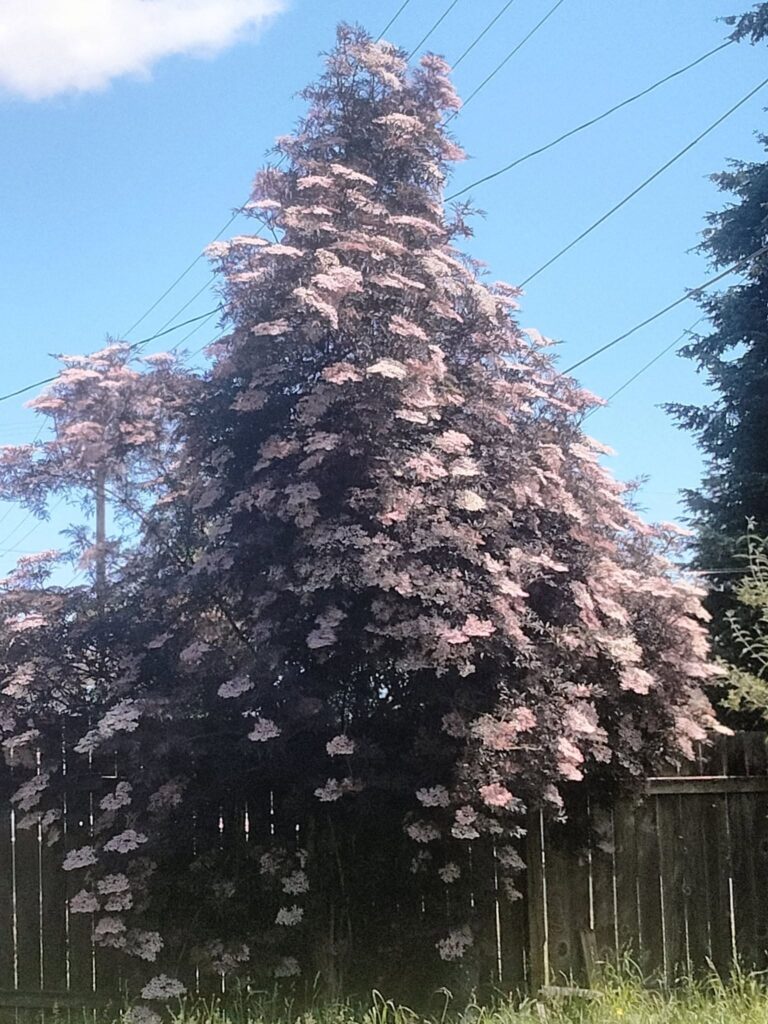
The single biggest reason gardeners plant Black Lace is its leaf color and texture. The foliage is deeply cut, almost fern-like, and ranges from dark burgundy to nearly black through the entire growing season [3][4].
Several plant databases compare the visual effect directly to a Japanese maple, and once you see it, that comparison sticks.
In late spring, flat-topped clusters of small, pale pink flowers open against that dark backdrop. The blooms carry a light lemon scent and slowly fade to a near-white shade as they age, according to observations recorded by the University of Wisconsin-Madison’s Extension program [6]. Bees and butterflies visit them readily.
By midsummer, the flowers give way to small clusters of black to blackish-red berries, each roughly 3/8 inch across [1][5]. The berries are edible once cooked, though Black Lace was bred mainly for looks, not for heavy fruit production.
If you want a serious harvest, the straight American elderberry (Sambucus canadensis) is a better culinary choice.
One small disappointment worth mentioning honestly: the fruit set on Black Lace is often light. Gardeners hoping for jars of elderberry syrup are usually better served by a fruiting cultivar.
Size, Shape, and Growth Habit
Most references list Black Lace Elderberry at 6 to 8 feet tall and wide at maturity, with a fast growth rate [5][6]. Oregon State University’s Landscape Plants database describes it as compact compared to the wild species, sitting in that same 6 to 8 foot range [2].
Left unpruned, some specimens stretch toward 10 feet. A documented 10-year-old plant at the Dane County Extension Teaching Garden in Wisconsin had reached 8 feet tall and 5 feet wide before regular pruning was introduced [6].
That’s a useful, real-world data point if you’re trying to picture how the plant performs over a decade rather than a single season.
The growth habit itself is upright but a little loose and irregular, not the dense, rounded form some buyers expect. Extension horticulturists in Wisconsin describe it as “somewhat gawky,” especially while young, though good pruning improves its structure considerably [6].
I’d call this an honest trade-off: you get extraordinary foliage color in exchange for a slightly informal silhouette.
Where Does Black Lace Elderberry Grow Best?
Climate and Hardiness Zones
Black Lace Elderberry is rated for USDA Hardiness Zones 4 through 7, based on data from Oregon State University and several specialty nurseries [2][5].
The North Carolina State Extension Gardener Plant Toolbox places the broader Sambucus nigra species, including its cultivars, in zones 5a through 7b for that state specifically [3].
Cold tolerance is one of the plant’s quiet strengths. Field reports from southern Wisconsin note that established specimens have survived temperatures down to roughly -30°F, although some winter dieback can occur in particularly harsh seasons [6]. That single statistic tells you this is not a fragile plant once it’s settled in.
Light Requirements
This shrub wants full sun for best color. In partial shade, the foliage often shifts toward a softer bronze-purple rather than the deep near-black shade sun-grown plants achieve [6]. If the whole point of buying this plant is the dramatic foliage, skimping on sun exposure works against you.
Soil Conditions
Black Lace tolerates a wide range of soils but performs best in moist, fertile, well-drained ground. It handles clay reasonably well and isn’t fussy about soil pH, doing fine in both acidic and alkaline conditions, according to nursery growing notes from Frank P Matthews in the UK [4].
Consistently soggy, waterlogged sites are the main thing to avoid.
How to Plant Black Lace Elderberry
Planting this shrub correctly sets the tone for everything that follows. Here is a straightforward approach:
- Choose a sunny spot. Pick a location that gets at least six hours of direct sun daily for the richest leaf color.
- Check drainage. Dig a test hole and fill it with water; if it drains within a few hours, the spot is suitable.
- Dig a hole twice the width of the root ball, but only as deep as the root ball itself, so the crown sits level with the soil surface.
- Amend the soil with compost if your native soil is sandy or heavy clay.
- Space multiple plants roughly seven feet apart on center to allow for the shrub’s mature spread [5].
- Water thoroughly after planting and apply two to three inches of mulch, keeping it away from the stem base.
Spring or early fall planting tends to give the roots time to settle before extreme summer heat or winter cold arrives.
Care and Maintenance Through the Seasons
Watering
Young plants need consistent moisture while they establish a root system, typically through their first one to two growing seasons. Mature specimens are fairly drought-tolerant but still look and perform best with regular watering during dry stretches, especially in full sun locations.
Feeding
A balanced, slow-release shrub fertilizer applied once in early spring is usually enough. Heavy nitrogen feeding tends to push lush, weak growth that’s more prone to wind damage, so moderation works better than excess here.
Pruning: The Most Important Skill
Pruning is where Black Lace Elderberry asks the most from its owner, and it’s also where opinions diverge slightly among growers.
Some gardeners cut the shrub back hard in late winter or early spring. This keeps the plant smaller and encourages the most vividly colored new growth, since young leaves tend to show the deepest purple-black tones [6].
The trade-off is that hard pruning can trigger such vigorous regrowth that the plant needs trimming again mid-season.
Other growers prefer lighter, structural pruning right after the spring bloom, removing dead wood and thinning crowded interior branches to improve airflow and light penetration. This approach sacrifices some color intensity for a tidier, more floriferous plant.
Either way, expect to prune at least once a year. Left entirely alone, the shrub becomes leggy, develops weak wood, and can suffer wind or snow damage to its branches [3].
Common Pests and Diseases
Black Lace Elderberry is generally healthy, but it isn’t bulletproof. Reported issues include:
- Aphids, which cluster on new growth and tender shoots.
- Spider mites, more common during hot, dry spells.
- Powdery mildew, leaf spot, and occasional cankers, particularly in poorly ventilated plantings [3].
- Verticillium wilt, a soil-borne fungal disease that some nurseries flag as a risk for this cultivar [5].
The plant is widely described as deer resistant, which is a meaningful advantage in areas where browsing pressure is heavy [5]. Routine inspection during the growing season usually catches pest problems early enough to manage them with simple measures like a strong water spray or insecticidal soap.
Is Black Lace Elderberry Toxic? What You Should Know
This is a question worth taking seriously, especially for households with children, pets, or grazing animals nearby.
According to the North Carolina State Extension Gardener Plant Toolbox, Sambucus nigra carries a medium poison severity rating. The toxic compounds are cyanide-inducing glycosides found in the leaves, roots, seeds, and stems [3].
Symptoms of ingestion can include nausea, vomiting, diarrhea, and a general feeling of illness.
The ripe, properly cooked berries are generally considered safe and are the part traditionally used for jams, syrups, and wine. Raw or unripe berries, along with any other plant part, should not be eaten [3].
The plant does not cause contact dermatitis simply from touching it, so handling the foliage during gardening tasks isn’t a concern.
If you have a curious dog or cat, it’s worth knowing that elderberry, including Black Lace, has been flagged by animal welfare organizations as potentially harmful if consumed [5].
As with most ornamental shrubs that double as food plants, the safe rule is simple: only eat what you’ve confirmed is ripe and properly prepared, and keep pets from snacking on the leaves or stems.
Will It Produce Berries? Pollination Explained
Black Lace Elderberry can self-pollinate to a degree, but fruit set improves noticeably with a compatible cross-pollinator nearby. Nursery growing guides recommend pairing it with cultivars such as Black Beauty®, Instant Karma®, or Laced Up® to boost berry production [5].
Even with a pollinator partner, don’t expect a heavy harvest. University extension observations describe fruiting on Black Lace as comparatively light, suggesting it’s planted for ornamental value first, with berries as a pleasant bonus rather than the main goal [6].
Black Lace vs. Other Dark-Leaved Elderberry Cultivars
If you’ve shopped for this plant, you’ve probably noticed it isn’t alone on the shelf. A few related cultivars are worth knowing about before you buy:
- Black Beauty®: Similar dark purple foliage but with broader, less finely cut leaves and stronger fruit production.
- Black Tower™: Grows to a comparable height but stays narrower, around 3 to 4 feet wide, useful for tight spaces.
- Laced Up™: Even narrower and more compact than Black Tower, with the same lacy leaf texture [6].
- Instant Karma®: Bred specifically as a reliable pollinator partner and fruit producer.
Choosing between them usually comes down to available space and whether fruit matters to you. If you want maximum drama in a wide bed, Black Lace remains the classic choice.
Landscape Design Ideas
Dark foliage plants earn their keep by making everything around them look brighter. Black Lace pairs beautifully with silver- or gray-leaved companions such as dusty miller or artemisia, a contrast that several extension horticulturists specifically recommend [6].
It also works well as:
- A specimen plant in a sunny island bed where its texture can be appreciated from multiple angles.
- An informal hedge or privacy screen, given its naturally upright, multi-stemmed habit.
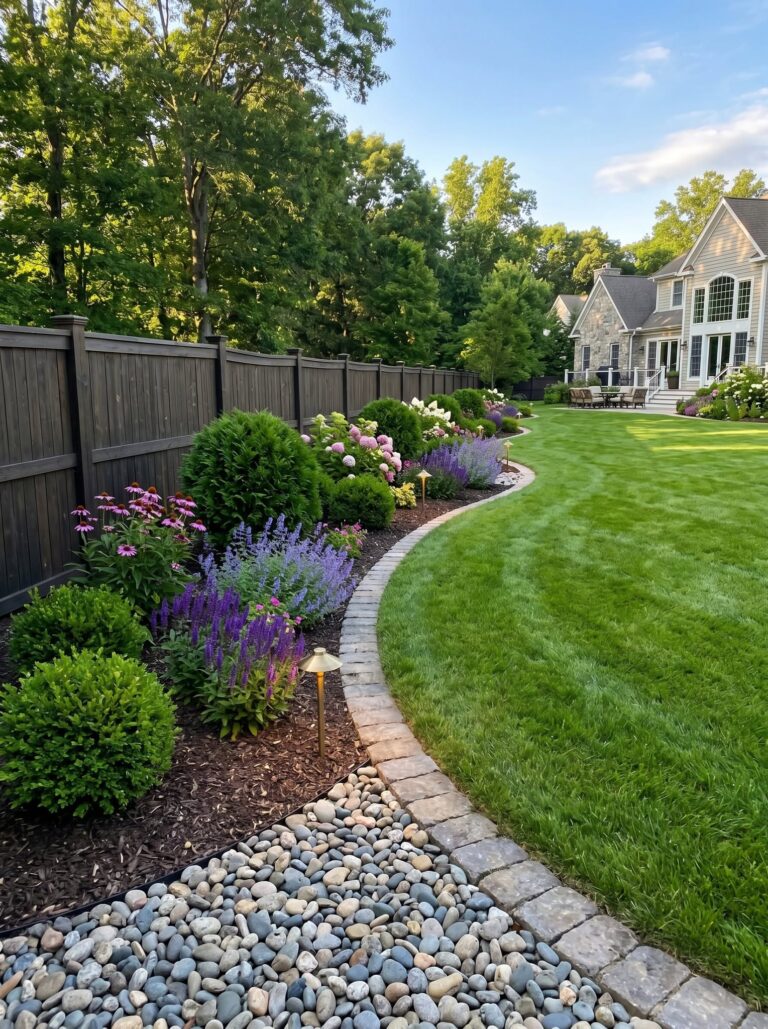
- A backdrop shrub behind lower perennials with pink, white, or chartreuse blooms, which pick up the subtle pink in its flowers.
- A large container specimen on a patio, where its size stays naturally restrained by the pot.
I’ll admit a personal bias here: I think this plant looks its absolute best planted in groups of three, staggered slightly, rather than as a single lonely specimen. The repeated dark color reads as intentional design rather than an accident.
Verified Statistics at a Glance
A few numbers worth remembering if you’re comparing this plant against alternatives:
- Mature size typically falls between 6 and 8 feet in both height and spread [2][5].
- Reported cold hardiness extends to roughly -30°F in established Wisconsin plantings [6].
- The plant carries U.S. Plant Patent 15,575, issued in February 2005 [2].
- Berries measure approximately 3/8 inch (about 9.5 mm) across [1][3].
- The wild parent species, European elder, can reach 8 to 20 feet, occasionally to 30 feet, making Black Lace dramatically more compact by comparison [1].
- Recommended planting spacing is about 7 feet apart on center for mass plantings [5].
Frequently Asked Questions
Is Black Lace Elderberry the same as a Japanese maple? No. It belongs to a completely different plant family (Adoxaceae versus Sapindaceae for maples). The resemblance is purely visual, due to its finely dissected leaf shape and dark color.
How fast does Black Lace Elderberry grow? It’s classified as a fast-growing shrub and can reach much of its mature size within a few growing seasons under good conditions.
Does Black Lace Elderberry need a pollinator to fruit? It doesn’t strictly need one to produce some berries, but planting a compatible cultivar like Black Beauty or Instant Karma nearby substantially improves fruit set [5].
Can I grow Black Lace Elderberry in a pot? Yes, with a large enough container and regular watering, though its mature size means it will eventually need either a sizable pot or transplanting into the ground.
Is it invasive? It is not generally classified as invasive, but the species can self-seed and produce root suckers, so removing unwanted seedlings or suckers keeps it contained [3].
What’s the difference between Black Lace and the plain European elder? Plain Sambucus nigra has green leaves and grows much larger and looser, up to 20 feet. Black Lace is a compact, patented selection bred specifically for dark, finely cut foliage.
When should I prune Black Lace Elderberry? Late winter to early spring for size control and maximum color, or right after flowering if you want lighter, structural maintenance instead.
Buying Tips: What to Look for at the Nursery
Not every “black lace” labeled plant on a garden center shelf is the patented original, since the name sometimes gets used loosely by sellers. A few things help confirm you’re getting the genuine cultivar.
Look for the trademark symbol, either Black Lace™ or Black Lace®, paired with the botanical name Sambucus nigra ‘Eva’ on the plant tag.
Reputable Proven Winners® retailers and established nurseries typically list both names together, which is a quick way to avoid confusion with seedling-grown, unnamed purple elderberries that may not hold their color as reliably.
Inspect the foliage color before buying. A healthy specimen should show consistently dark, near-black leaves throughout the plant, not just on the newest growth tips.
If most of the shrub looks green or only lightly tinged with purple, it has likely been grown in too much shade, which can make it slower to recover its full color once planted at home.
Check the root system if the nursery allows it. A well-established root ball that holds together when gently lifted from the pot is a better long-term investment than a rootbound plant with circling roots, since the latter often struggles after transplanting.
Finally, ask about the plant’s age and pot size relative to price. A three-gallon container at a reasonable price often establishes faster and cheaper overall than a much larger, more expensive specimen, since young Black Lace Elderberry plants grow quickly once settled into the ground.
Why Gardeners Keep Coming Back to This Plant
Part of what makes Black Lace Elderberry so enduringly popular is how little it asks for in return for such a strong visual payoff. Compare it to plants offering similar dark foliage drama, like Japanese maples or copper beech, and the price and care requirements are noticeably lower.
It also fills a niche that’s surprisingly hard to cover otherwise: a fast-growing, cold-hardy, full-sun shrub with genuinely black foliage.
Most truly dark-leaved ornamentals either need more shelter, grow far too slowly, or struggle outside narrow climate bands. Black Lace checks boxes that few competitors can match simultaneously.
That combination of toughness and visual impact is exactly why this plant continues showing up in demonstration gardens, university trial beds, and home landscapes more than two decades after its original release in England.
Final Thoughts
Black Lace Elderberry earns its popularity honestly. It offers a foliage color and texture that’s genuinely hard to find elsewhere in this size range, backed by real cold hardiness and a manageable footprint for most home gardens.
The trade-offs, a slightly informal growth habit and light fruiting, feel minor next to what the plant delivers visually from spring through fall.
If you’re drawn to dramatic, dark-leaved shrubs and have a sunny spot to spare, this is one of those plants that tends to reward the slight extra attention it asks for, particularly that yearly pruning session.
References
- Missouri Botanical Garden, Plant Finder: Sambucus nigra ‘Eva’ BLACK LACE. https://www.missouribotanicalgarden.org/PlantFinder/PlantFinderDetails.aspx?kempercode=c596
- Oregon State University, Landscape Plants: Sambucus nigra Black Lace™. https://landscapeplants.oregonstate.edu/plants/sambucus-nigra-black-lace
- NC State Extension, Gardener Plant Toolbox: Sambucus nigra. https://plants.ces.ncsu.edu/plants/sambucus-nigra/
- Purdue University, Purdue Arboretum Explorer: Sambucus nigra ‘Eva’ [Sold as Black Lace®]. https://www.arboretum.purdue.edu/explorer/plants/22448
- USDA, PLANTS Database: Sambucus nigra L. https://plants.usda.gov/plant-profile/SANI4
- University of Wisconsin–Madison, Division of Extension (Dane County): Black Lace™ Elderberry: A Landscape Standout. https://dane.extension.wisc.edu/2024/12/20/black-lace-elderberry-a-landscape-standout/
- USDA Forest Service: American Black Elderberry, Plant of the Week. https://www.fs.usda.gov/wildflowers/plant-of-the-week/sambucus_nigra_l.shtml

Tim M Dave is a gardening expert with a passion for houseplants, particularly cacti and succulents. With a degree in plant biology from the University of California, Berkeley, he has vast experience in gardening. Over the years, he has cultivated a vast collection of desert plants and learned a great deal about how to grow and care for these unique companions.