35 Types of Holly Bushes and Shrubs: Identification, With Pictures
I planted my first holly hedge mostly for privacy. I did not expect to fall in love with the plant itself, but years later, I still notice something new about it every winter.
Holly is one of those shrubs people think they know, then discover they barely scratched the surface. The genus Ilex contains 564 species and countless cultivars, found on every continent except Antarctica.
This guide walks through 35 types of holly bushes and shrubs, covering species, hybrids, and popular named cultivars. By the end, you will know exactly which holly fits your climate, your space, and your landscape style.
What Makes a Plant a “Holly”?
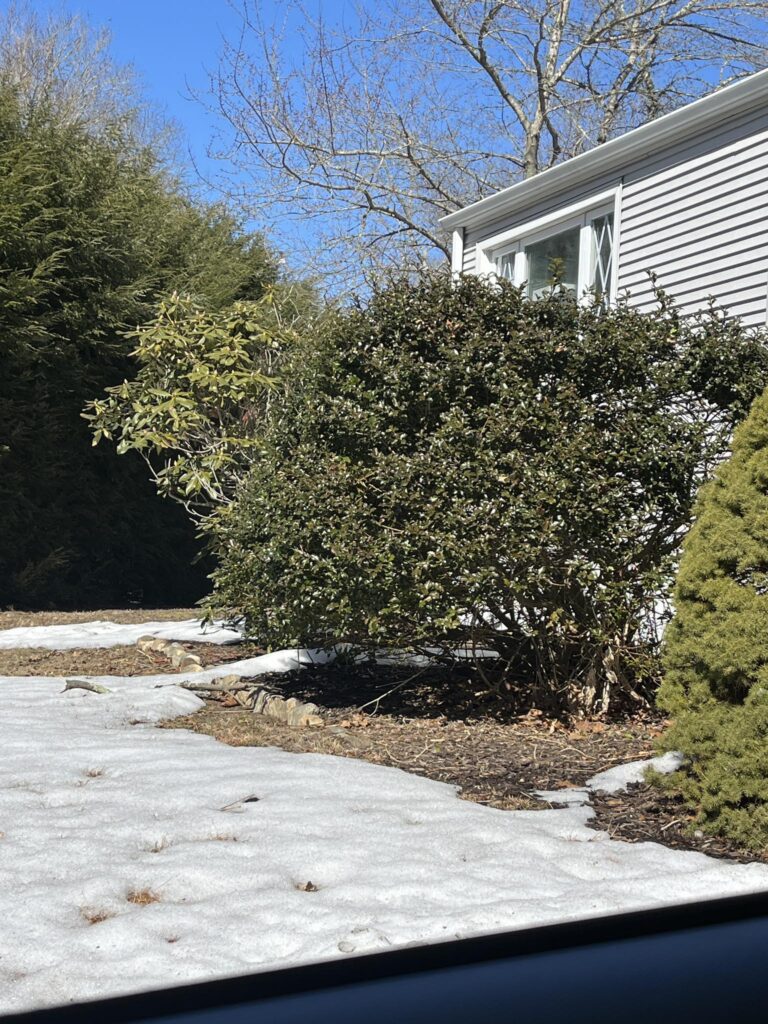
All true hollies belong to the genus Ilex, part of the Aquifoliaceae family. The genus includes about 400 species of trees, shrubs, and climbers, spread across temperate and subtropical regions worldwide.
Most hollies share glossy, often spiny leaves and colorful berries. These berries are technically drupes, not true berries, and they ripen by late summer or fall in shades of black, red, orange, or yellow.
One detail surprises almost everyone I talk to. Hollies are dioecious, meaning male and female flowers grow on separate plants, so you generally need both sexes nearby if you want fruit.
Part 1: Native Evergreen Holly Species
These are the backbone species most home landscapes are built around.
1. American Holly (Ilex opaca)
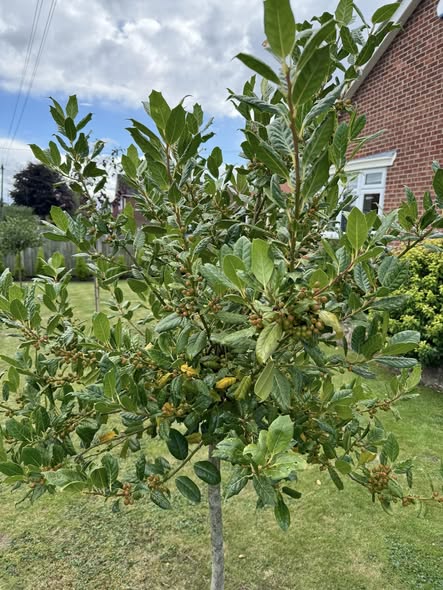
American holly is the classic Christmas holly most people picture. It is native to the southern and eastern United States, hardy in zones 5 to 9, and can reach heights of 15 to 60 feet.
This broad-leafed evergreen has a beautifully symmetrical, dense, wide pyramidal form. I love how it anchors a winter landscape when everything else has gone bare.
2. English Holly (Ilex aquifolium)
English holly is the European species long associated with Christmas cards and carols. It is the type species of the genus, first described by Linnaeus, with smooth or slightly pubescent branchlets.
Plants in this genus are generally slow-growing, with some species reaching up to 25 meters tall. Its glossy, spiny leaves remain the most recognized holly shape worldwide.
3. Yaupon Holly (Ilex vomitoria)
Yaupon is a versatile native holly from the American South. Cultivars range from attractive dwarf types resembling boxwood to large upright or weeping trees, with large-growing forms reaching 15 to 25 feet tall and about the same spread.
In the landscape, yaupon takes about ten years to develop its distinctive vase shape. It tolerates salt spray well, making it a favorite in coastal gardens.
4. Dahoon Holly (Ilex cassine)
Dahoon holly is a lesser-known Southeastern native with a tall, narrow form. It has a spread of 8 to 12 feet and can reach heights of 40 feet, though it is more commonly seen between 20 and 30 feet.
Its narrow leaves and dense clusters of red berries make it a strong choice for wet, boggy sites. Native plant enthusiasts prize it for coastal plain restoration projects.
5. Inkberry Holly (Ilex glabra)
Inkberry is unusual among hollies for its smooth, spineless leaves. It is an evergreen species native to Europe and North America, and unlike many hollies, inkberry leaves have no spines.
A couple of cultivars, including ‘Ivory Queen’ and ‘Leucocarpa,’ produce white fruit rather than the typical black berries. It works beautifully as a low, dense hedge alternative to boxwood.
6. Possumhaw (Ilex decidua)
Possumhaw is a deciduous native holly that drops its leaves to reveal bare branches loaded with berries. It appears in university extension guides alongside winterberry as a key deciduous holly for home landscapes.
Its bright orange-red fruit clings to the branches through winter, creating a striking silhouette. Birds rely heavily on it as a late-season food source.
7. Winterberry Holly (Ilex verticillata)
Winterberry is the deciduous holly most gardeners plant purely for winter color. It is a slow-growing, woody shrub native to Eastern North America that may grow 3 to 15 feet tall and 3 to 12 feet wide, with dwarf cultivars available.
It serves as a food source for butterflies, pollinators, small mammals, and songbirds, and fits well into rain gardens and pollinator gardens. Its bare, berry-covered branches are a florist favorite for winter arrangements.
8. Common Holly (Ilex chinensis)
Ilex chinensis is an Asian evergreen species valued for its glossy foliage and adaptability. It is one of the Asian evergreen species listed among the recognized Ilex species suited to Southeastern landscapes.
It performs well in warmer climates where American holly can struggle with heat stress. Its dense form also makes it useful for screening.
9. Gallberry (Ilex coriacea)
Gallberry, sometimes confused with inkberry, is a native Southeastern shrub with leathery leaves. It is a native evergreen shrub that produces black fruits and is recognized in university plant databases.
Beekeepers value it heavily, since gallberry honey is a prized regional specialty. It thrives in the wet, sandy soils of coastal plains.
10. Chinese Holly (Ilex cornuta)
Chinese holly is known for its square, spiny leaves that almost look artificial. This Asian evergreen species includes many cultivars and is a mainstay in Southeastern landscape plantings.
Its bright red berries persist through much of winter without needing a male pollinator in some cultivars. It tolerates heat and drought better than most holly species.
Part 2: Japanese Holly (Ilex crenata) Cultivars
Japanese holly is native to Japan and East Asia, found in thickets, woods, and wet places across the country. Its small, spineless leaves make it a popular boxwood substitute.
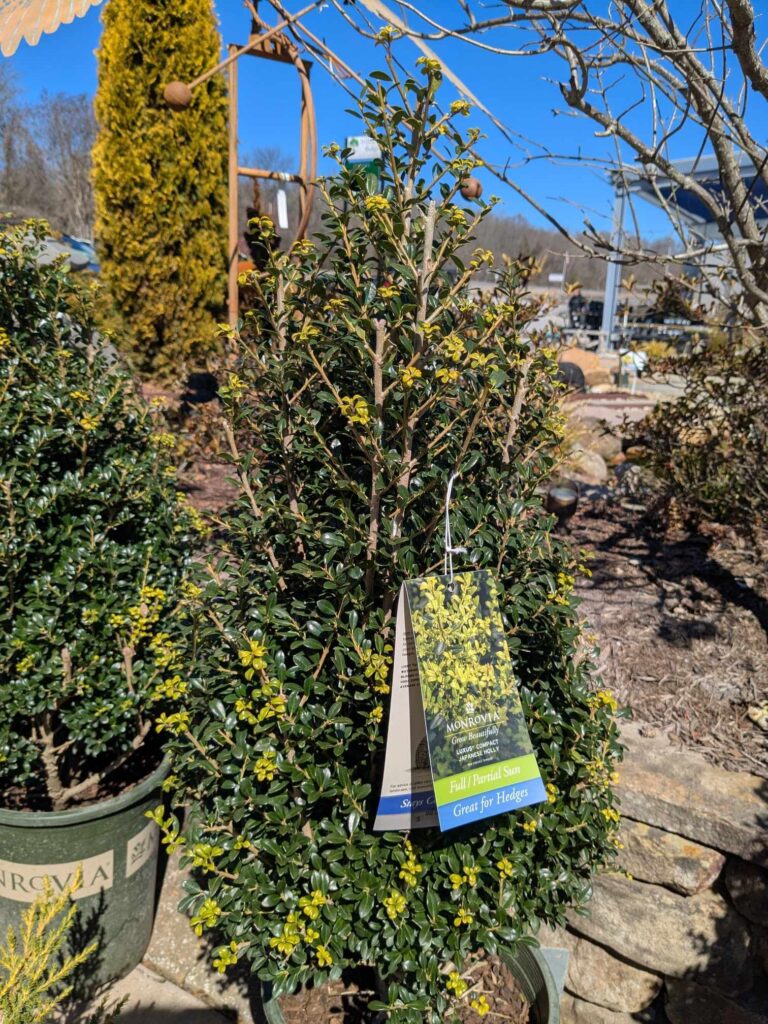
11. ‘Sky Pencil’ Holly
‘Sky Pencil’ is instantly recognizable for its narrow, columnar shape. It is a densely branched, tight, columnar evergreen shrub reaching 4 to 10 feet tall but only 1 to 3 feet wide.
It was voted Holly of the Year for 2004 by the Holly Society of America. I use this one myself as a living exclamation point beside my front steps.
12. ‘Helleri’ Holly
‘Helleri’ is a compact, rounded cultivar prized for tight spaces. It has small leaves, matures to about 4 feet tall and 5 feet wide, and fruits only infrequently.
Its dense, mounded form needs almost no pruning to stay tidy. It works beautifully as a low foundation hedge.
13. ‘Hetzii’ Holly
‘Hetzii’ is a shrubby cultivar that grows in a rounded mound, listed as a female selection among Japanese holly varieties. Its naturally neat shape reduces the need for frequent shearing.
It suits informal borders where a soft, rounded texture is desired. Landscapers often mix it with taller upright hollies for contrast.
14. ‘Hoogendorn’ Holly
‘Hoogendorn’ is an upright, vigorous, rounded male cultivar known for being very cold hardy. Since it is a male selection, it never produces berries but works well as a pollinator for nearby female hollies.
Its dependable hardiness makes it a safe choice for colder USDA zones. Many nurseries recommend pairing it strategically within a mixed holly planting.
15. ‘Golden Gem’ Holly
‘Golden Gem’ brings unexpected color to the typically dark-green holly palette. It resembles the cultivar ‘Convexa’ but displays golden foliage and is a female selection.
Its bright leaves add visual interest even without flowers or fruit. Gardeners use it to break up monotony in shaded evergreen borders.
16. ‘Drops of Gold’ Holly
‘Drops of Gold’ is a broad, upright-spreading, compact shrub maturing to about 4 feet tall and 5 feet wide, with glossy, yellow variegated leaves. Its variegation makes it one of the more decorative Japanese holly cultivars available.
It pairs nicely with darker green shrubs to create contrast. I find variegated hollies especially useful for brightening shady corners.
Part 3: Meserve (Blue) Holly Hybrids
Meserve holly resulted from a cross between English holly and the East Asian Ilex rugosa, developed by Kathleen Meserve of St. James, New York. She intended to create an English holly type that could withstand harsh northeastern winters.
17. ‘Blue Princess’ Holly
‘Blue Princess’ is a bushy, spreading, broadleaf evergreen shrub with abundant small white spring flowers that give way to bright red fall berries. It received the Royal Horticultural Society’s Award of Garden Merit and the Cary Award for exceptional New England landscape performance.
Its dark purple stems and blue-green foliage give it real winter presence. It needs a male pollinator such as ‘Blue Prince’ nearby to fruit.
18. ‘Blue Prince’ Holly
‘Blue Prince’ is the standard male pollinator paired with ‘Blue Princess’ in most nursery catalogs. It is commonly recommended as the companion pollinator for Blue Princess Meserve holly.
Since it is male, it never produces berries itself. Its job is purely to support fruiting on nearby female plants.
19. ‘Blue Boy’ and ‘Blue Girl’ Holly
‘Blue Boy’ was introduced in 1964 as one of the first Meserve hollies, a male form that grows well over ten feet tall with lustrous green foliage. ‘Blue Girl’ is its female counterpart with bright red fruit, offering good cold hardiness in a slightly more open, pyramidal habit.
Together, this original pairing helped launch the entire blue holly category. Many modern cultivars trace their lineage back to this 1964 introduction.
20. ‘Blue Angel’ Holly
‘Blue Angel’ is a slow-growing, female cultivar resulting from a backcross to English holly, giving it larger, crinkled leaves but reduced cold hardiness. It grows full and dense to about 8 feet tall and wide, with shiny red fruit.
Its bolder leaf texture sets it apart visually from other blue hollies. Gardeners in slightly milder zones get the best results from this cultivar.
21. ‘Blue Maid’ Holly
‘Blue Maid’ is a hardy, fast-growing female selection that assumes a pyramidal habit reaching about 15 feet tall. Its quicker growth rate makes it popular for gardeners who want faster screening.
It fits well as a tall privacy hedge along property lines. Pair it with a compatible male cultivar for reliable berry production.
Part 4: Hybrid and Named Landscape Hollies
22. Nellie R. Stevens Holly
This is one of the most widely planted landscape hollies in the United States. Nellie R. Stevens is a conical small tree with dark green, glossy, spine-tipped leaves that sets showy red fruit without needing a male pollinator.
It is typically used as a hedge or barrier planting and is widely used in the nursery and landscape trade due to its tolerance of adverse conditions. I recommend this one constantly to homeowners who want an instant, low-maintenance privacy screen.
23. Foster Holly (Ilex x attenuata)
Foster holly is a natural hybrid between two native species. It combines Ilex cassine, known as dahoon, with the more widely distributed and hardier American holly.
It grows to about 20 feet tall with narrow, spine-tipped leaves and sets large amounts of showy red fruit without needing a male plant. Its narrow, conical form suits tighter garden spaces.
24. East Palatka Holly
East Palatka is a naturally occurring hybrid holly popular throughout the Southeast. It is a hybrid of American and dahoon holly, sharing traits from both parent species.
Its moderate growth rate and dense form make it a common choice for street and foundation plantings. It tolerates a wide range of soil conditions.
25. ‘Hachfee’ Holly
‘Hachfee’ is a patented holly cultivar discovered in 1998 in Germany, a cross between Ilex aquifolium ‘Pyramidalis’ and Ilex meserveae ‘Blue Prince.’ Its distinguishing features reproduce reliably in successive propagations, according to its plant patent filing.
This cultivar demonstrates how breeders continue crossing existing hybrids to refine hardiness and form. It remains less common in retail nurseries than older Meserve selections.
26. Ilex x aquipernyi
This hybrid combines English holly with a Chinese species to create dense, compact plants. Its foliage closely resembles Meserve holly, leading to frequent confusion between the two groups at nurseries.
It tends to hold a tighter, more formal shape than straight Meserve hollies. Landscapers often choose it for clipped hedges requiring precise lines.
Part 5: Dwarf, Compact, and Specialty Hollies
27. ‘Compacta’ Holly
‘Compacta’ is a smaller-growing selection within the Japanese holly group. It is listed among the standard Ilex crenata cultivars used for smaller garden applications.
Its slower growth rate reduces pruning demands significantly. It suits container growing as well as tight foundation beds.
28. ‘Green Lustre’ Holly
‘Green Lustre,’ also spelled ‘Green Luster,’ is small and dense, making it great for hedges as a female cultivar. Its tightly packed foliage creates a clean, formal look with minimal shearing.
I find it especially useful for low border hedges around vegetable or herb gardens. Its dark, glossy leaves hold color well through winter.
29. ‘Soft Touch’ Holly
‘Soft Touch’ earns its name from unusually flexible, non-prickly foliage. It appears among the standard cultivar list for Japanese holly, valued for its mounded, low-growing form.
Its texture makes it a rare holly safe for planting near walkways where people brush past it. Families with young children often prefer it over spinier types.
READ MORE: 10+ Common Soft Touch Holly Shrub Problems: Identification and How to Fix
30. ‘Stokes’ Holly
‘Stokes’ is another recognized dwarf cultivar within the Ilex crenata group, valued for its compact form. It stays low and dense without requiring heavy maintenance.
Its predictable size makes it reliable for mass plantings along commercial landscapes. Many municipalities use it in low-maintenance public spaces.
31. ‘Sky Pointer’ Holly
‘Sky Pointer’ is a newer columnar Japanese holly bred as an improvement on ‘Sky Pencil.’ It is included among the recognized narrow, upright cultivars within the Ilex crenata group.
Its slightly wider form offers a bit more fullness than the original columnar cultivar. Gardeners wanting vertical structure with a fuller silhouette often choose it instead.
32. Weeping Yaupon Holly (Ilex vomitoria f. pendula)
This striking form takes the tough native yaupon and gives it a cascading, weeping habit. It creates dramatic, fountain-like silhouettes unlike any other holly on this list.
Its unusual form makes it a specimen plant rather than a hedge component. Landscape designers often use a single specimen as a dramatic focal point.
Part 6: Holly Toxicity and Safety Facts
Holly’s cheerful winter berries carry a real risk that many gardeners overlook. The main toxic compounds in holly are saponins, which can irritate the digestive system in both people and pets.
Children have shown symptoms after swallowing as few as two holly berries. Swallowing holly berries can cause nausea and vomiting, occasionally accompanied by diarrhea, which can lead to dehydration.
The USDA Natural Resources Conservation Service notes that although winterberry is a good wildlife food source, its fruits are poisonous to humans. The ASPCA classifies both English holly and winterberry as low toxicity for pets, typically causing vomiting, diarrhea, and depression.
My honest tip for parents and pet owners? Skip fresh-berry wreaths indoors, or strip the berries before decorating, just as poison control experts recommend.
Growing Conditions Every Holly Type Shares
Most hollies want similar basic conditions, regardless of species. They thrive in full sun to partial shade in acidic, well-drained soil, though they tolerate a wide range of soil types, including clay.
Hollies tolerate drought, shade, and air pollution, and they are easy to transplant compared to many other evergreen shrubs. That resilience explains why they show up in gardens across such different climates.
Watch your soil pH closely. Alkaline soils will cause holly leaves to yellow, a common complaint at extension offices every spring.
Choosing the Right Holly for Your Landscape
Start with your goal. Privacy screening calls for Nellie R. Stevens or American holly, while tight foundation spaces favor ‘Sky Pencil’ or ‘Helleri.’
Next, think about berries. If you want the classic red holiday look, plant a female cultivar alongside a compatible male, since male plants must be positioned near females to ensure pollination and fruit set.
Finally, factor in climate. Most deciduous species and hybrids will not thrive in areas with high heat and humidity, roughly USDA zones 8 and 9, while tropical species cannot tolerate frost.
Final Thoughts
Thirty-five types of holly is still only a small slice of a genus with hundreds of species. But this list covers the varieties you are most likely to encounter at a nursery or in a neighbor’s yard.
Pick a few types with different bloom habits, from evergreen screens to deciduous winterberry, and you get year-round structure with almost no fuss.
Whichever holly you choose, remember the berries look better admired than eaten. Keep them out of reach of curious kids and pets, and enjoy the show every winter brings.
References
- North Carolina State University Extension Gardener Plant Toolbox — Ilex (Hollies, Holly): https://plants.ces.ncsu.edu/plants/ilex/
- University of Arkansas Division of Agriculture Cooperative Extension Service — Hollies for the Home Garden (MP310): https://www.uaex.uada.edu/yard-garden/home-landscape/MP310.pdf
- Virginia Cooperative Extension, Virginia State University — Evergreen Hollies (Ilex spp.): https://www.pubs.ext.vt.edu/content/dam/pubs_ext_vt_edu/3010/3010-1482/3010-1482.pdf
- University of Florida IFAS, Gardening Solutions — Holly: https://gardeningsolutions.ifas.ufl.edu/plants/trees-and-shrubs/shrubs/holly/
- Oregon State University, Landscape Plants — Ilex × meserveae: https://landscapeplants.oregonstate.edu/plants/ilex-meserveae
- U.S. Department of Agriculture, Natural Resources Conservation Service — Common Winterberry Plant Fact Sheet: https://plants.sc.egov.usda.gov/DocumentLibrary/factsheet/pdf/fs_ilve.pdf
- U.S. National Arboretum, USDA Agricultural Research Service — Ilex crenata ‘Sky Pencil’: https://www.usna.usda.gov/assets/images/as_pdf_image/Ilex_crenata_Sky_Pencil.pdf

Tim M Dave is a gardening expert with a passion for houseplants, particularly cacti and succulents. With a degree in plant biology from the University of California, Berkeley, he has vast experience in gardening. Over the years, he has cultivated a vast collection of desert plants and learned a great deal about how to grow and care for these unique companions.