25 Stunning Shrubs With Red Flowers: Identification and Pictures
Red is the color of energy, passion, and life. In a garden, few things command attention the way a shrub bursting with red flowers does.
Whether you want to attract pollinators, create a bold focal point, or simply add warmth to a dull landscape, red-flowering shrubs deliver results that few other plants can match.
I have spent years researching and growing flowering shrubs across different climate zones, and one thing remains consistent — red-flowered varieties always draw the most questions and compliments.
This guide covers 25 of the best shrubs with red flowers, including their care needs, growing zones, and what makes each one special.
25 Best Shrubs With Red Flowers
1. Knockout Rose (Rosa ‘Knock Out’)
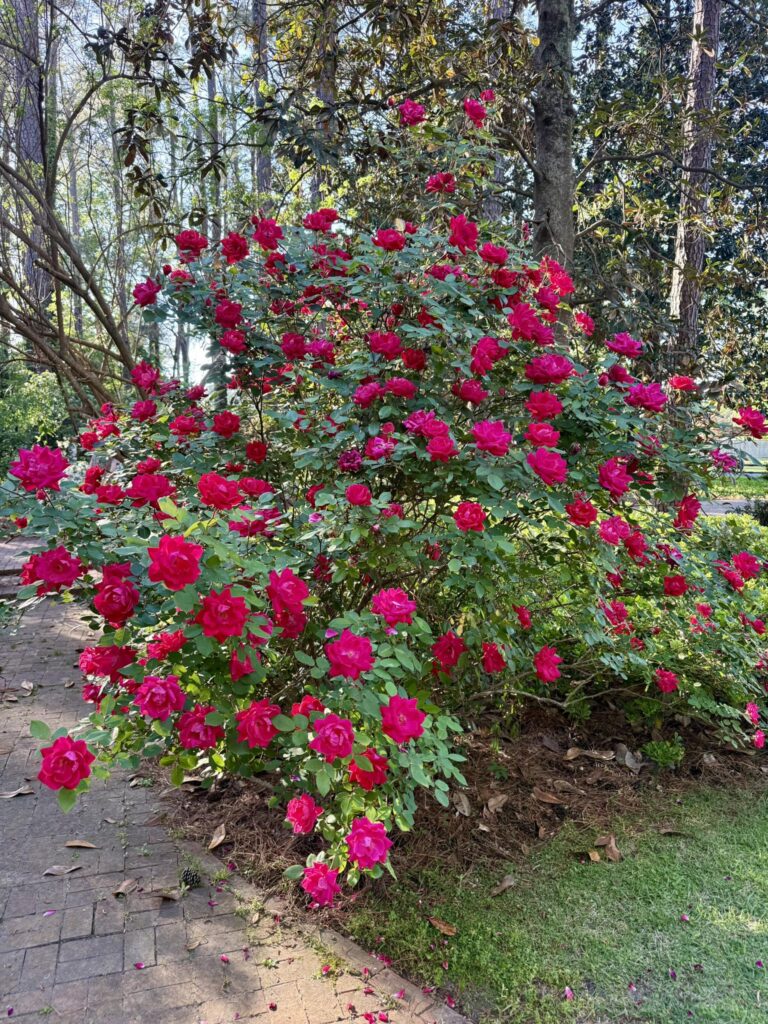
The Knockout Rose is arguably the most popular red-flowering shrub in North America. It blooms from spring through the first hard frost, producing clusters of bright red flowers with remarkable disease resistance.
- Hardiness Zones: 5–9
- Height: 3–4 feet
- Sun: Full sun
- Soil: Well-drained, slightly acidic
What makes it special: Unlike traditional roses, Knockout varieties need almost no deadheading or spraying. They are practically self-cleaning, dropping spent blooms on their own.
2. Red Azalea (Rhododendron spp.)
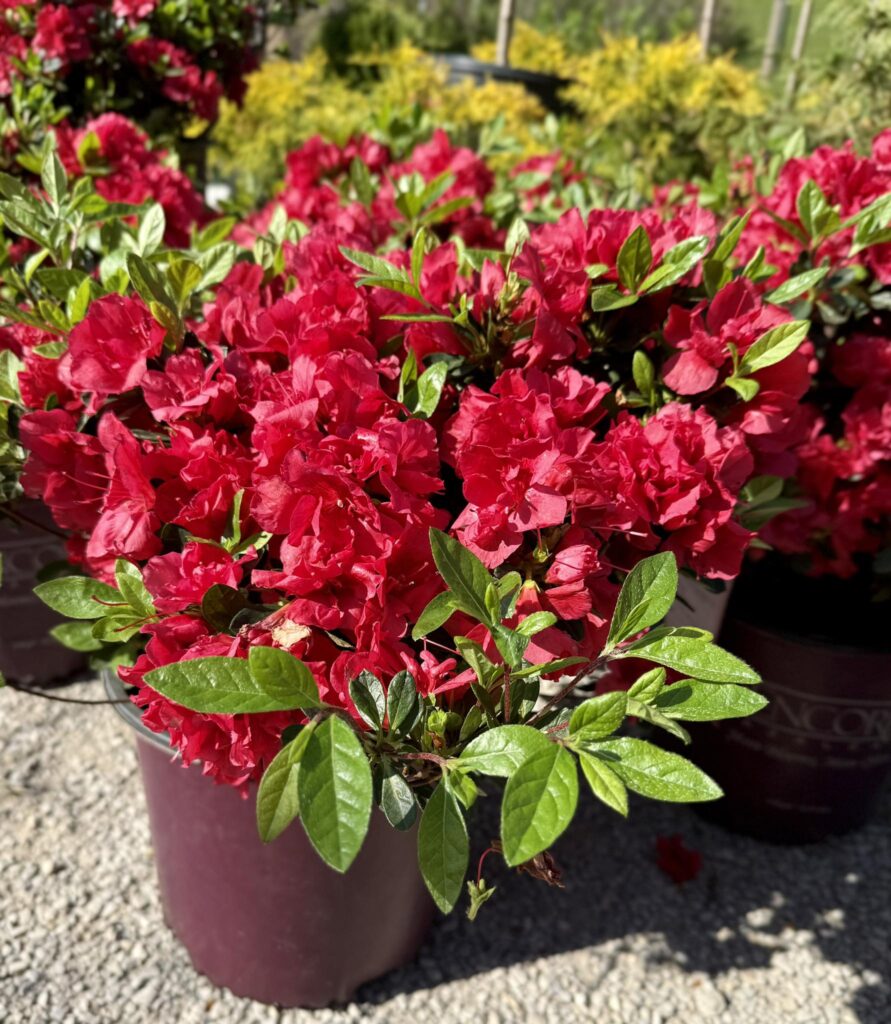
Few spring sights rival a mature red azalea in full bloom. The flowers are dense, vivid, and absolutely stunning against a backdrop of dark green leaves. This typically blooms in spring, usually between March and April, with the peak bloom lasting 1-2 weeks.
- Hardiness Zones: 4–9 (varies by cultivar)
- Height: 2–8 feet
- Sun: Partial shade to full sun
- Soil: Acidic, moist, well-drained
Best cultivars for red flowers: ‘Hino Crimson’, ‘Girard’s Hot Shot’, and ‘Stewartstonian’.
Azaleas prefer slightly acidic soil with a pH between 4.5 and 6.0. Adding pine bark mulch around the base helps maintain ideal soil conditions and retain moisture.
3. Flowering Quince (Chaenomeles speciosa)
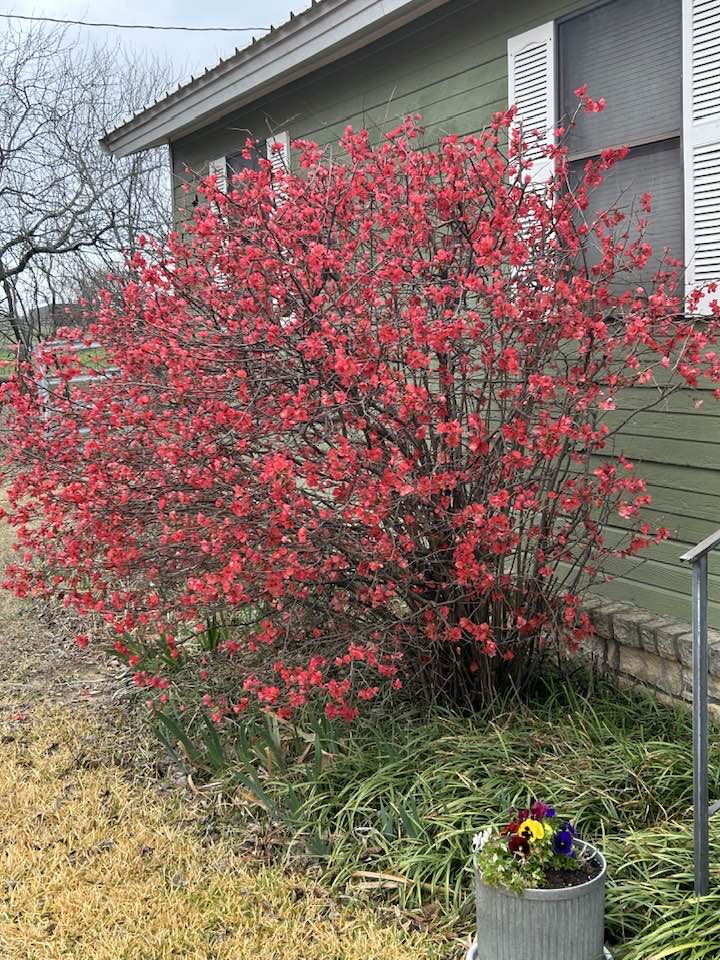
Flowering quince is one of the earliest shrubs to bloom in spring, sometimes flowering before the last frost has fully passed. The red blooms are bold and almost waxy in appearance. This plant is relatively easy to grow and maintain.
- Hardiness Zones: 4–9
- Height: 6–10 feet
- Sun: Full sun to partial shade
- Soil: Adaptable, tolerates clay
Pro tip: After the flowers fade, flowering quince produces small, apple-like fruits that make excellent jelly. It is both ornamental and productive.
4. Red-Flowering Currant (Ribes sanguineum)
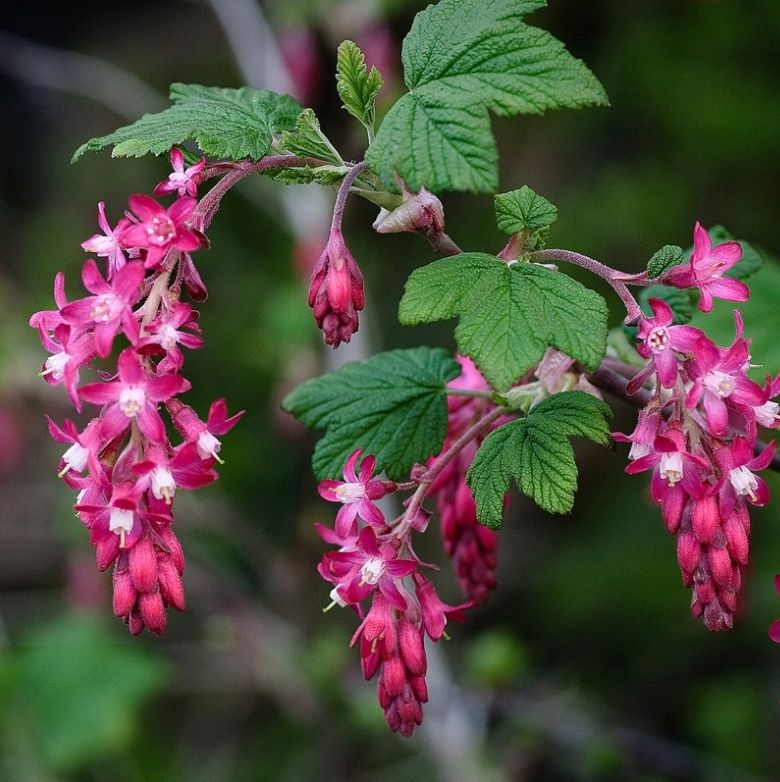
Native to the Pacific Northwest, this shrub produces drooping clusters of deep red to pink-red flowers in early spring. It is a favorite of hummingbirds migrating through western North America.
- Hardiness Zones: 6–8
- Height: 5–12 feet
- Sun: Full sun to partial shade
- Soil: Well-drained, dry to moderate moisture
Red-flowering currant is remarkably low-maintenance. Once established, it thrives in poor soils with minimal supplemental watering.
5. Camellia (Camellia japonica)
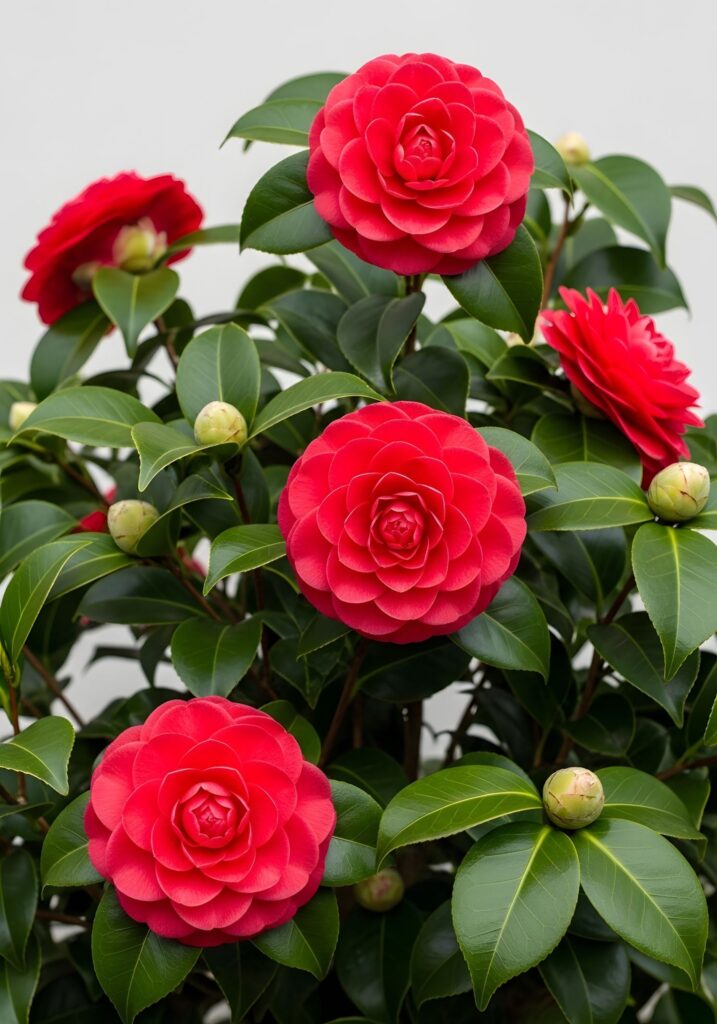
Camellias are elegant, slow-growing shrubs that produce large, rose-like red flowers from late fall through early spring — when most other plants are dormant.
- Hardiness Zones: 7–10
- Height: 6–12 feet
- Sun: Partial shade
- Soil: Acidic, rich, well-drained
Notable red cultivars: ‘Adolphe Audusson’, ‘Professor Charles S. Sargent’, and ‘Kramer’s Supreme’.
Camellias are particularly popular in the American South and along the Pacific Coast, where mild winters allow them to thrive outdoors year-round.
6. Bottlebrush (Callistemon citrinus)
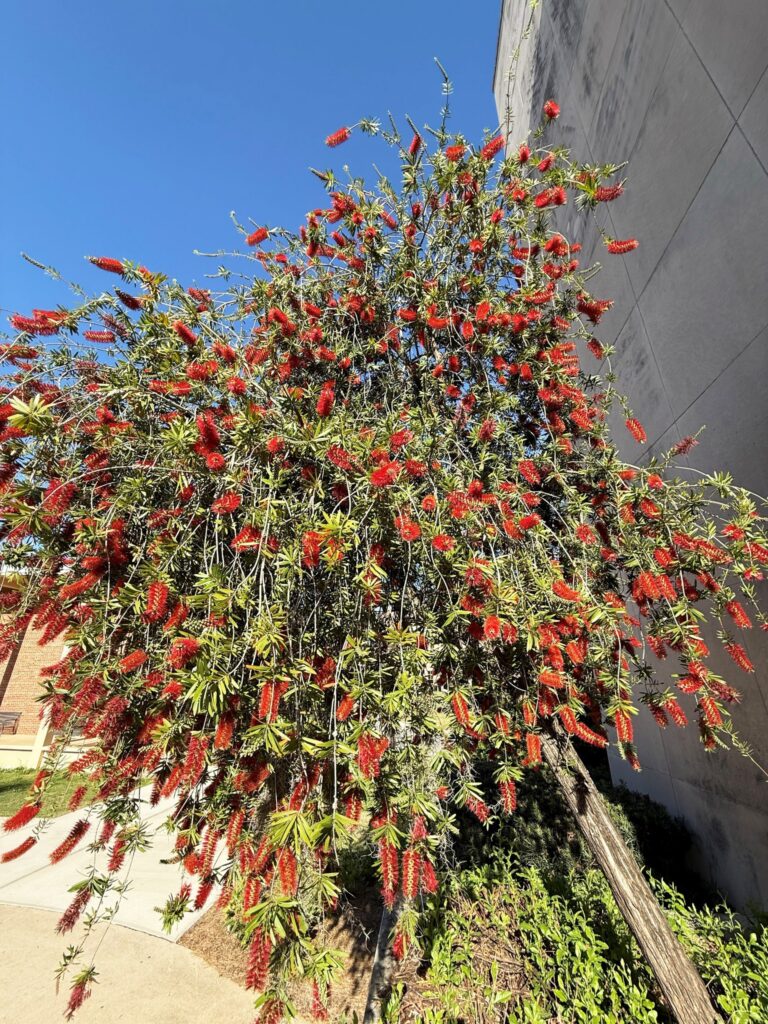
Named for its distinctive cylindrical, brush-like flowers, the crimson bottlebrush is a showstopper. The vivid red blooms look unlike any other flowering shrub and are irresistible to hummingbirds.
- Hardiness Zones: 8–11
- Height: 6–10 feet
- Sun: Full sun
- Soil: Well-drained, tolerates poor soil
In frost-free climates, bottlebrush blooms multiple times per year. In cooler zones, it can be grown in large containers and brought indoors during winter.
7. Red Hot Poker (Kniphofia uvaria)
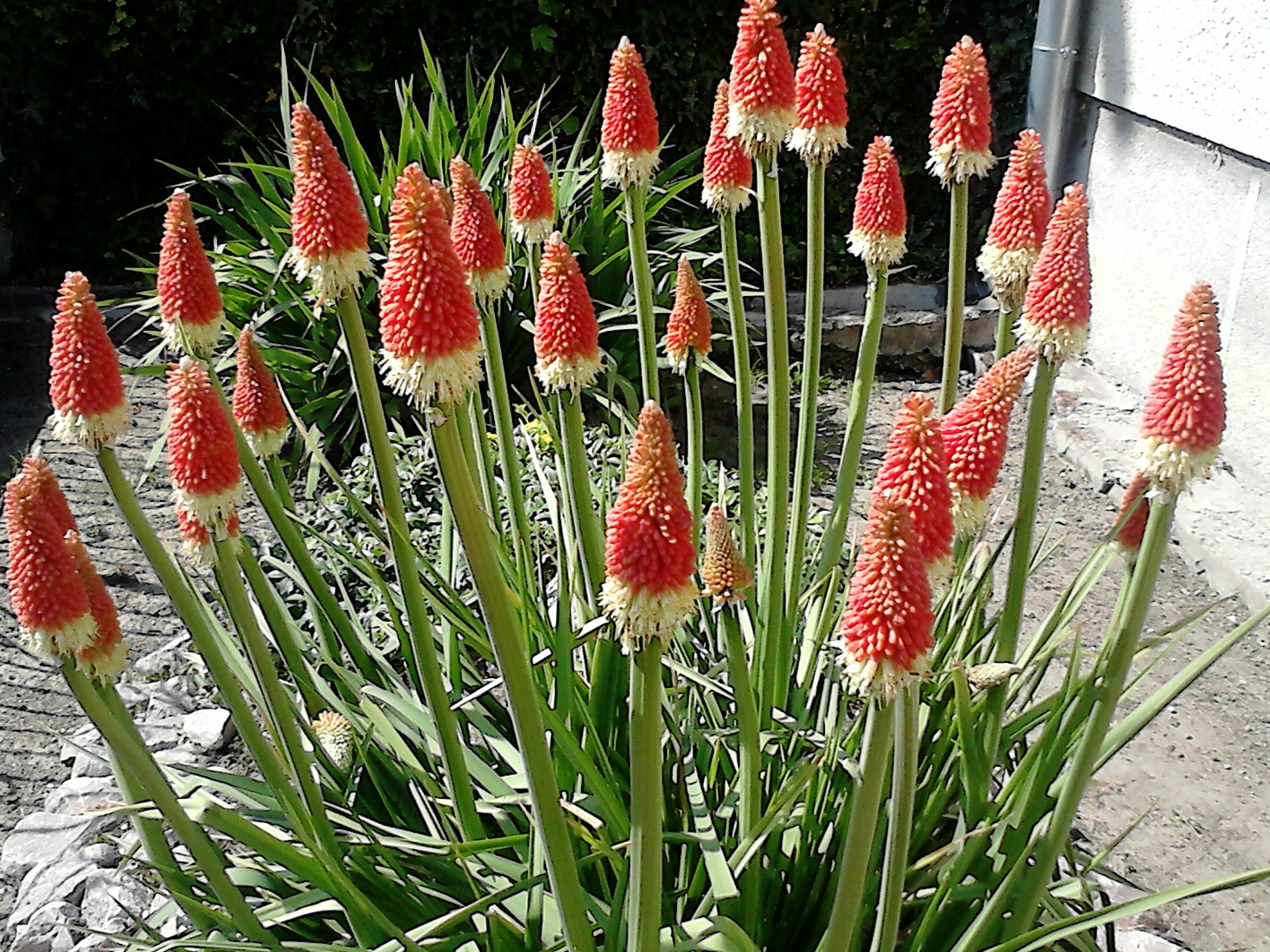
While often classified as a perennial, many red hot poker varieties grow as woody-based subshrubs in warmer climates. The tubular red and orange flower spikes are dramatic and long-lasting.
- Hardiness Zones: 5–9
- Height: 2–4 feet
- Sun: Full sun
- Soil: Sandy, well-drained
Best time to plant: Spring. Divide clumps every three to four years to maintain vigorous flowering.
8. Salvia greggii (Autumn Sage)
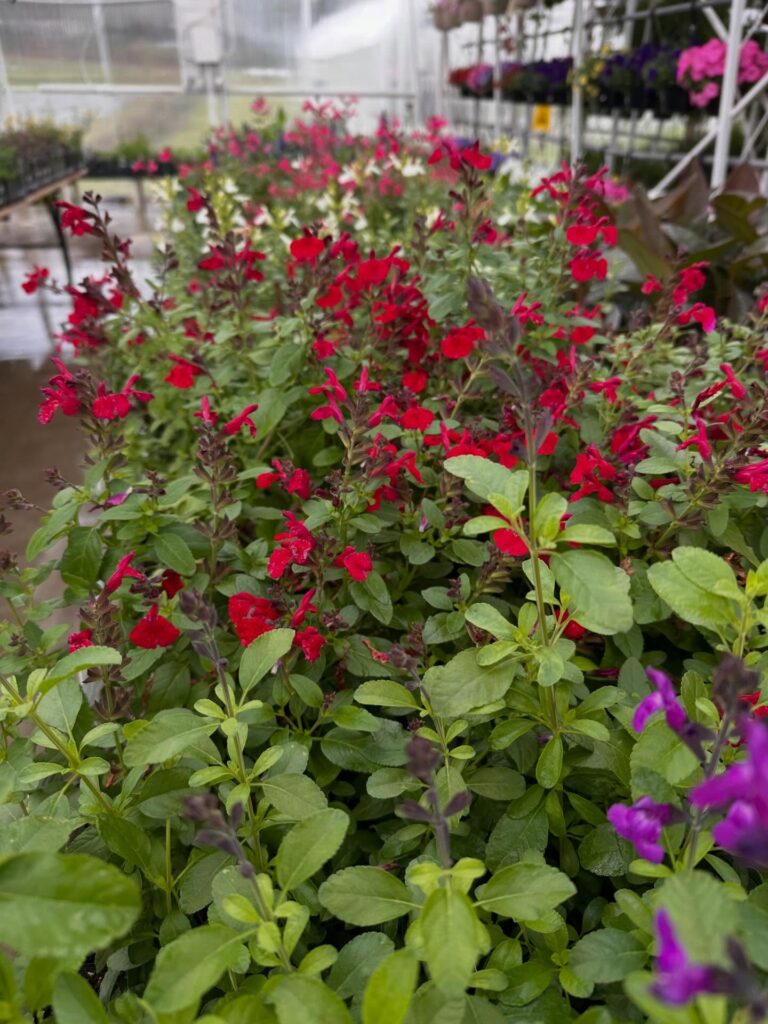
Autumn sage is a compact, bushy shrub that produces a continuous supply of small red flowers from spring through fall. It is heat-tolerant, drought-resistant, and practically impossible to kill once established.
- Hardiness Zones: 6–9
- Height: 2–3 feet
- Sun: Full sun
- Soil: Well-drained, sandy to loamy
This salvia is a go-to plant for xeriscaping projects in hot, dry climates. Hummingbirds visit it constantly throughout the blooming season.
9. Dwarf Pomegranate (Punica granatum ‘Nana’)
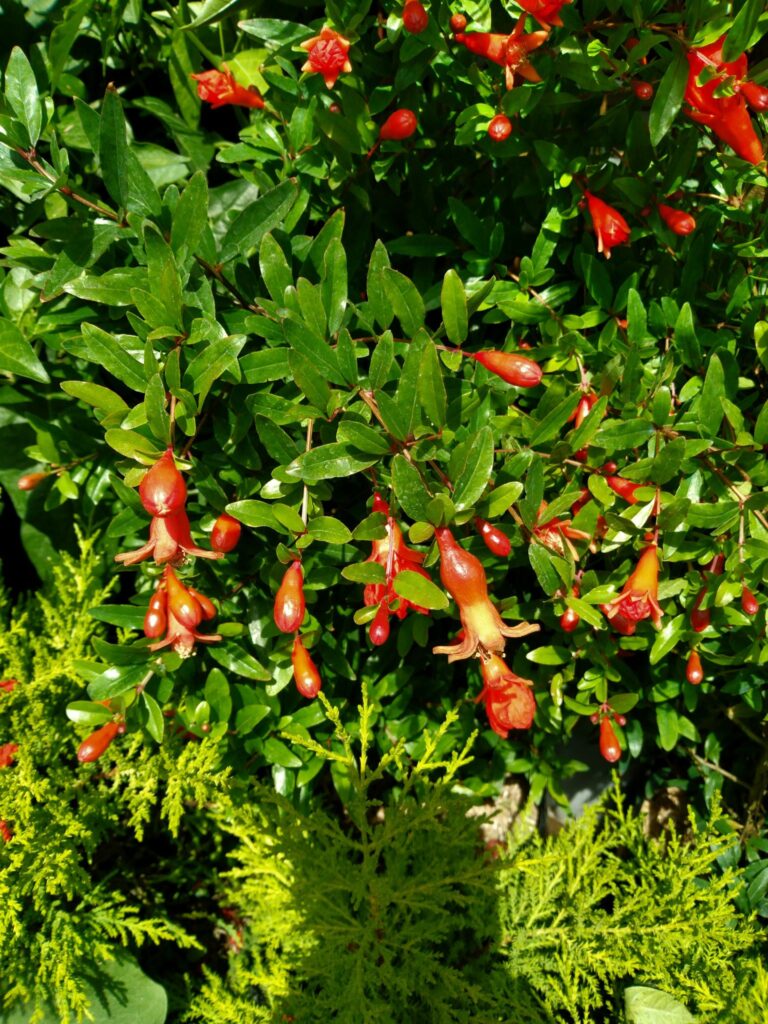
The dwarf pomegranate is a compact, ornamental shrub with fiery red-orange flowers followed by small decorative fruits. It makes an excellent container plant or hedge specimen.
- Hardiness Zones: 7–11
- Height: 2–4 feet
- Sun: Full sun
- Soil: Well-drained, tolerates poor soil
Though small in stature, the flowers are vivid and plentiful, making this a high-impact plant for patios and small gardens.
10. Weigela (Weigela florida)
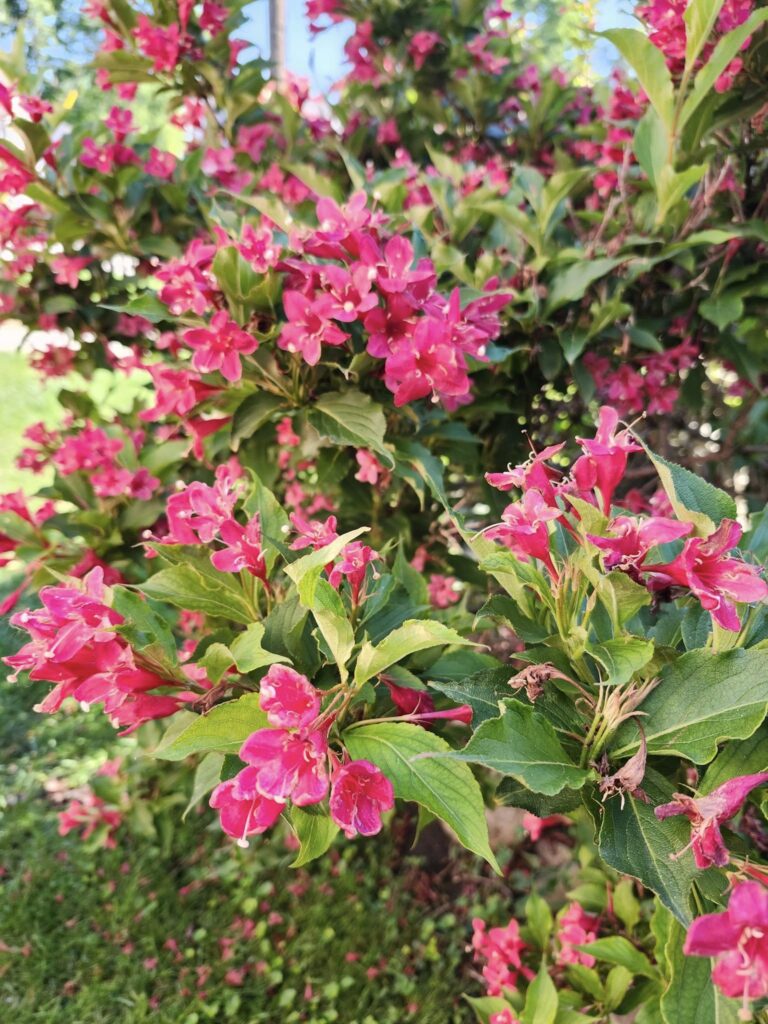
Weigela is a dependable, fast-growing shrub that produces trumpet-shaped red flowers in late spring and early summer. Some cultivars offer a repeat bloom in late summer.
- Hardiness Zones: 4–9
- Height: 6–10 feet
- Sun: Full sun to partial shade
- Soil: Moist, well-drained, adaptable
Top red cultivars: ‘Red Prince’, ‘Minuet’, and ‘Carnaval’. The ‘Red Prince’ variety is particularly known for holding its red color without fading.
11. Scarlet Firethorn (Pyracantha coccinea)
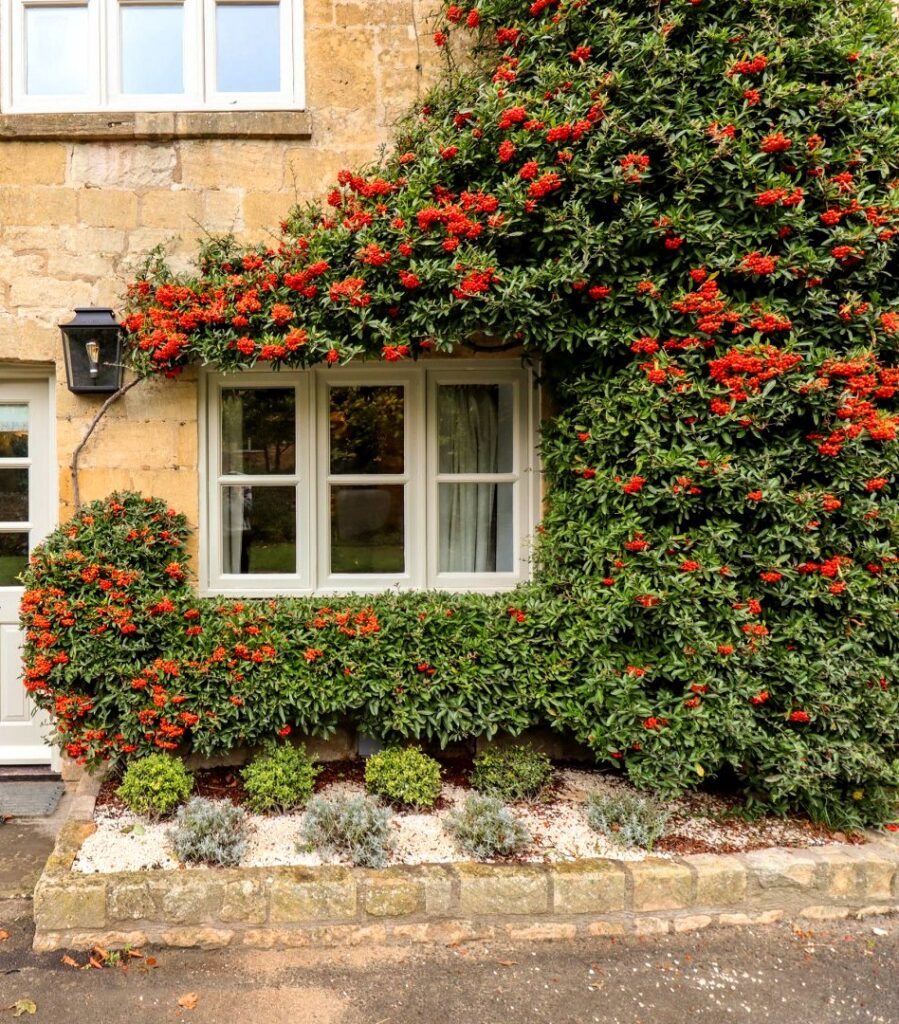
Firethorn produces small white flowers in spring, but it earns its place on this list through its brilliant red berries in fall and winter. In some regions, the young stems and foliage also carry a reddish hue.
- Hardiness Zones: 5–9
- Height: 6–18 feet
- Sun: Full sun
- Soil: Adaptable, well-drained
It doubles as a security hedge, thanks to its sharp thorns. Birds love the berries, making it a wildlife-friendly choice.
12. Fuchsia (Fuchsia magellanica)
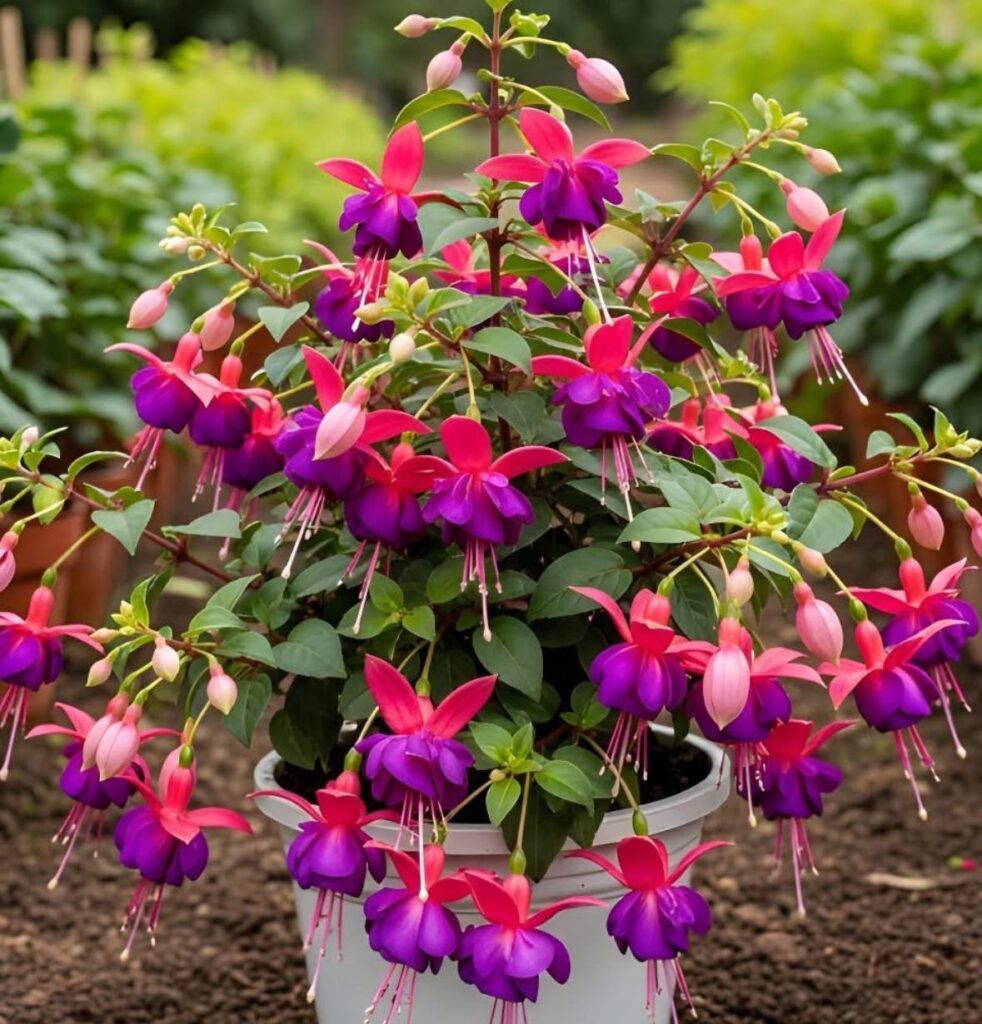
Hardy fuchsia is a graceful, arching shrub with dangling bicolor flowers in shades of red and purple. It is perfect for shaded or semi-shaded garden spots where other flowering shrubs struggle.
- Hardiness Zones: 6–9
- Height: 3–10 feet
- Sun: Partial to full shade
- Soil: Moist, fertile, well-drained
Fuchsia thrives in coastal climates and mild, humid conditions. In colder zones, the tops may die back in winter, but roots are often hardy enough to re-sprout in spring.
13. Turk’s Cap (Malvaviscus arboreus)
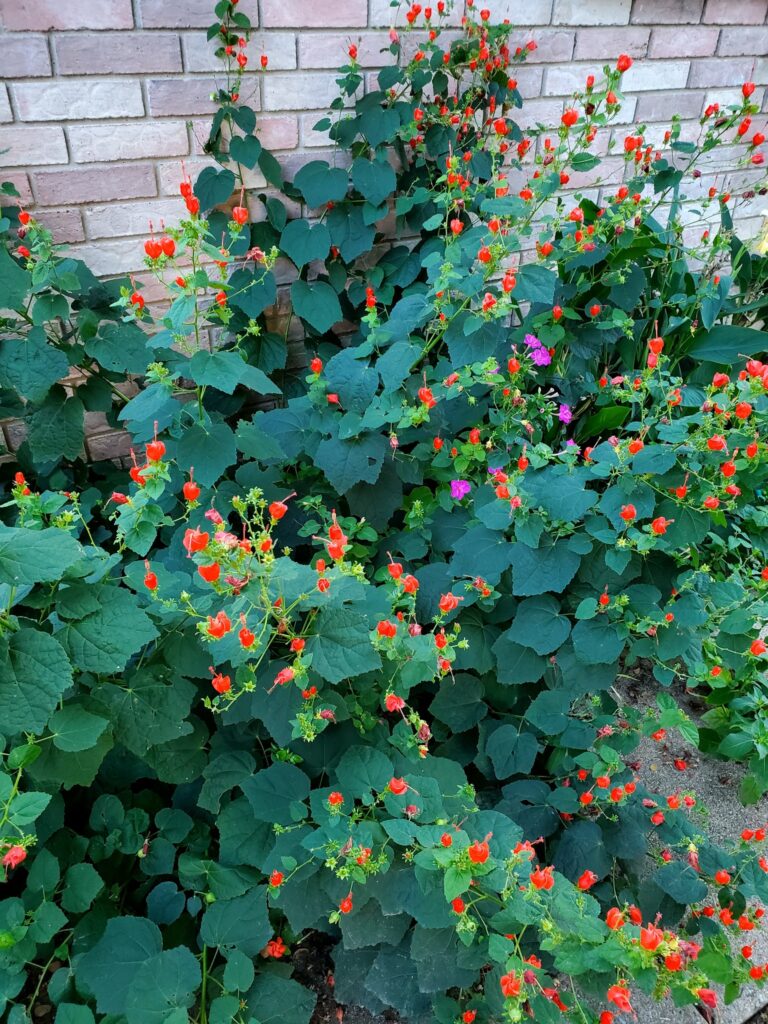
Turk’s cap is a native Texas shrub that produces twisted, never-fully-opened red flowers throughout summer and fall. Hummingbirds adore it, and it handles Texas heat better than almost any other flowering shrub.
- Hardiness Zones: 7–10
- Height: 3–9 feet
- Sun: Full sun to partial shade
- Soil: Adaptable, drought-tolerant
It is an excellent choice for naturalistic or wildlife gardens in the Southeast and Southwest United States.
14. Red Buckeye (Aesculus pavia)
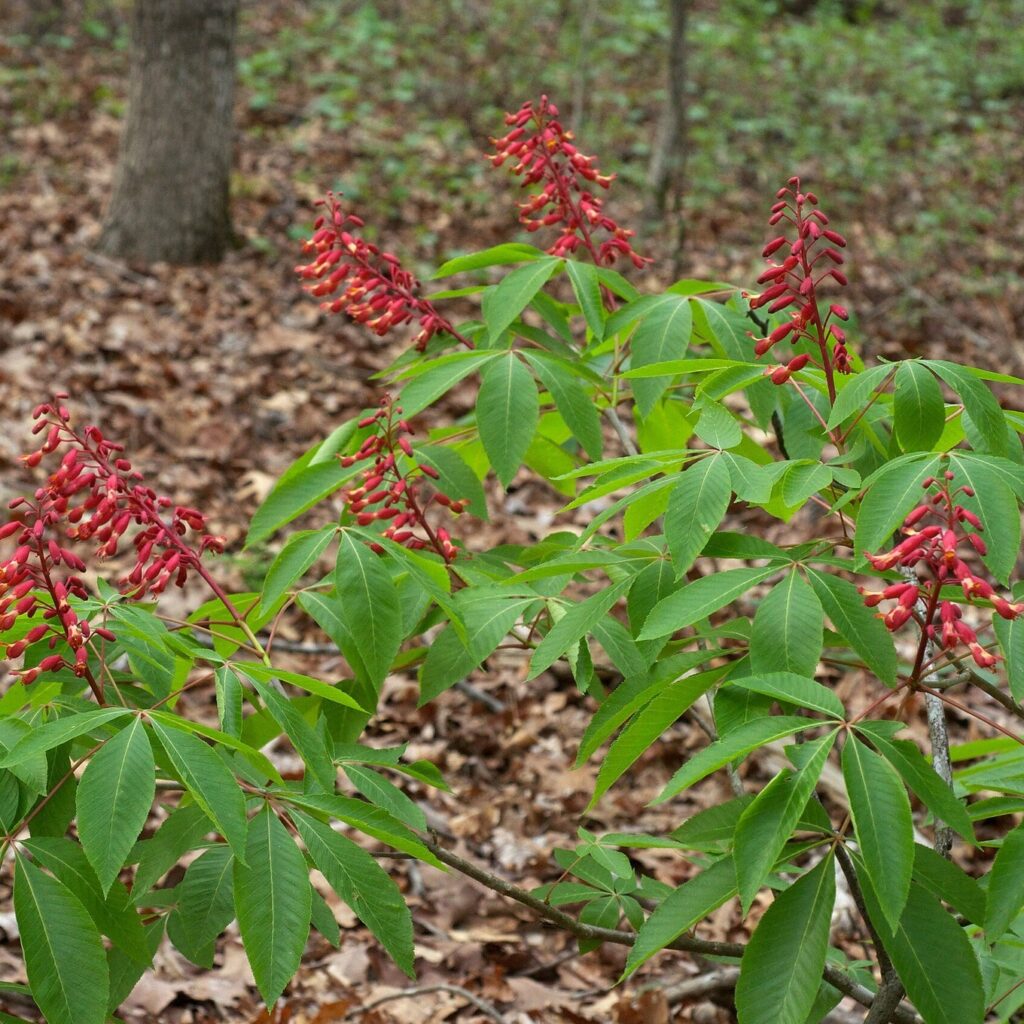
Red buckeye is a native North American shrub that produces tall, upright panicles of red flowers in spring. It is one of the earliest nectar sources for hummingbirds returning from winter migration.
- Hardiness Zones: 4–8
- Height: 8–12 feet
- Sun: Partial shade to full sun
- Soil: Moist, well-drained, rich
The seeds and all parts of this plant are toxic if ingested, so it is best planted away from areas where children and pets play.
15. Bougainvillea
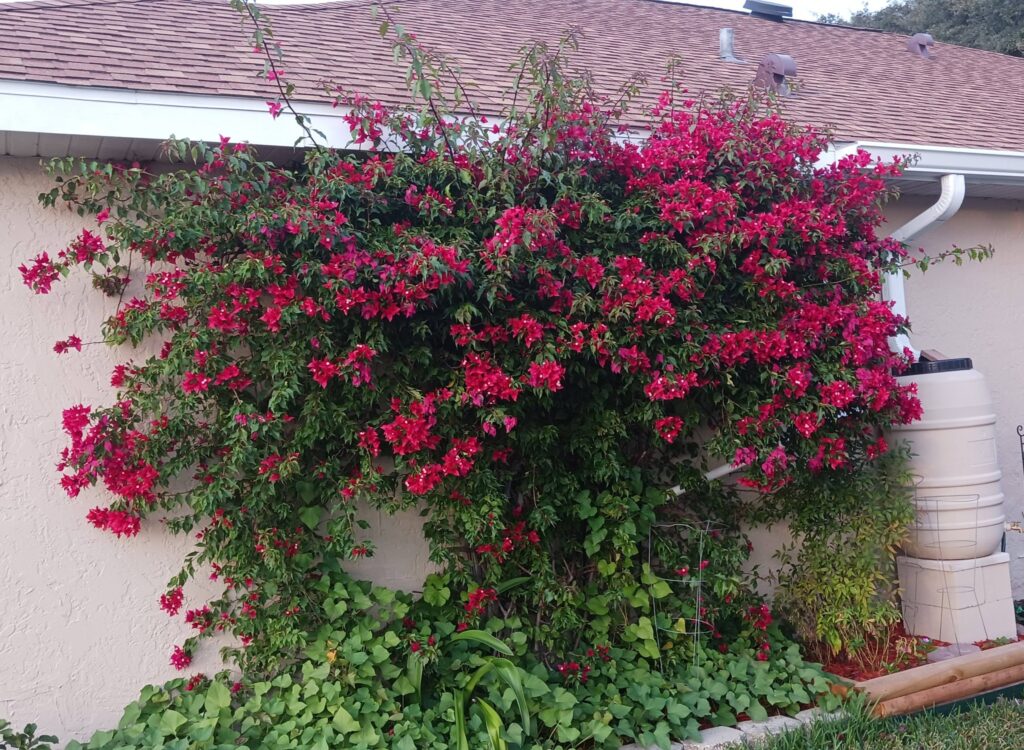
In tropical and subtropical climates, bougainvillea is the queen of red-flowering shrubs. Its vivid papery bracts — often mistaken for flowers — create an almost overwhelming display of color.
- Hardiness Zones: 9–11
- Height: 15–40 feet (as a climber/large shrub)
- Sun: Full sun
- Soil: Well-drained, slightly acidic
Key growing tip: Bougainvillea blooms more prolifically when slightly stressed. Light water stress encourages flowering. Over-watering leads to lush foliage but fewer bracts.
16. Lantana (Lantana camara)
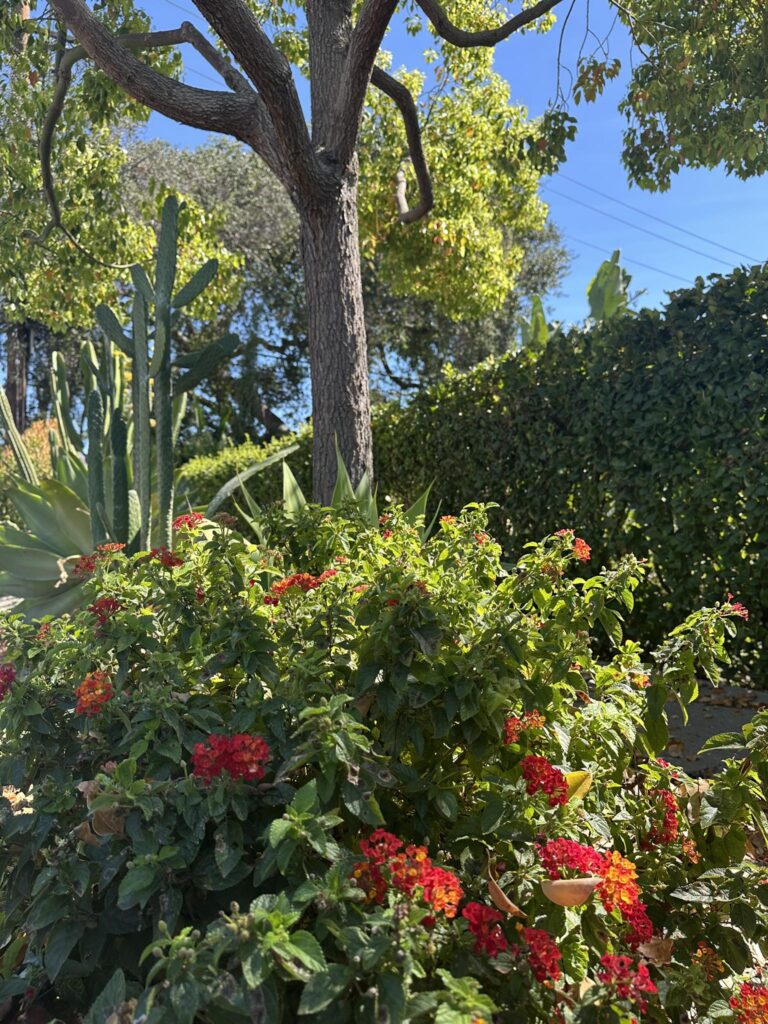
Lantana is a tough, heat-loving shrub that produces clusters of small flowers in shades of red, orange, and yellow. It thrives in the hottest, driest conditions and blooms continuously from spring through frost.
- Hardiness Zones: 7–11 (as perennial), annual elsewhere
- Height: 2–6 feet
- Sun: Full sun
- Soil: Well-drained, tolerates poor and dry soil
Note: Lantana is considered invasive in some regions, particularly in Florida and parts of the Southeast. Check local regulations before planting.
17. Red Bauhinia (Bauhinia punctata)
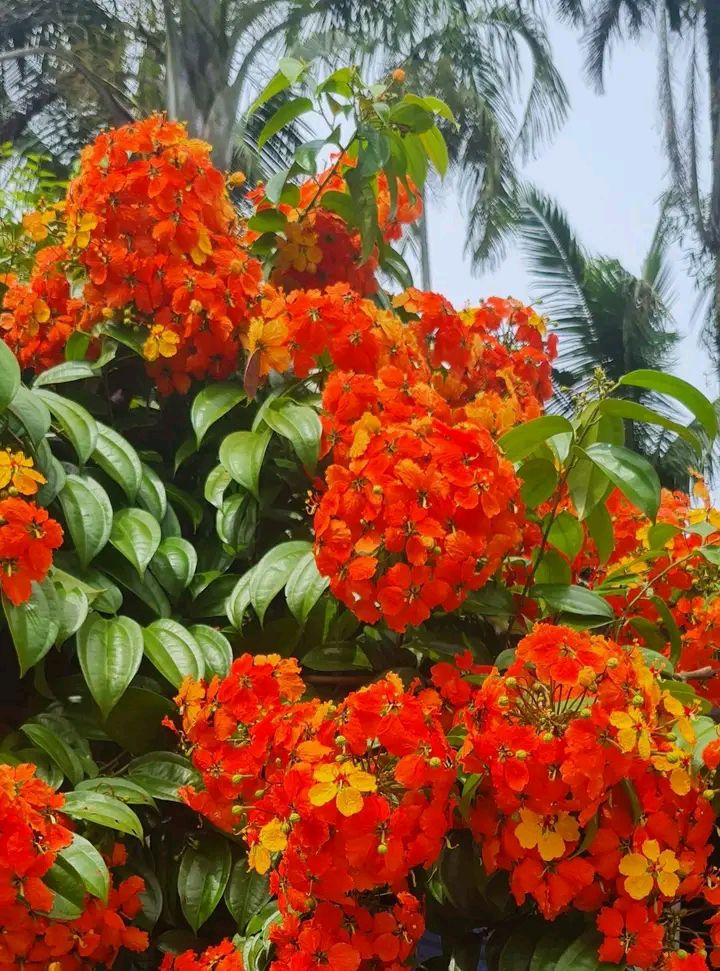
Also known as red orchid bush, red bauhinia produces butterfly-shaped blooms in vivid shades of red and coral. It is a stunning specimen plant for warm-climate gardens.
- Hardiness Zones: 9–11
- Height: 4–10 feet
- Sun: Full sun
- Soil: Well-drained, sandy to loamy
Blooming peaks in spring and fall, with sporadic flowering throughout the year in frost-free climates.
18. Cornus florida (Flowering Dogwood — Red Cultivars)
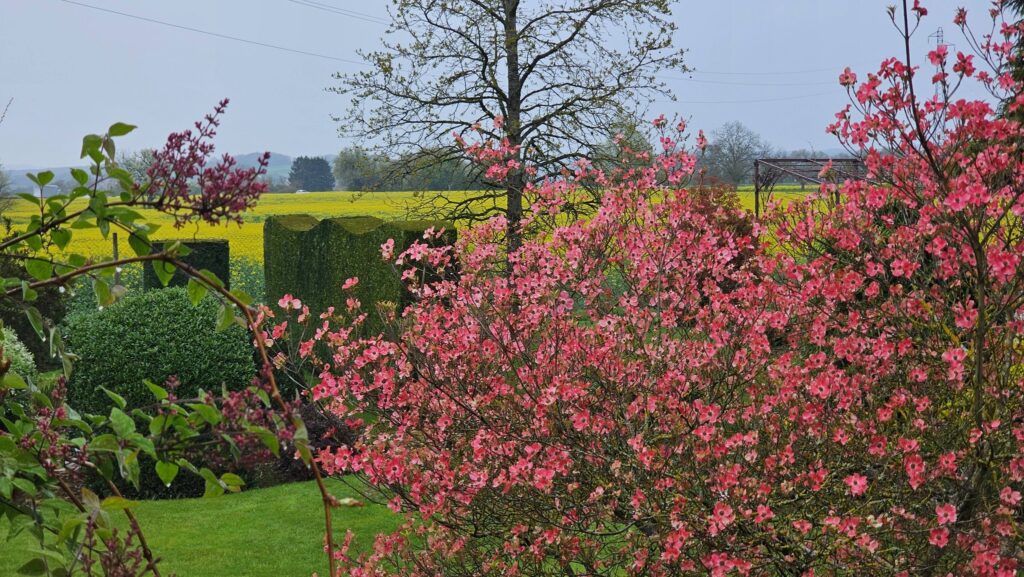
While flowering dogwood is often associated with white blooms, red and pink cultivars such as ‘Cherokee Chief’ and ‘Rubra’ produce stunning rosy-red bracts that light up the spring landscape.
- Hardiness Zones: 5–9
- Height: 15–30 feet (technically a small tree, but widely used as a large shrub)
- Sun: Partial shade to full sun
- Soil: Acidic, moist, well-drained, rich
Plant dogwoods where they receive morning sun and afternoon shade for best results in warmer climates.
19. Red Hibiscus (Hibiscus rosa-sinensis)
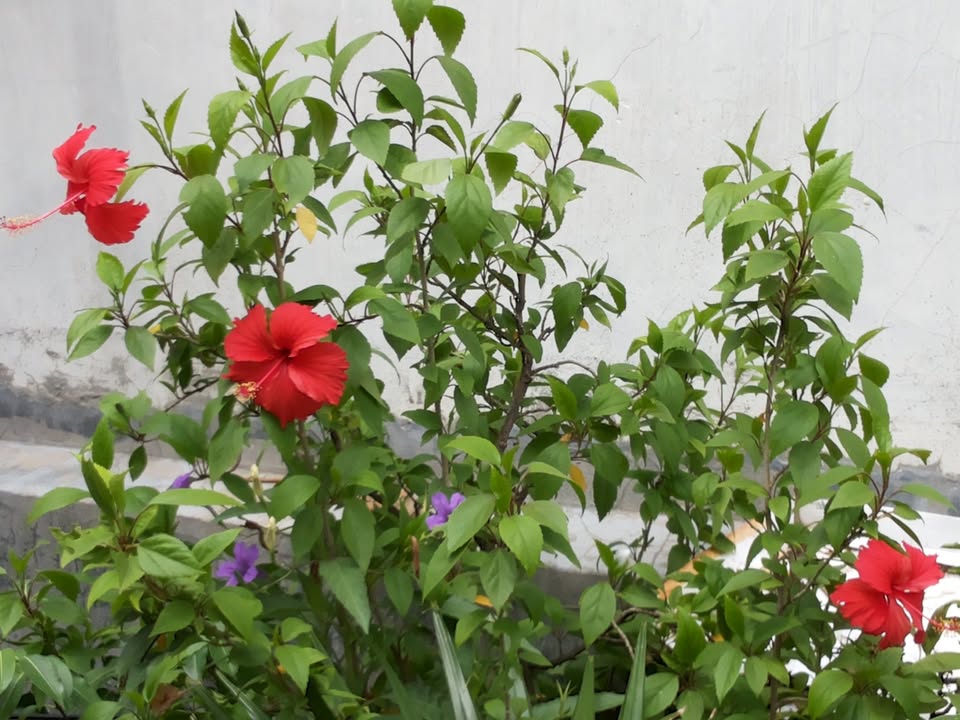
Tropical hibiscus produces some of the largest and most dramatic red flowers in the shrub world. A single bloom can measure six to ten inches across, and the plant blooms nearly year-round in warm climates.
- Hardiness Zones: 9–12
- Height: 4–10 feet
- Sun: Full sun
- Soil: Moist, well-drained, fertile
In cooler zones, hibiscus makes a spectacular container plant that can be moved indoors during winter. It requires bright light and consistent watering to thrive indoors.
20. Rose of Sharon — Red Cultivars (Hibiscus syriacus)
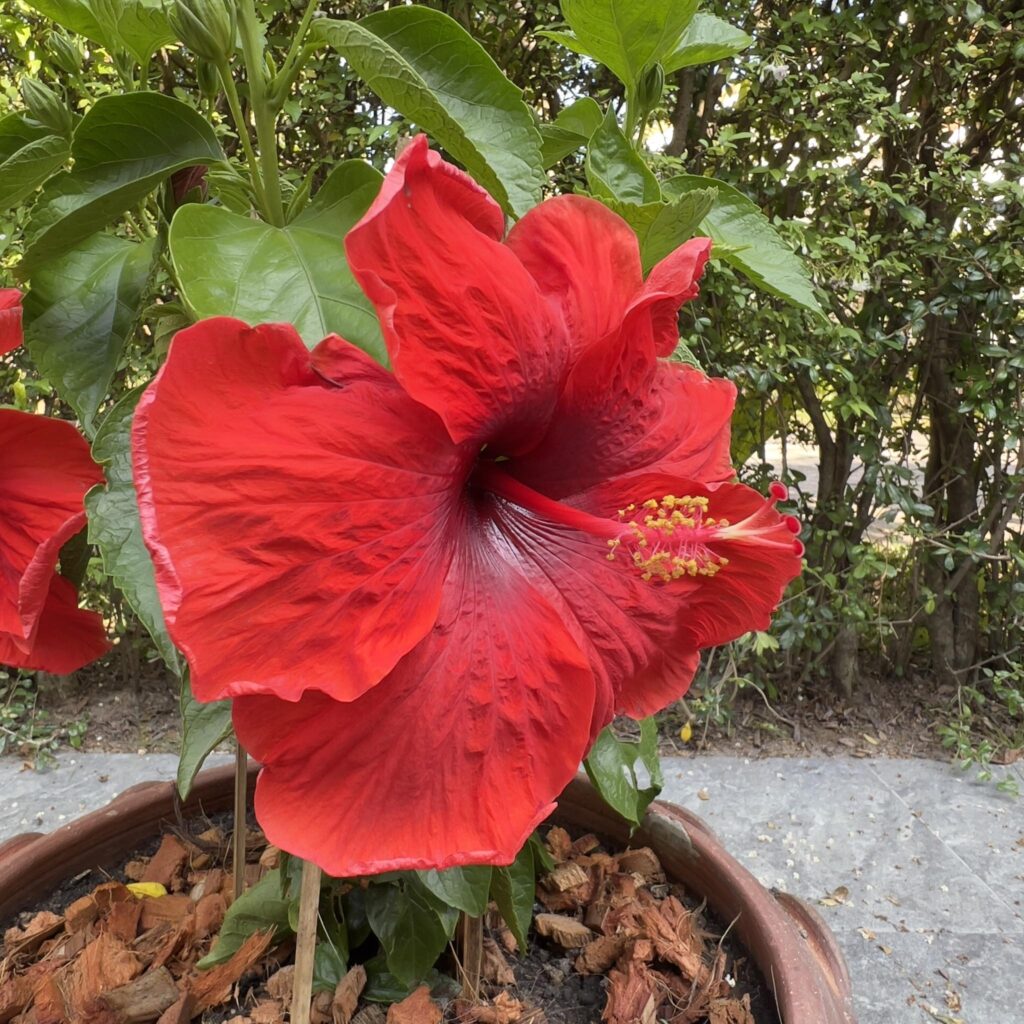
Rose of Sharon is a hardy, upright shrub that blooms in late summer when few other shrubs are flowering. Red and deep rose cultivars like ‘Bluebird Red’ and ‘Ruffled Satin’ provide late-season color.
- Hardiness Zones: 5–8
- Height: 8–12 feet
- Sun: Full sun to partial shade
- Soil: Well-drained, adaptable
It is an excellent choice for privacy hedges or screens, as it grows upright and can be trained into a small tree form.
21. Texas Sage — Red Varieties (Salvia coccinea)
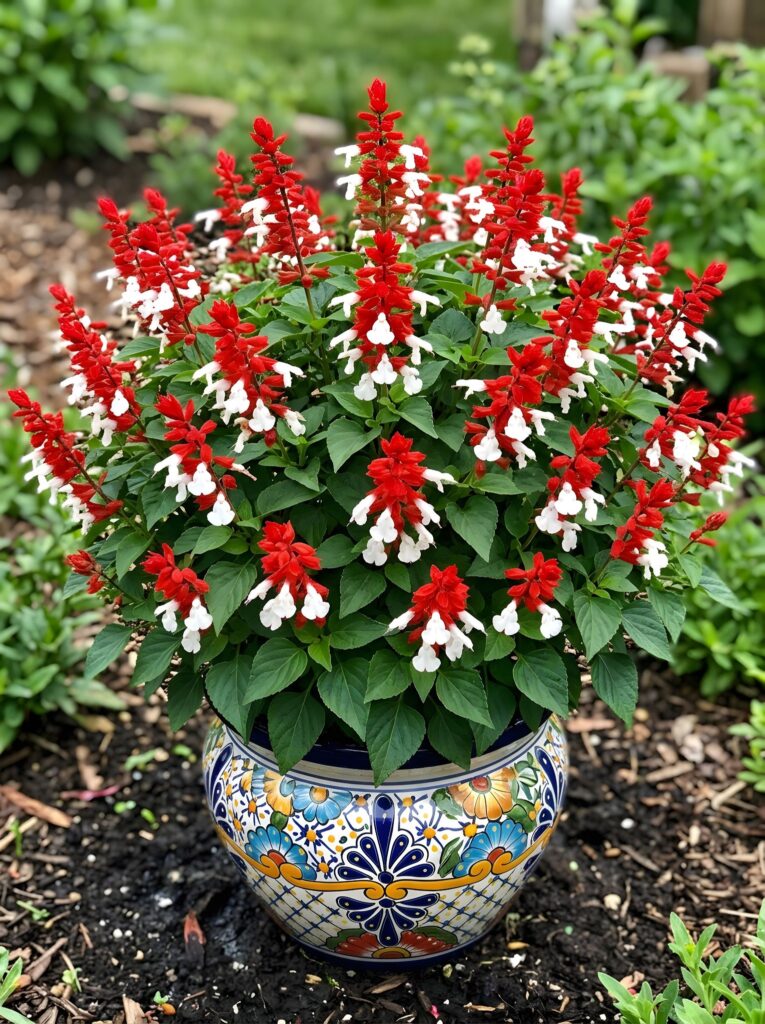
Scarlet sage, or Texas sage, is a fast-growing shrub with tall spikes of vivid red flowers. It blooms for months and self-seeds readily, returning year after year with minimal effort.
- Hardiness Zones: 8–10 (perennial), grown as annual elsewhere
- Height: 2–4 feet
- Sun: Full sun to partial shade
- Soil: Well-drained, tolerates poor soil
Plant near windows or seating areas to watch hummingbirds up close. This salvia is one of the top hummingbird plants in North America.
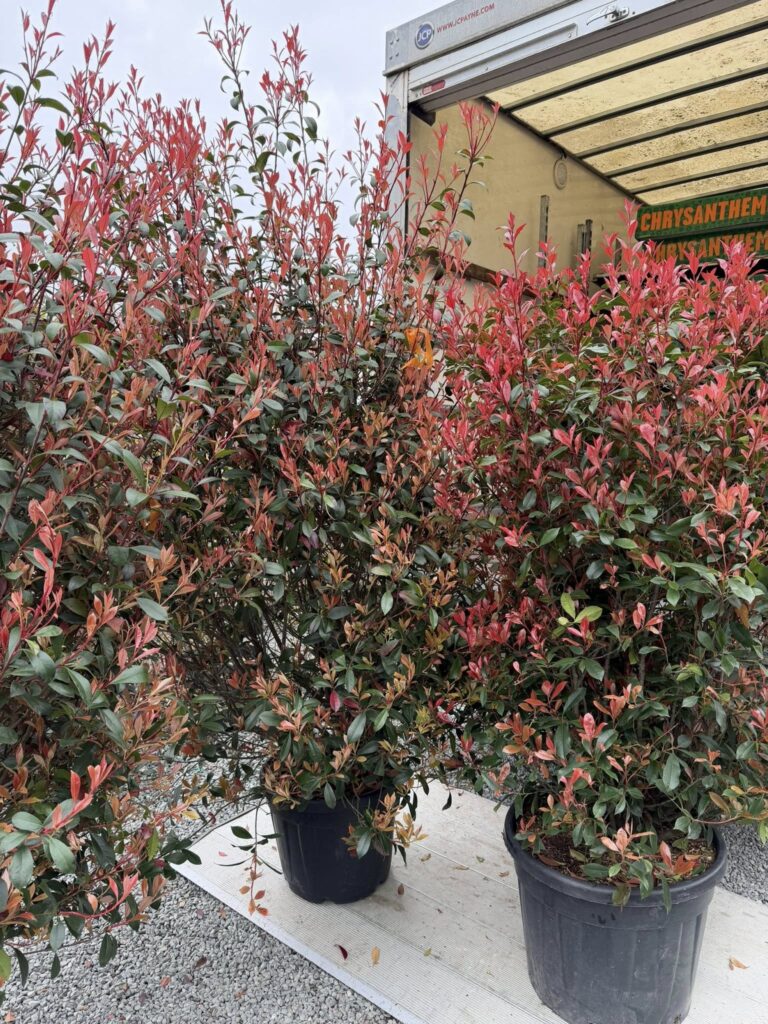
22. Photinia (Photinia × fraseri)
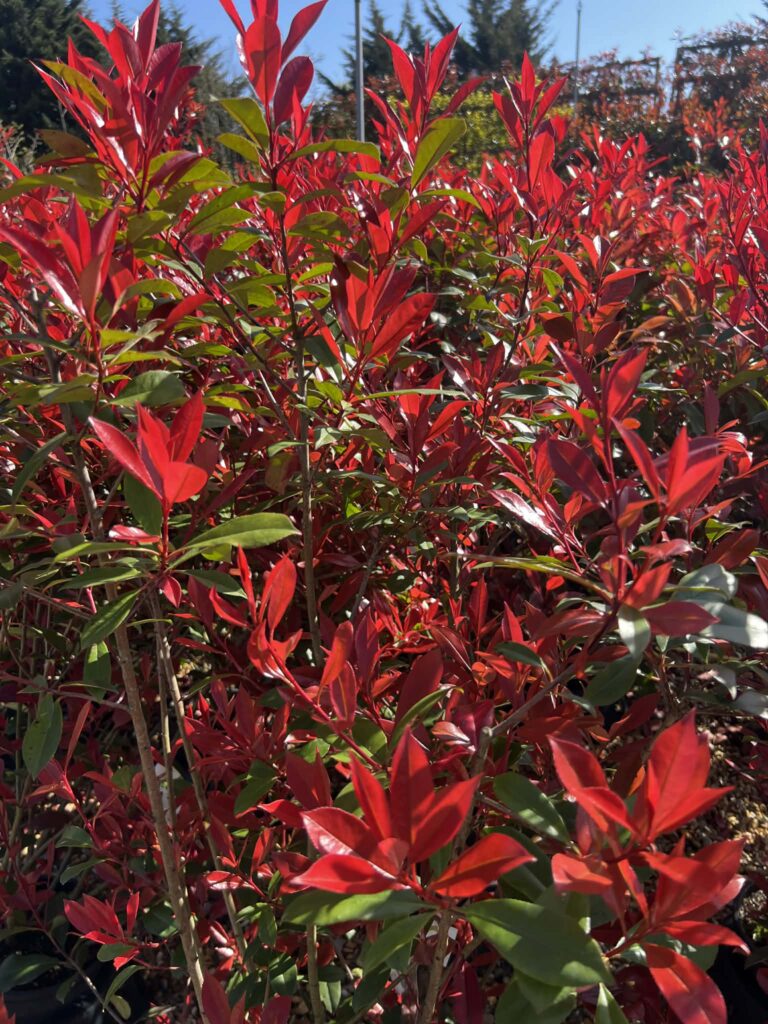
Photinia is best known for its brilliant red new growth, but its clusters of small white flowers in spring add additional ornamental value. The combination of red foliage and white flowers creates a unique two-tone effect.
- Hardiness Zones: 7–9
- Height: 10–15 feet
- Sun: Full sun to partial shade
- Soil: Well-drained, moist, adaptable
It is one of the most widely used hedge and screen plants in mild climates, offering year-round color from its red-tipped new growth.
23. Cestrum elegans (Red Cestrum)
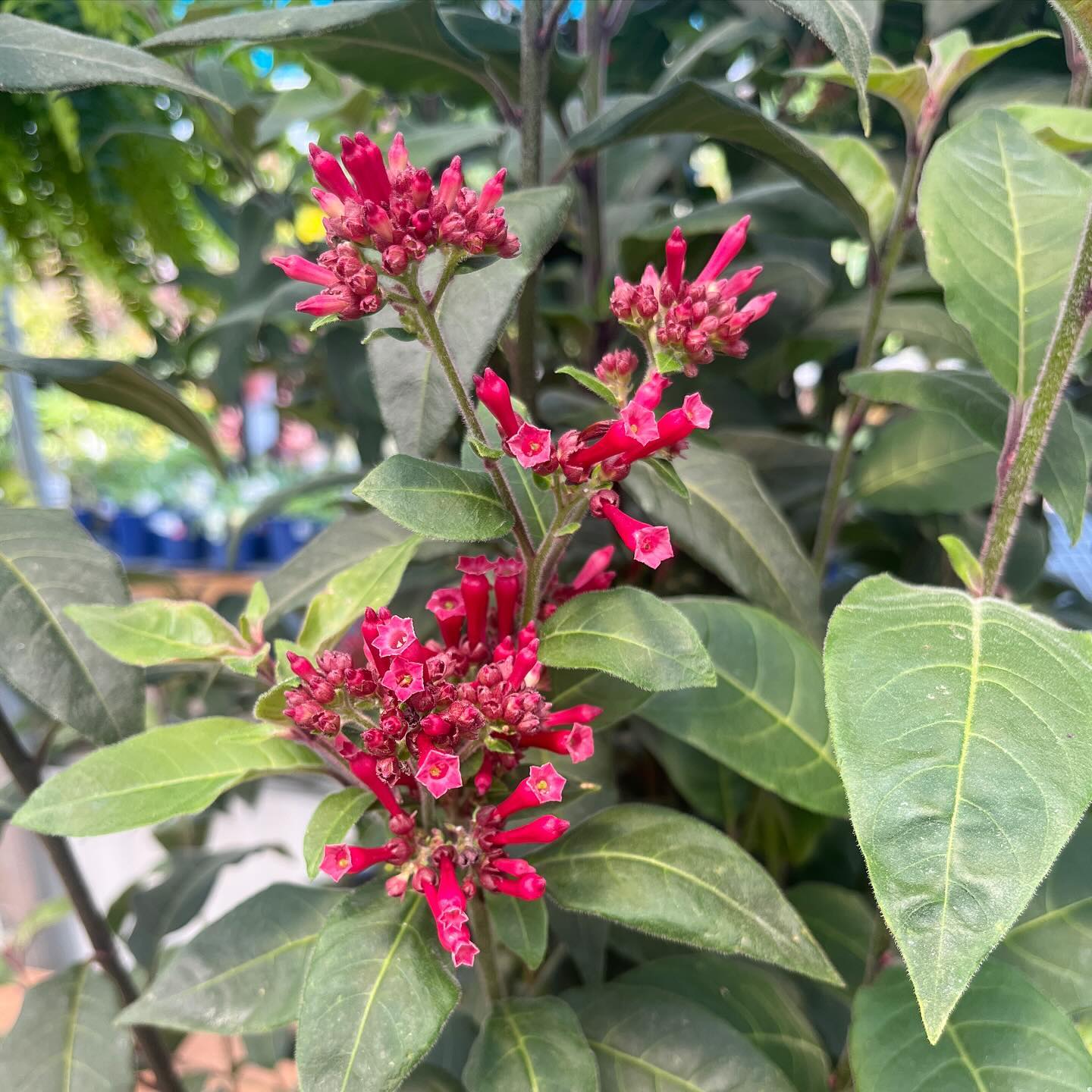
Red cestrum is a fast-growing, tropical shrub with arching branches draped in clusters of tubular crimson flowers. It blooms almost continuously in warm climates and is highly attractive to hummingbirds and butterflies.
- Hardiness Zones: 8–11
- Height: 6–10 feet
- Sun: Full sun to partial shade
- Soil: Well-drained, moist
Prune regularly to keep it compact and encourage fresh blooming growth. Without pruning, it can become leggy and sprawling.
24. Escallonia (Escallonia rubra)
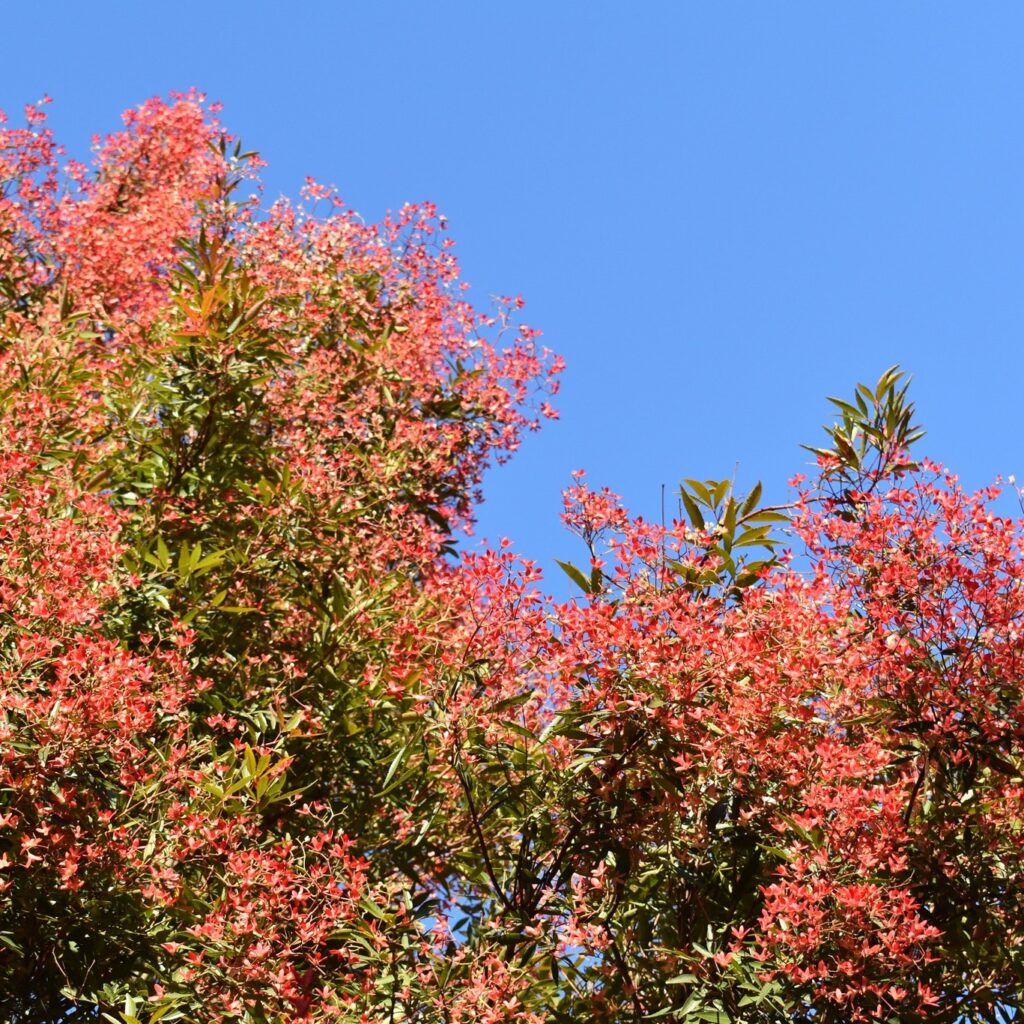
Escallonia is an evergreen shrub with glossy dark green leaves and clusters of small red flowers that appear from early summer through fall. It is highly salt-tolerant, making it ideal for coastal gardens.
- Hardiness Zones: 7–10
- Height: 4–15 feet
- Sun: Full sun
- Soil: Well-drained, adaptable
Escallonia makes an excellent windbreak or hedge in seaside locations. It is also popular in Mediterranean-climate gardens.
25. Indian Paintbrush (Castilleja spp.)
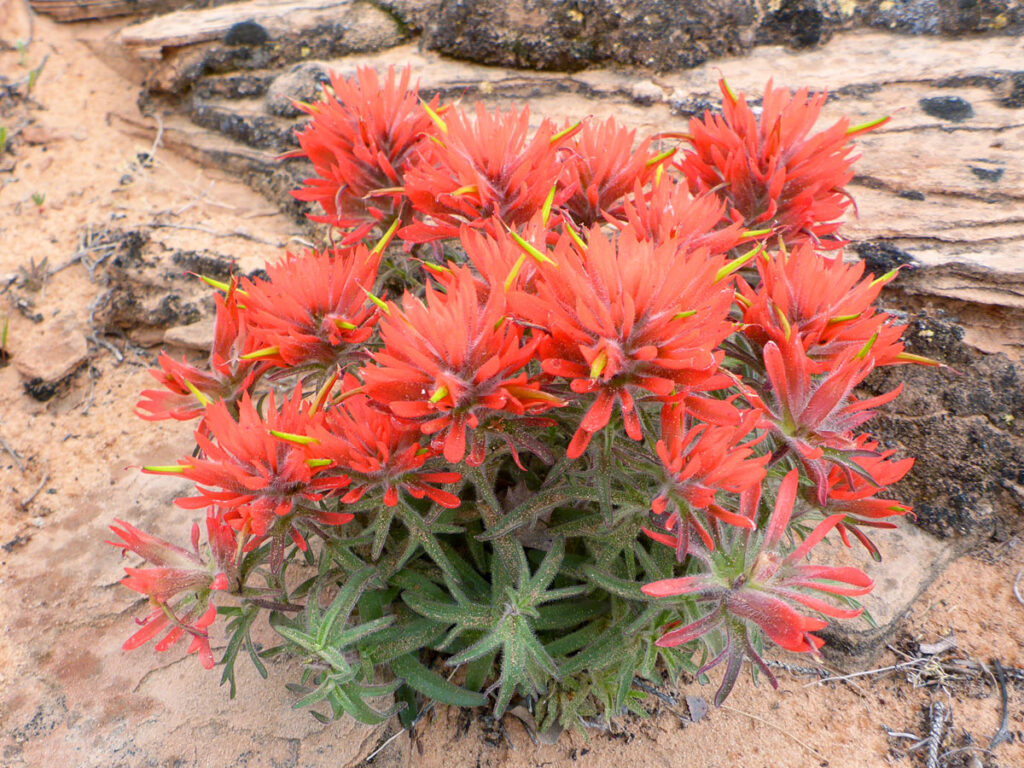
Indian paintbrush is a semi-parasitic native wildflower shrub found across North America. The brilliant red bracts look like brushes dipped in red paint, creating one of the most distinctive appearances in the plant world.
- Hardiness Zones: 4–8 (varies by species)
- Height: 1–2 feet
- Sun: Full sun
- Soil: Well-drained, dry, nutrient-poor
Important note: Indian paintbrush is semi-parasitic and attaches its roots to nearby grasses or other plants for nutrients. It grows best when seeded with native grass companions.
Why Choose Shrubs With Red Flowers?
Before planting one, it is worth understanding why red-flowering shrubs are such a smart landscaping choice.
Red flowers attract pollinators. Hummingbirds, bees, and butterflies are strongly drawn to red blooms. Planting these shrubs near a vegetable garden or orchard can improve pollination and yields.
Red-flowering shrubs also serve as natural focal points. They anchor garden beds, break the monotony of green foliage, and create visual contrast that makes surrounding plants look more vibrant.
They are also surprisingly low-maintenance once established. Many of the shrubs on this list are drought-tolerant, deer-resistant, and adaptable to a range of soil types.
How to Choose the Right Red-Flowering Shrub for Your Garden
With so many options available, choosing the right shrub comes down to a few key factors.
1. Climate and hardiness zone. Always check the USDA Hardiness Zone rating before purchasing. A tropical hibiscus that thrives in Florida will not survive a Minnesota winter outdoors.
2. Sun and shade availability. Some red-flowering shrubs, like fuchsias and azaleas, perform best in partial shade. Others, like knockout roses and bottlebrush, demand full sun.
3. Soil type and drainage. Most flowering shrubs dislike waterlogged soil. If your garden has heavy clay, consider raised beds or amending the soil with compost and grit before planting.
4. Intended purpose. Are you growing for pollinators? Choose salvia, bottlebrush, or red buckeye. Need a hedge? Escallonia and photinia are excellent options. Want year-round color? Camellia and red hibiscus are reliable performers.
5. Mature size. A bottlebrush or bougainvillea can reach 15 feet or more. Make sure the shrub’s mature dimensions fit your space before planting.
General Care Tips for Red-Flowering Shrubs
Water consistently but do not overwater. Most flowering shrubs prefer moist, well-drained soil. Drought-tolerant varieties like autumn sage and lantana need very little supplemental watering once established.
Fertilize at the right time. A balanced slow-release fertilizer applied in early spring supports healthy growth and abundant flowering. Avoid high-nitrogen fertilizers, which promote leafy growth at the expense of flowers.
Prune after flowering. For spring-blooming shrubs like azaleas and flowering quince, prune immediately after blooms fade. Pruning too late removes the following year’s flower buds.
Mulch generously. A 2–3 inch layer of mulch around the base of the shrub conserves moisture, suppresses weeds, and regulates soil temperature.
Monitor for pests. Watch for common problems like aphids, scale insects, and powdery mildew. Early intervention with neem oil or insecticidal soap prevents minor infestations from becoming serious problems.
Suggested For You:
20 Shrubs for Shade: Identification and Pictures
10 Shrubs with Red Berries: Identification and Pictures
15 Shrubs That Bloom All Summer: Identification and Pictures
Final Thoughts
Red-flowering shrubs are among the most rewarding plants a gardener can grow. They are visually striking, wildlife-friendly, and often remarkably easy to care for. Whether you have a sprawling country garden or a compact urban patio, there is a red-flowering shrub on this list that will thrive in your space.
Start with one or two that match your climate and conditions. Once you see how much life and color they bring to your garden, you will almost certainly want more.
From the reliable Knockout Rose to the exotic bottlebrush, each of these 25 shrubs offers something unique. The best garden is one that reflects your personal taste — and a well-placed shrub with red flowers will always make a statement worth remembering.
References
- University of Florida IFAS Extension — Flowering Shrubs for Florida Landscapes https://edis.ifas.ufl.edu/publication/EP001
- Clemson University Cooperative Extension — Azaleas https://hgic.clemson.edu/factsheet/azaleas/
- University of California Agriculture and Natural Resources — Flowering Shrubs for the Garden https://anrcatalog.ucanr.edu/
- Texas A&M AgriLife Extension — Native and Adapted Landscape Plants https://aggie-horticulture.tamu.edu/earthkind/landscape/

Tim M Dave is a gardening expert with a passion for houseplants, particularly cacti and succulents. With a degree in plant biology from the University of California, Berkeley, he has vast experience in gardening. Over the years, he has cultivated a vast collection of desert plants and learned a great deal about how to grow and care for these unique companions.