Understanding Madagascar Palm Plant (Pachypodium lamerei): Size, Growth Rate, Problems, and Care Details
The Madagascar Palm is one of those plants that stops people in their tracks. With its thick, spiny silver trunk, crown of tropical leaves, and desert-tough resilience, it looks like something that escaped from a prehistoric jungle — and in many ways, it did.
Despite its common name, the Madagascar Palm is not a true palm at all. It belongs to the genus Pachypodium, a group of succulent plants native to the island of Madagascar and parts of southern Africa.
The name comes from the Greek words pachys (thick) and pous (foot), referring to the plant’s distinctive swollen base that stores water.
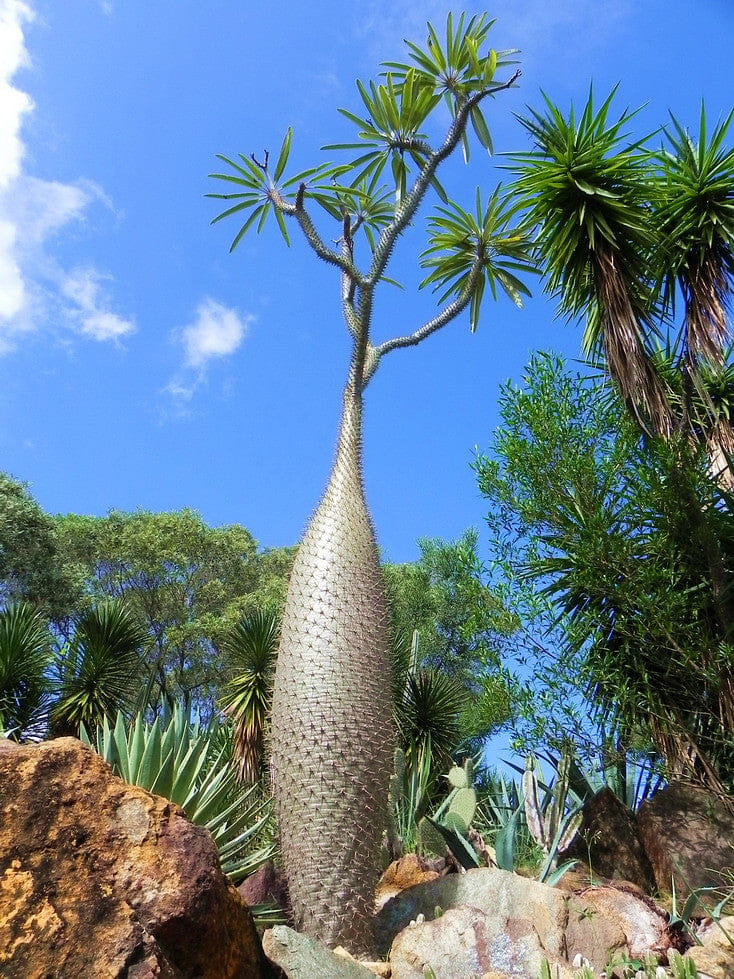
I first encountered one of these plants at a botanical garden years ago, and what struck me was the contrast — a silver trunk lined with sharp thorns, yet topped with glossy, elegant leaves. It looked almost too dramatic to be real.
This guide covers everything you need to know: from the plant’s origins and biology, to growing it at home, troubleshooting problems, and understanding why it deserves a spot in your collection.
| Common Name | Madagascar Palm |
| Scientific Name | Pachypodium lamerei |
| Family | Apocynaceae |
| Origin | Southern Madagascar |
| Type | Succulent tree / caudiciform |
| Mature Height | 4–6 ft indoors; up to 20 ft in the wild |
| Growth Rate | Slow (2–4 inches per year) |
| Sun Requirement | Full sun to bright indirect light |
| Watering Needs | Low (drought-tolerant) |
| Soil Type | Well-draining sandy or cactus mix |
| Hardiness Zones | USDA Zones 9–11 |
| Toxicity | Toxic to humans and pets |
| Bloom Color | White, fragrant flowers |
| Dormancy Period | Winter (leaves may drop) |
| Lifespan | Several decades under proper care |
Botanical Background and Origins
Where Does the Madagascar Palm Come From?
Pachypodium lamerei is endemic to the arid regions of southern Madagascar, particularly the spiny thicket biomes near Toliara and Fort Dauphin. Madagascar is one of the world’s most biodiverse islands, home to thousands of plant and animal species found nowhere else on Earth.
The plant thrives in Madagascar’s harsh, dry climate — rocky hillsides with very little rainfall, intense sun, and poor, sandy soils. Over millions of years, it evolved to handle months without water, storing moisture in its swollen trunk and shedding its leaves during the dry season to reduce water loss.
There are over 20 species in the genus Pachypodium, but P. lamerei is by far the most commonly cultivated worldwide. Other notable species include:
- Pachypodium geayi — taller, with narrower leaves and a greener trunk
- Pachypodium baronii — shorter, with red flowers
- Pachypodium brevicaule — very dwarf, almost flat to the ground
- Pachypodium rosulatum — yellow flowers, smaller form
Taxonomic Classification
The Madagascar Palm belongs to the Apocynaceae family (the dogbane family), which also includes well-known plants like oleander (Nerium oleander), frangipani (Plumeria), and periwinkle (Vinca).
This family connection explains one important characteristic: all parts of the plant contain toxic milky sap, which is a common feature across the Apocynaceae family.
Physical Characteristics: What Does It Look Like?
The Trunk
The most striking feature of the Madagascar Palm is its thick, silvery-gray trunk. It is cylindrical and densely covered in clusters of long, sharp spines — typically arranged in groups of three.
These spines are not modified leaves or bark features; they are outgrowths of the stem itself and remain permanently on the trunk even after the leaves fall.
In the wild, mature specimens can reach 15 to 20 feet tall, with a trunk diameter of several inches at the base. Indoors, growth is much slower and plants typically stay between 4 and 6 feet.
The Leaves
The leaves are long, narrow, and dark green, measuring roughly 10–16 inches in length. They emerge from the very tip of the trunk or branches in a rosette-like arrangement, giving the plant its palm-like silhouette. The leaves are shiny and have a prominent pale midrib.
One important behavior: during winter dormancy or periods of stress, the Madagascar Palm will drop all its leaves. This is normal and should not be confused with the plant dying. New leaves will return in spring when warmth and light increase.
The Flowers
Mature plants (usually those 5 years or older) can produce beautiful white, star-shaped flowers with a sweet, subtle fragrance. The flowers emerge from the growing tip and typically appear in summer. In cultivation, flowering is relatively rare but highly rewarding when it occurs.
The flowers resemble those of other Apocynaceae members — five rounded petals, usually white to creamy-white, and lightly scented. If pollinated, the plant can produce elongated seed pods containing winged seeds adapted for wind dispersal.
Also Read: Types of Palm Plants: Identification and Pictures
Growing Madagascar Palm: A Step-by-Step Guide
1. Light Requirements
The Madagascar Palm demands bright light. This is non-negotiable. In its native habitat, it grows under intense, unfiltered tropical sunlight for most of the day.
- Outdoors: Full sun is ideal. Place it in the sunniest spot available.
- Indoors: Position it directly in front of a south- or west-facing window. A minimum of 6 hours of direct sunlight per day is recommended.
Plants grown in low light become etiolated — meaning they stretch, lean toward the light source, and lose their compact form. The trunk may also soften over time if light is insufficient.
If moving an indoor plant outdoors for summer, acclimate it gradually over 1–2 weeks to prevent sunburn on the trunk.
2. Watering
This is where most growers go wrong. Madagascar Palms are drought-tolerant and highly susceptible to root rot from overwatering.
The correct approach:
- Water deeply but infrequently — typically every 2–3 weeks during the growing season (spring and summer).
- Always allow the soil to dry out completely between waterings.
- In autumn and winter, reduce watering significantly or stop entirely if the plant has gone dormant (leaves dropped).
- Use the “soak and drain” method: water thoroughly until it drains from the bottom, then wait until dry.
A simple test: push a wooden skewer or your finger 2–3 inches into the soil. If it comes out dry, it’s time to water. If it’s still damp, wait another few days.
3. Soil and Potting Mix
Drainage is the single most important soil factor. The Madagascar Palm will not survive in heavy, moisture-retentive soil.
Use one of these options:
- Commercial cactus/succulent mix with added perlite (50:50 ratio works well)
- Sandy loam mixed with coarse grit or pumice
- DIY mix: regular potting soil + coarse sand + perlite in roughly equal parts
Avoid any soil that contains large amounts of peat moss or moisture-retaining polymers. These will hold too much water around the roots.
4. Pot Selection
Always use pots with drainage holes — no exceptions. Terracotta pots are particularly good for Madagascar Palms because they are porous and allow excess moisture to evaporate through the sides.
Choose a pot that is only slightly larger than the root ball. Too large a container holds excess moisture for too long.
5. Temperature and Humidity
The Madagascar Palm is a warm-climate plant. It thrives in:
- Optimal temperature range: 65°F–95°F (18°C–35°C)
- Minimum temperature: 50°F (10°C); brief exposure to 40°F (4°C) may be tolerated but can cause damage
- Humidity: Prefers dry to moderate humidity; does not like consistently high humidity
In USDA zones 9–11, the plant can live outdoors year-round. In colder climates, it must be brought indoors before the first frost.
6. Fertilizing
Feed the Madagascar Palm sparingly. During the active growing season (spring through summer), apply a diluted, balanced fertilizer (such as 10-10-10) once a month at half the recommended strength.
Do not fertilize during autumn or winter. Over-fertilizing can cause rapid, weak growth.
7. Repotting
Repot every 2–3 years, or when you notice roots emerging from the drainage holes. Repotting is best done in spring at the start of the growing season.
Handle with care when repotting — the spines are sharp enough to cause injury. Use thick gloves and wrap the trunk in several layers of newspaper or a folded towel before lifting.
Propagation: How to Grow New Plants
From Seed
Growing Madagascar Palm from seed is slow but rewarding. Fresh seeds germinate at a rate of 50–80% if kept at 75°F–85°F (24°C–29°C) with consistent moisture.
Steps:
- Soak seeds in warm water for 24 hours before planting.
- Sow in a well-draining seed mix, barely covering the seeds.
- Keep warm and in bright, indirect light.
- Germination typically occurs within 2–4 weeks.
- Seedlings are fragile; transplant carefully once they are a few inches tall.
From Offsets (Pups)
Mature plants occasionally produce offsets or basal shoots at the base of the trunk. These can be carefully removed with a clean, sharp knife and planted in their own pots. Allow the cut end to callus (dry) for 1–3 days before planting in dry soil.
Do not water immediately after planting offsets. Wait about a week to allow the cutting to begin forming roots before introducing moisture.
Common Problems and How to Solve Them
1. Yellowing or Dropping Leaves
This is the most common concern. Causes include:
- Normal dormancy (winter leaf drop — no action needed)
- Overwatering — reduce watering immediately and check for root rot
- Cold temperatures — move to a warmer spot
- Underwatering during the growing season — water more frequently
2. Soft or Mushy Trunk
This is a serious sign of root rot, usually caused by overwatering or poorly draining soil. Act quickly:
- Remove the plant from its pot immediately.
- Inspect the roots — cut away all black, mushy roots with sterile scissors.
- Let the plant dry in a warm, bright location for several days.
- Repot in completely fresh, dry soil.
- Wait at least 1–2 weeks before watering again.
In severe cases, the rot may be irreversible. Prevention — through proper watering habits — is always the better path.
3. Pests
The Madagascar Palm is generally pest-resistant, but common culprits include:
- Mealybugs — appear as white, cottony masses; treat with rubbing alcohol on a cotton swab or insecticidal soap
- Spider mites — visible as fine webbing; increase airflow and spray with neem oil solution
- Scale insects — brown, waxy bumps on the trunk; scrub off manually and apply horticultural oil
4. Leaning or Stretching Trunk
Almost always caused by insufficient light. The plant leans toward its light source when deprived of enough sun. Rotate the pot regularly and move it to a brighter location to correct the issue over time.
5. No Flowers Despite Maturity
Flowering requires maximum light, warmth, and plant maturity (typically 5+ years). If your plant is mature but not flowering, try moving it to a sunnier location, ensuring it gets a proper winter rest period, and feeding it with a low-nitrogen, high-phosphorus fertilizer in spring.
Toxicity and Safety
The Madagascar Palm is toxic. All parts of the plant — trunk, leaves, sap, and seeds — contain toxic alkaloids and cardiac glycosides. The white milky sap that oozes from cut or damaged areas is particularly harmful.
- In humans: Contact with sap can cause skin and eye irritation. Ingestion causes nausea, vomiting, and in severe cases, cardiac complications. Always wear gloves when handling.
- In pets: Toxic to cats, dogs, and other animals if ingested. Symptoms include drooling, vomiting, lethargy, and abnormal heart rhythm. Seek veterinary care immediately if ingestion is suspected.
Keep this plant away from children and pets. Its spines also present a puncture hazard, especially for small animals and curious children.
Madagascar Palm in Landscaping and Interior Design
Outdoor Use
In warm climates (zones 9–11), the Madagascar Palm makes a dramatic statement plant in xeriscaping, rock gardens, and drought-tolerant landscapes. Its silver trunk and spiny silhouette add strong vertical interest.
It pairs beautifully with:
- Agave and aloe species
- Ornamental grasses
- Low-growing sedums
- Boulders and gravel mulch
It is increasingly popular in Mediterranean-style gardens and modern minimalist landscapes where its architectural form stands out.
Indoor Use
As a houseplant, the Madagascar Palm suits bright, contemporary interiors — particularly those with high ceilings and abundant natural light. Its height and sculptural quality make it a natural focal point in living rooms, sunrooms, or entryways.
It works well in:
- Modern industrial or minimalist interiors
- Desert-themed or bohemian collections
- Botanical display spaces with other succulents and cacti
One practical note: given its spines, place it away from high-traffic paths where people might brush against it.
Conservation Status and Environmental Importance
The native habitats of Pachypodium lamerei — the spiny thickets of southern Madagascar — are under increasing threat from deforestation, agricultural expansion, and charcoal production. Madagascar has lost a significant portion of its original forest cover over the past century.
Pachypodium lamerei is currently listed on the CITES Appendix II, meaning international trade of wild-collected specimens is regulated to prevent over-exploitation. Most plants available commercially are propagated from cultivation rather than collected from the wild.
If you purchase a Madagascar Palm, always buy from reputable nurseries that propagate their own stock. Avoid sellers who cannot confirm the plant’s origin, as wild-collected specimens may be illegally sourced.
Interesting Facts Worth Knowing
- Not a palm: Despite its common name and palm-like appearance, it is genetically closer to milkweed than any true palm.
- Spines stay forever: The spines are permanent structures embedded in the trunk and do not fall off as the plant ages.
- Water reservoir: The thick trunk acts as a water storage organ, allowing survival during extended droughts — sometimes up to several months.
- Slow aging beauty: A well-cared-for Madagascar Palm can live for decades, gradually developing impressive trunk girth and height.
- Pollinator magnet: In its native habitat, the white flowers attract moths and butterflies as primary pollinators.
Frequently Asked Questions
Q: Why is my Madagascar Palm losing all its leaves?
Leaf drop in winter is completely normal and is part of the plant’s natural dormancy cycle. As long as the trunk remains firm, the plant is healthy and will re-leaf in spring.
Q: Can I grow a Madagascar Palm from a cutting?
Unlike many succulents, Pachypodium lamerei does not root easily from stem cuttings. Propagation is most reliable from seeds or basal offsets.
Q: How big will it get indoors?
Indoors, most plants reach between 4 and 6 feet over many years. Growth is slow — typically 2–4 inches per year under good conditions.
Q: Is it safe to have around cats?
No. The plant is toxic to cats and dogs. It is best kept in a space where pets cannot access it.
Q: Does it need a winter rest?
Yes. Reduced watering and slightly cooler temperatures in winter help mimic its natural dormancy cycle and promote better growth and potential flowering the following season.
Final Thoughts
The Madagascar Palm is not the easiest plant to grow — it demands the right light, disciplined watering, and protection from cold.
But for those willing to meet its needs, it offers something few houseplants can match: a living piece of natural sculpture that grows more impressive with every passing year.
It teaches patience. It rewards attention. And in a world of fast-growing, forgettable houseplants, there is something deeply satisfying about nurturing a plant that has existed in its current form for millions of years on a remote island in the Indian Ocean.
If you can give it sun, warmth, and restraint with the watering can — the Madagascar Palm will give you decades of remarkable beauty in return.
References
- University of Florida IFAS Extension — Pachypodium lamerei: Madagascar Palm https://edis.ifas.ufl.edu/publication/FP461
- Missouri Botanical Garden — Pachypodium lamerei Plant Finder https://www.missouribotanicalgarden.org/PlantFinder/PlantFinderDetails.aspx?kempercode=b756
- Wikipedia-Pachypodium lamerei https://en.wikipedia.org/wiki/Pachypodium_lamerei

Tim M Dave is a gardening expert with a passion for houseplants, particularly cacti and succulents. With a degree in plant biology from the University of California, Berkeley, he has vast experience in gardening. Over the years, he has cultivated a vast collection of desert plants and learned a great deal about how to grow and care for these unique companions.