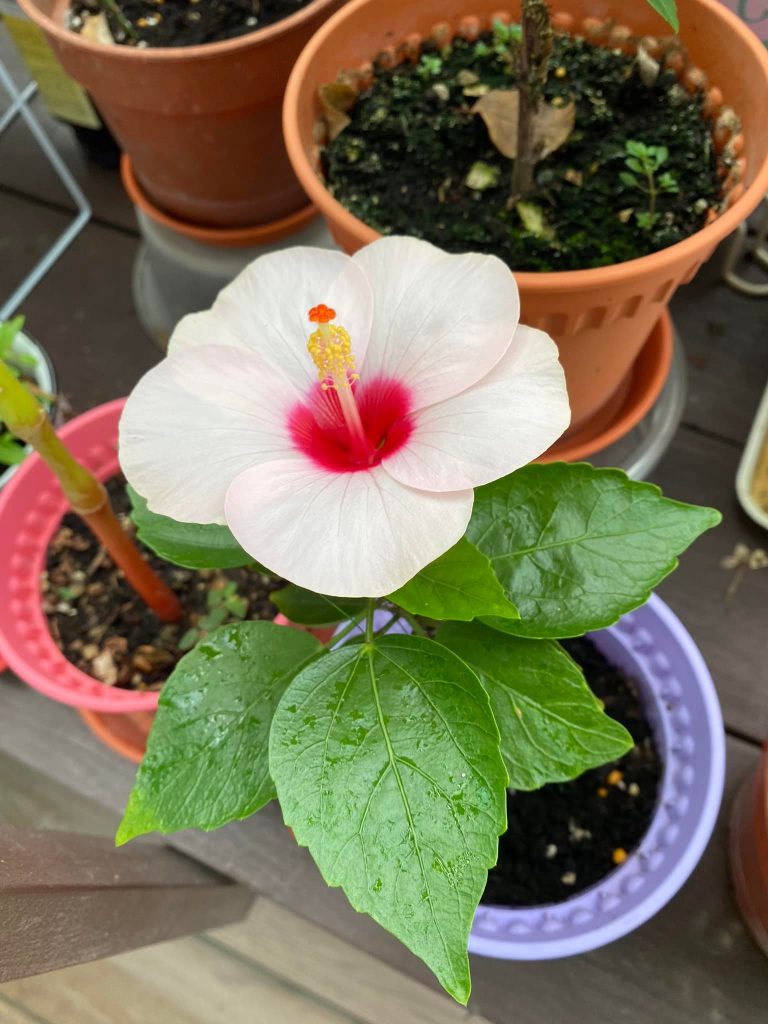
25 Varieties of Rose of Sharon (Different Types, With Pictures)
My neighbor has a Rose of Sharon hedge that blooms straight through the worst heat of August, right when the rest of my garden looks tired and dry. That toughness is exactly why this shrub has stayed popular for centuries.
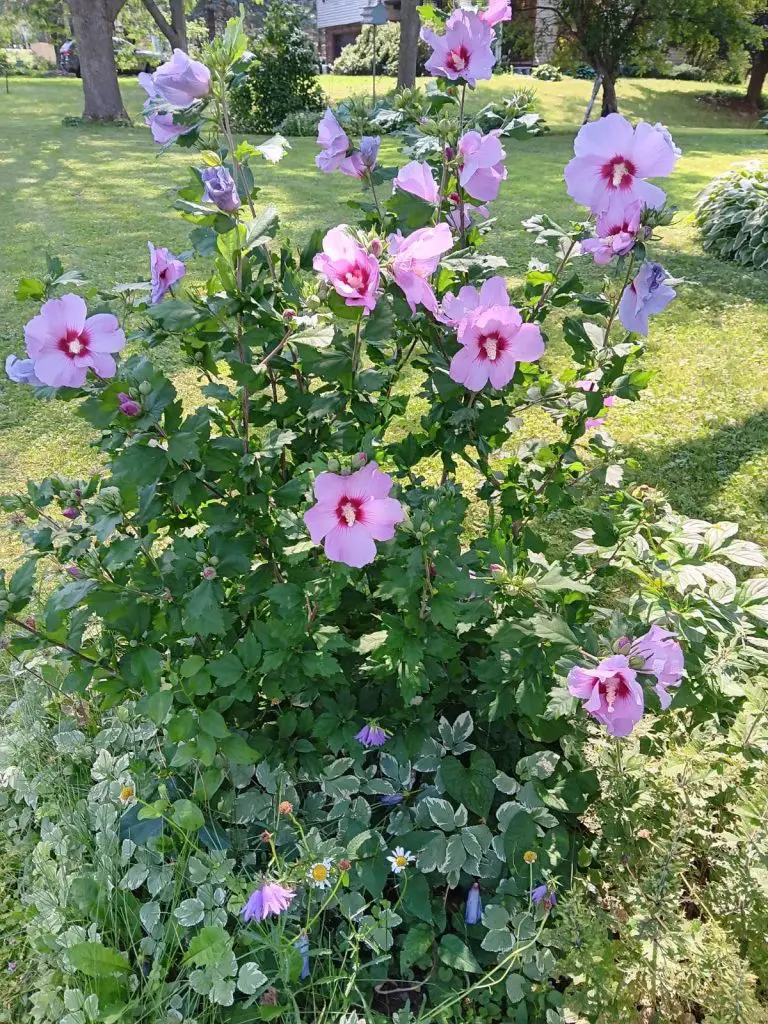
Rose of Sharon, botanically Hibiscus syriacus, is one of the few shrubs that flowers reliably during peak summer heat. It also happens to carry deep cultural weight, since it is the national flower of South Korea and is mentioned in the South Korean national anthem.
This guide covers 25 varieties of Rose of Sharon, from old cottage-garden classics to modern sterile hybrids bred for compact gardens. By the end, you will know exactly which cultivar suits your climate, your space, and your color preferences.
What Is Rose of Sharon?
Rose of Sharon is a deciduous flowering shrub in the mallow family. It is native to south China and Taiwan, growing 8 to 12 feet tall and 6 to 10 feet wide, so gardeners should plan for its mature size before planting.
It is hardy to USDA Zone 5 and was named syriacus not because it is native to Syria, but because Linnaeus mistakenly believed it originated there. Each flower only lasts a single day, but new buds keep opening for weeks on end.
I find that daily-renewal habit oddly comforting. You lose yesterday’s bloom, but tomorrow’s is already on its way.
Why So Many Varieties Exist
Breeders have spent decades refining this shrub’s natural tendency to self-seed. The fruits carry tiny hairs designed for wind dispersal, sending seeds over 50 feet from the parent plant.
That aggressive seeding pushed researchers toward sterile and near-sterile cultivars. The U.S. National Arboretum released several single-flowered introductions that produce few seeds, including ‘Diana,’ ‘Helene,’ ‘Aphrodite,’ and ‘Minerva.’
Modern series like Chiffon and Proven Winners built on that same sterility breakthrough. Today, gardeners can choose classic reseeding heirlooms or nearly seed-free modern hybrids depending on their goals.
READ MORE: 35 Popular Types of Hibiscus Plants (Tropical, Hardy, and Exotic Varieties)
Part 1: Classic and Heirloom Varieties
These older cultivars established Rose of Sharon as a garden staple long before modern breeding took hold.
1. ‘Blue Bird’
‘Blue Bird,’ sometimes listed as ‘Bluebird,’ remains one of the most requested older cultivars. It produces single flowers that are blue with a reddish base, and this old form is still popular in the trade today.
Its vase-shaped habit and reliable bloom make it a dependable choice for hedges. I still see it recommended constantly by longtime gardeners who grew up with it.
2. ‘Diana’
‘Diana’ is widely regarded as one of the finest white-flowered cultivars available. This triploid U.S. National Arboretum introduction produces large blooms that lack a central blotch and remain open at night, thanks to little or no seed production.
It is one of the single-flowered introductions selected specifically for producing few seeds. Its clean white color makes it a favorite for evening and moon gardens.
3. ‘Helene’
‘Helene’ is a triploid U.S. National Arboretum introduction producing white flowers with a maroon base, flowering heavily while setting little fruit. Its contrasting red eye against pure white petals gives it striking visual depth.
Like ‘Diana,’ this cultivar was bred specifically to curb the plant’s self-seeding tendency. It remains a solid pick for gardeners wary of aggressive reseeding.
4. ‘Minerva’
‘Minerva’ has stayed popular for its lavender flowers overcast with pink tones. It is a heavy bloomer with a red eye at the base, and its foliage quality is noticeably higher than the straight species.
This cultivar remains smaller and more shrubby, staying around 9 feet tall. Its compact size fits more modest garden spaces than older, leggier varieties.
5. ‘Aphrodite’
‘Aphrodite’ rounds out the U.S. National Arboretum’s classic triploid group. It produces deep pink flowers with a dark red eyespot and was selected for producing few seeds.
Its bold pink color reads more saturated than many pastel cultivars on this list. Gardeners chasing a strong color statement often reach for this one first.
6. ‘Ardens’
‘Ardens’ is one of several double-flowered cultivars sold at nurseries with blooms in a pink or rose hue. Its fuller, ruffled petals give it a softer, more romantic appearance than single-flowered types.
It suits cottage-style borders where texture matters as much as color. Older gardens across the eastern United States still commonly feature this heirloom.
7. ‘Blushing Bride’
‘Blushing Bride’ is another classic double-flowered cultivar producing pink and rose-hued blooms sold widely at nurseries. Its double flowers lack stamens because the pollen-producing structures converted into petals, called petaloids, though it may retain functioning pistils.
That structural quirk means it can still set some seed despite its doubled form. Its soft pink tone remains a dependable choice for romantic garden themes.
8. ‘Peoniflora’
‘Peoniflora’ rounds out the classic double-bloom group with peony-like flower structure. It is among the traditional double-flowered forms with pink or rose hues that have long been sold at nurseries.
Its dense, layered petals resemble a true peony far more than a typical hibiscus bloom. This unusual form has kept it in cultivation for generations.
9. ‘Tri-color’
This heirloom variety stands out for an unusual genetic quirk. It is a very unusual cultivar with double flowers colored pink, red, and purple all on one single plant.
Its unpredictable, multi-toned blooms make every flush of flowers slightly different. Collectors treasure it specifically for that variability.
Part 2: Chiffon Series (Semi-Double Sterile Cultivars)
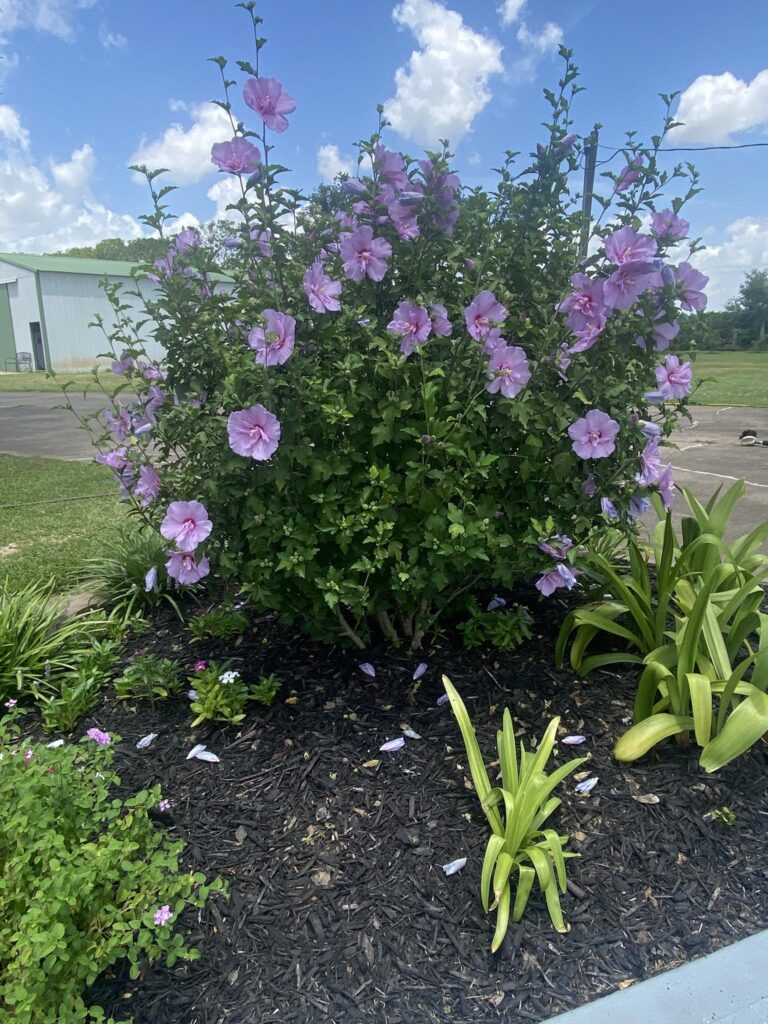
Cultivars with semi-double flowers include ‘Notwoodthree,’ patented as Blue Chiffon, and the lavender-flowered ‘Notwoodone,’ known as Lavender Chiffon. These hybrids balance a fuller flower shape with strong sterility.
10. Blue Chiffon®
Blue Chiffon is arguably the most awarded modern Rose of Sharon on the market. This cultivar, also listed as ‘Notwoodthree,’ produces large single blue blooms accented with a lacy center.
Bred in England and introduced by Proven Winners, this sterile cultivar does not produce viable seed and has received the Royal Horticultural Society’s Award of Garden Merit. Its lacy, semi-double center sets it apart from older single-flowered blue cultivars.
11. Lavender Chiffon™
Lavender Chiffon produces large lavender flowers on graceful stems with a rounded habit, growing 8 to 12 feet tall and preferring full sun. Its soft purple tone pairs beautifully with silver-foliaged perennials.
This cultivar shares the same lacy-centered flower structure as Blue Chiffon. I especially like pairing this one with catmint for a cohesive purple-lavender palette.
12. White Chiffon®
White Chiffon offers the same semi-double lacy structure in pure white. Its clean color works well as a backdrop for brighter, bolder-flowered companions in a mixed border.
Like its Chiffon series relatives, it produces very few viable seeds. That sterility makes it a safer choice in regions where Rose of Sharon has become weedy.
Part 3: Smoothie Series (Fully Double Sterile Cultivars)
Other double-flowered cultivars, such as Peppermint Smoothie with bi-colored red and pink flowers and Blueberry Smoothie with bluish-purple flowers, are completely sterile, since their stamens and pistils have both become petaloids.
13. Peppermint Smoothie™
Peppermint Smoothie produces double red-pink blooms with ruffled petals and glossy green leaves throughout summer. Its candy-cane color combination makes it a standout specimen plant.
Because it carries no functional reproductive structures, it will not seed into your lawn or nearby beds. This makes it one of the safest choices for tidy suburban landscapes.
14. Blueberry Smoothie™
Blueberry Smoothie delivers vivid blue-purple double flowers with a ruffled, full texture. Flowers cover the plant in continuous color, with the shrub growing about eight feet tall and four to six feet wide in a dense, upright habit.
This sterile Rose of Sharon was bred for saturated flower color and tidy growth, offering an alternative to older, seed-producing varieties. Its rich color reads almost indigo in certain light conditions.
15. Collie Mullens
‘Collie Mullens’ produces semi-double pink blooms with burgundy centers throughout the summer. Its two-tone contrast gives it more visual depth than a simple solid-pink bloom.
This cultivar bridges the gap between older double heirlooms and modern sterile breeding. It remains a strong middle-ground choice for gardeners wanting fuller flowers without excessive reseeding.
Part 4: Compact and Dwarf Cultivars
Not every garden has room for a 12-foot shrub. These next varieties were bred specifically to stay smaller.
16. Lil’ Kim®
Lil’ Kim revolutionized what a compact Rose of Sharon could look like. Whether you prefer the compact size of Lil’ Kim or the bold vertical form of Purple Pillar, there is a Rose of Sharon to fit nearly any garden.
Its diminutive size makes it suitable for large containers as well as small foundation beds. Gardeners with limited space finally get access to the classic hibiscus bloom without the sprawling footprint.
17. Pollypetite®
Pollypetite is one of the smallest cultivars currently on the market. Gardeners concerned about invasiveness can try seedless varieties such as Sugar Tip and Azurri Blue Satin, or the nearly seedless Pollypetite.
Its rounded, dense habit fits neatly into mixed perennial borders. This makes it an excellent option for anyone wanting the look without the bulk.
18. Sugar Tip®
Sugar Tip stands out for more than just its flowers. It is listed among the seedless varieties recommended for gardeners concerned about self-seeding in their region.
Its variegated, cream-and-green foliage adds ornamental value even before the double pink blooms open. That dual-season interest makes it a popular specimen plant.
19. Azurri Blue Satin®
Azurri Blue Satin pairs a rich, true-blue flower color with a seedless growth habit. It appears alongside Sugar Tip as a recommended seedless alternative for regions where Rose of Sharon is considered invasive.
Its saturated blue tone rivals older heirloom blue cultivars while avoiding the aggressive reseeding problem. This balance of color and restraint has made it a modern favorite.
20. Blush Satin®
Also known by the cultivar name ‘Mathilde,’ Blush Satin bears single flowers in soft blush pink with a distinct red eye at the center. Its understated color works beautifully in cottage-style and pastel garden themes.
Its single-flower form keeps pollinators happy, since bees and hummingbirds access the nectar and pollen easily. That accessibility supports the wildlife value many gardeners want from their hibiscus plantings.
Part 5: Vertical and Specialty Growth Forms
21. Purple Pillar®
Purple Pillar broke the mold by growing narrow and upright rather than wide and rounded. It offers a bold vertical form that fits nearly any garden, especially tight spaces where a traditional Rose of Sharon would sprawl.
Its columnar shape makes it useful for narrow side yards or as a living privacy screen. Landscapers increasingly use it where horizontal space is limited.
22. White Pillar®
White Pillar mirrors Purple Pillar’s narrow form but in pure white blooms. A Proven Winners introduction, this cultivar is sterile and does not produce viable seed.
Its vertical habit pairs beautifully alongside its purple counterpart for a striking two-tone hedge. Both Pillar cultivars share the same space-saving advantage over traditional Rose of Sharon forms.
23. Paraplu Violet®
Paraplu Violet brings a distinctive ruffled, umbrella-like bloom shape to the Rose of Sharon lineup. It can overwinter outdoors in temperatures as cold as 20 degrees below zero, making it one of the hardiest modern cultivars available.
Its extreme cold tolerance extends the growing range for gardeners in harsher northern climates. This resilience adds to the plant’s long-standing reputation for toughness.
24. Magenta Chiffon®
Magenta Chiffon delivers a bolder, more saturated pink than most Chiffon series relatives. Its semi-double, lacy-centered blooms bring vibrant color to late-summer borders when many other shrubs have finished flowering.
It shares the same sterile breeding advantage as the rest of the Chiffon line. Gardeners layering multiple Chiffon colors together often include this one for contrast.
25. Notwoodtwo (White Chiffon Registered Name)
Hibiscus syriacus ‘Notwoodtwo,’ registered commercially as White Chiffon, is documented in the Missouri Botanical Garden’s Plant Finder database. This formal cultivar name distinguishes it from unrelated white-flowered seedlings sold under similar generic labels.
Knowing the registered cultivar name helps you verify you are buying the true sterile hybrid. Nurseries sometimes market lookalike seedlings under similar trade names, so checking the patent designation protects your purchase.
Growing Conditions Every Rose of Sharon Variety Needs
Regardless of cultivar, most Rose of Sharon shrubs share the same basic requirements. Plant in locations with full sun to partial shade, since the shrub is tolerant of neglect and adaptable to a wide pH range.
It grows best in moist, well-drained soils but tolerates all except extremely wet or dry conditions. The growth rate ranges from slow to moderate, and transplanting is generally easy.
Pruning timing matters more than most gardeners expect. Spring pruning encourages flowers on new growth and increases flower size.
The Invasive Question: What Every Gardener Should Know
Rose of Sharon’s biggest drawback is also its biggest strength: it seeds prolifically. It has been reported to be invasive in some states, including Virginia and Kentucky.
Seeds sprout with high germination rates, and left unchecked by natural predators, this exotic species can crowd out native plants in wooded areas. That risk grows in regions with mild winters and consistent rainfall.
My advice after watching this play out in my own neighborhood? Choose one of the sterile cultivars above, like Diana, Blue Chiffon, or Sugar Tip, if you live anywhere near natural woodland.
Choosing the Right Variety for Your Garden
Start by deciding how much space you actually have. Traditional cultivars like ‘Blue Bird’ need 8 to 12 feet of width, while Lil’ Kim or Pollypetite fit into much tighter beds.
Next, think about seed concerns. Check the Invasive Plant Atlas of the United States for your specific region before choosing an older, fertile heirloom cultivar.
Finally, factor in bloom form. Single flowers like ‘Blue Bird’ and ‘Diana’ feed pollinators most efficiently, while double and semi-double types like the Chiffon and Smoothie series prioritize visual fullness.
Pairing Rose of Sharon with Other Plants
Rose of Sharon works best when it has company that complements its bloom timing. Since it flowers heaviest from midsummer into fall, pairing it with spring-blooming shrubs gives a garden bed color across more of the year.
I like combining blue or lavender cultivars, such as Blue Chiffon or Lavender Chiffon, with silver-leaved perennials like Russian sage. The contrast between soft gray foliage and saturated hibiscus blooms creates a calm, cohesive look.
For a bolder combination, pink and red cultivars such as Peppermint Smoothie pair naturally with ornamental grasses. The airy grass texture softens the shrub’s upright, sometimes stiff branching habit.
Gardeners building a pollinator bed should stick with single-flowered types. Bees and hummingbirds reach nectar and pollen far more easily on single blooms than on the layered petals of double cultivars.
Frequently Asked Questions
How long does a single Rose of Sharon flower last? Each individual bloom opens for about one day before closing. New buds continue opening in succession for weeks, so the shrub always looks freshly flowered from a distance.
Do all Rose of Sharon varieties need a pollinator to produce seeds? No. Single-flowered types like ‘Blue Bird’ self-pollinate readily, while many modern sterile hybrids, including the Smoothie series, produce no viable seed at all regardless of pollination.
Is Rose of Sharon toxic to pets? Hibiscus species are generally considered to have low toxicity, though ingestion of large quantities of leaves or flowers can cause mild stomach upset in cats and dogs. As with any ornamental plant, keep an eye on pets that tend to chew foliage.
Which variety blooms the longest? Sterile cultivars, including Blue Chiffon and the Smoothie series, often bloom longer than fertile heirlooms because the plant channels its energy into new flowers instead of seed production.
Can Rose of Sharon be grown in containers? Yes, especially the compact cultivars. Lil’ Kim and Pollypetite both perform well in large containers, making them a solid option for patios, balconies, or small courtyard gardens.
Final Thoughts
Twenty-five varieties barely covers the full range of Hibiscus syriacus cultivars available today, but it gives you a strong, practical starting point. I still think few shrubs match its reliability during the hottest weeks of summer.
Pick a sterile modern cultivar if you are worried about self-seeding, or lean into a classic heirloom if you love that old cottage-garden character. Either way, you get months of dependable color when much of the garden has already faded.
Whichever variety you choose, give it full sun, decent drainage, and a spring pruning each year. Rose of Sharon rewards that modest care with one of the longest bloom seasons any flowering shrub can offer.
References
- North Carolina State University Extension Gardener Plant Toolbox — Hibiscus syriacus: https://plants.ces.ncsu.edu/plants/hibiscus-syriacus/
- Clemson Cooperative Extension, Home & Garden Information Center — Bring on the Heat: Bring on the Blooms with Rose-of-Sharon: https://hgic.clemson.edu/bring-on-the-heat-bring-on-the-blooms-with-rose-of-sharon/
- University of Florida IFAS Extension — Hibiscus syriacus: Rose-of-Sharon (ENH454/ST295): https://journals.flvc.org/edis/article/view/141334
- Oregon State University, Landscape Plants — Hibiscus syriacus: https://landscapeplants.oregonstate.edu/plants/hibiscus-syriacus
- Invasive Plant Atlas of the United States (University of Georgia Center for Invasive Species and Ecosystem Health, in cooperation with USDA Forest Service and National Park Service) — Rose of Sharon: Hibiscus syriacus: https://www.invasiveplantatlas.org/subject.cfm?sub=5724
- EDDMapS, University of Georgia Center for Invasive Species and Ecosystem Health — Rose of Sharon (Hibiscus syriacus L.): https://www.eddmaps.org/species/subject.cfm?sub=5724
- University of Connecticut Plant Database — Hibiscus syriacus, Rose-of-Sharon, Shrub Althea: https://plantdatabase.uconn.edu/detail.php?pid=204

Tim M Dave is a gardening expert with a passion for houseplants, particularly cacti and succulents. With a degree in plant biology from the University of California, Berkeley, he has vast experience in gardening. Over the years, he has cultivated a vast collection of desert plants and learned a great deal about how to grow and care for these unique companions.