25 Edible Shrubs You Can Grow for Food and Beauty
Most gardeners think of shrubs as pretty backdrops for flower beds. I used to see them the same way, until I started planting a few that actually feed me. Now half my “ornamental” border is something I can eat, brew, or preserve.
Edible shrubs deserve more attention. They take up less space than fruit trees, many tolerate poor soil, and some produce for decades with almost no care.
Below is a detailed guide to 25 edible shrubs worth growing, with details on taste, hardiness, and how people actually use them.
Why Edible Shrubs Belong in Every Garden
Before diving into the list, it helps to understand why these plants matter beyond flavor.
Edible shrubs offer real nutritional value. According to the USDA FoodData Central database, blackcurrants contain roughly 181 mg of vitamin C per 100 grams, which is more than double the amount found in oranges. That’s not a small difference.
They support pollinators too. The Xerces Society notes that flowering shrubs like elderberry and serviceberry provide early-season nectar when few other plants are blooming, which matters because many native bee species emerge in early spring with limited food sources.
Many are low-maintenance once established. Unlike annual vegetables, shrubs don’t need replanting every year. A currant bush or a gooseberry can produce fruit for 15 to 20 years with basic pruning.
List of Edible Shrubs
Here are the 25 shrubs you can grow for food and beauty in your garden.
1. Blackcurrant (Ribes nigrum)
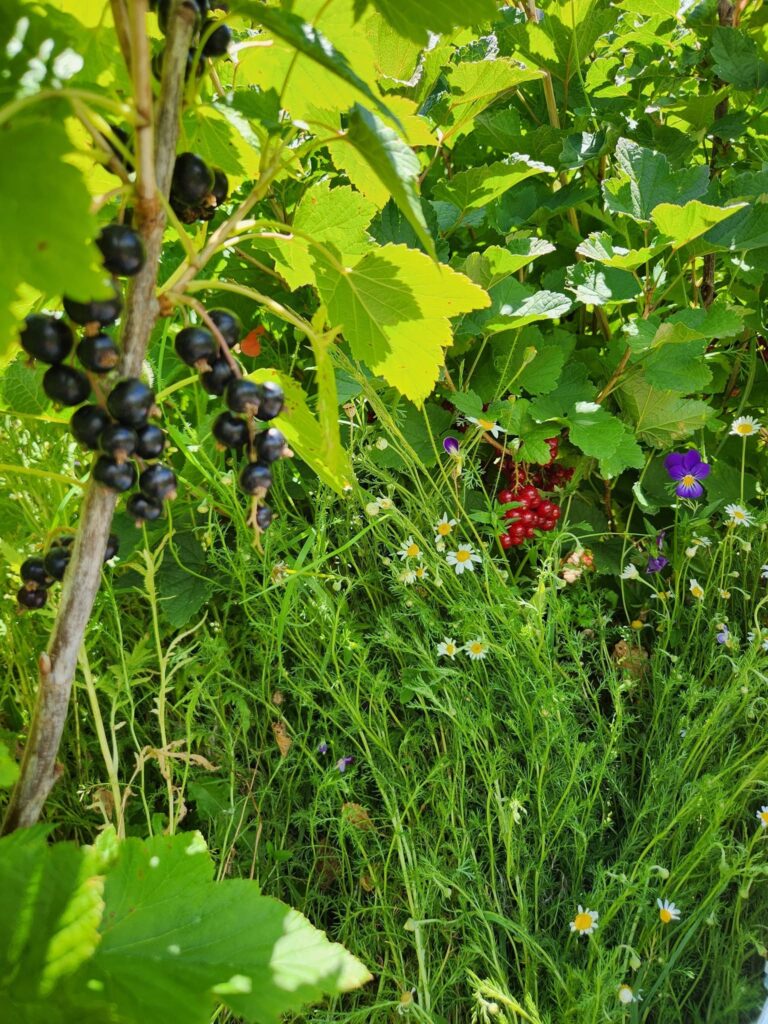
Blackcurrants have a sharp, almost wine-like flavor that’s too intense for most people to eat raw. I learned this the hard way the first time I popped one in my mouth straight off the bush.
But cooked into jam, syrup, or cordial, they’re remarkable. The berries are exceptionally high in vitamin C and antioxidants. They grow well in cooler climates, USDA zones 3 to 8, and prefer slightly acidic, moist soil.
2. Gooseberry (Ribes uva-crispa)

Gooseberries are tart, almost lemony, with a firm texture. Green varieties tend to be sourer, while red and yellow types mellow with ripeness.
These shrubs are thorny, so wear gloves when harvesting. They thrive in zones 3 to 8 and tolerate partial shade better than most fruiting shrubs, which makes them useful for spots under taller trees.
3. Highbush Blueberry (Vaccinium corymbosum)

Blueberries need acidic soil, ideally a pH between 4.5 and 5.5. Without that, the leaves yellow and growth stalls. I made this mistake in my first year and spent a season amending soil with sulfur and pine bark mulch before the plants finally took off.
Once established, a mature highbush blueberry can produce 5 to 10 pounds of fruit annually. They’re hardy in zones 3 to 8 depending on the cultivar.
4. Elderberry (Sambucus canadensis / nigra)

Elderberry is one of the most studied medicinal shrubs. Research published through the National Center for Complementary and Integrative Health has examined elderberry’s potential to reduce the duration of cold and flu symptoms, though larger studies are still needed to confirm the effect size.
A word of caution: raw elderberries, along with the leaves, stems, and seeds, contain compounds that can cause nausea. Cook the berries before eating, and avoid eating the rest of the plant.
5. Serviceberry (Amelanchier species)

Serviceberry, also called saskatoon or juneberry depending on the region, produces small purple berries that taste like a cross between blueberry and almond. The flavor surprised me the first time, almost a marzipan undertone.
This shrub is native to much of North America, which means it generally requires less irrigation and fewer pest treatments once established. It’s hardy down to zone 2 in some varieties.
6. Jostaberry (Ribes × nidigrolaria)
This is a cross between blackcurrant and gooseberry, bred to combine the productivity of gooseberry with the flavor of blackcurrant. The berries are larger than either parent and have a milder, less acidic taste.
Jostaberries are thornless, which makes harvesting far easier than picking gooseberries. They grow in zones 3 to 8.
7. Honeyberry (Lonicera caerulea)
Also known as haskap, honeyberry is one of the earliest fruiting shrubs in spring, often ripening before strawberries. The flavor is a blend of blueberry and raspberry with a slightly tart finish.
These shrubs tolerate extreme cold, surviving temperatures down to minus 40°F in some cultivars. They need a second variety nearby for pollination.
8. Goji Berry (Lycium barbarum)
Goji berries have built a reputation as a “superfood,” and there’s some basis for it. They contain notable amounts of vitamin A and antioxidant compounds, though marketing claims often overstate the benefits compared to other berries.
The shrub itself is sprawling and can become invasive if not pruned regularly. It tolerates drought and poor soil better than most fruiting shrubs on this list.
9. Sea Buckthorn (Hippophae rhamnoides)
Sea buckthorn berries are intensely sour and packed with vitamin C, sometimes cited at levels higher than citrus fruit. I find them nearly impossible to eat raw, but they make an excellent base for juice blends and syrups once sweetened.
This shrub is dioecious, meaning you need both a male and female plant for fruit production. It also fixes nitrogen in the soil, which benefits surrounding plants.
10. Aronia (Aronia melanocarpa), aka Chokeberry
Don’t let the name put you off. Aronia berries are extremely high in anthocyanins, the antioxidant compounds responsible for deep purple and red colors in fruit.
The taste is astringent on its own, similar to an unripe persimmon, but blended into smoothies or made into juice, the bitterness mellows considerably. Aronia is native to eastern North America and tolerates wet soil well.
11. Currants, Red and White (Ribes rubrum)
Red and white currants are milder than their black counterparts, with a tart-sweet flavor that works well fresh or in jellies. They’re visually striking too, with translucent clusters that almost glow in sunlight.
These shrubs prefer partial shade in hotter climates and full sun in cooler regions. They’re productive within two to three years of planting.
12. Nanking Cherry (Prunus tomentosa)
This shrub produces small, bright red cherries with a flavor somewhere between sweet and tart. The bushes are dense and can double as a privacy hedge.
Nanking cherries are self-pollinating in most cases, though planting more than one improves yield. They’re hardy to zone 2, making them suitable for harsh winter climates.
13. Pineapple Guava / Feijoa (Acca sellowiana)
Feijoa has edible flowers as well as fruit, which is unusual among shrubs on this list. The petals taste sweet, almost like cotton candy, and can be added to salads.
The fruit itself has a flavor reminiscent of pineapple and mint combined. Feijoa grows best in mild climates, USDA zones 8 to 11, and tolerates light frost but not extended freezes.
14. Rosa rugosa (Beach Rose)
Rose hips from Rosa rugosa are one of the richest natural sources of vitamin C among common plants. They’re traditionally used for teas, syrups, and jams.
This shrub is exceptionally tolerant of salt spray and poor coastal soil, which is why it’s commonly found along beaches and roadsides. It’s considered invasive in some regions, so check local guidelines before planting.
15. Barberry (Berberis vulgaris)
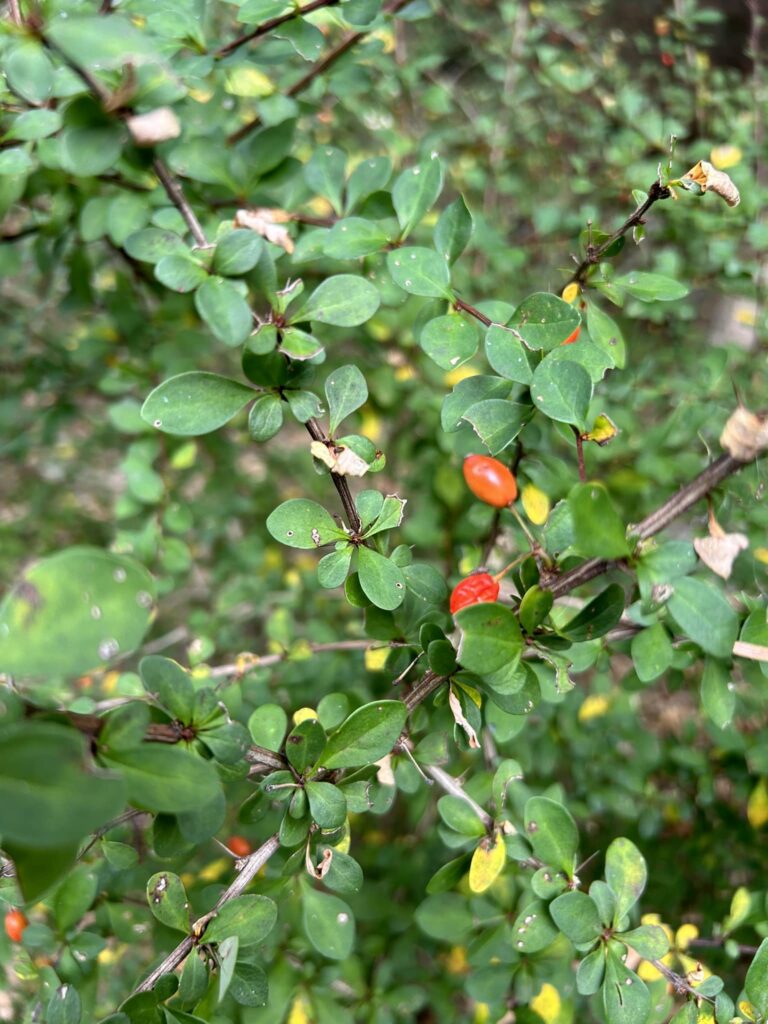
Barberries have a sharp, tangy flavor often used in Persian and Middle Eastern cooking, particularly in rice dishes. The berries are small and require some patience to harvest in quantity.
Note that Berberis vulgaris is banned or restricted in parts of the United States because it can host wheat rust, a fungal disease affecting cereal crops. Check local agricultural extension guidance before planting.
16. Autumn Olive (Elaeagnus umbellata)
Autumn olive berries ripen in fall and have a flavor that’s tart with a slight astringency, similar to a cranberry with sweeter undertones. They’re rich in lycopene, the same antioxidant found in tomatoes.
This shrub is considered invasive in many parts of the eastern United States, so I’d recommend checking with your local extension office before planting it intentionally.
17. Chilean Guava / Strawberry Myrtle (Ugni molinae)
Sometimes called “Ugni berry,” this shrub produces tiny berries with a flavor that genuinely resembles a mix of strawberry and bubblegum. Queen Victoria reportedly favored it, which gave it the nickname “New Zealand cranberry” in some markets.
It’s slow-growing and prefers mild, frost-free climates, generally zones 8 to 10.
18. Cornelian Cherry (Cornus mas)
This is actually a dogwood species, not a true cherry, but the fruit looks similar. The flavor is tart, somewhere between cranberry and sour cherry, and works well in preserves.
Cornelian cherry blooms very early, often before forsythia, providing one of the first nectar sources for pollinators each year. It’s hardy to zone 4.
19. Bayberry (Myrica species)
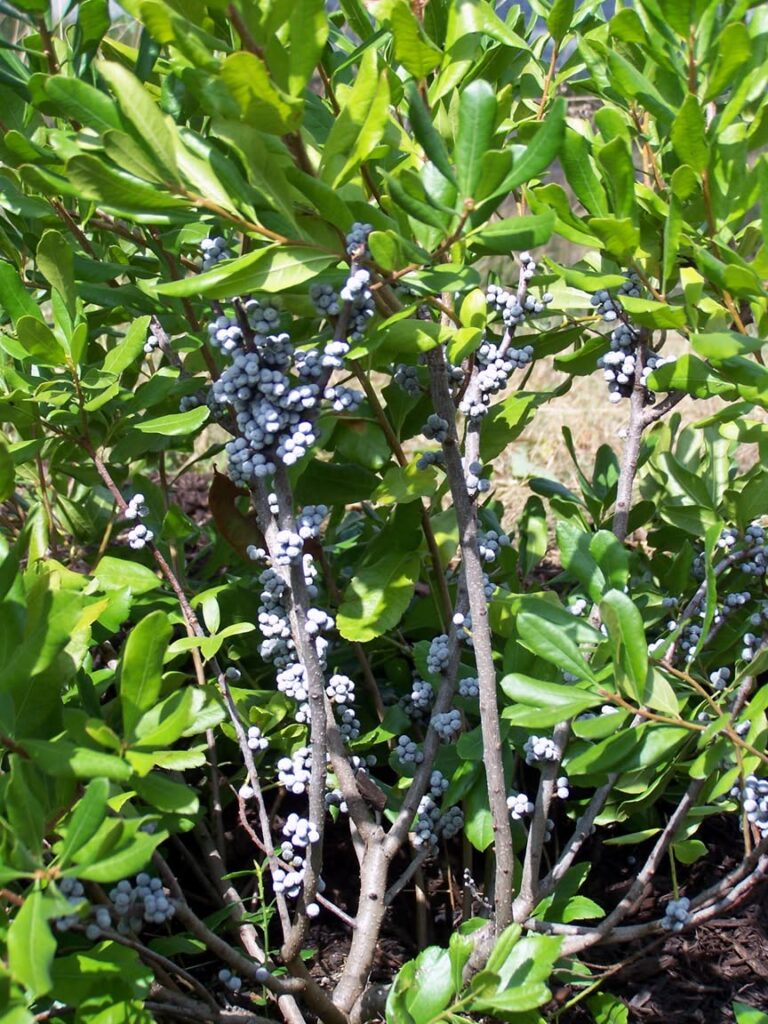
Bayberry is grown more for its aromatic leaves and wax-coated berries than for direct eating. The berries are used to make scented candles, but the leaves can be dried and used as a seasoning similar to bay leaf.
This shrub tolerates sandy, salty soil and is often found in coastal regions.
20. Highbush Cranberry (Viburnum trilobum)
Despite the name, this isn’t a true cranberry, it’s a viburnum. The berries are tart and can be made into a sauce similar to traditional cranberry sauce, though the flavor has a slightly musky note that some find off-putting raw.
It’s extremely cold-hardy, surviving down to zone 2, and the berries often persist on the branches well into winter, providing food for birds when little else is available.
21. Wolfberry (Lycium species, related to Goji)
Closely related to goji berry but with a slightly different growing range, wolfberry shrubs are tolerant of alkaline and saline soils. The berries are similar in taste and nutritional profile to goji.
22. Bush Cherry (Prunus japonica)
Smaller than Nanking cherry but similarly productive, bush cherry produces fruit that’s good for fresh eating when fully ripe, though slightly tart if picked early. The shrub stays compact, often under 5 feet, making it suitable for small gardens.
23. Lingonberry (Vaccinium vitis-idaea)
Lingonberries are a staple in Scandinavian cuisine, often served as a tart accompaniment to meat dishes. The shrub is low-growing, typically under 12 inches, and works well as a groundcover in acidic, partially shaded areas.
They’re extremely cold-hardy and the berries can persist under snow, retaining flavor through winter.
24. Buffaloberry (Shepherdia argentea)
Native to the Great Plains, buffaloberry produces tart red berries traditionally used by Indigenous communities for a frothy dessert called “Indian ice cream.” The shrub is thorny and tolerates extremely poor, alkaline soil.
It’s dioecious like sea buckthorn, requiring both male and female plants for fruit.
25. Cape Gooseberry / Ground Cherry (Physalis peruviana)
Technically more of a soft-stemmed shrub or subshrub depending on climate, cape gooseberry produces small orange fruits encased in a papery husk. The flavor is sweet with a tomato-like tang, often compared to a tropical fruit cocktail.
It’s frost-sensitive and usually grown as an annual in temperate climates, but in zones 9 to 11, it behaves as a perennial shrub.
A Few Tips Before You Plant
Check invasive species lists first. Several shrubs on this list, including autumn olive, barberry, and Rosa rugosa, are restricted in certain states or countries. Your local agricultural extension office will have the most accurate, up-to-date information for your region.
Most fruiting shrubs need 2 to 3 years to establish. Don’t expect a full harvest in year one. Patience pays off, and honestly, watching a bare cutting turn into a fruiting bush over a few seasons is one of the small joys of gardening.
Pollination matters. Several species here, sea buckthorn, honeyberry, and buffaloberry among them, need more than one plant for fruit set. Always check whether a shrub is self-pollinating before buying just one.
Soil testing saves frustration. A simple soil pH test, often available free or low-cost through university extension programs, can prevent years of poor growth, especially for acid-loving plants like blueberries and lingonberries.
Final Thoughts
Edible shrubs sit in a sweet spot between low-maintenance landscaping and genuine food production. Some, like elderberry and serviceberry, double as wildlife support and medicine cabinets. Others, like feijoa and Chilean guava, offer flavors you simply can’t buy in a grocery store.
I’ll admit, the first time I bit into a sea buckthorn berry straight off the branch, I regretted it instantly. But that same berry, turned into syrup, became one of my favorite additions to homemade sodas. That’s the thing about these plants: they reward a little experimentation.
Whichever shrubs you choose, give them time, check local growing guidelines, and don’t be afraid to taste-test as you go.
References
- USDA FoodData Central – Blackcurrant nutrient profile: https://fdc.nal.usda.gov/
- Xerces Society – Pollinator-friendly plant lists: https://xerces.org/pollinator-conservation/plant-lists
- National Center for Complementary and Integrative Health – Elderberry: https://www.nccih.nih.gov/health/elderberry
- USDA Plants Database – Species hardiness and range information: https://plants.usda.gov/
- University of Minnesota Extension – Growing fruit shrubs: https://extension.umn.edu/fruit
- North Carolina State University Extension – Plant Toolbox (species profiles): https://plants.ces.ncsu.edu/
- USDA Natural Resources Conservation Service – Invasive plant species information: https://www.nrcs.usda.gov/

Tim M Dave is a gardening expert with a passion for houseplants, particularly cacti and succulents. With a degree in plant biology from the University of California, Berkeley, he has vast experience in gardening. Over the years, he has cultivated a vast collection of desert plants and learned a great deal about how to grow and care for these unique companions.