20 Stunning Summer Flower Bed Ideas: Designs, Plant Combinations, and Expert Tips
There is something deeply satisfying about a flower bed in full summer bloom. Colour, movement, fragrance, and life — all concentrated in one carefully designed space.
I have planned and planted flower beds in many different climates over the years, and the one thing that never changes is the reaction people have when they see a well-executed summer planting. It stops them. It makes them want to stay.
The good news is that a stunning summer flower bed does not require a large budget, a professional landscaper, or years of experience.
What it requires is a thoughtful plan, the right plant choices for your climate, and an understanding of a few simple design principles. This article gives you 20 practical and beautiful summer flower bed ideas.
Understanding What Makes a Summer Flower Bed Work
Before exploring specific ideas, it is worth understanding the principles that separate a truly effective summer flower bed from one that merely exists.
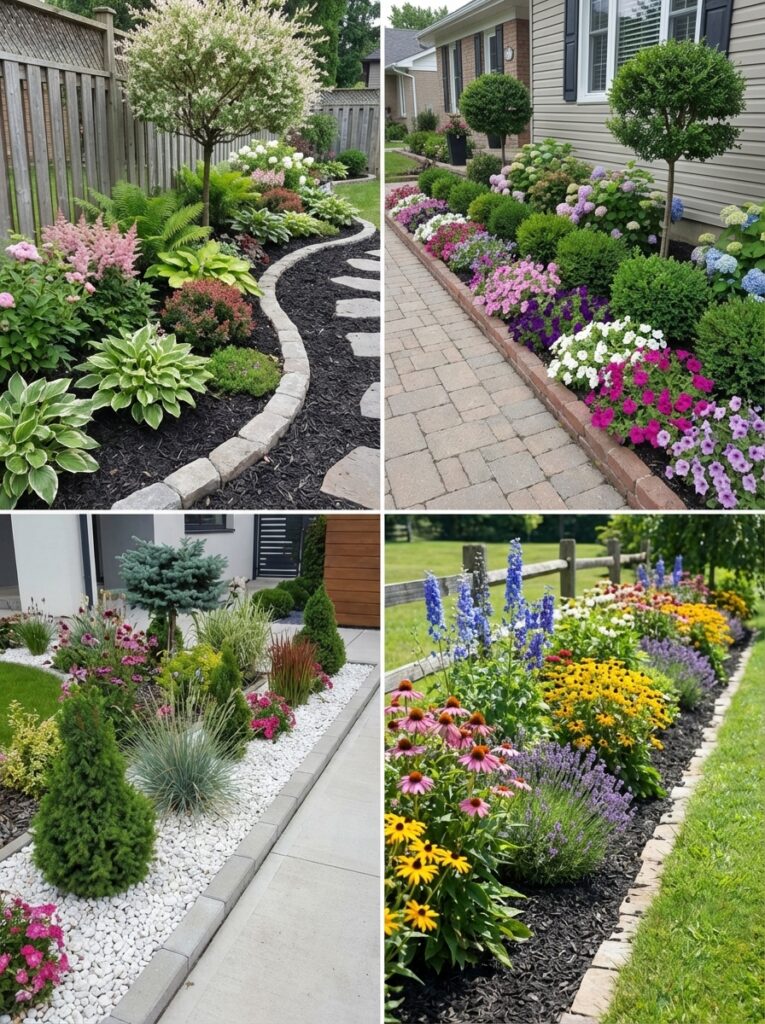
The best flower beds are designed, not just planted. That means thinking about colour combinations before you buy a single plant, considering the mature size of each variety, and accounting for how the bed will look from different angles and at different times of day.
Three core principles underpin every idea in this article:
- Layering by height: Tall plants at the back, mid-height in the middle, low-growing plants at the front. This ensures every plant is visible and the bed has visual depth.
- Colour harmony: Using either complementary colours (opposites on the colour wheel, such as purple and yellow) or analogous colours (neighbours on the wheel, such as orange, red, and yellow) creates cohesion.
- Succession planting and long-blooming varieties: Choosing plants that bloom at different times, or selecting long-blooming varieties, ensures the bed remains colourful from start to finish.
With those principles in mind, let’s explore the ideas.
Design Ideas by Colour Theme
1. The Hot Border — Reds, Oranges, and Yellows
If you want a flower bed that radiates energy and warmth, the hot border is the place to start. This palette — built on fiery reds, deep oranges, bright yellows, and burnished coppers — is bold, unapologetic, and spectacular in full summer sun.
Plant it with:
- Rudbeckia hirta (Black-eyed Susan) — golden yellow, extremely long blooming
- Helenium ‘Moerheim Beauty’ — deep orange-red, mid-height
- Crocosmia ‘Lucifer’ — vivid red, arching stems, excellent structure
- Tagetes (African marigold) — yellow and orange, front edge
- Kniphofia (Red hot poker) — tall, dramatic, red and yellow spikes
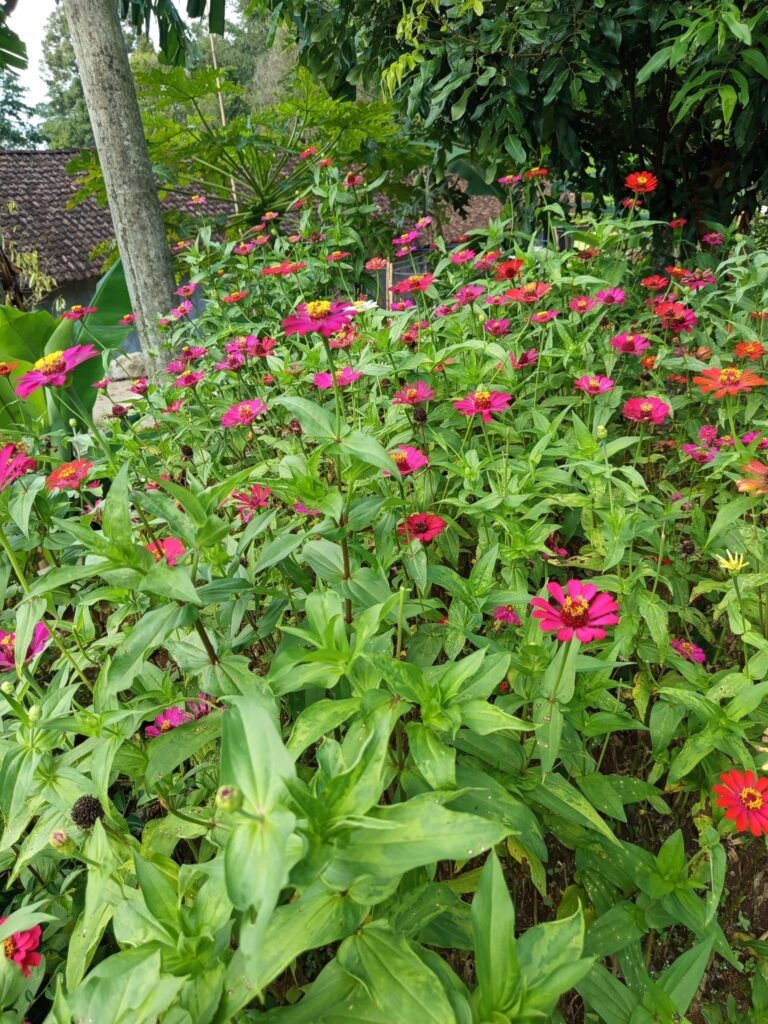
- Zinnia ‘Profusion Orange’ — low, compact, front-of-border filler
Why it works: The colours intensify each other. Under bright summer sun, this combination appears almost luminous.
2. The Cool Retreat — Blues, Purples, and Whites
A cool-coloured flower bed does something remarkable in summer: it makes the garden feel calmer, more spacious, and cooler in temperature. Psychologically, blue and white plantings are genuinely perceived as lower in temperature than hot-coloured ones.
Plant it with:
- Salvia nemorosa ‘Caradonna’ — deep violet-purple spikes
- Agapanthus (Lily of the Nile) — blue to deep violet, tall and elegant
- Veronicastrum virginicum ‘Fascination’ — pale lilac, architectural spires
- Perovskia atriplicifolia (Russian sage) — lavender-blue, silvery stems
- Nicotiana ‘White Sensation’ — white flowers, evening fragrance
- Verbena bonariensis — airy purple, excellent for floating above other plants
Regional note: Agapanthus thrives particularly well in South Africa, the Mediterranean, East Africa, and coastal Australia. It is one of the most reliable summer performers in warm climates globally.
3. The Romantic Pastel Bed — Pinks, Creams, and Soft Lilacs
Pastel flower beds suit cottage-style and formal gardens equally. They are gentle on the eye, work beautifully in partial shade, and photograph exceptionally well — which matters for those who maintain garden blogs or social media.
Plant it with:
- Phlox paniculata — fragrant, pink to pale lilac, mid-summer
- Echinacea purpurea (Coneflower) — rosy pink, long-blooming
- Astrantia major — intricate, cream-pink, delicate texture
- Cosmos bipinnatus — feathery foliage, pink and white flowers
- Lavatera ‘Barnsley’ — pale pink shrub, continuous blooming
- Gypsophila — white, cloud-like filler
4. The Sunset Bed — Peach, Coral, Apricot, and Gold
The sunset palette sits between hot and soft. It is warmer than pastels but gentler than pure reds and oranges. The result is a flower bed that feels rich and luxurious without being overwhelming.
Plant it with:
- Hemerocallis (Daylily) in peach and apricot tones
- Geum ‘Totally Tangerine’ — coral-orange, long-blooming
- Rosa ‘Lady of Shalott’ — apricot-orange, repeat-flowering
- Achillea ‘Terracotta’ — flat-topped, warm coral fading to gold
- Knautia macedonica — small, deep coral buttons above the planting
- Calendula — orange and apricot, front-of-border
5. The Monochromatic White Bed
White flower beds have been celebrated in garden design since Vita Sackville-West created her famous White Garden at Sissinghurst in England. A white-only planting is anything but boring — the variation in flower shape, leaf texture, and fragrance creates extraordinary depth.
Plant it with:
- Phlox paniculata ‘David’ — tall, fragrant white
- Lychnis coronaria ‘Alba’ — white flowers on silvery stems
- Zantedeschia (Calla lily) — sculptural, elegant white
- Nicotiana sylvestris — tall, fragrant evening white
- Salvia argentea — large, silver-white leaves as foliage contrast
- Gaura lindheimeri ‘Whirling Butterflies’ — airy white wands
Top tip: White flowers look best at dusk and in moonlight — if you have an outdoor entertaining area, planting a white bed nearby transforms evening gatherings.
Design Ideas by Style and Setting
6. The Cottage Garden Flower Bed
Cottage garden style is perhaps the most universally loved aesthetic in garden design. It is informal, relaxed, and characterised by generous planting, mixed species, and an apparent spontaneity that is actually carefully managed.
Key design rules:
- Plant in drifts, not rows. Groups of 3, 5, or 7 of the same plant create a natural feel.
- Allow plants to self-seed. Nigella, Aquilegia, Foxglove, and Poppy will return year after year, filling gaps naturally.
- Mix annuals with perennials. Annuals fill gaps while perennials build structure over the years.
Essential cottage garden summer plants:
- Digitalis purpurea (Foxglove) — tall, structural, early summer
- Centaurea cyanus (Cornflower) — electric blue, airy
- Lathyrus odoratus (Sweet pea) — fragrant, climbs through neighbours
- Scabiosa (Pincushion flower) — lilac-pink, butterfly magnet
- Allium — spherical purple heads, bridges spring and summer
- Rosa (Climbing or shrub roses) — anchor the planting with height and fragrance
7. The Formal Symmetrical Bed
Formal flower beds suit the front gardens of traditional or Georgian-style homes, municipal parks, and estate gardens. They rely on symmetry, repetition, and geometric precision for their effect.
Design approach:
- Choose one central anchor plant (often a standard rose, clipped box, or tall grass)
- Mirror plantings exactly on either side of the central axis
- Use a restrained palette of 2–3 colours maximum
- Edges must be sharp and maintained regularly
Reliable formal summer plants:
- Pelargonium (Bedding geranium) — red, pink, or white; extremely reliable
- Lobularia maritima (Alyssum) — white edging plant, fragrant
- Begonia semperflorens — neat, uniform, heat-tolerant
- Impatiens (Busy Lizzie) — for shaded formal beds
- Salvia splendens — red formal bedding, long-season
8. The Wildflower Meadow Bed
The wildflower bed is one of the most powerful trends in contemporary garden design — driven partly by aesthetics, partly by ecology. A wildflower bed provides food for pollinators, requires minimal input once established, and looks spectacular.
How to create a wildflower bed:
- Remove all existing vegetation from the bed
- Cultivate the soil shallowly — deep digging promotes weeds
- Sow a wildflower seed mix appropriate for your region
- Water in gently; do not feed (wildflowers prefer poor soil)
- Allow to naturalise over 2–3 seasons
Key wildflower species for summer:
- Papaver rhoeas (Field poppy) — red
- Leucanthemum vulgare (Oxeye daisy) — white and yellow
- Centaurea cyanus (Cornflower) — blue
- Achillea millefolium (Yarrow) — white to pink
- Echium vulgare (Viper’s bugloss) — deep blue, exceptional bee plant
Regional note: In East Africa, local wildflower species like Bidens and Tagetes minuta can substitute in a regional wildflower planting. In Australia, native species like Wahlenbergia, Scaevola, and Goodenia are excellent for native wildflower beds.
9. The Mediterranean Summer Bed
Mediterranean-style planting is designed for heat, drought, and sun. It draws on the flora of southern Europe, North Africa, and the Middle East — plants adapted to long, dry summers and well-drained, often poor soils.
This style suits: Spain, Italy, Greece, North Africa, parts of East Africa, the Middle East, Southern California, and Australia.
Plant it with:
- Lavandula (Lavender) — fragrant, drought-tolerant, bee magnet
- Cistus (Rock rose) — papery flowers in white, pink, and purple
- Phlomis fruticosa (Jerusalem sage) — yellow flowers, woolly silver leaves
- Verbena bonariensis — purple, airy, self-seeds freely
- Salvia species (various) — purple and blue, extremely heat-tolerant
- Stachys byzantina (Lamb’s ears) — silver foliage, textural contrast
Gravel mulch instead of organic mulch is ideal for Mediterranean beds — it reflects heat upward to ripen growth and drains rapidly, replicating natural conditions.
10. The Tropical Summer Bed
In warm and humid climates, the tropical flower bed is one of the most dramatic statements a garden can make. Large leaves, vivid colours, and bold architectural forms define this style.
Plant it with:
- Canna (Canna lily) — enormous leaves in green, bronze, or striped; red, orange, or yellow flowers
- Hedychium (Ginger lily) — fragrant flowers in white, yellow, and orange
- Strelitzia reginae (Bird of paradise) — iconic orange and blue flowers
- Colocasia (Elephant ear) — vast tropical leaves for dramatic foliage
- Dahlia — large-flowered varieties in vivid colours
- Curcuma (Hidden ginger) — pink or white cone-like bracts
This style works beautifully in Kenya, Tanzania, Uganda, South Africa, India, Thailand, the Philippines, Brazil, and tropical Australia — anywhere the summer is warm and rainfall adequate.
Structural and Functional Ideas
11. The Pollinator Garden Bed
A pollinator flower bed is both ecologically valuable and visually beautiful. By choosing plants that are rich in nectar and pollen, you attract bees, butterflies, hoverflies, and other beneficial insects throughout summer.
Best summer pollinator plants:
- Echinacea (Coneflower) — bees and butterflies
- Monarda (Bee balm) — hummingbirds and bumblebees
- Nepeta (Catmint) — lavender-blue, long-blooming, loved by bees
- Scabiosa — pincushion flowers, butterfly favourite
- Verbena bonariensis — tall purple, exceptional for butterflies
- Buddleja (Butterfly bush) — fragrant, attracts dozens of species
Key design rule for pollinator beds: Do not deadhead everything. Allow some seed heads to remain for birds and overwintering insects.
12. The Cutting Garden Bed
If you love fresh flowers indoors, a dedicated cutting garden bed is one of the most practical and joyful summer projects. The goal is to grow flowers specifically for cutting — meaning you plant densely, harvest freely, and choose varieties with long vase life.
Top cutting garden summer flowers:
- Zinnia — outstanding vase life; grows in 6–8 weeks from seed
- Lisianthus — long-lasting, elegant, resembles peony
- Celosia — dramatic, textural, excellent dried flower
- Sunflower (Helianthus annuus) — ‘Procut’ series has no pollen (no staining)
- Dahlia — unmatched variety of form and colour
- Phlox paniculata — fragrant, long stems, mid-summer
Top tip: Harvest flowers in early morning when stems are fully hydrated. Strip lower leaves immediately and place in cold water. Flowers cut at bud stage or just as they open last significantly longer than those cut in full bloom.
13. The Fragrant Summer Bed
A fragrant flower bed engages a sense that most visual garden designs ignore. Position it near a seating area, an open window, or along a frequently walked path to get maximum benefit from the scent.
Best fragrant summer plants:
- Lavandula (Lavender) — the defining summer fragrance
- Rosa (Fragrant rose varieties) — ‘Gertrude Jekyll’, ‘Munstead Wood’
- Phlox paniculata — sweet, spicy evening fragrance
- Nicotiana (Flowering tobacco) — fragrance intensifies at night
- Dianthus (Carnation/Pink) — sweet clove scent
- Heliotropium (Heliotrope) — vanilla fragrance, deep purple
Fragrance is strongest in still, warm air. Evening is often the best time to experience scented beds — particularly those planted with nicotiana and phlox, which intensify as temperatures cool.
14. The Shaded Summer Bed
Not every garden gets full sun, and a shaded flower bed is not a compromise — it is an opportunity. Some of the most sophisticated summer plantings in the world are designed specifically for shade.
Best plants for shaded summer beds:
- Impatiens walleriana — the classic shade bedding plant; vivid and reliable
- Begonia — tuberous varieties thrive in dappled shade
- Astilbe — feathery plumes in red, pink, and white
- Hosta — grown primarily for foliage; architectural and bold
- Fuchsia — pendulous flowers in red, pink, and purple
- Digitalis (Foxglove) — tall and elegant in partial shade
Top tip: In shaded beds, foliage becomes as important as flowers. Combining different leaf shapes, sizes, and colours creates a composition that is interesting even when nothing is blooming.
15. The Edging Flower Bed
An edging flower bed runs alongside a path, driveway, lawn, or fence — typically narrow (30–60 cm) but highly visible. Because every plant is close to the viewer, detail and long-blooming quality are the priorities.
Best edging plants for summer:
- Lobularia maritima (Sweet alyssum) — white, fragrant, spreading
- Lobelia erinus — vivid blue or red, compact
- Begonia semperflorens — neat, heat-tolerant, continuous
- Portulaca grandiflora (Moss rose) — brilliant colours, thrives in heat and drought
- Dianthus chinensis — fragrant, compact, long-blooming
- Impatiens — for shaded paths
Practical Design and Planting Tips
16. Planning Your Flower Bed Before You Plant
The single biggest mistake home gardeners make is planting without a plan. A plan does not need to be architectural — even a rough sketch on paper makes a significant difference.
When planning, record:
- The mature size of every plant (height and spread)
- Sunlight levels throughout the day
- Soil type and drainage quality
- Colour combinations and seasonal interest
A helpful rule: Space plants at roughly half their mature spread for the first season, knowing they will fill in by the second. Planting too closely leads to competition and disease; too widely creates a sparse first-year appearance.
17. Soil Preparation: The Foundation of Every Successful Bed
No planting combination, however brilliant, will succeed in poor soil. Healthy soil is the single most important factor in flower bed performance.
Before planting any new bed:
- Remove all perennial weeds by root (not just surface)
- Dig in generous amounts of well-rotted compost or manure — at least 5–10 cm worked into the top 20–30 cm of soil
- Test soil pH if possible; most flowering plants prefer a slightly acidic to neutral pH of 6.0–7.0
- Ensure drainage is adequate — if water sits after rain, add grit or raise the bed level
18. Mulching for Colour and Low Maintenance
A well-mulched flower bed looks more refined, retains moisture more effectively, and suppresses weeds that would otherwise compete with your plants.
Apply a 5–7 cm layer of bark mulch, wood chips, or compost after planting. Keep mulch a few centimetres clear of plant stems to prevent rot.
A well-mulched bed can reduce watering frequency by up to 50% in summer — an important consideration in regions experiencing water restrictions or prolonged dry spells.
19. Seasonal Layering for Continuous Colour
One of the most common disappointments in summer flower beds is a spectacular early peak followed by a dull, tired-looking bed by late summer. The solution is succession planting and seasonal layering.
- Early summer: Foxgloves, Alliums, Lupins, Iris
- Mid-summer: Roses, Echinacea, Rudbeckia, Lavender, Phlox
- Late summer: Helenium, Dahlias, Verbena, Sedums, Asters
By combining plants from all three periods, the bed remains interesting from early June through to September or October depending on your climate.
20. Container Flower Beds for Small Spaces
Not every garden has an in-ground bed, and not every gardener needs one. A collection of thoughtfully planted containers can create a flower bed effect on any balcony, patio, roof terrace, or courtyard.
Tips for container flower bed arrangements:
- Group containers in odd numbers (3, 5, 7) for visual appeal
- Vary container heights by using pot risers, overturned pots, or purpose-built staging
- Use the same “thriller, filler, spiller” formula used in conventional beds: one tall central plant, mid-height fillers, and trailing plants that flow over the edge
- Water daily in peak summer, as containers dry out significantly faster than in-ground planting
Common Mistakes to Avoid
- Planting everything at the same height. Without variation in height, a flower bed looks flat and loses visual interest. Always include at least three height levels.
- Choosing only plants that bloom at the same time. A bed that blazes in June but offers nothing in August is a missed opportunity. Plan for sequence across the season.
- Ignoring the view from inside the house. Many flower beds are admired more through a window than in person. Position your most colourful or structural plantings where they are visible from your most-used interior spaces.
- Underestimating the power of foliage. Interesting leaves — silver, bronze, variegated, or textural — hold a bed together between bloom periods and elevate the overall composition.
- Overfilling with too many species. More is not always better. A bed planted with 4–6 well-chosen species, generously repeated, always looks better than one with 20 different plants used singly.
Final Thoughts
A summer flower bed is one of the most personally expressive things you can create in a garden. It reflects your taste, your climate, your lifestyle, and your relationship with the natural world.
Start with one bed. Do it well. Then expand. That is the advice I return to every season, and it has never failed me.
References and Further Reading
- University of Florida IFAS Extension — Gardening in Florida https://edis.ifas.ufl.edu/
- University of California Agriculture and Natural Resources (UC ANR) https://ucanr.edu/
- Clemson Cooperative Extension — Annuals and Perennials https://hgic.clemson.edu/
- Penn State Extension — Flower Gardening https://extension.psu.edu/
- University of Minnesota Extension — Yard and Garden https://extension.umn.edu/
- NC State Extension — Plants for Home Landscapes https://plants.ces.ncsu.edu/
- USDA National Agricultural Library — Home Gardening Resources https://www.nal.usda.gov/

Tim M Dave is a gardening expert with a passion for houseplants, particularly cacti and succulents. With a degree in plant biology from the University of California, Berkeley, he has vast experience in gardening. Over the years, he has cultivated a vast collection of desert plants and learned a great deal about how to grow and care for these unique companions.