Understanding Cosmos Flower: Identification, Meaning, and Cultivation Details
There are flowers that demand attention, careful soil preparation, and constant vigilance. And then there is the cosmos flower — a plant that practically grows itself, asks for very little, and rewards you with months of delicate, feathery blooms that look like they belong in a painting.
I have grown many flowers over the years, and few have impressed me quite like cosmos. You scatter the seeds. You water occasionally. And by midsummer, you have a swaying forest of color rising above the garden bed. It is, in the best possible way, almost effortless.
But do not let that ease fool you. The cosmos flower has a rich history, strong ecological value, and fascinating botanical characteristics. It is one of the most planted annuals in the world, and for very good reason.
This guide covers everything: its origins, biology, growing requirements, varieties, symbolism, uses, and care tips — all written clearly and practically, so you can get the most from this extraordinary flower.
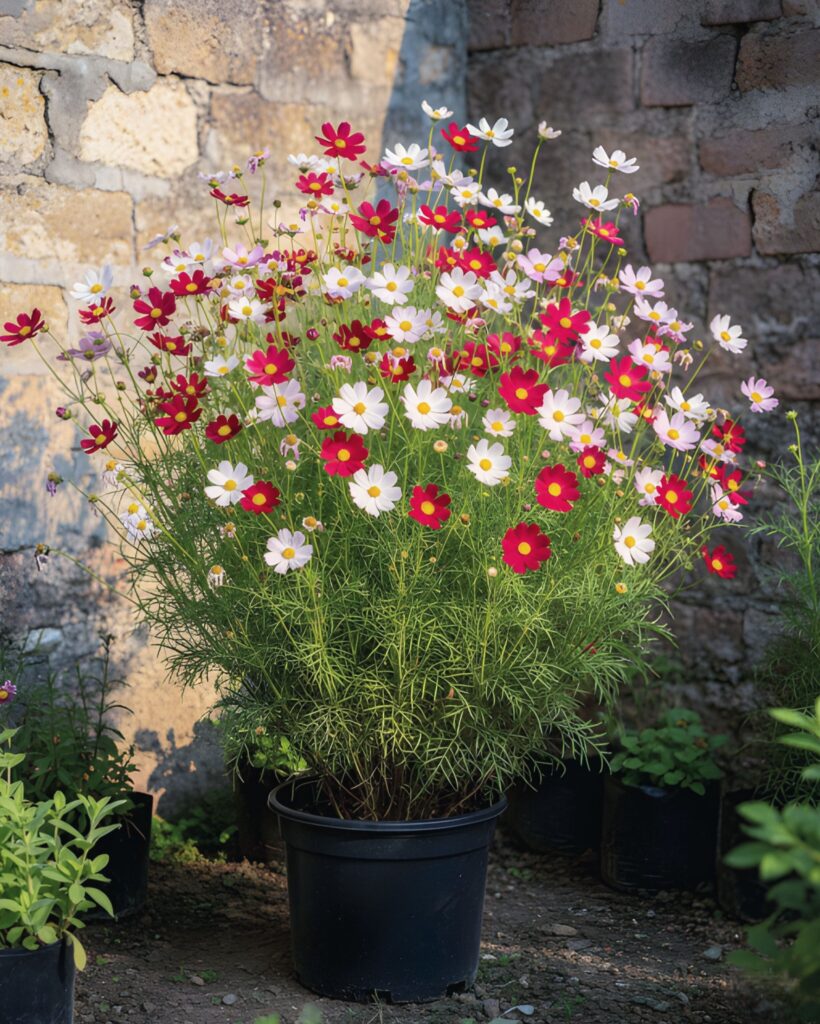
| Common Name | Cosmos, Mexican Aster, Garden Cosmos |
| Scientific Name | Cosmos bipinnatus (common); Cosmos sulphureus (sulphur cosmos) |
| Family | Asteraceae (Daisy family) |
| Origin | Mexico and Central America |
| Plant Type | Annual (most species); short-lived perennial in frost-free zones |
| Bloom Season | Summer through first frost (June–October) |
| Flower Colors | Pink, red, white, magenta, lavender, orange, yellow, bi-colored |
| Mature Height | 18 inches to 6 feet (45 cm – 1.8 m), depending on species |
| Spread | 12–24 inches (30–60 cm) |
| Sun Requirement | Full sun (minimum 6 hours daily) |
| Soil Type | Poor to moderately fertile, well-drained; tolerates sandy or rocky soils |
| Watering Needs | Low to moderate; drought-tolerant once established |
| USDA Hardiness Zones | Annual in all zones; perennial in zones 9–11 |
| Toxicity | Non-toxic to humans, cats, and dogs (ASPCA-listed safe) |
| Popular Use | Cut flowers, cottage gardens, wildflower meadows, pollinator gardens |
| Symbolism | Order, harmony, beauty, love, and innocence |
| Attracts | Bees, butterflies, hummingbirds, and beneficial insects |
Origin and History of the Cosmos Flower
The cosmos flower is native to Mexico and Central America, where it grows wild along roadsides, open fields, and disturbed land.
Spanish priests cultivated it in their mission gardens in the 1600s, and it was the Spanish who gave it the name “cosmos” — derived from the Greek word kosmos, meaning order, harmony, and the universe. They considered its evenly spaced petals a symbol of the ordered beauty of creation.
By the late 18th century, cosmos had made its way to Europe through Spain. It was introduced to British and French botanical gardens around 1789 and quickly became a popular ornamental plant.
Victorian gardeners embraced it for its feathery foliage, long bloom season, and ease of cultivation. Commercial interest grew steadily through the 19th and 20th centuries.
Today, cosmos is grown on every inhabited continent, naturalizing freely in many regions — particularly in East Africa, South Asia, and parts of Europe, where it has escaped garden boundaries and colonized roadsides and open grasslands with remarkable success.
In countries like Ethiopia, Kenya, and South Africa, cosmos has become so familiar along rural roads and hillsides that many local communities assume it is native.
The sight of pink and white cosmos fields stretching across the highveld in South Africa is now considered one of the country’s most iconic seasonal landscapes.
Botanical Classification and Description
The cosmos belongs to the Asteraceae family — the same large family that includes daisies, sunflowers, marigolds, and gerberas. Like all members of this family, what appears to be a single flower is actually a composite flower head made up of two distinct parts:
- Ray florets: The flat, petal-like structures arranged around the outer edge. In cosmos, these are typically arranged in one clean row of 8 petals, giving the flower its characteristically simple, open face.
- Disc florets: The small, tubular florets packed tightly into the central disc, usually yellow or orange. These are the fertile flowers responsible for seed production.
The foliage is one of cosmos’s most distinctive features. The leaves are finely divided, feathery, and bipinnate — meaning each leaf is divided into many thread-like segments. This gives the plant an airy, almost fern-like appearance that provides beautiful contrast to the bold flowers above.
The stems are tall, hollow, and slightly branching, capable of reaching 6 feet (1.8 m) in the right conditions. They sway gracefully in the breeze — a characteristic that adds kinetic beauty to any garden planting.
The Two Main Species
While over 40 species of Cosmos exist, two dominate garden cultivation:
1. Cosmos bipinnatus (Garden Cosmos / Mexican Aster). This is the most widely grown species. It produces the classic pink, white, red, and lavender flowers on tall, airy plants. Blooms typically measure 2–4 inches (5–10 cm) across.
This species prefers cooler conditions and blooms best in spring and autumn in warm climates.
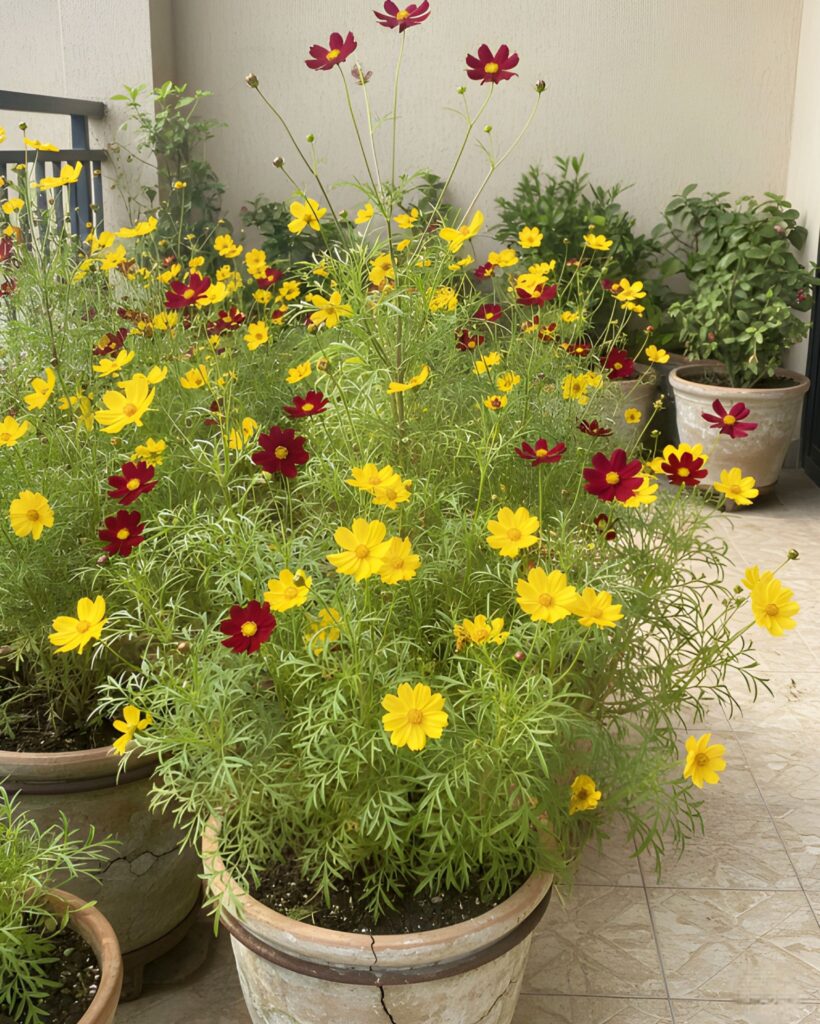
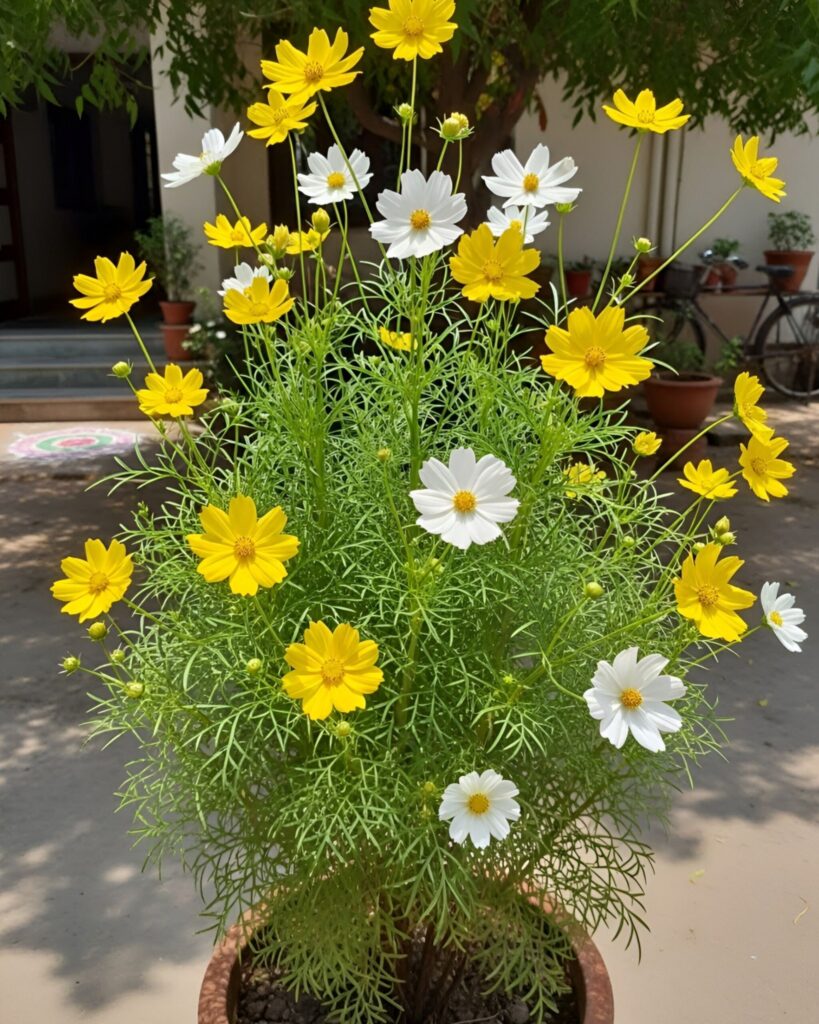
2. Cosmos sulphureus (Sulphur Cosmos / Yellow Cosmos). This species produces flowers in bright orange, yellow, and red-orange shades. It is generally shorter (18–36 inches), more heat-tolerant, and slightly less feathery in foliage. It thrives in hotter, more humid climates where C. bipinnatus may struggle.
Both species are annuals in most of the world, completing their life cycle from seed to flower to seed within a single growing season.
Growing Cosmos: What This Plant Needs to Thrive
One of cosmos’s greatest gifts to gardeners is its low demand. However, understanding its preferences still makes a significant difference in how well it performs.
Sunlight
Cosmos demands full sun — at least 6 hours of direct sunlight per day. In partial shade, the plant becomes leggy and produces fewer flowers. More sun almost always means more blooms.
This is a plant of open meadows and sunny hillsides, and it performs exactly as its native habitat suggests.
Soil
Here is where cosmos surprises most new gardeners: it actually prefers poor soil.
Rich, heavily fertilized soil causes cosmos to produce excessive foliage and very few flowers. Sandy, rocky, or low-fertility soil is ideal. If your garden bed has clay soil, improve drainage with coarse grit or sand rather than adding compost or fertilizer at planting.
The ideal soil is:
- Well-drained and loose
- Low to moderately fertile
- Neutral to slightly acidic (pH 6.0–8.0)
Avoid over-amending. This is perhaps the most common mistake people make with cosmos, and it consistently results in tall, leafy plants with disappointing flower output.
Watering
Once established, cosmos is remarkably drought-tolerant. It evolved in regions with distinct dry seasons, and its ability to survive on limited rainfall makes it an excellent choice for water-wise gardens.
During establishment (first 2–3 weeks after germination), water regularly to keep the soil evenly moist. After that, water deeply but infrequently — roughly once a week in dry spells, and less in cooler weather.
Overwatering encourages root rot and disease. If in doubt, water less.
Temperature
Cosmos germinates best in soil temperatures of 60–70°F (15–21°C). It grows actively through warm summer temperatures and continues blooming until the first hard frost. In tropical and subtropical climates with mild winters, it can bloom year-round.
It is frost-sensitive: a killing frost will end the plant’s life cycle, though it typically self-seeds prolifically enough to return the following season.
Fertilization
In most situations, cosmos needs no supplemental fertilizer. If your soil is extremely poor (sandy desert soil, for instance), a single light application of a low-nitrogen fertilizer at planting may help establishment.
Nitrogen-rich fertilizers — standard lawn feed, for example — are counterproductive. They produce lush growth at the expense of flowers. If your cosmos plants are tall and green but not blooming well, excess nitrogen is almost certainly the cause.
Planting Cosmos: Step-by-Step Instructions
Direct Seeding Outdoors (Best Method)
Cosmos grows so quickly and easily from seed that it is almost always better to direct sow outdoors rather than start indoors.
- Choose your timing: Sow seeds outdoors after all danger of frost has passed and soil has warmed to at least 60°F (15°C). In tropical climates, sow at the start of the cool season.
- Prepare the bed: Clear weeds and loosen the top 2–3 inches of soil. Do not amend or fertilize.
- Sow seeds: Scatter seeds on the soil surface and press gently to ensure good contact. Cover lightly with no more than ¼ inch (6mm) of soil.
- Water in: Mist gently after sowing. Keep moist until germination.
- Thin seedlings: Once seedlings reach 2–3 inches tall, thin to 12–18 inches apart to ensure good air circulation and prevent overcrowding.
Germination typically occurs within 7–14 days. First blooms appear in approximately 60–90 days from sowing.
Starting Seeds Indoors
If you want an earlier start in short-season climates:
- Start seeds indoors 4–6 weeks before last frost.
- Sow in seed trays with standard seed-starting mix.
- Press seeds lightly onto the surface; they need some light to germinate.
- Keep at 65–70°F (18–21°C) and maintain consistent moisture.
- Harden off seedlings outdoors for 7–10 days before transplanting.
Note: Cosmos does not love root disturbance, so handle seedlings gently during transplanting and use biodegradable pots if possible.
Succession Planting
For continuous blooms from early summer through autumn, sow seeds every 3–4 weeks until midsummer. This ensures a constant rotation of fresh plants as older ones begin to decline.
Deadheading, Pruning, and Maintenance
Cosmos is a low-maintenance plant, but a few simple practices will dramatically extend its flowering period.
Deadheading
Removing spent blooms (deadheading) is the single most effective way to keep cosmos flowering longer. When you remove a finished flower before it sets seed, the plant is stimulated to produce more flowers in its effort to reproduce.
Use clean scissors or your fingers to snap off dead flower heads at the stem junction. Do this every few days during peak bloom.
If you want cosmos to self-seed and return next season, stop deadheading in late summer and allow some seed heads to mature and drop.
Pinching
When seedlings reach about 12 inches (30 cm) tall, pinch out the growing tip (the topmost inch of the main stem). This encourages branching, resulting in a bushier plant with more flower-bearing stems rather than a single tall stalk.
Staking
Tall varieties of Cosmos bipinnatus can reach 4–6 feet and may require staking in exposed, windy locations. Use bamboo canes or grow-through rings placed early so the plant grows naturally through the support structure.
In sheltered garden beds, cosmos stems are typically strong enough to support themselves.
Common Pests and Diseases
Cosmos has relatively few serious pest and disease problems, which is part of its enduring appeal.
Pests
- Aphids are the most common pest, clustering on soft new growth and flower buds. A strong spray of water or insecticidal soap controls them effectively.
- Thrips can damage petals and cause distorted flowers. They are more problematic during hot, dry conditions. Neem oil or spinosad-based sprays help manage infestations.
- Spider mites may appear in hot, dry weather. Increasing humidity and using miticides or neem oil addresses the problem.
- Caterpillars occasionally feed on foliage. Hand-picking is usually sufficient for minor infestations.
Diseases
Powdery mildew is the most common disease, particularly in humid climates or when plants are overcrowded. It appears as a white powdery coating on leaves. Ensuring adequate spacing and good air circulation is the best prevention.
Botrytis blight (grey mold) can affect flowers and stems in cool, wet conditions. Remove and dispose of affected plant material promptly.
Aster yellows, a phytoplasma disease spread by leafhoppers, causes distorted, yellowed growth. Affected plants should be removed and destroyed — there is no chemical treatment.
The best defense against most cosmos diseases is simply correct spacing, good airflow, and appropriate watering practices.
Cosmos Flower Varieties and Cultivars
Plant breeders have developed dozens of cultivars over the decades, offering gardeners a wide palette of colors, heights, and flower forms.
Cosmos bipinnatus Cultivars
- ‘Sensation Mix’ — One of the oldest and most popular series, producing large blooms in mixed pink, rose, white, and crimson on plants reaching 3–4 feet. Excellent for cutting.
- ‘Sonata Mix’ — A dwarf series reaching only 24 inches, ideal for smaller gardens, containers, and exposed windy sites. Available in white, pink, and crimson.
- ‘Purity’ — A classic single-color cultivar producing pure white flowers on graceful, tall stems. Highly popular for wedding arrangements and white garden designs.
- ‘Dazzler’ — Rich crimson-magenta blooms with a slightly darker center. One of the most vivid cosmos cultivars available.
- ‘Cupcakes’ — An interesting cultivar producing bowl-shaped (rather than flat) ray florets, giving flowers a cupped, almost peony-like appearance.
- ‘Antiquity’ — A distinctive variety with flowers that open deep rose-pink and fade to a dusty vintage rose, giving mixed-age blooms a painterly, ombre effect.
- ‘Double Click’ — Produces semi-double to fully double flowers with layered, ruffled petals in mixed colors. Unusual and eye-catching.
Cosmos sulphureus Cultivars
- ‘Bright Lights Mix’ — The most widely grown sulphur cosmos series, producing semi-double flowers in orange, yellow, and gold on compact 24–30 inch plants.
- ‘Cosmic Orange’ — All-America Selections winner; vivid orange semi-double flowers on compact plants. Excellent heat and humidity tolerance.
- ‘Lemon Bird’ — Soft yellow flowers on compact plants; one of the few truly pale yellow sulphur cosmos cultivars.
Cosmos in the Ecosystem: A Pollinator Powerhouse
Among the many reasons to grow cosmos in your garden, its ecological value is perhaps the most compelling.
Cosmos flowers are exceptional pollinator attractors. The open, single flower form — with its exposed disc of pollen-rich florets — makes nectar and pollen easily accessible to a wide range of insects.
Regular visitors include:
- Honeybees and native bumblebees
- Monarch butterflies and swallowtails
- Hoverflies (important for aphid control)
- Lacewings (beneficial predatory insects)
- Hummingbirds (particularly attracted to red and orange sulphur cosmos)
Research from the Xerces Society for Invertebrate Conservation has repeatedly highlighted cosmos as one of the top annual flowers for supporting pollinators in home gardens. Its long bloom period — from midsummer through frost — provides food at a time when many other flowers have finished.
Beyond pollinators, cosmos seeds attract seed-eating birds such as finches and sparrows in late summer and autumn. Allowing some plants to go to seed creates a natural feeding station that draws bird activity into the garden.
Cosmos as a Cut Flower
Cosmos may be casual in the garden, but it brings real elegance indoors.
Its long, slender stems and delicate, feathery foliage create effortless, airy arrangements that feel natural and unforced. A simple bunch of mixed cosmos in a glass jar has more charm than many elaborate florist arrangements.
Cutting Tips for Maximum Vase Life
- Cut in the early morning when stems are fully hydrated.
- Choose flowers that are just beginning to open, rather than fully open blooms.
- Cut stems at a 45-degree angle with clean, sharp scissors.
- Remove lower leaves immediately — any foliage submerged in water will rot and shorten vase life.
- Place cut stems in cool, clean water immediately after cutting.
- Keep vases away from direct sunlight, heat sources, and ripening fruit.
- Change the water every 2 days and re-cut stem ends.
With proper care, cosmos cut flowers can last 5–10 days in a vase. Adding a commercial floral preservative extends this further.
The Symbolism and Meaning of Cosmos Flowers
The name itself tells a story. Derived from the Greek kosmos — meaning order, harmony, and the universe — the cosmos flower has carried symbolic weight for centuries.
In Victorian floriography, the language of flowers, cosmos represented order and peace. Gifting cosmos to someone was a message of admiration for their balanced, harmonious nature.
In Japanese culture, cosmos (kosumosu in Japanese) is a beloved autumn flower, associated with maiden’s modesty and simplicity. October fields of cosmos in rural Japan draw visitors the way cherry blossoms do in spring.
In Mexican culture, where the flower originates, cosmos is associated with national identity and natural abundance. It grows wild along the highways of central Mexico and is deeply embedded in the country’s rural landscape.
By color, cosmos symbolism carries specific meanings:
- White cosmos: Purity, innocence, and spiritual peace
- Pink cosmos: Love, tenderness, and romantic affection
- Red cosmos: Deep love and passionate emotion
- Magenta/crimson cosmos: Vitality, boldness, and intensity
- Orange cosmos: Joy, warmth, enthusiasm, and creativity
- Yellow cosmos: Friendship, optimism, and good fortune
Cosmos makes a meaningful gift for occasions involving new beginnings, whether a graduation, a new job, a wedding, or a housewarming.
Cosmos in Different Growing Regions
One of the cosmos flower’s most impressive qualities is its global adaptability. It performs well across a remarkable range of climates and conditions.
Temperate Climates (UK, Northern Europe, Northern USA, Canada)
In these regions, cosmos is grown as a half-hardy annual, sown in spring and flowering from midsummer until autumn frost. It thrives in the long summer days of northern latitudes. C. bipinnatus is particularly well-suited here, preferring the cooler temperatures.
Tropical and Subtropical Climates (East Africa, South Asia, Southeast Asia)
In warm, year-round climates, cosmos can bloom almost continuously. In places like Kenya, Tanzania, India, and the Philippines, cosmos grows wild along roadsides and is used extensively in home gardens and school grounds for its ease and color. C. sulphureus performs particularly well in these regions due to its heat tolerance.
Mediterranean Climates (Southern Europe, California, South Africa, Chile)
Cosmos thrives in dry, warm summers typical of Mediterranean climates. It is often used in drought-tolerant garden designs and low-water landscaping. Once established, cosmos can survive extended dry periods without supplemental irrigation.
Arid and Semi-Arid Regions
In drier climates, cosmos can be established with initial irrigation and then largely left to fend for itself. Its deep root system and low water demand make it surprisingly resilient in water-scarce environments.
Self-Seeding: The Gift That Keeps Giving
One of the most practical and charming aspects of cosmos is its tendency to self-seed generously. Allow some flowers to go to seed at the end of the season, and you will almost certainly find a fresh crop of seedlings emerging the following spring.
This self-seeding habit is why cosmos has naturalized so successfully around the world. Seeds are light, wind-dispersed, and can remain viable in the soil for 2–3 years.
For gardeners who want reliable self-seeding:
- Stop deadheading by late summer and allow seed heads to mature
- Leave the soil undisturbed over winter
- Thin spring seedlings rather than pulling them all
For gardeners who prefer control:
- Deadhead consistently throughout the season
- Collect mature seeds in paper bags before they drop
- Store seeds in a cool, dry place for next season’s planting
Cosmos in Landscape and Garden Design
- Cosmos is one of the most versatile plants available to the home gardener and landscape designer. Here is how it is most effectively used:
- Wildflower meadows and naturalistic plantings: Mixed with other annuals like nigella, poppies, and cornflowers, cosmos creates the relaxed, abundant feel of a wildflower meadow.
- Cottage garden style: Combined with roses, lavender, and foxgloves, cosmos adds height and airy texture characteristic of traditional English cottage gardens.
- Back-of-border planting: Tall varieties (3–5 feet) work well behind shorter perennials, creating a backdrop of color and movement.
- Cutting gardens: Cosmos produces stems over many weeks, making it invaluable in a dedicated cutting garden. Planting in rows ensures efficient harvesting.
- Children’s gardens: Few plants are as rewarding for young gardeners. Cosmos grows quickly, blooms prolifically, and is virtually indestructible. It is an ideal plant for introducing children to gardening.
- Low-maintenance public spaces: Cosmos is increasingly used in roadside planting, public parks, and community gardens due to its low cost, ease of establishment, and high visual impact.
Environmental and Sustainability Considerations
Cosmos earns strong marks as a sustainable garden plant.
It requires no pesticides under normal conditions. Its root system helps prevent soil erosion on slopes and disturbed land. It attracts and feeds dozens of beneficial insect species throughout its long bloom season.
Cosmos is also useful in companion planting. Grown near vegetable gardens, it attracts hoverflies and parasitic wasps that control aphids and other vegetable pests naturally. Some gardeners plant it as a trap crop to draw aphids away from more vulnerable plants.
Unlike many ornamental annuals, cosmos can be grown entirely from saved seed — meaning zero cost after the first purchase and no reliance on commercial transplant production. This makes it one of the most economically and environmentally accessible garden plants available.
Frequently Asked Questions
Does cosmos come back every year? Cosmos is an annual, completing its life cycle in one season. However, it self-seeds prolifically, and new plants often appear the following spring without any action from the gardener. In zones 9–11, it may persist as a short-lived perennial.
Why are my cosmos not flowering? The most common causes are insufficient sunlight, overly rich or heavily fertilized soil, or crowding. Move plants to full sun, reduce or eliminate fertilizer, and ensure adequate spacing.
Can cosmos grow in pots? Yes — use dwarf varieties like ‘Sonata’ series. Choose a container at least 12 inches deep, fill with a low-fertility mix, and place in full sun. Water less frequently than you think is needed.
Are cosmos flowers edible? Yes — cosmos petals are edible and are used as a garnish in salads and desserts. Cosmos sulphureus petals have a slight spicy note. C. bipinnatus petals are milder.
How tall do cosmos grow? Cosmos bipinnatus can reach 3–6 feet (90 cm – 1.8 m). Cosmos sulphureus is typically shorter at 18–36 inches (45–90 cm). Dwarf cultivars remain under 24 inches.
Can I plant cosmos with vegetables? Absolutely — cosmos is one of the best companion plants for vegetable gardens. It attracts pollinators that improve vegetable yields and draws beneficial predatory insects that help control pests.
Are cosmos safe for pets? Yes. The ASPCA lists cosmos as non-toxic to cats, dogs, and horses — an important consideration for pet owners choosing garden plants.
Final Thoughts
The cosmos flower is proof that nature’s most beautiful things are not always the most complicated. It asks for poor soil, bright sun, and a little water. In return, it gives you months of color, a garden full of butterflies, armloads of cut flowers, and the satisfaction of watching something grow almost entirely on its own terms.
If I had to recommend one flower to someone who has never gardened before — or someone who has given up gardening out of frustration — it would be cosmos. It is generous, forgiving, and genuinely beautiful. It fills space beautifully, supports wildlife meaningfully, and costs almost nothing when grown from seed.
Few plants offer so much for so little. And that, perhaps, is the truest reflection of the meaning behind its name: perfect harmony.
References and Further Reading
- NC State Extension — Gardener Plant Toolbox — Cosmos bipinnatus https://plants.ces.ncsu.edu/plants/cosmos-bipinnatus/
- USDA PLANTS Database — Cosmos bipinnatus Cav. https://plants.usda.gov/plant-profile/COBI2
- University of Florida IFAS Gardening Solutions — Cosmos https://gardeningsolutions.ifas.ufl.edu/plants/ornamentals/cosmos.html

Tim M Dave is a gardening expert with a passion for houseplants, particularly cacti and succulents. With a degree in plant biology from the University of California, Berkeley, he has vast experience in gardening. Over the years, he has cultivated a vast collection of desert plants and learned a great deal about how to grow and care for these unique companions.