Understanding Oak Tree Acorns: Identification, Uses, and Surprising Facts
Pick up an acorn from the ground and hold it in your palm. It is small — sometimes no bigger than a grape. It is hard, smooth, and capped with a textured little hat that fits just right.
Now consider this: that tiny object is capable of growing into a tree that will live for 500 years, produce millions of its own acorns, and feed an astonishing range of wildlife from songbirds to black bears. It is one of the most nutritionally dense wild foods on the planet.
The acorn is not just a nut. It is one of the most ecologically significant structures in the natural world. Yet most people walk past them every autumn without a second thought.
This article is an invitation to look closer — at what acorns are, how they grow, why they matter so profoundly, and what they mean for the ecosystems, landscapes, and even the kitchens we inhabit.
What Exactly Is an Acorn?
An acorn is the fruit — more precisely, the nut — of any tree or shrub in the genus Quercus (oaks) and the closely related genus Lithocarpus (stone oaks of Asia).
It is a type of dry fruit called a “nut,” defined botanically as a single-seeded fruit enclosed in a hard, indehiscent shell — meaning the shell does not split open at maturity.
Every acorn has three distinct parts:
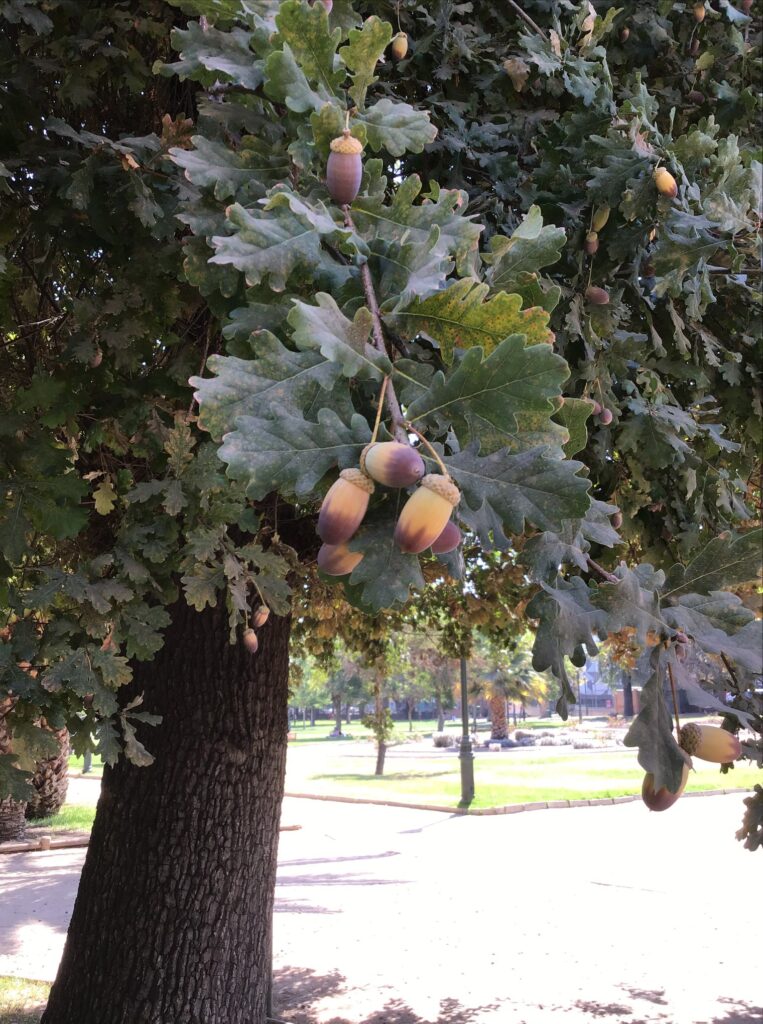
The cupule — commonly called the “cap” — is the scaly or warty cup-shaped structure that partially encloses the nut. It is derived from modified bracts and attached to the twig. The cap does not travel with the acorn when it falls; it stays on the branch or drops separately.
The pericarp — the hard outer shell of the nut itself. This is the smooth, tan-to-brown casing you see when an acorn rolls across a pavement.
The seed — the inner kernel, rich in fats, carbohydrates, and proteins, which is the actual food-storage tissue that powers germination and sustains the seedling until it can photosynthesize on its own.
The word “acorn” comes from the Old English æcern, which simply meant “fruit of the open land” or “forest fruit.” It has been part of the English language for over a thousand years — a small measure of how long humans have known and depended on this seed.
The Oak Genus: A World of Acorn Diversity
There are approximately 500 to 600 species of oak in the world, distributed across the Northern Hemisphere from the equatorial mountains of Southeast Asia to the boreal forests of Canada.
Each species produces its own distinct acorn — and the variation in size, shape, cap texture, and maturation time across those 500+ species is remarkable.
Oaks are broadly divided into two major groups in North America, and understanding the difference between them helps explain a great deal about acorn biology.
The Red Oak Group (Quercus section Lobatae)
Red oaks — including the northern red oak (Q. rubra), scarlet oak (Q. coccinea), pin oak (Q. palustris), and shumard oak (Q. shumardii) — are characterized by pointed leaf lobes and acorns that take two full years to mature.
Acorns that appear on a red oak in autumn of any given year actually began developing during the previous spring. They spent their first year as tiny, inconspicuous nubbins on the branch before swelling and maturing through their second growing season.
Red oak acorns are also notably high in tannins — the bitter, astringent compounds that give them their sharp taste when raw.
Those tannins are not pleasant to eat without processing, but they are part of what makes red oak acorns so ecologically important, as they remain on the forest floor longer before being consumed, serving as a reliable winter food cache.
The White Oak Group (Quercus section Quercus)
White oaks — including the white oak (Q. alba), bur oak (Q. macrocarpa), chestnut oak (Q. montana), and chinkapin oak (Q. muehlenbergii) — have rounded leaf lobes and produce acorns that mature in a single growing season.
White oak acorns develop in spring and are ready to fall by autumn of the same year. They are considerably lower in tannins than red oak acorns — noticeably sweeter and more palatable, both to wildlife and to humans.
White-tailed deer, wild turkeys, and squirrels strongly prefer white oak acorns when given a choice. The lower tannin content means less processing is required before consumption, making them an immediate, high-energy food source in early autumn.
Also Read: White Oak vs Red Oak Tree
The Acorn Growth Cycle: From Flower to Forest Floor
Understanding how acorns develop requires a brief step back to spring, when oak trees flower.
Oaks are monoecious — meaning each individual tree produces both male and female flowers, but they are separate structures on the same plant.
The male flowers appear as long, hanging catkins that release enormous clouds of wind-borne pollen in April and May. The female flowers are tiny, barely visible structures tucked at the base of new leaves along the growing shoots.
When pollen from a male catkin lands on a receptive female flower — a process called wind pollination — fertilization occurs, and the acorn begins its development.
For white oaks, the fertilized ovule develops rapidly through a single growing season, reaching full size and maturity by September or October. The acorn then drops — a process called abscission — usually within a narrow window of a few weeks.
For red oaks, the process is slower. After spring fertilization, development essentially pauses through summer and fall of the first year, resumes the following spring, and the acorn finally matures during its second autumn.
This two-year cycle has an interesting ecological consequence: a red oak tree carries two generations of acorns simultaneously — tiny first-year buds and full-sized second-year acorns — throughout most of the growing season. You can observe this on any mature red oak in summer if you look closely at the branchlets.
Mast Years: When Oak Trees Flood the Forest
Perhaps the most fascinating aspect of acorn ecology is the phenomenon of mast years — irregular years of extraordinary acorn abundance — and the equally dramatic lean years that precede and follow them.
Individual oak trees, and entire forests of oaks, do not produce the same number of acorns every year. Instead, they follow a boom-and-bust cycle. In a typical year, a mature oak might produce a few thousand acorns.
In a mast year, the same tree can produce tens of thousands — sometimes reported in the hundreds of thousands for large, well-established specimens.
What causes this? The leading scientific hypothesis is called predator satiation. By producing a massive surplus of acorns all at once — across many trees in the same region simultaneously — oaks essentially flood the market.
Wildlife cannot possibly eat every acorn during a mast year. The surplus that survives predation has an excellent chance of germinating and establishing as new trees.
In lean years, the reduced acorn crop starves down populations of acorn predators — squirrels, deer, turkeys, weevils — keeping them from building up to numbers that would overwhelm even a mast year’s production.
The synchrony of mast years across oak populations is one of the most intriguing and still not fully understood phenomena in plant ecology.
Trees across vast geographic areas appear to coordinate their production cycles, possibly in response to shared environmental cues like late spring frosts, summer drought stress, or temperature signals during flower development.
Wildlife and Acorns: An Ecological Cornerstone
If you want to understand the ecological importance of acorns, start with a single number: 96 percent.
Research by ornithologist and ecologist Doug Tallamy found that oaks support over 500 species of caterpillars in North America — more than any other tree genus.
Those caterpillars are the primary food source for virtually all terrestrial songbirds during nesting season, since nestlings cannot digest seeds or berries and must be fed soft-bodied insects almost exclusively.
But the caterpillar story is only the beginning. Acorns themselves are a foundational food source for an astonishing range of North American wildlife:
Mammals
White-tailed deer consume acorns as a primary autumn food source, fattening on the calorie-dense nuts before winter. Black bears enter hyperphagia — their intense pre-hibernation eating phase — in large part fueled by mast year acorn availability.
Gray squirrels and fox squirrels cache thousands of acorns as winter stores, inadvertently planting future oak trees in the process. Eastern chipmunks, raccoons, white-footed mice, and flying squirrels all depend heavily on acorns.
Birds
Blue jays are perhaps the most important acorn dispersers in eastern North America. A single blue jay can carry 3 to 5 acorns at a time in its esophageal pouch and throat, and research suggests individual jays cache thousands of acorns per season.
Wild turkeys scratch through leaf litter for acorns from October through March. Woodpeckers — particularly acorn woodpeckers in the West — store acorns in excavated “granary trees.” Wood ducks, mallards, and other waterfowl consume acorns that fall near water.
Insects and invertebrates
Beyond caterpillars, dozens of weevil species (Curculio spp.) lay eggs inside developing acorns, where the larvae feed on the kernel through winter. These weevil larvae are themselves an important protein source for birds probing the leaf litter in fall and winter.
The ripple effects of a good mast year extend far beyond the forest floor. When acorns are abundant, deer mice populations boom the following spring.
And since deer mice are the primary reservoir host of Lyme disease, mast years are now recognized as predictors of elevated Lyme disease risk in humans two years after the event.
Acorns and Human History: A Forgotten Food Staple
Before wheat, before rice, before the agricultural revolution that changed how humans eat — there was acorn.
For thousands of years, across cultures on every continent where oaks grow, acorns were a dietary staple. They were ground into flour, leached of tannins in running water, cooked into porridge, baked into bread, and pressed for oil.
Indigenous peoples of California — where oak woodlands once dominated the landscape — built entire food economies around acorn processing and storage.
Tribes including the Miwok, Pomo, Maidu, and Yokuts developed sophisticated leaching and grinding techniques that transformed bitter, tannin-rich acorns into a nutritious, storable, versatile food.
Acorn flour remained a dietary cornerstone for California’s Indigenous communities for thousands of years before European contact.
In Korea and Japan, acorn starch (dotori-muk in Korean) is still used today to make a traditional jelly-like food that is enjoyed as a side dish or snack.
In parts of Spain and Portugal, pigs raised on a diet heavy in acorns from Quercus ilex (holm oak) produce the prized Jamón Ibérico de Bellota — considered among the finest cured hams in the world.
The nutritional case for acorns is compelling. Acorn flour contains 60–80% complex carbohydrates, 4–7% protein, and 14–20% fat — with a fatty acid profile similar to olive oil, dominated by oleic acid. It is also rich in vitamins B6 and folate, magnesium, potassium, and manganese.
Acorn flour is naturally gluten-free, making it of interest in modern dietary contexts. Several artisan bakers and foragers in Europe and North America are actively working to revive acorn-based foods as part of a broader interest in wild and traditional food systems.
Are Acorns Safe for Humans to Eat?
Yes — with one important qualification. Raw acorns are not pleasant to eat, and consuming large quantities of unprocessed acorns can cause gastrointestinal upset in sensitive individuals due to their tannin content.
The good news is that tannins are water-soluble and can be removed through a straightforward leaching process. Here is how it works:
- Cold-water leaching: Shell and grind the acorns into a coarse flour. Place the flour in a cloth or fine-mesh bag and submerge it in a running stream or change the soaking water several times a day. Continue until the bitterness is largely gone — this can take a few days for red oak acorns, less time for white oak acorns.
- Hot-water leaching: Boil the flour in multiple changes of water. This is faster but may break down some starches, affecting the flour’s binding properties.
Once leached, acorn flour has a mildly nutty, earthy flavor that works well in pancakes, cookies, bread, muffins, and pasta. It does not rise on its own (it contains no gluten), so it is typically blended with wheat flour or other binding agents for baking.
White oak acorns require the least processing and can sometimes be eaten with only brief leaching. Red oak acorns have higher tannin levels and require more thorough treatment.
Acorns and Toxicity: What You Need to Know
While acorns are safe for humans when properly prepared, they are toxic to certain animals in significant quantities.
Horses and cattle are the most seriously affected. Oak leaves, bark, and acorns contain gallotannins that, when consumed in large amounts, can cause kidney damage, colic, bloody diarrhea, and potentially fatal poisoning.
Horses that graze in oak-heavy pastures during acorn drop season are at real risk. Fallen acorns should be fenced off from equine pastures, or horses should be temporarily relocated during heavy drop.
Dogs and cats can also be affected by tannin toxicity if they consume significant quantities of acorns. Symptoms include vomiting, diarrhea, lethargy, and in severe cases, kidney or liver damage. Acorns should be raked up from gardens and yards where pets have unsupervised access.
Squirrels, deer, birds, and other wildlife have digestive adaptations — including specific gut bacteria and tannin-binding proteins in their saliva — that allow them to consume acorns safely and efficiently. Humans who properly leach acorns before eating them are similarly safe.
Why Is My Oak Tree Not Producing Acorns?
This is one of the most common questions from homeowners with mature oak trees. The answer depends on the tree’s age, the current point in its mast cycle, and local environmental conditions.
- Age is the first factor. Most oak trees do not begin producing acorns until they are 20 to 25 years old. Some species — particularly white oak — may not produce meaningful quantities until age 50. A young oak that looks mature may simply not yet be of reproductive age.
- The mast cycle is the second factor. Even a healthy, reproductively mature oak will have low-production years between mast events. If your tree produced heavily two or three years ago and is producing little this year, it may simply be in a natural lean cycle.
- Late spring frosts can destroy the female flowers before fertilization occurs, resulting in little to no acorn development for that year. This is particularly common in northern climates where spring weather is unpredictable.
- Drought stress during the growing season can cause the tree to abort developing acorns as a resource conservation strategy.
- Poor pollination — caused by cool, wet, or still weather during the brief spring flowering window — can reduce acorn set even in otherwise healthy trees.
If your oak is mature and has never produced acorns, or if it once produced and has stopped for several consecutive years without explanation, consulting a certified arborist is worthwhile.
Acorn Germination: How a Seed Becomes a Tree
For an acorn that escapes predation and lands in a suitable location, the germination process begins almost immediately after it falls — in some cases, within days.
White oak acorns are particularly eager. They germinate in autumn, sending down a radicle (embryonic root) even before winter arrives. The shoot does not emerge above ground until spring, but the root system quietly establishes itself through the cold months, giving the seedling a head start when warmth returns.
Red oak acorns germinate in spring, having undergone a period of cold stratification through winter that breaks their dormancy and triggers growth.
The embryonic root — the radicle — is the first structure to emerge. It drives deep into the soil, securing the seedling and beginning to access water and nutrients. The shoot follows, pushing up through leaf litter toward light.
The cotyledons — the seed leaves that contain the acorn’s stored food — remain partially or fully below ground in oaks (a germination strategy called hypogeal germination).
This means that even if a frost, deer, or mower destroys the above-ground shoot, the seedling can resprout from the energy stored in the buried cotyledons. This adaptation makes young oak seedlings remarkably resilient in the face of browsing and mechanical damage.
That resilience is part of why oak forests persist even under heavy deer pressure. The trees keep resprouting. The deer keep browsing. Eventually, if the seedling reaches a size where its growing tip is above the deer’s comfortable reach, it escapes and begins its centuries-long journey to the canopy.
Managing Acorns in the Landscape
For gardeners and homeowners with oak trees, acorn management is a seasonal reality. Here are practical approaches:
- Raking and composting is the most straightforward solution. Acorns can be added to a compost pile, where they will break down over time. They are high in carbon and should be mixed with nitrogen-rich material for best results.
- Mulching in place — running a mulching lawn mower over fallen acorns — breaks them into fragments that decompose quickly without creating slipping hazards on grass. This works well in lawn areas.
- Tarps and collection during peak drop make cleanup more efficient. Spreading a tarp beneath the tree for a day or two and then gathering the collected acorns saves significant raking time.
- Wildlife feeding stations positioned away from patios and walkways can redirect squirrels and birds toward fallen acorns, naturally reducing accumulation in inconvenient areas.
- Paved surfaces need prompt attention. Acorns on pavement are a genuine slipping hazard and can stain some surfaces. A leaf blower used during peak drop can move them off hard surfaces quickly.
Final Thoughts
The acorn does not announce itself. It falls quietly, rolling under leaves and into the soil with no particular ceremony. Most of them never become trees. They feed squirrels and jays and deer and bears.
When you understand what an acorn is — really is — it is difficult to look at the ground beneath an oak tree the same way again.
Every one of those small, hard, perfectly shaped seeds is a compressed possibility. A future forest. A century of shade. A chain of ecological relationships too complex to fully trace. All of it packed neatly into something small enough to fit in the palm of your hand.
That, in my view, is worth knowing.
References
- NC State Extension — Quercus rubra: Northern Red Oak (Acorn Biology and Ecology) North Carolina State University Cooperative Extension Plant Toolbox https://plants.ces.ncsu.edu/plants/quercus-rubra/
- University of Florida IFAS Extension — Wildlife and Oak Trees: Importance of Acorns Wildlife Ecology and Conservation, University of Florida Institute of Food and Agricultural Sciences https://edis.ifas.ufl.edu/publication/UW291
- Wikipedia: Acorn https://en.wikipedia.org/wiki/Acorn

Tim M Dave is a gardening expert with a passion for houseplants, particularly cacti and succulents. With a degree in plant biology from the University of California, Berkeley, he has vast experience in gardening. Over the years, he has cultivated a vast collection of desert plants and learned a great deal about how to grow and care for these unique companions.