Understanding Brazilian Jasmine: Identification, Care, and Cultivation Details
Brazilian jasmine is one of those plants that makes people stop and stare. It produces bold, trumpet-shaped blooms in vivid shades of pink, red, and white — sometimes all at once — against a backdrop of deep, glossy green leaves.
Despite its name, Brazilian jasmine is not a true jasmine. It belongs to the genus Mandevilla (also historically sold under the name Dipladenia), which is part of the Apocynaceae family — the same family that includes oleanders and periwinkles.
Its common name comes from its place of origin: the hillsides and forest edges around Rio de Janeiro, Brazil.
Today, it is grown across tropical and subtropical regions worldwide, and it has become a popular container plant for temperate gardeners who want a taste of the tropics on their balconies and patios.
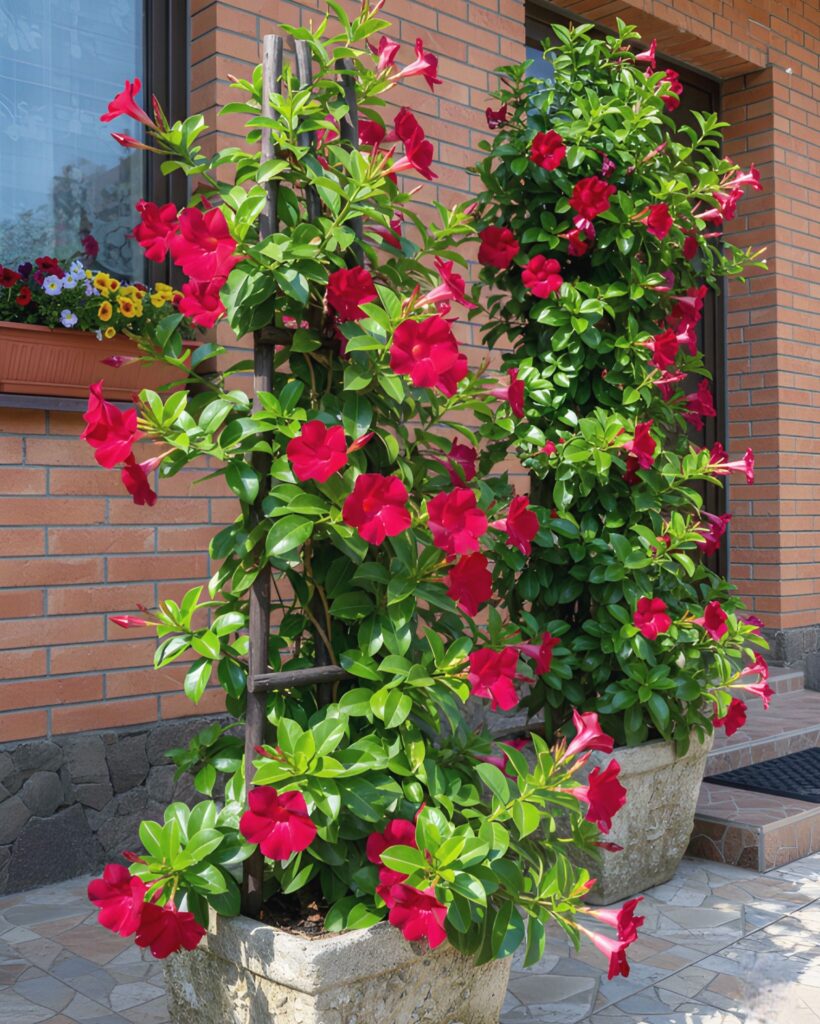
| Common Name | Brazilian Jasmine, Brazilian Dipladenia |
| Scientific Name | Mandevilla sanderi (syn. Dipladenia sanderi) |
| Plant Family | Apocynaceae |
| Native Region | Rio de Janeiro, Brazil |
| Plant Type | Tropical woody vine / climbing shrub |
| Mature Size | 3–10 feet (vine form); 1–3 feet (shrub form) |
| Bloom Season | Spring through frost (year-round in tropics) |
| Flower Colors | Pink, red, white, yellow, salmon |
| Sun Requirement | Full sun to partial shade |
| Watering Needs | Moderate; well-draining soil preferred |
| USDA Hardiness Zones | 9–11 (treated as annual in cooler zones) |
| Soil Type | Loamy, well-drained, slightly acidic (pH 6.0–6.5) |
| Toxicity | Mildly toxic to humans and pets if ingested |
| Growth Rate | Moderate to fast |
| Common Uses | Trellises, fences, containers, hanging baskets |
Brazilian Jasmine vs. Dipladenia: Are They the Same?
This is a question many gardeners ask, and the short answer is: mostly yes, but with a small distinction.
Both Mandevilla and Dipladenia belong to the same genus, and the two names are often used interchangeably by nurseries and garden centres. The practical difference is mostly in growth habit:
- Dipladenia tends to grow in a compact, bushy, mounding form. It is ideal for pots and hanging baskets.
- Mandevilla refers more specifically to the vining types that climb aggressively and can cover a trellis or fence in a single growing season.
Taxonomists have largely merged Dipladenia into Mandevilla, so the distinction is more commercial than botanical. When shopping, expect to see both names on the label for essentially the same plant.
Popular Varieties of Brazilian Jasmine
Brazilian jasmine has been extensively hybridised, and the range of cultivars available today is remarkable. Here are some of the most sought-after varieties:
- Mandevilla sanderi ‘Red Riding Hood’ is one of the most popular cultivars in the world. It produces rich crimson-red blooms with a yellow throat, and it grows with vigour on any support structure.
- ‘Alice du Pont’ is a classic climbing variety with large pink flowers up to 4 inches across. It is a favourite for covering pergolas and archways. If you only grow one Mandevilla in your lifetime, many experienced gardeners would recommend this one.
- ‘White Delight’ produces pristine white flowers with a pale yellow centre. It is elegant, versatile, and pairs beautifully with darker-coloured companion plants.
- ‘Sun Parasol’ series is a relatively modern group of hybrids developed in Japan. They are compact, highly floriferous, and bred for improved disease resistance. They come in crimson, giant crimson, apricot, and white shades.
- ‘Sundaville’ series offers similar traits — compact growth, large flowers, and extended bloom time. These are particularly popular in European markets.
- Mandevilla boliviensis produces smaller white blooms with a golden-yellow throat. It is slightly more cold-tolerant than other varieties and has a delicate, airy appearance.
Climate and Hardiness
Brazilian jasmine is a tropical plant at heart. It thrives in warm, humid conditions and does not tolerate frost. In USDA Hardiness Zones 9 through 11, it can be grown outdoors year-round as a perennial.
In cooler regions — Zones 8 and below — it is typically grown as an annual or overwintered indoors.
That said, Brazilian jasmine is surprisingly adaptable. In temperate climates, it performs exceptionally well as a summer container plant on sunny patios and balconies.
Many gardeners in temperate zones bring their plants inside before the first frost, store them in a cool, dry location over winter, and move them back outside in spring.
One thing to keep in mind: temperatures below 50°F (10°C) will cause the plant stress, leading to leaf drop and reduced flowering. Frost, even a light one, can be fatal.
Ideal Growing Conditions
Sunlight
Brazilian jasmine loves the sun. Full sun — at least 6 hours of direct sunlight per day — is ideal for the best flowering. In very hot climates, some afternoon shade is tolerated and can even prevent heat stress, but deep shade will cause the plant to become leggy and produce few, if any, flowers.
Soil
The plant prefers a loamy, well-draining soil with a slightly acidic pH of around 6.0 to 6.5. It will not tolerate waterlogged roots. Heavy clay soils should be amended with compost and coarse sand before planting.
In containers, use a high-quality potting mix formulated for tropical plants, or mix standard potting soil with perlite to improve drainage.
Humidity
As a native of Brazil’s coastal forests, Brazilian jasmine appreciates humid air. In dry climates or when grown indoors, misting the leaves occasionally or placing a humidity tray beneath the pot can make a noticeable difference in plant health and flowering.
How to Plant Brazilian Jasmine
Planting in the Ground
Choose a location that receives full sun and has good drainage. Dig a hole twice as wide as the root ball and equally deep. Place the plant so the crown sits at or slightly above soil level — never bury the crown, as this encourages rot.
Backfill with amended soil, firm gently around the roots, and water thoroughly. Mulching around the base with organic material such as bark chips helps retain moisture, regulate soil temperature, and suppress weeds.
Install a trellis, fence, or stake at planting time, before the roots are established. Trying to add support later risks damaging the root system.
Planting in Containers
Choose a container with drainage holes — at least 10 to 12 inches in diameter for a single plant. Fill with a well-draining tropical potting mix. Plant at the same depth as the nursery pot.
Container-grown Brazilian jasmine tends to bloom more prolifically when slightly root-bound, so do not rush to re-pot. Move up to the next container size only when roots visibly emerge from the drainage holes.
Watering Brazilian Jasmine
Brazilian jasmine is moderately drought-tolerant once established, but consistent moisture during the growing season is important for sustained flowering. The general rule is to water deeply and then allow the top inch of soil to dry out before watering again.
In containers, watering requirements are higher — sometimes daily in the height of summer heat. Always check the soil before watering rather than following a rigid schedule.
During winter dormancy (for plants stored indoors), reduce watering significantly. The goal is to keep the roots barely moist, not dry, but also not wet.
Avoid watering the leaves directly, as this can encourage fungal diseases. Aim water at the base of the plant.
Feeding and Fertilisation
Brazilian jasmine is a heavy feeder when actively growing and blooming. A balanced, slow-release fertiliser applied in early spring gives it a strong start for the season.
From late spring through summer, switching to a fertiliser higher in phosphorus — the middle number in the NPK ratio — supports prolific flowering.
Liquid fertilisers can be applied every two to three weeks during the growing season. Avoid high-nitrogen fertilisers, as these promote leafy green growth at the expense of flowers.
Do not fertilise in autumn or winter, when the plant is resting.
Pruning Brazilian Jasmine
Pruning is both necessary and rewarding with Brazilian jasmine. Regular pruning keeps the plant tidy, encourages bushier growth, and promotes more flower production.
The best time to prune is in late winter or early spring, just before new growth begins. Cut back the previous year’s growth by about one-third to one-half. This may seem drastic, but Brazilian jasmine recovers quickly and will reward the effort with vigorous new growth.
During the growing season, deadheading spent flowers is helpful but not strictly necessary — the plant is typically self-cleaning. However, pinching back the growing tips in early summer encourages branching and more flower buds.
Always use clean, sharp pruning shears. Brazilian jasmine produces a milky white sap when cut, which can irritate skin and eyes. Wear gloves during pruning.
Pests and Diseases
Brazilian jasmine is relatively robust, but like any garden plant, it has its weaknesses.
Common Pests
Spider mites are the most frequent pest, particularly in hot, dry conditions or when plants are grown indoors. Look for fine webbing on the undersides of leaves and a dusty, stippled appearance on leaf surfaces. Treat with insecticidal soap or neem oil applied to both sides of the leaves.
Mealybugs appear as white, cottony masses in leaf axils and along stems. They can be removed physically with a cotton swab dipped in rubbing alcohol, or treated with neem oil for larger infestations.
Aphids cluster on new growth and flower buds, sucking sap and excreting honeydew that leads to sooty mould. A strong spray of water dislodges them; insecticidal soap handles persistent colonies.
Whiteflies are another concern, especially on greenhouse-grown plants. Yellow sticky traps are effective for monitoring and controlling populations.
Common Diseases
Root rot is the most serious disease risk, almost always caused by overwatering or poor drainage. The leaves yellow, stems become mushy at the base, and the plant declines rapidly. Prevention is the only real cure — improve drainage and water less frequently.
Powdery mildew can appear in conditions of high humidity with poor air circulation. It presents as a white, powdery coating on leaves. Improve air circulation around the plant and apply a fungicide if needed.
Botrytis blight (grey mould) is common in cool, wet conditions. Remove affected plant material promptly and ensure good airflow.
Propagation: Growing Brazilian Jasmine from Cuttings
Brazilian jasmine is best propagated from stem cuttings taken in late spring or early summer, when the plant is actively growing.
Step 1: Take a cutting of approximately 4 to 6 inches from a healthy stem, just below a leaf node. The cutting should include at least two or three sets of leaves.
Step 2: Remove the lower leaves, leaving only one or two sets at the tip. Dip the cut end in rooting hormone powder.
Step 3: Insert the cutting into a pot filled with moistened perlite or a 50/50 mix of perlite and potting soil. Water lightly and cover with a clear plastic bag or humidity dome to retain moisture.
Step 4: Place in a warm location with bright, indirect light. Check the cuttings every few days and mist the inside of the dome if the medium begins to dry out.
Step 5: Roots typically develop within three to five weeks. Test by gently tugging on the cutting — resistance indicates root formation. Once rooted, transition the cutting gradually to normal growing conditions.
Growing Brazilian Jasmine Indoors
Brazilian jasmine can be grown indoors year-round, provided it receives adequate light. A south-facing window with at least four to six hours of direct sunlight per day is ideal. Supplemental grow lights can compensate when natural light is insufficient.
Indoors, maintain temperatures between 60°F and 80°F (16°C–27°C). Avoid placing the plant near heating or air conditioning vents, as these create dry, drafty conditions the plant dislikes.
Humidity is a particular concern indoors, especially in winter when central heating dries the air. A small humidifier placed nearby, or regular misting, can prevent leaf browning and spider mite infestations.
Water carefully indoors — the most common mistake with indoor tropical plants is overwatering.
Overwintering Brazilian Jasmine in Cold Climates
For gardeners in frost-prone regions, overwintering Brazilian jasmine is absolutely possible. Bring the plant indoors before nighttime temperatures drop below 50°F (10°C).
Once inside, cut the plant back by about one-third, reduce watering substantially, and stop fertilising. The plant will go semi-dormant and may drop some leaves — this is normal. Place it in a cool, bright location such as a greenhouse, conservatory, or sunny spare room.
In late winter, begin watering more frequently and move the plant to the warmest, brightest spot available. New growth will signal the plant’s readiness to be moved back outdoors as spring temperatures rise.
Landscaping Uses for Brazilian Jasmine
The versatility of Brazilian jasmine makes it a favourite among landscape designers and home gardeners alike.
As a climber, it transforms fences, trellises, pergolas, and garden walls with colour from spring to autumn. The vining types can reach 10 feet or more in a single growing season in optimal conditions.
As a container plant, the compact Dipladenia types are stunning on patios, decks, and balconies. They can be trained up a small stake for height or left to trail loosely over the pot rim.
In hanging baskets, trailing Dipladenia varieties create cascades of colour. They pair particularly well with white bacopa, blue calibrachoa, or silver dichondra for a striking combination.
As a seasonal annual in beds and borders, Brazilian jasmine adds tropical drama to mixed plantings. It looks especially effective alongside cannas, elephant ears, and ornamental grasses.
Is Brazilian Jasmine (Mandevilla) Invasive?
Mandevilla sanderi (the ornamental Brazilian jasmine discussed throughout this article) is not considered invasive in most regions. It is frost-sensitive and does not naturalise outdoors in temperate or even most subtropical climates.
However, the plant known as Jasminum fluminense — also sometimes called “Brazilian jasmine” — is an entirely different species and is listed as a Category I invasive plant in Florida by the Florida Invasive Species Council. It spreads aggressively by seed in warm climates and chokes out native vegetation.
If you live in Florida, Hawaii, or another warm subtropical or tropical region, always confirm the scientific name of any plant labelled “Brazilian jasmine” before purchasing. Ensure it is Mandevilla sanderi or a Mandevilla hybrid, not Jasminum fluminense.
Toxicity and Safety
Brazilian jasmine (Mandevilla sanderi) is mildly toxic to humans, dogs, and cats if any part of the plant is ingested. The plant produces a latex-like sap that can also cause skin irritation on contact in sensitive individuals.
Symptoms of ingestion in pets can include vomiting, diarrhoea, and lethargy. If you suspect a pet has ingested any part of the plant, contact your veterinarian promptly.
Keep the plant away from children and pets, and always wear gloves when pruning or handling cut stems.
Frequently Asked Questions
Why is my Brazilian jasmine not flowering?
The most common reasons are insufficient sunlight, excess nitrogen fertiliser, or the plant being overly pot-bound for too long without repotting. Ensure it receives at least 6 hours of direct sun and switch to a phosphorus-rich fertiliser during the growing season.
How fast does Brazilian jasmine grow?
In ideal conditions — full sun, warm temperatures, and regular feeding — Brazilian jasmine can grow 1 to 2 feet or more per month during its active growing season.
Can Brazilian jasmine survive winter outdoors?
Only in USDA Zones 9 through 11, where frost is rare or absent. In cooler zones, it must be overwintered indoors or treated as an annual.
Does Brazilian jasmine have a fragrance?
Some varieties have a faint, pleasant fragrance, but Brazilian jasmine (Mandevilla sanderi) is not noted for strong scent the way true jasmines (Jasminum spp.) are. It is grown primarily for its striking visual display.
How often should I repot my Brazilian jasmine?
Repot every two to three years, or when roots begin emerging from the drainage holes. As mentioned earlier, slight root-binding tends to encourage flowering, so do not rush to upsize the container.
Final Thoughts
Brazilian jasmine is not a plant that sits quietly in a corner. It announces itself boldly — through its rich colour, its vigorous climbing habit, and its season-long flowering performance. For those who want a plant that rewards consistent attention with spectacular results, this tropical vine is hard to beat.
Whether you grow it on a sun-drenched trellis in a warm climate, or nurse it through the winter in a pot by a south-facing window, Brazilian jasmine has a way of becoming one of the most beloved plants in a gardener’s collection.
Give it warmth, sunlight, and a little feeding, and it will give you blooms from spring until frost — season after season.
References and Further Reading
- University of Florida IFAS Extension — Mandevilla (Dipladenia) UF/IFAS EDIS publication covering Mandevilla care, culture, and landscape use in Florida. https://edis.ifas.ufl.edu/publication/EP472
- USDA PLANTS Database — Mandevilla Official United States Department of Agriculture plant database entry for the Mandevilla genus, including taxonomy and distribution data. https://plants.usda.gov/home/plantProfile?symbol=MANDE
- University of Florida IFAS — Assessment of Jasminum fluminense (Brazilian Jasmine) as an Invasive Species Technical report from the UF/IFAS Invasive Plant Working Group assessing the invasive potential of Jasminum fluminense in Florida and the southeastern United States. https://assessment.ifas.ufl.edu/assessments/jasminum-fluminense/

Tim M Dave is a gardening expert with a passion for houseplants, particularly cacti and succulents. With a degree in plant biology from the University of California, Berkeley, he has vast experience in gardening. Over the years, he has cultivated a vast collection of desert plants and learned a great deal about how to grow and care for these unique companions.