30 Michigan Native Flowers (With Growing Details)
Michigan is home to more than 1,800 native plant species, according to the Michigan Natural Features Inventory (MNFI). That is a staggering pool of options for anyone who wants a garden that actually thrives instead of just surviving.
Pollinator numbers are dropping fast. Monarch butterfly populations have declined by roughly 80% over the past two decades, based on data from the World Wildlife Fund and Monarch Watch. Native milkweed and nectar plants are one of the few proven ways to help reverse that trend.
Michigan has also lost over 99% of its original tallgrass prairie, according to state conservation records. Every native garden planted today replaces a tiny piece of that lost habitat.
Native flowers also need less water, less fertilizer, and almost no pesticide once established. That is not a marketing claim. It is simply what happens when a plant has spent thousands of years adapting to local conditions.
Below, you will find 30 flowers that check every box: beauty, resilience, and real ecological value.
The 30 Best Native Michigan Flowers
1. White Trillium (Trillium grandiflorum)
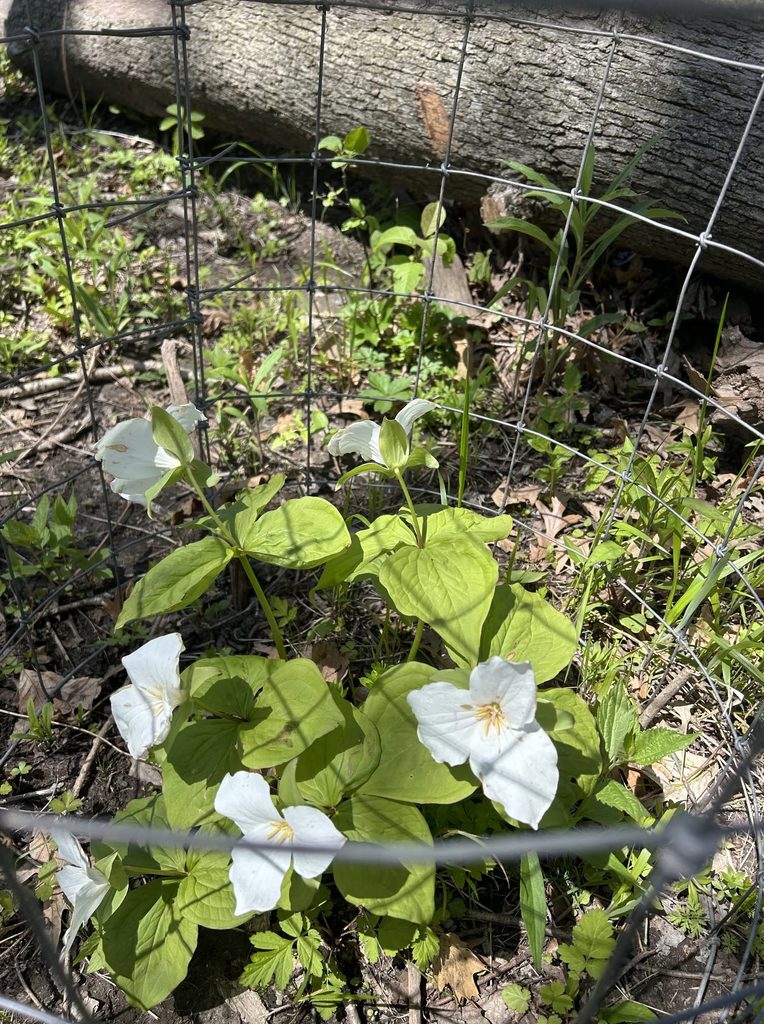
This is Michigan’s official state wildflower, named so in 1980. It blooms in April and May across shaded hardwood forests statewide.
The flower is slow to establish, sometimes taking seven to ten years to bloom from seed. Once mature, though, a colony can persist for decades.
Do not pick this flower. Removing the leaves kills the plant’s ability to store energy for the following year. Admire it, photograph it, but leave it rooted.
It pairs beautifully with ferns and wild ginger in a shaded native bed.
2. Wild Columbine (Aquilegia canadensis)
Wild columbine produces red and yellow bell-shaped flowers that dangle like tiny lanterns. Hummingbirds cannot resist them.
It grows well in rocky, well-drained soil and tolerates partial shade with ease. I have seen it thrive in gravel driveways where nothing else survives.
Bloom time runs from April through June. It self-seeds gently, so expect a few volunteers each spring without becoming invasive.
Deer tend to leave it alone, which makes it a smart pick for rural Michigan yards.
3. Black-Eyed Susan (Rudbeckia hirta)
Few flowers say “Midwest summer” quite like black-eyed Susan. Its golden petals and dark center bloom from June straight through September.
This plant is tough. It handles drought, poor soil, and full sun without complaint. It is one of the easiest native flowers for beginners.
Bees and butterflies visit it constantly, and goldfinches eat the seed heads in fall. Leave the stems standing through winter for extra bird food.
It reseeds freely, so a small patch today can become a full meadow within three years.
4. Purple Coneflower (Echinacea purpurea)
Purple coneflower is a pollinator magnet with a long bloom season running from June into September. Its rosy-purple petals surround a spiky orange-brown cone.
This plant is drought-tolerant once established and rarely needs staking. It also has a long history in traditional herbal medicine, though I will leave that discussion to herbalists.
Goldfinches love the seed heads, so resist the urge to deadhead every bloom. Leaving some seed heads standing supports birds through the colder months.
It grows two to five feet tall, making it a strong middle-border choice.
5. Butterfly Weed (Asclepias tuberosa)
Butterfly weed produces clusters of vivid orange flowers and serves as a host plant for monarch caterpillars. This is one of the most important flowers on this list for pollinator health.
Unlike some milkweeds, it does not spread aggressively. It prefers dry, sandy soil and full sun, and it hates wet feet.
Bloom time runs June through August. The plant takes a season or two to establish a deep taproot, so patience pays off here.
Once mature, it can live for fifteen years or longer in the right spot.
ALSO READ: 15 Best Flowers for Pollinators: (Bees, Butterflies, Moths, Hummingbirds and More)
6. Common Milkweed (Asclepias syriaca)
Common milkweed is the classic monarch host plant found across Michigan roadsides and fields. Its fragrant pink-purple flower clusters bloom in June and July.
This species spreads through underground rhizomes, so give it room. It works best in a naturalized area rather than a tidy border.
Every part of the plant supports wildlife, from the flowers feeding bees to the leaves feeding monarch larvae. A single milkweed patch can host dozens of caterpillars in one season.
Cut back seed pods before they burst if you want to control spread in a smaller yard.
7. Swamp Milkweed (Asclepias incarnata)
If your yard has a wet corner that nothing seems to like, swamp milkweed is the answer. It grows naturally along Michigan wetlands and rain gardens.
Unlike its cousin common milkweed, this species stays clumping rather than spreading aggressively. That makes it far more garden-friendly.
Pink flower clusters bloom from July through August, drawing monarchs, bees, and hummingbird moths. It handles both wet soil and average garden conditions once established.
This is a top pick for anyone building a rain garden in southeast Michigan.
8. Cardinal Flower (Lobelia cardinalis)
Cardinal flower produces tall spikes of brilliant red blooms from July through September. It is one of the few truly red native wildflowers in Michigan.
Hummingbirds seek this flower out specifically. Its tubular shape is built for their long beaks, and few other pollinators can access the nectar as easily.
It prefers moist, rich soil near streams, ponds, or shaded garden beds. Full sun works too, as long as the soil stays consistently damp.
This plant is short-lived, often two to three years, but it reseeds reliably if the soil stays undisturbed.
9. Wild Bergamot (Monarda fistulosa)
Wild bergamot, also called bee balm, produces lavender, shaggy-looking flowers that bees cannot resist. It blooms from July through September.
The leaves carry a strong minty fragrance when crushed. Some Michigan gardeners use dried leaves for tea, though I would treat that as a bonus rather than the main reason to plant it.
It tolerates drought and average soil, and it attracts an impressive range of pollinators, including hummingbird moths.
Give it room, since it spreads by rhizome and can fill a bed within two or three growing seasons.
10. New England Aster (Symphyotrichum novae-angliae)
New England aster is one of the last flowers standing each fall, blooming from August through October in shades of purple and pink.
This late bloom time makes it critical for pollinators preparing for winter. Monarchs use it as a key fuel source during their fall migration south.
It grows tall, often three to six feet, and prefers full sun with moist to average soil. Pinching stems back in early summer keeps the plant bushier and less floppy.
Bees, butterflies, and even some migrating birds rely on this flower late in the season.
11. Joe-Pye Weed (Eutrochium purpureum)
Joe-Pye weed is a statement plant, growing up to seven feet tall with dusty pink flower clusters. It blooms from July through September.
This is a favorite among swallowtail butterflies. It prefers moist soil and does well near ponds, ditches, or low-lying garden areas.
Despite its towering height, it rarely needs staking if planted in a spot with decent sun exposure.
Give it plenty of space at the back of a border, since it can spread into a substantial clump over time.
ALSO READ: Top 20 Rare Flowers in the World: Identification + Pictures
12. Blazing Star (Liatris spicata)
Blazing star produces tall, fuzzy purple spikes that bloom top-down instead of bottom-up, which is unusual among native flowers. It flowers from July through September.
This plant is a butterfly favorite, particularly for swallowtails and monarchs during migration season. It also makes an excellent cut flower for indoor arrangements.
It grows from a corm and prefers full sun with well-drained soil. Once established, it tolerates drought remarkably well.
Plant it in groups of five or more for the strongest visual impact.
13. Wild Geranium (Geranium maculatum)
Wild geranium produces soft pink-lavender flowers in April and May, thriving in the dappled shade of Michigan woodlands.
This is a low-maintenance groundcover option for shaded yards. It spreads slowly through rhizomes, filling in bare patches without becoming invasive.
Deer generally avoid it, which makes it a reliable choice for wooded lots near forests or parks.
After blooming, the attractive foliage continues to provide ground cover through the growing season.
14. Virginia Bluebells (Mertensia virginica)
Virginia bluebells are a spring ephemeral, meaning they bloom early and then disappear entirely by midsummer. Clusters of blue, bell-shaped flowers appear in April.
This flower thrives in moist, shaded soil near streams or under deciduous trees. It pairs beautifully with trillium and wild ginger.
Because the plant goes dormant by June, plant summer-blooming perennials nearby to fill the visual gap it leaves behind.
Bumblebees are especially active around bluebells during the short window they bloom each spring.
15. Marsh Marigold (Caltha palustris)
Marsh marigold produces cheerful yellow flowers in early spring, often blooming as early as March in wetland areas across Michigan.
This plant needs consistently wet soil, making it ideal for pond edges, rain gardens, or low spots that stay soggy after rain.
It is one of the earliest native bloomers, providing crucial nectar for early-emerging bees before most other flowers appear.
Once established, it requires almost no maintenance beyond keeping the soil moist.
16. Turtlehead (Chelone glabra)
Turtlehead gets its name from flowers shaped like a turtle’s open mouth. White to pale pink blooms appear from August through October.
This late-season bloomer thrives in moist to wet soil and partial shade. It is a host plant for the Baltimore checkerspot butterfly, a species that depends heavily on it.
It tolerates clay soil better than most native flowers, making it a strong pick for Michigan’s heavier ground.
Plant it near ponds, rain gardens, or shaded low spots for the best results.
17. Bloodroot (Sanguinaria canadensis)
Bloodroot is named for the reddish sap found in its roots, historically used by Indigenous communities for dye and medicine. The white flowers bloom briefly in early spring.
Each bloom lasts only a few days before petals drop, so timing your visit to see it matters.
It prefers rich, moist woodland soil with dappled shade. The distinctive lobed leaves continue to provide ground cover after the flowers fade.
This is a slow-spreading plant, so patience is required before it forms a noticeable colony.
18. Dutchman’s Breeches (Dicentra cucullaria)
Dutchman’s breeches earns its name from flowers shaped like tiny pairs of white pantaloons hanging upside down. It blooms in April.
This spring ephemeral thrives in rich, shaded woodland soil and disappears by early summer once its energy cycle completes.
It is pollinated almost exclusively by early bumblebee queens, which have tongues long enough to reach the nectar.
Plant it alongside trillium and bloodroot for a classic Michigan woodland spring display.
19. Jack-in-the-Pulpit (Arisaema triphyllum)
Jack-in-the-pulpit is one of the more unusual native flowers, with a hooded green-and-purple striped spathe covering a spike called the spadix.
It grows in moist, shaded woodlands and blooms from April through June. By fall, it produces a cluster of bright red berries that birds rely on.
This plant can actually change sex from year to year depending on the energy reserves stored in its root, a rare trait among native wildflowers.
It requires little care beyond consistent moisture and shade.
20. Wild Lupine (Lupinus perennis)
Wild lupine produces tall spikes of blue-purple pea-like flowers in May and June. It is the sole host plant for the endangered Karner blue butterfly, found in only a handful of Michigan counties.
This flower needs dry, sandy soil and full sun, mimicking the oak savanna habitat it evolved alongside.
Because of its role in supporting an endangered species, planting wild lupine has real conservation value beyond aesthetics.
It resents transplanting due to a deep taproot, so starting from seed directly in the garden works best.
ALSO READ: 15 Flowers to Plant in September for Stunning Early Spring Blooms: Identification and Pictures
21. Fringed Gentian (Gentianopsis crinita)
Fringed gentian produces striking blue, fringed-edge flowers that bloom in September and October, right as most other flowers are fading.
This species is biennial, meaning it grows foliage in year one and blooms in year two before dying. Reseeding keeps a patch going year after year.
It prefers moist, sunny meadows and does not tolerate competition well, so keep surrounding plants trimmed back.
Its late bloom time makes it a valuable late-season nectar source for remaining bee populations before winter.
22. Prairie Smoke (Geum triflorum)
Prairie smoke gets its name from the wispy, smoke-like seed heads that follow its dusty pink spring blooms. Flowering occurs in April and May.
This low-growing plant prefers dry, well-drained soil and full sun, making it ideal for rock gardens or prairie-style plantings.
It is highly drought-tolerant once established and rarely needs any supplemental watering after the first year.
The feathery seed heads persist for weeks, adding visual interest long after the flowers themselves have faded.
23. Shooting Star (Primula meadia)
Shooting star produces delicate pink or white flowers with swept-back petals, resembling tiny comets. It blooms in May in Michigan prairies and open woodlands.
This is a spring ephemeral that goes dormant by midsummer, so plan for other plants to take over visual interest later in the season.
It prefers well-drained soil with full sun to light shade and does not tolerate standing water.
Bumblebees pollinate it through a technique called buzz pollination, vibrating at a specific frequency to release the pollen.
24. Culver’s Root (Veronicastrum virginicum)
Culver’s root produces tall white flower spikes that resemble candelabras, blooming from July through September. It can reach up to six feet in height.
This plant attracts a wide range of pollinators, including bees, wasps, and butterflies, making it a workhorse for garden biodiversity.
It tolerates both moist and average soil conditions, giving it more flexibility than many native flowers on this list.
Its strong vertical structure makes it an excellent architectural anchor for the back of a native flower border.
25. Ohio Spiderwort (Tradescantia ohiensis)
Ohio spiderwort produces three-petaled blue-purple flowers that open in the morning and close by early afternoon. Bloom time runs from May through July.
This plant tolerates a wide range of conditions, from dry sandy soil to more average garden beds, and thrives in full sun to partial shade.
It spreads readily by seed and rhizome, so give it space or plan to divide it every few years.
Bees are especially active on this flower during its brief morning bloom window.
26. Sneezeweed (Helenium autumnale)
Despite its name, sneezeweed does not cause allergies. The name comes from its historical use in dried snuff, not from pollen irritation.
It produces bright yellow, daisy-like flowers with a distinctive raised center, blooming from August through October.
This plant thrives in moist soil near streams, ponds, or rain gardens, and it attracts a strong mix of late-season bees and butterflies.
It grows three to five feet tall and benefits from pinching back in early summer to prevent flopping.
27. Foxglove Beardtongue (Penstemon digitalis)
Foxglove beardtongue produces white, tubular flowers on tall spikes, blooming from May through July. Despite the name, it is unrelated to true foxglove.
This plant tolerates clay soil better than most natives, making it a practical choice for Michigan’s heavier ground conditions.
Bumblebees are the primary pollinators, and the plant holds up well in both full sun and light shade.
Its dark reddish foliage varieties, like ‘Husker Red,’ also add ornamental value beyond the bloom itself.
ALSO READ: 15 Lucky Flowers to Bring Fortune and Good Luck to Your Garden
28. Compass Plant (Silphium laciniatum)
Compass plant is a true prairie giant, growing up to nine feet tall with large yellow sunflower-like blooms from July through September.
Its name comes from a fascinating trait: the deeply lobed leaves tend to orient themselves north-south to reduce midday sun exposure.
This plant can live for over 100 years, developing an extraordinarily deep taproot that can reach 15 feet into the soil.
It needs full sun and plenty of room, making it better suited to larger properties than small urban lots.
29. Rattlesnake Master (Eryngium yuccifolium)
Rattlesnake master has spiky, yucca-like foliage topped with round, white-green flower clusters. It blooms from July through September.
Despite the intimidating name, it poses no danger. Historical accounts suggest Indigenous peoples once used it in treatments related to snakebite, hence the name.
This prairie native tolerates poor, dry soil and full sun, and it attracts a wide variety of small pollinating insects and wasps.
Its unusual texture makes it a striking contrast plant among softer, rounder native flowers.
30. Michigan Lily (Lilium michiganense)
Michigan lily is the state’s native lily species, producing nodding orange flowers with recurved petals and dark spots. It blooms from July through August.
It grows naturally in moist prairies, meadows, and open woodland edges across the state. Full sun to light shade suits it best.
Swallowtail butterflies and hummingbirds both visit this flower regularly, drawn to its bold color and open nectar access.
This is a fitting flower to end the list with, given that it carries the state’s own name.
How to Choose Native Flowers for Your Michigan Garden
Start by matching plants to your actual conditions, not the conditions you wish you had. Sun exposure and soil moisture matter more than any other factor.
Group flowers by bloom time to keep something in color from April through October. A garden with only summer bloomers leaves pollinators without food in spring and fall.
Mix spring ephemerals like trillium and bluebells with summer stars like coneflower and bergamot. Add fall bloomers such as asters and gentians to close out the season.
Most of Michigan falls within USDA Hardiness Zones 5 and 6, with a small strip of the Upper Peninsula in Zone 4. Nearly every flower on this list is rated for all three zones.
Common Questions About Michigan Native Flowers
When is the best time to plant native flowers in Michigan? Fall planting, roughly September through October, allows roots to establish before winter. Spring planting after the last frost also works well for most species.
Do native flowers need fertilizer? Generally, no. Most Michigan natives evolved in nutrient-poor soil and can struggle or grow too leggy with added fertilizer.
Are native flowers deer-resistant? Some, like wild geranium and columbine, are rarely bothered. Others, including lilies and asters, may need protection in areas with heavy deer pressure.
Where can I buy Michigan native plants? Look for nurseries specializing in native plants, or check with the Michigan Native Plant Producers Association, which lists certified native growers across the state.
Final Thoughts
Planting native flowers is one of the simplest ways to support Michigan’s struggling pollinator populations. It also happens to be one of the easiest ways to build a garden that takes care of itself.
Every flower on this list has spent thousands of years adapting to Michigan winters, Michigan clay, and Michigan bees. That kind of track record is hard to beat.
Start small if you need to. Even a handful of these 30 species can turn a plain yard into a small piece of restored habitat, one bloom at a time.

Tim M Dave is a gardening expert with a passion for houseplants, particularly cacti and succulents. With a degree in plant biology from the University of California, Berkeley, he has vast experience in gardening. Over the years, he has cultivated a vast collection of desert plants and learned a great deal about how to grow and care for these unique companions.