25 Native Flowers of Minnesota (With Growing Details)
I have walked more prairie trails and shaded woodlots in Minnesota than I can count, and every single time, something wild and unplanted stops me in my tracks. This state does not need a manicured garden to look stunning. It just needs its own flowers.
Minnesota’s landscape holds a strange kind of history in its soil. Less than 1% of the state’s original 18 million acres of tallgrass prairie still exists today, according to the Minnesota DNR. What remains is precious, and the flowers growing there are living proof of what once covered a third of this state.
This guide walks through 25 native Minnesota flowers you can actually find, from bog orchids to woodland spring bloomers.
25 Native Flowers of Minnesota
Native flowers are not just pretty. They evolved alongside Minnesota’s soil, climate, and pollinators over thousands of years. That means they need less water, resist local pests better, and feed bees and butterflies that non-native plants often cannot support.
Planting or simply appreciating these species is one small way to push back against habitat loss. Every prairie remnant and woodland patch matters more than most people realize.
Now, here are the 25 flowers worth knowing.
1. Showy Lady’s Slipper (Cypripedium reginae)
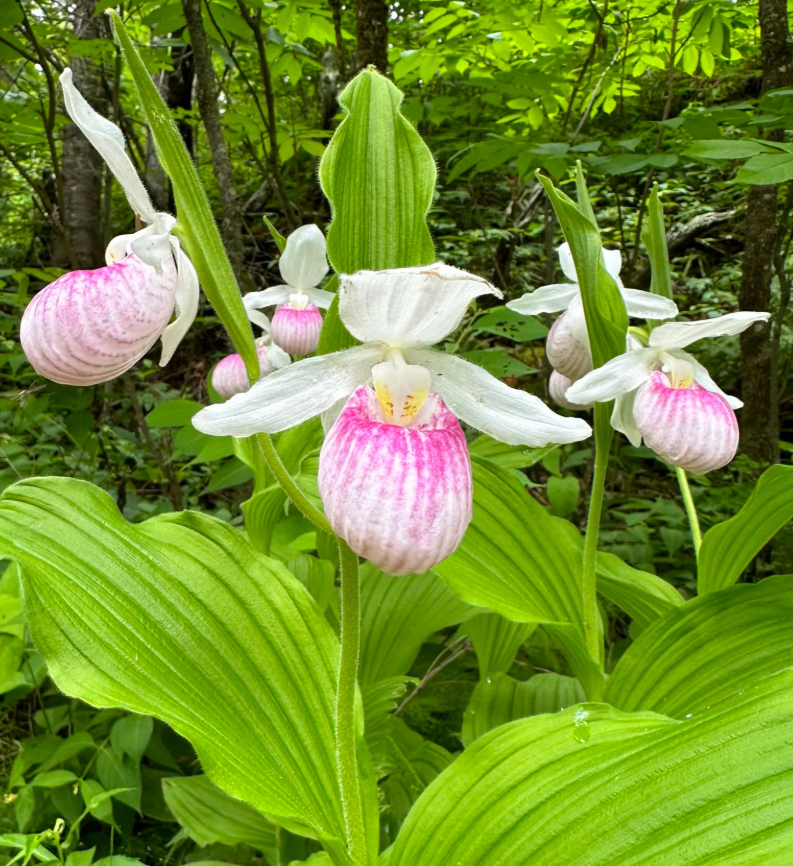
This is Minnesota’s official state flower, and honestly, it earns the title. It became the state flower in 1902, and since 1925 it has been illegal to pick, uproot, or unearth it anywhere in Minnesota.
The flower grows in bogs, swamps, and wet woods, mostly in the northeastern half of the state. Its white petals and streaked pink pouch make it one of the most recognizable wildflowers in North America.
What amazes me most is the patience this plant demands. It can take 4 to 16 years before a single plant produces its first bloom. Once established, though, it can live for decades, with some specimens estimated to survive 50 years or more.
Look for it blooming in late June through early July, especially along the Lady Slipper Scenic Byway between Cass Lake and Blackduck, where more than 10,000 plants grow wild.
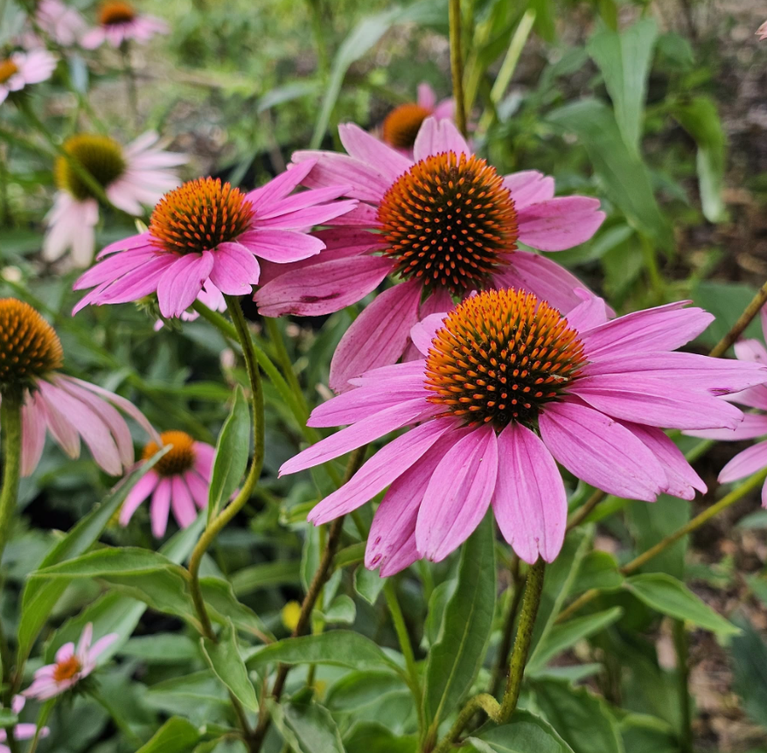
2. Purple Coneflower (Echinacea purpurea)
Purple coneflower is probably the most familiar prairie flower to non-botanists, and for good reason. Its pink-purple petals droop gracefully around a spiky, copper-colored cone that pollinators absolutely love.
I have watched goldfinches perch right on the seed heads in late summer, picking away long after the petals fade. That alone makes it worth planting.
It thrives in full sun and tolerates drought better than almost anything else in a home garden. Bloom season runs from June through August.
Herbalists have used echinacea for generations as an immune booster, though that use predates any of my expertise. Botanically, it remains one of Minnesota’s toughest and most rewarding natives.
3. Black-Eyed Susan (Rudbeckia hirta)
Black-eyed Susan brings that classic golden-yellow color with a dark brown center that almost every Minnesotan recognizes on sight. It grows along roadsides, in prairies, and in disturbed soil where little else survives.
This flower is a biennial or short-lived perennial, meaning it often reseeds itself generously. That habit makes it a favorite for restoration projects trying to rebuild native cover quickly.
Bees and butterflies visit constantly through its long bloom window, which stretches from June into September. Few native flowers offer that much color for that many weeks.
4. Wild Columbine (Aquilegia canadensis)
Wild columbine has a shape unlike anything else on this list. Its red and yellow petals curve backward into distinctive spurs that hold nectar, drawing in hummingbirds almost as soon as it opens in spring.
I always find it growing in rocky, partially shaded spots, often along bluffs or open woodland edges. It seems to prefer soil that other plants would call too poor to bother with.
Bloom time runs from April through June, making it one of the earlier native flowers to appear each year. Its nodding, bell-like flowers give a woodland garden real personality.
ALSO READ: 25 Trees Native to Minnesota (With Growing Details)
5. Prairie Blazing Star (Liatris pycnostachya)
Blazing star sends up tall purple spikes that seem to glow when backlit by late afternoon sun. Unlike most flowers, it blooms from the top of the spike downward, which is a small detail I find oddly satisfying to watch over a season.
Monarch butterflies rely on it heavily during their fall migration south. Because it blooms in August and September, it provides a late nectar source right when monarchs need fuel most.
It grows tall, often 2 to 5 feet, and prefers full sun with moist to average soil. Prairie restorations across Minnesota use it constantly for this reason.
6. Butterfly Milkweed (Asclepias tuberosa)
Butterfly milkweed produces bright orange clusters of flowers that stand out immediately against green prairie grass. Unlike common milkweed, its sap is not milky, which surprises people who expect the family trait.
Monarch caterpillars depend entirely on milkweed species to survive, and this one is a favorite. Given that monarch populations have declined significantly over recent decades according to multiple conservation surveys, every planted milkweed patch genuinely helps.
It tolerates dry, sandy soil well and blooms from June through August. I recommend it to anyone starting a pollinator garden for the first time.
7. Common Milkweed (Asclepias syriaca)
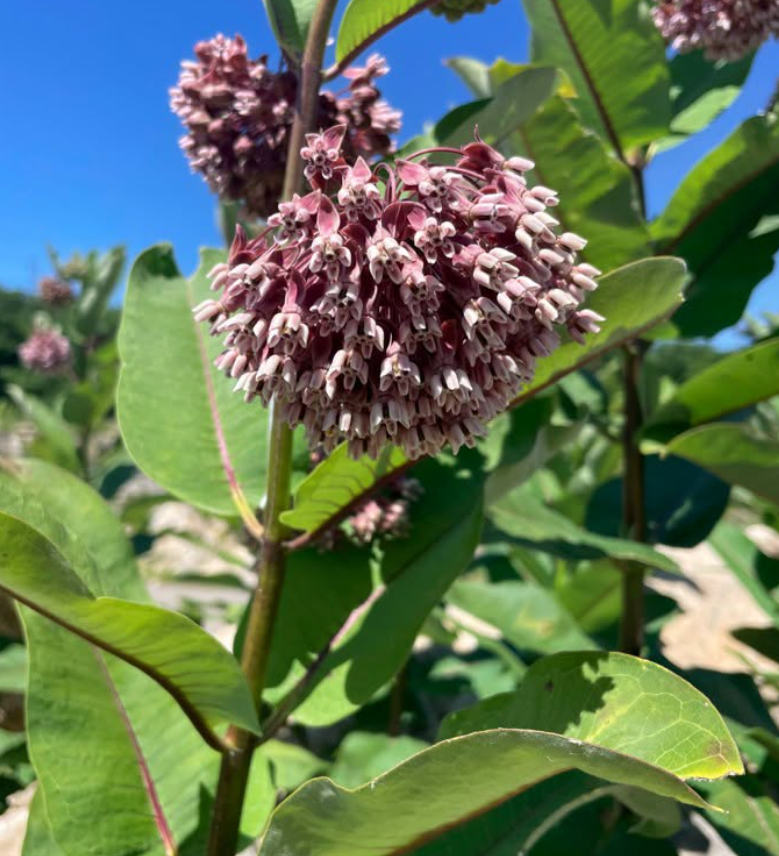
Common milkweed is the plant most people picture when they hear the word “milkweed.” Its dusty pink flower clusters release a sweet fragrance that carries surprisingly far on a warm July evening.
This species spreads through underground rhizomes, so it can take over a small garden bed if left unchecked. In a larger prairie setting, though, that spreading habit helps rebuild habitat quickly.
Monarchs lay eggs almost exclusively on milkweed leaves. Losing milkweed to development and herbicide use is one of the documented reasons behind monarch population stress across the Midwest.
8. Wild Bergamot (Monarda fistulosa)
Wild bergamot, also called bee balm, produces shaggy lavender flower heads that look almost explosive up close. Crush a leaf between your fingers and you get a sharp, minty scent that some people compare to oregano.
Bees, butterflies, and hummingbird moths all visit this plant heavily. I have spent entire afternoons just watching the traffic around a single bergamot patch.
It grows well in average to dry soil under full sun, blooming from July into September. Native Americans historically used it as a medicinal herb, though I’ll leave that history to the ethnobotanists.
9. New England Aster (Symphyotrichum novae-angliae)
New England aster is one of the last native flowers standing each fall. Its purple, daisy-like petals surround a bright yellow center, offering color right up until the first hard frost.
Because it blooms so late, from August through October, it becomes a critical nectar source for bees and butterflies preparing for winter or migration. Few other flowers fill that seasonal gap.
It grows tall and can look leggy without companions around it, so I usually recommend planting it alongside grasses or shorter perennials. The payoff in late-season color is worth the extra planning.
ALSO READ: 70 Stunning Flowers That Start With C (With Pictures, and Care Tips)
10. Prairie Smoke (Geum triflorum)
Prairie smoke gets its name from the wispy, smoke-like seed heads that follow its nodding pink-red flowers. Honestly, the seed stage is more photographed than the bloom itself.
It flowers early, typically in April and May, before most prairie grasses have grown tall enough to shade it out. This timing lets it take advantage of full spring sun.
It stays low to the ground, rarely exceeding a foot in height, which makes it a good fit for rock gardens or the front edge of a native planting bed.
11. Pasque Flower (Anemone patens)
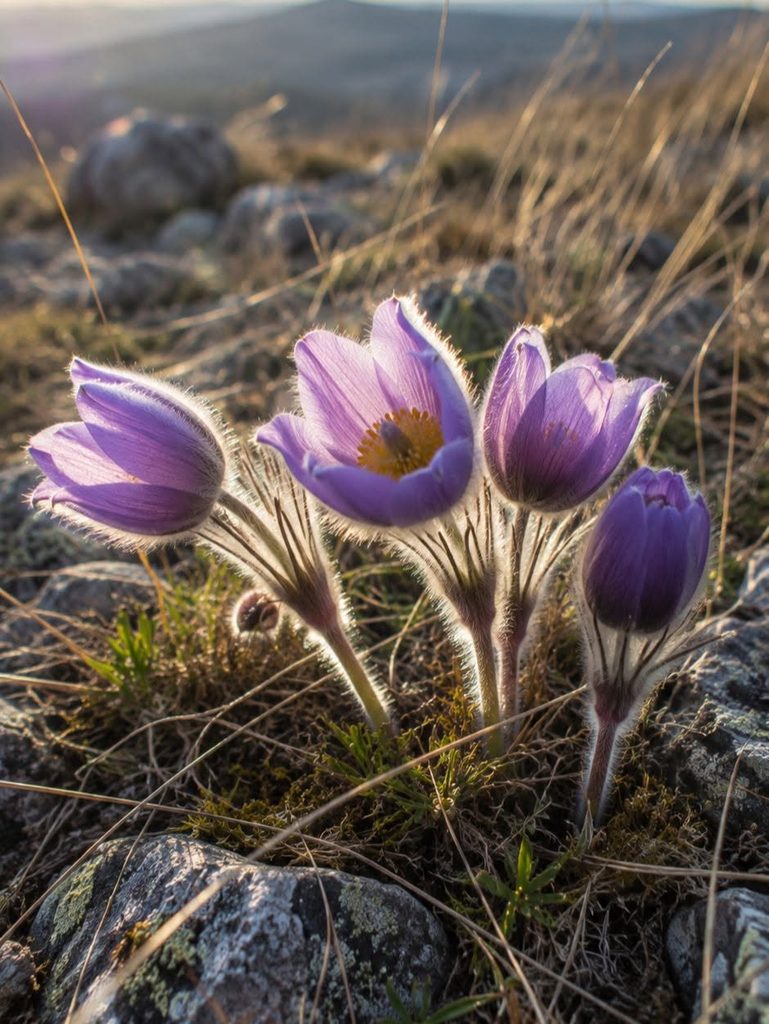
Pasque flower is one of the earliest bloomers in Minnesota, sometimes pushing through late snow in March or April. Its lavender petals surround a bright yellow center, and fine silvery hairs cover the entire plant like a soft coat.
This hairy covering actually helps the flower survive cold snaps by trapping a small layer of warmer air around the bud. It is a clever adaptation for a plant blooming this early.
You will mostly find it on dry prairie hillsides and rocky outcrops. South Dakota claims it as a state flower too, but it grows wild across western Minnesota just the same.
12. Wild Geranium (Geranium maculatum)
Wild geranium, sometimes called cranesbill, produces soft pink-purple flowers with five rounded petals each. It grows in dappled shade, often carpeting the floor of oak and maple woodlands each spring.
Bloom time runs from April through June, overlapping nicely with other spring ephemerals. The plant’s seed pods split open explosively when ripe, flinging seeds several feet from the parent plant.
It tolerates a range of soil types and spreads slowly by rhizome, making it a reliable, low-maintenance choice for shaded native gardens.
13. Cardinal Flower (Lobelia cardinalis)
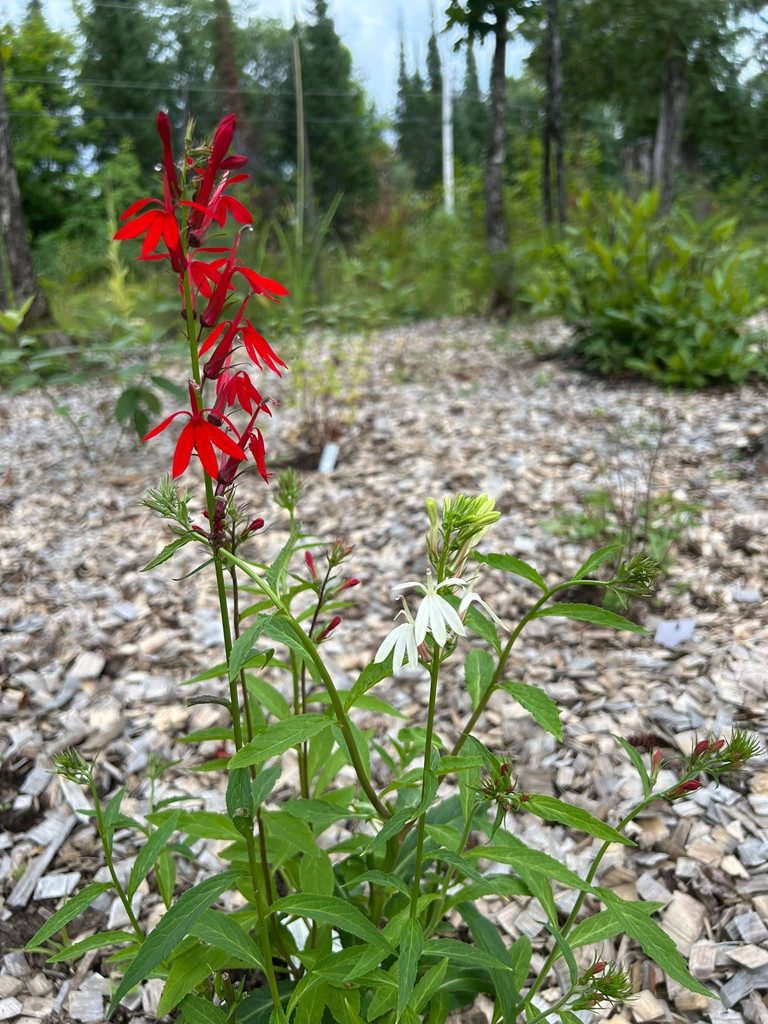
Cardinal flower produces the most intensely red blooms on this entire list. It grows along stream banks, pond edges, and other consistently damp ground, standing 2 to 4 feet tall on a single spike.
Hummingbirds are drawn to it almost exclusively because the deep tubular shape fits their bill perfectly. I rarely see bees bother with it, which tells you something about how specialized this flower’s design really is.
It blooms from July through September and needs consistently moist soil to thrive, so it is not a great fit for a typical dry garden bed.
14. Shooting Star (Dodecatheon meadia)
Shooting star has a genuinely unusual shape, with petals swept sharply backward away from a pointed, dark central cone. It looks almost like a tiny comet frozen mid-flight, which explains the common name.
You can find it along the Shooting Star Scenic Byway in southeastern Minnesota, among other native prairie remnants. It blooms in May and June, then the foliage dies back completely by midsummer.
Because the plant goes dormant so early, it pairs well with later-blooming natives that fill the space it leaves behind.
15. Prairie Rose (Rosa arkansana)
Prairie rose is Minnesota’s native wild rose, producing simple pink, five-petaled flowers with a mild, sweet fragrance. It grows as a low shrub, rarely more than knee height, which distinguishes it from taller cultivated roses.
It blooms from June through August and produces red rose hips in fall that birds and small mammals rely on through the colder months. Those hips also carry notably high vitamin C content.
You will find it along roadsides, prairie edges, and open woodland margins across the entire state.
16. Blue Flag Iris (Iris versicolor)
Blue flag iris grows in marshes, wet ditches, and pond margins, producing striking blue-purple flowers with yellow and white markings near the base of each petal. It closely resembles garden iris varieties, but this one is fully wild.
Bloom time runs from May through July. The flower’s intricate petal patterns act as visual landing guides for bees, directing them straight toward the nectar reward.
It spreads through rhizomes in consistently wet soil, so it works well along the edge of a rain garden or natural pond.
17. Marsh Marigold (Caltha palustris)
Marsh marigold is one of the very first wetland flowers to bloom each spring, often appearing in April while snow still lingers nearby. Its glossy yellow petals and rounded leaves brighten up marshes and stream edges before most other plants have even emerged.
Despite the name, it is not a true marigold at all. It belongs to the buttercup family, which explains its waxy, sunlit petal texture.
It needs consistently wet or saturated soil and typically finishes blooming by early June.
18. Compass Plant (Silphium laciniatum)
Compass plant is a true prairie giant, capable of reaching 8 to 10 feet tall with bright yellow, sunflower-like blooms. Its deeply cut leaves famously orient themselves north-south to reduce midday sun exposure, which is where the name comes from.
Below ground, the taproot can extend more than 10 feet deep, a trait that helps prairie plants survive Minnesota’s droughts and wildfires. That kind of root system is part of why prairie soil holds so much carbon.
It blooms from July through September and can live for decades once established in the right prairie soil.
19. Rattlesnake Master (Eryngium yuccifolium)
Rattlesnake master looks like nothing else on a Minnesota prairie, with spiky, yucca-like leaves and round, thistle-textured white flower heads. It stands out immediately against the softer shapes around it.
Despite the intimidating name, it has no connection to actual snakes. Early settlers believed the root could treat snakebite, which is where the folklore name stuck.
It blooms from July through September and attracts a wide range of pollinators, including several specialized native bee species that favor it specifically.
ALSO READ: 70 Beautiful Flowers That Start With D (With Photos, and Care Tips)
20. Purple Prairie Clover (Dalea purpurea)
Purple prairie clover produces tight, cylindrical flower heads in deep purple-pink, blooming in a ring that moves upward over several weeks. It stays compact, usually under 2 feet tall, making it a good fit for smaller native plantings.
As a legume, it fixes nitrogen in the soil, quietly improving conditions for neighboring prairie plants. That trait made it valuable to historic prairie ecosystems long before anyone understood the chemistry behind it.
It tolerates dry, poor soil well and blooms from June through August, drawing bees and butterflies steadily throughout that stretch.
21. Bottle Gentian (Gentiana andrewsii)
Bottle gentian produces deep blue, bottle-shaped flowers that never fully open. Only the strongest bumblebees can force their way inside to reach the nectar, which is a genuinely fascinating pollination strategy.
It blooms very late in the season, typically September into October, right as most other prairie flowers are finishing. That timing makes it one of the last color sources before winter.
It prefers moist prairie and open woodland edges, and I always find its color surprising against the browning grass around it late in the year.
22. Wood Lily (Lilium philadelphicum)
Wood lilies produce upward-facing, orange-red flowers with dark spots near the center, a rarer shape among native lilies that typically nod downward. It stands out sharply against green prairie or open woodland backgrounds.
It blooms from June through July and grows scattered rather than in dense colonies, so finding one often feels like a small reward on a hike.
Because of habitat loss and occasional overpicking historically, it is less common today than it once was across the state.
23. Jack-in-the-Pulpit (Arisaema triphyllum)
Jack-in-the-pulpit is one of the strangest-looking native flowers in Minnesota, with a hooded, striped spathe curling over a central spadix. It looks almost otherworldly compared to the flowers around it.
It grows in shaded, moist woodlands and blooms from April through June. Interestingly, individual plants can change sex from year to year depending on their stored energy reserves.
Later in the season, it produces a cluster of bright red berries that birds rely on for food, though the plant itself is toxic if eaten by humans.
24. Large-Flowered Trillium (Trillium grandiflorum)
Large-flowered trillium is a true woodland spring signal, with three broad white petals that slowly fade to pink as the bloom ages. It grows in rich, undisturbed forest soil, often in large colonies that carpet the ground.
Bloom time runs from April into May, disappearing again once the tree canopy above fully leafs out and blocks the light. This narrow window is a defining trait of spring ephemeral wildflowers.
Because it grows so slowly, taking years to reach flowering maturity, it should never be picked or transplanted from the wild.
25. Bloodroot (Sanguinaria canadensis)
Bloodroot closes out this list with one of the most delicate spring blooms in the state. Its pure white, many-petaled flower opens briefly in April, often lasting only a few days before petals drop.
The name comes from the plant’s reddish-orange sap, historically used by Native American communities as a natural dye. That sap is also mildly toxic, so it deserves respect rather than casual handling.
It grows in rich, shaded woodland soil alongside trillium and other spring ephemerals, making early April walks through Minnesota’s forests genuinely worth the effort.
Final Thoughts
Walking through even a small patch of Minnesota prairie or woodland during peak bloom season is something I would recommend to anyone, plant enthusiast or not. These 25 flowers represent thousands of years of adaptation to this exact soil and climate.
With less than 1% of original prairie remaining and habitat pressure continuing statewide, every native flower still blooming out there is doing real ecological work. Planting even a few of these species in a home garden supports pollinators that have nowhere else to turn.
Next time you are out on a trail between April and October, take a moment to look down. Minnesota’s wildest and most honest beauty is usually growing right at your feet.

Tim M Dave is a gardening expert with a passion for houseplants, particularly cacti and succulents. With a degree in plant biology from the University of California, Berkeley, he has vast experience in gardening. Over the years, he has cultivated a vast collection of desert plants and learned a great deal about how to grow and care for these unique companions.