45 Native Texas Flowers (With Growing Details)
Texas does not do anything small, and its wildflowers are no exception. Drive any rural highway in April, and you will pass through miles of blue, red, orange, and gold without even trying.
I have made that drive myself more than once, and it never gets old. More than 5,000 species of wildflowers and native grasses grow across Texas roadsides alone, according to the Texas Department of Transportation. That scale is hard to grasp until you see it firsthand.
This guide covers 45 flowers that are genuinely native to Texas, gathered from the Hill Country, the Panhandle, the Piney Woods, the Gulf Coast, and the western deserts.
Why Texas Wildflowers Matter
Texas covers an enormous range of climates and soils, from humid pine forests in the east to arid desert basins in the west. That range is exactly why the state supports so many distinct wildflower species in the first place.
The Lady Bird Johnson Wildflower Center, the official State Botanic Garden and Arboretum of Texas, maintains more than 970 native plant species on its own grounds. It also runs the most comprehensive native plant database in the country.
These flowers are not just scenery. TxDOT notes that its roadside wildflowers support more than 900 species of butterflies, bees, birds, and other pollinators, including migrating monarch butterflies that depend on them for fuel.
I find that detail worth remembering next time a bluebonnet field looks like nothing more than a nice photo backdrop. It is actually a working ecosystem.
The Bluebonnets: Texas’s Official State Flower
1. Texas Bluebonnet (Lupinus texensis)
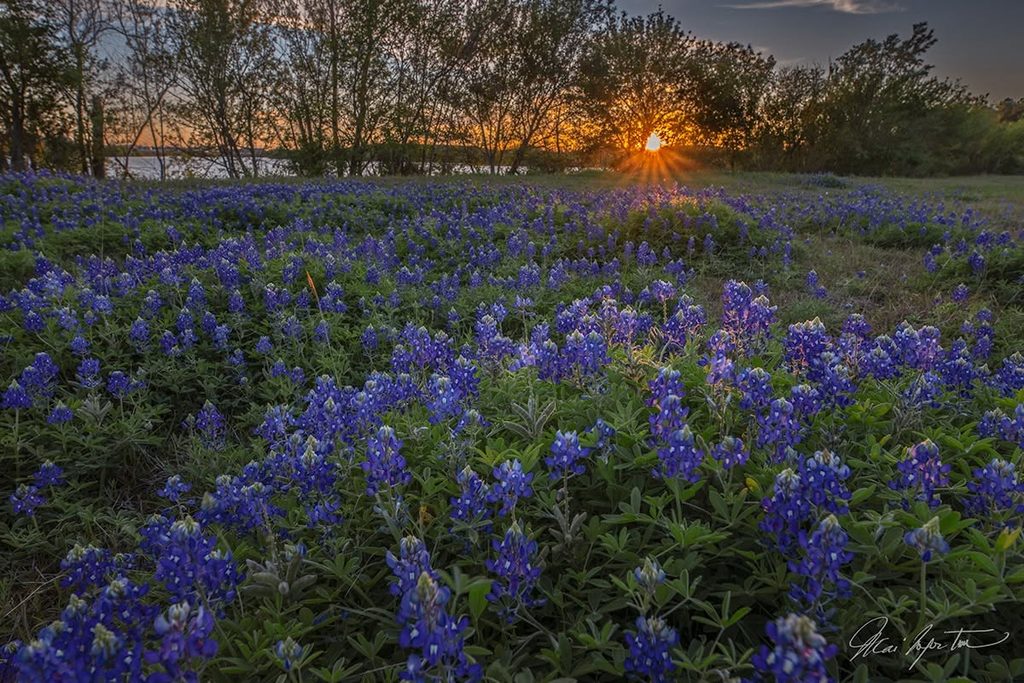
Texas bluebonnet is the most recognized wildflower in the state, and for good reason. Its deep blue spikes, tipped with white, blanket fields and highway medians every spring from March through April.
This species officially became the state flower in 1971, replacing an earlier bluebonnet species. It was chosen over Lupinus subcarnosus for its larger size and brighter color, according to Texas history records.
Bluebonnets are actually part of a group of five recognized species, and all five share the title of state flower under Texas law. That detail surprises a lot of visitors who assume only one official bluebonnet exists.
I still slow down every time I pass a bluebonnet field in bloom. There is something about that particular blue that photographs never quite capture.
2. Sandyland Bluebonnet (Lupinus subcarnosus)
Sandyland bluebonnet was actually the first bluebonnet named Texas’s state flower back in 1901. It grows in sandy soils across South and Central Texas, favoring drier, looser ground than its more famous cousin.
Its flowers are a slightly paler blue, and the plant itself tends to sprawl lower and looser than Lupinus texensis. Bloom time runs from March into early April, slightly ahead of the more common bluebonnet species.
Lawmakers eventually swapped the official designation to Lupinus texensis in 1971, largely because its flowers were considered showier. Sandyland bluebonnet still holds historical importance as the original honoree.
You will find this species most reliably in the sandy soils of South Texas, an area often overlooked by bluebonnet tourists heading to the Hill Country instead.
3. Big Bend Bluebonnet (Lupinus havardii)
Big Bend bluebonnet is the giant of the bluebonnet family, with flower spikes that can reach up to three feet tall. It grows almost exclusively in the Big Bend region of far West Texas.
This species blooms earlier than most bluebonnets, often appearing in February along desert washes and roadside gravel. Its height and drama make it a favorite subject for wildflower photographers who travel specifically to see it.
Because Big Bend bluebonnet grows in such a remote, arid part of the state, it is far less commonly seen than its Hill Country relatives. Seeing it in person usually requires deliberate travel rather than a casual roadside stop.
I think this is the bluebonnet species people are most surprised to learn exists at all. Its scale genuinely looks different from the familiar patches near Austin.
ALSO READ: 25 Native Texas Shrubs (With Growing Details)
Classic Prairie and Roadside Wildflowers
4. Indian Paintbrush (Castilleja indivisa)
Indian paintbrush produces brush-like clusters of red-orange bracts, often growing right alongside bluebonnets in the same fields. It blooms from March through May across Central and East Texas.
What looks like the flower petal is actually a colored leaf structure called a bract. The true flowers are small and tucked inside, mostly hidden from casual view.
This plant is partially parasitic, tapping into the root systems of nearby grasses for extra nutrients. That relationship helps explain why it thrives so well among established prairie grasses.
Paired with bluebonnets, this combination of red and blue creates the classic Texas roadside look seen on countless postcards and calendars.
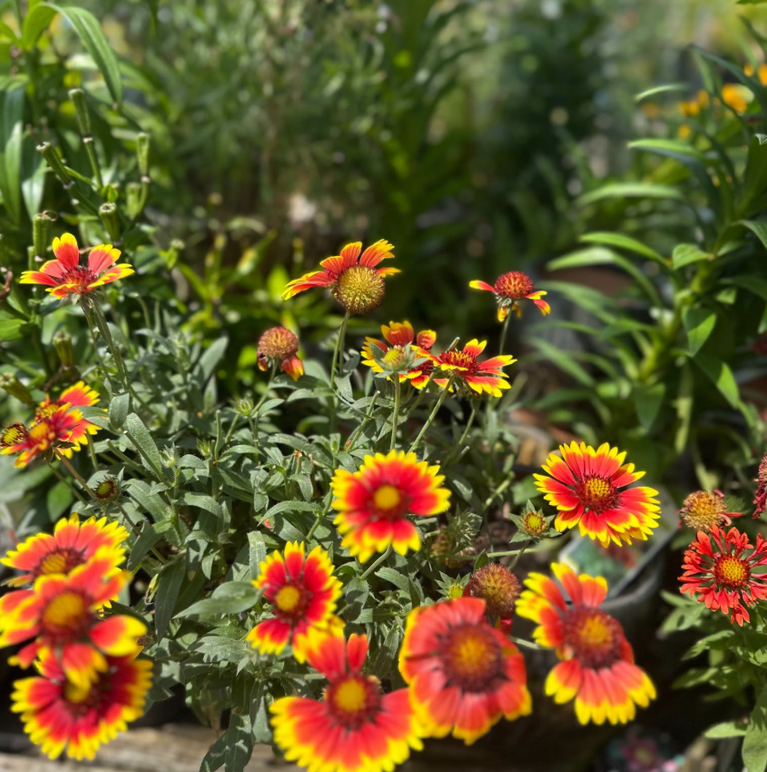
5. Indian Blanket / Firewheel (Gaillardia pulchella)
Indian blanket produces bold red-and-yellow daisy-like flowers that resemble a woven blanket pattern, hence the common name. It blooms from April through the peak of summer heat, longer than most spring annuals.
This flower tolerates poor, dry soil better than almost any other prairie native, which explains its dominance along Texas highways well into summer. It reseeds readily, forming dense colonies year after year.
Firewheel belongs to the sunflower family, and TxDOT notes that more than 20% of Texas wildflowers fall into this same family group. That statistic hints at just how dominant sunflower relatives are across the state’s landscapes.
I associate this flower with the hottest part of a Texas summer, still blooming cheerfully when most spring wildflowers have already faded.
6. Black-Eyed Susan (Rudbeckia hirta)
Black-eyed Susan produces golden-yellow petals around a dark, dome-shaped center, blooming from late spring through fall. It grows across most of Texas, from East Texas woodlands to Central Texas prairies.
TxDOT specifically lists this flower among the state’s most prominent and recognizable roadside blooms, alongside bluebonnets and Indian paintbrush. Its long bloom window makes it a reliable summer standby.
This flower attracts a steady stream of bees and butterflies throughout its bloom period. Its seed heads also feed goldfinches and other seed-eating birds once petals fade in autumn.
Because it tolerates heat, poor soil, and minimal water, gardeners across Texas often plant it as a low-maintenance native alternative to imported annuals.
7. Mexican Hat (Ratibida columnifera)
Mexican hat produces a tall, cone-shaped central column surrounded by drooping red and yellow petals. Its shape genuinely resembles a small sombrero, which explains the common name.
TxDOT lists this flower as one of the state’s most prominent and popular wildflowers, blooming from late spring through summer across Central and West Texas prairies. It tolerates drought exceptionally well.
The petals can range from solid yellow to deep red with yellow tips, depending on the individual plant and region. This variation makes roadside patches look more varied than a single-species stand usually would.
Bees favor this flower heavily, and its tall central cone continues to provide visual interest even after the petals eventually drop.
8. Winecup (Callirhoe involucrata)
Winecup produces cup-shaped, deep magenta-purple flowers low to the ground, often trailing along roadsides and open fields. It blooms from March through June across most of Texas.
This plant grows from a deep taproot, which makes it remarkably drought tolerant once established. Its sprawling habit means a single plant can cover a surprisingly wide patch of ground.
Winecup flowers typically open in the morning and close by early afternoon, a pattern worth watching for if you want to catch them at their best. Bees are the primary pollinators drawn to its rich color.
I like how this flower hugs the ground rather than standing tall, adding low color beneath taller bluebonnets and paintbrush in mixed prairie plantings.
9. Prairie Verbena (Glandularia bipinnatifida)
Prairie verbena forms low mats of small, purple-pink flower clusters that bloom from spring through fall in warm years. It thrives in dry, rocky soil across Central and West Texas.
This species tolerates heat and drought better than almost any other native groundcover flower in the state. Its long bloom season means it often provides color when many spring annuals have already finished.
Butterflies, including several swallowtail species, visit prairie verbena regularly throughout its extended bloom period. Its low, spreading habit also makes it useful for erosion control on slopes.
Roadside patches of this flower often go unnoticed next to taller, showier blooms, but its persistence through summer heat deserves more attention.
10. Texas Thistle (Cirsium texanum)
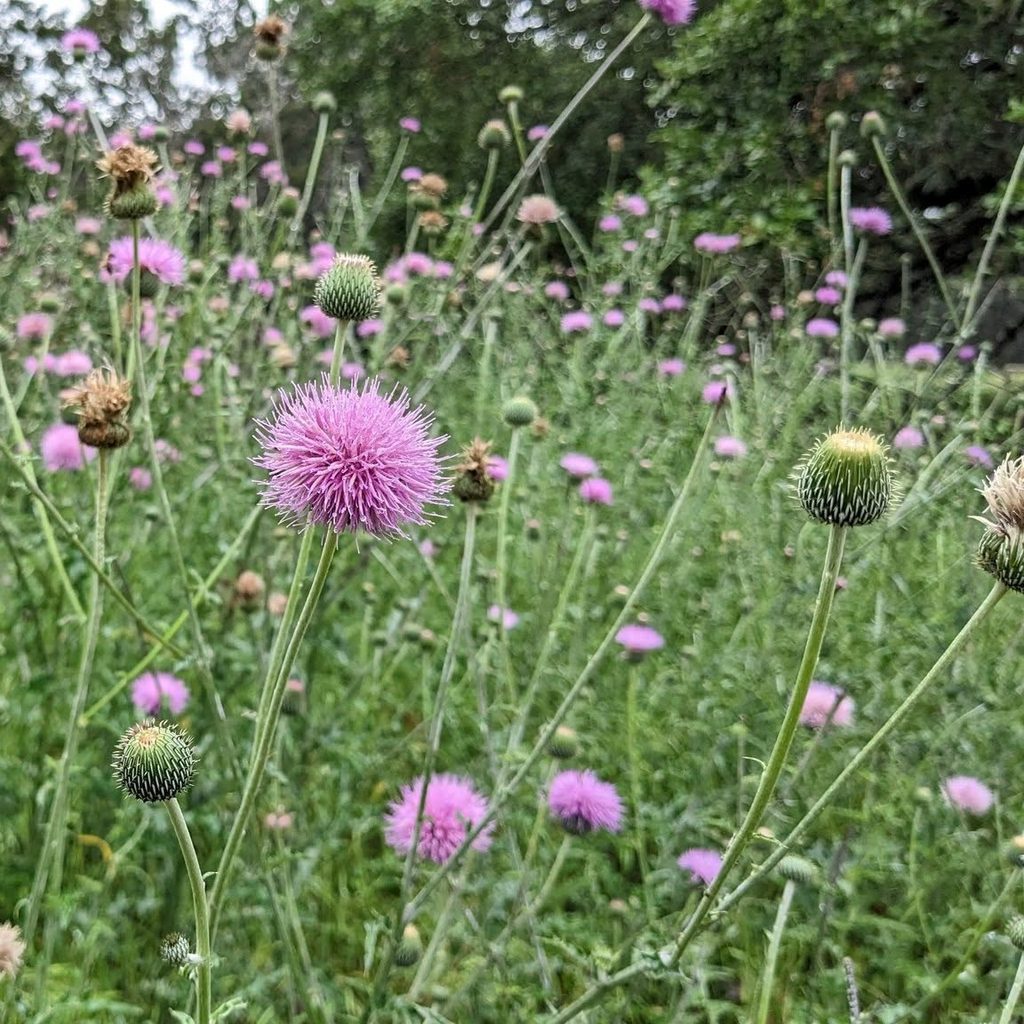
Texas thistle produces spiky purple-pink flower heads atop tall, prickly stems, blooming from late spring into summer. It grows across prairies and open fields throughout most of the state.
Despite its intimidating appearance, this native thistle is an important nectar source for a wide range of pollinators, including native bees and several butterfly species. Goldfinches also rely on its seeds later in the season.
This plant is often confused with invasive thistle species, but Texas thistle is a genuine native and generally not considered a problem for grazing land in typical densities.
Its tall, architectural form adds vertical structure to prairie plantings, standing out clearly against lower-growing wildflowers nearby.
ALSO READ: 30 Native Texas Trees (With Pictures, And Growing Details)
Milkweeds and Butterfly Favorites
11. Antelope Horns Milkweed (Asclepias asperula)
Antelope horns milkweed produces pale green-and-white star-shaped flower clusters, blooming from April through June across Central and West Texas. Its curved seed pods resemble a pair of antelope horns, giving the plant its name.
This species is a critical host plant for monarch butterfly caterpillars during their spring migration north through Texas. Without milkweed species like this one, monarchs cannot complete their life cycle in the region.
The plant grows low and clumping compared to taller milkweed relatives, often blending into surrounding prairie grasses until it flowers. It tolerates dry, rocky soil exceptionally well.
Conservation groups across Texas actively encourage planting native milkweeds like this one, given well-documented declines in monarch populations over recent decades.
12. Green Milkweed (Asclepias viridis)
Green milkweed produces clusters of pale green flowers with a subtle purple center, blooming from April through June. It favors open prairies and roadsides across much of eastern and Central Texas.
Like other milkweed species, this plant serves as a host for monarch caterpillars, though its blooms are less showy than some relatives. Its muted color makes it easy to overlook among taller wildflowers.
This species tolerates a range of soil types, from clay to sand, which explains its wide distribution across the state. It typically grows twelve to eighteen inches tall.
I find this one requires a closer look to appreciate. Its subtlety is easy to miss next to bluebonnets and paintbrush blooming nearby.
13. Butterfly Weed (Asclepias tuberosa)
Butterfly weed produces bright orange flower clusters, a color rarely seen elsewhere among native milkweeds. It blooms from late spring through summer across East and Central Texas.
This species has clear sap rather than the milky sap typical of most milkweeds, an easy way to distinguish it in the field. Its deep taproot makes it highly drought tolerant once established.
Monarch and queen butterflies both use this plant as a host species, laying eggs on its leaves for caterpillars to feed on. Adult butterflies also visit heavily for nectar.
Deer tend to avoid this plant, which makes it a practical, low-maintenance choice for home gardens across much of the state.
14. Turk’s Cap (Malvaviscus arboreus var. drummondii)
Turk’s cap produces small, twisted red flowers that never fully open, resembling a tiny folded turban. It blooms from summer through fall in shaded areas across Central, South, and East Texas.
This plant tolerates shade far better than most flowering natives, making it valuable for gardens under trees where sun-loving wildflowers struggle. It typically grows three to six feet tall.
Hummingbirds are drawn strongly to its tubular red flowers, and the plant also produces small red fruit later in the season that birds readily eat. That fruit is edible for humans as well, with a mild, apple-like flavor.
I appreciate this plant for blooming steadily through the hottest, driest stretch of a Texas summer, when many other flowers have already given up.
15. Cardinal Flower (Lobelia cardinalis)
Cardinal flower produces tall spikes of brilliant scarlet-red blooms, one of the most vivid colors found among Texas natives. It flowers from summer into early fall along streambanks and moist woodland edges in East and Central Texas.
This intense red evolved specifically to attract hummingbirds, which see red exceptionally well and can reach the flower’s deep nectar tube with their long bills. Bees, by comparison, have more difficulty pollinating it.
The plant needs consistently moist soil and partial shade, making it a strong choice for rain gardens or pond edges rather than dry prairie plantings. It can reach three to four feet tall.
I have rarely seen a native flower stop passersby quite the way cardinal flower does. Its color simply demands attention against green summer foliage.
ALSO READ: 15 Best Flowers to Plant Around Your Pool (And How to Make Them Stunning)
Hill Country and Central Texas Natives
16. Blue Mistflower (Conoclinium coelestinum)
Blue mistflower produces fuzzy clusters of pale blue-purple flowers, blooming from late summer into fall across Central and East Texas. Its soft, hazy color gives the plant its common name.
This species tolerates both sun and partial shade, and it spreads readily through underground rhizomes once established. That spreading habit makes it useful for filling in bare patches in a native garden bed.
Butterflies, particularly migrating monarchs heading south for winter, rely heavily on this flower’s late-season nectar. Its bloom timing fills a gap after most summer wildflowers have finished.
I always notice how busy this flower gets with butterflies on a warm October afternoon, right as autumn migration passes through Central Texas.
17. Gayfeather / Blazing Star (Liatris mucronata)
Gayfeather produces tall, dense spikes of purple flowers that open from the top downward, unlike most flowering spikes. It blooms in September and October across Central and West Texas prairies.
This unusual blooming pattern makes it easy to identify even from a distance. The plant grows from a corm, which helps it survive both drought and periodic prairie fires common to its native habitat.
Butterflies and native bees visit gayfeather heavily during its fall bloom period, when fewer other nectar sources remain available. Its narrow, grass-like leaves blend easily into surrounding prairie vegetation until the flower spike emerges.
This is one of the last true prairie natives to bloom before winter, giving pollinators one final push of resources before the season turns cold.
18. Standing Cypress (Ipomopsis rubra)
Standing cypress produces a tall spike of trumpet-shaped red-orange flowers, sometimes reaching five to six feet in height. It blooms from late spring into summer across Central and East Texas.
This biennial plant spends its first year as a low rosette of feathery leaves before sending up its dramatic flowering spike in year two. That two-year cycle surprises many gardeners expecting an annual bloom pattern.
Hummingbirds are the primary pollinators, strongly attracted to the flower’s tubular red shape and abundant nectar. The plant’s height also makes it a striking vertical accent in native prairie plantings.
I find its sudden height genuinely surprising the first time you see one shoot up from what looked like a modest ground-level plant the year before.
19. Scarlet Sage (Salvia coccinea)
Scarlet sage produces spikes of bright red tubular flowers, blooming from spring through the first frost across most of Texas. It tolerates both sun and partial shade, adapting well to a range of garden conditions.
This plant belongs to the mint family, and crushing its leaves releases a mild, herbal fragrance. Its long bloom season makes it one of the most reliable native flowers for continuous color through a Texas summer.
Hummingbirds and butterflies both visit scarlet sage regularly, drawn to its abundant nectar and vivid color. It also reseeds readily, often returning on its own the following spring.
This is a flower I would recommend to anyone starting a native pollinator garden, given how little maintenance it demands once established.
20. Drummond’s Phlox (Phlox drummondii)
Drummond’s phlox produces clusters of small, five-petaled flowers in shades of pink, red, purple, and white. It blooms from March through May across Central and East Texas prairies and roadsides.
TxDOT specifically names this species among the state’s most prominent roadside wildflowers, often blooming alongside bluebonnets and Indian paintbrush. Its color variation within a single population is unusually wide.
This species was actually collected from Texas in the 1800s and introduced to European gardens, where it became a popular annual flower worldwide. Its wild Texas populations remain the origin point for that global garden history.
I find it interesting that a flower now grown in gardens across Europe and beyond started right here along Texas roadsides.
21. Texas Bluebell (Eustoma exaltatum)
Texas bluebell, sometimes called Texas lisianthus, produces elegant, tulip-like flowers in shades of purple, blue, or white. It blooms from spring through summer in moist prairies and coastal areas of Central and South Texas.
This flower’s smooth, waxy petals and graceful form led to its widespread use as an ornamental garden flower, cultivated commercially under the name lisianthus. Wild populations, however, remain native specifically to Texas and neighboring states.
The plant favors damp, low-lying soil, often found near seasonal wetlands or roadside ditches that hold moisture longer than surrounding ground. It typically grows one to two feet tall.
Seeing this flower in the wild feels different from seeing its cultivated florist-shop cousin. The wild version has a looser, more natural grace to it.
22. Rain Lily (Cooperia drummondii)
Rain lily produces delicate white, crocus-like flowers that emerge suddenly after a good rain, often within just a day or two of a storm. It blooms sporadically from spring through fall across most of Texas.
This unpredictable bloom pattern gives the plant its common name, since the flowers seem to appear as a direct response to rainfall rather than following a fixed calendar. Dry spells can delay blooming for weeks at a time.
The plant grows from a small underground bulb, allowing it to survive long dry periods completely dormant until conditions improve. Each individual flower typically lasts only a day or two before fading.
I always think of rain lilies as nature’s own rain gauge. A sudden field of white blooms is a reliable sign that a good rain has recently passed through.
ALSO READ: 15 Ground Cover Plants With Yellow Flowers That Will Light Up Your Garden
Cacti and Desert Blooms
23. Prickly Pear Cactus (Opuntia engelmannii)
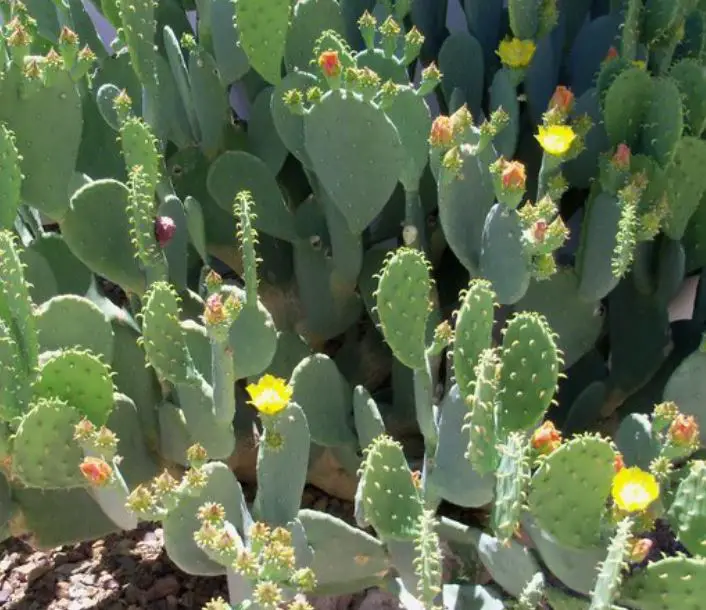
Prickly pear cactus produces large, bright yellow flowers with a reddish center, blooming from April through June across nearly every region of Texas. Its wide, flat pads make it one of the most recognizable native plants in the state.
This species tolerates extreme drought and poor soil better than almost any other Texas native, thriving from the Hill Country all the way into the arid western deserts. Its flowers open fully only in direct sunlight.
Native bees are the primary pollinators, and the plant later produces a purple-red fruit called a tuna, historically used in food and traditional remedies across the region. Both the pads and fruit remain edible today when properly prepared.
This is the plant most people picture when they imagine a Texas desert scene, and its flowers are genuinely more delicate than the spiny pads might suggest.
24. Claret Cup Cactus (Echinocereus coccineus)
Claret cup cactus produces brilliant scarlet-red flowers clustered densely across a rounded, spiny cactus mound. It blooms in April and May, mostly across the Trans-Pecos and West Texas regions.
This species forms large mounding colonies over time, sometimes containing dozens of individual stems growing together. Its flowers are among the most vivid red found in any native Texas cactus.
Hummingbirds are strongly attracted to this flower’s shape and color, making it an important early-season nectar source in the arid west. The plant tolerates extreme heat and minimal rainfall with ease.
Finding a claret cup cactus in full bloom against a backdrop of West Texas desert rock is one of the more striking sights the region offers in spring.
25. Desert Marigold (Baileya multiradiata)
Desert marigold produces bright yellow, daisy-like flowers on silvery-gray foliage, blooming from spring through fall across West Texas and the Trans-Pecos region. It tolerates extreme heat and drought with ease.
This plant’s silvery leaves reflect sunlight, helping it retain moisture in harsh desert conditions. That adaptation allows it to keep blooming through stretches of West Texas summer that would wilt less hardy flowers.
Bees and butterflies visit this flower reliably throughout its long bloom season. Its cheerful color stands out sharply against the muted browns and tans of the surrounding desert landscape.
This is a flower I associate with long drives through West Texas, appearing steadily along roadsides even during the driest months of the year.
26. Twistleaf Yucca (Yucca rupicola)
Twistleaf yucca produces a tall stalk of creamy white, bell-shaped flowers rising above a rosette of curling, blue-green leaves. It blooms in late spring across the Hill Country and Edwards Plateau region.
The plant’s leaves twist and curl in a distinctive spiral pattern, which gives this species its common name and makes it easy to identify even without flowers present. It tolerates thin, rocky limestone soil exceptionally well.
Yucca flowers depend on a specialized relationship with yucca moths for pollination, a partnership found nowhere else in nature quite so precisely. Neither species can complete its life cycle without the other.
This plant’s flower stalk can rise several feet above the leaf rosette, creating a striking architectural shape against the rocky Hill Country landscape.
East Texas and Woodland Wildflowers
27. Purple Coneflower (Echinacea purpurea)
Purple coneflower produces large, drooping purple-pink petals around a raised, spiky orange-brown center. It blooms from late spring through summer, favoring open woodlands and prairies in East Texas.
This species has a long history of use in traditional herbal medicine, and it remains a popular ingredient in commercial immune-support supplements today. Its garden popularity has spread it well beyond its native range.
Butterflies and bees visit this flower heavily throughout its bloom period, and its seed heads later attract goldfinches once petals fade. The plant tolerates both full sun and light shade.
I find this flower’s sturdy, upright form makes it a natural anchor plant in any native pollinator garden, holding its shape well even after a hard summer storm.
28. Brown-Eyed Susan (Rudbeckia triloba)
Brown-eyed Susan produces smaller, more numerous flowers than its black-eyed Susan relative, with golden petals around a dark brown center. It blooms from summer into fall across East and Central Texas woodlands.
This species tends to grow bushier and more branched than black-eyed Susan, often producing dozens of small blooms per plant rather than fewer large ones. It tolerates partial shade better than many of its sunflower relatives.
Its extended bloom period provides a steady nectar source for pollinators well into autumn, when many spring wildflowers have already finished. Bees and small butterflies visit it consistently.
This flower often gets overshadowed by its more famous relative, but its sheer abundance of blooms per plant genuinely earns it a place in any native garden.
29. Swamp Rose Mallow (Hibiscus moscheutos)
Swamp rose mallow produces enormous flowers, sometimes six to eight inches across, in shades of white, pink, or red with a deep maroon center. It blooms from summer into early fall in wet, marshy areas along the Texas Gulf Coast and East Texas.
This is one of the largest native flowers found anywhere in Texas, rivaling tropical hibiscus varieties in sheer size despite being fully native to coastal wetlands. It reaches four to seven feet in height at maturity.
The plant tolerates wet, poorly drained soil that would rot most other flowering perennials. It is often found growing directly at the edge of marshes, ditches, and slow-moving streams.
Seeing this flower bloom feels almost tropical, which surprises many visitors who assume such large blooms could not possibly survive Texas heat and humidity.
30. Spiderwort (Tradescantia gigantea)
Spiderwort produces three-petaled purple-blue flowers atop grass-like foliage, blooming from spring into early summer across East and Central Texas. Each individual flower lasts only a single day before wilting.
Despite that short individual lifespan, the plant produces a continuous succession of new blooms over several weeks, so a patch always appears to be flowering. Its stamens are covered in fine hairs that turn blue when exposed to radiation, a trait once used in early environmental monitoring studies.
This species tolerates a range of soil conditions and light levels, from full sun to partial shade beneath open woodland canopy. It typically grows one to three feet tall.
I find it fascinating that scientists once used this common roadside flower as a practical tool for detecting radiation exposure in the environment.
31. Blue-Eyed Grass (Sisyrinchium species)
Blue-eyed grass produces small, star-shaped violet-blue flowers with a bright yellow center, despite its grass-like foliage. It blooms from March through May across most of Texas, favoring moist meadows and open woodland edges.
Despite its common name, this plant is actually a member of the iris family rather than a true grass. Its narrow, flattened leaves simply resemble grass blades until the small flowers appear.
Each bloom typically opens only in direct sunlight and closes on cloudy days or in late afternoon. Small native bees are its primary pollinators.
This flower’s diminutive size means it is often overlooked entirely, hiding in plain sight among taller prairie grasses until you look closely at ground level.
32. Horsemint / Lemon Mint (Monarda citriodora)
Horsemint produces tiered, whorled clusters of pale lavender flowers with purple spotting, blooming from April through June across most of Texas. Crushing its leaves releases a strong lemon-mint fragrance.
This plant belongs to the mint family and was historically used by Indigenous peoples and early settlers for medicinal teas and natural insect repellent. Its distinctive layered flower structure sets it apart from most other native wildflowers.
Bees and butterflies are strongly attracted to horsemint, and it often blooms in dense stands alongside bluebonnets and Indian paintbrush during peak spring wildflower season. It tolerates poor, dry soil with ease.
I always notice the scent before I notice the flower itself. That lemony fragrance carries surprisingly far on a warm spring breeze.
33. Basket Flower (Plectocephalus americanus)
Basket flower produces large, fringed lavender-pink blooms atop tall, sturdy stems, blooming from May through July across Central Texas prairies. Its papery bracts beneath the flower head resemble a woven basket, giving the plant its name.
This species can grow four to five feet tall, making it one of the taller native wildflowers found in Central Texas grasslands. Its large flower heads attract a wide variety of pollinators throughout the bloom season.
Bees, butterflies, and even hummingbirds visit this flower regularly for its abundant nectar. It often blooms alongside coneflowers and black-eyed Susans, extending the region’s wildflower season into early summer.
This is a flower that rewards a closer look. Its papery, straw-colored bracts are almost as interesting as the vivid petals they support.
Sunflowers and Late-Season Bloomers
34. Maximilian Sunflower (Helianthus maximiliani)
Maximilian sunflower produces tall spikes of golden-yellow flowers along a single stalk, blooming from late summer into fall across most of Texas. It can reach six to eight feet in height in ideal conditions.
Unlike common sunflower, which produces one large flower head, this species produces many smaller blooms along the length of its stem. That structure creates a dramatic vertical wall of color in late-season prairie plantings.
This plant spreads through underground rhizomes, forming dense colonies over time that provide excellent cover and food for birds and pollinators. Its seeds are a valuable food source for wildlife heading into winter.
I find this flower marks the true end of the Texas wildflower season, blooming right up until the first hard frost of the year.
35. Common Sunflower (Helianthus annuus)
Common sunflower produces large, classic yellow flower heads with dark brown centers, blooming from summer through fall across most of Texas. It is considered native to the state, particularly in western and central regions.
This species can grow six feet or taller, and it often forms dense roadside stands that turn entire fields a uniform gold in late summer. Its seeds are a major food source for birds, particularly as autumn migration begins.
The flower head tracks the sun’s movement during early growth stages, a behavior called heliotropism that becomes less pronounced once the plant reaches full maturity. Bees visit it heavily throughout its bloom period.
This is likely the single most recognizable wildflower silhouette in the world, and Texas’s wild populations are part of the species’ original native range.
36. Partridge Pea (Chamaecrista fasciculata)
Partridge pea produces small, bright yellow flowers with a reddish center, blooming from summer into early fall across most of Texas. Its fern-like leaves fold shut when touched, a defensive response to disturbance.
This plant is a legume, meaning it fixes nitrogen in the soil through its root system, naturally improving soil fertility wherever it grows. That trait makes it valuable in prairie restoration projects beyond its ornamental value.
Bumblebees are the primary pollinators, strong enough to trigger the flower’s pollen release mechanism that smaller insects cannot manage. Quail and other ground-feeding birds rely heavily on its seeds.
I always enjoy showing this plant to first-time visitors, since gently touching the leaves and watching them fold shut never fails to draw a surprised reaction.
37. Pink Evening Primrose (Oenothera speciosa)
Pink evening primrose produces delicate, cup-shaped pink flowers with a soft yellow center, blooming from April through June across most of Texas. Despite its name, it often opens in the morning as readily as in the evening.
This plant spreads aggressively through underground rhizomes, forming large, dense colonies along roadsides and open fields. Its soft pink color contrasts beautifully against the deep blue of nearby bluebonnet patches.
Bees are the primary pollinators, visiting the flower’s open, shallow shape with ease. The plant tolerates poor, dry soil and requires essentially no maintenance once established.
This is one of the flowers I most associate with the tail end of bluebonnet season, often taking over roadside color duty as the blue fades into pink each May.
38. Silverleaf Nightshade (Solanum elaeagnifolium)
Silverleaf nightshade produces small, star-shaped purple flowers with bright yellow anthers, blooming from spring through fall across most of Texas. Its silvery, slightly fuzzy leaves help it tolerate intense heat and dry conditions.
This plant belongs to the same family as tomatoes and potatoes, though its yellow berries are toxic to humans and livestock. Despite that toxicity, the flowers themselves are a valuable pollinator resource.
Buzz-pollinating bees, which vibrate their flight muscles to release pollen, are the primary visitors to this flower. That specialized pollination method is shared with several other native nightshade family members.
I find the flower’s color striking against its pale, silvery foliage, even though the plant as a whole carries a slightly cautionary reputation among ranchers.
Trees, Shrubs, and Woody Natives with Notable Flowers
39. Texas Mountain Laurel (Dermatophyllum secundiflorum)
Texas mountain laurel produces dense clusters of purple, wisteria-like flowers with an intense grape-soda fragrance. It blooms in early spring, typically February through April, across the Hill Country and South Texas.
This slow-growing evergreen shrub or small tree can live for decades, eventually reaching fifteen to twenty-five feet in height. Its glossy, dark green leaves stay attractive year-round, even outside the bloom period.
The plant’s seeds, contained in woody pods, are toxic if ingested and were historically used decoratively rather than as food. Its fragrant flowers, however, are prized heavily in Texas landscaping.
I have never met anyone who forgets that grape-soda scent once they catch it drifting from a blooming mountain laurel in March.
40. Texas Redbud (Cercis canadensis var. texensis)
Texas redbud produces clusters of small, magenta-pink flowers directly along its bare branches before leaves emerge each spring. It blooms in March, typically ahead of most other flowering native trees in the Hill Country.
This variety is specifically adapted to the thin, rocky, alkaline soils common across the Edwards Plateau, distinguishing it from the more widespread Eastern redbud found elsewhere in the country. Its leaves are also noticeably glossier and more drought tolerant.
Bees are drawn heavily to its early spring blooms, which provide one of the first significant nectar sources of the season after winter. The tree typically grows fifteen to twenty feet tall at maturity.
Seeing this tree bloom against the muted gray-brown of a Hill Country hillside in early March always feels like the true starting signal for wildflower season.
41. Agarita (Mahonia trifoliolata)
Agarita produces small, fragrant yellow flowers in early spring, typically February and March, well before most Hill Country wildflowers begin blooming. Its spiny, holly-like leaves make it easy to identify even without flowers present.
This evergreen shrub thrives in rocky, dry limestone soil across Central and West Texas. Its early bloom timing makes it a critical first nectar source for bees emerging from winter dormancy.
The plant later produces small, tart red berries in late spring, historically used for jelly and traditional remedies by both Indigenous peoples and early Texas settlers. Wildlife, including birds, also rely on this fruit.
I find agarita’s fragrance surprisingly sweet given how sharp and thorny the plant itself looks. It is easy to underestimate until you catch that scent up close.
42. Autumn Sage (Salvia greggii)
Autumn sage produces small, tubular flowers in shades of red, pink, purple, or white, blooming from spring through fall across the Hill Country and West Texas. Its extended bloom season makes it one of the most reliable native flowering shrubs in the state.
This drought-tolerant shrub typically grows two to three feet tall and wide, forming a dense, rounded mound over time. It tolerates the thin, rocky soils of the Edwards Plateau exceptionally well.
Hummingbirds are strongly attracted to this flower, particularly the red-flowered varieties, making it a favorite addition to hummingbird gardens throughout Central Texas. Bees and butterflies visit it as well.
This is a plant I would recommend to nearly anyone gardening in Central Texas, given how much color it produces relative to how little care it demands.
43. Mealy Blue Sage (Salvia farinacea)
Mealy blue sage produces tall spikes of violet-blue flowers with a soft, powdery texture along the stem, blooming from spring through fall across Central and West Texas. Its long bloom season rivals autumn sage for reliability.
This species tolerates heat and drought exceptionally well, often continuing to bloom through the hottest, driest stretches of a Texas summer when many other natives have paused. It typically grows one to three feet tall.
Bees, butterflies, and hummingbirds all visit this flower regularly, drawn to its abundant nectar and long flowering stalks. It also makes an excellent cut flower, holding its color well after being picked.
I appreciate how this flower’s cool blue tone contrasts against the warm reds and oranges of Indian paintbrush and Mexican hat blooming nearby.
44. Huisache Daisy (Amblyolepis setigera)
Huisache daisy produces bright yellow, daisy-like flowers with a soft, fuzzy texture, blooming from March through May across South and Central Texas. It often grows in dense stands alongside bluebonnets and Indian paintbrush.
This annual wildflower favors sandy, well-drained soil and tolerates drought once established. Its cheerful yellow color adds contrast to the blues and reds dominating many spring roadside displays.
Bees visit this flower reliably throughout its spring bloom period. Its common name references the huisache tree, which often grows in the same South Texas habitats where this daisy is commonly found.
This flower rarely gets top billing next to bluebonnets, but its bright yellow patches genuinely round out the classic Texas spring wildflower palette.
45. Texas Prickly Poppy (Argemone albiflora)
Texas prickly poppy produces large, papery white flowers with a bright yellow center, blooming from April through June across most of the state. Its spiny, blue-green leaves make it easy to identify even without flowers present.
This plant is a valuable pollen source for insects, with abundant, bright yellow stamens at the center of each bloom. Despite its spiny appearance, the flowers themselves are delicate and almost tissue-like in texture.
Every part of this plant contains toxic alkaloids and should never be ingested, though it poses no danger simply growing in a field or garden. Livestock generally avoid grazing it due to its spines and bitter taste.
I always find the contrast striking between this plant’s rough, thorny foliage and the almost fragile, crumpled-paper texture of its white petals.
Bringing Native Texas Flowers Into Your Own Garden
If this list has inspired you, start small rather than attempting all 45 species at once. Choose a handful suited to your specific region, whether that is Hill Country limestone, East Texas clay, or West Texas sand.
Try to include flowers that bloom across different seasons, so pollinators always have a nectar source available. Combining an early bloomer like agarita with a late bloomer like Maximilian sunflower keeps color and food available for months.
Avoid digging up wild plants, especially slower-growing species like Texas mountain laurel or twistleaf yucca. Reputable native plant nurseries across Texas propagate these species responsibly for home gardens.
Once established, native Texas flowers genuinely need less water, less fertilizer, and less pest treatment than most imported ornamental alternatives. That practical benefit matters just as much as the ecological one.
Final Thoughts
Texas earns its wildflower reputation honestly, and these 45 species only scratch the surface of what actually grows across the state. From a humble roadside bluebonnet to a rare Big Bend desert bloom, each one represents a small, specific answer to the particular soil, climate, and history of its home region.
I hope this guide helps you notice a few more of them on your next drive, whether that is down a Hill Country back road or simply through your own backyard.

Tim M Dave is a gardening expert with a passion for houseplants, particularly cacti and succulents. With a degree in plant biology from the University of California, Berkeley, he has vast experience in gardening. Over the years, he has cultivated a vast collection of desert plants and learned a great deal about how to grow and care for these unique companions.