30 Native Texas Trees (With Pictures, And Growing Details)
Texas is big. Its trees are just as varied. I have spent time walking under live oaks in the Hill Country and pecan groves near river bottoms, and every region tells a different story through its trees.
According to Texas A&M Forest Service records, Texas is home to more than 300 native tree species, making it one of the most tree-diverse states in the country. That diversity spans ten distinct ecoregions, from the Piney Woods of East Texas to the deserts of the Trans-Pecos.
This guide covers 30 native Texas trees, with identification tips, growth habits, and where each species naturally thrives.
Why Native Trees Matter in Texas
Native trees have adapted over thousands of years to Texas heat, drought, and soil. They need less water once established. They also support local birds, insects, and wildlife far better than imported species.
Native species are self-perpetuating. They reproduce naturally in their region without human help, which keeps ecosystems stable. That’s a key reason foresters recommend them for both rural and urban planting.
Now let’s get into the list.
1. Oaks: Texas’s Backbone Trees
1. Live Oak (Quercus virginiana / Quercus fusiformis)
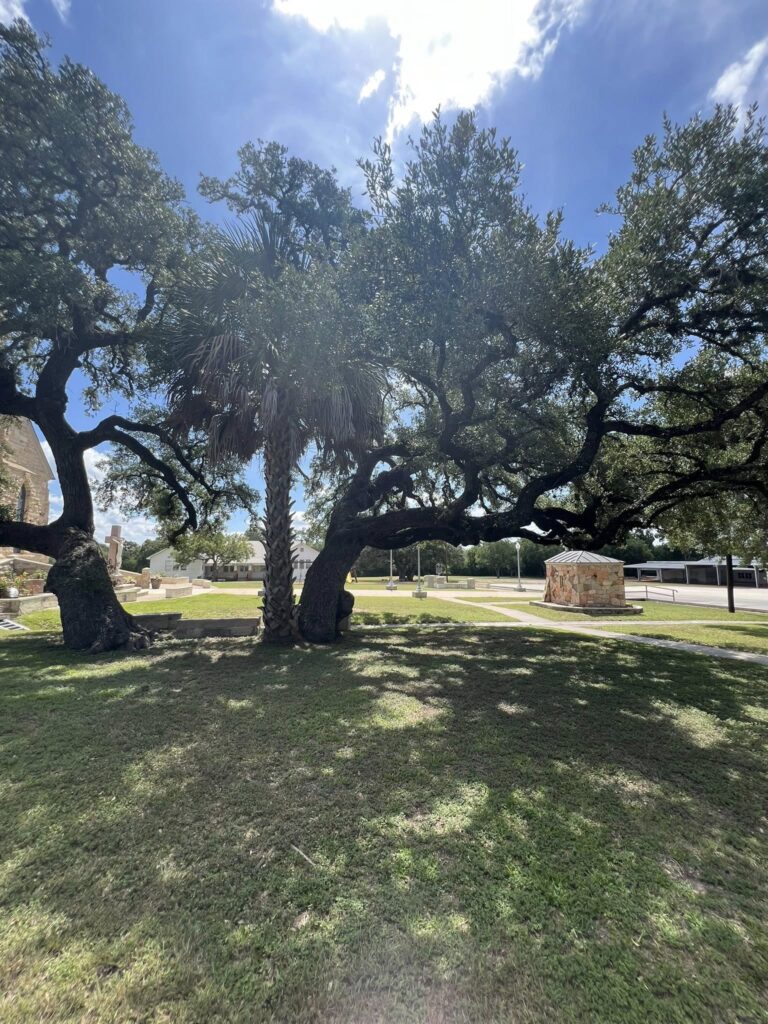
The live oak is arguably Texas’s most iconic tree. It keeps its leaves year-round, dropping old foliage only briefly each spring before new growth appears.
Some live oaks in Texas are documented at more than 500 years old. Their sprawling canopies can spread wider than the tree is tall, making them popular shade trees across Central and South Texas.
You’ll find live oaks thriving from the coastal plains up into the Hill Country. They tolerate drought, heat, and poor soil better than most hardwoods.
I always find it humbling to stand under one of these old giants. It’s a reminder of how long Texas land has quietly done its own thing.
2. Texas Red Oak (Quercus buckleyi)
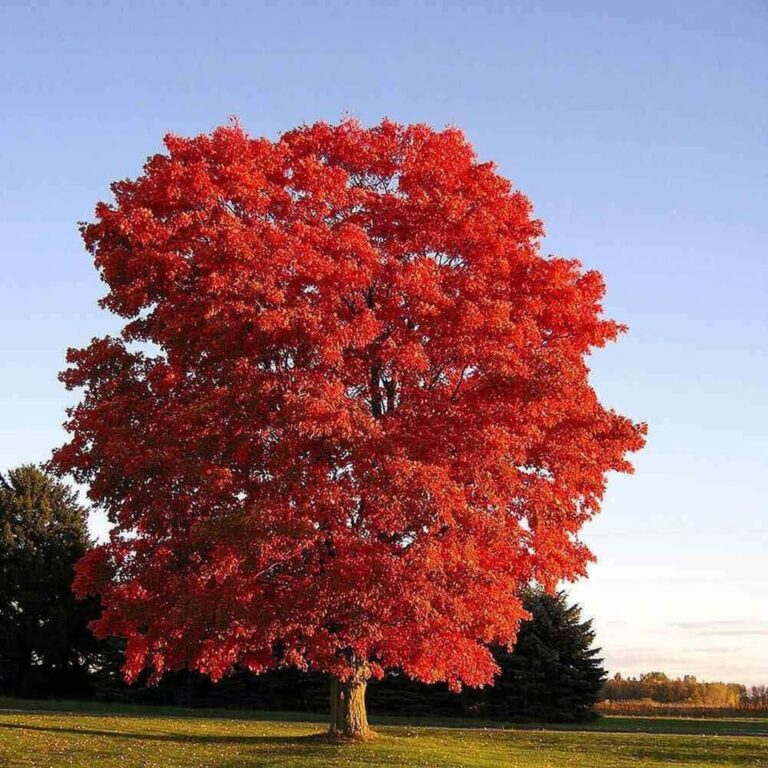
Also called Texas oak or Spanish oak, this tree lights up Hill Country hillsides with deep red fall color. It’s smaller than many oaks, typically reaching 30 to 50 feet.
It grows best on rocky limestone soils, which makes it a favorite for Central Texas landscaping. Fall color here is genuinely striking compared to most Texas natives.
3. Bur Oak (Quercus macrocarpa)
Bur oak produces the largest acorns of any North American oak, some over two inches long with a shaggy, fringed cap. It’s a massive, long-lived tree found along river bottoms in North and Central Texas.
This species handles both drought and occasional flooding, which is unusual. That flexibility makes it valuable for parks and large properties needing a durable shade tree.
4. Post Oak (Quercus stellata)
Post oak defines much of the “Cross Timbers” region stretching through North Texas. Its leaves have a distinctive cross shape, which makes identification easy.
It grows slowly, sometimes under a foot per year, but that slow growth produces dense, rot-resistant wood historically used for fence posts. It tolerates poor, sandy soil better than almost any other oak.
5. Blackjack Oak (Quercus marilandica)
Blackjack oak often grows alongside post oak in the same sandy, dry soils. Its leaves are wider at the tip than the base, shaped almost like a bell.
It’s a smaller, scrubbier tree, usually under 50 feet tall. Foresters often note it as an indicator species for poor or eroded soils in North Texas.
6. Chinquapin Oak (Quercus muehlenbergii)
Chinquapin oak has narrow, toothed leaves that resemble a chestnut’s foliage. It grows on limestone bluffs and rocky slopes across the Edwards Plateau and North Texas.
This oak is prized in native landscaping for its clean form and tolerance of alkaline soil. It’s less common than live oak but just as tough.
READ MORE: 30 Popular Types of Oak Trees (Different Varieties, With Pictures)
2. Riverbank and Bottomland Trees
7. Pecan (Carya illinoinensis)
Pecan is the official state tree of Texas, named so by the legislature in 1919. It grows naturally along rivers and creeks throughout most of the state.
Texas produces tens of millions of pounds of pecans annually, according to Texas A&M AgriLife Extension data, making it both an ecological and economic cornerstone. Wild pecans can live well over 200 years.
The tree needs deep, moist soil to thrive, which is why you’ll rarely see healthy pecans far from a water source. Its nuts feed everything from squirrels to deer to humans.
8. Bald Cypress (Taxodium distichum)
Bald cypress lines rivers like the Frio, Guadalupe, and Neches, often growing right in the water. It’s a deciduous conifer, meaning it drops its needle-like leaves each fall, unusual for a conifer.
Its knobby “knees” that rise from the water are still debated among botanists as to their exact function. Some of Texas’s bald cypress trees are estimated at over 1,000 years old, among the oldest living things in the state.
READ MORE: Bald Cypress Tree Pros and Cons: What to Know Before You Plant
9. American Sycamore (Platanus occidentalis)
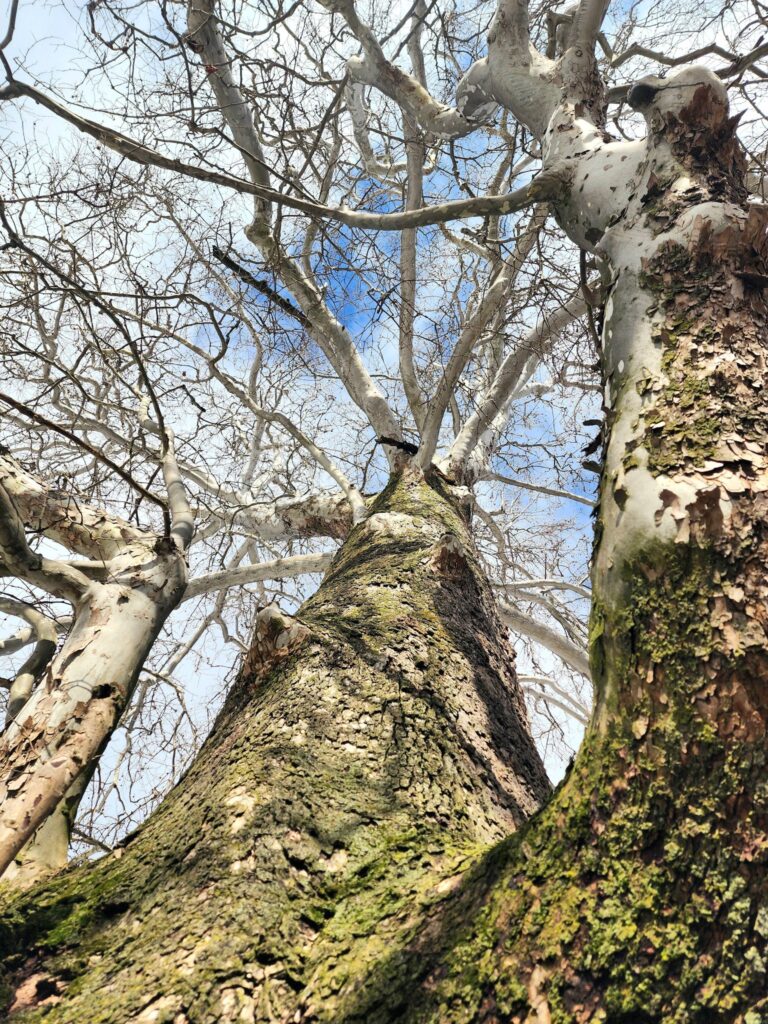
Sycamore is easy to spot thanks to its mottled, peeling bark that shows white and tan patches. It grows fast along streams and can reach heights over 100 feet.
Its huge leaves and ball-shaped seed pods make it distinctive in any season. It’s commonly planted for shade near water features because it tolerates wet roots well.
10. Black Willow (Salix nigra)
Black willow grows almost exclusively along riverbanks and floodplains, where its roots help stabilize eroding soil. It’s fast-growing but relatively short-lived compared to oaks.
This tree is a critical early colonizer after floods, often the first woody plant to reestablish on bare sandbars. Wildlife, especially beavers, rely heavily on it.
11. Cedar Elm (Ulmus crassifolia)
Cedar elm is one of the last native trees to bloom each year, flowering in early fall rather than spring. Its small, rough leaves and corky bark ridges make it easy to identify.
It’s remarkably drought-tolerant for an elm and handles urban conditions well. You’ll see it widely used as a street tree across Dallas-Fort Worth and Central Texas.
12. American Elm (Ulmus americana)
American elm once dominated many American streets before Dutch elm disease swept through the country. Texas populations have fared somewhat better than those farther north and east.
Its vase-shaped canopy and arching branches give it a graceful, classic look. It prefers moist bottomland soil but adapts to a range of conditions.
3. Pines and Conifers of East and West Texas
13. Loblolly Pine (Pinus taeda)
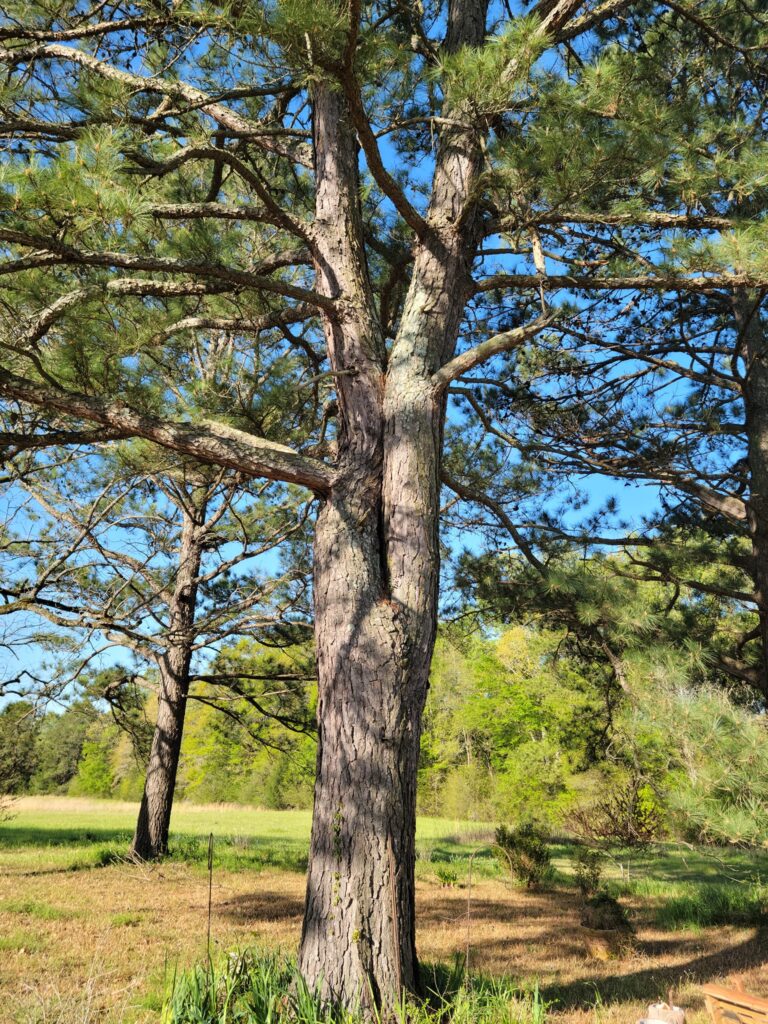
Loblolly pine dominates the Piney Woods of East Texas, one of the state’s most commercially important tree species. It grows fast, often two feet per year in good conditions.
East Texas forests, largely loblolly and shortleaf pine, cover roughly 12 million acres, per Texas A&M Forest Service inventory data. This makes the pine belt a major part of the state’s timber economy.
14. Longleaf Pine (Pinus palustris)
Longleaf pine once covered vast stretches of East Texas before logging reduced its range sharply. Restoration efforts have brought it back in select preserves and state forests.
It has the longest needles of any Southern pine, often over a foot long. Its fire-adapted ecosystem is now considered one of the most endangered in North America.
READ MORE: Longleaf Pine vs Loblolly Pine: Understanding the Difference
15. Shortleaf Pine (Pinus echinata)
Shortleaf pine grows alongside loblolly in East Texas but tolerates drier, poorer soils better. It’s identifiable by its shorter needles and smaller cones.
This species can resprout from its root collar after fire damage, a trait few other Southern pines share. That resilience made it historically important after wildfires swept the Pineywoods.
16. Ashe Juniper (Juniperus ashei)
Known locally as “mountain cedar,” Ashe juniper covers huge swaths of the Hill Country. It’s often disliked for triggering severe winter allergies, sometimes called “cedar fever.”
Despite the reputation, it plays a genuine ecological role, providing bark strips that golden-cheeked warblers use nowhere else for nesting. That endangered songbird depends almost entirely on mature Ashe juniper stands.
4. Drought-Tough Trees of Central and South Texas
17. Honey Mesquite (Prosopis glandulosa)
Mesquite is the tree most associated with rugged Texas rangeland. Its deep taproots can reach water more than 100 feet underground, letting it survive brutal droughts.
Ranchers have fought mesquite spread for over a century since it can crowd out grazing land. Still, its wood is prized for smoking meat and its beans historically fed both livestock and people.
18. Texas Persimmon (Diospyros texana)
Texas persimmon has smooth, peeling gray bark that almost looks polished. It produces small black fruit in late summer that birds and mammals eat eagerly.
It thrives on rocky, well-drained soil across Central and South Texas. Its compact size makes it a popular choice for smaller native landscapes.
19. Texas Mountain Laurel (Sophora secundiflora)
Texas mountain laurel produces striking purple flower clusters each spring with a fragrance often compared to grape soda. It’s evergreen, slow-growing, and extremely drought hardy.
Every part of this tree is toxic if ingested, including the bright red seeds. Despite that, it remains one of the most requested ornamental natives in Texas nurseries.
20. Texas Redbud (Cercis canadensis var. texensis)
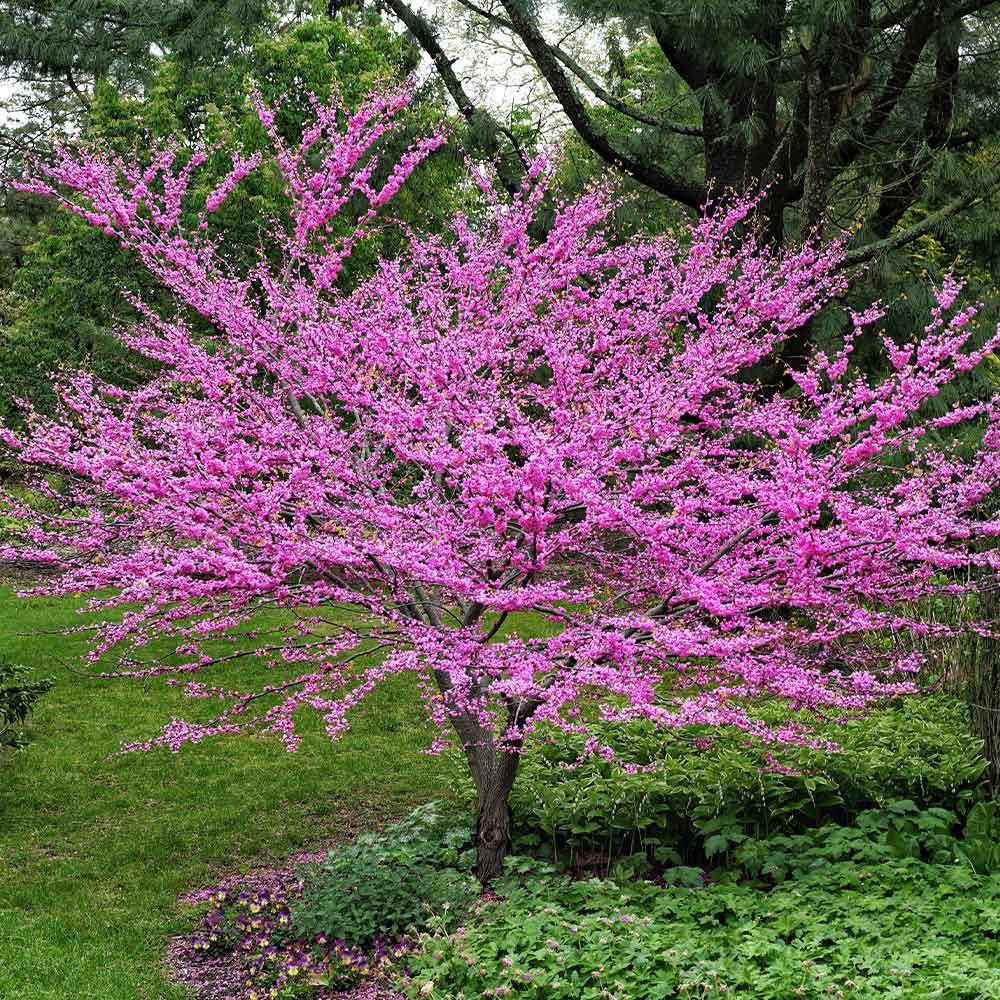
Redbud is one of the first native trees to bloom each spring, covering bare branches in pink-purple flowers before leaves emerge. The Texas variety has glossier, more leathery leaves than its eastern cousin.
It handles limestone soil and drought far better than the standard American redbud. Landscapers across Central Texas favor it for early-season color.
21. Anacua (Ehretia anacua)
Anacua, sometimes called sugarberry or knockaway, grows mainly in South Texas along the Rio Grande region. Its rough, sandpapery leaves and small white flowers attract bees heavily.
It’s semi-evergreen, holding leaves through mild winters. The orange fruit it produces is an important food source for South Texas birds.
22. Retama (Parkinsonia aculeata)
Retama, or Jerusalem thorn, stands out with its green bark and feathery leaves that let it photosynthesize even when leafless. Bright yellow flowers bloom for months during summer.
It grows fast in poor, dry soils across South and Central Texas. Its thorny branches make it useful as a natural barrier hedge.
23. Huisache (Vachellia farnesiana)
Huisache produces small, round, golden-yellow flowers with a strong sweet fragrance each spring. It’s common across South Texas brushland and coastal prairies.
This tree tolerates both drought and occasional flooding. Its flowers are a significant early-season nectar source for native bees.
5. Trees of the Piney Woods and Eastern Forests
24. Flowering Dogwood (Cornus florida)

Dogwood is the signature understory tree of East Texas forests, blooming with white bracts each April. It grows best shaded beneath taller pines and hardwoods.
Its red fall fruit clusters feed dozens of bird species. The annual Dogwood Trails festivals in towns like Woodville celebrate this tree’s spring display.
25. Southern Magnolia (Magnolia grandiflora)
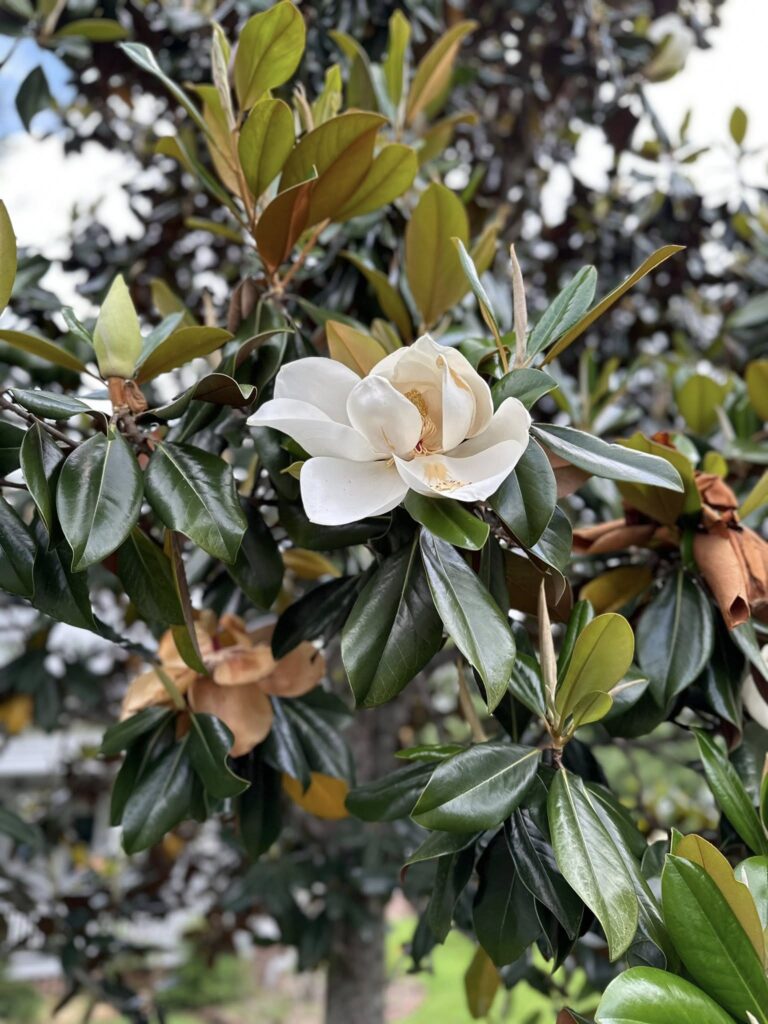
Southern magnolia‘s glossy evergreen leaves and enormous white flowers make it one of the most recognizable Southern trees. It’s native to the moist forests of deep East Texas.
Flowers can reach up to a foot across, among the largest of any native tree in North America. Its dense shade and evergreen habit make it a favorite ornamental statewide.
26. Sweetgum (Liquidambar styraciflua)
Sweetgum is known for its star-shaped leaves that turn brilliant red, orange, and purple in fall. It grows commonly across East Texas bottomlands and moist forests.
Its spiky seed balls, often called “gumballs,” are a familiar nuisance in yards but a valuable food source for finches and other birds.
27. Black Cherry (Prunus serotina)
Black cherry, sometimes called escarpment cherry in Central Texas, produces small white flower clusters followed by dark, bitter fruit. Birds and mammals eat the cherries readily, though the leaves and pits contain compounds toxic in large amounts.
The Edwards Plateau variety grows more compact than East Texas populations. Its wood has long been valued for furniture making.
28. Texas Buckeye (Aesculus glabra var. arguta)
Texas buckeye is one of the earliest trees to leaf out each spring and among the first to drop leaves in late summer heat. Its palmate leaves and spiky seed capsules make it easy to identify.
The seeds are toxic to humans and livestock but were historically used by some groups, after careful processing, as a fish stupefacient. It’s a smaller understory tree found in Central Texas canyons.
29. Yaupon Holly (Ilex vomitoria)
Yaupon holly is an evergreen with small, scalloped leaves and bright red winter berries. It grows across East and Central Texas, often as an understory shrub or small tree.
Yaupon is the only native North American plant that naturally contains caffeine. Indigenous groups historically brewed its leaves into a ceremonial drink, and it has seen renewed interest as a locally grown tea crop.
30. Texas Ash (Fraxinus texensis)
Texas ash grows on rocky limestone slopes across the Hill Country and North Central Texas. Its compound leaves turn shades of orange and burgundy in fall, rare for a Texas native.
It stays relatively small, usually under 40 feet, making it a good fit for residential yards. Its drought tolerance exceeds most other ash species found further east.
Quick Comparison: Choosing a Native Tree for Your Region
If you’re picking a tree for a specific part of Texas, region matters more than personal preference. Here’s a quick reference.
- East Texas (Piney Woods): loblolly pine, dogwood, sweetgum, southern magnolia
- North Texas (Cross Timbers): post oak, blackjack oak, cedar elm, bur oak
- Central Texas (Hill Country): live oak, Texas red oak, mountain laurel, Ashe juniper
- South Texas (Brush Country): honey mesquite, huisache, retama, anacua
- River bottoms statewide: pecan, bald cypress, sycamore, black willow
Best Time to Plant Native Texas Trees
Fall is generally the best planting window in Texas, roughly October through December. Cooler air reduces stress on new roots while soil is still warm enough for growth to continue underground.
Spring planting works too, but summer heat arrives fast in Texas. A tree planted in spring often needs more supplemental watering through its first summer than one planted in fall.
Avoid planting during peak summer months if possible. Even drought-tolerant natives like mesquite or live oak need consistent moisture while their root systems are still establishing.
Always water deeply and infrequently rather than a little every day. This encourages roots to grow downward, which builds the same drought resilience these species are known for in the wild.
How to Identify a Native Tree Versus a Non-Native Look-Alike
Not every tree growing in Texas belongs here naturally. Species like Chinese tallow and Bradford pear were introduced and have since become invasive in many areas.
A true native species reproduces on its own without human planting, and it fills a specific ecological role built up over centuries. Non-native species may look attractive but often provide little food value to local wildlife.
If you’re unsure whether a tree in your yard is native, the Texas A&M Forest Service’s Texas Tree ID tool lets you search by leaf shape, bark texture, and region. It’s free and built specifically for Texas conditions, not generic national databases.
Frequently Asked Questions
What is the most common native tree in Texas? Live oak and post oak are generally considered the most widespread, though loblolly pine dominates by volume in East Texas forests.
What is the official state tree of Texas? The pecan tree, designated by the Texas Legislature in 1919.
Do native Texas trees need less watering? Yes. Once established, most native species listed here survive on natural rainfall alone, unlike many imported ornamentals.
Which native Texas tree grows fastest? Black willow and loblolly pine both grow quickly, often adding several feet of height per year in good soil.
Are native Texas trees more resistant to pests and disease? Generally, yes. Native species evolved alongside local pests over long periods, so they typically show more natural resistance than trees imported from other regions or continents.
Can I plant an East Texas native tree in West Texas? It’s risky. Soil, rainfall, and temperature differ so sharply across Texas that a tree suited to humid Piney Woods conditions, like sweetgum, often struggles or dies in arid West Texas soil.
Final Thoughts
Texas trees carry the state’s climate extremes in their bark, roots, and growth patterns. Choosing native species isn’t just sentimental; it’s practical. These trees survive with less water, less maintenance, and more benefit to local wildlife than almost any imported alternative.
Whether you’re planting one tree or exploring a whole forest, this list should give you a solid starting point rooted in real Texas ecology.
References
- Texas A&M Forest Service, “Trees of Texas” – https://tfsweb.tamu.edu/trees/
- Texas A&M Forest Service, “Texas Tree ID” – https://texastreeid.tamu.edu/
- Texas A&M Forest Service, “Famous Trees of Texas” – https://tfsweb.tamu.edu/education-outreach/learning-about-trees/famous-trees-of-texas/
- USDA Natural Resources Conservation Service, “PLANTS Database” – https://plants.usda.gov/
- USDA Forest Service, “Silvics of North America” – https://www.srs.fs.usda.gov/pubs/misc/ag_654/table_of_contents.htm
- Lady Bird Johnson Wildflower Center, University of Texas at Austin, “Native Plant Database” – https://www.wildflower.org/plants/
- Texas Parks and Wildlife Department, “Texas Wildscapes” – https://tpwd.texas.gov/nature/wildscapes/

Tim M Dave is a gardening expert with a passion for houseplants, particularly cacti and succulents. With a degree in plant biology from the University of California, Berkeley, he has vast experience in gardening. Over the years, he has cultivated a vast collection of desert plants and learned a great deal about how to grow and care for these unique companions.