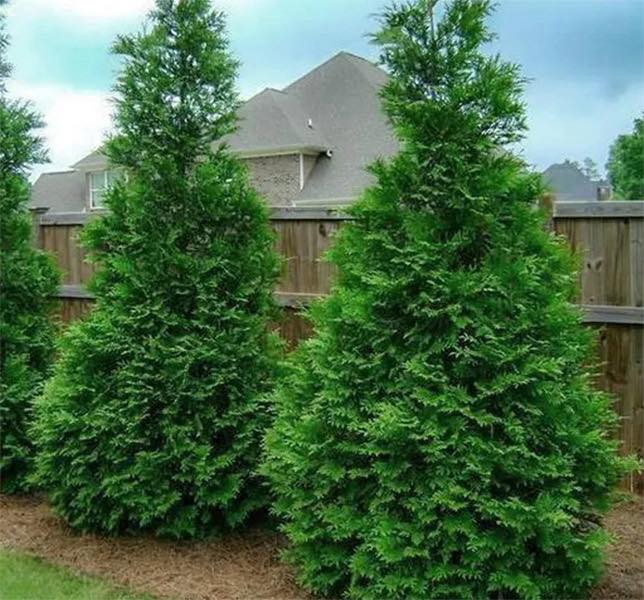
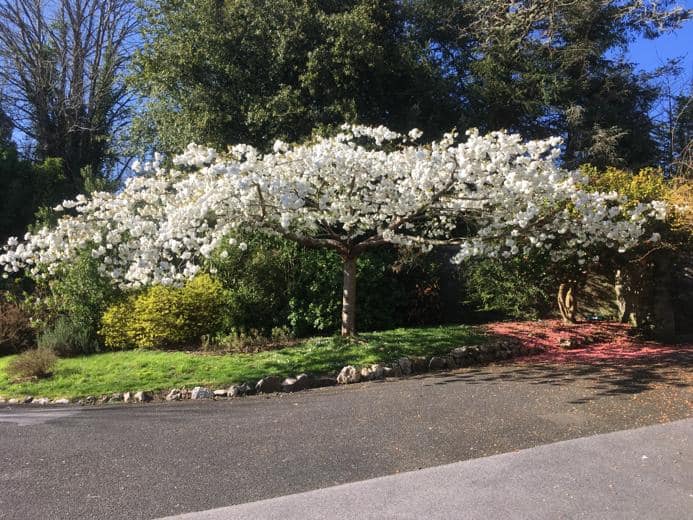
30 Native Florida Trees (With Pictures, And Growing Details)
Florida surprised me the first time I really looked at its trees. I expected palms everywhere and little else. Instead, I found live oaks draped in Spanish moss, cypress swamps, and pine flatwoods that stretch for miles.
According to the Florida Department of Agriculture and Consumer Services, Florida’s forests cover more than 14.5 million acres, almost half the state’s total land area. That forest cover supports one of the most biologically diverse tree populations in the continental United States.
This guide covers 30 native Florida trees, grouped by the landscapes where they naturally grow. You’ll find identification details, growth habits, and the regions each species calls home.
Why Native Trees Matter in Florida
Native trees have adjusted to Florida’s heat, humidity, sandy soil, and hurricane season over thousands of years. They generally need less water and fertilizer than introduced species once established.
Native trees also support wildlife far better than exotic ornamentals. Birds, insects, and mammals rely on native fruits, seeds, and leaf structures that many imported species simply don’t provide.
Florida Forest Service data shows more than 82 million trees are planted across the state each year, with roughly five planted for every one harvested. Choosing native species for that planting matters for long-term ecological balance.
Let’s get into the list.
1. Oaks and Hardwoods of Central and North Florida
1. Southern Live Oak (Quercus virginiana)
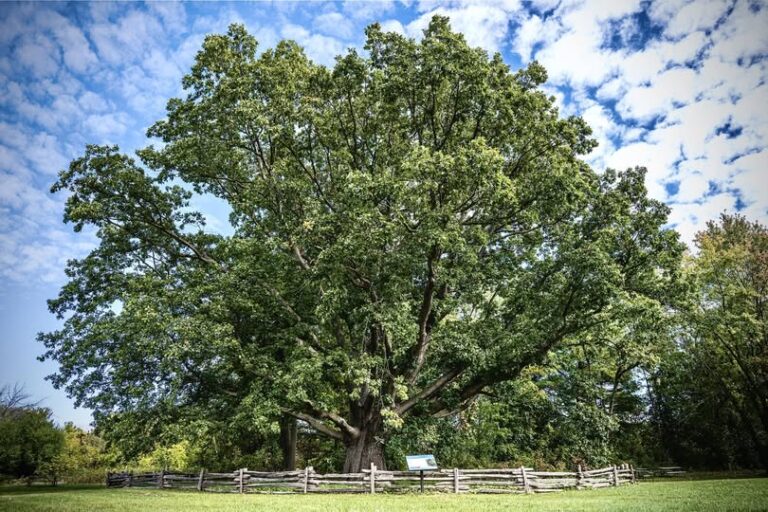
Live oak is Florida’s signature shade tree, instantly recognizable by its wide, sprawling canopy and evergreen leaves. It often grows draped in Spanish moss, which isn’t parasitic but simply uses the tree for support.
Some live oaks in Florida are documented at more than 300 years old, with massive specimens found from the Panhandle down through Central Florida. Its wood is exceptionally dense and was historically prized for shipbuilding.
Live oaks tolerate wind, salt spray, and drought remarkably well. That resilience is why they survive hurricanes that topple weaker, faster-growing trees nearby.
I’ve stood under old live oaks in North Florida town squares, and there’s something steadying about a tree that has outlasted generations of people walking beneath it.
2. Laurel Oak (Quercus hemisphaerica)
Laurel oak grows fast and tall, often reaching 60 to 70 feet with a straighter trunk than live oak. Its narrow, glossy leaves stay green through most of the winter in Florida’s mild climate.
It’s common on the University of Florida campus and throughout Central and North Florida landscapes. Laurel oak has a shorter lifespan than live oak, typically 50 to 70 years, and its wood is more prone to rot.
3. Southern Magnolia (Magnolia grandiflora)
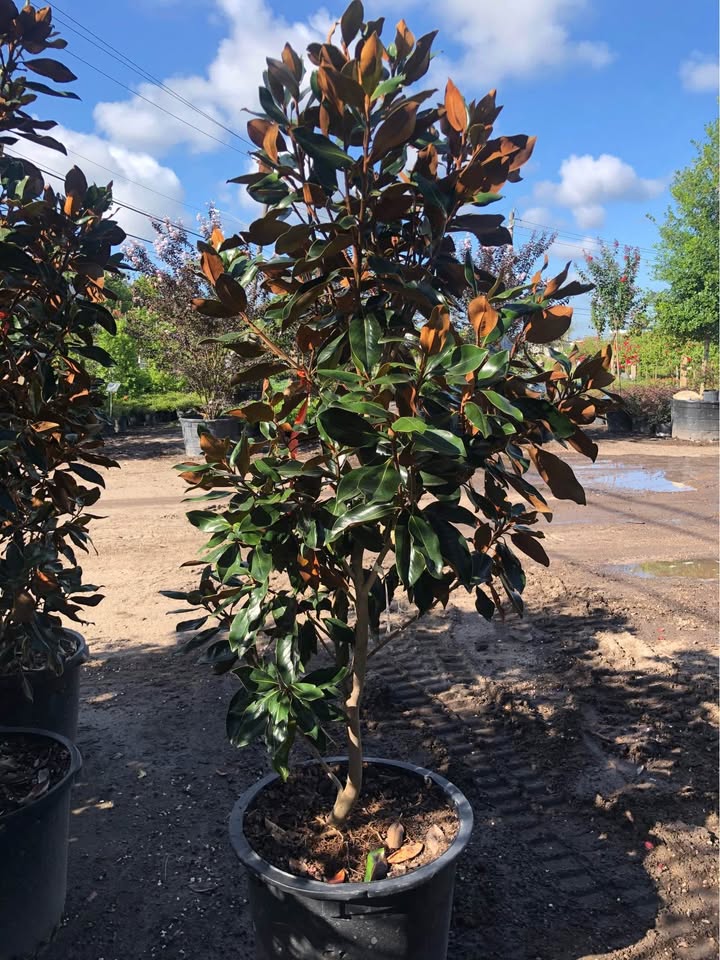
Southern magnolia produces enormous white flowers, sometimes nearly a foot across, with a strong sweet fragrance each spring and summer. Its thick, glossy evergreen leaves make it a year-round landscape favorite.
This tree grows naturally in the moist woodlands of North and Central Florida. Its dense shade and slow growth make it a long-term investment rather than a quick shade solution.
4. Florida Maple (Acer saccharum subsp. floridanum)
Florida maple, sometimes called southern sugar maple, is one of the few native Florida trees offering real fall color. Its leaves turn yellow, orange, and occasionally red in North Florida’s cooler winters.
It grows best in rich, well-drained soil found in hardwood hammocks. This tree stays smaller than its northern sugar maple relatives, usually under 60 feet.
5. American Sweetgum (Liquidambar styraciflua)
Sweetgum is easy to identify by its star-shaped leaves and spiky round seed pods, often called “gumballs.” It grows across North and Central Florida in moist, fertile soil.
Its fall color rivals anything found further north, ranging from deep red to purple and gold. Songbirds and small mammals rely heavily on its seeds through winter.
6. Southern Red Oak (Quercus falcata)
Southern red oak has distinctive bell-shaped leaves with pointed lobes, unlike the rounder lobes of many other oaks. It grows on drier upland sites across North Florida.
This oak tolerates poor, sandy soil better than most hardwoods in the region. Its acorns are an important food source for deer, turkey, and squirrels.
2. Pines of the Flatwoods and Sandhills
7. Longleaf Pine (Pinus palustris)
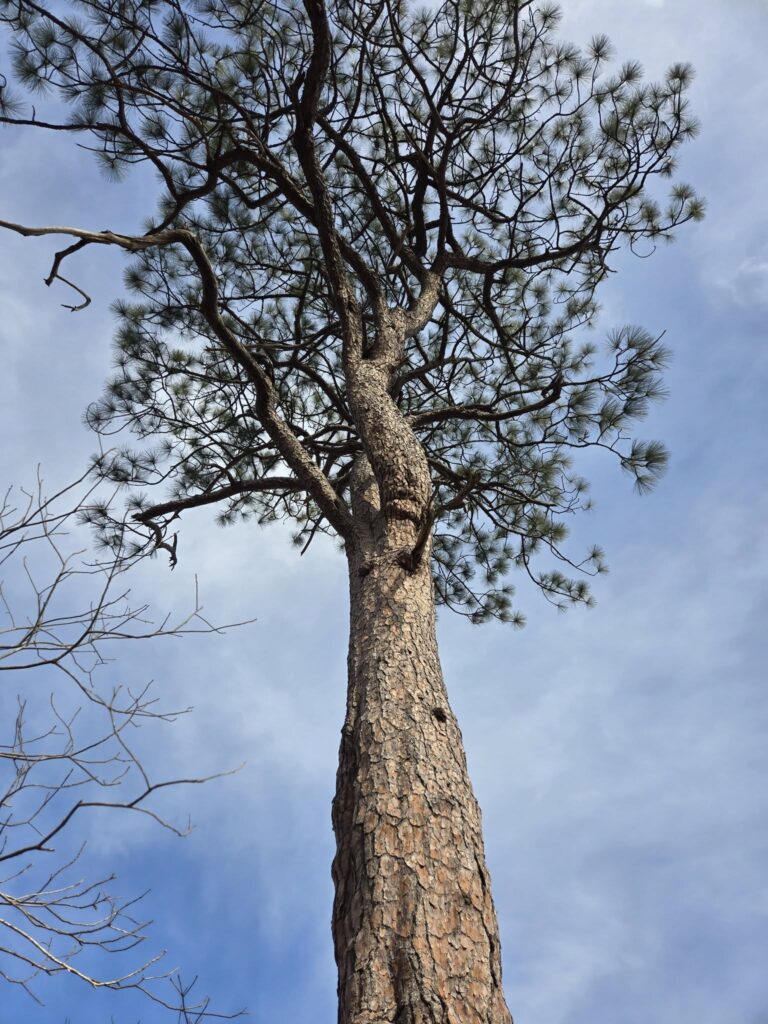
Longleaf pine once dominated tens of millions of acres across the Southeast, including much of Florida, before logging drastically reduced its range. It has the longest needles of any Southern pine, often exceeding a foot in length.
This species can live over 300 years, far longer than most other Southern pines. Restoration efforts across Florida state forests are actively working to bring longleaf ecosystems back.
Longleaf pine depends on periodic fire to clear competing vegetation and open its cones. Without regular burns, the species struggles to regenerate naturally.
8. Slash Pine (Pinus elliottii)
Slash pine is Florida’s most common commercial pine, valued for fast growth and strong, resinous wood. It thrives in the flatwoods and swampy lowlands across the state.
It’s tagged as tree number one on the University of Florida’s campus tree inventory, reflecting how widespread the species is statewide. Slash pine grows faster than longleaf but generally doesn’t live as long.
9. Loblolly Pine (Pinus taeda)
Loblolly pine grows across North Florida, often mixed with slash pine and hardwoods in managed forests. It’s one of the most commercially important timber trees in the entire Southeast.
This pine adds height quickly, sometimes two feet or more per year in good soil conditions. Its dense, straight growth makes it valuable for lumber and paper production.
10. Sand Pine (Pinus clausa)
Sand pine grows in Florida’s dry, nutrient-poor scrub habitats where few other trees survive. It’s smaller and shorter-lived than loblolly or slash pine, rarely exceeding 60 feet.
This species depends on intense wildfire to open its serotinous cones and release seeds. Florida scrub ecosystems built around sand pine support several endangered species found nowhere else.
3. Wetland and Swamp Trees
11. Bald Cypress (Taxodium distichum)

Bald cypress lines rivers, swamps, and lake edges throughout Florida, often standing directly in water. It’s a deciduous conifer, dropping its needle-like leaves each fall despite being a cone-bearing tree.
Some bald cypress trees in Florida are estimated at over 1,000 years old, among the oldest living organisms in the eastern United States. Its knobby “knees” rising from the water remain a subject of ongoing botanical study.
12. Pond Cypress (Taxodium ascendens)
Pond cypress is closely related to bald cypress but grows in still, shallow water rather than flowing rivers. Its needle-like leaves press tightly against the branches, giving it a slightly different texture.
You’ll find it commonly in Florida’s isolated wetlands and cypress domes. It grows slower than bald cypress and typically reaches smaller heights.
13. Red Maple (Acer rubrum)
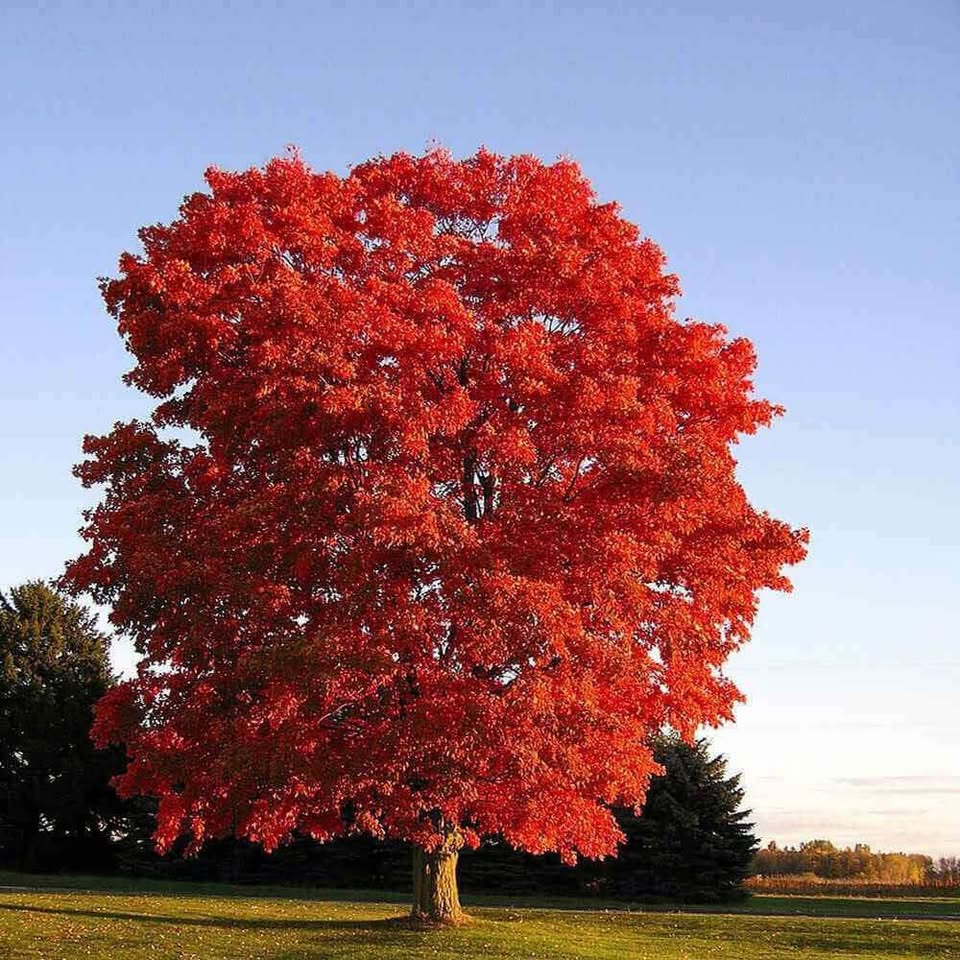
Red maple is one of the most adaptable native trees in Florida, thriving in swamps as well as drier upland soil. Its red flowers appear in late winter, among the earliest color of the season.
This tree grows fast and provides reliable fall color, ranging from yellow to deep red depending on the individual tree. Its seeds, called samaras, are an important early food source for wildlife.
14. Sweetbay Magnolia (Magnolia virginiana)
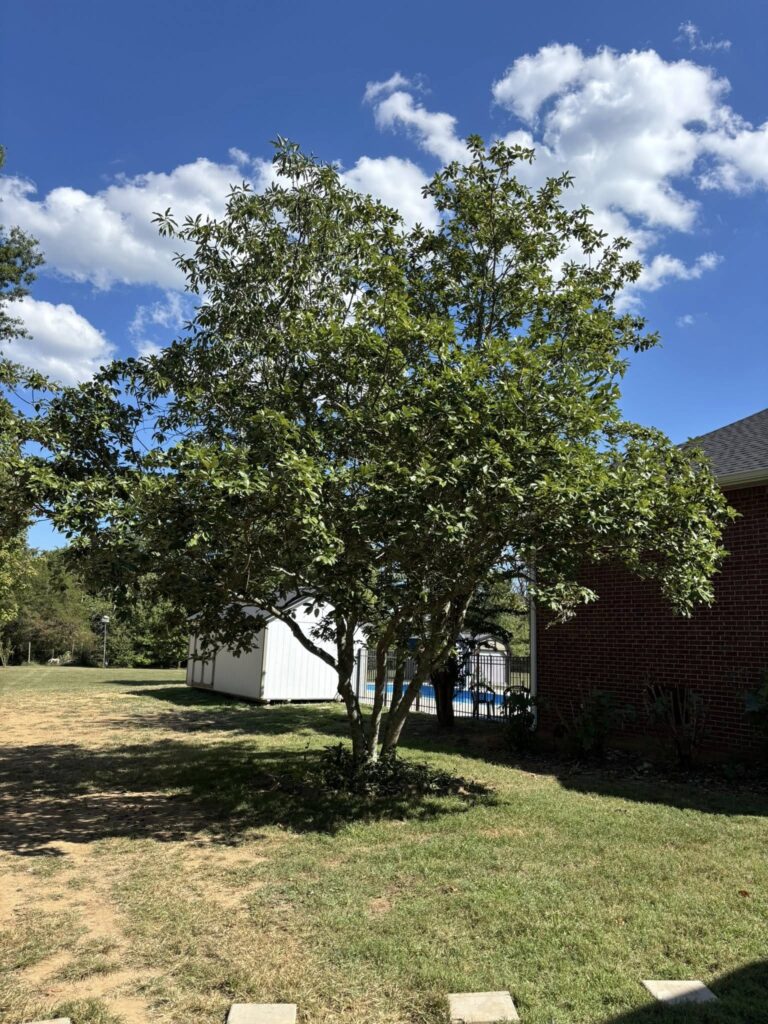
Sweetbay magnolia grows in Florida’s wetter forests and swamp edges, producing smaller, more fragrant flowers than its southern magnolia cousin. Its leaves show a silvery underside that flashes in the wind.
It’s semi-evergreen in Florida’s mild climate, often keeping leaves through winter further south in the state. This tree tolerates flooding better than almost any other native magnolia.
15. Water Tupelo (Nyssa aquatica)
Water tupelo grows in Florida’s river swamps, often alongside bald cypress in flooded bottomland forests. Its trunk swells dramatically at the base, an adaptation that helps stability in soft, wet soil.
This tree produces large, plum-like fruit eaten by wood ducks and other waterfowl. It can tolerate months of standing water, a trait few hardwoods share.
16. Pop Ash (Fraxinus caroliniana)
Pop ash grows in Florida’s swamps and floodplain forests, often in standing water for much of the year. Its winged seed clusters are a distinctive identifying feature.
It stays relatively small, usually under 40 feet, and rarely grows outside consistently wet soil. Wildlife, including wood ducks, feed on its seeds through fall and winter.
4. Coastal and Salt-Tolerant Trees
17. Red Mangrove (Rhizophora mangle)
Red mangrove is instantly recognizable by its tangled, arching prop roots reaching into coastal saltwater. It grows along Florida’s southern and central coastlines, forming dense protective barriers.
Florida’s mangrove forests cover an estimated 469,000 to 600,000 acres, according to Florida Department of Environmental Protection data, making them a defining feature of the state’s coastline. These trees filter pollutants and buffer shorelines from storm surge.
Mangrove forests provide nursery habitat for countless fish and shellfish species. Losing even a narrow fringe of mangroves can significantly worsen flood damage during hurricanes.
18. Black Mangrove (Avicennia germinans)
Black mangrove grows slightly further inland than red mangrove, often identified by pencil-like root projections called pneumatophores poking up through the mud. These structures allow the roots to breathe in oxygen-poor soil.
It tolerates higher salt concentrations than most plants on Earth, excreting excess salt through its leaves. Bees that forage on black mangrove flowers produce a distinctive, prized honey.
19. White Mangrove (Laguncularia racemosa)
White mangrove typically grows on the highest, driest ground among Florida’s three mangrove species, furthest from open water. Its rounded leaves and small notched tips help distinguish it from red and black mangrove.
This species has small salt-excreting glands on its leaf stalks rather than the leaves themselves. It rounds out the mangrove community that protects much of South Florida’s coast.
20. Sabal Palm (Sabal palmetto)
Sabal palm is the official state tree of Florida, designated by the legislature in 1953. Also called cabbage palm, it grows throughout nearly the entire state and appears on Florida’s official seal.
A sabal palm with twenty feet of visible trunk is likely at least 50 years old, since research shows the species adds roughly six inches of trunk height per year after establishing. It tolerates salt spray, drought, flooding, and cold remarkably well.
Its edible bud, known as heart of palm or swamp cabbage, was historically an important food source. The tree’s fruit feeds a wide range of wildlife, from black bears to songbirds.
21. Live Oak (Coastal Variant)
Coastal live oak populations along Florida’s shoreline show a distinctly wind-sculpted growth form, often leaning inland from years of ocean breeze. Salt tolerance allows this variant to survive conditions that would kill most hardwoods.
These trees often grow shorter and denser than inland live oaks, forming natural windbreaks. Coastal maritime hammocks depend heavily on live oak for structure and shade.
5. Trees of South Florida and the Everglades
22. Gumbo Limbo (Bursera simaruba)
Gumbo limbo is nicknamed the “tourist tree” for its reddish, peeling bark that some say resembles a sunburned visitor. It grows throughout South Florida’s tropical hardwood hammocks.
This tree can regrow from cut branches simply stuck in the ground, an unusual trait among Florida hardwoods. Its resin was historically used for varnish and glue.
23. Royal Palm (Roystonea regia)
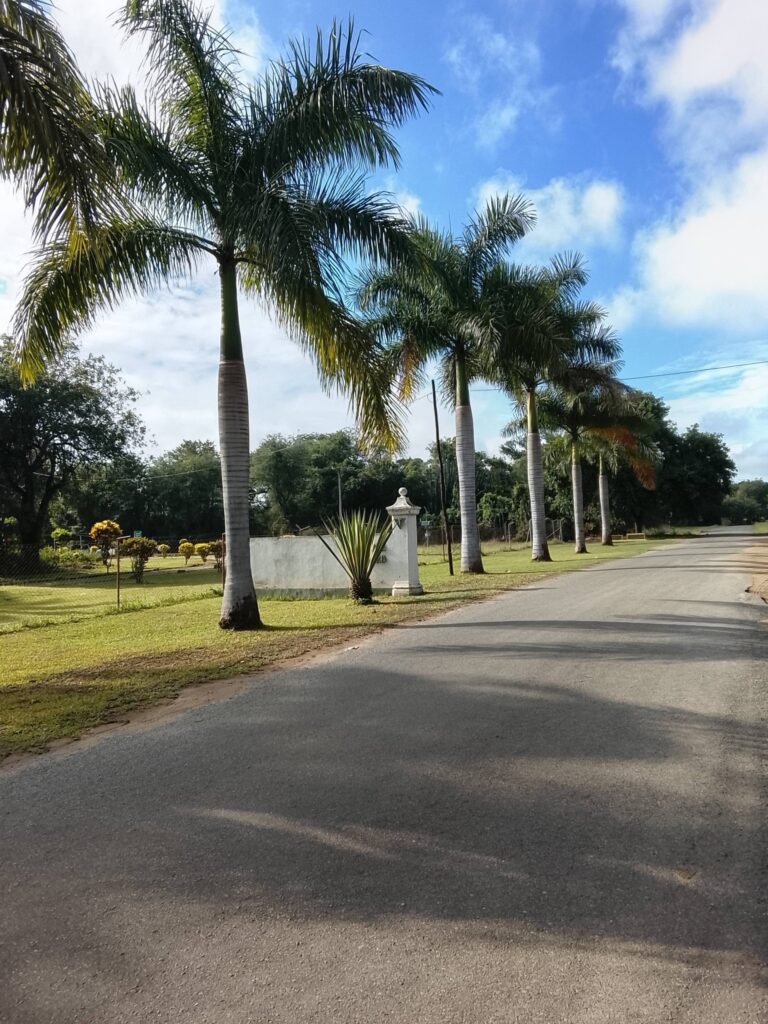
Royal palm is native to extreme South Florida and stands out with its smooth, gray concrete-like trunk and towering height, sometimes exceeding 100 feet. It was seriously considered as Florida’s state tree before the sabal palm was chosen.
This palm requires warm, frost-free conditions and struggles anywhere north of Central Florida. Its dramatic silhouette makes it a signature look along South Florida boulevards.
24. Pond Apple (Annona glabra)
Pond apple grows in South Florida’s swamps and pond margins, producing a yellowish fruit resembling a small custard apple. It’s closely related to cultivated tropical fruit trees in the same genus.
This tree tolerates prolonged flooding better than most fruiting species. Wildlife, including deer and raccoons, readily eat its fallen fruit.
25. Florida Strangler Fig (Ficus aurea)
Strangler fig begins life as an epiphyte, germinating in the branches of a host tree before sending roots down to the ground. Over decades, it can completely envelop and outlive its original host.
It grows throughout South and Central Florida’s hardwood hammocks. Its fruit is a critical food source for numerous native bird species, particularly during lean winter months.
26. Buttonwood (Conocarpus erectus)
Buttonwood grows along Florida’s coastal transition zones, just inland from mangrove stands. Its small, button-like seed clusters give the tree its common name.
This species tolerates salt and drought exceptionally well, making it a popular coastal landscaping choice. It’s technically classified alongside Florida’s mangrove community due to its similar coastal habitat role.
27. Live Slash Pine Savanna Species: Dahoon Holly (Ilex cassine)
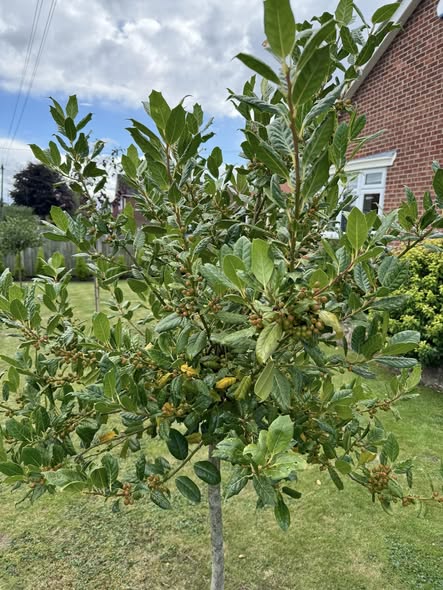
Dahoon holly grows in Florida’s wetter flatwoods and pond margins, producing bright red berries that persist through winter. Its smooth, evergreen leaves lack the sharp points found on many other holly species.
Birds rely heavily on its berries during colder months when other food sources are scarce. It’s commonly planted ornamentally for its reliable winter color.
6. Small Native Trees and Understory Species
28. Redbud (Cercis canadensis)
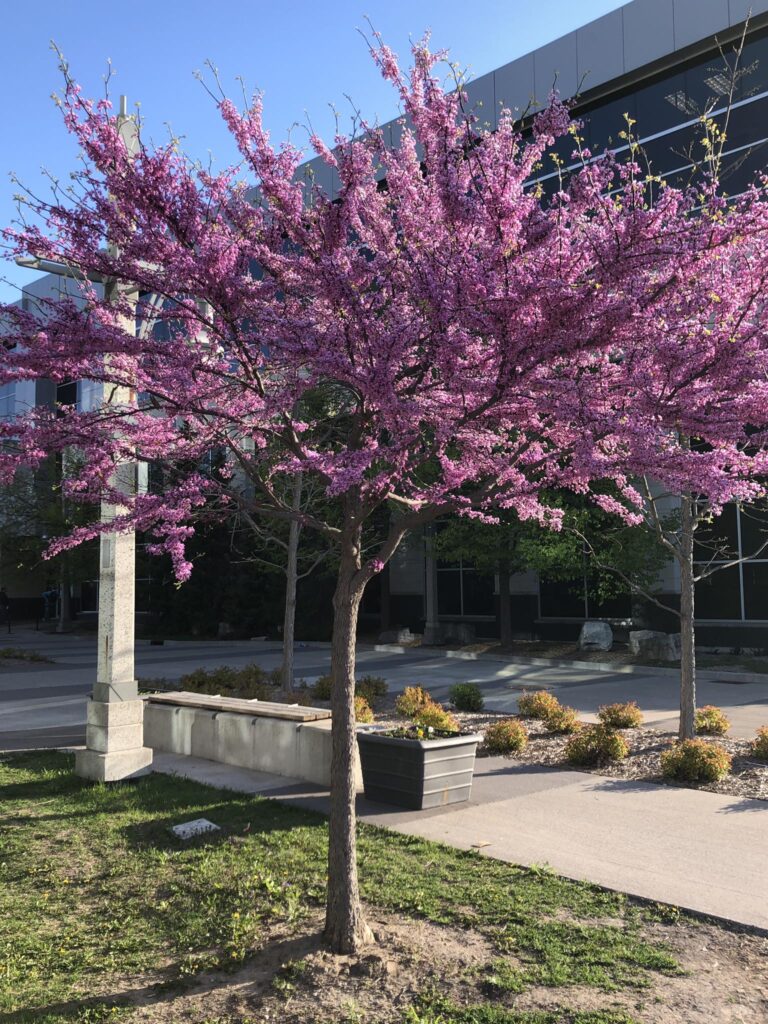
Redbud produces striking pink-purple blooms directly on bare branches each early spring, before its heart-shaped leaves emerge. It grows in North and Central Florida’s hardwood forests and landscaped yards alike.
This tree stays relatively small, typically under 30 feet, making it well suited for residential planting. Its early bloom time makes it one of the first color signals of a Florida spring.
29. American Holly (Ilex opaca)
American holly is instantly recognizable by its spiny, evergreen leaves and bright red winter berries. It grows in North and Central Florida’s hardwood hammocks, often in the shaded understory of taller trees.
Only female trees produce the classic red berries, and they need a nearby male tree for pollination. Its dense, prickly foliage provides valuable cover for nesting birds.
30. Chickasaw Plum (Prunus angustifolia)
Chickasaw plum produces clouds of small white flowers each early spring, followed by small red or yellow fruit in summer. It grows as a thicket-forming small tree across North and Central Florida.
Its fruit is edible and historically used by Native American communities and early settlers alike. Wildlife, particularly birds and small mammals, rely on it heavily during summer months.
Tip: Choosing a Native Tree for Your Region
Region matters more than personal taste when picking a Florida native tree. Here’s a fast reference by area.
- North Florida (hardwood forests): live oak, Florida maple, southern red oak, redbud
- Central Florida (flatwoods and sandhills): slash pine, sand pine, laurel oak, sweetgum
- Wetlands and swamps statewide: bald cypress, red maple, sweetbay magnolia, water tupelo
- Coastal areas: red mangrove, black mangrove, sabal palm, buttonwood
- South Florida (tropical hammocks): gumbo limbo, strangler fig, royal palm, pond apple
Best Time to Plant Native Florida Trees
Fall through winter is generally the best planting window in Florida, roughly October through February. Cooler temperatures reduce transplant stress while the soil stays warm enough for root growth to continue.
Summer planting is possible but riskier, since Florida’s intense heat and sudden afternoon storms can stress new roots. A tree planted in summer typically needs more frequent watering through its first several months.
Avoid planting right before Florida’s peak hurricane season if you’re working with a fast-growing but weakly rooted species. Slower-growing natives like live oak generally handle storms far better once mature.
Water deeply but infrequently after planting, rather than a small amount daily. This trains roots to grow downward, building the same resilience these species show naturally in the wild.
How to Identify a Native Tree Versus a Non-Native Look-Alike
Not everything green in a Florida yard belongs there naturally. Species like Brazilian pepper and melaleuca were introduced and have since become seriously invasive across the state.
A genuinely native species reproduces on its own without human planting, filling an ecological role shaped over centuries. Recent University of Florida research tracking millions of trees over nearly three decades found non-native species quietly displacing native trees in forests nationwide, Florida included.
If you’re unsure whether a tree in your yard is native, UF/IFAS Extension offices across the state offer identification help, and their Gardening Solutions website includes detailed native species profiles. It’s a free, Florida-specific resource, not a generic national database.
Frequently Asked Questions
What is the most common native tree in Florida? Live oak and slash pine are generally considered the most widespread, though sabal palm is the most recognizable thanks to its status as the state tree.
What is the official state tree of Florida? The sabal palm, designated by the Florida Legislature in 1953 and featured on the state seal since 1970.
Do native Florida trees need less watering? Yes. Once established, most species on this list survive on natural rainfall alone, unlike many imported ornamentals that need constant irrigation.
Which native Florida tree grows fastest? Slash pine and red maple both grow quickly, often adding several feet of height per year in favorable soil.
Are Florida’s native trees resistant to hurricanes? Some are. Live oak and sabal palm both show strong wind resistance thanks to flexible trunks and deep or wide-spreading root systems, though no tree is entirely storm-proof.
Final Thoughts
Florida’s trees reflect the state’s extremes, from hurricane winds to saltwater coastlines to swamp flooding. Choosing native species isn’t just about aesthetics; it’s a practical decision. These trees survive with less maintenance and support far more wildlife than most imported alternatives.
Whether you’re planting a single tree in your yard or exploring a state forest, this list should give you a solid, ecologically grounded starting point.
References
- Florida Department of Agriculture and Consumer Services, “Florida Forests” – https://www.fdacs.gov/Forest-Wildfire/For-Landowners/Management-Planning/Florida-Forests
- Florida Department of Agriculture and Consumer Services, “Florida Forest Service” – https://www.fdacs.gov/divisions-offices/florida-forest-service
- University of Florida IFAS, “Gardening Solutions: Trees” – https://gardeningsolutions.ifas.ufl.edu/plants/trees-and-shrubs/trees/
- University of Florida IFAS, “Sabal Palmetto” – https://gardeningsolutions.ifas.ufl.edu/plants/trees-and-shrubs/palms-and-cycads/sabal-palmetto/
- Florida Department of Environmental Protection, “Florida’s Mangroves” – https://floridadep.gov/rcp/rcp/content/floridas-mangroves
- Florida Department of State, “State Tree” – https://dos.fl.gov/florida-facts/florida-state-symbols/state-tree/
- USDA Forest Service, “National Forests in Florida” – https://www.fs.usda.gov/main/florida/about-forest

Tim M Dave is a gardening expert with a passion for houseplants, particularly cacti and succulents. With a degree in plant biology from the University of California, Berkeley, he has vast experience in gardening. Over the years, he has cultivated a vast collection of desert plants and learned a great deal about how to grow and care for these unique companions.