35 Types of Plums (Names, With Flavor Details)
A good plum is a small miracle. The skin is tart, the flesh is sweet, and the juice runs down your wrist. I still remember biting into a ripe one on a warm afternoon and forgetting everything else.
Yet most shoppers see only one or two kinds of plums. The real world of plums is much larger. It includes yellow gages, blood-red heart-shaped giants, tiny wild thicket plums, and hardy hybrids that survive harsh winters.
This guide covers 35 types of plums, with details on how each one looks, how it tastes, and how best to use it.
Plum Facts That Surprise Most People
Plums are a serious crop. Iowa State’s Agricultural Marketing Resource Center reports that the United States produced about 80,660 tons of fresh plums in 2021. They grew on 12,800 acres and were worth $91.7 million.
Dried plums, called prunes, are a separate industry. The same source lists 71,110 tons of prunes from 37,000 acres. Prunes are simply dried European plums.
The U.S. also imports plums. About 91% of U.S. plum imports come from Chile, says the same source. Japanese plums first reached California in 1870.
The Three Main Plum Groups
Almost every plum belongs to one of three groups. Knowing them helps you choose the right tree and the right fruit.
| Group | Hardiness zones | Pollination | Typical use |
| European (Prunus domestica) | 5–8 | Mostly self-fruitful | Drying, cooking, fresh |
| Japanese (Prunus salicina) | 5–9 | Pollinizer required | Fresh eating, jam |
| American and hybrids | 3–4 (varies) | Varies | Jam, jelly, fresh |
Source: Utah State University Extension.
European plums are oval, often blue or purple, and sweet enough to dry. Japanese plums are rounder, juicier, and come in many colors. American plums are small but very hardy.
Utah State also notes that a plum tree can give 3 to 5 bushels of fruit. That is a lot of plums, so plan your recipes.
How to Choose and Store Plums
Pick plums that feel slightly soft and smell sweet. Hard plums may stay sour. Let near-ripe fruit finish ripening at room temperature.
Once ripe, move plums to the refrigerator. Utah State advises using them within three weeks. Eat them soon for the best flavor.
European Plums
1. Stanley
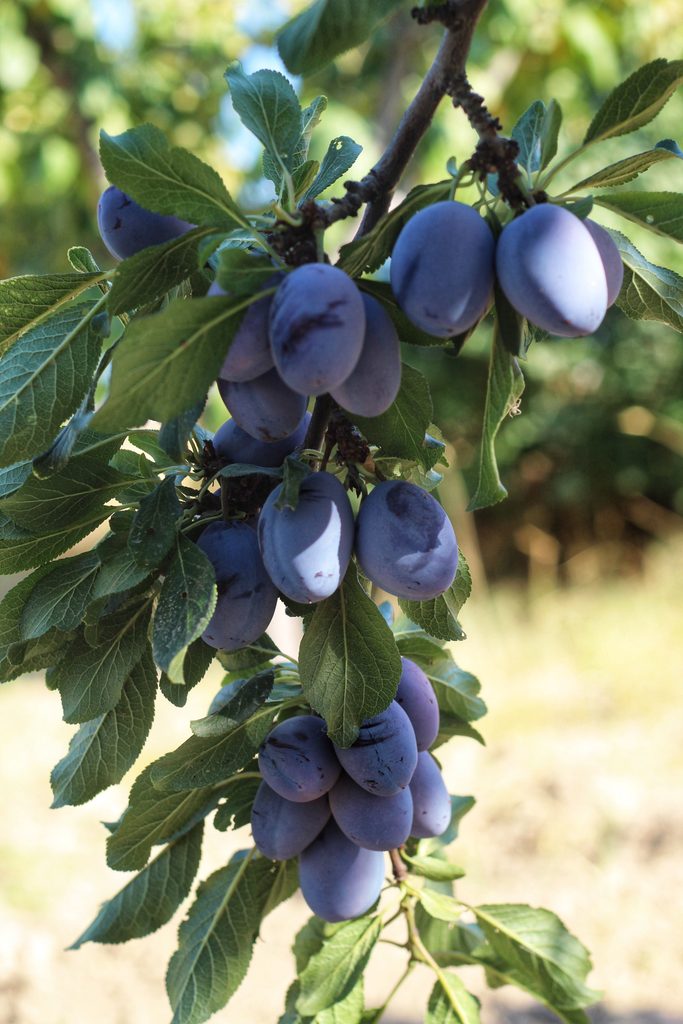
Stanley is a classic prune-type plum. Utah State describes it as European, with dark blue skin and yellow flesh. The flavor is rich, and the tree is self-pollinating.
Iowa State recommends it for home gardens, because one tree can bear fruit alone. That is a big advantage for small yards.
It is also a long-lived tree. The University of Wisconsin’s Carandale Farm reports Stanley trees still fruiting after 40 years. I find that kind of durability very reassuring.
2. Italian Prune
Italian Prune is the plum you want for drying. Utah State calls it very sweet, with dark blue skin. It works for dessert, canning, and drying.
The tree is self-pollinating, which makes it easy to grow. Utah State also lists “Early Italian” as a prune-type plum with oval fruit and a higher sugar content.
That sugar is the key. When water leaves the fruit, the sweetness concentrates. Dried Italian plums are a lovely snack, and they keep well.
3. Green Gage (Reine Claude)
Green Gage is the dessert plum that many people call the finest. The University of Wisconsin says it has a rich, confectionery flavor. The fruit is small, round, and green-yellow, and the skin is often russeted.
The name has a royal story. In France it is called Reine Claude, after Queen Claude, who lived from 1499 to 1524. The English name comes from the Gage family, who introduced it from France around 1724.
Wisconsin warns that the fruit ripens unevenly, so you need several harvests. Utah State lists it as self-pollinating, with amber flesh. Eat it fresh, or cook it into compote and jam.
4. Damson
Damson is a small, tart plum. Iowa State describes it as having blue skin and yellow flesh. It is not reliably cold hardy in northern Iowa, but it suits the southern two-thirds of the state.
Its sharp flavor is the whole point. Many cooks use damsons for jams, jellies, and sauces, where sugar balances the tartness. I would not eat a damson raw unless it was fully ripe.
Utah State groups Damson with the fresh-eating European plums. Like other European types, it prefers a cooler climate.
5. Mount Royal
Mount Royal is a tough, reliable plum. The University of Wisconsin calls it a semi-dwarf tree with good structure. The fruit is blocky and round, and the flesh is very sweet and freestone.
It is smaller than Stanley, but the quality is higher, according to Wisconsin. It ripens in late August or early September.
Cold hardiness is its special strength. A plum cultivar list describes it as the hardiest of the European plums. Iowa State says it suits all of Iowa, with bluish-black skin and greenish-yellow flesh.
6. President
President is a large, handsome plum. Utah State says the skin is dark blue and the flesh is amber. It needs another European plum nearby to set fruit.
The flavor is where President falls short. Utah State states plainly that it lacks outstanding flavor. For that reason, cooks tend to use it for canning and cooking.
It is a useful plum when you want size and a firm texture. I would pick it for baking, not for eating out of hand.
7. Brooks
Brooks is a European prune plum with a strong reputation for eating quality. Utah State calls its eating quality excellent. It is also good for dehydrating, and the fruit keeps well.
The tree is self-pollinating. That makes it a smart choice for a backyard with room for only one tree.
If you like dried fruit, Brooks is a good project. Slice, dry, and store the pieces for winter snacks.
Japanese Plums
8. Santa Rosa
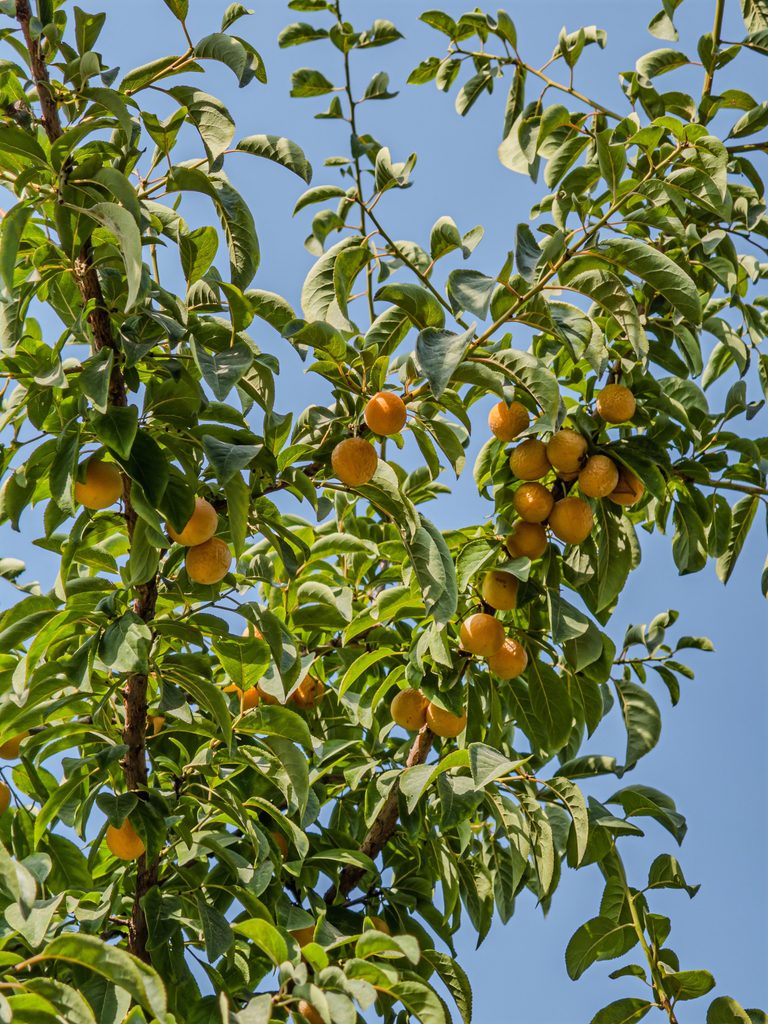
Santa Rosa is the most famous Japanese-type plum in California. The UC Davis variety database says Luther Burbank bred it in Santa Rosa. George Roeding introduced it around 1906 or 1907.
The flavor is rich, juicy, and aromatic, with tartness near the skin and the pit. UC Davis calls it the industry standard for a classic plum flavor. The skin is purplish red with a blue bloom.
Its fame has faded. UC Davis reports that Santa Rosa’s share of the California harvest fell from 36% in 1945 to 7% in 1994. Still, it remains a fine home tree, hardy in zones 5 to 9.
9. Satsuma
Satsuma is a plum with unusual color. Utah State describes a dull, dark red skin, with red flesh and red juice. The flavor is mild.
It is used for dessert and preserves. The red juice makes beautiful jam, so it is a good choice for canning.
As a Japanese plum, it needs a pollinizer. UC Davis lists Satsuma among the recommended pollinizers for Santa Rosa. Plant them together for a better crop.
10. Shiro
Shiro is a yellow Japanese plum. Utah State describes yellow skin and yellow flesh, with good flavor. It is used for fresh eating and cooking.
The tree is a heavy producer. That is wonderful if you love plums, and a challenge if you do not. Be ready to share the harvest.
UC Davis also lists Shiro as a recommended pollinizer for Santa Rosa. That makes it a helpful tree in a mixed planting.
11. Elephant Heart
Elephant Heart is a plum that people remember. UC Davis says Luther Burbank selected it around 1920, and Stark Bros. introduced it in 1929. The fruit is very large and heart-shaped.
The skin is mottled purple and green, and the flesh is blood red. UC Davis calls the flavor rich, distinctive, and very juicy. Utah State says it is extremely sweet.
The tree needs about 500 chill hours and is hardy to zone 5. UC Davis says it is a favorite for home orchards on dwarf rootstock. I would plant one just for the color of the flesh.
12. Methley
Methley is a popular backyard plum in many regions. The University of Florida lists it as self-pollinating, which is a useful trait.
It does have limits. UF/IFAS says Methley needs about 650 chill hours. For that reason, it is no longer recommended in Florida.
Florida researchers also noted small fruit, poor firmness, and disease problems there. The lesson is simple. A good plum in one region can fail in another, so check local advice first.
ALSO READ: 15 Common Plum Tree Problems (With Symptoms and Fixes)
Gulf and Southern Plums
Warm regions need plums that do not need long winters. The University of Florida developed the Gulf series for this purpose. These Japanese-type plums resist bacterial spot and leaf scald.
UF/IFAS says Gulf plums ripen in May, about two weeks earlier than plums from other areas. Mature trees give about 40 to 50 pounds of fruit.
13. Gulfbeauty
Gulfbeauty needs only about 225 chill hours. That is very low for a plum. It is also the earliest of the Gulf series, with a 75-day fruit development period.
The skin is dark reddish purple, and the flesh is yellow with a green hue. UF/IFAS describes it as sweet and sub-acid, with sour skin. The flesh is firm.
The fruit is small, about 1¾ inches across. It is clingstone. UF also notes that it is very resistant to canker, which is a real help in humid places.
14. Gulfblaze
Gulfblaze is a mid-season plum. It needs about 250 chill hours and ripens 8 to 14 days after Gulfbeauty. The fruit is a little larger, at 70 to 80 grams.
The skin is dark red to purple, and the flesh is orange. UF/IFAS calls it sweet and sub-acid with good overall quality. The flesh is very firm.
It is also semi-freestone, which makes it easier to eat and to cook. UF says it tolerates leaf scald better than Gulfrose.
15. Gulfrose
Gulfrose has some of the most attractive flesh in the series. UF/IFAS describes dark reddish-purple skin and blood-red flesh. It needs about 275 chill hours.
The flavor is sweet and aromatic. UF notes a moderately sour skin and no bitter aftertaste. That clean finish is what I like best about it.
It ripens about a week after Gulfblaze. The fruit is semi-freestone and weighs 70 to 80 grams. Its drawback is less tolerance of leaf scald than Gulfblaze.
16. Gulfruby
Gulfruby is an early plum in the series. UF/IFAS says it ripens 7 to 10 days before Gulfblaze. The skin is red to purple, and the flesh is yellow-green.
The flesh is sweet, while the skin is sour. The fruit reaches up to 2 inches. It is a public variety, so no patent fee applies.
Its weakness is health. UF warns that it is susceptible to bacterial canker. Trees may live only 5 to 8 years, so it suits gardeners who accept a short life.
17. Gulfgold
Gulfgold is the sweetest plum in the Gulf series, according to UF/IFAS. The skin is yellow with a red blush, and the flesh is yellow and semi-soft.
It ripens from late May to mid-June. A yellow plum in a warm garden is a pleasant surprise, and it looks lovely in a fruit bowl.
There is a catch. UF says it is susceptible to leaf scald, which limits the life of the tree. The tree is also dwarfing, so it stays small.
18. Au-Roadside
Au-Roadside carries the “Au” prefix of Auburn University’s plum selections. UF/IFAS lists it for north Florida, with a higher need of about 750 chill hours. It ripens in mid-June.
The skin is magenta and the flesh is red. UF calls the quality very good. The fruit is under 2 inches, and the tree is highly vigorous.
The fruit is soft, so it is too delicate for commercial shipping. For a home gardener, that hardly matters. You can pick it ripe and eat it the same day.
ALSO READ: Understanding Mexican Plum (Prunus mexicana): Identification, Uses, Problems, and More
19. Au-Producer
Au-Producer is another “Au” selection. It needs about 750 chill hours and ripens in mid-June. The skin and flesh are both dark red.
UF/IFAS rates the quality as high. The fruit is under 2 inches, and the tree has moderate vigor. It tolerates leaf scald.
It does need work. UF says it needs heavy thinning. Without thinning, the fruit stays small. Thin early, and you will be rewarded.
20. Byrongold
Byrongold ripens later than most. UF/IFAS lists late June to early July, with about 450 chill hours. The skin and flesh are yellow, with a red blush when ripe.
The fruit has good firmness and quality. It is round and about 2 inches across, and the tree is highly vigorous.
UF warns of possible leaf scald problems. Even so, it is a nice choice if you want a yellow plum that extends your season.
Cold-Hardy Hybrid and American Plums
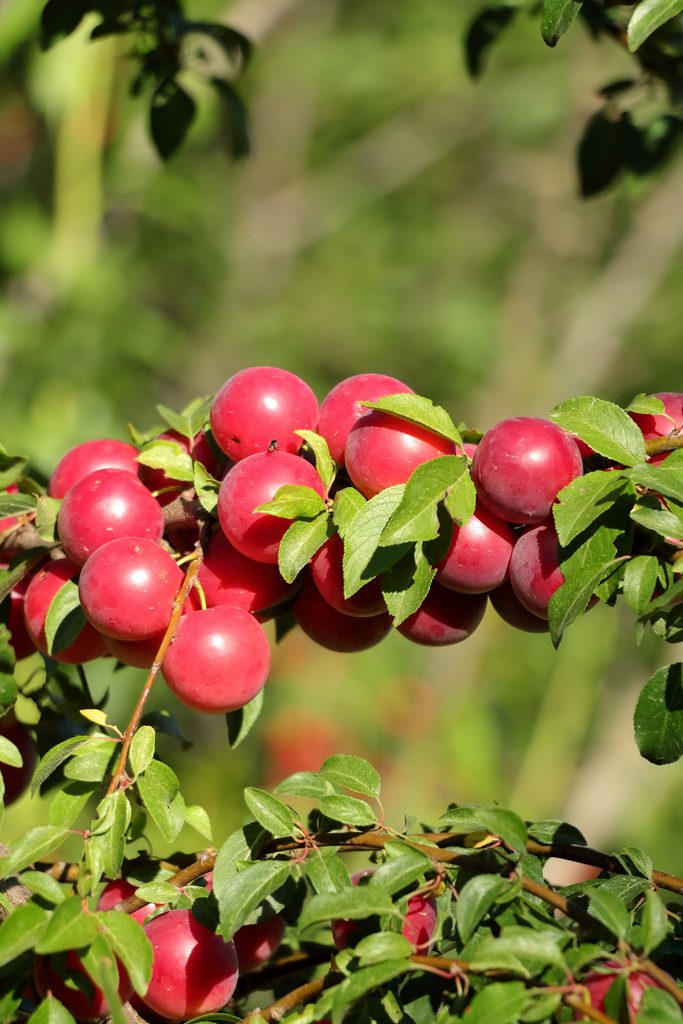
Cold regions need tough plums. The University of Minnesota and other northern programs have bred hybrids that survive hard winters. Most need a partner tree for pollination.
Iowa State says these hybrids are self-unfruitful, so plant two or more varieties. It names Toka as an excellent pollinator for Alderman, Superior, and Underwood.
21. Alderman
Alderman is a University of Minnesota release from 1986. The skin is burgundy and the flesh is golden. UMN calls it sweet and juicy, ripening in late August.
The University of Wisconsin describes the flesh as firm and somewhat nectarine-like. It is used for fresh eating and preserves. The fruit is clingstone.
Utah State says it needs thinning for larger fruit. UMN advises planting Superior, Toka, or Compass nearby as pollinators.
22. La Crescent
La Crescent is an early plum. UMN lists it as yellow, sometimes lightly blushed, and ripening in early August. The flavor is sweet and juicy, and somewhat apricot-like.
Unlike many hybrids, it is freestone, according to UMN. The pit falls away cleanly, which makes it easy to eat and to cook.
Utah State counts it among the commonly available American plums. I like the apricot note. It makes a good bridge for people who prefer apricots.
23. Pipestone
Pipestone is a hardy, productive plum. UMN says the fruit is large, red, and sweet, with yellow flesh. It ripens in late August and is used for jam, jelly, and fresh eating.
UMN calls the tree very hardy and productive. It adds that Pipestone does well in drier areas. Iowa State also lists it among recommended hybrids.
Opinions differ on flavor. The Carandale Farm report found it bland, with a tough skin. Let the fruit hang on the tree as long as possible before you judge it.
24. Superior
Superior is a long-standing favorite. UMN dates it to 1933. The skin is dark red with russet dots, and the flesh is yellow. It ripens in mid-August.
The flavor is sweet, juicy, and flavorful. UMN notes that it may lack hardiness in the far north. It is clingstone, and Utah State says it needs thinning for larger fruit.
It also works as a pollinizer. UMN recommends Superior for Alderman. A pair of hybrid plums is almost always better than a single tree.
25. Underwood
Underwood is an early hybrid. UMN dates it to 1920. The fruit is medium to large, with red skin and golden-yellow flesh. It ripens in late July.
The flavor is sweet and juicy. UMN calls the tree hardy and vigorous. The University of Wisconsin adds that the skin is moderately tart.
There is one warning. Carandale Farm reported poor fruit set despite good bloom, probably from a pollination problem. Plant a good pollinizer such as Toka nearby.
26. Toka
Toka is a plum with a lot of fragrance. The University of Wisconsin describes it as purple-red, firm, and highly aromatic, with a spicy sweet flavor. It ripens in late August.
Its best feature is pollination. Wisconsin calls it a superb pollinizer. Iowa State agrees and recommends it for several hybrids.
A plum cultivar list notes that Toka comes from South Dakota and is also called the bubblegum plum. The same nickname is used for Kaga, so check the label when you buy.
27. Waneta
Waneta is a hybrid with a clear history. A plum cultivar list says it came from South Dakota and was introduced in 1913 by N.E. Hansen. It is a cross of a Japanese plum and an American plum.
The fruit is dark red over yellow. The University of Wisconsin says it is juicy and sweet when the tree is not overcropped. If the tree carries too much fruit, the plums become bland and mealy.
The lesson is thinning. Remove extra fruit early, and the remaining plums will taste far better. It ripens in late August to early September.
28. Black Ice
Black Ice is the first plum of the season in the Wisconsin trial. It ripens from late July to early August. The skin is blue-black and the flesh is reddish purple.
The University of Wisconsin calls it very sweet and juicy, with excellent quality. That is high praise from a farm that tested many varieties.
An early plum has a special charm. When most fruit trees are still green, Black Ice brings dark, shining fruit to the kitchen.
29. Vermont
Vermont is a pretty plum. The University of Wisconsin describes golden-yellow skin with a pink blush. The flavor is sweet and succulent, and even the skin tastes sweet.
It ripens from late August to early September. Wisconsin says it could be a profitable fruit if pollination improves.
That is a reminder of how much pollination matters. Plant a compatible tree nearby, and a good plum becomes a great one.
30. Kaga
Kaga is a popular hybrid with a fun nickname. Utah State says it is sold as Bubblegum. It is a good pollinizer, and it is especially popular.
Because it pollinates other plums, it is a smart choice for small gardens. One Kaga can help a neighbor’s tree set fruit.
Remember the name overlap with Toka. If a nursery sells a “bubblegum plum,” ask which tree it is, and check its pollination partners.
31. Pottawattamie
Pottawattamie is a plum with sentimental value. Utah State says it was once very popular and fondly remembered for its flavor. It is no longer commercially available.
Today, many hedgerow plants are only seedlings. Utah State’s Box Elder page lists the native plum “Potawatame” as usually found along fencerows. It is used mainly for preserves.
That is a lovely detail about old farm life. Wild plums along a fence line once fed families for jam all winter.
ALSO READ: 25 Cold Hardy Fruit Trees (Varieties That Thrive in Freezing Winters)
Native and Specialty Plums
32. Excelsior
Excelsior is a native-type plum for the South. UF/IFAS lists it for north Florida, with about 400 chill hours. The skin and flesh are yellow, and the fruit is about 2 inches.
The flesh is somewhat translucent and watery, says UF/IFAS. It is not praised for flavor, so I would treat it as a hardy, low-fuss tree rather than a dessert plum.
For gardeners in humid regions, native-type plums can be tougher. They are worth a try where fussy European trees fail.
33. Chickasaw Plum (Sand Plum)
Chickasaw plum is a true wild plum. The USDA Natural Resources Conservation Service describes it as a thicket-forming shrub, 3 to 10 feet tall. In the east, it can grow into a small tree up to 25 feet.
The fruit is small, only ¼ to ½ inch, and ripens from June through August. The colors range from red to orange-red to yellow. The USDA notes that some plants bear edible fruit, while others bear very bitter fruit.
Native Americans ate the fruit fresh or dried it for winter. People have also used it for wine, jam, and jelly. Many birds and animals eat it, and the thickets give nesting cover to songbirds.
34. Plumcot and Pluot (Plum-Apricot Hybrids)
Plumcots and pluots are modern hybrids of plums and apricots. Utah State explains that they are sold under trade names such as Plumcot, Pluot, and Aprium. The names are trademarks of Zaiger Genetics.
They vary a great deal. Utah State says some are mostly plum and some are mostly apricot in their genetic background. The result can taste like a plum with an apricot note.
I enjoy these fruits for their novelty. They are not a single variety, but a group, so ask the seller for the exact type.
35. Newport (Purple-Leaf Plum)
Newport is a plum that people grow mainly for its looks. Utah State describes it as an ornamental, purple-leaf plum. It sometimes produces fruit suitable for processing.
The leaves give a deep purple color to the landscape. The fruit is a bonus, not the main goal. Expect modest crops.
I included it because gardeners often ask whether ornamental plums are edible. Some give a little fruit, but they are not a replacement for a true orchard tree.
Quick Comparison: Which Plum Should You Grow?
| Plum | Group | Color | Best use |
| Stanley | European | Dark blue | Fresh, drying |
| Green Gage | European | Green-yellow | Dessert, jam |
| Mount Royal | European | Blue-black | Fresh, very hardy |
| Santa Rosa | Japanese | Purplish red | Fresh, canning |
| Elephant Heart | Japanese | Mottled purple | Fresh, freezing |
| Gulfrose | Gulf series | Reddish purple | Fresh, warm climates |
| Alderman | Hybrid | Burgundy | Fresh, preserves |
| Toka | Hybrid | Purple-red | Fresh, pollinizer |
| La Crescent | Hybrid | Yellow | Fresh, freestone |
| Chickasaw | Native | Red to yellow | Jam, wildlife |
Frequently Asked Questions
What is the sweetest plum? Utah State describes Elephant Heart as extremely sweet. UF/IFAS calls Gulfgold the sweetest of the Gulf series.
Which plum is best for drying? Prune-type European plums such as Italian Prune and Brooks. Their high sugar content suits drying.
Do plum trees need a partner? Japanese plums and hybrids usually do. Utah State says European plums are mostly self-fruitful but crop better with a pollinizer.
Which plum is best for cold climates? Mount Royal among European types, and hybrids such as Pipestone and Underwood. Check your hardiness zone before you buy.
How long do plums keep? Refrigerate ripe plums and use them within about three weeks, advises Utah State.
Final Thoughts
Plums are far more varied than the store shelf suggests. You can taste a golden Green Gage, a blood-red Elephant Heart, or a tiny wild Chickasaw plum. Each one has its own story.
My advice is simple. Match the plum to your climate first, then choose your favorite flavor. A plum that suits your region will always taste better than one that struggles.
Start with one tree, or one new fruit this season. You may find, as I did, that one perfect plum is worth the wait.
References
- Utah State University Extension. How to Grow Plums in Your Home Garden. https://extension.usu.edu/yardandgarden/research/plums-in-the-home-garden
- Utah State University Extension, Box Elder County. Plums & Prunes: Plum/Prune Varieties for Box Elder County. https://extension.usu.edu/boxelder/agriculture/fruit-trees/plums-prunes.php
- University of Florida IFAS Extension. Growing Plums in Florida (HS250). https://ask.ifas.ufl.edu/publication/HS250
- University of Wisconsin-Madison, Uncommon Fruit. Japanese-American Hybrid Plums. https://uncommonfruit.cias.wisc.edu/japanese-american-hybrid-plums/
- University of Minnesota. Minnesota Hardy: Plums. https://mnhardy.umn.edu/plums
- UC Davis Fruit and Nut Research and Information Center. Santa Rosa Plum. https://ngr.ucdavis.edu/treedetails.cfm?v=1343
- USDA Natural Resources Conservation Service. Chickasaw Plum (Prunus angustifolia) Plant Fact Sheet. https://plants.sc.egov.usda.gov/DocumentLibrary/factsheet/pdf/fs_pran3.pdf

Tim M Dave is a gardening expert with a passion for houseplants, particularly cacti and succulents. With a degree in plant biology from the University of California, Berkeley, he has vast experience in gardening. Over the years, he has cultivated a vast collection of desert plants and learned a great deal about how to grow and care for these unique companions.