50 Types of Orange Trees (Varieties With Pictures)
I still remember the first time I tasted a blood orange straight off a backyard tree. It tasted nothing like the oranges I grew up eating, and that single fruit sent me down a research rabbit hole into just how many orange varieties actually exist.
Most people assume “orange” means one fruit. In reality, growers and botanists recognize dozens of distinct cultivars, each with its own flavor, harvest window, and climate preference.
This guide walks through 50 types of orange trees, grouped by category, with growing and care tips for each one. I have leaned on university citrus collections and government crop data to keep the facts solid.
Oranges fall into a few broad groups: sweet oranges, navel oranges, blood oranges, sour (bitter) oranges, and various hybrids like tangors and tangelos that blend orange with mandarin genetics. Knowing the group helps you understand the tree.
Quick Facts Before We Begin
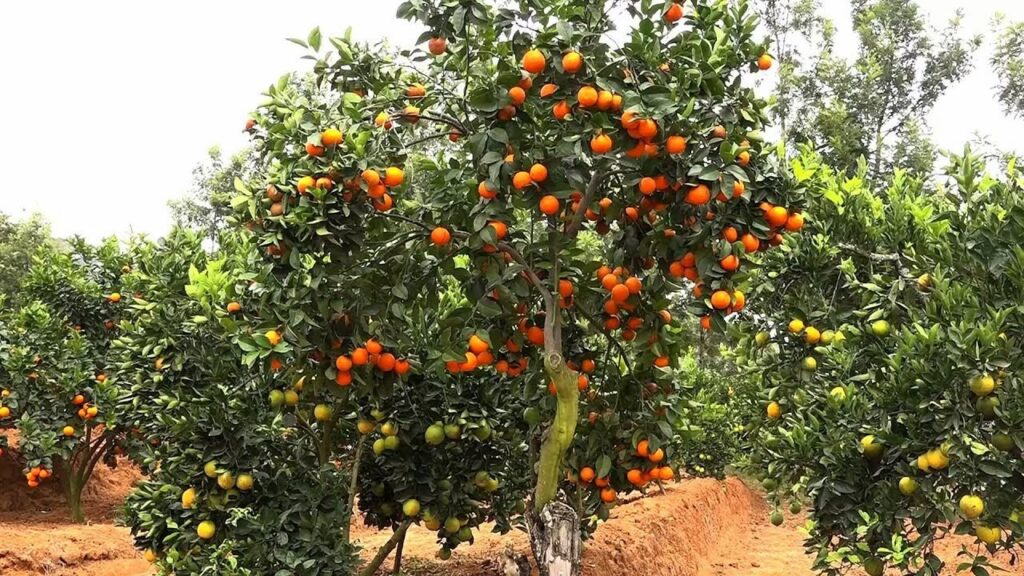
California and Florida dominate US orange growing. According to USDA’s National Agricultural Statistics Service, California produced about 84% of total US citrus in the 2024-25 season, with Florida contributing roughly 13%.
That balance has shifted sharply over time. University of Florida research shows Florida’s orange production fell 82% between 2000 and 2022, driven largely by citrus greening disease (HLB) and hurricane damage.
California’s orange yield now outpaces Florida’s by nearly double. UF/IFAS reports California growers harvested about 22,600 pounds per acre in 2022, compared to roughly 11,600 pounds per acre in Florida.
On the historic side, the Washington navel orange, introduced to Riverside, California, from Bahia, Brazil, in 1870, became one of the most important fruit varieties ever planted in the United States, according to UC Riverside, prized for its size, shape, color, and complete seedlessness.
Let’s explore all 50 varieties, organized by category.
Navel Oranges
Navel oranges get their name from the small, secondary fruit that develops at the blossom end, resembling a human navel. They are seedless, easy to peel, and best eaten fresh rather than juiced.
1. Washington Navel
The original commercial navel orange, introduced to California in 1870 from Bahia, Brazil, through the USDA’s early plant introduction program. It remains the benchmark against which nearly every other navel selection is measured.
The tree produces large, sweet, seedless fruit with thick, easy-peeling skin, typically ready from November through January. Its arrival in Riverside is credited with launching California’s entire citrus industry.
Because Washington navel is seedless, every commercial tree must be propagated through grafting rather than seed, which is true of most navel selections that descended from it as bud mutations.
Growing tip: Washington navel trees need full sun and well-drained soil; they are moderately cold-hardy but benefit from windbreaks in exposed locations, especially during their first few winters.
Care tip: Water deeply once a week rather than lightly every day, and fertilize with a citrus-specific blend three times during the growing season, tapering off as fall approaches to avoid tender new growth before frost.
2. Cara Cara Navel
Cara Cara is a pink-fleshed navel discovered as a chance mutation on a Washington navel tree in Venezuela in the 1970s. The flesh looks almost like a grapefruit but tastes sweeter, with berry-like undertones that surprise first-time tasters.
Its pink color comes from lycopene, the same pigment found in tomatoes and watermelon, rather than the anthocyanins responsible for blood orange color.
Growing tip: Cara Cara trees perform much like Washington navels and thrive in the same warm, dry Mediterranean-style climates found across inland Southern California.
Care tip: Thin fruit clusters in heavy-bearing years to keep fruit size consistent and prevent limb strain, since overloaded branches can crack under a bumper crop.
3. Atwood Navel
Atwood is a bud sport of the Washington navel, valued for slightly earlier maturity and a more compact tree structure, according to UC Riverside’s Citrus Variety Collection records.
Growers appreciate Atwood for producing fruit with a smoother rind texture than standard Washington navel, along with dependable annual yields.
Growing tip: Its smaller canopy suits home gardens with limited space better than a standard Washington navel tree, allowing closer planting distances.
Care tip: Prune lightly each year to maintain airflow, since compact canopies are more prone to fungal buildup if left dense and unthinned.
4. Fisher Navel
Fisher is another Washington navel selection maintained in the UC Riverside collection under two separate accession numbers, reflecting ongoing evaluation of its performance across different growing sites.
Growing tip: Treat Fisher navel like standard navel stock; it needs the same watering depth and sun exposure as any Washington-derived selection.
Care tip: Monitor for scale insects, a common navel orange pest that weakens trees over time, and treat early with horticultural oil if spotted on leaves or stems.
5. Frost Washington Navel
This nucellar, or virus-free, selection was developed through the University of California’s citrus budwood program to improve orchard health by reducing viral transmission through infected propagation material.
Because nucellar trees grow from seed tissue rather than potentially virus-carrying bud tissue, they tend to establish with stronger, more uniform vigor than older budlines.
Growing tip: Because it is disease-screened, Frost Washington is a strong choice for new commercial plantings where tree longevity and disease-free status matter most.
Care tip: Source only certified budwood from registered nurseries to preserve the variety’s disease-free advantage, and avoid grafting from unverified backyard trees.
6. Golden Buckeye Navel
Golden Buckeye is a lesser-known navel selection appreciated for rind color and dependable fruit set, held in the UC Riverside germplasm collection as part of ongoing varietal research.
Its fruit tends to hold a rich golden-orange rind color even in regions with more humid or overcast growing conditions.
Growing tip: Give this tree a full-sun position with reflected heat from a south-facing wall in cooler climates to maximize sweetness and rind color.
Care tip: Apply a balanced citrus fertilizer in early spring, midsummer, and early fall for steady annual production without pushing excessive vegetative growth.
7. Cukurova Navel
Cukurova is a Turkish navel selection bred for the Mediterranean climate of southern Turkey’s Cukurova region, one of the country’s most important citrus-growing areas.
The variety reflects growing international interest in navel orange breeding outside the traditional California and Brazilian programs.
Growing tip: This variety suits Mediterranean and semi-arid climates with hot, dry summers and mild winters, similar to its native growing region.
Care tip: Because Cukurova originates from a region with distinct wet and dry seasons, mimic that rainfall pattern with deep, infrequent irrigation rather than constant light watering.
8. Bahianinha Navel
Bahianinha traces its lineage to Bahia, Brazil, the same region that produced the original Washington navel budwood shipped to California in the nineteenth century.
Several related Bahia selections, including Bahianinha Araras, are preserved in the UC Riverside collection as reference material for citrus breeding research.
Growing tip: This variety grows well under conditions similar to Washington navel, favoring warm days and cool nights for best sugar development in the fruit.
Care tip: Avoid overhead watering late in the day, since wet foliage overnight invites fungal disease in humid climates, particularly during Brazil-like rainy seasons.
9. Dream Navel
Dream Navel is valued by growers for its bright color and reliable size, another selection preserved within the Givaudan Citrus Variety Collection at UC Riverside for ongoing evaluation.
Its consistent performance across trial plots has made it a candidate for growers seeking dependable navel production without unusual maintenance demands.
Growing tip: Plant Dream Navel where afternoon sun is strongest, since navel oranges color best with maximum light exposure during the ripening period.
Care tip: Mulch around the root zone to conserve soil moisture during hot summer months without waterlogging the roots, which are sensitive to prolonged saturation.
10. Newhall Navel
Newhall is an early-maturing bud sport of the Washington navel, often ready for harvest a few weeks ahead of standard navel trees, making it popular with growers wanting an earlier market entry.
The tree resembles Washington navel closely in size and growth habit, differing mainly in its earlier fruit maturity timeline.
Growing tip: Because it ripens early, Newhall works well for growers wanting to extend the fresh-eating navel season into fall rather than waiting for winter.
Care tip: Protect early fruit from sunburn with light canopy shading if your region experiences intense late-summer heat during the ripening window.
Valencia and Late-Season Sweet Oranges
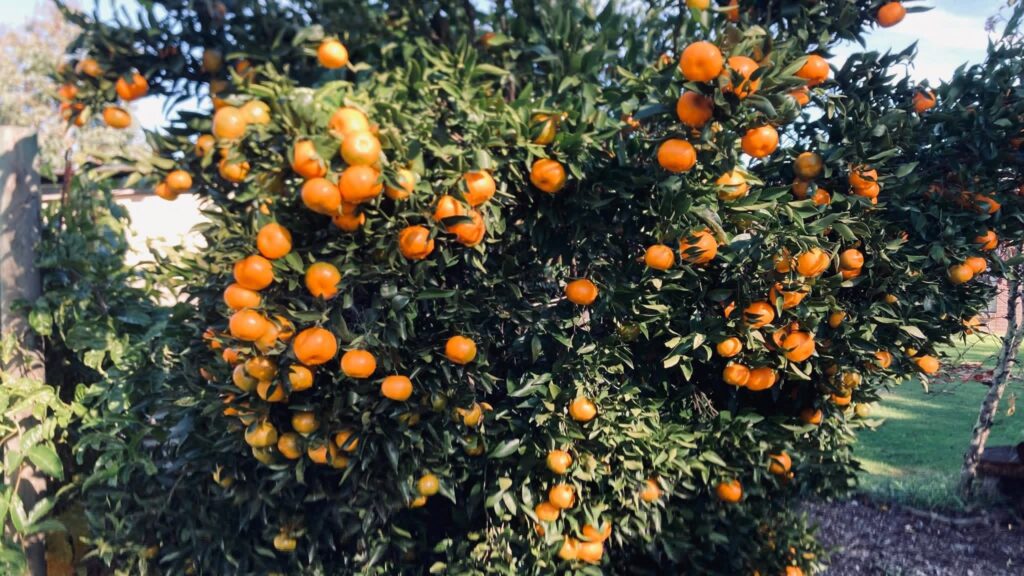
Valencia oranges are the backbone of the juice industry worldwide. They ripen later in the season and hold well on the tree without losing quality, sometimes for months past maturity.
11. Valencia Orange
Valencia is often called the “king of juice oranges.” UF/IFAS notes Valencia provides sweet, bright juice and is considered Florida’s top juicing variety, prized industry-wide for its high juice content and balanced acidity.
The variety likely originated in Spain or the Azores and was later refined through selection in California and Florida into the modern commercial standard.
Unlike navel oranges, Valencia contains seeds and a looser-clinging peel, which is part of why it suits juicing better than fresh, hand-peeled eating.
Growing tip: Valencia trees tolerate heat well and can be left on the tree for months after ripening without spoiling, a trait growers call “hang time.”
Care tip: Because Valencia has a long growing season, feed the tree consistently through spring and summer to support extended fruit development through to a spring harvest.
12. Midknight Valencia
Midknight is a South African Valencia selection that reaches commercial maturity several weeks earlier than standard Valencia, according to UF/IFAS’s 2025-2026 Citrus Production Guide.
Its earlier maturity window gives processors access to Valencia-quality juice before the bulk of the traditional crop is ready, smoothing out supply through the season.
Growing tip: Midknight trees are less vigorous than other Valencia types and grow best on Carrizo or Swingle rootstock, according to current UF/IFAS rootstock recommendations.
Care tip: Because the tree is smaller, plant at slightly closer spacing than standard Valencia for efficient orchard density and easier harvesting access.
13. Delta Valencia
Delta is another South African Valencia selection, more vigorous than Midknight, though its fruit has somewhat lower Brix, or sugar content, compared to traditional Valencia.
Growers often choose between Midknight and Delta based on rootstock compatibility and desired tree vigor for their specific soil conditions.
Growing tip: Delta trees benefit from Swingle or Carrizo rootstock due to their vigorous growth habit, which helps balance canopy size with root capacity.
Care tip: Manage canopy size with annual pruning, since Delta’s vigor can quickly outgrow tight planting spaces if left unchecked for several seasons.
14. Vernia
Vernia is a midseason sweet orange somaclone developed by UF/IFAS, noted for excellent juice quality and among the highest color scores of any orange variety at time of harvest.
Somaclonal selection, the breeding method used to create Vernia, involves selecting naturally occurring genetic variations from tissue-cultured plant material rather than traditional cross-pollination.
Growing tip: Vernia matures in February and March, filling the gap between the early Hamlin harvest and the late Valencia season for continuous juice supply.
Care tip: Because Vernia was bred partly for HLB tolerance, monitor leaf color and consult local extension services for updated management practices as research continues.
15. Rhode Red Valencia
Rhode Red is a red-blushed Valencia selection prized for its deeper rind color, maintained in the UC Riverside variety collection as a distinct budline from standard Valencia.
The reddish rind blush makes Rhode Red visually distinctive in a mixed citrus display, even though its internal flavor closely mirrors standard Valencia.
Growing tip: Full sun exposure enhances the red blush on the rind, so avoid shaded planting locations that would mute the coloring.
Care tip: Treat this tree like standard Valencia for irrigation and fertilization, adjusting only for local soil conditions and available rootstock options.
16. Olinda Valencia
Olinda is a widely propagated nucellar Valencia selection known for consistent fruit quality across California orchards, and it exists under multiple sub-selections within the UC Riverside collection.
Its broad commercial adoption makes it one of the most recognizable Valencia budlines used by California growers today.
Growing tip: This is one of the most common commercial Valencia budlines, so it is broadly available and well-suited to standard grove conditions across the state.
Care tip: Rotate irrigation scheduling with seasonal rainfall to avoid overwatering during California’s wetter winter months, particularly in coastal growing regions.
17. Campbell Valencia
Campbell is a nucellar Valencia selection developed for improved disease resistance through virus-free propagation methods similar to those used for Frost Washington navel.
Its nucellar status makes it a preferred choice for growers establishing new orchards where long-term tree health is a priority.
Growing tip: As with other nucellar selections, source Campbell budwood only from certified programs to maintain its disease-free status over successive plantings.
Care tip: Give young trees a slow-release citrus fertilizer to establish strong root systems before their first fruiting year, typically two to three years after planting.
18. Frost Valencia
Frost Valencia is another nucellar selection, developed through the same virus-elimination program at the University of California that produced Frost Washington navel orange.
Because both Frost selections share a breeding origin, growers sometimes plant them together for complementary navel and juice orange production.
Growing tip: This selection performs reliably across a range of California growing regions, from coastal fog belts to hot inland valleys.
Care tip: Because nucellar trees can be more vigorous initially, prune young trees to establish a strong scaffold structure early, before the canopy becomes unmanageable.
19. Hart’s Tardiff Valencia
Hart’s Tardiff is a late-maturing Valencia strain, historically valued for extending the harvest season even further into summer than standard Valencia timing allows.
The name “Tardiff,” derived from the French word for late, reflects its role as one of the last-ripening sweet oranges available to growers.
Growing tip: Plant this variety if you want the latest possible fresh Valencia harvest in your growing region, extending your home orchard’s productive window.
Care tip: Because fruit hangs longer on the tree, watch for increased pest pressure during the extended ripening period, particularly from citrus thrips and scale.
20. Lue Gim Gong Valencia
Named after the Chinese-American horticulturist who developed cold-hardy citrus varieties in Florida in the late nineteenth and early twentieth centuries, this Valencia selection reflects his breeding legacy.
Lue Gim Gong’s original citrus breeding work in DeLand, Florida, helped establish Florida’s citrus industry on a firmer, more cold-resistant footing.
Growing tip: This variety carries slightly improved cold tolerance, useful for growers in Florida’s cooler citrus-growing counties near the northern edge of the citrus belt.
Care tip: Protect young trees during winter with trunk wraps or temporary covers until they are well established, typically for the first two to three years.
Early and Mid-Season Sweet Oranges
These varieties ripen before Valencia and are prized for early-season fresh eating and juicing, often forming the first wave of the annual citrus harvest.
21. Hamlin Orange
Hamlin is Florida’s most widely planted early-season juice orange. UF/IFAS notes Hamlin trees produce the most fruit for juicing of any Florida variety, making it the backbone of the state’s early-season processing industry.
Originally discovered as a chance seedling in Florida in the 1870s, Hamlin became commercially significant because of its reliable early yields and cold tolerance relative to other sweet oranges.
Growing tip: Hamlin trees are cold-hardy relative to other sweet oranges, making them a reliable choice for Central Florida groves near the cooler edges of the growing region.
Care tip: Because Hamlin is particularly sensitive to citrus canker and HLB, follow local extension disease-management guidance closely and inspect trees regularly for early symptoms.
22. Hamlin Somaclone N13-32
This UF/IFAS-developed clone of Hamlin offers improved juice color and equal or better soluble solids for processing, according to UF/IFAS breeding reports released through the citrus improvement program.
The somaclone was selected specifically to address quality shortcomings in standard Hamlin juice, particularly around color intensity valued by processors.
Growing tip: Growers replacing older Hamlin blocks should consider this improved somaclone for better juice quality outcomes without changing overall grove management.
Care tip: Manage this tree with the same practices as standard Hamlin, since its horticultural needs and disease susceptibilities remain largely similar.
23. Pineapple Orange
Pineapple orange, developed through Florida’s citrus breeding programs in the nineteenth century, is named for its distinctive tropical aroma rather than any pineapple flavor in the actual fruit.
It was historically considered one of Florida’s best midseason oranges for both fresh eating and juicing, valued for rich flavor despite a seedier profile than modern hybrids.
Growing tip: Pineapple orange trees produce well in Central Florida’s warm climate and are typically harvested December through February for peak flavor.
Care tip: Because this variety is seedier than modern hybrids, home growers focused on fresh eating may prefer navel varieties instead, saving Pineapple orange for juicing.
24. Parson Brown Orange
Parson Brown is one of Florida’s oldest commercial sweet orange varieties, historically valued as an early-season option before Hamlin’s rise to dominance in the early twentieth century.
The variety was discovered in Florida in the 1800s and named after the Reverend N.L. Brown, who first propagated it commercially.
Growing tip: This variety tolerates Florida’s sandy soils well and requires similar care to Hamlin, including standard citrus fertilization schedules.
Care tip: Expect a seedier fruit than modern selections; this variety suits juicing more than fresh eating, particularly for growers focused on early-season processing.
25. Ambersweet Orange
Ambersweet was developed by the USDA in the 1980s specifically for improved cold tolerance in Florida’s citrus belt, following a series of devastating freezes that pushed commercial groves further south.
Its parentage includes both orange and mandarin genetics, giving it a slightly different profile than a purely traditional sweet orange.
Growing tip: Ambersweet trees handle brief cold snaps better than standard sweet oranges, useful for growers near Florida’s northern citrus boundary where frost risk is higher.
Care tip: This variety has technically mixed parentage including mandarin, so expect slightly looser skin than a true sweet orange when handling and storing fruit.
26. Valquarius
Valquarius is an early Valencia somaclone developed by UF/IFAS to advance the harvest window ahead of traditional Valencia timing, part of a broader breeding push toward earlier maturity.
Its development reflects growing industry pressure to reduce the need for blending early and late juice batches to meet quality standards.
Growing tip: Consider Valquarius if your operation needs juice fruit ready before the standard Valencia season begins, smoothing out your annual harvest schedule.
Care tip: Follow UF/IFAS recommended rootstock pairings, since somaclone performance varies noticeably by rootstock choice and local soil chemistry.
27. Florida EV1
EV1 is one of two early-maturing Valencia somaclones released by UF/IFAS in 2016, offering higher solids and better juice color than Hamlin around the Thanksgiving harvest window.
Field trials conducted over several seasons showed EV1 consistently outperforming Hamlin on key juice quality metrics during its early maturity period.
Growing tip: EV1 suits growers wanting a bridge variety between Hamlin’s early harvest and full Valencia season, filling a useful gap in the calendar.
Care tip: Pair with recommended rootstocks per current UF/IFAS production guides for the best disease tolerance and long-term grove performance.
28. Florida EV2
EV2 is the companion release to EV1, sharing similar early maturity advantages with slightly different tree vigor characteristics that suit different soil and rootstock combinations.
Growers often trial both EV1 and EV2 side by side to determine which fits their specific grove conditions best before committing to a full planting.
Growing tip: Trial EV2 alongside EV1 in test blocks to determine which performs better on your specific soil type and irrigation setup.
Care tip: Because these are relatively new releases, stay in contact with your local UF/IFAS extension agent for updated management data as more field results accumulate.
29. Midsweet Orange
Midsweet, as UF/IFAS EDIS notes, is a solid midseason option alongside Pineapple for Florida home landscapes wanting fruit between the early and late season harvests.
It offers a useful middle point in a home orchard’s harvest calendar, bridging the gap between Hamlin’s fall fruit and Valencia’s spring finish.
Growing tip: Plant Midsweet alongside an early variety like Hamlin and a late variety like Valencia for near year-round home harvest coverage.
Care tip: Standard citrus fertilization and watering schedules apply; no special requirements beyond typical sweet orange care are needed for this variety.
30. OLL-4 Sweet Orange
OLL-4 is a UF/IFAS-developed juicy sweet orange with excellent color and flavor, typically harvested in mid-February as part of the university’s home landscape variety program.
It was bred with backyard growers specifically in mind, balancing flavor quality with practical considerations like disease tolerance and manageable tree size.
Growing tip: This variety was specifically bred with home landscape gardeners in mind, alongside disease tolerance improvements not always prioritized in commercial varieties.
Care tip: Because newer UF releases often show improved HLB tolerance, ask your local nursery whether OLL-4 fits your region’s specific disease pressure before planting.
Blood Oranges
Blood oranges get their deep red flesh from anthocyanin pigments, which develop most strongly with cool nighttime temperatures during ripening, a trait shared with red apples and dark grapes.
31. Moro Blood Orange
Moro is the most intensely colored blood orange, with nearly maroon flesh and a distinctive berry-like flavor alongside the classic orange taste, making it the most dramatic of the three main Italian blood orange varieties.
Originating in Sicily, Moro is often considered the “grandfather” of blood oranges due to its bold pigmentation and strong flavor profile compared to its milder relatives.
Growing tip: Moro develops its deepest color where daytime heat is followed by cool nights, such as inland California valleys like those around Bakersfield and Exeter.
Care tip: Avoid excessive nitrogen fertilization, which can dilute the red pigmentation in the flesh by pushing vegetative growth at the expense of fruit quality.
32. Tarocco Blood Orange
Tarocco, an Italian heirloom variety from Sicily, is prized for a milder blood-orange flavor and less intense coloring than Moro, often described as the sweetest of the blood orange trio.
It is sometimes called the “queen of oranges” in Italy, where it remains the most widely grown blood orange for both domestic consumption and export.
Growing tip: Tarocco trees tend to be less vigorous than standard sweet oranges, so use closer spacing in commercial rows to maximize yield per acre.
Care tip: This variety benefits from consistent deep watering, since inconsistent moisture affects both size and color development throughout the ripening period.
33. Sanguinelli Blood Orange
Sanguinelli is a Spanish blood orange selection known for a nearly seedless fruit and dependable red pigmentation, developed as a bud mutation of an older Spanish blood orange variety.
Its Spanish origin means it is particularly well adapted to Mediterranean growing conditions similar to those found in parts of coastal California.
Growing tip: Sanguinelli performs well in Mediterranean climates with warm days and cool, but not freezing, nights during the winter ripening period.
Care tip: Harvest promptly once ripe, since blood oranges can lose some color intensity if left too long past maturity on the tree.
34. Burris Valencia Blood Orange
This is a blood-orange-pigmented Valencia selection maintained in the UC Riverside Citrus Variety Collection, combining Valencia’s juiciness and long hang time with blood orange coloring.
It represents an interesting crossover category, offering growers the extended harvest flexibility of Valencia alongside the visual appeal of red flesh.
Growing tip: Grow this variety in regions with a wide day-night temperature swing to encourage stronger pigmentation, similar to standard blood orange requirements.
Care tip: Treat cultivation needs similarly to standard Valencia, since this is fundamentally a Valencia-type tree with an added pigmentation trait.
35. Ruby Blood Orange
Ruby blood orange, referenced in UC Riverside breeding history as a parent of hybrids like “Valentine,” offers classic red-fleshed sweetness and played an important role in the university’s citrus breeding program.
Its genetic contribution to later hybrids demonstrates how blood orange traits have been used to enhance flavor and appearance in entirely new citrus types.
Growing tip: Plant in full sun with well-drained soil; blood oranges generally need the same conditions as standard sweet oranges to thrive.
Care tip: Cooler autumn nights before harvest intensify color, so avoid picking too early in warm-climate plantings where nights stay mild.
Sour and Bitter Oranges
Sour oranges are grown mainly for marmalade, essential oils, rootstock, and ornamental use rather than fresh eating, since their flesh is typically too tart and bitter to enjoy raw.
36. Seville Sour Orange
Seville orange is the classic marmalade orange, valued for its intensely tart, bitter flavor that mellows beautifully when cooked with sugar into the traditional British preserve.
Originally brought to Spain by Moorish traders, Seville orange trees still line the streets of Seville today, more for ornamental shade than for fruit harvest.
Growing tip: Seville trees are notably cold-hardy and were historically used as rootstock before disease concerns, particularly tristeza virus, shifted grower preferences elsewhere.
Care tip: If growing for marmalade, harvest once fruit is fully colored but still firm for the best pectin content, which helps the preserve set properly.
37. Bergamot Orange
Bergamot is a sour orange hybrid best known for the essential oil used in Earl Grey tea and perfumery, grown commercially mainly in Calabria, Italy, where it thrives in coastal conditions.
The oil is extracted from the peel through cold-pressing, and Calabria’s specific soil and climate are considered essential to producing authentic bergamot oil.
Growing tip: Bergamot prefers a warm coastal Mediterranean climate similar to its native Calabrian growing region, with mild winters and consistent humidity.
Care tip: Fruit is rarely eaten fresh due to bitterness; harvest for peel and oil extraction rather than juice, timing picking to peak oil concentration.
38. Chinotto (Myrtle-Leaf Orange)
Chinotto, listed in the UC Riverside collection as Citrus aurantium var. myrtifolia, produces small, intensely bitter fruit used in Italian soft drinks and aperitifs, most famously in Chinotto soda.
The tree’s dense, small-leaved growth habit has also made it a popular ornamental subject in formal Italian and French gardens for centuries.
Growing tip: This compact tree also works well as an ornamental hedge plant due to its small leaves and dense growth habit, tolerating regular shaping.
Care tip: Prune regularly if using Chinotto ornamentally, since it responds well to shaping without harming fruit production or overall tree health.
39. Daidai Orange
Daidai is a traditional Japanese sour orange used in New Year celebrations and traditional medicine, valued more for symbolism and peel use than fresh eating, since the fruit is highly bitter.
The name “daidai” means “generation to generation” in Japanese, reflecting its symbolic role in wishing prosperity across family generations during New Year decorations.
Growing tip: Daidai tolerates cooler temperatures better than many sweet orange varieties, suiting temperate Japanese growing regions with distinct winter seasons.
Care tip: Because fruit is rarely consumed fresh, focus care on tree vigor and appearance rather than juice quality, particularly if grown for ornamental or ceremonial purposes.
40. Trifoliate Orange (Poncirus trifoliata)
Trifoliate orange is technically a citrus relative rather than a true orange, but it plays a massive role as cold-hardy rootstock throughout the world, valued for its exceptional resistance to freezing temperatures.
Its deciduous habit, unusual among citrus relatives, and distinctive three-leaflet foliage make it easy to identify even from a distance in an orchard or nursery.
Growing tip: This is the most cold-hardy citrus relative available, tolerating temperatures well below what any true orange survives, sometimes into the single digits Fahrenheit.
Care tip: Rarely grown for fruit; instead, use as rootstock to graft cold-sensitive orange varieties in marginal climates where standard rootstocks would fail.
Tangors, Tangelos, and Orange Hybrids
These hybrids combine orange genetics with mandarin or grapefruit, producing some of the most flavorful citrus available and often blurring the line between categories.
41. Temple Orange (Tangor)
Temple is a mandarin-orange hybrid, or tangor, that UF/IFAS EDIS describes as superb in both quality and appearance, often preferred over grapefruit by home growers looking for a rich, complex flavor.
Discovered in Jamaica and later popularized in Florida, Temple oranges are known for their deep orange color and rich, slightly spicy sweetness distinct from either parent fruit.
Growing tip: Temple trees are somewhat cold-sensitive compared to standard sweet oranges, so site them in a protected, warm location away from open frost pockets.
Care tip: Fruit peels more easily than a true orange but less easily than a mandarin; harvest when fully colored for best flavor and easiest handling.
42. Murcott (Honey Tangerine, Tangor)
Murcott, also called the honey tangerine, is a tangerine-orange hybrid known for exceptionally sweet, rich flavor that has made it one of the most popular fresh-eating citrus varieties in Florida.
Despite its common “tangerine” nickname, Murcott’s orange parentage gives it a fuller body and higher sugar content than a typical true tangerine.
Growing tip: Murcott trees tend toward alternate bearing, producing a heavy crop one year and a lighter one the next, a pattern growers should plan around.
Care tip: Thin fruit in heavy years to even out production and reduce stress on the tree over time, helping smooth out the alternate bearing cycle.
43. Orlando Tangelo
Orlando is a tangerine-grapefruit hybrid, one of the two tangelo varieties UF/IFAS recommends most for Florida home gardens, valued for its juicy, mildly sweet flavor and easy-peeling rind.
The cross was developed in the early twentieth century by USDA breeders working to combine the best traits of tangerines and grapefruit into a single, more approachable fruit.
Growing tip: Orlando tangelo trees are fairly cold-hardy, making them suitable for a wide range of Florida growing zones, including cooler inland areas.
Care tip: Plant a pollinator variety nearby, since Orlando tangelo benefits from cross-pollination for reliable fruit set and higher overall yields.
44. Minneola Tangelo (Honeybell)
Minneola, commonly called the Honeybell, is a beloved tangelo known for its bell shape, deep orange color, and intensely sweet, juicy flavor that has built a passionate seasonal following.
Its short, highly anticipated harvest window each winter has turned Honeybell shipping into something of an annual tradition for many Florida citrus fans and mail-order customers.
Growing tip: Minneola trees share Orlando’s cold hardiness and similar Florida growing requirements, making the two varieties good companions in a home orchard.
Care tip: Because Honeybells are seasonal and highly perishable once ripe, plan harvest timing carefully if selling or shipping fruit to avoid quality loss in transit.
45. Amoa 8 Tangor
Amoa 8 is a tangor selection preserved in the UC Riverside Citrus Variety Collection, valued for its balance of mandarin sweetness and orange structure, offering researchers a useful reference point for breeding work.
Its inclusion in the collection reflects the broader international interest in tangor development beyond the well-known Temple and Murcott varieties.
Growing tip: Grow Amoa 8 under similar conditions to Temple orange, favoring warm, sheltered planting sites protected from harsh winter winds.
Care tip: Monitor young trees for cold sensitivity during their first few winters until roots are well established and the canopy has matured.
46. Altoona Tangor
Altoona is another tangor type documented in UC Riverside’s collection, contributing to the genetic diversity available for citrus breeding research and future variety development.
Like many collection-held varieties, Altoona is rarely available commercially but remains valuable for scientists studying tangor flavor and growth characteristics.
Growing tip: As with other tangors, Altoona benefits from full sun and protection from hard frost in its early years of establishment.
Care tip: Because tangors vary significantly in flavor even within the category, taste-test fruit before committing to large-scale planting of any lesser-known selection.
47. Valentine Hybrid
Valentine, developed at UC Riverside in the 1950s, is a cross between a Siamese Sweet pummelo and a Ruby blood orange-Dancy mandarin hybrid, prized for its low acidity and floral sweetness.
The fruit was nicknamed “Valentine” by a former staff research associate because it matures near Valentine’s Day and reveals a vivid red, heart-shaped cross-section when cut and turned upside down.
Growing tip: Plant Valentine where a striking, vividly red interior at harvest will be appreciated, since it’s a visually dramatic fruit when cut and displayed.
Care tip: This tree matures mid-February; time fertilization and irrigation to peak before that ripening window for the best possible fruit quality.
48. Fallglo Tangerine-Orange Hybrid
Fallglo, recommended by UF/IFAS EDIS as a favored early-maturing tangerine substitute, carries orange parentage that gives it a fuller, richer flavor than a pure mandarin variety.
It was developed specifically to fill the earliest part of Florida’s mandarin-type harvest calendar, arriving on shelves well before Dancy or Sunburst.
Growing tip: Fallglo trees perform well across much of Florida’s citrus-growing region and mature earlier than many mandarin hybrids, extending the fresh season.
Care tip: Provide a compatible pollinator variety nearby, since many mandarin-orange hybrids set fruit better with cross-pollination from a neighboring tree.
49. Sunburst Tangerine-Orange Hybrid
Sunburst, another EDIS-recommended hybrid, combines deep orange-red rind color with the sweetness expected from strong orange lineage, making it a visually appealing addition to any home grove.
Its bright color and reliable production have made it one of the more commercially successful mandarin-orange hybrids developed for the Florida fresh market.
Growing tip: Sunburst trees are productive and relatively easy to grow, making them a good choice for less experienced home citrus growers starting their first orchard.
Care tip: Watch for alternate bearing patterns; thinning fruit in a heavy year helps maintain more even production going forward into future seasons.
50. 1859 Sweet Orange-Like Hybrid
Released by UF/IFAS after more than 20 years of field exposure to HLB, this experimental hybrid resembles sweet orange and shows strong tolerance to citrus greening disease, one of the most promising outcomes of decades of patient breeding work.
Fruit of 1859 closely resembles a standard sweet orange in appearance, which is notable given the disease pressure under which it was selected and tested.
Growing tip: Fruit matures beginning in mid-November and holds well on the tree until late January, giving growers flexible harvest timing across a wide window.
Care tip: Because this is a newer release focused on disease tolerance, consult your local UF/IFAS extension office for the latest management recommendations before large-scale planting decisions.
General Growing and Care Guide for Orange Trees
Regardless of variety, orange trees share fundamental needs. Understanding these basics determines whether your tree merely survives or truly flourishes across its productive lifespan.
Sunlight: Orange trees need full sun, ideally six or more hours daily. UF/IFAS notes citrus tolerates light shade but produces far better in direct sunlight, with fuller canopies and sweeter fruit.
Soil and drainage: Citrus trees need well-drained soil with a slightly acidic to neutral pH, generally between 6.0 and 7.5. Standing water around roots quickly leads to root rot and gradual tree decline.
Watering: Deep, infrequent watering builds strong root systems. Young trees need more frequent watering during establishment, tapering off as roots mature and reach deeper soil layers.
Spacing: UF/IFAS recommends a minimum of 15 feet between citrus trees to allow full canopy development and reduce disease spread between neighboring trees in a home orchard.
Fertilization: Apply a citrus-specific fertilizer three times yearly during active growth. Micronutrients like zinc, manganese, and boron support healthy leaf color and consistent fruit development.
Cold protection: Choose a location with a windbreak to reduce wind speed during freezes, and avoid low-lying areas where cold air settles, per UF/IFAS cold-hardy citrus guidance for home gardeners.
Harvest timing: Citrus fruit does not ripen further once picked. Taste a sample fruit before harvesting the entire tree to confirm readiness, since color alone can be misleading.
Disease awareness: Huanglongbing, or citrus greening, remains the industry’s top threat. No variety is fully resistant, though breeding programs continue releasing more tolerant selections like Vernia and 1859.
Rootstock matters: Rootstock choice affects tree vigor, disease resistance, and soil adaptability. UF/IFAS and USDA continue releasing new rootstocks, including the SuperSour series, to improve grower outcomes against disease and stress.
Pruning: Annual light pruning after harvest improves airflow through the canopy and reduces populations of pests like scale and mites that thrive in dense, shaded growth.
Frequently Asked Questions
What is the difference between a navel orange and a Valencia orange? Navel oranges are seedless, easy to peel, and best for fresh eating, harvested earlier in the season. Valencia oranges are juicier, seedier, and dominate the juice industry, ripening later and holding well on the tree.
How long does it take an orange tree to bear fruit? Grafted orange trees typically begin fruiting within two to three years, while seed-grown trees can take much longer, sometimes five to seven years, and may not match the parent variety’s quality.
Why do blood oranges turn red? Blood oranges develop anthocyanin pigments in response to cool nighttime temperatures during ripening, which is why California’s inland valleys produce more intensely colored fruit than warmer coastal regions.
Can orange trees survive frost? Most sweet oranges suffer damage below 28°F, though some, like Ambersweet, tolerate brief cold snaps better. Trifoliate orange, a citrus relative, is by far the most cold-hardy option available for rootstock use.
What is HLB and why does it matter for orange trees? Huanglongbing, or citrus greening, is a bacterial disease spread by a small insect that has devastated Florida’s orange industry, cutting production dramatically over the past two decades according to UF/IFAS research.
Which orange variety is best for a home garden? For most home gardeners, a Washington or Cara Cara navel offers reliable, easy-to-eat fruit, while a Valencia tree adds a long juicing season for those who want both fresh and juice options from a single yard.
Final Thoughts
Choosing the right orange tree comes down to climate, purpose, and personal taste. A navel suits fresh eating, a Valencia suits juicing, and a blood orange rewards patience with a striking, flavorful surprise at harvest time.
I would encourage any first-time grower to buy a certified, grafted tree from a registered nursery rather than starting from seed. It shortens the wait and guarantees the fruit quality you actually want in your own backyard.
With the right variety, thoughtful placement, and consistent care, an orange tree can provide fresh fruit for decades, season after season, long after the planting day is forgotten.
References
- University of California, Riverside – Givaudan Citrus Variety Collection: https://citrusvariety.ucr.edu/
- UC Riverside – Citrus Varieties by Category or Type: https://citrusvariety.ucr.edu/citrus-varieties/category-or-type
- UF/IFAS Extension – Citrus Culture in the Home Landscape (HS132): https://edis.ifas.ufl.edu/publication/HS132
- UF/IFAS Extension – 2025–2026 Florida Citrus Production Guide: Rootstock and Scion Selection (HS1308): https://ask.ifas.ufl.edu/publication/HS1308
- UF/IFAS Extension – The United States Orange Industry: Declining Production and Climbing Imports (FE1145): https://ask.ifas.ufl.edu/publication/FE1145
- UF/IFAS Gardening Solutions – Cold-Hardy Citrus: https://gardeningsolutions.ifas.ufl.edu/plants/edibles/fruits/cold-hardy-citrus/
- USDA National Agricultural Statistics Service – Citrus Fruits Summary Reports: https://www.nass.usda.gov/Statistics_by_State/Florida/Publications/Citrus/Citrus_Forecast/index.php

Tim M Dave is a gardening expert with a passion for houseplants, particularly cacti and succulents. With a degree in plant biology from the University of California, Berkeley, he has vast experience in gardening. Over the years, he has cultivated a vast collection of desert plants and learned a great deal about how to grow and care for these unique companions.