25 Types of Avocado Trees (Identification, With Pictures)
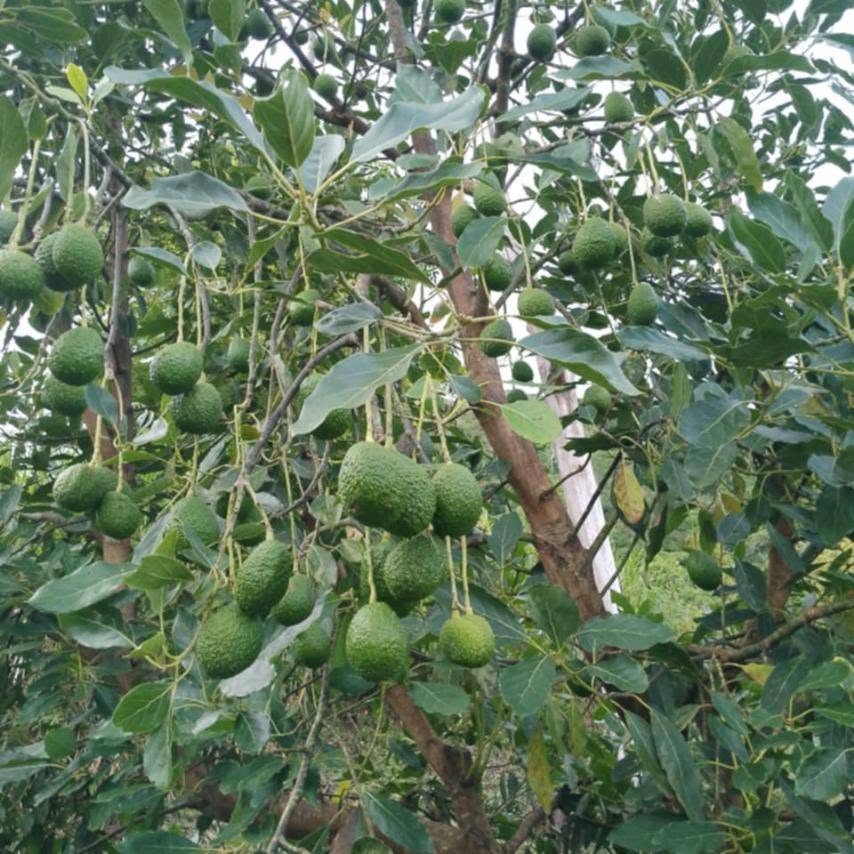
If you have ever bitten into a creamy Hass avocado and wondered why your neighbor’s tree grows fruit twice the size with paper-thin skin, you are not alone. Avocado trees are far more diverse than the produce aisle suggests.
I have spent time digging through university extension records, grower bulletins, and botanical collections to put together this guide. What surprised me most is how much variety hides behind one common name.
There are three natural races of avocado — Mexican, Guatemalan, and West Indian — plus countless hybrids bred from them. Each type brings its own flavor, cold tolerance, and growth habit.
This guide covers 25 distinct avocado tree types, along with growing and care tips for each. Whether you are a backyard gardener in Florida or a commercial grower in California, you will find something useful here.
Quick Facts Before We Begin
California grows about 88% of all avocados produced in the United States, with Florida contributing roughly 12% and Hawaii less than 1%, according to USDA data cited by the University of Florida’s IFAS Extension.
Within California, Hass avocados alone make up around 94 to 95% of the state’s total crop volume. That leaves a small but growing share for Lamb Hass, GEM, and other named varieties.
Florida’s story is different. Its warm, humid climate favors the West Indian race, and growers there cultivate more than 50 recognized varieties, prized for lower fat content compared to California-grown fruit.
Knowing the race behind a variety tells you almost everything about how to grow it. Let’s go through all 25.
1. Hass
The Hass avocado is the variety most people picture when they hear the word “avocado.” It has pebbly, dark green skin that turns nearly black when ripe.
This tree originated from a single seedling patented in 1935 by mail carrier Rudolph Hass in La Habra Heights, California. Nearly every commercial Hass tree today traces back to that one original seedling, grown almost by accident from a batch Hass had intended to remove.
The fruit itself carries about 20.8% dry matter at harvest maturity, one of the benchmarks California growers use to judge picking time. Flavor is rich and nutty, with a smooth, buttery texture that holds up well in shipping.
Hass trees are vigorous, upright growers that can reach 30 feet or more without regular pruning. Left unchecked, the canopy becomes dense enough to shade out lower fruiting wood.
Growing tip: Hass performs best in well-drained, sandy loam soil with full sun. Water deeply but infrequently, since standing water encourages root rot, and mulch generously to keep roots cool.
Care tip: Prune lightly after harvest to control height and improve airflow. Hass is a Type A flowering variety, so planting a Type B tree nearby, such as Fuerte or Zutano, boosts fruit set considerably.
2. Fuerte
Fuerte is a Mexican-Guatemalan hybrid with smooth, thin, green skin that stays green even when ripe, unlike Hass. Before Hass took over the market in the 1970s and 1980s, Fuerte was the dominant commercial variety in California.
The name means “strong” in Spanish, a nod to the tree’s relative cold hardiness compared to purely Guatemalan types. It was first introduced to California from Mexico in 1911 and became a cornerstone of the early industry.
I find Fuerte fruit has a lighter, more buttery texture than Hass, with a slightly higher water content, which makes it a favorite among home cooks who prefer a milder taste over the richer Hass profile.
Growing tip: Fuerte trees tolerate cooler temperatures better than Hass, surviving brief dips to around 25°F once established, and they also handle alternate bearing, meaning yields can swing from year to year.
Care tip: This is a Type B variety, so pair it with a Type A tree like Hass for reliable cross-pollination and heavier yields. Fuerte also benefits from a light spring pruning to reduce biennial bearing patterns.
3. Bacon
Bacon avocados have smooth, medium-green skin and a nutty, mild flavor with lower oil content than Hass. This Mexican-type variety is one of the most cold-hardy avocados grown commercially in California.
Bred in Buena Park, California, in the 1950s, Bacon was developed specifically to extend the growing range of avocados into cooler inland valleys where Guatemalan types struggled.
The fruit is medium-sized, oval, and ripens in late fall through winter, filling a gap in the market when Hass supply is lower.
Growing tip: Bacon trees can handle temperatures as low as 24°F, making them a solid choice for growers in marginal avocado climates, including parts of inland Southern California.
Care tip: Give Bacon trees consistent irrigation during fruit development. Uneven watering causes the fruit to drop prematurely, and a thick mulch layer helps buffer soil temperature swings during cold snaps.
4. Zutano
Zutano produces smooth, pale green, thin-skinned fruit with a pear-like shape. The flavor is watery compared to Hass, but the tree’s reliability and productivity make up for it.
This Mexican-Guatemalan hybrid was developed in the 1920s and remains popular mainly as an early-season variety and a dependable pollinator tree rather than for fresh-market flavor.
Growing tip: Zutano is one of the most freeze-tolerant avocado trees available, tolerating temperatures into the low 20s Fahrenheit, and it is often used as a windbreak or pollinator row in commercial orchards.
Care tip: Because it is a heavy, early producer, thin the fruit in high-yield years to prevent branches from snapping under the weight, and stake young trees since Zutano wood is somewhat brittle.
5. Pinkerton
Pinkerton avocados are long and pear-shaped with a small seed and thick, easy-to-peel skin. The high flesh-to-seed ratio, often over 70%, makes this variety especially popular with home growers and small-scale sellers.
Developed in the 1970s by California grower John Pinkerton, this Guatemalan-Mexican hybrid ripens early in the season, typically just ahead of the main Hass crop.
Growing tip: Pinkerton trees have a spreading, umbrella-like canopy that can become quite wide. Give them generous spacing, around 20 to 25 feet, to let branches develop fully without crowding neighboring trees.
Care tip: This is a Type A tree. Fertilize with a balanced citrus and avocado formula three to four times per year for steady fruiting, and thin heavy fruit clusters to prevent limb breakage.
6. Reed
Reed avocados are round, large, and green-skinned, staying green through ripeness rather than darkening. Unlike most varieties, Reed fruits in the heat of summer, extending the California season into July and August.
This Guatemalan variety was discovered as a chance seedling in a California backyard in the 1940s and later commercialized for its exceptional summer availability.
The flesh is thick, creamy, and nearly seedless in proportion, making it a favorite among chefs for presentation as well as taste.
Growing tip: Reed trees grow upright and compact compared to sprawling Guatemalan cousins, which suits smaller yards and higher-density plantings better than wide-canopy varieties.
Care tip: Because Reed fruits later in the season, protect young trees from intense afternoon sun with light shade cloth during their first two summers, and irrigate consistently through the extended fruit-hang period.
7. Gwen
Gwen is a Guatemalan-type variety often described as a compact, high-yield cousin of Hass. The skin is pebbly and turns dark as it ripens, and the flavor is rich, similar to Hass but slightly milder.
Gwen was bred at the University of California, Riverside, and released to growers as a smaller, more manageable tree option without sacrificing fruit quality.
Growing tip: Gwen trees stay smaller than most Guatemalan types, often topping out around 15 to 18 feet, so they suit backyard orchards and container growing better than standard Hass.
Care tip: This variety needs consistent deep watering; shallow, frequent watering leads to weak root systems and poor anchorage, particularly during the tree’s first three years in the ground.
8. Lamb Hass
Lamb Hass is a Hass-Gwen cross bred at UC Riverside that ripens later in the season, extending the harvest window well into late summer and fall. It resembles Hass closely in appearance, texture, and flavor.
According to California Avocado Commission crop reports, Lamb Hass now accounts for roughly 3% of California’s annual avocado volume, a share that has been climbing steadily as growers plant more acreage.
The tree also tends to bear more consistently year to year than standard Hass, reducing the sharp boom-and-bust cycles common in avocado orchards.
Growing tip: Lamb Hass trees are more upright and compact than standard Hass, which makes pruning and harvesting easier, and their sturdier limb structure resists wind damage better.
Care tip: Mulch heavily around the base to retain soil moisture, since this variety is sensitive to drought stress during fruit set, and monitor for the same pest pressures that affect standard Hass.
9. GEM
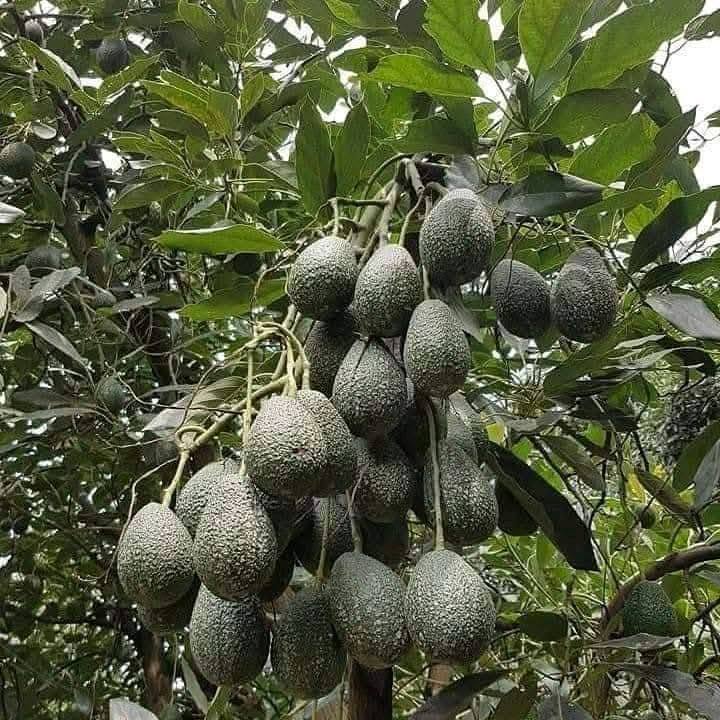
GEM is a newer patented variety, also developed through the UC Riverside breeding program, that has gained rapid popularity with both growers and retailers. Its dark, thick skin resists bruising during shipping far better than standard Hass.
Market data reported by The Packer shows GEM avocado sales rose 161% year over year through early 2025, reflecting strong consumer demand and expanding retail placement.
The tree itself is notably compact and upright, allowing growers to plant at higher densities than traditional Hass orchards, which translates into more pounds harvested per acre over time.
Growing tip: GEM trees grow more compact and upright than Hass, allowing tighter orchard spacing and higher yield per acre once trees mature into full production.
Care tip: GEM benefits from regular boron and zinc micronutrient applications, based on University of California nutrient guidelines, alongside standard nitrogen feeding through the growing season.
10. Sir-Prize
Sir-Prize is a lesser-known Hass relative bred at UC Riverside, valued for excellent flavor and a notably longer on-tree storage period than most commercial varieties.
Because fruit can hang on the tree for weeks past maturity without losing eating quality, Sir-Prize gives growers and home gardeners more flexibility in timing their harvest.
Growing tip: This variety tolerates being left on the tree longer after maturity without losing quality, which is useful for staggered home harvests across a household or small farmers market operation.
Care tip: Because Sir-Prize is not widely propagated, source grafted trees only from reputable, certified nurseries to guarantee true-to-type fruit and disease-free rootstock.
11. Luna UCR
Luna UCR is a recent release from the University of California, Riverside’s avocado breeding program, led by Dr. Mary Lu Arpaia, whose work traces back to the foundational breeding efforts of Bob Bergh in the 1950s. It complements, rather than replaces, Hass in the marketplace.
The tree is about half the size of a standard Hass tree while producing a comparable yield per tree, according to UC Riverside researchers, allowing higher-density planting and safer, easier harvesting from the ground or low ladders.
Early trials took place at UC’s Lindcove and South Coast Research and Extension Centers, with Arpaia noting that many earlier candidate selections were dropped due to poor storage life before Luna UCR proved itself.
Growing tip: Because of its compact form, Luna UCR suits small residential lots and high-density commercial rows alike, and it flowers with a pattern generally compatible with Type B trees.
Care tip: Follow the same irrigation schedule as Hass, but expect earlier canopy closure, so prune sooner to maintain light penetration into the lower fruiting wood.
12. Sharwil
Sharwil is an Australian-bred Guatemalan-Mexican hybrid known for rich, nutty flavor and creamy texture. It is especially popular in Hawaii, where the climate suits it particularly well.
The variety was developed in Australia in the 1950s by crossing Sharpless and Rudall Wilson lines, hence the portmanteau name.
Growing tip: Sharwil trees prefer humid, subtropical climates and struggle in dry inland heat, making coastal and island growing regions the best fit for reliable production.
Care tip: Watch for anthracnose in humid conditions; good airflow through regular pruning reduces fungal pressure significantly, and avoid overhead irrigation that keeps foliage wet overnight.
13. Mexicola
Mexicola is a true Mexican-race avocado with small, thin, black skin and rich, high-oil flesh that some describe as the most intensely flavored avocado available. It is among the most cold-hardy avocado trees you can plant.
The tree is fast-growing and often used by home gardeners in climates too cold for Guatemalan or West Indian types, including parts of the Pacific Northwest and inland mountain valleys.
Growing tip: Mexicola tolerates temperatures down to about 18 to 20°F, making it one of the few avocado trees suitable for climates well outside the traditional subtropical growing belt.
Care tip: This tree grows quickly and tall, sometimes exceeding 20 feet within a few years. Head back the leader in early years to encourage a manageable, bushier shape rather than a single tall trunk.
14. Mexicola Grande
A larger-fruited sibling of Mexicola, this variety offers the same exceptional cold hardiness with roughly double the fruit size, making it more practical for kitchen use while retaining the rich, oily flavor of its parent line.
Growing tip: Plant Mexicola Grande in full sun with excellent drainage, since Mexican-race trees are especially prone to root rot in heavy clay soil that retains moisture around the root crown.
Care tip: As a Type A variety, pairing it with a Type B cold-hardy tree, like Zutano or Bacon, improves fruit set in cooler regions where pollinating insect activity may already be limited.
15. Stewart
Stewart is another Mexican-type variety, valued for its small, dark, thin-skinned fruit and strong cold tolerance, similar to Mexicola but with slightly different growth habits and a more compact mature size.
Growing tip: Stewart trees establish quickly from grafted stock and begin bearing fruit within three to four years, making them a good option for gardeners who want a faster return.
Care tip: Avoid overwatering young Stewart trees; Mexican-race roots are notably sensitive to soggy soil conditions, and raised planting mounds can help in areas with heavier soil.
16. Duke
Duke is valued mainly as a cold-hardy rootstock and pollinator tree rather than for fresh fruit, though it does produce edible avocados with a mild, somewhat fibrous texture.
Its primary contribution to the industry has been genetic. Duke 7, a rootstock selection from this variety, is widely used because of its resistance to Phytophthora root rot, a major disease threat in avocado production.
Growing tip: If you live in a frost-prone area, Duke can serve as reliable rootstock onto which a preferred variety, like Fuerte or Hass, is grafted for better cold survival and disease resistance.
Care tip: Keep the graft union above soil level and staked upright for the first year to prevent wind damage, since young grafted unions are structurally weaker than mature wood.
17. Wurtz (Little Cado)
Wurtz, commonly sold under the trademark “Little Cado,” is a true dwarf avocado tree that rarely exceeds 8 to 10 feet, making it ideal for patios, small yards, and large containers.
Despite its small stature, Wurtz produces full-sized, good-quality Guatemalan-Mexican hybrid fruit, which surprises many first-time growers expecting a miniature harvest to match the miniature tree.
Growing tip: Because it is self-pollinating as a Type A variety, one tree alone can produce fruit, which is rare among avocados and makes Wurtz especially attractive for gardeners with limited space.
Care tip: In containers, use a well-draining potting mix formulated for citrus or palms, and repot every two to three years as roots fill the container, refreshing the soil each time.
18. Ettinger
Ettinger is an Israeli-bred Guatemalan-Mexican hybrid with smooth, thin, green skin and a mild, watery flavor, popular in Mediterranean climates similar to Israel’s coastal growing regions.
The variety was developed in the early 20th century and remains a staple in Israeli avocado orchards, valued for consistent production and good cold tolerance relative to pure Guatemalan types.
Growing tip: Ettinger tolerates cooler coastal conditions well and is often planted alongside Hass for cross-pollination, since the two varieties’ flowering schedules complement each other.
Care tip: This Type B tree flowers early in spring; protect blossoms from late frost with row covers or overhead irrigation for frost protection in borderline climates.
19. Nabal
Nabal is a Guatemalan heirloom variety with large, round, thick-skinned fruit and a long history among backyard growers in warm, frost-free climates, predating many modern hybrid releases.
The flesh is pale yellow-green, nutty, and relatively low in fiber, and the thick skin makes the fruit fairly resistant to bruising during handling.
Growing tip: Nabal trees grow large and dense, so allow ample space, at least 25 to 30 feet, for full canopy spread without crowding structures or other trees.
Care tip: This variety ripens late in the season; leave fruit on the tree well into cooler months for the best flavor development, since early picking often results in disappointing taste.
20. Brogdon
Brogdon is a West Indian-Mexican hybrid and one of the most cold-tolerant Florida varieties, according to UF/IFAS Extension publications, sometimes grown as far north as Sebastian, Florida, well outside the traditional South Florida growing belt.
The fruit has striking purple-black skin at maturity and a rich, buttery flesh that many Florida gardeners rank among the best-tasting home varieties available.
Growing tip: Brogdon’s cold hardiness and strong flavor make it a top pick for home landscapes outside the tropical zone, including Central Florida locations with occasional light frost.
Care tip: Stake young Brogdon trees firmly, since Florida’s avocado trees generally have weaker wood and lower wind tolerance, and hurricane-prone areas should prune for a lower, sturdier canopy.
21. Lula
Lula is a Guatemalan-West Indian hybrid recommended by UF/IFAS as a variety that sets fruit reliably through self-pollination, so a single tree can produce well without a second variety nearby.
Lula was one of the founding commercial varieties of the Florida avocado industry in the early 20th century and remains widely planted for its dependable yields and adaptability.
Growing tip: Lula grows vigorously in Florida’s sandy soils and tolerates brief cold snaps better than pure West Indian types, though it is more susceptible to scab disease than some newer hybrids.
Care tip: Watch for scab disease in humid climates; choose scab-resistant rootstock where available to reduce fungicide needs, and remove fallen fruit and leaves to limit fungal spread.
22. Waldin
Waldin is a West Indian variety known for setting fruit without a second tree nearby, similar to Lula, and it has long been recommended by UF/IFAS as an easy, reliable choice for home landscapes. Its fruit is oval with smooth green skin and a mild flavor.
Waldin ripens early in the Florida season, often ahead of most other West Indian and hybrid varieties, giving growers an early jump on the harvest calendar.
Growing tip: Waldin performs best in tropical, frost-free zones and struggles if temperatures drop below freezing, so it is not recommended for Central or North Florida plantings.
Care tip: Harvest early-season fruit promptly, since Waldin avocados soften quickly once mature and do not store long on the tree without quality loss.
23. Choquette
Choquette is a large-fruited Guatemalan-West Indian hybrid, often producing avocados weighing over two pounds each, a favorite for Florida home gardens where growers want maximum fruit size per tree.
The tree bears late in the season, typically from late fall into winter, and the flesh is smooth, pale green, and relatively low in oil compared to California varieties.
Growing tip: Because Choquette fruit is heavy, stake main scaffold branches to prevent breakage during peak production, particularly in the tree’s early bearing years.
Care tip: This variety needs a Type A pollinator nearby for best results; pair it with a compatible Florida variety like Simmonds or Waldin to improve fruit set.
24. Monroe
Monroe is a cold-hardy Guatemalan-West Indian hybrid recommended by UF/IFAS for home planting due to its dependable production and decent frost tolerance relative to other Florida varieties.
The fruit is medium to large, pear-shaped, and matures in late fall, filling a useful gap between earlier West Indian types and the latest-ripening Guatemalan hybrids.
Growing tip: Monroe trees adapt well to a range of Florida soils, from sandy coastal ground to slightly heavier inland loam, which makes it a flexible choice for varying home garden conditions.
Care tip: Apply a slow-release fertilizer formulated for tropical fruit trees every eight to ten weeks during the growing season, tapering off applications heading into the cooler months.
25. Simmonds
Simmonds is a West Indian variety with smooth, glossy green skin and a mild, watery flavor. It is one of the earliest-ripening Florida varieties, often ready before most other backyard cultivars.
Because of its early season and dependable bearing, UF/IFAS lists Simmonds among the varieties recommended for home planting in South Florida, particularly for gardeners wanting fruit as soon as possible after planting.
Growing tip: Simmonds needs consistently warm, frost-free conditions and performs poorly outside tropical and near-tropical zones, making it unsuitable for anywhere north of Central Florida.
Care tip: Because it fruits early in the season, protect young trees from unexpected spring cold snaps with frost cloth, and avoid planting in low-lying areas where cold air settles.
General Growing and Care Guide for Avocado Trees
Regardless of variety, avocado trees share core needs. Getting these right determines whether your tree merely survives or truly thrives.
Sunlight: Nearly all avocado trees need full sun, at least six to eight hours daily, for strong flowering and fruit development. Trees grown in partial shade produce noticeably fewer flowers and smaller fruit.
Soil and drainage: Avocados are notoriously sensitive to root rot caused by Phytophthora cinnamomi. Well-drained, slightly acidic soil, with a pH between 6 and 6.5, is non-negotiable for long-term tree health.
Watering: Deep, infrequent watering encourages healthy root depth. Overwatering is the single most common cause of avocado tree failure in home gardens, particularly in the first two years after planting.
Pollination types: Avocado flowers open twice, first as female then as male, on a staggered daily schedule known as synchronous dichogamy. Type A varieties open female in the morning and male the following afternoon; Type B varieties open female in the afternoon and male the next morning.
Planting one of each type nearby generally improves fruit set, though many varieties, like Wurtz, Lula, and Waldin, set fruit reasonably well alone through overlapping flower timing on the same tree.
Fertilization: Young trees benefit from nitrogen-rich feeding every six to eight weeks during active growth. Mature trees need less frequent but well-balanced applications, including zinc and boron, which UC Davis nutrient guidelines identify as commonly deficient in avocado orchards.
Pruning: Light annual pruning after harvest improves airflow, controls height, and reduces disease pressure, particularly anthracnose and stem-end rot, both of which thrive in dense, poorly ventilated canopies.
Cold protection: Mexican-race varieties tolerate the coldest temperatures, followed by Guatemalan hybrids, with West Indian types being the most frost-sensitive of the three races. Match your variety to your region’s typical winter lows before planting.
Pest and disease watch: Laurel wilt disease, spread by ambrosia beetles, has reduced Florida’s avocado production by roughly 50% in affected areas since its 2012 detection near Homestead, according to UF/IFAS researchers. Regular scouting and prompt removal of infected wood matter enormously.
Spacing and planting: Standard varieties generally need 20 to 30 feet between trees, while dwarf types like Wurtz can be planted much closer or grown in containers. Always plant on a slight mound in heavier soils to improve drainage around the root crown.
Frequently Asked Questions
How long does it take an avocado tree to bear fruit? Grafted trees typically fruit within three to four years. Seed-grown trees may take four to ten years and often produce lower-quality fruit that does not match the parent tree.
Can one avocado tree produce fruit alone? Yes, some varieties like Wurtz, Lula, and Waldin self-pollinate reasonably well, though cross-pollination with a compatible Type A or Type B tree usually boosts yield noticeably.
Which avocado variety is most cold-hardy? Mexican-race varieties, including Mexicola, Stewart, and Bacon, handle the coldest temperatures, some surviving brief dips into the upper teens Fahrenheit once fully established.
Why do avocados not ripen on the tree? Avocado fruit only begins ripening after harvest, once ethylene production increases sharply, a trait confirmed by UC Davis postharvest research and true across nearly all commercial varieties.
How big do avocado trees grow? Standard varieties can reach 30 to 65 feet in the ground, while dwarf types like Wurtz stay under 10 feet, making them suitable for containers, patios, and small urban gardens.
What is the difference between Mexican, Guatemalan, and West Indian avocados? Mexican types are the most cold-hardy with small, thin-skinned fruit; Guatemalan types have thicker skin and richer flesh; West Indian types are the least cold-tolerant but thrive in tropical humidity.
Final Thoughts
Choosing the right avocado tree comes down to your climate, space, and taste preference. A cold-hardy Mexican type suits a chilly backyard, while a heat-loving West Indian variety fits a tropical garden perfectly.
I would encourage any first-time grower to start with a locally adapted, grafted tree from a certified nursery rather than a seed. It saves years of waiting and guesswork, and it guarantees the fruit quality you actually expect.
With the right variety and consistent care, an avocado tree can reward a household with decades of fresh, homegrown fruit.
References
- University of California, Riverside – Avocado Variety Collection: https://avocado.ucr.edu/avocado-varieties
- University of California, Davis – Fruit & Nut Research and Information Center, Avocado: https://fruitsandnuts.ucdavis.edu/crops/avacado
- UF/IFAS Extension – Avocado Growing in the Florida Home Landscape (CIR1034/MG213): https://ask.ifas.ufl.edu/publication/MG213
- UF/IFAS Gardening Solutions – Avocado: https://gardeningsolutions.ifas.ufl.edu/plants/edibles/vegetables/avocado/
- UF/IFAS Extension – An Overview of the Avocado Market in the United States (FE1150): https://ask.ifas.ufl.edu/publication/FE1150
- California Avocado Commission – Industry Statistical Data: https://www.californiaavocadogrowers.com/industry/industry-statistical-data
- California Department of Food and Agriculture – Avocado Production in California (FREP Report): https://apps1.cdfa.ca.gov/FertilizerResearch/docs/Avocado_Production_CA.pdf

Tim M Dave is a gardening expert with a passion for houseplants, particularly cacti and succulents. With a degree in plant biology from the University of California, Berkeley, he has vast experience in gardening. Over the years, he has cultivated a vast collection of desert plants and learned a great deal about how to grow and care for these unique companions.