17 Best Fruit Trees for Zone 7 (With Care Tips)
If you garden in USDA Hardiness Zone 7, you have landed in one of the most rewarding zones for growing your own fruit. I say that with confidence, because this zone sits right at the crossroads between cold-climate classics and warm-climate treats.
Zone 7 covers a wide stretch of the country, from the mid-Atlantic states through much of the South and into parts of the Southwest and Pacific Northwest. Winter lows here run between 0°F and 10°F, mild enough that figs, pomegranates, and even container citrus become realistic options, yet cold enough that apples and peaches still get the winter chill they need.
One Oregon-based grower assessment even points out that Zone 7 offers a 210-day growing season, with a typical last frost around April 1 and first frost near October 30. That is a long, generous window for fruit to set, ripen, and mature fully before winter returns.
This guide covers 17 fruit trees proven to thrive in Zone 7, including the cold-hardy staples, the borderline warm-climate options, and the container tricks that let you push the zone’s limits a little further.
1. Apple Trees
Apples remain one of the most dependable choices, even in a warmer zone like this one.
Zone 7 provides enough winter chill for the vast majority of apple cultivars, including favorites like Fuji, Gala, and Honeycrisp. Disease-resistant varieties are worth prioritizing here, since Zone 7’s humid summers can encourage apple scab and fire blight.
Plant two different apple varieties within reasonable distance for reliable cross-pollination.
2. Pear Trees
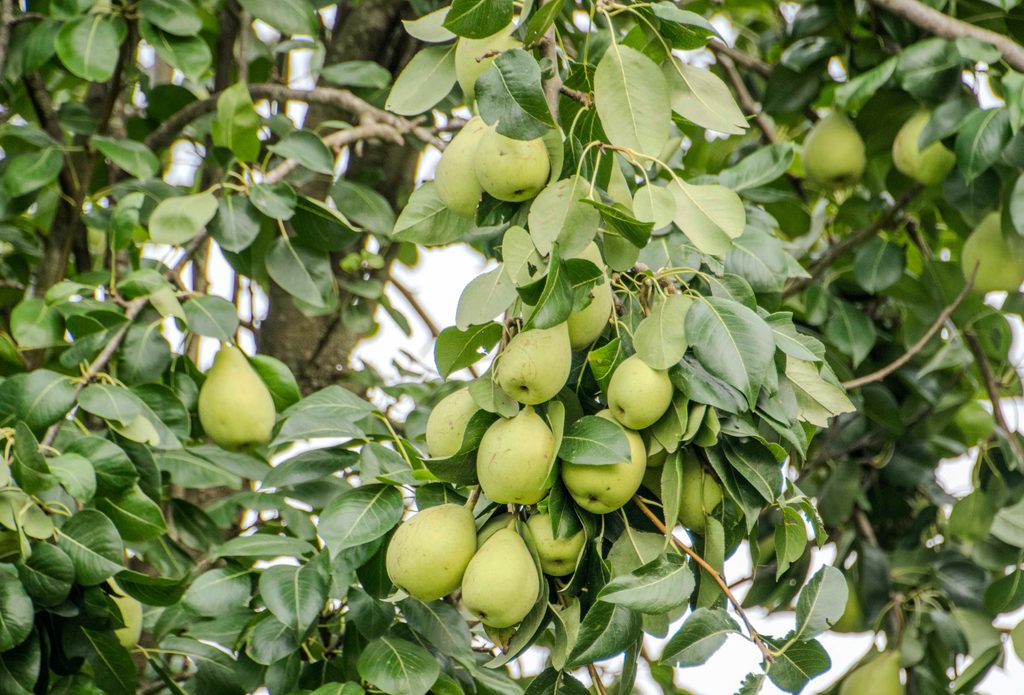
Pears handle Zone 7 heat and humidity better than many stone fruits, with fewer pest headaches along the way.
Bartlett and Bosc remain standard choices, though disease-resistant cultivars are worth seeking out in the humid Southeast. Plant two compatible varieties for consistent fruiting.
3. Peach Trees
Peaches genuinely shine in Zone 7. The combination of adequate winter chill and a long, hot summer is close to ideal for stone fruit ripening.
Full sun and excellent airflow matter here just as much as in colder zones, since Zone 7’s humidity can invite fungal disease if trees are planted too close together. Choose a site on higher ground where cold air will not pool during a late-spring frost.
4. Plum Trees
Both Japanese and European plum varieties perform well across Zone 7.
Japanese types like Santa Rosa ripen earlier and tend to be juicier, while European plums, including Damson, are the better choice for preserving and baking. Most plums appreciate a pollination partner, though some self-fertile cultivars exist.
5. Sweet Cherry Trees
Sweet cherries can be grown in Zone 7, though heat and humidity toward the zone’s southern edge make site selection important.
Choose a spot with good air circulation and morning sun, avoiding low, humid pockets where fungal disease can take hold. Self-fertile varieties simplify planting if space is limited.
6. Tart Cherry Trees
Tart cherries remain the lower-maintenance cherry option in Zone 7, just as they are in colder zones.
Montmorency, the standard pie cherry, is self-fertile and tolerates Zone 7 conditions comfortably. It is smaller and more compact than most sweet cherry trees, which suits a tighter backyard layout.
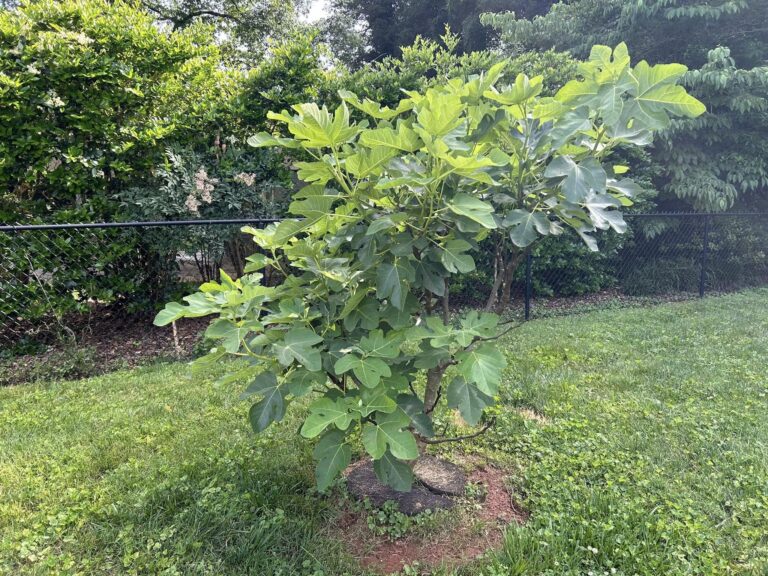
7. Fig Trees
Figs are arguably the signature fruit tree of Zone 7, and I mean that as genuine praise.
Per Clemson University’s Home & Garden Information Center, fig plants can take two to six years from planting before they begin producing fruit, and ripening in South Carolina typically runs from August into September, depending on variety.
Cold-hardy cultivars like Chicago Hardy, Celeste, and Brown Turkey are widely recommended for Zone 7 gardens. Chicago Hardy in particular can survive temperatures below 0°F with only minor dieback, according to Online Fig Trees, then resprout and fruit again the same season.
Figs also tolerate poor soil surprisingly well. Clemson Extension notes that fertilizing beyond what a soil test recommends can actually reduce fruit set, so restraint pays off here.
8. Pomegranate Trees
Pomegranates push right up against Zone 7’s comfort limit, and that is part of what makes them exciting to grow here.
Per Clemson HGIC, pomegranates are rated hardy to Zone 8 through 10, but can succeed in Zone 7b when given winter protection, such as a sheltered spot against a south-facing wall. The plant is also notably drought-tolerant and salt-tolerant once established.
Choose known cold-hardy cultivars, and treat pomegranate as a project for the warmer pockets of your specific yard, not an automatic success everywhere in the zone.
9. Nectarine Trees
Nectarines are essentially smooth-skinned peaches, and they share nearly identical Zone 7 requirements.
Full sun, good drainage, and airflow around the canopy help prevent the fungal issues that nectarines are somewhat more prone to than peaches in humid climates.
10. Asian Pear Trees
Asian pears grow well across Zone 7 and bring a crisp, juicy texture that is closer to an apple than a traditional pear.
They need a pollination partner, ideally another Asian pear or a compatible European variety, and the spring blossom display is genuinely one of the prettiest in a backyard orchard.
11. Persimmon Trees
Zone 7 is one of the few zones where you can realistically grow both American and Asian persimmon varieties.
American persimmon is native and extremely tough, needing little care once established. Asian persimmon, which needs a milder climate than the American type, becomes viable in the warmer parts of Zone 7, especially in a protected location.
12. Pawpaw Trees
Pawpaw is native to a broad swath of the eastern and midwestern United States, and Zone 7 sits comfortably within its natural range.
The custard-like fruit tastes like a cross between banana and mango, and the tree flowers late enough in spring to sidestep most frost damage. Plant at least two different varieties, since pawpaws need cross-pollination.
13. Mulberry Trees
Mulberries are low-maintenance across nearly every zone, and Zone 7 is no exception.
Illinois Everbearing remains a strong, cold-hardy, heavy-producing cultivar. Mulberries tolerate poor soil and drought once established, making them a smart pick for a spot other fruit trees might struggle with.
14. Jujube Trees
Jujube, or Chinese date, is remarkably well suited to Zone 7’s hot, humid summers.
It tolerates drought, poor soil, and heat with minimal fuss, and needs very little spraying compared to most stone fruit. The small fruit dries naturally on the tree into something resembling a wrinkled date.
15. Quince Trees
Quince is compact, cold-hardy well below Zone 7’s winter lows, and often self-fertile, meaning a single tree can produce fruit.
The fruit is not eaten raw, but cooked into jellies and pastes, it develops a distinctive floral flavor that neither apples nor pears quite match.
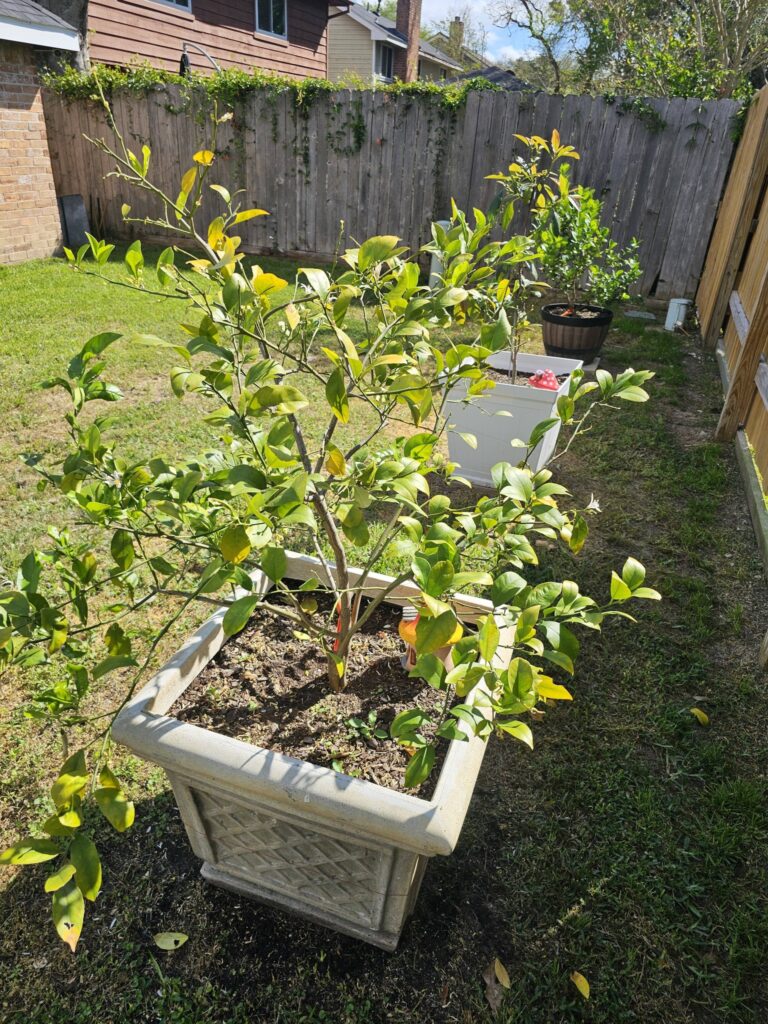
16. Container Citrus (Meyer Lemon)
Zone 7 is technically too cold for in-ground citrus, but container growing changes the equation entirely.
Per Oregon State University Extension Service, Meyer lemon trees grown in containers stay compact, generally 3 to 4 feet tall, and are self-fertile, though they still need airflow or hand pollination to set fruit reliably indoors.
The strategy is simple: grow the tree in a pot outdoors through the warm months, then bring it into an unheated garage or sunroom before the first hard frost. It is one of the few ways a Zone 7 gardener can genuinely harvest homegrown lemons.
17. Olive Trees (Protected Sites Only)
Olive trees are a genuine stretch for Zone 7, but not an impossible one in the mildest, most protected pockets of the zone.
They demand full sun, sharp drainage, and shelter from harsh winter exposure. Treat an in-ground olive tree in Zone 7 as an experiment rather than a guaranteed success, and consider a large container as a lower-risk alternative.
Quick Comparison: Hardiness and Site Needs
| Fruit Tree | USDA Zone Rating | Zone 7 Strategy |
| Fig (Chicago Hardy) | 6–10 | In-ground, minor winter dieback expected |
| Pomegranate | 8–10 | 7b only, with protection |
| Meyer Lemon | 8–11 (in-ground) | Container, bring indoors for winter |
| American Persimmon | 4–9 | In-ground, low maintenance |
| Pawpaw | 5–8 | In-ground, needs partner tree |
| Apple | 3–7 (varies) | In-ground, standard care |
| Jujube | 6–9 | In-ground, very low maintenance |
Zone ratings vary by specific cultivar. Confirm with your local extension office before purchasing.
ALSO READ: 20 Best Fruit Trees for Zone 6 (Identification, With Details)
What Makes Zone 7 Different
Understanding why Zone 7 behaves the way it does will help you choose smarter.
The USDA Plant Hardiness Zone Map, maintained by the Agricultural Research Service, places Zone 7 winter lows at 0°F to 10°F, split into the slightly colder 7a and the milder 7b. That single ten-degree band opens the door to fruit trees that simply cannot survive in Zone 5 or 6.
Figs are the clearest example. According to Online Fig Trees, Zone 7 stretches across the mid-Atlantic, parts of the South, and into the Pacific Northwest, encompassing some of the most productive fig-growing regions outside California itself.
Pomegranates are another Zone 7 story. Clemson University’s Home & Garden Information Center rates pomegranate hardiness at Zone 8 to 10, but notes it can succeed in Zone 7b specifically with winter protection.
That pattern repeats throughout this list: many warm-climate fruits are technically rated for Zone 8, but a sheltered Zone 7 microclimate, a south-facing wall, or a simple winter wrap, can often make them work anyway.
ALSO READ: 17 Best Fruit Trees for Zone 5 (Identification, With Details)
Planting Tips for Zone 7 Growers
A few habits separate a thriving Zone 7 orchard from a disappointing one.
- Prioritize airflow and drainage. Zone 7’s humid summers, especially in the Southeast, make fungal disease the bigger threat, not winter cold.
- Push borderline fruits into microclimates. A south-facing wall, a sheltered courtyard, or a spot near thermal mass like brick or stone can shift effective conditions by nearly a full zone.
- Use containers strategically. Citrus, and sometimes pomegranate or fig in the coldest 7a pockets, are far more reliable in movable pots than in open ground.
- Match chill hours carefully. Some low-chill apple and peach varieties bred for the Deep South may not get enough winter cold in cooler Zone 7a locations to fruit reliably.
- Protect young trees for their first two winters. Even a Zone 7-rated fig or pomegranate benefits from extra mulch or wrapping while its root system is still establishing.
Frequently Asked Questions
What is the easiest fruit tree to grow in Zone 7? Figs are widely considered the easiest and most rewarding choice, tolerating poor soil, needing minimal spraying, and producing within two to six years of planting.
Can I grow citrus outdoors in Zone 7? Not reliably in the ground. Container growing, with the tree moved indoors before the first frost, is the standard and most successful approach.
How many years until a Zone 7 fruit tree produces fruit? It varies by species. Peaches and figs can begin fruiting within two to four years, while pawpaws and some apple varieties may take three to seven years for full production.
Do pomegranates really grow in Zone 7? Only in the milder 7b areas, and typically with winter protection such as a sheltered, south-facing planting site.
Final Thoughts
Zone 7 genuinely offers the best of both worlds. I would call it one of the most flexible zones in the country for a home orchard, since it supports cold-climate staples and warm-climate specialties side by side.
Start with a fig and an apple, they represent the two ends of what this zone can do, then experiment with pomegranate or container citrus once you understand your yard’s warmest and coolest corners. A well-planned Zone 7 orchard can realistically keep you in fresh fruit from early summer cherries through late-autumn persimmons.
References
- USDA Agricultural Research Service. USDA Plant Hardiness Zone Map. https://planthardiness.ars.usda.gov/
- Clemson University Home & Garden Information Center. Figs: How to Grow and Care for Figs in South Carolina. https://hgic.clemson.edu/factsheet/figs-how-to-grow-and-care-for-figs-in-south-carolina/
- Clemson University Home & Garden Information Center. Pomegranate: How to Grow, Care for, and Enjoy in South Carolina. https://hgic.clemson.edu/factsheet/pomegranate/
- Oregon State University Extension Service. How to Grow Meyer Lemons Successfully in the Pacific Northwest. https://extension.oregonstate.edu/news/how-grow-meyer-lemons-successfully-pacific-northwest
- West Virginia University Extension. Fruit Tree Chilling Requirements. https://extension.wvu.edu/lawn-gardening-pests/plant-disease/fruit-vegetable-diseases/fruit-tree-chilling
- University of Missouri Center for Agroforestry. Growing and Marketing Pawpaw in Missouri. https://extension.missouri.edu/media/wysiwyg/Extensiondata/Pub/pdf/agguides/agroforestry/af1021.pdf
- Michigan State University Extension. Smart Gardening: Growing Backyard Fruit Trees. https://www.canr.msu.edu/home_gardening/uploads/files/Backyard-Fruit-Trees_2024-04-25-AA.pdf

Tim M Dave is a gardening expert with a passion for houseplants, particularly cacti and succulents. With a degree in plant biology from the University of California, Berkeley, he has vast experience in gardening. Over the years, he has cultivated a vast collection of desert plants and learned a great deal about how to grow and care for these unique companions.