25 Native Texas Shrubs (With Growing Details)
Texas weather doesn’t negotiate. One season brings a hard freeze, the next brings a hundred-degree drought that lasts for months. I’ve watched imported ornamentals collapse under that swing more times than I can count.
Native shrubs don’t collapse. They evolved through exactly this kind of extreme, and that history shows in how little they ask from a gardener once their roots take hold.
Texas is home to more than 5,000 native plant species, according to the Native Plant Society of Texas, and shrubs make up a large, underused share of that number.This guide covers 25 native Texas shrubs, sorted by growing condition, so you can match a plant to your actual landscape.
Why Native Shrubs Make Sense in Texas
Native shrubs adapted to Texas soil, rainfall patterns, and temperature swings over thousands of years, long before irrigation systems existed. That history is exactly why they need less water and attention today.
Deer resistance matters here too. Many native shrubs developed natural defenses, thorns, tough leaves, or strong scents, that make them far less appealing to browsing deer than tender ornamentals.
The Lady Bird Johnson Wildflower Center, the official State Botanic Garden and Arboretum of Texas, maintains a database covering more than 25,000 native plants across North America, with hundreds of those native specifically to Texas ecoregions.
That’s a serious research foundation behind the plant choices below. Let’s get into the list.
Native Shrubs for Full Sun and Drought
1. Texas Sage (Leucophyllum frutescens)
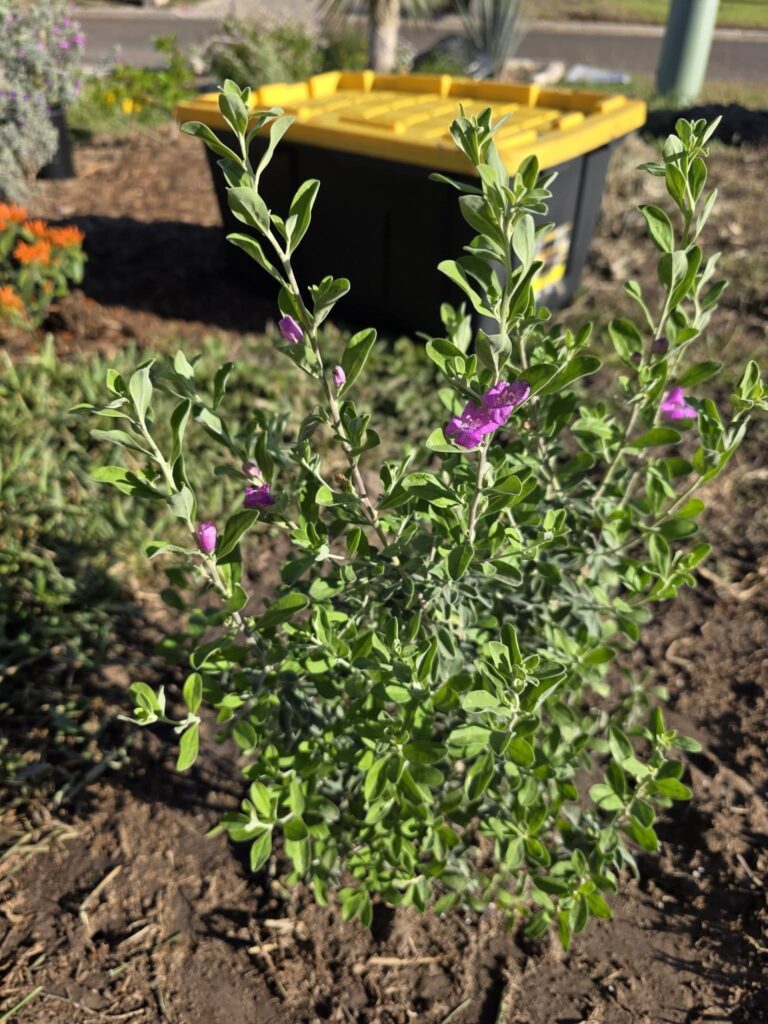
Texas sage, sometimes called cenizo or barometer bush, blooms in flushes of purple after summer rains, almost like it’s reading the humidity in the air. Silvery-gray leaves give it a distinct look year-round.
It handles caliche soil, reflected heat, and weeks without rain without complaint. Full sun brings out its densest, most compact growth habit.
Mature size runs 5 to 8 feet, though dwarf cultivars stay under 3 feet for smaller beds. Deer generally leave it alone, a rare trait in Hill Country landscapes.
I’ve never watered mine beyond the first summer, and it still blooms on cue after every good rain.
2. Flame Acanthus (Anisacanthus quadrifidus var. wrightii)
Flame acanthus produces slender orange-red tubular flowers from summer straight through the first frost. Hummingbirds treat it as a primary fuel stop during fall migration.
It grows into a loose, twiggy, somewhat unruly shrub, reaching 3 to 4 feet tall. Hard pruning in early spring keeps the form dense rather than sparse and leggy.
This shrub tolerates rocky, poor soil and extended drought once established, needing almost no supplemental water beyond its first growing season.
Left unpruned, it can look a bit wild by late winter. That’s a fair trade for the pollinator traffic it pulls in during warmer months.
3. Agarita (Mahonia trifoliolata)
Agarita carries holly-like spiny leaves that make it a natural, low-maintenance barrier planting. Small yellow flowers open in late winter, often the first nectar source pollinators find each year.
Bright red berries follow in spring and are edible, traditionally used for jelly by Texas settlers. Birds and small mammals compete with humans for the harvest.
It grows slowly to about 3 to 6 feet, tolerating rocky limestone soil and full sun without hesitation. Established plants shrug off drought entirely.
The spiny leaves keep deer away and double as a natural deterrent for anyone tempted to cut through a planting bed.
4. Texas Persimmon (Diospyros texana)
Texas persimmon straddles the line between large shrub and small tree, often reaching 12 to 20 feet with striking, smooth gray bark that peels in patches. That bark alone makes it a standout in winter landscapes.
Female plants produce small black fruit in late summer, sweet and edible once fully ripe, though sharply astringent before then. Wildlife strips the fruit fast.
It thrives in thin, rocky soil across the Hill Country and Edwards Plateau, needing essentially no irrigation once its root system matures.
Male and female flowers grow on separate plants, so you’ll need both nearby if fruit production is the goal.
ALSO READ: 15 Salt Tolerant Shrubs That Thrive Near the Coast and Winter Roads
5. Cenizo’s Cousin: Guayacan (Guaiacum angustifolium)
Guayacan produces small purple-blue flowers that appear suddenly after rain, followed by orange seed pods that split open dramatically. It’s a South Texas specialty most gardeners outside the region have never planted.
Extremely dense, hard wood gives this shrub outstanding drought and heat tolerance, suited to the brushlands and thorn-scrub habitat where it grows naturally.
Growth stays slow and compact, typically 3 to 6 feet, making it well suited to smaller xeriscape beds in South and Central Texas.
Butterflies, particularly the Lyside sulphur, rely on guayacan as both nectar source and larval host plant.
6. Mountain Laurel (Sophora secundiflora)
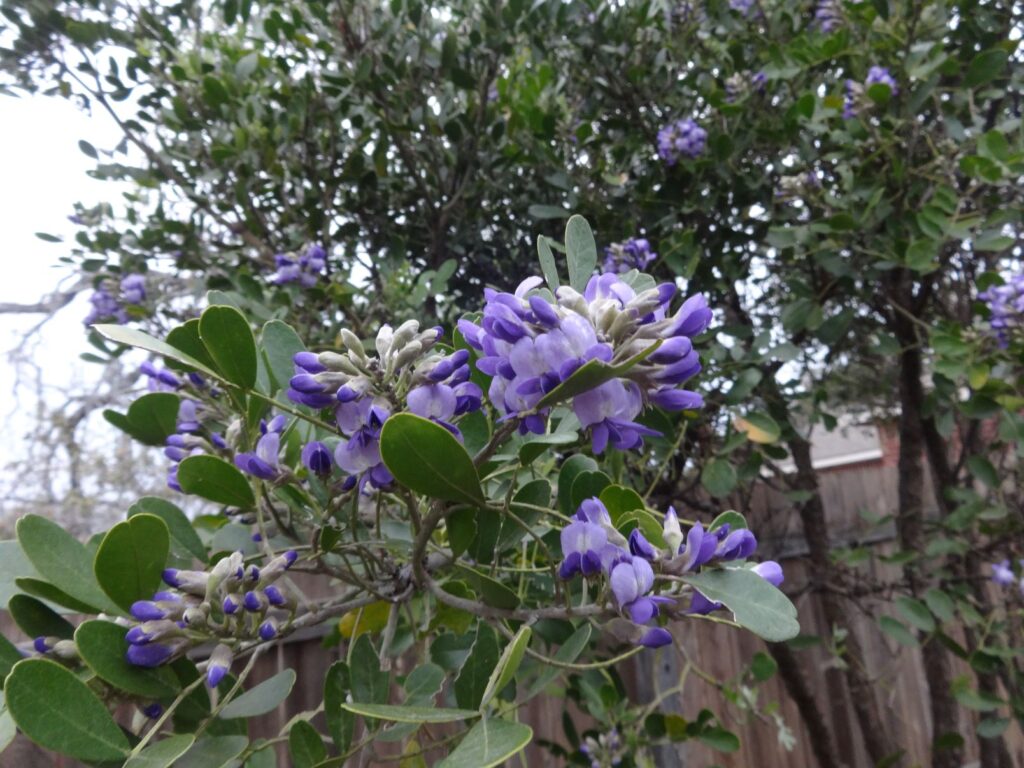
Texas mountain laurel produces heavy clusters of purple flowers each spring with a fragrance often compared to grape soda, strong enough to notice from across a yard. Evergreen foliage keeps it attractive year-round.
It grows slowly, often less than a foot per year, eventually reaching 10 to 15 feet as a large shrub or small tree form in the Hill Country and South Texas.
Seed pods contain bright red seeds that are toxic if ingested, so plant with awareness around pets and small children despite the shrub’s overall low-maintenance nature.
This is one of the most requested native shrubs at Central Texas nurseries each spring, largely because of that unmistakable bloom scent.
7. Turk’s Cap (Malvaviscus arboreus)
Turk’s cap produces bright red, twisted flowers shaped like tiny turbans, blooming from late spring through the first frost. Hummingbirds visit constantly during that entire stretch.
It tolerates shade better than most sun-loving Texas natives, though it also performs in full sun with adequate soil moisture. That flexibility makes it useful in mixed light conditions.
Mature size reaches 3 to 6 feet, spreading readily through underground runners if left unchecked. Occasional division keeps the spread in check.
Small red fruit follows the blooms and is edible, sometimes used locally for jam, though most gardeners leave it for the birds.
8. Yaupon Holly (Ilex vomitoria)
Yaupon holly grows across East and Central Texas, tolerating shade, sun, drought, and occasional flooding with equal ease. Female plants produce bright red berries that persist through winter.
Dwarf cultivars stay compact for foundation plantings, while the straight species reaches 15 to 20 feet as a dense, evergreen screen or small tree.
Native peoples historically brewed the caffeinated leaves into a ceremonial tea, making yaupon one of the only naturally caffeinated plants in North America.
Its dense, tidy structure and berry production make it one of the most reliable year-round hedges available to Texas gardeners.
Native Shrubs for Shade and Woodland Gardens
9. American Beautyberry (Callicarpa americana)
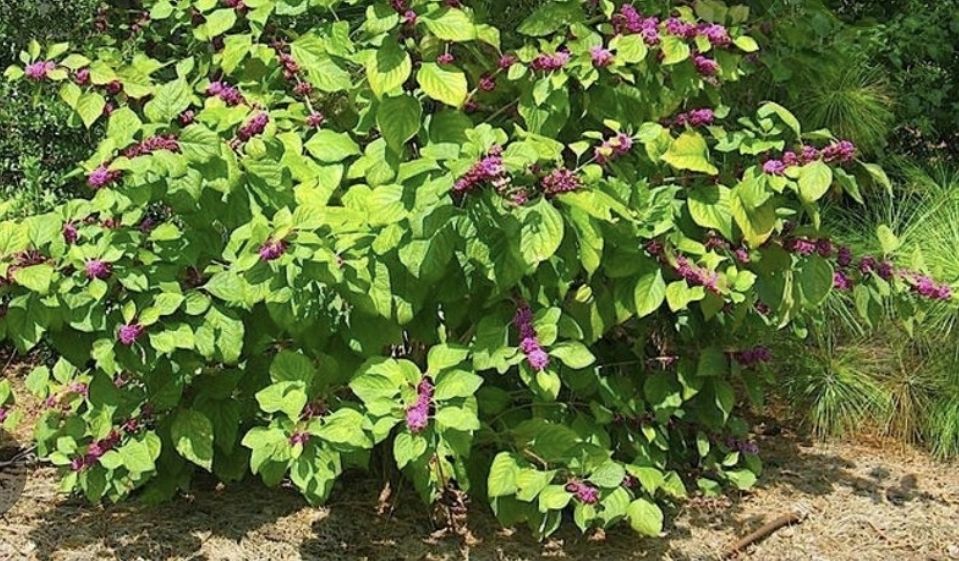
American beautyberry produces clusters of vivid purple berries that wrap tightly around the stem each fall, standing out sharply against green foliage. The display rarely lasts past a few weeks before birds clean it out.
It performs best in part shade with consistent moisture, common in East Texas woodlands and along shaded creek banks throughout the eastern half of the state.
Growth reaches 4 to 8 feet with an open, arching form. Hard pruning in late winter encourages denser new growth and heavier fall fruiting.
Mockingbirds, cardinals, and other songbirds depend on the berries as a reliable fall and early winter food source.
10. Possumhaw Holly (Ilex decidua)
Possumhaw holly drops its leaves in fall, revealing branches loaded with bright red or orange berries that persist through winter, sometimes into early spring. The bare-branch berry display rivals any ornamental on the market.
It tolerates both wet, poorly drained soil and moderate drought, adapting to bottomland and upland sites across East and Central Texas equally well.
Mature size reaches 12 to 15 feet as a large shrub or small tree. Female plants need a male pollinator nearby to produce the signature berry show.
Cedar waxwings and robins often strip a mature possumhaw clean in a single afternoon during a hard winter.
11. Coralberry (Symphoricarpos orbiculatus)
Coralberry stays low and spreads by suckering, forming a loose colony that works well as a woodland edge planting or erosion control on shaded slopes. Small pink flowers in summer are easy to miss.
Clusters of pinkish-purple berries follow in fall, persisting into winter and providing food for grouse, quail, and other ground-feeding birds.
It tolerates deep shade better than almost any other native shrub on this list, thriving under dense tree canopy where sun-loving plants fail.
Height stays under 4 feet typically, making it a practical groundcover substitute in wooded residential lots.
12. Carolina Buckthorn (Frangula caroliniana)
Carolina buckthorn produces small greenish flowers in spring that most gardeners never notice, but the fall show more than makes up for it. Berries shift from red to black as they ripen, often showing both colors at once.
It grows in the understory of East Texas forests, tolerating shade and a range of soil types from sandy to clay-based.
Mature height reaches 10 to 15 feet as a large shrub or small multi-trunked tree. It fills gaps in a woodland garden where more demanding shrubs struggle.
Birds favor the ripe black fruit heavily, and the plant reseeds moderately in favorable, shaded conditions.
13. Oakleaf Hydrangea (Hydrangea quercifolia)
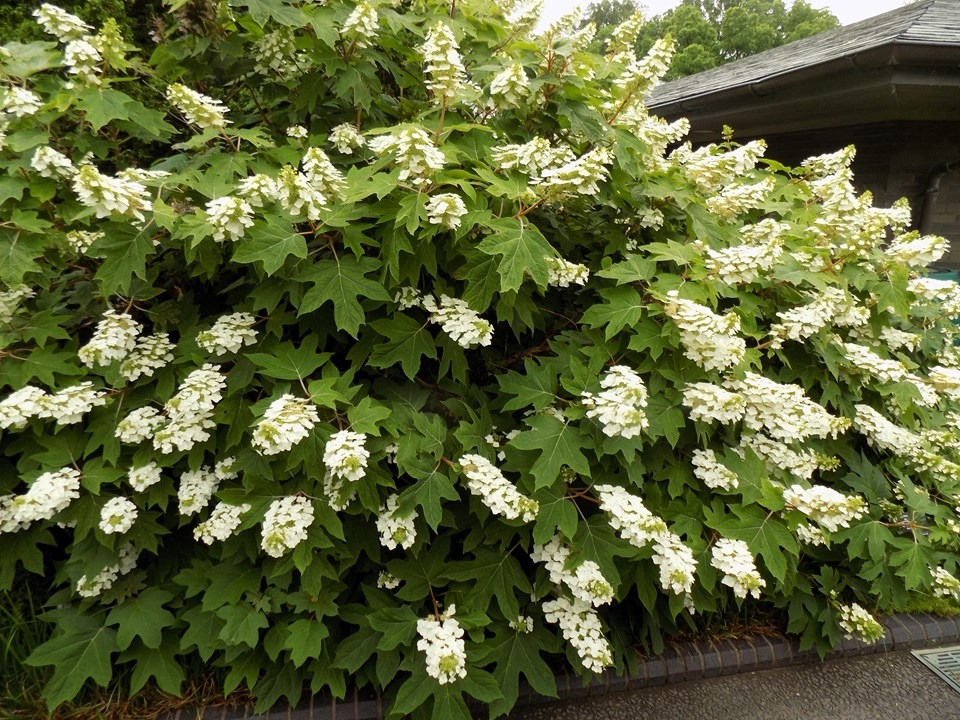
Oakleaf hydrangea brings cone-shaped white blooms in late spring that gradually shift to pink and tan through summer heat. Oak-shaped leaves turn deep burgundy in fall, unusual color for a native shade shrub.
It prefers part shade and consistently moist, well-drained soil, doing best on the east or north side of a structure in East Texas.
Mature size reaches 6 to 8 feet with an equal spread. It naturalizes through suckering, so allow room or plan on occasional management.
This shrub rewards a shaded, protected spot with more seasonal interest than almost any other native option available.
Native Shrubs for Wet Soil and Low Areas
14. Buttonbush (Cephalanthus occidentalis)
Buttonbush produces round, pincushion-shaped white flowers that draw pollinators from across the yard. I’ve counted several butterfly species working one blooming shrub within a single afternoon.
It grows naturally along pond edges, ditches, and creek margins throughout Texas, tolerating standing water that would rot out most other shrubs.
Mature height reaches 6 to 12 feet with an open, rounded form. Waterfowl eat the round seed heads that follow the flowers through fall.
For a low, poorly drained corner of the yard, buttonbush solves a problem most ornamental shrubs simply can’t handle.
ALSO READ: 15 Fragrant Shrubs and Bushes That Will Fill Your Garden With Scent
15. Swamp Privet (Forestiera acuminata)
Swamp privet thrives in bottomland soils across East Texas, tolerating seasonal flooding and standing water for extended periods without dieback. Small greenish flowers appear before the leaves in early spring.
It grows into a multi-stemmed large shrub, reaching 15 to 20 feet in favorable, consistently moist conditions along rivers and streams.
Small purple-black fruit follows the spring bloom, feeding birds through summer months when other food sources may run thin.
This shrub rarely appears in traditional nursery inventory, but native plant specialists in East Texas typically carry it for wetland restoration projects.
16. Virginia Sweetspire (Itea virginica)
Virginia sweetspire produces drooping spikes of fragrant white flowers in late spring, resembling small bottlebrushes hanging from arching stems. Fall foliage turns deep red and orange, standing out among wetland natives.
It handles standing water, occasional flooding, and heavy clay soil with ease, while also adapting reasonably well to average garden conditions.
Mature size stays modest, 3 to 6 feet, making it a good fit for smaller residential lots near a rain garden or drainage swale.
Bees and other pollinators visit the flower spikes heavily during bloom, adding life to what’s often an underused wet corner of the yard.
Coastal and Salt-Tolerant Native Shrubs
17. Wax Myrtle (Morella cerifera)
Wax myrtle grows fast along the Texas Gulf Coast, tolerating salt spray, wind, and occasional flooding better than most screening plants available at nurseries. Aromatic gray-green leaves release a spicy scent when crushed.
It reaches 15 to 20 feet if left unpruned, functioning as a privacy screen or windbreak in coastal landscapes from Houston down to the Rio Grande Valley.
Female plants produce small waxy berries historically boiled down for candle wax, giving the shrub its common name. Birds rely on the berries through winter.
Fast growth, often 3 feet a year, makes wax myrtle a practical choice when coastal homeowners need coverage established quickly.
18. Saltbush (Baccharis halimifolii)
Saltbush, also called groundsel bush, tolerates direct salt exposure and poor, sandy coastal soil better than nearly any other Texas native shrub. Female plants produce a showy white, cottony seed display each fall.
It grows quickly to 6 to 12 feet, often used in coastal restoration projects to stabilize disturbed soil and provide erosion control along the Gulf.
Late-season blooms provide one of the last significant nectar sources for migrating monarch butterflies before they continue south for winter.
Some gardeners consider its aggressive reseeding a drawback inland, but along the immediate coast, that same trait makes it valuable for erosion control.
19. Yucca (Yucca treculeana and related species)
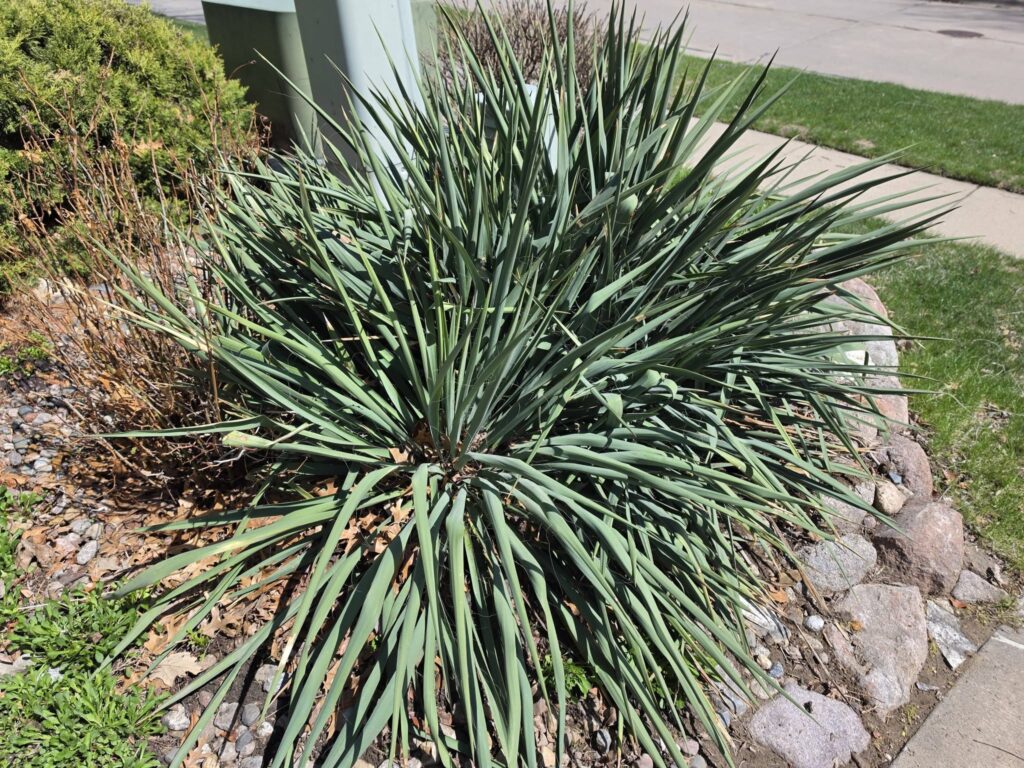
Spanish dagger and related yucca species bring bold, architectural form to coastal and xeriscape gardens with stiff, sword-shaped leaves and tall white flower spikes in late spring.
These shrubs tolerate salt, wind, and extended drought without hesitation, thriving in exactly the conditions that stress traditional coastal landscaping choices.
Mature height can reach 8 to 15 feet including the flower stalk on older specimens, with sharp leaf tips that double as a natural security barrier.
Handle carefully during planting and pruning. The leaf tips are sharp enough to puncture skin through light clothing.
Compact and Foundation Native Shrubs
20. Dwarf Yaupon Holly
Dwarf yaupon holly, particularly the ‘Schillings’ or ‘Nana’ cultivars, gives Texas gardeners a native, drought-tolerant substitute for non-native boxwood hedging that struggles statewide in summer heat.
It stays naturally compact, usually 2 to 4 feet, without regular shearing, though it responds well to pruning when a formal shape is preferred for foundation beds.
This male selection won’t produce the red berries seen on straight-species yaupon, making up for it with dense, tidy structure through every season.
Full sun brings out the tightest growth habit, though it tolerates considerable shade without significant thinning or dieback.
21. Dwarf Barbados Cherry (Malpighia glabra)
Dwarf Barbados cherry produces small pink flowers through the warm months, followed by bright red fruit rich in vitamin C, historically used in South Texas home remedies.
It stays compact, typically 3 to 5 feet, with fine-textured foliage that takes shearing well for low hedges or foundation plantings in South Texas landscapes.
Full sun and well-drained soil suit it best. Established plants tolerate significant heat and drought, common through the Rio Grande Valley and South Texas Plains.
Butterflies visit the flowers steadily, and the fruit draws birds quickly once it ripens each season.
22. Dwarf Wax Myrtle (Morella cerifera ‘Don’s Dwarf’)
The dwarf form of wax myrtle brings all the salt and drought tolerance of the species down into a compact 3 to 5 foot form, suited to foundation plantings rather than full screening.
It holds a naturally rounded shape with minimal pruning, releasing the same spicy fragrance from crushed foliage that the full-size species is known for.
This selection works particularly well replacing non-native boxwood or Indian hawthorn in Central and South Texas landscape beds.
Full sun to part shade both work, with minimal supplemental water required once the root system establishes fully.
Thorny and Deer-Resistant Native Shrubs
23. Texas Barometer Bush’s Neighbor: Mexican Buckeye (Ungnadia speciosa)
Mexican buckeye produces clusters of pink, orchid-like flowers in early spring, appearing before the leaves fully emerge each year. The display draws early-season pollinators across the Hill Country and Edwards Plateau.
It grows into a large shrub or small tree, reaching 10 to 20 feet, tolerating rocky, alkaline soil that defeats most non-native ornamentals outright.
Seeds inside the woody seed capsules are toxic if ingested, so site this shrub with awareness around small children and pets, similar to mountain laurel.
Deer generally avoid it, and once established, it needs essentially no supplemental irrigation beyond normal Hill Country rainfall.
ALSO READ: 25 Cold Hardy Evergreen Shrubs That Keep Your Garden Alive All Winter (Identification With Pictures)
24. Elbowbush (Forestiera pubescens)
Elbowbush earns its name from the sharply angled branching pattern that zigzags at each node, giving the shrub distinct winter structure even without leaves. Small yellow flowers appear in late winter.
It tolerates poor, rocky soil and extended drought across Central and West Texas, often found growing wild along limestone outcrops and dry creek beds.
Mature size reaches 6 to 10 feet, functioning well as an informal hedge or wildlife thicket. Deer rarely browse it heavily.
Small blue-black fruit follows the spring bloom and feeds birds through early summer, adding wildlife value to an already low-maintenance shrub.
25. Desert Willow’s Companion: Fragrant Sumac (Rhus aromatica)
Fragrant sumac produces small yellow flowers in early spring, followed by red, fuzzy fruit clusters that persist into summer. Crushed leaves release a distinct, sharp fragrance that gives the plant its name.
It tolerates poor, rocky soil, drought, and considerable shade, making it useful across a wide range of Texas conditions from the Hill Country through North Texas.
Fall color runs toward orange and red, a standout feature among evergreen-heavy native shrub lists. Mature size stays compact, typically 3 to 6 feet.
Deer tend to avoid fragrant sumac, and its dense, spreading habit makes it useful for erosion control on slopes and banks.
How to Choose the Right Shrub for Your Property
Match the plant to your real site conditions first. A shrub built for Hill Country limestone will struggle in the heavy black clay of a Blackland Prairie yard, no matter how well you tend it.
Ask these three questions before choosing:
- How many hours of direct sun does the site get?
- Does the soil stay wet after rain, or drain quickly?
- Is deer pressure a concern in your neighborhood?
Cross-reference the answers against the growing notes for each shrub above. That single step prevents most of the losses new native gardeners run into during the first year.
Planting and Care Tips for Native Texas Shrubs
Plant in fall or late winter, giving roots time to establish before summer heat arrives. Spring planting works too, but demands closer attention to watering through the first hot months.
Water deeply and infrequently during establishment. Frequent shallow watering trains roots to stay near the surface, undermining the drought tolerance these shrubs are known for.
Skip heavy fertilizer applications. Most Texas natives evolved in nutrient-poor, rocky, or clay soil and can respond to rich fertilizer with weak, leggy growth instead of the compact form you want.
Mulch generously, keeping it a few inches back from the base of each stem. A 2 to 3 inch layer holds moisture and blocks competing weeds through the hottest months.
Final Thoughts
Twenty-five shrubs barely scratches the surface of what Texas has to offer, but this list covers the range most homeowners actually need: sun, shade, wet ground, coastal salt, and deer-heavy neighborhoods.
Pick two or three that fit your yard’s real conditions. Give them one full season to settle in, and you’ll likely notice how much less they demand compared to whatever they’re replacing.
References
- Texas A&M AgriLife Extension – Aggie Horticulture, Native Plants and Home Landscape Planning: https://aggie-horticulture.tamu.edu/earthkind/planning-the-home-landscape/plants/
- Texas A&M AgriLife Extension – Native Texas Plants for Home and Garden: https://aggie-horticulture.tamu.edu/wp-content/uploads/2020/06/Native-Texas-Plants-for-Home-and-Garden-plant_list-1.pdf
- Lady Bird Johnson Wildflower Center, The University of Texas at Austin – Native Plant Database: https://www.wildflower.org/plants/
- Lady Bird Johnson Wildflower Center – Facts Page: https://www.wildflower.org/facts
- University of Texas at Austin Field Station Network – Wildflower Center Overview: https://fieldstations.utexas.edu/field-stations/wildflower-center
- Native Plant Society of Texas – What Is a Native Plant?: https://www.npsot.org/about/what-is-a-native-plant/
- Native Plant Society of Texas – Native Plant Table by Ecoregion: https://www.npsot.org/resources/native-plants/native-plant-table/

Tim M Dave is a gardening expert with a passion for houseplants, particularly cacti and succulents. With a degree in plant biology from the University of California, Berkeley, he has vast experience in gardening. Over the years, he has cultivated a vast collection of desert plants and learned a great deal about how to grow and care for these unique companions.