35 Best Perennial Flowers for Zone 4 (With Growing Details)
Zone 4 doesn’t leave much room for error. Winter temperatures fall between -30°F and -20°F, according to the USDA Plant Hardiness Zone Map, and only the toughest root systems make it through that kind of freeze.
I have friends who garden in Minnesota and North Dakota, and they all say the same thing: a plant either proves itself here, or it doesn’t come back at all. There’s no gray area with Zone 4.
States like Minnesota, North Dakota, Wisconsin, Vermont, and parts of Maine and Montana sit within this zone. Despite the brutal cold, the region still supports a genuinely wide range of perennials that thrive year after year.
Below are 35 perennial flowers proven to survive Zone 4 winters, each with bloom time, light needs, and the small details that separate a plant that merely survives from one that truly flourishes.
35 Best Perennial Flowers for Zone 4
1. Peony (Paeonia lactiflora)
Peonies are practically built for Zone 4. The deep winter chill actually helps them set flower buds properly, so gardeners here often see better blooms than warmer-zone growers ever do.
A single peony clump can remain productive for more than 50 years without needing division, making it one of the most reliable long-term investments available.
Plant in full sun with rich, well-drained soil, and avoid burying the roots too deep, since that alone prevents flowering.
2. Daylily (Hemerocallis)
Daylilies handle Zone 4 winters without any special protection. Each flower lasts only a day, but a mature clump produces enough buds for four to six weeks of continuous bloom.
They tolerate clay soil, drought, and general neglect better than almost any other perennial, which explains their popularity in older, low-maintenance gardens.
Full sun brings the strongest bloom, though daylilies still perform reasonably well in light shade.
3. Purple Coneflower (Echinacea purpurea)
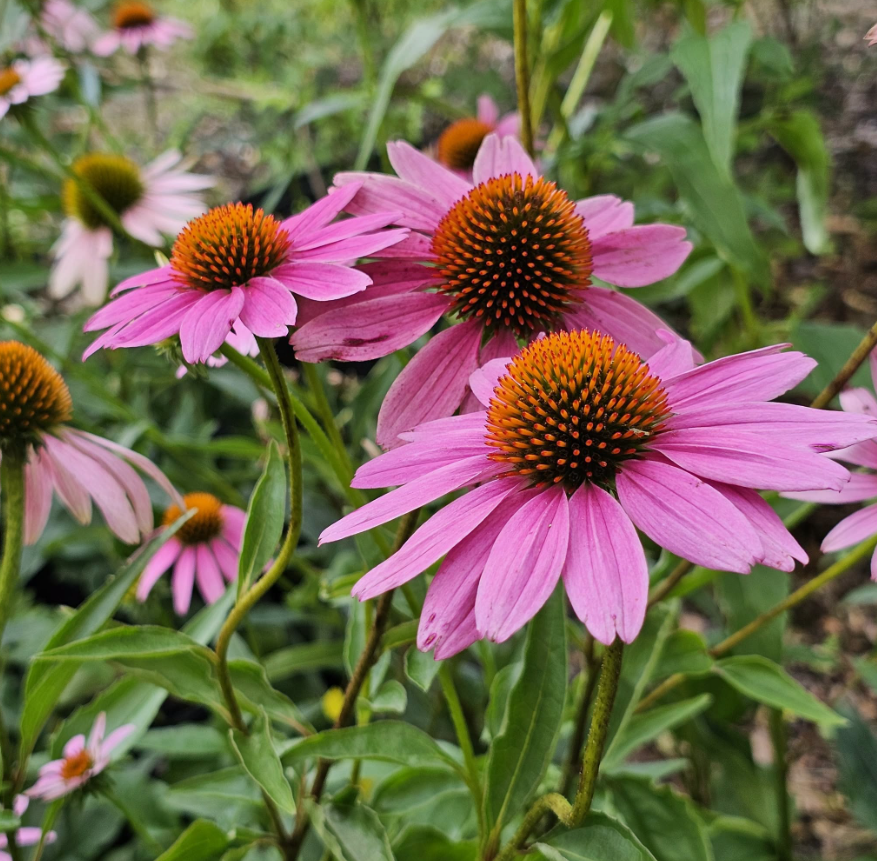
Coneflower handles Zone 4 cold, summer heat, and drought with equal ease, blooming from June through September. Its coarse purple petals and spiky orange center draw bees and butterflies constantly.
I leave the seed heads standing through winter, since goldfinches rely on them as a food source once snow covers the ground.
Full sun and well-drained soil suit it best. Established plants rarely need supplemental watering once summer rains arrive.
4. Black-Eyed Susan (Rudbeckia hirta)
Black-Eyed Susan brings dependable, golden-yellow blooms from midsummer into early fall. It self-seeds readily, often filling in bare patches within a border without any assistance.
This plant handles poor soil and inconsistent watering better than most flowering perennials, making it a smart starting point for first-time gardeners.
Full sun keeps the stems sturdy and upright. Expect a mature height around 2 to 3 feet.
ALSO READ: 25 Wisconsin Native Flowers (With Growing Details)
5. Hosta
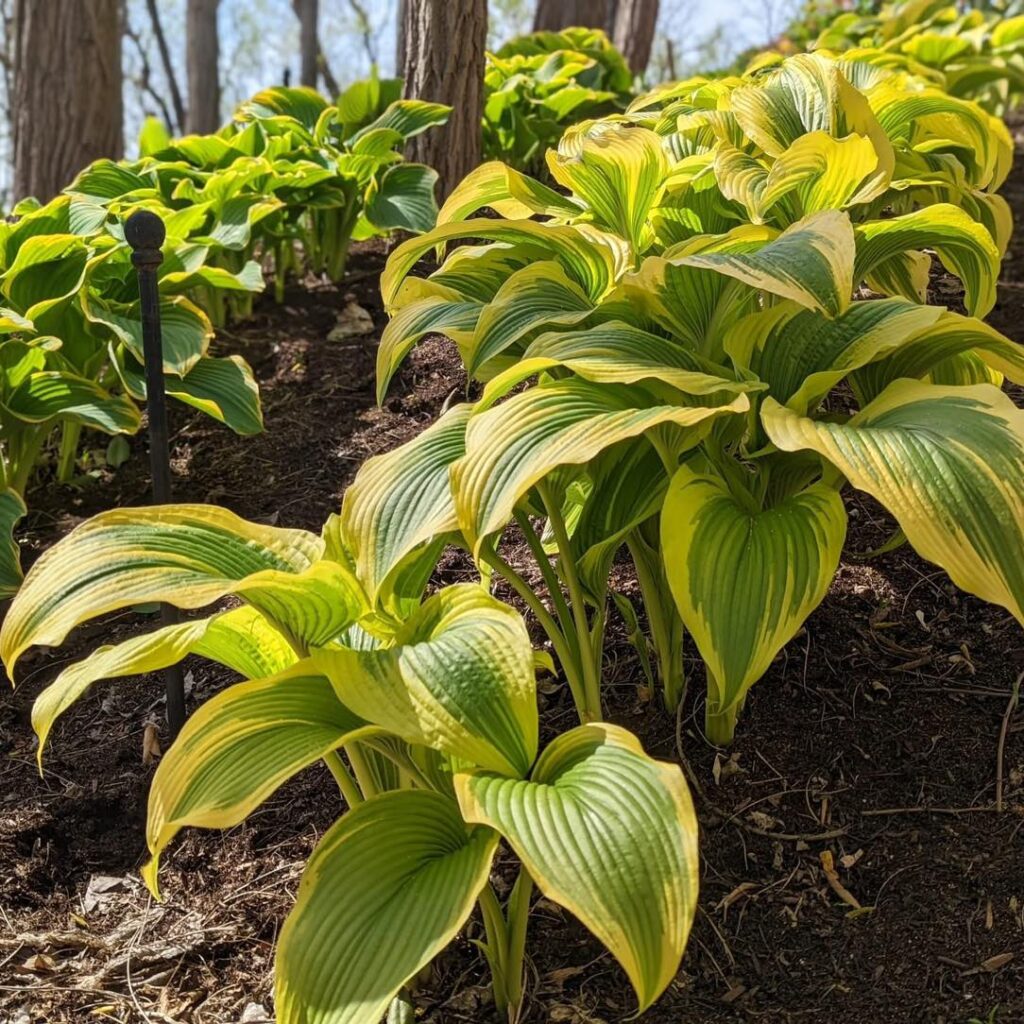
Hostas fill shaded areas where flowering perennials often struggle during Zone 4’s shorter growing season. Grown mainly for bold foliage, they also send up spikes of purple or white flowers in midsummer.
They return reliably year after year and expand gradually, making them ideal for filling space under mature trees.
Partial to full shade with consistent moisture keeps hosta leaves large and vibrant through the season.
6. Sedum ‘Autumn Joy’ (Hylotelephium)
Sedum ‘Autumn Joy‘ provides late-season color right when most perennials have already finished blooming. Its flower heads shift from green to pink to deep rust as fall settles in.
Thick, water-storing leaves make this plant remarkably drought tolerant, and its sturdy stems often stay upright through the first light snowfall.
Full sun and sharp drainage are the only real requirements for strong, compact growth.
7. Yarrow (Achillea millefolium)
Yarrow forms flat clusters of tiny flowers atop fern-like foliage, blooming from early summer well into fall. It requires almost no intervention once established in the garden.
This plant actually performs worse in rich or overly wet soil, where it tends to flop over instead of standing upright and tidy.
Full sun and lean, well-drained soil bring out yarrow’s strongest, most compact growth habit.
8. Catmint (Nepeta)
Catmint delivers months of soft lavender-blue blooms with very little effort required from the gardener. A single trim after the first flush often produces a second wave of color.
It handles heat, drought, and poor soil with ease, and its aromatic foliage rarely attracts pests or disease of any kind.
Full sun brings out its fullest form, with mature plants reaching 1 to 3 feet depending on variety.
9. Shasta Daisy (Leucanthemum x superbum)
Shasta Daisy offers the crisp white-and-yellow bloom that feels instantly familiar in cottage-style gardens. It flowers from early to late summer with minimal care.
Deadheading spent blooms keeps the plant flowering longer, though it performs reasonably well even without regular attention.
Full sun and average, well-drained soil keep Shasta Daisy compact and consistently floriferous.
10. Bee Balm (Monarda didyma)
Bee Balm produces shaggy, tubular red or pink flowers that hummingbirds seek out through July and August. Few perennials attract pollinators as reliably during peak summer heat.
It spreads by rhizomes and can become assertive in rich soil, so plant it where some spreading is welcome rather than unwanted.
Good air circulation reduces the powdery mildew that sometimes appears in humid, still conditions.
11. Garden Phlox (Phlox paniculata)
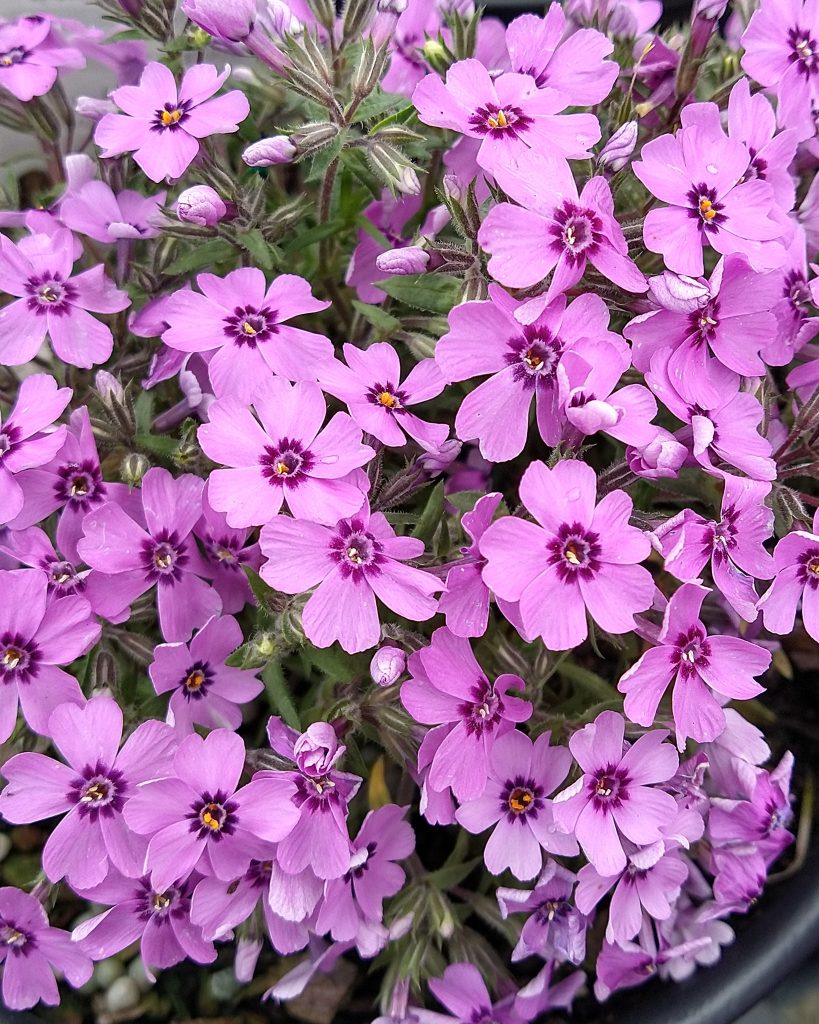
Garden Phlox delivers large, fragrant flower clusters in pink, purple, or white during the height of summer. The scent alone makes it worth planting near a porch or walkway.
Choosing mildew-resistant cultivars and spacing plants generously reduces the risk of the powdery mildew that occasionally affects this species.
Full sun with consistent moisture produces the tallest, healthiest blooms, often reaching 3 to 4 feet.
12. Siberian Iris (Iris sibirica)
Siberian Iris ranks among the hardiest irises available, thanks to a tough root system and narrow, grass-like foliage. It blooms in late spring with delicate blue or purple flowers.
Unlike some showier iris types, it tolerates slightly wetter soil and rarely needs dividing for 10 years or more.
Full sun to light shade and consistently moist soil keep this iris thriving with minimal upkeep.
13. Bearded Iris
Bearded Iris brings ruffled, dramatic flowers in nearly every color imaginable, blooming in late spring. Few perennials offer this level of visual detail per bloom.
Rhizomes should sit slightly exposed at the soil surface, since burying them too deep is the most common reason bearded iris fails to flower.
Full sun and sharp drainage are essential, and dividing clumps every three to four years maintains strong blooming.
14. Columbine (Aquilegia)
Columbine’s unusual spurred flowers appear in spring, often in bicolor combinations of red, yellow, purple, or pink. Hummingbirds seek it out early, when few other blooms are available.
It self-seeds readily, so new plants often appear in unexpected corners of the garden the following year.
Partial shade and well-drained soil suit it well, especially in woodland-style plantings near trees.
ALSO READ: 25 Native Flowers of Minnesota (With Growing Details)
15. Lupine (Lupinus)
Lupine produces tall, dramatic flower spikes packed with pea-like blooms in blue, purple, pink, or white. It flowers in late spring to early summer, often becoming a garden focal point.
This plant genuinely prefers cooler climates, which makes Zone 4’s short, mild summers a natural fit rather than a limitation.
Well-drained, slightly acidic soil and full sun to light shade give the best, most reliable results.
16. Delphinium
Delphinium offers some of the tallest, most vivid blue flower spikes available to home gardeners, occasionally reaching 6 feet. It blooms in early summer.
Staking is often necessary, since the flower spikes grow top-heavy and snap easily in strong wind or heavy rain.
Rich, well-drained soil and full sun with some afternoon shade in hotter spells give the strongest performance.
17. Hardy Geranium (Geranium sanguineum)
Hardy Geranium, also called Cranesbill, forms low mounds of soft flowers in pink, purple, or white from late spring through summer. It works well as a low-growing ground cover.
Unlike tender annual geraniums, this true perennial survives Zone 4 winters without any protection and rarely needs dividing.
Full sun to partial shade and average soil keep it thriving with very little maintenance required.
18. Veronica (Speedwell)
Veronica produces narrow, upright flower spikes in blue, purple, pink, or white from early to midsummer. Its neat, compact form suits border plantings especially well.
Deadheading spent spikes often triggers repeat blooming into early fall, extending its usefulness considerably.
Full sun and well-drained soil keep Veronica compact and free-flowering season after season.
19. Baptisia (False Indigo)
Baptisia forms a substantial, shrub-like clump with blue, purple, or white pea-like flowers in late spring. Its deep taproot makes it extremely drought tolerant once mature.
It grows slowly at first, but a mature Baptisia can live for decades without needing division, making it a long-term investment rather than a quick fix.
Full sun and well-drained soil support its best structural growth, often reaching 3 to 4 feet wide.
20. Lamb’s Ear (Stachys byzantina)
Lamb’s Ear is grown mostly for its soft, silvery, fuzzy foliage rather than its small purple flower spikes. Children and adults alike enjoy touching the velvety leaves.
It spreads as ground cover and tolerates poor, dry soil far better than most flowering perennials on this list.
Full sun and good drainage prevent the rot that can occur in humid or overly wet conditions.
21. Astilbe
Astilbe produces feathery, plume-shaped flowers in pink, red, or white, and it actually prefers shade rather than sun. It blooms in early to midsummer.
Consistent moisture is essential. Dry soil quickly causes browning at the leaf edges, so mulching helps retain moisture through hot spells.
Partial to full shade with rich, moist soil gives the strongest flowering results.
22. Ligularia
Ligularia stands out with large, bold leaves and tall spikes of yellow-orange flowers in midsummer. It suits shady, moist garden areas where drama is welcome.
This plant wilts dramatically in afternoon heat even with adequate water, which looks alarming but usually resolves once evening temperatures drop.
Partial shade and consistently moist, rich soil give the best foliage and bloom performance.
ALSO READ: 25 Best Flowering Shrubs for Zone 4 (With Growing Details)
23. Ostrich Fern (Matteuccia struthiopteris)
Ostrich Fern brings graceful, feathery green fronds that fill shady spaces where flowers often struggle to establish. While it doesn’t bloom, its texture adds essential contrast.
It spreads by underground rhizomes, forming attractive colonies over several seasons in the right conditions.
Full to partial shade with moist, rich soil helps it reach its full height of 3 to 5 feet.
24. New England Aster (Symphyotrichum novae-angliae)
New England Aster provides some of the last color of the gardening season, blooming in purple, pink, or blue from September into October. Pollinators depend on it heavily before winter arrives.
Pinching back stems in early summer keeps the plant bushier and prevents the legginess that often affects taller varieties.
Full sun and average, well-drained soil support strong, upright growth through the season.
25. Bleeding Heart (Dicentra spectabilis)
Bleeding Heart produces heart-shaped pink or white flowers that dangle gracefully along arching stems in spring. It remains one of the most photographed perennials for good reason.
The foliage dies back by midsummer, so pairing it with later-blooming perennials fills the visual gap it leaves behind.
Partial to full shade and moist, well-drained soil bring out its best spring display.
26. Tickseed (Coreopsis)
Tickseed offers cheerful yellow, orange, or red daisy-like flowers from early summer through fall. It ranks among the longest-blooming perennials suited to Zone 4 gardens.
It tolerates poor soil, drought, and heat with ease, making it a low-maintenance choice for beginner gardeners or busy schedules.
Full sun and average drainage keep Coreopsis blooming steadily for months at a time.
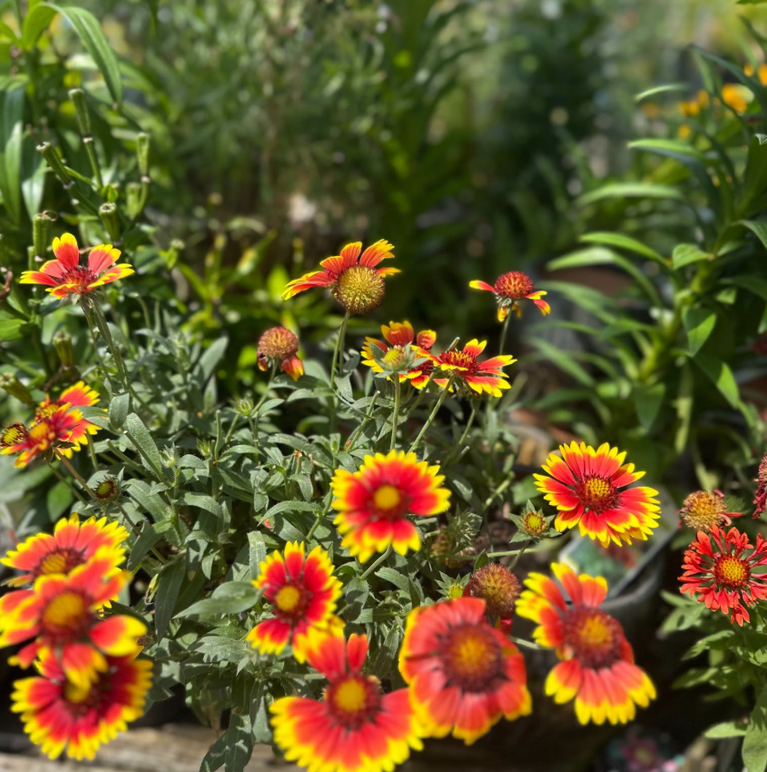
27. Blanket Flower (Gaillardia)
Blanket Flower produces striking red-and-yellow bicolor blooms that resemble a woven blanket pattern. It flowers from early summer into fall with impressive heat tolerance.
Deadheading spent blooms encourages continuous flowering, though the plant performs reasonably well even without regular attention.
Full sun and well-drained, even sandy, soil suit it best. It struggles in consistently wet conditions.
28. Cardinal Flower (Lobelia cardinalis)
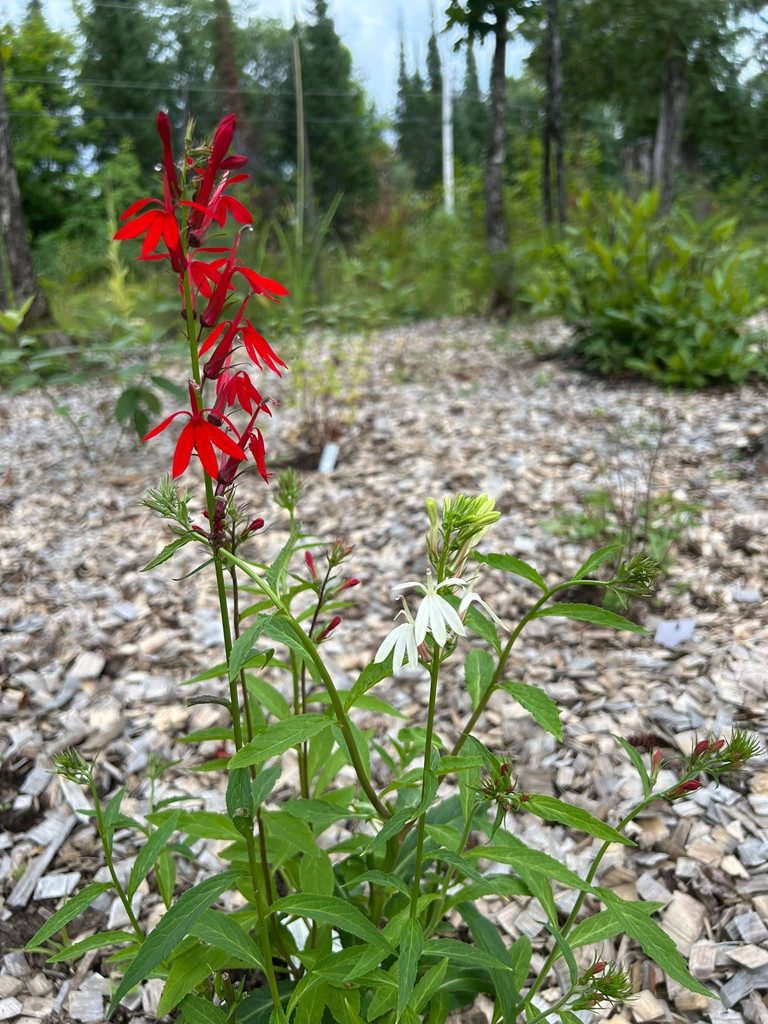
Cardinal Flower produces vivid scarlet-red spikes that hummingbirds seek out from midsummer into early fall. It’s a native perennial well suited to moist garden areas or rain gardens.
Unlike many perennials on this list, it actually prefers consistently damp soil and tolerates occasional standing water without issue.
Full sun to partial shade with moisture-retentive soil supports its healthiest, tallest growth.
29. Joe Pye Weed (Eutrochium purpureum)
Joe Pye Weed is a tall, dramatic native perennial with dusty pink flower clusters that bloom from midsummer into fall. Butterflies, especially monarchs, visit it constantly during migration season.
Its height, often 4 to 6 feet, makes it ideal for the back of a border or a naturalized garden edge.
Full sun to partial shade and moist soil bring out its fullest, most floriferous form.
30. Globe Thistle (Echinops ritro)
Globe Thistle produces striking, spherical steel-blue flower heads that look almost architectural against green foliage. It blooms from midsummer into early fall.
Bees are drawn to it in large numbers, and the dried flower heads look attractive well into winter if left standing rather than cut back.
Full sun and well-drained soil, even on the poor side, keep this perennial upright and thriving.
31. Turtlehead (Chelone glabra)
Turtlehead earns its name from flowers shaped like a small turtle’s head, blooming in pink or white from late summer into fall. It’s a native plant well suited to moist soil.
I find it especially useful near ponds or low-lying areas where other perennials often struggle with excess moisture.
Partial shade to full sun with consistently moist soil brings out its healthiest, most upright growth.
32. Solomon’s Seal (Polygonatum biflorum)
Solomon’s Seal brings arching stems lined with small, bell-shaped white flowers in late spring. It thrives in the shaded, wooded conditions common across Zone 4 landscapes.
Its graceful form pairs beautifully with hostas and ferns, adding textural variety to shaded borders.
Partial to full shade and rich, moist soil support its slow, steady spread over several seasons.
33. Obedient Plant (Physostegia virginiana)
Obedient Plant gets its curious name from flowers that stay in place when gently pushed sideways along the stem. It blooms in pink or white spikes from late summer into fall.
It spreads energetically through rhizomes, so give it room, or plant it in a spot where controlled spreading actually helps fill space.
Full sun to partial shade and average, moist soil keep it blooming steadily right up until frost.
34. Pasque Flower (Pulsatilla vulgaris)
Pasque Flower is often among the very first perennials to bloom in Zone 4, sometimes appearing while patches of snow still linger nearby. Its soft purple, cup-shaped flowers emerge in early spring.
Silvery, feathery seed heads follow the blooms, adding a second wave of visual interest once the petals fade.
Full sun and sharp, well-drained soil suit this compact, low-growing perennial best.
35. Anise Hyssop (Agastache foeniculum)
Anise Hyssop closes out this list with fragrant purple flower spikes and licorice-scented foliage that blooms from midsummer into fall. Bees and hummingbirds visit it constantly.
It tolerates poor, dry soil and rarely needs fertilizing, making it a low-input choice for busy or beginner gardeners alike.
Full sun and well-drained soil keep this native perennial upright, fragrant, and reliably productive.
Why Zone 4 Demands Extra Care in Plant Selection
A plant rated for Zone 5 or warmer often looks fine through fall, only to disappear entirely after a single Zone 4 winter. That disappointment is common enough that it deserves attention before any planting begins.
Research from the University of Minnesota Extension notes that perennials matched correctly to their hardiness zone survive at rates above 85% after their first winter, compared to a steep drop-off for borderline plants pushed past their limits.
That single statistic is why every flower on this list earned its place through proven cold tolerance, not just attractive color.
Building a Zone 4 Garden That Holds Up Every Year
With 35 proven options, the real work shifts to sequencing bloom times so the garden never sits empty for long. Pairing early risers like Pasque Flower and Columbine with late finishers like Aster and Obedient Plant keeps color moving from the first spring thaw through the first fall frost.
Grouping plants by their light and moisture needs matters even more in Zone 4, since the compressed growing season leaves little time for a misplaced perennial to recover.
According to North Dakota State University Extension, gardens built around properly zoned, layered perennials show significantly reduced winter dieback compared to beds mixing in borderline-hardy species.
Starting small, with eight to ten reliable perennials from this list, then expanding gradually each year, tends to produce far sturdier results than planting everything at once. Zone 4 winters are unforgiving, but every flower on this list has already proven it can take the cold and come back stronger.
Frequently Asked Questions
How cold does Zone 4 actually get? Zone 4 winters typically range from -30°F to -20°F, based on USDA hardiness zone classifications.
Can Zone 5 perennials survive in Zone 4? Some can with winter mulch protection, but many will not reliably return. Choosing perennials rated specifically for Zone 4 or colder gives far more consistent results.
What is the best time to plant perennials in Zone 4? Early spring, right after the last frost, is generally safer than fall planting, since it gives roots a full growing season to establish before the next hard freeze.

Tim M Dave is a gardening expert with a passion for houseplants, particularly cacti and succulents. With a degree in plant biology from the University of California, Berkeley, he has vast experience in gardening. Over the years, he has cultivated a vast collection of desert plants and learned a great deal about how to grow and care for these unique companions.