25 Wisconsin Native Flowers (With Growing Details)
I grew up thinking dandelions were the only flowers that could survive a Wisconsin winter. I was wrong. The state actually holds close to 1,800 documented native plant species, according to the Wisconsin Department of Natural Resources.
That toughness is exactly why native flowers deserve more attention. They evolved here, alongside Wisconsin’s soil, its pollinators, and its four-season swings. They need less water, less fertilizer, and almost no coddling once established, and they feed the bees, butterflies, and birds that non-native ornamentals often ignore.
This guide walks through 25 of the best Wisconsin native flowers, from the tiny state flower you might be stepping over right now to towering prairie giants.
The 25 Best Wisconsin Native Flowers
1. Wood Violet (Viola sororia)
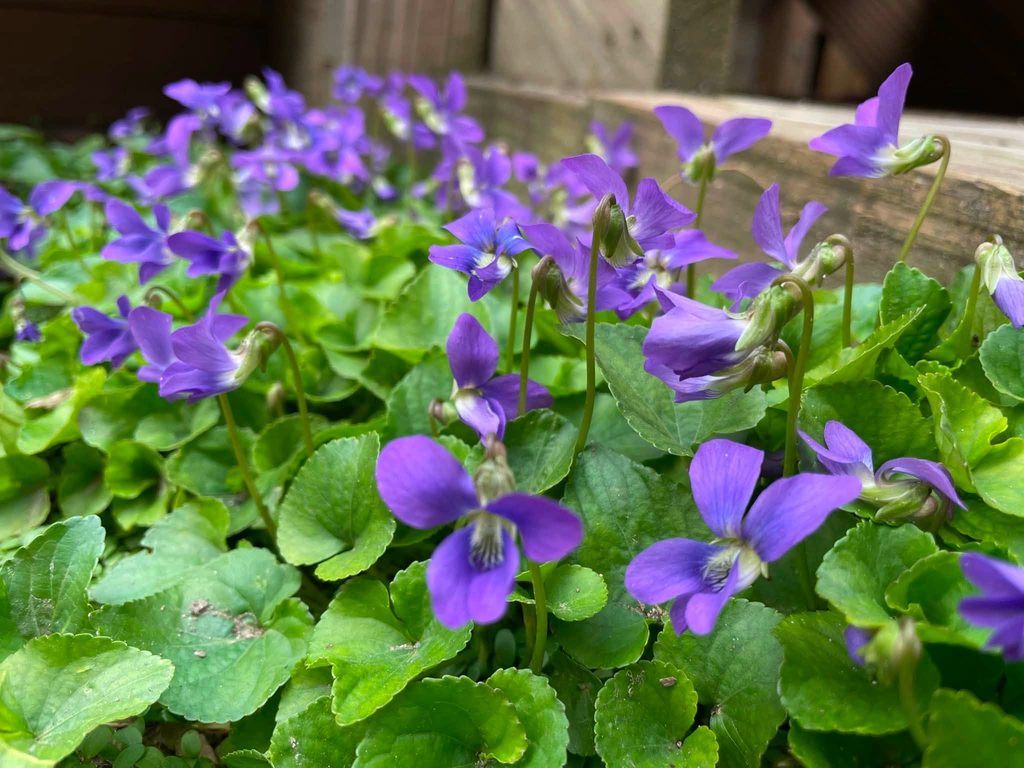
The wood violet is Wisconsin’s official state flower, a title Wisconsin school children voted for in 1909, though the legislature didn’t formally codify it until 1949. It’s a low, five-petaled purple bloom that grows only a few inches tall.
You’ll find it carpeting shaded woodlands, stream banks, and meadow edges across nearly the entire state. It blooms early, often from March through June, making it one of the first true signs that spring has arrived.
I love that such an unassuming little flower earned this honor over showier rivals like the wild rose and white water lily. It says something about Wisconsin’s character: quiet, hardy, and easy to overlook until you actually stop and look down.
Wood violets thrive in part shade and moist, humus-rich soil, so they work well under trees where little else will bloom.
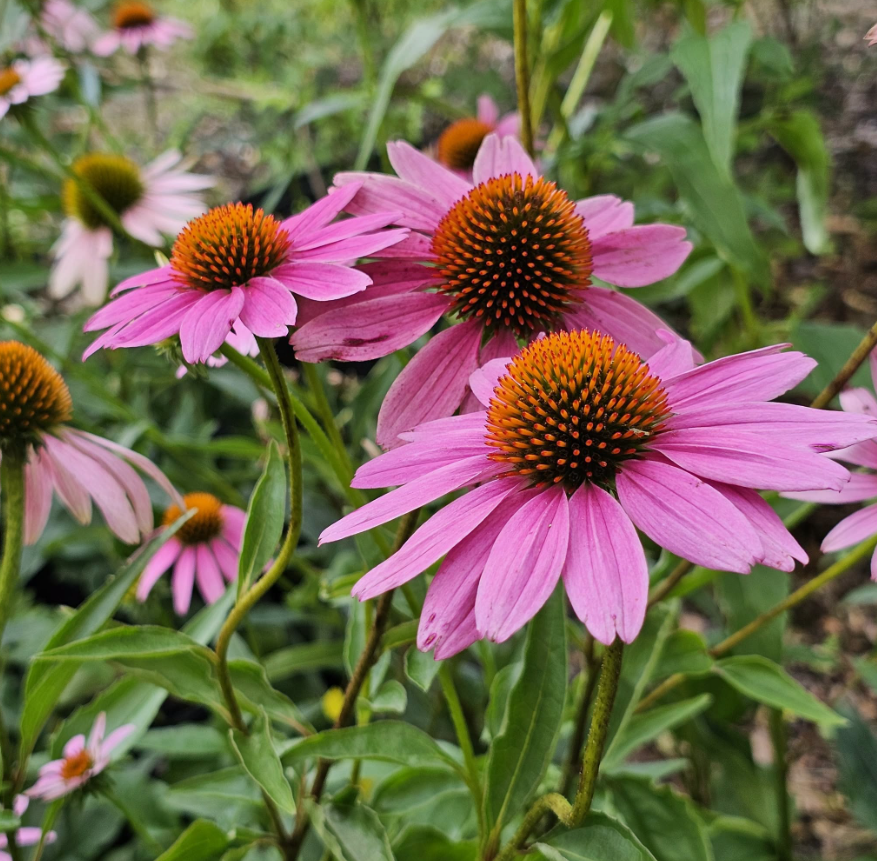
2. Purple Coneflower (Echinacea purpurea)
Purple coneflower is probably the most recognizable prairie flower in the Midwest, with its spiky orange center cone and drooping pink-purple petals. It blooms from June through August and can reach up to three feet tall.
This plant is a pollinator magnet. Bees and butterflies visit constantly, and goldfinches strip the seed heads in fall, so it’s worth leaving the dried stalks standing through winter.
It also happens to be one of the most drought-tolerant flowers on this list. Once established, it rarely needs supplemental watering, even during Wisconsin’s driest July stretches.
Coneflower is the plant I’d recommend first to any beginner gardener. It is nearly impossible to kill and rewards very little effort.
3. Black-Eyed Susan (Rudbeckia hirta)
Black-eyed Susan brings bright yellow petals and a dark brown center to roadsides, prairies, and gardens across Wisconsin. It typically blooms from June to October, one of the longest flowering windows on this list.
It is a short-lived perennial or biennial, meaning individual plants may not last more than a couple of years. But it self-seeds so readily that established patches feel permanent.
Deer tend to leave it alone, which makes it a smart pick for rural Wisconsin properties where hungry deer test every new planting.
4. Wild Bergamot (Monarda fistulosa)
Wild bergamot, also called bee balm, produces shaggy lavender flower heads that look almost fireworks-shaped. Crush the leaves and you’ll catch a strong minty-oregano scent, a nod to its place in the mint family.
Hummingbirds and long-tongued bees favor it heavily, and it blooms from July into September. It tolerates poor, dry soil and full sun without complaint.
Historically, Native American communities in the region used bergamot medicinally, particularly for respiratory ailments, which adds a layer of cultural history to an already beautiful plant.
ALSO READ: 20 Native Shrubs of Wisconsin (With Growing Details)
5. Butterfly Weed (Asclepias tuberosa)
Butterfly weed is a milkweed species with vivid orange flower clusters, blooming from June through August. Unlike other milkweeds, its sap is not milky, and it prefers drier, sandy soil over wet ground.
Monarch caterpillars rely on it as a host plant, and adult butterflies feed on its nectar constantly through summer. It’s one of the showiest ways to support monarch populations in a home garden.
It grows two to three feet tall and takes a couple of seasons to establish a strong taproot, so patience pays off here.
6. Swamp Milkweed (Asclepias incarnata)
Swamp milkweed produces clusters of pink to mauve flowers and, true to its name, thrives in wet soil, rain gardens, and pond edges. It blooms from June through October and grows two to four feet tall.
Like all milkweeds, it’s essential to monarch butterflies, which lay their eggs exclusively on milkweed leaves. No milkweed, no monarchs — it really is that direct a relationship.
It also handles average garden soil better than its name suggests, so you don’t need standing water to grow it successfully.
7. Common Milkweed (Asclepias syriaca)
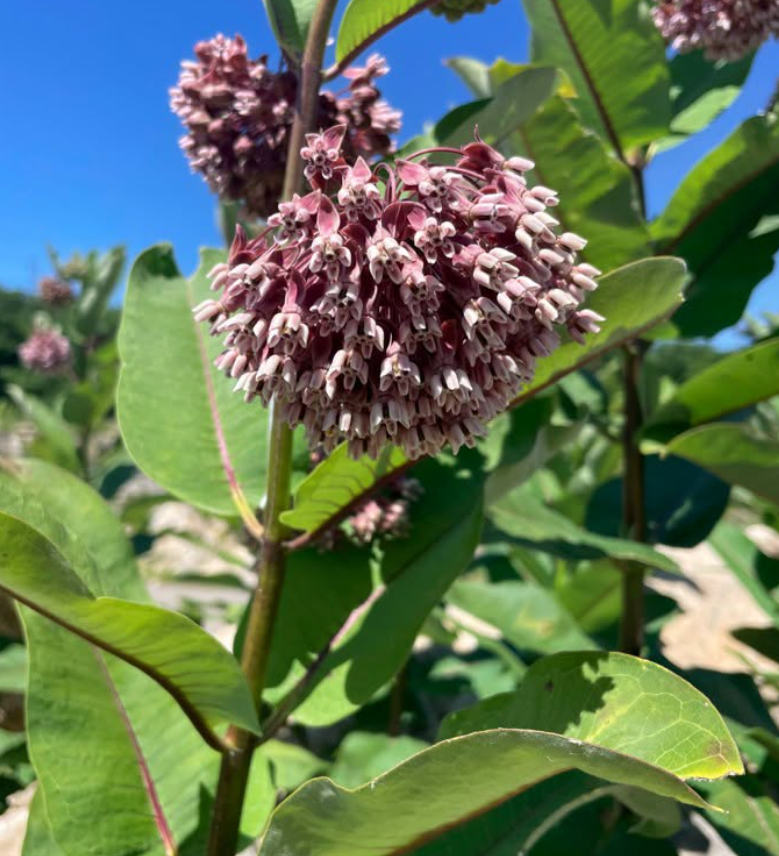
Common milkweed is the classic roadside milkweed, with dusty pink globe-shaped flower clusters and a strong, sweet fragrance. It spreads by rhizomes, so it can colonize an area quickly.
It blooms from June to August and supports both monarch caterpillars and a huge range of nectar-seeking insects, including native bees, wasps, and beetles.
Because it spreads aggressively, it’s best suited to larger plots or naturalized areas rather than tight garden borders.
8. Rough Blazing Star (Liatris aspera)
Rough blazing star sends up tall purple flower spikes that open from the top down, an unusual pattern among prairie flowers. It blooms in August and September, extending color late into the season.
Butterflies, especially monarchs on their fall migration south, rely on it heavily as a late-season nectar source. Goldfinches also eat the seeds once flowering ends.
It handles dry, rocky soil well and adds strong vertical structure to a native prairie garden.
9. New England Aster (Symphyotrichum novae-angliae)
New England aster closes out the growing season with clusters of purple-pink daisy-like flowers from August through October, often the last major bloom before frost.
It provides critical late-season fuel for bees and butterflies preparing for winter or migration. Monarchs passing through Wisconsin in September lean on asters heavily.
It can reach four to six feet tall, so give it room at the back of a border or plant it alongside other tall prairie species.
10. Wild Columbine (Aquilegia canadensis)
Wild columbine has a distinctive nodding shape, with red and yellow petals forming backward-pointing spurs. It blooms from April through June in woodland edges and rocky slopes.
Hummingbirds arriving in Wisconsin each spring depend on columbine as one of their earliest reliable nectar sources, timing their migration to match its bloom.
It tolerates both sun and part shade, and it self-seeds gently without becoming invasive, making it a manageable choice for smaller gardens.
11. Cardinal Flower (Lobelia cardinalis)
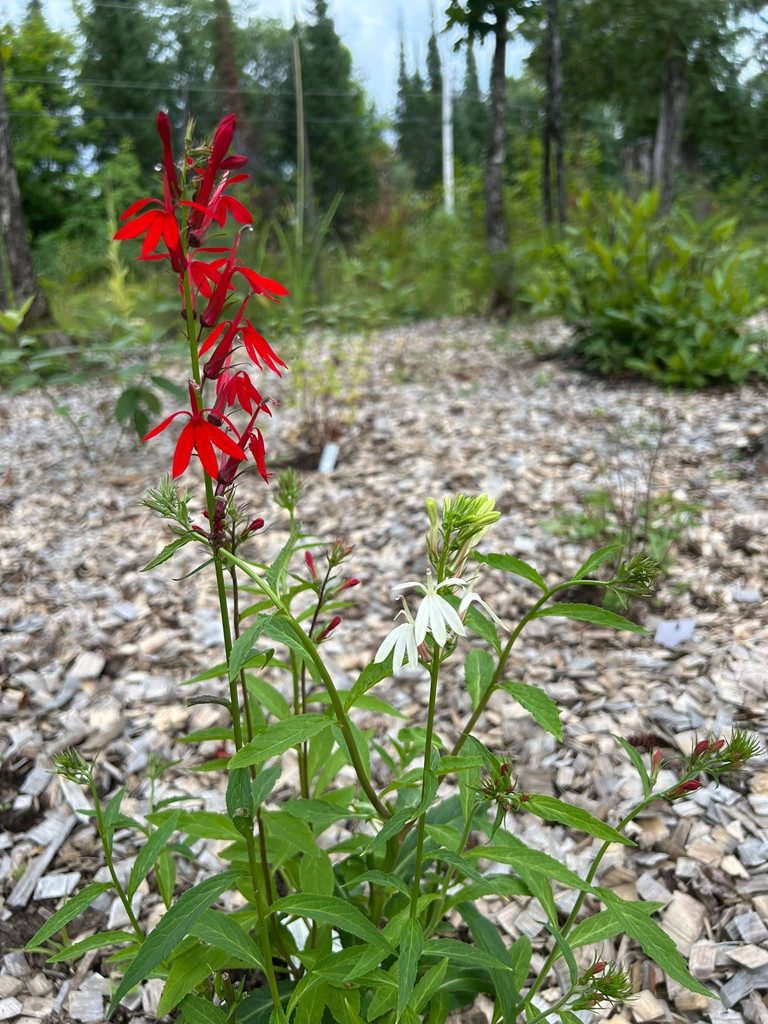
Cardinal flower produces brilliant scarlet spikes and blooms from July through September. It’s one of the most vivid reds found in any native North American flower.
It prefers consistently moist soil, making it ideal for rain gardens, pond margins, or low spots that stay damp after storms. Hummingbirds are drawn to its tubular red blooms almost exclusively.
It can be short-lived as an individual plant, but it reseeds reliably if the soil stays undisturbed and moist.
12. Prairie Smoke (Geum triflorum)
Prairie smoke gets its name from its seed heads, which form feathery pink plumes that look like wisps of smoke after the flowers fade. The nodding pink-red blooms appear in April and May.
It’s a low-growing plant, rarely more than a foot tall, which makes it well suited to rock gardens or the front edge of a prairie planting.
It grows in dry, well-drained soil and full sun, conditions common on Wisconsin’s sandier prairie remnants.
13. Compass Plant (Silphium laciniatum)
Compass plant is a prairie giant, growing up to nine feet tall with large yellow sunflower-like blooms from July through September. Its deeply cut leaves famously orient north-south, which is how it earned its name.
Its taproot can extend more than ten feet underground, letting it survive drought that would wither shallow-rooted plants within days.
Because of its size, it needs a dedicated spot in larger prairie gardens rather than a small flower bed.
ALSO READ: 25 Wisconsin Native Trees (With Growing Details)
14. Great Blue Lobelia (Lobelia siphilitica)
Great blue lobelia produces tall spikes of true blue-purple flowers, blooming from August through October. It’s one of the few native flowers offering a genuinely blue color in the palette.
It grows well in moist to wet soil and part shade, often found along stream banks and in low woodland areas throughout the state.
Bumblebees are its primary pollinators, since the flower shape is built to accommodate their size and strength.
15. Joe-Pye Weed (Eutrochium purpureum)
Joe-Pye weed forms large, dusky pink-purple flower domes atop stems that can reach five to seven feet. It blooms from July through September and is hard to miss in a wet meadow.
Butterflies swarm it, particularly swallowtails, making it one of the best late-summer nectar sources for a pollinator-focused garden.
It prefers moist soil and can handle part shade, so it fits well near rain gardens or the damp edges of a yard.
16. Wild Geranium (Geranium maculatum)
Wild geranium, also called spotted cranesbill, has soft lavender-pink flowers with five petals, blooming from April through June in woodland settings.
It spreads slowly to form attractive ground cover under trees, filling in spaces where lawn grass typically struggles due to shade.
Its seed pods split explosively when ripe, flinging seeds several feet away, a natural dispersal trick that helps it colonize new woodland patches.
17. Marsh Marigold (Caltha palustris)
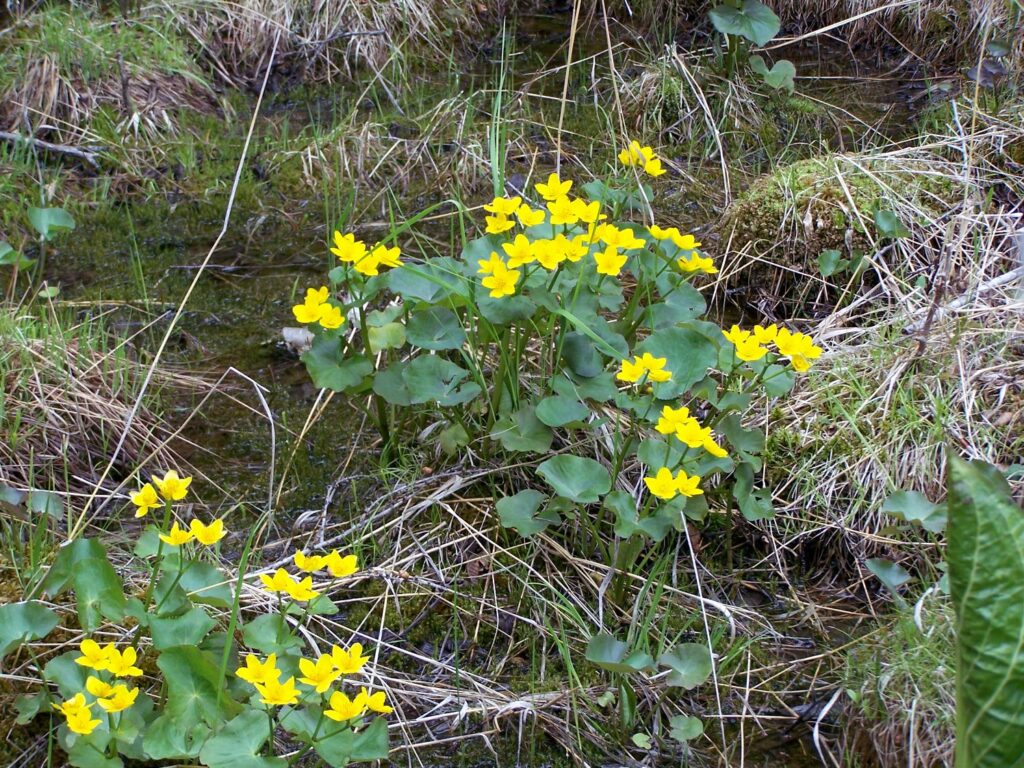
Marsh marigold is one of the earliest spring bloomers, producing bright yellow, buttercup-like flowers from April through May in wet meadows and along streams.
Despite the name, it’s not a true marigold; it belongs to the buttercup family. It requires consistently wet or boggy soil to thrive.
Its early bloom time makes it an important nectar source for the first bees active after Wisconsin’s long winter.
18. White Trout Lily (Erythronium albidum)
White trout lily gets its name from its mottled leaves, which resemble the markings on a trout’s skin. It produces small, nodding white flowers in April, often in large woodland colonies.
Colonies can take years to establish and may not flower until a plant is several years old, which is part of why undisturbed old-growth woodlands often host the largest displays.
It’s an ephemeral, meaning the entire plant dies back by early summer once the tree canopy above fills in and blocks sunlight.
19. Bloodroot (Sanguinaria canadensis)
Bloodroot produces a striking white flower with a yellow center, wrapped by a single distinctive leaf, blooming for just a short window in April.
Its name comes from the red-orange sap in its rhizome, historically used by Native American communities as a dye and in traditional remedies.
Like trout lily, it’s a spring ephemeral, disappearing above ground by midsummer, so plant it where later-blooming perennials can fill the gap.
20. Jack-in-the-Pulpit (Arisaema triphyllum)
Jack-in-the-pulpit has an unusual flower structure: a hooded green-and-purple striped spathe wraps around a central spike, blooming from April through June in shaded, moist woodlands.
It’s one of the more unusual-looking native flowers on this list, often more of a conversation piece than a showy garden centerpiece.
By late summer, it produces a cluster of bright red berries, which are toxic to humans but eaten by some wildlife species.
21. Wild Lupine (Lupinus perennis)
Wild lupine produces tall spikes of blue-purple pea-like flowers from May through June, most often found on Wisconsin’s dry, sandy prairies and oak savannas.
It’s the sole host plant for the endangered Karner blue butterfly, meaning lupine populations directly determine whether this rare species can survive in the state.
It needs well-drained, sandy soil and struggles in rich garden soil, so it’s best suited to prairie restorations rather than typical flower beds.
22. Pasque Flower (Anemone patens)
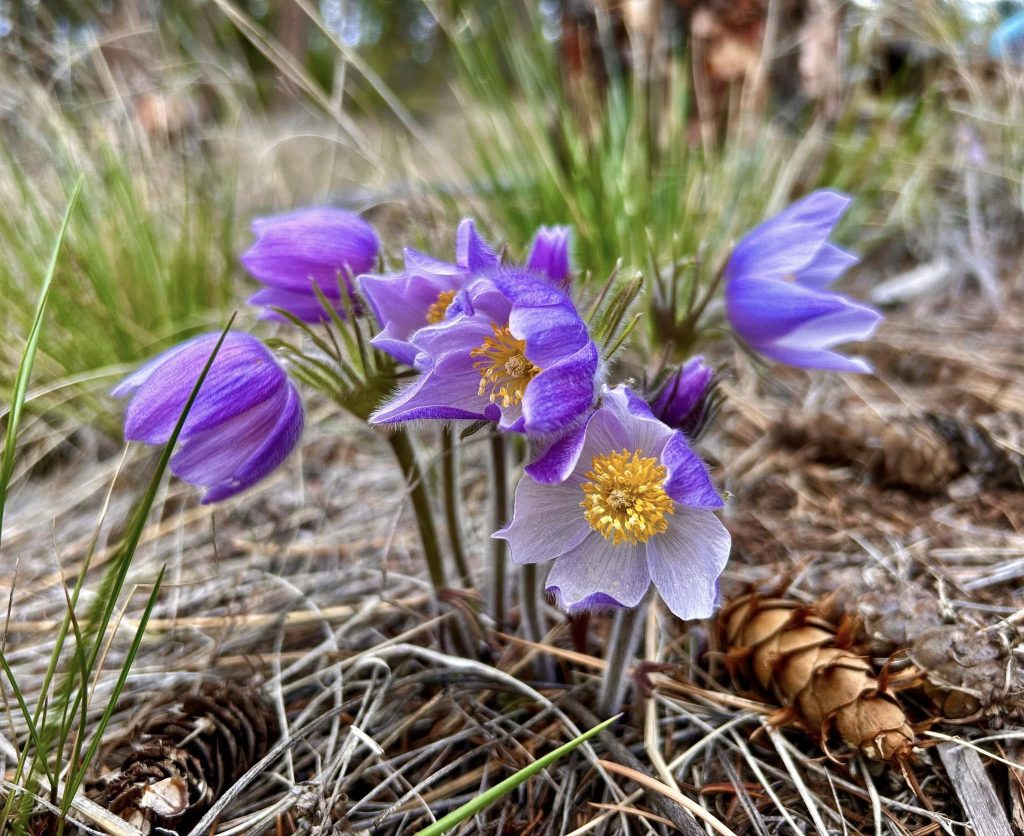
Pasque flower is among the very first prairie flowers to bloom, often pushing through in late March or April while frost is still a real possibility, with soft lavender petals and a fuzzy stem.
It grows low, rarely exceeding a foot, and prefers dry, sandy or rocky prairie soil with full sun exposure.
Its early bloom time made it culturally significant to many Indigenous groups, who associated it with the true start of spring, sometimes before the calendar agreed.
23. Shooting Star (Dodecatheon meadia)
Shooting star has a genuinely unusual flower shape, with petals swept sharply backward around a pointed yellow center, resembling a small comet. It blooms in May and June.
It grows in prairies and open woodlands, favoring moist but well-drained soil, and typically reaches one to two feet tall.
The flower’s pollen is only released through vibration, a process called buzz pollination, which means only bumblebees can effectively pollinate it.
24. Culver’s Root (Veronicastrum virginicum)
Culver’s root produces tall, narrow spikes of white flowers arranged almost like small candelabras, blooming from July through September and reaching up to six feet.
It’s a strong architectural addition to a native garden, giving vertical structure without the bulk of a plant like compass plant.
Bees and small butterflies visit constantly, and it tolerates both moist and average garden soil, making it more adaptable than many prairie natives.
25. Spiderwort (Tradescantia ohiensis)
Spiderwort has three-petaled blue-purple flowers that typically close by early afternoon, blooming from May through July in prairies, open woods, and roadsides.
Each flower lasts only a single day, but the plant produces so many buds that it appears to bloom continuously for weeks at a time.
It tolerates both sun and part shade and adapts to a wide range of soil types, which makes it one of the more forgiving natives for new gardeners.
Why Choose Native Flowers for a Wisconsin Garden?
Before the list, it helps to know why natives beat imported ornamentals. Wisconsin’s rare plant list already includes 65 endangered and 57 threatened native species, largely because of habitat loss. Planting natives in home gardens is a small, direct way to push back against that trend.
Native flowers also cut down on maintenance. They’re matched to local rainfall patterns and soil types, so they rarely need irrigation once their roots settle in. Many also have deep root systems that reduce erosion and improve water infiltration, something lawn grass simply cannot do.
Finally, natives support the food web. A single milkweed patch can host monarch caterpillars that no other plant will feed. That relationship is not optional for the butterfly — it is the entire reason monarchs migrate through Wisconsin every year.
How to Start a Wisconsin Native Flower Garden
Start small. Pick a single bed, four to six species, and let it establish before expanding. Trying to convert an entire yard at once usually leads to weeds outcompeting slow-starting natives.
Match plants to your actual site conditions. A shooting star planted in dry, full sun will struggle, while wild lupine planted in rich, moist soil will rot. Read the soil and light before the plant tag, not after.
Skip the fertilizer. Wisconsin natives evolved in lean prairie and woodland soil, and excess nutrients often produce floppy growth and fewer flowers rather than a healthier plant.
Be patient through year one. The old gardener’s saying about native perennials — first year sleep, second year creep, third year leap — holds true for most of the species on this list.
Frequently Asked Questions
What is Wisconsin’s official state flower? The wood violet (Viola sororia) has held that title since 1949, following a vote by Wisconsin school children in 1908 and 1909.
How many native plant species does Wisconsin have? The Wisconsin DNR documents roughly 1,800 native plant species across the state’s forests, prairies, and wetlands.
Are Wisconsin native flowers easier to maintain than non-native flowers? Generally yes. Once established, native flowers need far less watering, fertilizing, and pest management because they are adapted to local soil and climate conditions.
Which native flower best supports monarch butterflies? Milkweed species — common milkweed, swamp milkweed, and butterfly weed — are essential, since monarch caterpillars can only eat milkweed leaves.
When is the best time to plant Wisconsin native flowers? Fall planting, after the first light frost, often gives the best results, since it mimics natural seed dispersal and allows roots to establish before summer heat arrives.
Wisconsin’s native flowers carry the state’s whole ecological story in miniature: hardy, unfussy, and quietly essential to everything from bumblebees to monarch butterflies. Start with two or three species from this list, watch what shows up to visit them, and the rest of the garden tends to follow.

Tim M Dave is a gardening expert with a passion for houseplants, particularly cacti and succulents. With a degree in plant biology from the University of California, Berkeley, he has vast experience in gardening. Over the years, he has cultivated a vast collection of desert plants and learned a great deal about how to grow and care for these unique companions.