25 Wisconsin Native Trees (With Growing Details)
Wisconsin holds more trees than most people ever guess. The state carries 17 million acres of forest land, and inside that green expanse stand roughly 11.5 billion live trees, according to the USDA Forest Service’s Forest Inventory and Analysis program. That is more trees than there are people on Earth.
I grew up walking under some of these same canopies, and I still stop to look up at a good bur oak. There is something grounding about a tree that outlives generations of a family.
This guide walks through 25 native tree species you can find across Wisconsin’s northern forests, southern hardwoods, and Great Lakes shoreline.
Why Wisconsin’s Native Trees Matter
Native trees support the birds, insects, and mammals that evolved alongside them. A single mature oak can host hundreds of caterpillar species, which in turn feed nesting songbirds.
Wisconsin’s forest cover is not evenly spread. Maple-beech-birch forests make up about 22% of the state’s timberland, while oak-hickory forests form the single largest forest type by volume, according to Forest Service inventory data.
Knowing these species also helps homeowners choose the right tree for a yard, helps hikers read the landscape, and helps landowners manage woodlots responsibly.
Wisconsin’s growing-stock volume on timberland totals more than 22.4 billion cubic feet, with sugar maple and red maple leading the way. That scale is hard to picture until you have stood inside a real northern hardwood stand and looked up.
Each region of the state leans toward different species too. The Driftless Area in the southwest favors oak-hickory woodlands, the north woods lean conifer-heavy, and the Lake Superior shoreline supports its own cooler, moisture-loving mix. Now, on to the list.
1. Sugar Maple (Acer saccharum)
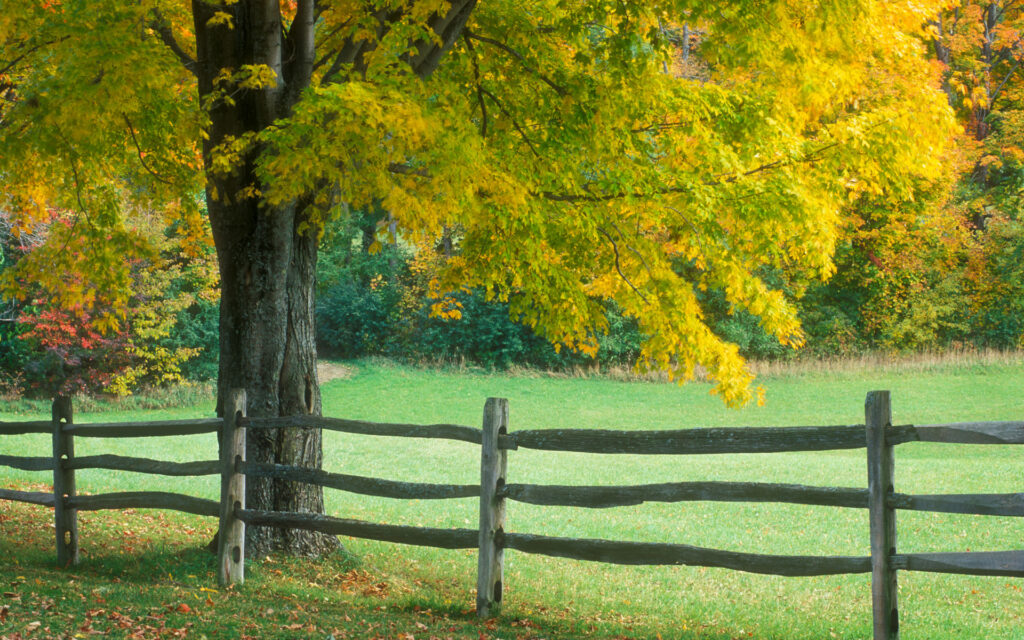
The sugar maple is Wisconsin’s official state tree, chosen by a vote of schoolchildren back in 1893 and made official in 1949. It is the backbone of the state’s maple syrup industry.
This tree needs about 34 gallons of sap to produce a single gallon of syrup. That ratio alone explains why syrup carries a premium price.
Sugar maples grow slowly but live long, often past 200 years. Look for its five-lobed leaf and smooth gray bark that furrows with age. Fall color runs from gold to a deep scarlet, and it is genuinely one of the best shows in the Midwest.
2. Red Maple (Acer rubrum)
Red maple runs a close second to sugar maple in overall abundance across the state. It tolerates wetter soils better than its cousin, which is why you often see it near streams and lowlands.
Its red flowers appear in early spring, before the leaves even open. That early bloom makes red maple one of the first color signals that winter is loosening its grip.
The leaves have three main lobes with jagged edges. In autumn they can flash bright red almost overnight, and honestly, that quick transformation always catches me off guard.
3. Silver Maple (Acer saccharinum)
Silver maple favors riverbanks, floodplains, and the moist soil found in lowland corridors. Its bark peels in long, flaky strips as the tree ages, which makes it fairly easy to spot.
Leaves show a pale, silvery underside, hence the name. When wind flips the canopy, the whole tree seems to shimmer.
This is a fast grower, but the wood is weaker than sugar maple. Storms can snap its branches, so plant it away from structures if you are adding one to a yard.
4. Black Maple (Acer nigrum)
Black maple looks so similar to sugar maple that botanists sometimes treat it as a variety rather than a separate species. The leaves droop slightly and have fewer, more rounded lobes.
You will mostly find it in the same rich, moist hardwood forests where sugar maple thrives, often growing side by side with it.
Its sap also produces quality syrup, though most commercial operations don’t separate the two species. For casual identification, don’t worry too much about telling them apart.
5. White Oak (Quercus alba)
White oak is one of the most majestic native trees in Wisconsin, with a broad trunk and wide, horizontal limbs. Its bark stays relatively light and less deeply fissured than other oaks.
The acorns feed deer, turkey, and squirrels through the fall and winter. White oak wood is also prized for barrels, flooring, and furniture because of its strength and tight grain.
This tree can live several centuries. Standing under an old white oak feels a little like standing near a quiet historical marker.
6. Bur Oak (Quercus macrocarpa)
Bur oak is built for survival. Its thick, corky bark protects it from prairie fires, which is why it dominates Wisconsin’s oak savannas.
The acorns are the largest of any native oak, capped with a fringed, mossy border that looks almost decorative. Wildlife line up for these in autumn.
Bur oaks grow slowly and can reach impressive ages, some documented well past 300 years. If you want one true symbol of the Wisconsin prairie-forest border, this is it.
7. Northern Red Oak (Quercus rubra)
Northern red oak grows faster than most other oaks and produces valuable, straight-grained lumber. It is the dominant single tree species across much of the state’s northern forest, second only to sugar maple.
Its leaves have pointed, bristle-tipped lobes rather than the rounded lobes of white oak. Fall color leans toward deep red-brown rather than bright orange.
Red oak acorns take two years to mature, unlike white oak acorns, which mature in one season. That detail alone can help you identify the species from a distance.
8. Swamp White Oak (Quercus bicolor)
As the name suggests, swamp white oak tolerates wet, poorly drained soils better than most oaks. You will often spot it in floodplains and along wetland edges.
The leaves show a two-toned look, dark green above and pale, almost white, underneath. That contrast is where the “bicolor” species name comes from.
It naturally hybridizes with bur oak in parts of Wisconsin, producing a mixed offspring sometimes called Quercus x schuettei. That hybrid is a nice reminder of how flexible these species really are.
9. Eastern White Pine (Pinus strobus)
Eastern white pine is Wisconsin’s tallest native conifer, historically reaching well over 150 feet before extensive logging in the 1800s reshaped the northern forests. It remains a defining tree of the north woods.
You can identify it by its soft, flexible needles bundled in groups of five. The bark is smooth and gray on young trees, turning dark and plated with age.
It nearly won the vote for state tree back in 1949, losing narrowly to sugar maple. Given its towering presence, I understand why so many people wanted it.
10. Red Pine (Pinus resinosa)
Red pine, sometimes called Norway pine, grows in straight, tall stands and is one of the three native pines forming Wisconsin’s mixed pine forest type. Its reddish-orange bark plates are a reliable identifying feature.
Needles come in bundles of two, longer and stiffer than white pine’s. The wood is valued for construction lumber and utility poles.
Red pine plantations cover large stretches of northern Wisconsin, planted extensively during reforestation efforts in the early 20th century. Walking through a mature stand feels almost cathedral-like, with tall trunks and little understory.
11. Jack Pine (Pinus banksiana)
Jack pine is the toughest of Wisconsin’s native pines, thriving on poor, sandy soils where other trees struggle. It is closely tied to fire ecology.
Its cones are often serotinous, meaning they stay sealed shut with resin until intense heat from a fire melts the seal and releases the seeds. This adaptation lets jack pine regenerate quickly after wildfire.
The needles are short, twisted, and grow in bundles of two. This species also provides critical nesting habitat for the endangered Kirtland’s warbler in parts of the Upper Midwest.
12. Paper Birch (Betula papyrifera)
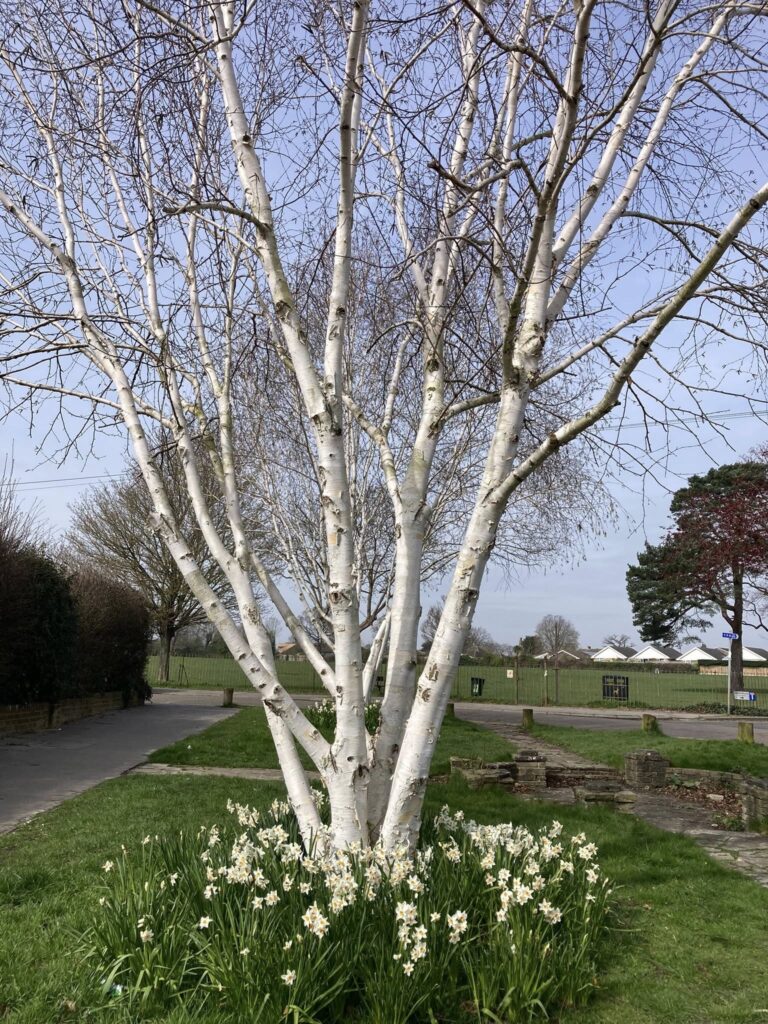
Paper birch is instantly recognizable by its white, peeling bark, which historically was used by Indigenous communities for canoes, containers, and writing material. It is a true icon of the northern forest.
This tree prefers cooler climates and is often one of the first species to colonize disturbed or burned areas. Its rapid early growth gives it a head start over slower competitors.
Fall color turns a clean, bright yellow. Against a backdrop of dark conifers, a stand of paper birch practically glows in October.
13. Yellow Birch (Betula alleghaniensis)
Yellow birch carries a yellowish-bronze, curling bark rather than the stark white of paper birch. It grows in cooler, moist upland forests, often beside hemlock and sugar maple in northern Wisconsin.
Crush a twig and you may notice a faint wintergreen scent, a helpful trick for identification in the field.
This species is a climax forest tree, meaning it can persist in shaded understories for decades before finally reaching the canopy. Patience seems to be its defining trait.
14. American Basswood (Tilia americana)
American basswood, also called linden, has large heart-shaped leaves and small, fragrant cream-colored flowers that bloom in early summer. Bees swarm these blossoms, and basswood honey has a distinct, almost minty flavor.
The wood is soft and light, historically favored for carving, guitar bodies, and beehive frames. It is a common component of the maple-basswood forest community found across southern and central Wisconsin.
Basswood often sprouts multiple trunks from a single root system after the main stem is damaged. That resilience helps it persist even after storms or logging.
15. American Beech (Fagus grandifolia)
American beech is considered a climax species in Wisconsin’s forests, meaning it can dominate a site only after decades of slow, patient growth in the shade of other trees. Over 80% of the state’s beech volume grows within maple-beech-birch forest stands.
Its smooth, gray bark rarely develops the rough furrows seen on other hardwoods, which makes it a favorite target for unfortunate carved initials.
The tree produces small, triangular nuts that feed squirrels, deer, and turkey. Beech is found mostly in the eastern and southeastern parts of the state, where rich, moist soils support it.
16. Quaking Aspen (Populus tremuloides)
Quaking aspen earns its name from leaves that flutter constantly in even the lightest breeze, thanks to flattened leaf stems. It is one of the fastest-colonizing native trees in Wisconsin.
Aspen often spreads through root suckers, creating large clonal colonies that are technically a single organism. Some aspen clones elsewhere in North America are considered among the oldest living things on the planet.
This tree matures quickly and provides critical habitat for ruffed grouse and deer. Its pale, greenish-white bark and constant shimmer make it easy to spot from a moving car.
17. Bigtooth Aspen (Populus grandidentata)
Bigtooth aspen looks similar to quaking aspen but carries larger, coarsely toothed leaf edges, as the name implies. It tends to grow slightly larger and live a bit longer than its quaking cousin.
Like quaking aspen, it is a pioneer species, quick to colonize open or disturbed ground after fire, logging, or windthrow.
Wildlife rely on its buds and catkins as an important late-winter food source, when few other options remain. That timing makes it valuable well beyond its short lifespan.
18. Eastern Hemlock (Tsuga canadensis)
Eastern hemlock grows in cool, shaded ravines, often alongside yellow birch and sugar maple in Wisconsin’s northeastern forests. It can tolerate deep shade for decades, patiently waiting for a canopy gap.
Short, flat needles with two white stripes underneath make it easy to distinguish from pines and spruces. The tree can live several centuries when undisturbed.
Hemlock stands create a distinctly cool, quiet microclimate that supports trout streams and specialized understory plants. Losing a hemlock grove changes an entire ecosystem, not just one tree.
19. Black Cherry (Prunus serotina)
Black cherry produces small, dark fruit that birds and mammals eat eagerly, though the wilted leaves and seeds contain compounds that can be toxic to livestock. Its bark looks almost like burnt potato chips, dark and scaly.
The wood is highly valued for furniture and cabinetry, prized for its reddish-brown color that deepens with age.
White, drooping flower clusters appear in spring, followed by fruit that ripens through summer. Wisconsin’s black cherry populations range widely, from woodland edges to fencerows.
20. Green Ash (Fraxinus pennsylvanica)
Green ash once thrived across Wisconsin’s floodplains, wetlands, and urban streets, valued for its tolerance of tough growing conditions. Its compound leaves with 7 to 9 leaflets were a common sight statewide.
Unfortunately, the invasive emerald ash borer has devastated ash populations across the state since it was first detected in Wisconsin in 2008. Many mature green ash trees have died as a result.
Where it survives, green ash still offers valuable shade and erosion control along riverbanks. Foresters continue monitoring surviving stands for any signs of natural resistance.
21. Black Ash (Fraxinus nigra)
Black ash grows in wet, swampy soils where few other hardwoods can compete, making it a defining tree of Wisconsin’s forested wetlands. Its wood was traditionally used by Indigenous basket weavers because the growth rings separate cleanly into thin, flexible splints.
Like green ash, black ash faces serious pressure from emerald ash borer infestation. Its loss threatens both wetland ecology and cultural practices tied to basket-making traditions.
The tree has dark, corky bark and compound leaves with narrow, stalkless leaflets. It is a slower grower than green ash but well adapted to its swampy home.
22. American Elm (Ulmus americana)
American elm once lined city streets across Wisconsin with its graceful, vase-shaped canopy, before Dutch elm disease swept through the state starting in the mid-20th century. The disease killed the vast majority of mature elms.
Some individual trees survive due to natural resistance or isolation, and disease-tolerant cultivars have since been developed for replanting.
The leaves are asymmetrical at the base, with a rough, sandpapery texture. Where healthy elms remain, they are treasured for the shade and character they bring back to a landscape.
23. Shagbark Hickory (Carya ovata)
Shagbark hickory is named for its bark, which peels away in long, curling strips that give the trunk a shaggy, unkempt look. It stands out immediately in a mixed forest.
This tree produces edible nuts favored by squirrels and once gathered by early settlers. Its wood is dense and shock-resistant, historically used for tool handles and, later, smoking meat.
Shagbark hickory grows slowly and can live for centuries. Southern Wisconsin’s oak-hickory forests depend on it as a key companion species to the oaks.
24. Northern White Cedar (Thuja occidentalis)
Northern white cedar, also called arborvitae, forms dense, almost impenetrable thickets in some wetland forests. Its compact, pyramidal form and scale-like foliage make it distinct from every other native conifer in the state.
The tree favors moist, often alkaline soils, and it is common along the shorelines of northern lakes and rivers. Deer rely heavily on cedar browse during harsh winters, sometimes over-browsing young stands.
Some individual white cedars in the Great Lakes region are documented as over 800 years old, making this one of the longest-lived native trees in eastern North America.
25. Balsam Fir (Abies balsamea)
Balsam fir is the classic Christmas tree species of the north, known for its symmetrical shape, soft needles, and strong fragrance. It thrives in cool, moist northern forests, often mixed with spruce.
Flat needles with rounded tips and a fragrant resin-filled bark blister make it simple to identify. The resin, called Canada balsam, was historically used in optical instruments and as a natural adhesive.
Balsam fir grows relatively fast but has a shorter lifespan than many conifers on this list. Even so, its scent alone earns it a permanent place in Wisconsin’s forest identity, and in a lot of living rooms every December.
Final Thoughts
Twenty-five species barely scratch the surface of what grows across Wisconsin, but this list covers the trees you are most likely to meet on a hike, in a backyard, or along a northern lakeshore. Each one carries its own history, ecology, and use.
Learning to identify these trees changes how a walk in the woods feels. You start noticing bark texture, leaf shape, and the small clues that separate one oak from another.
Wisconsin’s forests took centuries to become what they are today. Understanding the trees inside them is one small way to help keep that legacy standing for a long time.
If you plan to plant a native tree at home, check the site conditions first. Soil moisture, sun exposure, and mature size all matter more than most people expect at the nursery.
Local county land and water conservation departments, along with University of Wisconsin-Extension offices, often offer free advice on species selection. It is worth a call before digging a hole, especially for a tree meant to outlast you.
References
- USDA Forest Service, Northern Research Station — Wisconsin Forests 2019: Summary Report: https://research.fs.usda.gov/treesearch/65726
- Wisconsin Department of Natural Resources — Forestry: https://dnr.wisconsin.gov/topic/forestry
- Wisconsin Department of Natural Resources — Tree Identification: https://dnr.wisconsin.gov/education/treeID
- Wisconsin Department of Natural Resources — Champion Tree Program: https://dnr.wisconsin.gov/topic/forests/championtrees/nominate
- Wisconsin Department of Natural Resources — Urban Forestry Tree Learning Center: https://dnr.wisconsin.gov/topic/urbanforests/treecenter
- University of Wisconsin-Green Bay, Cofrin Center for Biodiversity — Trees of Wisconsin, Acer saccharum: https://www.uwgb.edu/biodiversity-old/herbarium/trees/acesug01.htm
- University of Wisconsin-Stevens Point, Wisconsin Center for Environmental Education — Tree ID Tools (LEAF Program): https://www.uwsp.edu/wcee/wcee/leaf/tree-id-tools/

Tim M Dave is a gardening expert with a passion for houseplants, particularly cacti and succulents. With a degree in plant biology from the University of California, Berkeley, he has vast experience in gardening. Over the years, he has cultivated a vast collection of desert plants and learned a great deal about how to grow and care for these unique companions.