35 Types of Basil Plants: Every Variety Explained, With Pictures
Basil is not just one herb. It is a whole family of flavors. Ocimum basilicum, the main basil species, has at least 60 recognized varieties, according to botanical records. Add in related species like holy basil and African blue basil, and you have dozens of distinct choices.
This guide breaks down 35 types of basil you can actually grow, cook with, or buy. Each one has its own leaf shape, aroma, and best use in the kitchen.
Let’s dig in.
A Herb With a 5,000-Year History
Basil is not a newcomer to human kitchens. Cultivation of basil-type herbs stretches back more than 5,000 years, according to horticultural historians who track its spread from South Asia and Africa outward.
It reached England from India during the 16th century, then traveled to colonial America soon after. Along the way, it picked up cultural weight far beyond the kitchen.
In Hindu tradition, basil is considered sacred. Holy basil, or tulsi, still grows in home courtyards across India and is used in daily prayer.
In parts of Europe, folklore linked basil to love, mourning, and protection. Some legends even claimed it could ward off the mythical basilisk, which is where the botanical name is thought to originate.
That long, layered history is part of why so many regional varieties exist today. Each culture shaped the plant to fit its own cuisine and customs.
Why Basil Varieties Matter So Much
Basil belongs to the mint family, Lamiaceae, and it is native to tropical regions of Africa and Asia. That tropical origin explains why basil loves heat and hates frost.
The flavor differences between varieties come down to essential oil composition. Compounds like linalool, eugenol, citral, and methyl chavicol appear in different ratios across cultivars.
That is why one basil tastes like licorice, another tastes like lemon, and another tastes peppery and clove-like. It is genuinely fascinating once you start comparing leaves side by side.
Nutritionally, basil punches above its weight too. Fresh basil delivers about 415 micrograms of vitamin K per 100 grams, which covers well over 300% of a typical adult’s daily requirement, based on USDA nutrient data.
Now let’s look at the varieties themselves, grouped by type so the list stays easy to follow.
Group 1: Classic Sweet Basils (The Kitchen Staples)
These are the basils most people picture first. They dominate Italian cooking and grocery store shelves across the United States.
1. Genovese Basil
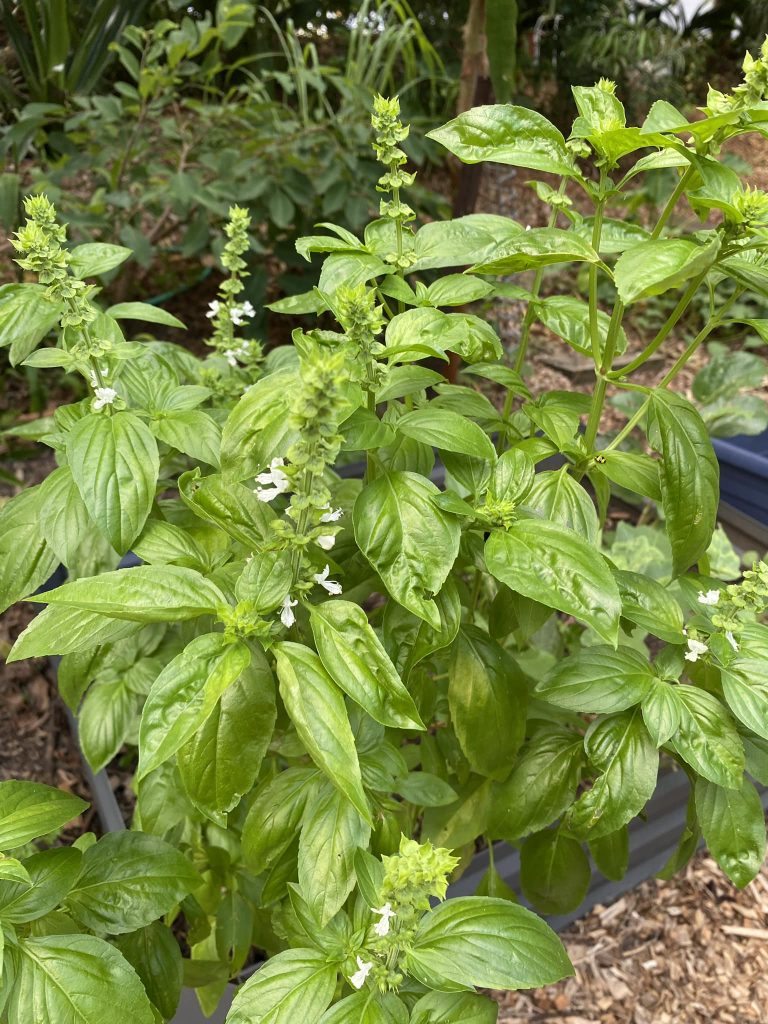
Genovese is the gold standard for pesto. It has large, glossy, dark green leaves with a strong, sweet, slightly peppery aroma.
Plants reach about 2 feet tall at maturity. This is the variety most Italian restaurants rely on.
The name traces back to Genoa, the Italian coastal city credited with inventing pesto alla genovese. Growers there still consider it the benchmark against which other sweet basils are judged.
In the garden, Genovese responds well to regular pinching. Removing the top leaves every couple of weeks keeps the plant bushy and delays flowering, which helps preserve flavor through the whole season.
2. Sweet Basil (Sweet Broadleaf)
Often just labeled “sweet basil,” this variety has medium-sized leaves and a milder flavor than Genovese. Mature plants stay around 18 inches tall.
It is the type most commonly sold fresh in supermarkets across America.
Because it is easygoing and quick to establish, this is usually the variety recommended to first-time gardeners. It tolerates light pruning mistakes and forgives an occasional missed watering better than many showier cultivars.
Its balanced, not-too-sharp flavor makes it a safe all-purpose choice. It works in everything from a simple tomato salad to a weeknight pasta sauce without overpowering other ingredients.
3. Lettuce Leaf Basil
This variety earns its name honestly. The leaves are enormous, ruffled, and genuinely resemble lettuce.
Its mild, sweet flavor makes it ideal for wrapping other ingredients or using whole in salads.
A single mature leaf can measure several inches across, which makes harvesting fast. A few leaves are often enough to fill a sandwich or a wrap, unlike smaller-leafed varieties that need handfuls.
The plant itself grows fairly large and benefits from extra spacing. Crowding tends to trap moisture between the broad leaves, which can invite fungal problems in humid weather.
4. Mammoth Basil
Mammoth basil produces some of the largest leaves in the entire basil family. A single leaf can stretch several inches long.
Gardeners often use the leaves as edible wraps for cheese, meat, or rice fillings.
Despite the oversized foliage, the flavor stays mild and sweet, closer to lettuce leaf basil than to peppery Genovese. That gentle taste is part of why it works so well as an edible wrapper rather than a background seasoning.
The plants themselves grow slower than compact varieties, since so much energy goes into building each leaf. Patience pays off, though, once the harvest starts rolling in through midsummer.
5. Napoletano Basil
Also called Napolitano, this is a standard lettuce-leaved type with a sweeter, less peppery taste than Genovese. It is a favorite for fresh Neapolitan-style tomato sauces.
The leaves are notably crinkled and slightly savoyed, similar in texture to a loose-leaf lettuce. That texture helps the leaf hold onto olive oil and sauce rather than shedding it.
Home cooks in southern Italy often tear the leaves by hand rather than chopping them with a knife. Bruising the leaf with a blade is said to darken the cut edges and dull the fragrance faster.
6. Nufar Basil
Nufar was bred specifically for fusarium wilt resistance, a soil-borne disease that devastates basil crops. It tastes similar to classic sweet basil.
Commercial growers favor it because it protects yield without sacrificing flavor.
Fusarium wilt lives in soil and can persist for years once established, which makes resistant genetics especially valuable for anyone replanting basil in the same bed season after season.
Nufar was one of the earlier resistant releases developed through university breeding programs, and it remains a reliable benchmark variety that newer disease-resistant cultivars are often compared against.
7. Emily Basil
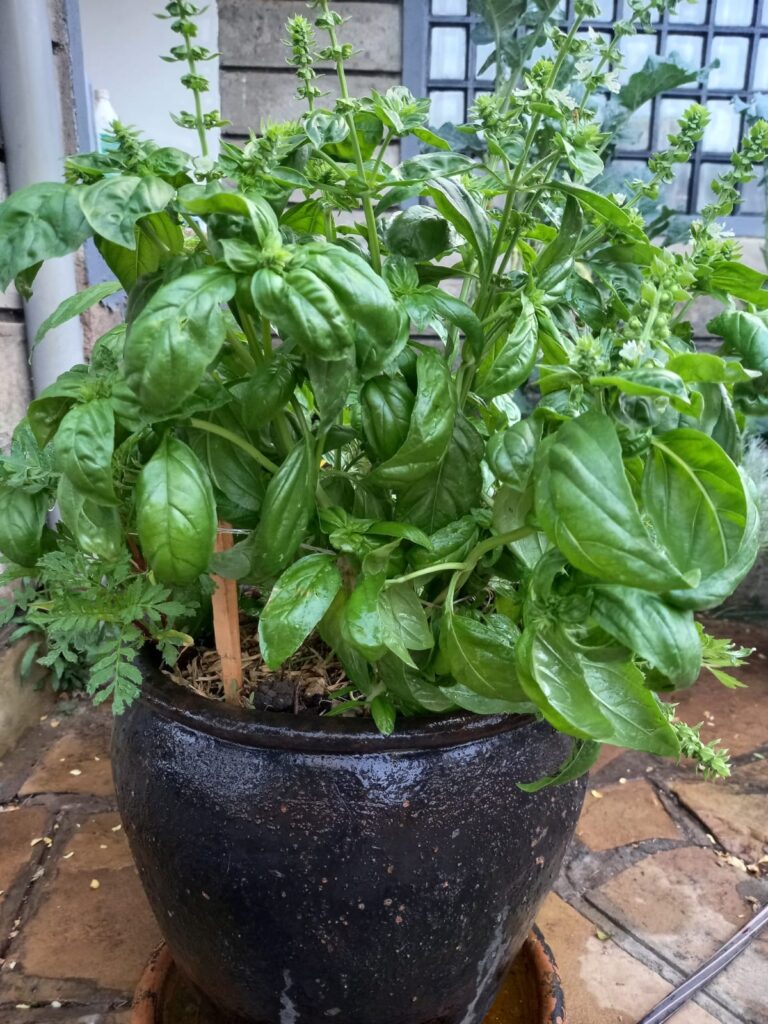
Emily is a compact sweet basil, bred for containers and small garden beds. It keeps the traditional Genovese-style flavor in a tidier plant.
Its naturally dense branching means it needs less pinching to stay full and rounded, which suits gardeners who want a low-maintenance pot on a balcony or patio.
Because the plant stays small, it also dries out faster than larger varieties in hot weather. Checking soil moisture daily during summer heat waves keeps it from wilting.
8. Medinette Basil
Medinette is compact with large leaves for its size. It suits patio pots and windowsill herb gardens where space is tight.
The contrast between its small footprint and comparatively large leaves makes it efficient for indoor growers, since each harvest yields more usable leaf per square inch of pot space.
It also holds its shape well without heavy pruning, which is useful for anyone growing basil on a kitchen counter where trimming tools are not always close at hand.
Group 2: Disease-Resistant Sweet Basils
Basil downy mildew has been a serious problem in the United States since 2007. It causes yellowing leaves and fuzzy gray spores on the underside of foliage.
Breeders responded with resistant cultivars. These varieties matter more than most people realize if you have lost a basil crop to mildew before.
9. Rutgers Devotion DMR
Developed at Rutgers University, this cultivar resists downy mildew while keeping classic sweet basil flavor and appearance.
Devotion was one of several cultivars released under the Rutgers Downy Mildew Resistant, or DMR, breeding program, which began years of trials specifically targeting this destructive disease.
For gardeners who have watched a promising basil crop collapse to mildew in a single humid week, a resistant cultivar like Devotion offers real peace of mind without asking them to give up familiar flavor.
10. Rutgers Obsession DMR
Obsession is another Rutgers release, also bred for both downy mildew and fusarium wilt resistance. It is a strong pick for humid climates.
Stacking resistance to two separate diseases in one plant took years of careful crossbreeding, which is why Obsession is often singled out among the Rutgers DMR lineup for commercial growers managing large plantings.
Home gardeners in the humid Southeast and Midwest tend to reach for Obsession first, since both diseases it resists are especially common in those regions during warm, wet summers.
11. Prospera Basil
Bred in Israel, Prospera is a widely used downy-mildew-resistant variety now common in both home gardens and commercial operations.
It was developed in a region where basil downy mildew first became a major commercial threat, which pushed breeders there to prioritize resistance early and aggressively.
Prospera keeps a leaf shape and aroma close enough to standard sweet basil that most cooks cannot tell the difference once it lands in the pan, which is exactly the goal of resistant breeding.
12. Amazel Basil
Amazel is a sterile hybrid, meaning it never flowers or sets seed. That keeps the plant producing leaves all season instead of going to seed early.
Because sterility is bred into the plant, Amazel cannot be grown from saved seed. Gardeners need to buy new plants or rooted cuttings each season, which is a trade-off for its extended productivity.
The upside is a noticeably longer harvest window. While standard sweet basil often bolts and turns bitter by midsummer, Amazel can keep producing tender leaves right up until frost.
13. Everleaf Basil
Everleaf is another slow-to-bolt, disease-resistant variety. It stays productive and leafy for much longer than older heirloom types.
The Everleaf line includes a few sub-varieties with slightly different growth habits, ranging from more upright forms to bushier, rounder plants suited to containers.
Because it resists bolting so well, it needs less frequent flower removal than older sweet basils, which saves time for anyone managing a larger planting through the peak of summer.
ALSO READ: 10 Beautiful Flowers That Repel Bugs and Mosquitoes from Your Garden
Group 3: Purple and Ornamental-Leaf Basils
Purple basils bring color to both the garden bed and the plate. Many double as landscape plants because of their striking foliage.
14. Purple Ruffles Basil
This variety has deeply ruffled, dark purple-bronze leaves. The flavor carries a clove-like note, and it is a favorite for flavored vinegars.
The heavily ruffled leaf edges make it visually distinct even from other purple basils, which tend to have smoother foliage. That texture also traps light in a way that deepens the color under full sun.
Older seed stock sometimes produces plants that revert partially to green, so gardeners who want the deepest purple color should look for leaves with minimal green streaking when selecting seedlings.
15. Dark Opal Basil
Dark Opal reaches about 18 inches tall with rich purple leaves. Around 20% of plants may show variegated or green leaves, which adds an interesting mix in the garden.
Dark Opal was actually one of the first purple basils bred specifically for ornamental gardens, introduced decades ago as an All-America Selections winner. It helped popularize purple basil as a garden plant rather than just a culinary curiosity.
Its pink to lavender flower spikes are also edible and make an attractive addition to salads, though letting the plant flower too early will reduce leaf production.
16. Osmin Purple Basil
Osmin has deep purple, glossy leaves and a strong, slightly spicy flavor. It holds its color well even after light cooking.
The glossy sheen on its leaves sets it apart from the matte texture common in other purple cultivars, giving dishes a slightly more vivid, almost lacquered look when used fresh.
Because the color holds up better than most purple basils under gentle heat, it is one of the few purple varieties worth adding to a warm dish rather than reserving strictly for raw garnish.
17. Red Rubin Basil
Red Rubin is one of the more stable purple varieties, meaning it reverts to green far less often than older purple cultivars.
This genetic stability came from selective breeding aimed at fixing the purple trait more consistently across generations, addressing a common frustration with earlier purple basils like Dark Opal.
Flavor-wise, it sits closer to sweet basil than to the sharper, clove-forward taste of Purple Ruffles, which makes it a more versatile everyday cooking basil despite its striking color.
18. Amethyst Basil
Amethyst produces very dark, almost black-purple leaves with excellent color retention, making it popular for garnishes and infused oils.
The near-black color comes from a high concentration of anthocyanins, the same pigment family responsible for the color in red cabbage and blackberries.
Because the leaves are so visually striking, chefs often use Amethyst basil sparingly as a plate accent rather than a bulk ingredient, letting a few leaves do the visual work.
19. Red Genovese Basil
This variety combines the classic Genovese leaf shape with a deep burgundy-purple color, offering both traditional flavor and ornamental appeal.
It essentially bridges the gap between the two most popular basil categories, giving gardeners who love pesto flavor an option that also looks striking planted alongside green herbs.
Because the leaf shape mirrors standard Genovese so closely, it substitutes directly into any pesto or Caprese recipe, with the main difference showing up in the color of the finished dish.
Group 4: Asian and Sacred Basils
Southeast Asian and South Asian cuisines rely on basil types that taste sharply different from Italian sweet basil. These are essential if you cook Thai, Vietnamese, or Indian food regularly.
20. Thai Basil
Thai basil has a distinct anise or licorice flavor with purple stems and flower spikes. It holds up well under high heat, which is why it works so well in stir-fries and simmering soups like Tom Yum.
Its sturdier leaf structure compared to sweet basil is part of what lets it survive a hot wok without wilting into mush the way delicate Genovese leaves do.
Beyond Thai cooking, it appears widely in Vietnamese pho as a table garnish and in Laotian dishes, making it one of the more geographically widespread basil types in daily use.
21. Siam Queen Basil
Siam Queen is a specific Thai-style cultivar bred for uniform growth and strong anise flavor. It has ornamental purple blooms that pollinators love.
It earned an All-America Selections award years ago, largely for combining reliable, even growth with the bold flavor that home cooks look for in Thai-style dishes.
Because the plants grow so uniformly, Siam Queen is a common choice for commercial growers who need predictable harvest timing across an entire planting bed.
22. Cardinal Basil
Cardinal is grown as much for looks as for flavor. It produces tightly clustered, bright red-purple blooms on plants up to two and a half feet tall.
Unlike most culinary basils, which gardeners try to keep from flowering, Cardinal is often allowed to bloom on purpose. The flower spikes are the main attraction here.
Its strong, spicy scent also makes it a practical choice for infused vinegars and oils, giving gardeners a dual-purpose plant that works in both the flower bed and the kitchen.
23. Queenette Basil
Queenette is another Thai-style basil, bred for compact growth while retaining the classic licorice-spice flavor profile used across Southeast Asian dishes.
Its smaller stature makes it a practical option for gardeners who want authentic Thai basil flavor but do not have room for the taller, more sprawling Siam Queen variety.
The compact form also means more plants can fit into a small raised bed, which is useful for anyone cooking Southeast Asian food regularly and wanting a steady, space-efficient supply.
24. Holy Basil (Rama Tulsi)
Also called tulsi, holy basil is sacred in Hindu tradition and used in temples and rituals across India. Rama tulsi has green leaves and a peppery, clove-like taste, most often brewed as tea.
Technically, holy basil belongs to a different species than sweet basil, Ocimum tenuiflorum rather than Ocimum basilicum, which partly explains why its flavor and aroma feel so distinct.
Many Indian households keep a tulsi plant in a dedicated pot near the entrance of the home, watering and tending it as part of daily religious practice rather than treating it purely as a kitchen herb.
25. Krishna Tulsi
Krishna tulsi is the purple-leaved counterpart to Rama tulsi. It has a stronger, spicier flavor and is also widely used in Ayurvedic preparations.
The purple pigmentation is often more pronounced in strong sunlight, so plants grown in partial shade may appear noticeably greener than those grown in full sun.
In traditional Ayurvedic use, Krishna tulsi leaves are frequently chewed fresh or steeped into a stronger, more bitter tea than the milder Rama variety, reflecting its more intense flavor profile.
26. Kapoor Tulsi
Kapoor tulsi is a hybrid Indian variety, prized mainly for its essential oil content and use in herbal remedies rather than everyday cooking.
Its name comes from a camphor-like note in the aroma, which sets it apart from the sweeter, more peppery scent of Rama and Krishna tulsi.
Because it is bred primarily for oil yield, Kapoor tulsi is more often found in herbal medicine cultivation than in home vegetable gardens or restaurant kitchens.
Group 5: Citrus Basils
Citrus-scented basils bring a completely different aromatic direction. They pair beautifully with fish, poultry, and desserts.
27. Lemon Basil
Lemon basil has narrow, light green leaves and a genuinely lemony aroma when crushed. In Indonesia, it is often served fresh alongside vegetables and grilled fish.
Its citrus scent comes largely from citral, the same compound found in lemongrass and lemon verbena, which explains why the fragrance feels so immediately recognizable.
The plant tends to be smaller and more delicate than sweet basil, with thinner stems that bruise easily, so it is best harvested gently and used soon after picking for the strongest aroma.
28. Mrs. Burns’ Lemon Basil
This heirloom variety is known for an especially strong lemon fragrance, stronger than standard lemon basil. Gardeners often grow it specifically for teas and infusions.
The variety is named after Mrs. Burns, a New Mexico gardener credited with preserving and sharing the seed line decades ago, which is how many heirloom varieties survive today.
It also grows taller than typical lemon basil, often reaching two feet or more, and produces a heavier seed head that some cooks toast and use as a citrusy spice on its own.
29. Lime Basil
Lime basil offers a milder citrus note with a hint of sweetness. It works well in marinades, sorbets, and even shortbread cookies.
Its leaf shape sits somewhere between lemon basil and sweet basil, slightly broader than lemon basil but still smaller than a standard Genovese leaf.
Because the citrus note is subtler than true lemon basil, it blends more easily into desserts and drinks without overwhelming other flavors, making it a favorite for basil-infused cocktails and lemonade.
Group 6: Spice and Scented Basils
This group covers the more unusual aromatic profiles. They are less common in stores but easy to find through specialty seed suppliers.
30. Cinnamon Basil (Mexican Spice)
Cinnamon basil has a subtle cinnamon scent and purple-tinged stems. It works particularly well in chutneys and dishes built around pumpkin or sweet potato.
The warm, spicy note comes from methyl cinnamate, a compound also present in true cinnamon bark, which is why the resemblance in scent is so convincing.
Its purple stems and pink flower spikes add ornamental interest too, so it often gets planted along garden borders where both its scent and appearance can be appreciated.
31. Licorice Basil (Anise Basil)
As the name suggests, this variety carries a strong anise or licorice aroma, similar to Thai basil but often even more pronounced.
The intensity comes from a higher concentration of anethole-related compounds, the same family responsible for the flavor in star anise and fennel seed.
Because the scent is so assertive, a little goes a long way in cooking, and many gardeners grow it mainly for scenting oils, syrups, or simply enjoying the fragrance in the garden.
32. Camphor Basil
Camphor basil has a sharp, medicinal aroma. It is grown more for ornamental and aromatic purposes than for cooking, since the flavor is intense.
Its scent comes from high camphor content in the essential oil, the same aromatic compound found in traditional chest rubs and some insect repellents.
Some gardeners plant it near vegetable beds specifically for its reputed ability to deter certain pests, treating it as a companion plant rather than an ingredient.
33. Clove Basil
Clove basil delivers a warm, spicy scent close to whole cloves. It pairs well in savory dishes that need a deeper, warming note.
Eugenol, the compound responsible for clove’s signature scent, is present in high concentrations in this variety, which is also why some purple basils carry a faint clove undertone.
It suits slow-cooked stews and braises particularly well, where its warm, spicy character has time to blend into the dish rather than standing out sharply.
34. African Blue Basil
African Blue is a sterile hybrid between sweet basil and camphor basil. Unlike most basils, it behaves as a perennial in frost-free climates and blooms continuously, making it a magnet for bees.
Because it is sterile, it never diverts energy into seed production, which is part of why it can keep blooming and growing for months without the burnout typical of annual basils.
Its woody stems and shrub-like habit also set it apart visually. In warm climates, it can grow into a substantial rounded bush rather than the softer, more upright form of common basil varieties.
Group 7: Dwarf and Compact Basils
Small-space gardeners need basil too. This final group covers the miniature varieties built for pots, windowsills, and tight garden beds.
35. Spicy Globe Basil
Spicy Globe grows into a naturally round, dense mound of tiny leaves, usually staying between 6 and 12 inches tall. It needs almost no pruning to keep its shape and works well in small containers.
Its tiny leaves pack a surprisingly concentrated flavor for their size, closer in intensity to Genovese than to the milder taste you might expect from such a small plant.
The naturally tidy, ball-shaped growth habit also makes it popular as an edging plant in ornamental herb gardens, where its neat form contrasts nicely with taller, looser varieties nearby.
ALSO READ: 50 Stunning Flowers that Start with B: Identification and Pictures
How Basil Leaf Shape and Size Change by Type
Leaf shape is often the fastest way to identify a basil variety at a glance, even before you smell it.
Sweet basils like Genovese and Napoletano have broad, slightly cupped leaves. Lettuce Leaf and Mammoth push that trait even further, with leaves that can rival actual lettuce in size.
Thai and holy basils tend toward smaller, narrower, more pointed leaves. This shape helps the plant handle heat and humidity better than the broader-leafed sweet types.
Dwarf types like Spicy Globe shrink everything down. The leaves stay tiny, often under an inch long, which suits their compact, rounded growth habit.
Purple varieties add another layer of variation. Some, like Dark Opal, show ruffled edges, while others, like Red Rubin, stay flatter and smoother.
Plant height varies just as widely. Spicy Globe basil may top out around 8 inches, while Greek Columnar types and some sweet basils can reach 3 feet or more in a single growing season.
Culinary Pairings Worth Trying
Matching the right basil to the right dish makes a real difference. I have swapped varieties by accident before, and the results were not always pleasant.
Genovese and Sweet Basil pair naturally with tomatoes, mozzarella, olive oil, and pine nuts. This is the classic Caprese and pesto combination.
Thai Basil and Siam Queen hold their flavor through high heat, so they belong in stir-fries, curries, and simmered soups rather than raw salads.
Lemon and Lime Basil shine in lighter dishes. Think grilled fish, fruit salads, iced tea, and vinaigrettes where a citrus lift is welcome.
Cinnamon and Clove Basil work best in warming, slightly sweet dishes. Roasted squash, spiced chutneys, and fall-flavored desserts all benefit from these varieties.
Purple basils like Purple Ruffles and Amethyst are often reserved for garnishing or infusing oils and vinegars, since heat can dull their vivid color.
Holy Basil (Tulsi) is rarely cooked at all in South Asian tradition. It is more commonly steeped as a calming herbal tea.
Quick Comparison: Choosing the Right Basil
| Purpose | Best Basil Types |
| Pesto and Italian cooking | Genovese, Napoletano, Nufar |
| Thai and Vietnamese dishes | Thai Basil, Siam Queen, Queenette |
| Indian cooking and tea | Rama Tulsi, Krishna Tulsi |
| Garnish and color | Purple Ruffles, Amethyst, Dark Opal |
| Small pots and windowsills | Spicy Globe, Emily, Medinette |
| Fish, poultry, desserts | Lemon Basil, Lime Basil |
| Downy mildew-prone regions | Prospera, Rutgers Devotion, Amazel |
Growing Basil: What the Research Says
Basil seeds germinate best when soil temperature sits between 65°F and 80°F, according to university extension research. Germination usually happens within 5 to 14 days.
Most varieties are ready for first harvest 60 to 70 days after seeding. After that, plants can regrow and be harvested multiple times through the season.
Basil is frost-sensitive and can suffer permanent leaf damage at temperatures below 40°F. If you garden somewhere with unpredictable spring frosts, wait until nighttime temperatures stay reliably above 60°F before transplanting.
Full sun and well-drained soil with a pH between 6.0 and 7.5 give the best results. Overhead watering increases disease risk, so drip irrigation is the safer choice for larger plantings.
Storing and Preserving Different Basil Types
Fresh basil is fragile. Chilling injury can set in below 40°F, which is why refrigeration often leaves leaves blackened and slimy within a day or two.
The better method is to treat basil like cut flowers. Trim the stems, stand them in a glass of room-temperature water, and keep the container on a counter away from direct sun.
For longer storage, drying and freezing both work well, though they suit different varieties. Sweet basils dry cleanly and hold flavor for up to six months in a sealed, dark container.
Purple basils are best preserved by steeping in white vinegar. This locks in both the color and the peppery flavor for use later in dressings.
Freezing works well for pesto-style basils. Blend the leaves with a little olive oil, then freeze the mixture in ice cube trays for easy portioning through winter.
A Note on Flavor Chemistry
I find this part genuinely interesting, even beyond the cooking angle. The same plant species can taste like licorice, lemon, cinnamon, or clove, purely because of which essential oils dominate.
Sweet basil leans on methyl chavicol and linalool. Thai basil leans on higher concentrations of anethole-related compounds, which is where that anise note comes from. Lemon basil owes its scent mainly to citral.
This is also why substituting one basil for another in a recipe does not always work well. A Thai curry made with sweet Genovese basil instead of true Thai basil will taste noticeably different.
Frequently Asked Questions
Is there really more than one type of basil? Yes. Botanists recognize dozens of cultivars within Ocimum basilicum alone, plus related species like holy basil and African blue basil.
Which basil is best for pesto? Genovese basil is the traditional choice because of its strong, sweet, slightly peppery flavor and large leaf size.
Can I grow multiple basil types together? Yes, but be aware that different basil varieties can cross-pollinate if allowed to flower near each other, which may affect seed saving.
Why does my basil taste different from store-bought basil? Store basil is almost always sweet Genovese or a similar sweet-basil cultivar. Home gardeners often grow more aromatic types, which taste noticeably stronger.
Is purple basil as flavorful as green basil? Generally yes, though many purple varieties carry a slightly spicier, clove-like edge compared to standard sweet basil.
Final Thoughts
Basil is one of those herbs that rewards curiosity. Once you move past the single pot of Genovese on the windowsill, a whole world of citrus, spice, and floral varieties opens up.
I would encourage any home cook to try at least three or four types side by side. The differences are far more dramatic than most people expect, and it genuinely changes how you think about a dish.
Whichever varieties you choose, the payoff is the same: fresher flavor, better aroma, and a garden that smells incredible all summer long.
References
- Pennsylvania State University Extension — Herb Garden Plants: Basil https://extension.psu.edu/herb-garden-plants-basil
- University of Minnesota Extension — Growing Basil in Home Gardens https://extension.umn.edu/vegetables/growing-basil
- University of Massachusetts Amherst, Center for Agriculture, Food and the Environment — Basil Fact Sheet https://www.umass.edu/agriculture-food-environment/vegetable/fact-sheets/basil
- University of Illinois Extension — Basil https://extension.illinois.edu/herbs/basil
- University of Florida, UF/IFAS Gardening Solutions — Basil https://gardeningsolutions.ifas.ufl.edu/plants/edibles/vegetables/basil/
- USDA Natural Resources Conservation Service — PLANTS Database, Ocimum basilicum https://plants.usda.gov/home/plantProfile?symbol=OCBA
- USDA Agricultural Research Service, FoodData Central — Food and Component Search https://fdc.nal.usda.gov/food-search/?component=1185

Tim M Dave is a gardening expert with a passion for houseplants, particularly cacti and succulents. With a degree in plant biology from the University of California, Berkeley, he has vast experience in gardening. Over the years, he has cultivated a vast collection of desert plants and learned a great deal about how to grow and care for these unique companions.