15 Trees With Black Bark (Identification, With Pictures)
Black bark makes a tree hard to ignore. Walk through a winter forest and the dark trunks stand out against snow, grey sky and paler neighbours. I still remember the first time I noticed a black cherry. The bark looked like burnt potato chips, and I could not stop looking.
This guide covers 15 trees with black bark. Some have bark that is truly black, others turn dark gray or blackish-brown as they age. All of them are worth learning to recognize.
Why Do Some Trees Have Black Bark?
Bark is a tree’s outer shield. It protects the living tissue underneath from fire, insects, cold and water loss. As a tree grows, this outer layer thickens and cracks, and its color changes with age.
Bark darkens for several reasons. Natural compounds such as tannins change color when exposed to air. Old outer cells also collect dirt, moisture and lichen over the years. After rain, a trunk can look even blacker.
Age is the biggest factor. Many trees on this list have smooth, pale or reddish bark when young. The dark, deeply furrowed look appears only on mature trunks. A young black cherry and an old one can look like two different species.
Keep one point in mind. A tree’s name does not always match its bark. Black spruce and river birch are good examples, and I have noted this where it applies.
The 15 Trees With Black Bark
1. Black Walnut (Juglans nigra)
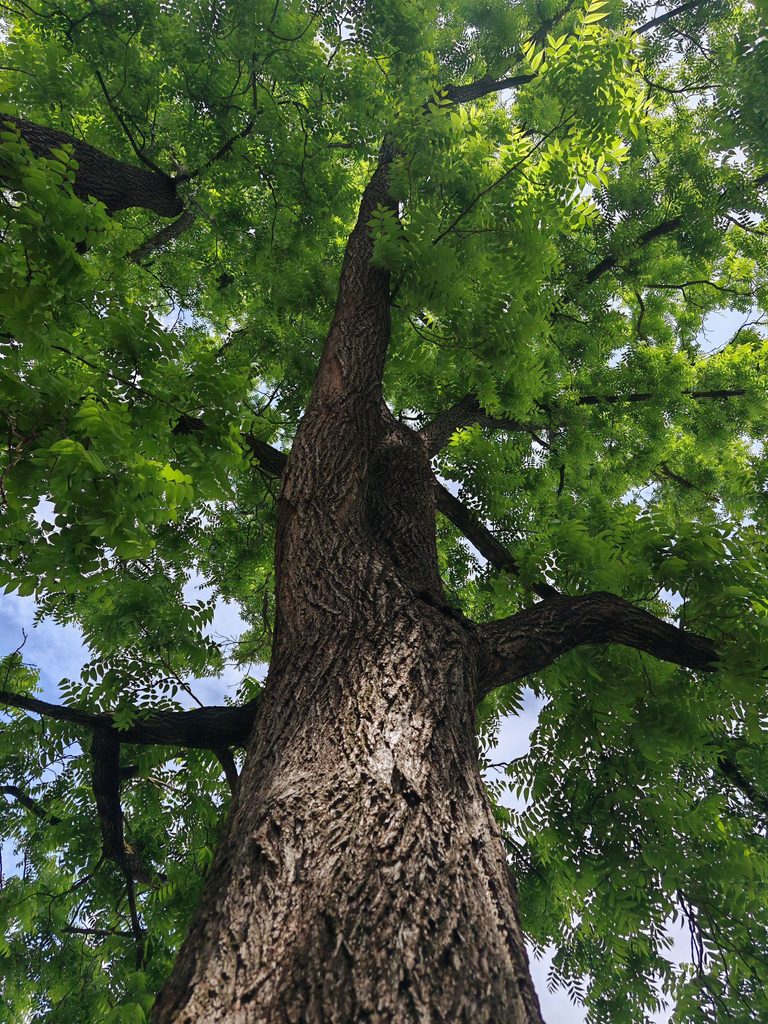
Black walnut gave this list its theme. The bark is dark brown to grayish black, with deep, narrow furrows. The ridges fork and cross, forming a diamond pattern that is easy to spot even from a distance.
Oregon State University lists the tree at 50 to 75 feet, with some reaching 125 feet. It is hardy to USDA zone 4 and grows best in deep, rich, moist soil. Its Latin name, nigra, refers to that dark bark.
Gardeners should know one thing before planting it. The tree releases a chemical called juglone, which blocks the growth of many nearby plants. I always keep vegetable beds well away from walnut roots.
2. Black Cherry (Prunus serotina)
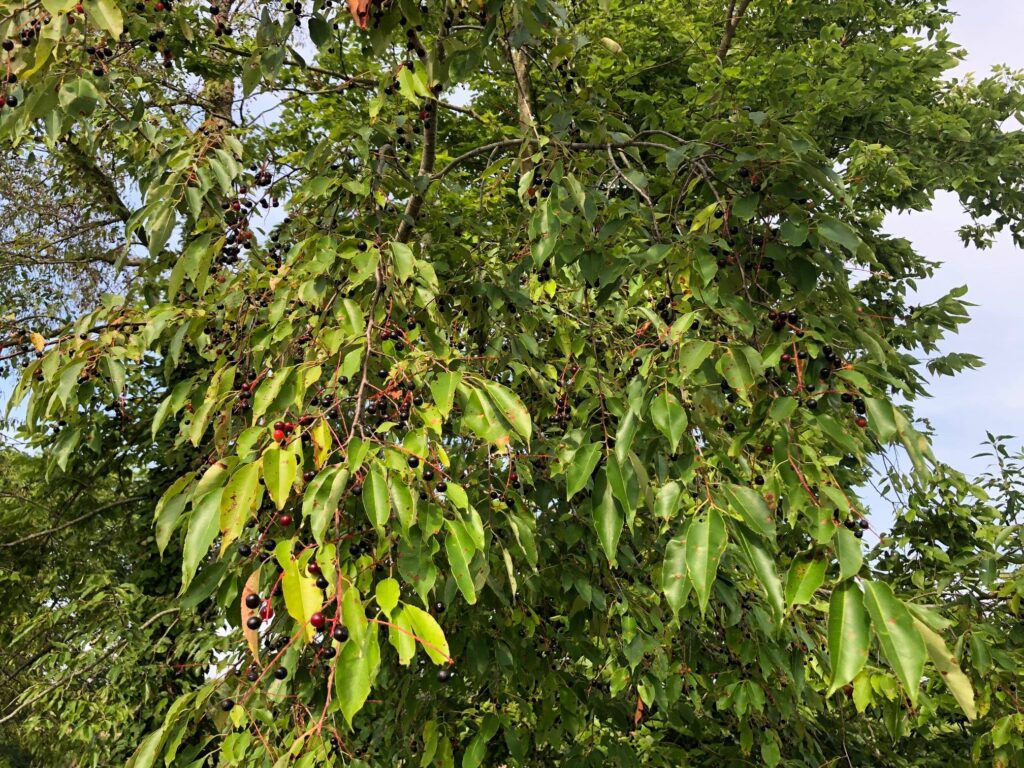
Black cherry has the most memorable bark on this list. Mature trunks are covered in dark, scaly plates that curl at the edges. Most people compare them to burnt potato chips, and the comparison is fair.
The University of Minnesota calls it the largest native cherry in North America. It grows 50 to 80 feet tall and thrives in zones 3 to 9. Young trees look different, with smooth, dark gray bark.
Take care around this tree. The bark, roots and leaves contain toxic cyanogenic compounds. Keep twigs and wilted leaves away from children and animals. The ripe fruit is edible, but it tastes bitter.
3. Black Locust (Robinia pseudoacacia)
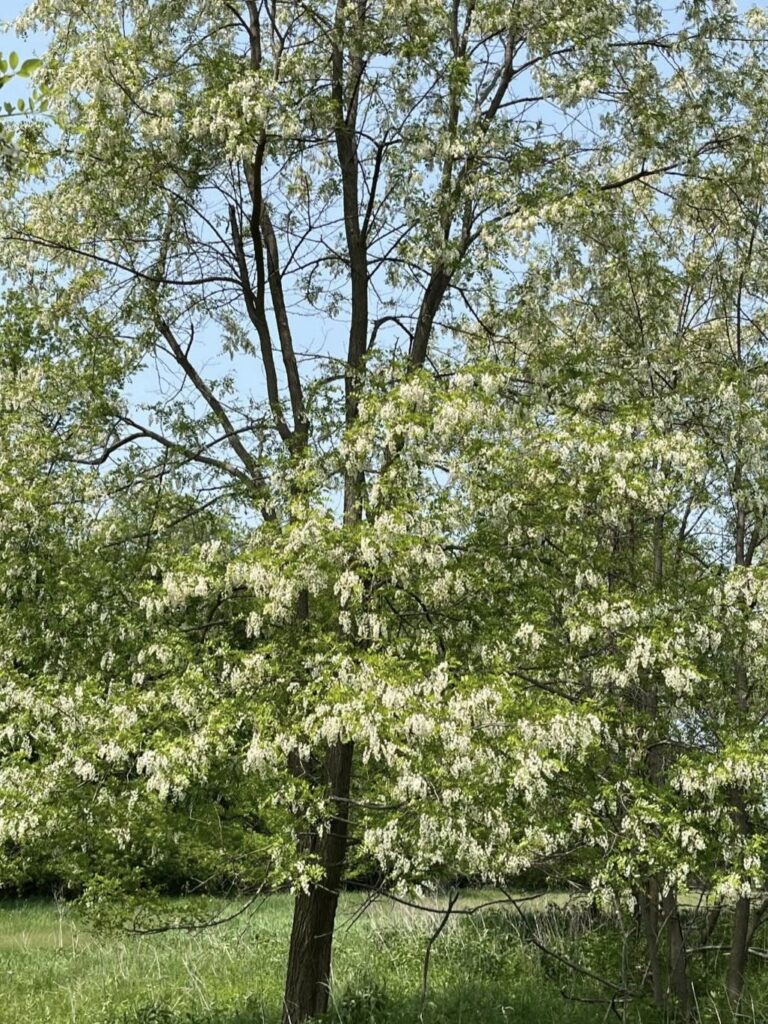
Utah State University Extension describes black locust bark as red-brown to nearly black. It is deeply furrowed, with crisscrossing, scaly ridges. Pairs of short, sharp spines on young twigs are another useful clue.
The USDA Forest Service reports that the tree can reach 82 feet, with a trunk up to 47 inches across. It fixes nitrogen in the soil and grows fast. It is hardy in zones 3 to 9 and copes well with poor sites.
The wood is hard and durable, so farmers have long used it for fence posts. Plant it with care, though. The Forest Service notes that it often becomes invasive because of heavy seed production and root sprouts.
4. Black Tupelo (Nyssa sylvatica)
Black tupelo, also called blackgum, has a rugged coat. Young bark is light gray. Older trunks turn gray to nearly black and break into thick blocks, often compared to alligator hide.
The University of Minnesota gives its size as 30 to 50 feet tall and 20 to 30 feet wide, for zones 4 to 9. The branches often leave the trunk at right angles, which gives the tree a neat, layered shape.
Autumn is when I like it best. The glossy leaves turn yellow, orange, red and purple, sometimes all on one tree. Birds and small mammals also feed on its bluish-black fruit.
5. Blackjack Oak (Quercus marilandica)
Blackjack oak lives up to its name. The Missouri Department of Conservation describes the bark as blackish and very rough, with square or rectangular blocks. Like black tupelo, it resembles alligator hide.
It stays small for an oak. The tree can reach 60 feet, but it rarely grows beyond 30 to 40 feet. It grows slowly, prefers dry, acid and poor soils, and cannot grow in shade.
Thick bark helps it survive fire, and it resprouts quickly. It is often one of the first trees to move into burned ground. Its wood has been used for railroad ties, fence posts and charcoal.
6. Black Oak (Quercus velutina)
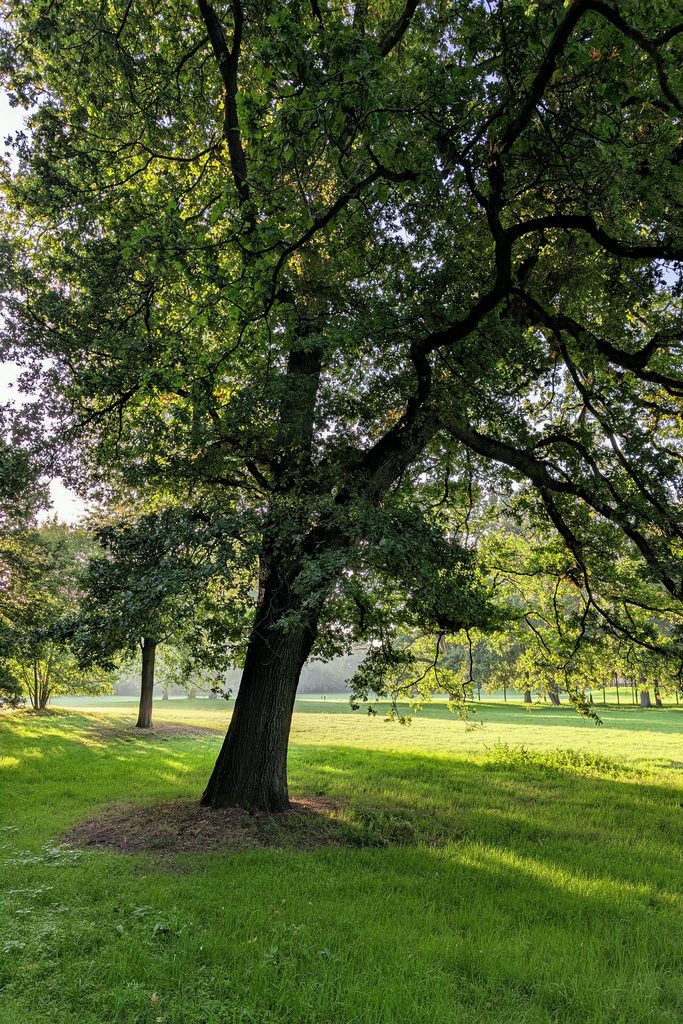
Black oak begins life with smooth gray bark. With age it becomes thick, rough and nearly black. Deep vertical furrows and horizontal breaks form blocky ridges that are easy to feel with your hand.
The University of Minnesota lists a mature height of 50 to 60 feet, with a similar spread. It grows in zones 3 to 9.
A small scratch reveals its secret. The inner bark is bright yellow or orange, and it tastes very bitter. That color once supplied a natural yellow dye. Please do not damage a living tree to check, though.
7. Black Willow (Salix nigra)
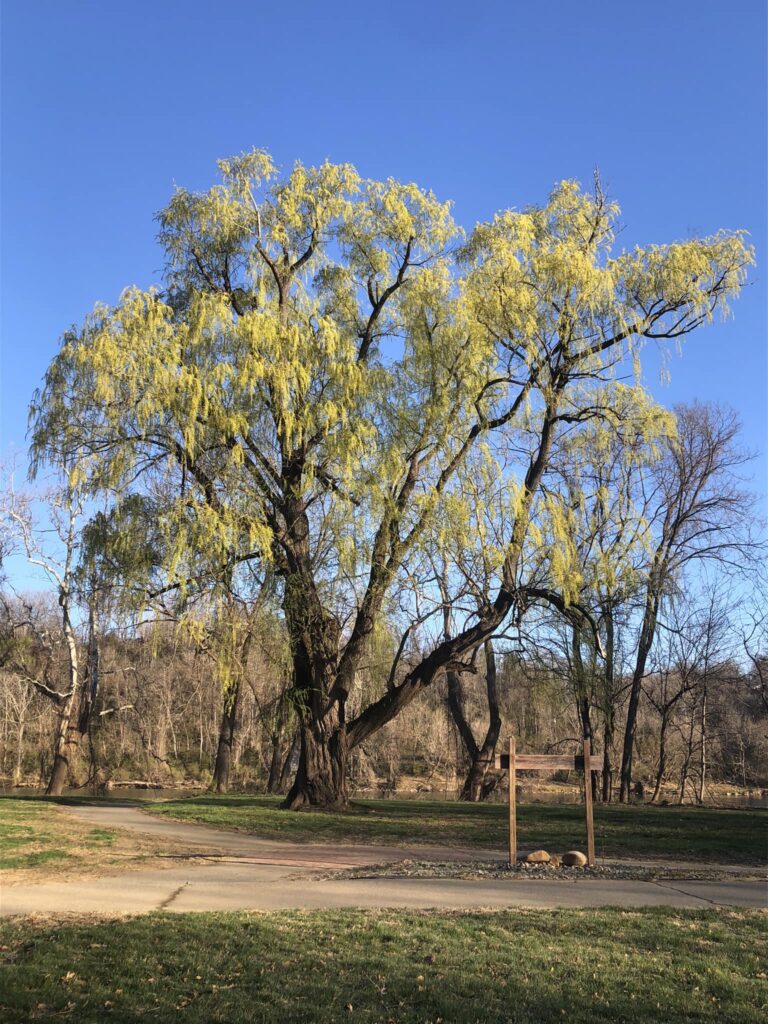
Black willow grows beside rivers, ponds and wet ditches. NC State Extension says the bark ranges from light brown to dark brown and black. With age it becomes deeply grooved, with shaggy scales.
The University of Minnesota calls it the largest willow, with the widest range of the group. It grows 30 to 60 feet tall and wide, in zones 4 to 9. It does best in moist or wet soil.
Its shallow, spreading roots hold riverbanks together, so people use it for erosion control. The wood is soft and breaks easily in wind, ice and snow. I would not plant one close to a house.
8. Sweet Birch (Betula lenta)
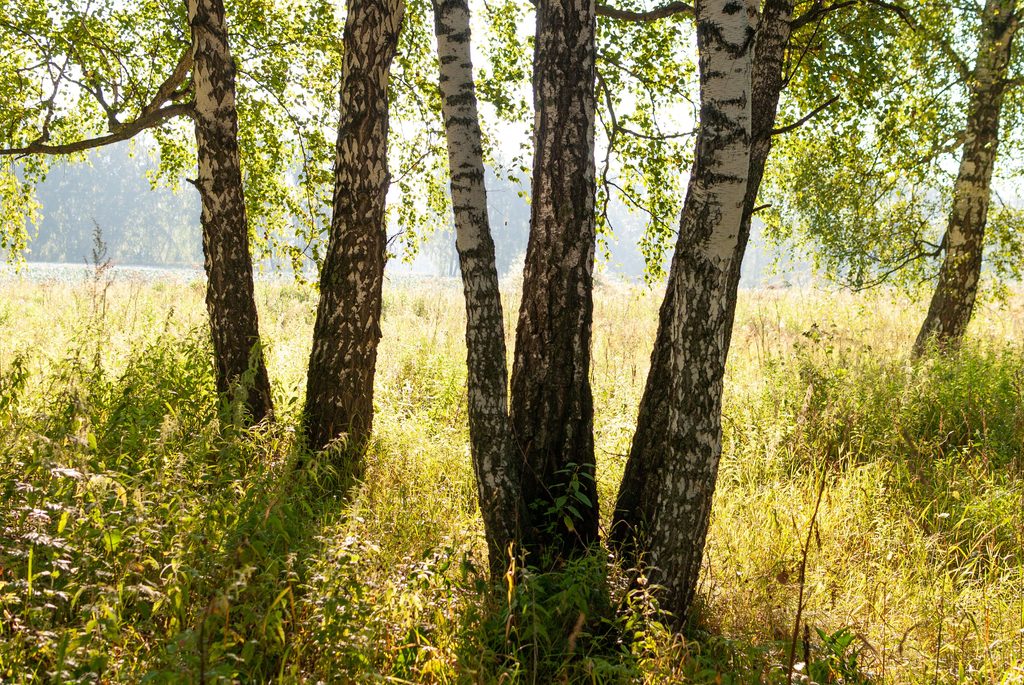
Sweet birch is often called black birch, and its bark explains why. The National Park Service describes it as lustrous reddish-black and non-peeling, with horizontal lenticels that look like cherry bark.
Snap a twig and smell it. A strong wintergreen scent gives the tree its other name. The University of Minnesota lists it at 40 to 55 feet tall for zones 4 to 7, and notes that it resists the bronze birch borer.
People once harvested it for wintergreen oil. The park service reports that about 100 saplings were needed to make a single quart. Today the tree has made a comeback in the Appalachian mountains.
9. Common Persimmon (Diospyros virginiana)
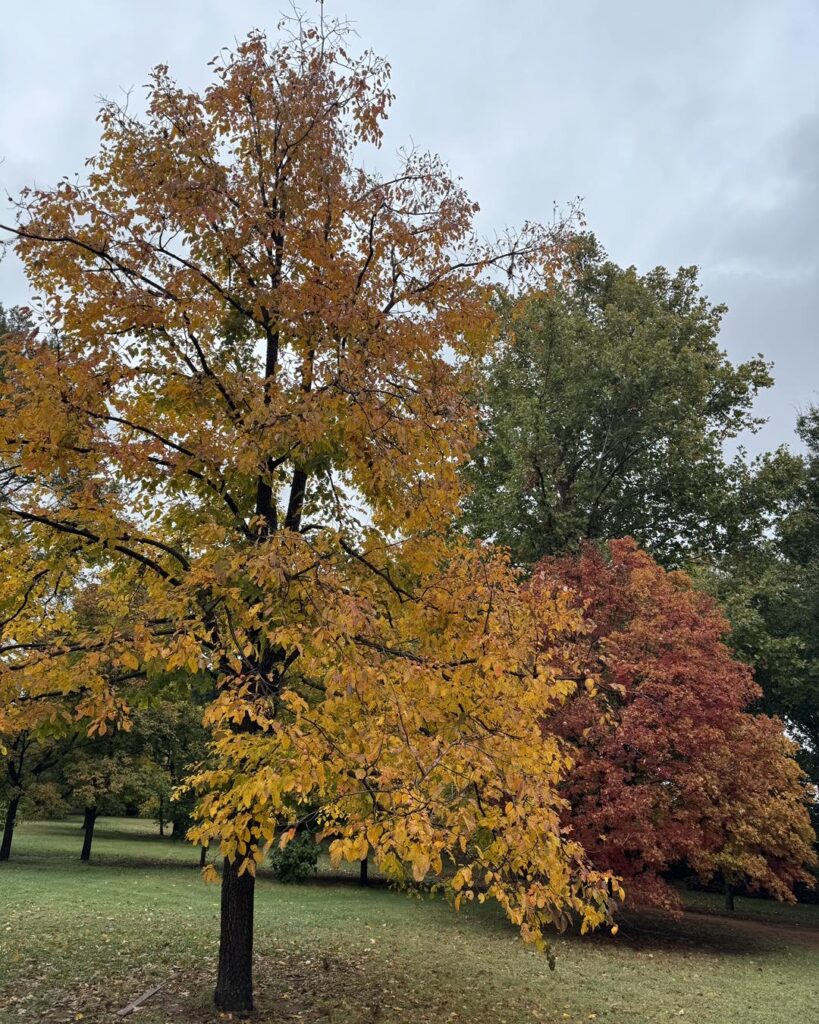
Common persimmon has one of the most striking trunks in this guide. The bark is gray to black and cut into small, square blocks. The University of Florida notes orange showing in the valleys between them.
It is a small to medium tree of 40 to 60 feet, hardy in zones 4b to 9b. It tolerates poor, dry soils and city conditions, so it suits tough sites where other trees struggle.
The fruit ripens in late fall, often after frost. Unripe fruit is very astringent and unpleasant. Fully ripe fruit is sweet, and early settlers mixed it into bread.
10. Black Poplar (Populus nigra)
Black poplar is a stately European tree. The Woodland Trust describes its bark as dark brown but often black-looking, thick and full of fissures. Large woody swellings, called burrs, are a signature feature.
Mature trees can grow to 30 metres and live around 200 years. In Britain, the species is now rare and counted among the most endangered native timber trees. Finding an old one feels special.
Oregon State University notes it is hardy to zone 3 and native to western Europe, North Africa and Siberia. The leaves carry a faint balsam scent, which helps when wet bark looks dark on every tree.
11. Black Alder (Alnus glutinosa)
Black alder grows in wet places across Europe, western Asia and North Africa. Young bark is smooth and greenish-brown. With age it turns dark gray to almost black and splits into fissures.
Mature trees often reach 20 to 30 metres. The leaves are rounded with a small notch at the tip. Small, woody cones stay on the branches through winter, and they are easy to spot against bare twigs.
It is a pioneer species, so people use it to steady riverbanks and soak up flood water. One warning applies. A disease called phytophthora has killed many alders in parts of Europe, so check trees for bleeding, rusty patches on the bark.
12. Japanese Black Pine (Pinus thunbergii)
Japanese black pine is a rugged evergreen. Utah State University describes its bark as dark gray, scaly plates that can become strikingly black on mature trunks. The common name comes from this feature.
Purdue’s arboretum lists a height of 20 to 80 feet. The tree is very tolerant of salt spray and drought, so it is a classic choice for seaside gardens and dunes. It is hardy in zones 5 to 9.
There is a downside. Purdue warns that it is quite susceptible to pine wilt disease. The tree also tends to live a shorter time in the United States than in its native Japan and Korea.
13. Black Maple (Acer nigrum)
Black maple looks very much like its relative, the sugar maple. The easiest clue is the bark. The Morton Arboretum says mature trunks are dark gray to almost black and deeply furrowed.
Young trunks are smooth and pale gray, so you need a mature tree for a sure identification. Some botanists treat black maple as a subspecies of sugar maple. Its leaves often droop, which helps tell the two apart.
It prefers moist sites and brings brilliant fall color. The tree is commonly planted in the Midwest. Like sugar maple, it is valued for its timber and sweet sap.
14. Black Spruce (Picea mariana)
Black spruce comes with a note of honesty. Its bark is thin, scaly and grayish brown, sometimes blackish, so it is not a truly black trunk. It earns a place here because many mature trees look nearly black when damp.
The tree grows in cold bogs and northern forests across Canada and the northern United States. The Minnesota DNR says growth is very slow. In cold swamps, trunks only 2 inches wide have been found to be more than 125 years old.
It is the provincial tree of Newfoundland and Labrador. It is also a major source of paper pulp. Its small purple cones are the smallest among the spruces.
15. River Birch (Betula nigra)

River birch closes the list with a lesson in change. Young trunks peel in curling sheets of salmon pink and cinnamon. On older trunks the bark darkens and grows rough, often looking blackish near the base.
Its Latin name, nigra, means black. An Ohio dendrology guide points out that this causes mix-ups with sweet birch, which people also call black birch. Remember the peeling bark, and you will tell them apart.
River birch grows naturally along streams and flood plains. In my view, it is a fine choice for anyone who wants interest in every season. You get peeling color when it is young and dark texture when it is old.
ALSO READ: 15 Stunning Trees With Peeling Bark (Pictures): Identification and Uses
Quick Comparison of the 15 Trees
| Tree | Main bark clue |
| Black walnut | Dark furrows with a diamond pattern |
| Black cherry | Scaly plates like burnt potato chips |
| Black locust | Deep, crisscrossing ridges; paired spines on twigs |
| Black tupelo | Thick blocks like alligator hide |
| Blackjack oak | Very rough, blackish square blocks |
| Black oak | Nearly black ridges; orange inner bark |
| Black willow | Deep grooves with shaggy scales |
| Sweet birch | Reddish-black bark with horizontal lenticels |
| Common persimmon | Small square blocks with orange in the cracks |
| Black poplar | Fissures and large burrs |
| Black alder | Dark, fissured bark; small woody cones |
| Japanese black pine | Black to gray plates; coastal tree |
| Black maple | Dark, deeply furrowed trunk; drooping leaves |
| Black spruce | Thin, scaly, blackish-gray bark |
| River birch | Peeling when young; dark and rough when old |
How to Identify Black Bark Trees in the Field
Bark is a helpful clue, but it should never be the only one. These simple steps will make your identification much more reliable.
- Study the pattern. Square blocks point to tupelo, blackjack oak or persimmon. Curling plates suggest black cherry. Diamond-shaped ridges suggest walnut or locust.
- Check the leaves and twigs. A wintergreen smell from a snapped twig means sweet birch. Paired spines on a twig mean black locust.
- Notice the habitat. Willow, alder and river birch like wet ground. Blackjack oak grows on dry, poor soil. Japanese black pine thrives near the coast.
- Think about age. Many young trees have smooth, pale bark. Judge the trunk of a mature tree, not a sapling.
- Look at fallen pieces. A loose flake of bark may show an orange or reddish inner layer. Never strip bark from a living tree.
- Photograph in dry and wet weather. Rain can make any trunk look black, so a second look in dry light is worth the time.
Frequently Asked Questions
Which tree has the darkest bark? Blackjack oak, black oak and black walnut are among the darkest. Even so, color shifts with age, moisture and light, so no single tree is always the blackest.
Is black walnut bark truly black? Not quite. Oregon State University describes it as dark brown to grayish black. The deep furrows create shadows that make it look darker.
Can bark color change over time? Yes. Black cherry, sweet birch and black maple all start with smooth, lighter bark. They darken and crack as they mature.
Are black bark trees poisonous? Bark color is not a warning sign. Still, several trees here have toxic parts. Black cherry leaves and bark contain cyanogenic compounds, and the inner bark of black locust may be poisonous.
Which black bark tree suits a home garden? Black tupelo and common persimmon are good candidates because of their size and tolerance. Black walnut needs space because of juglone. Check your local hardiness zone first.
Final Thoughts
Dark bark gives a tree character, especially in winter. From the potato-chip plates of black cherry to the orange-cracked blocks of persimmon, each species on this list has its own story.
Start with the pattern, then check the leaves, the habitat and the age of the tree. With a little practice, you will name most of these trees at a glance.
I hope this guide sends you outside with fresh eyes. Next time you pass a dark trunk, stop and look closely. It may be one of the 15 trees above.
References
All seven pages below were opened and loaded correctly on 8 November 2026.
- USDA Forest Service. Black Locust (Robinia pseudoacacia), Plant of the Week. https://www.fs.usda.gov/wildflowers/plant-of-the-week/Robinia-pseudoacacia.shtml
- Missouri Department of Conservation. Blackjack Oak, Field Guide. https://mdc.mo.gov/discover-nature/field-guide/blackjack-oak
- National Park Service, Shenandoah National Park. Sweet Birch. https://www.nps.gov/shen/learn/nature/sweet_birch.htm
- University of Minnesota, Urban Forestry Outreach and Research. Black Cherry (Prunus serotina). https://trees.umn.edu/black-cherry-prunus-serotina
- University of Minnesota, Urban Forestry Outreach and Research. Black Tupelo (Nyssa sylvatica). https://trees.umn.edu/black-tupelo-nyssa-sylvatica
- Utah State University Extension. Black Locust. https://extension.usu.edu/forestry/tree-identification/other-trees/black-locust
- Oregon State University, Landscape Plants. Juglans nigra (Black Walnut). https://landscapeplants.oregonstate.edu/plants/juglans-nigra

Tim M Dave is a gardening expert with a passion for houseplants, particularly cacti and succulents. With a degree in plant biology from the University of California, Berkeley, he has vast experience in gardening. Over the years, he has cultivated a vast collection of desert plants and learned a great deal about how to grow and care for these unique companions.