25 Drought Tolerant Flowers (With Pictures, and Care Tips)
Water bills are rising, and summers feel hotter every year. Many gardeners now ask the same question: can I enjoy colour without watering all the time? The answer is yes.
This guide lists 25 drought tolerant flowers that handle dry spells well. I have included both perennials and annuals. That way, you can plan long-term beds and still add quick seasonal colour. Each flower comes with its size, sun needs and one simple care tip.
One note before we start. “Drought tolerant” does not mean “no water.” Even the toughest plant needs regular watering while it settles in. I explain how to do this in the care section.
Why Choose Drought Tolerant Flowers?
The main reason is simple: they save water. The EPA reports that residential outdoor water use in the United States is more than 9 billion gallons each day. Most of it goes to landscape irrigation.
Much of that water is wasted. The EPA estimates that as much as 50 percent of outdoor water is lost to evaporation, wind and runoff. Poor irrigation design makes the problem worse.
Plant choice can change this. According to the EPA, a water-smart landscape built on careful plant selection can reduce outdoor water use by 20 to 50 percent. Studies it cites show savings between 18 and 50 percent when thirsty plants are replaced by low-water ones.
There is also a clear definition to keep in mind. The University of Nebraska–Lincoln describes drought-tolerant perennials as plants that persist for three or more years with little or no supplemental watering.
The benefits go beyond water. These plants usually need less fertiliser, because Nebraska experts advise feeding them only when growth looks weak. Many also attract butterflies, birds and hummingbirds, according to Oklahoma State University.
Personally, I find these flowers more forgiving. A missed watering day does not ruin the bed. For busy people and beginners, that peace of mind matters.
25 Drought Tolerant Flowers for Your Garden
The first 17 flowers below are perennials. They return year after year. The last 8 are annuals, which give fast colour in a single season.
1. Purple Coneflower (Echinacea purpurea)
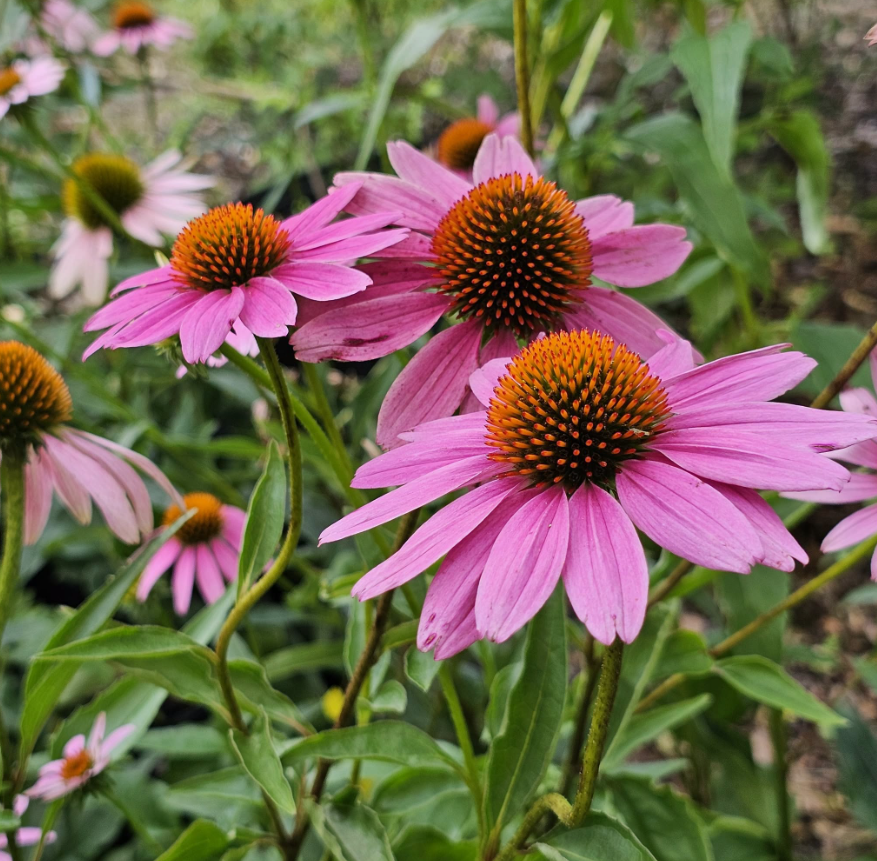
Purple coneflower is a classic. It grows 2 to 4 feet tall and about 2 feet wide. Purple-pink petals droop gently around a brown, cone-shaped centre. Iowa State University lists it as a native plant that suits wildflower gardens.
It blooms in summer and loves full sun and well-drained soil. Goldfinches enjoy the seeds, so leave a few seed heads standing in autumn. Nebraska experts also name pale coneflower (Echinacea pallida) as the most drought-tolerant species.
My tip: plant it in groups of three or more. The flowers look richer in a drift. White types such as ‘Alba’ add a softer look.
2. Blanket Flower (Gaillardia)
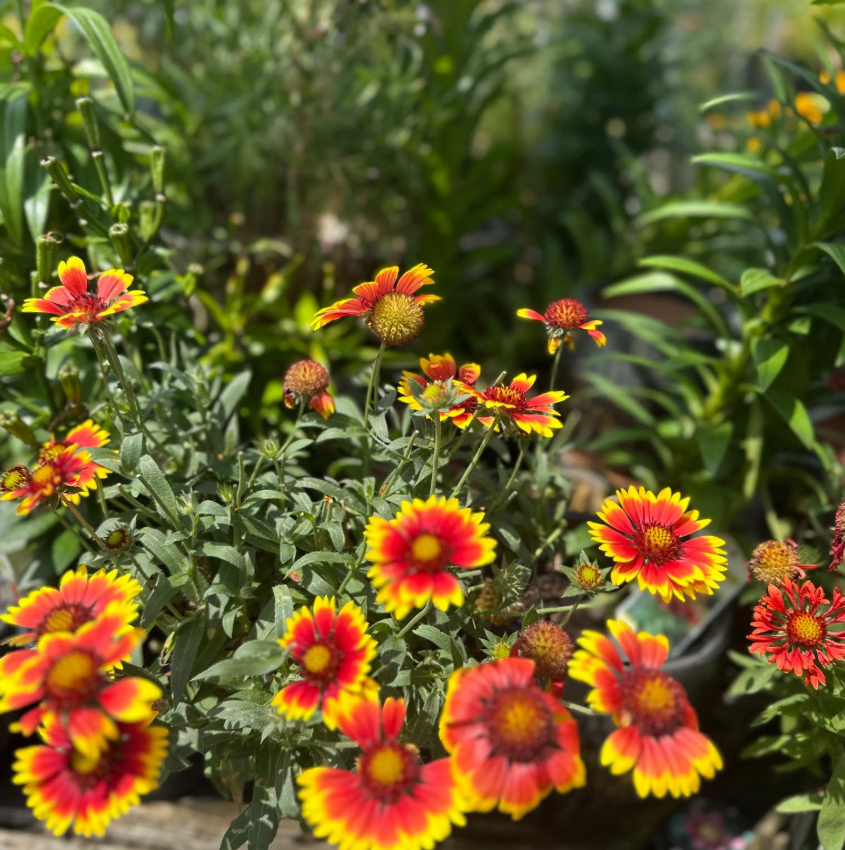
Blanket flower brings warm red, orange and yellow blooms. Each flower looks like a small sunflower. North Carolina Cooperative Extension notes that it often grows wild on sandy coastal dunes. That tells you how tough it is.
The flowers last a long time. Nebraska lists a bloom period from June to September. Oklahoma State University names it the state wildflower and says it attracts butterflies.
Once established, it needs very little care or water. Expect it to self-seed, and know that individual plants can be short-lived. Let a few seeds fall, and the patch will renew itself.
3. Russian Sage (Perovskia atriplicifolia)
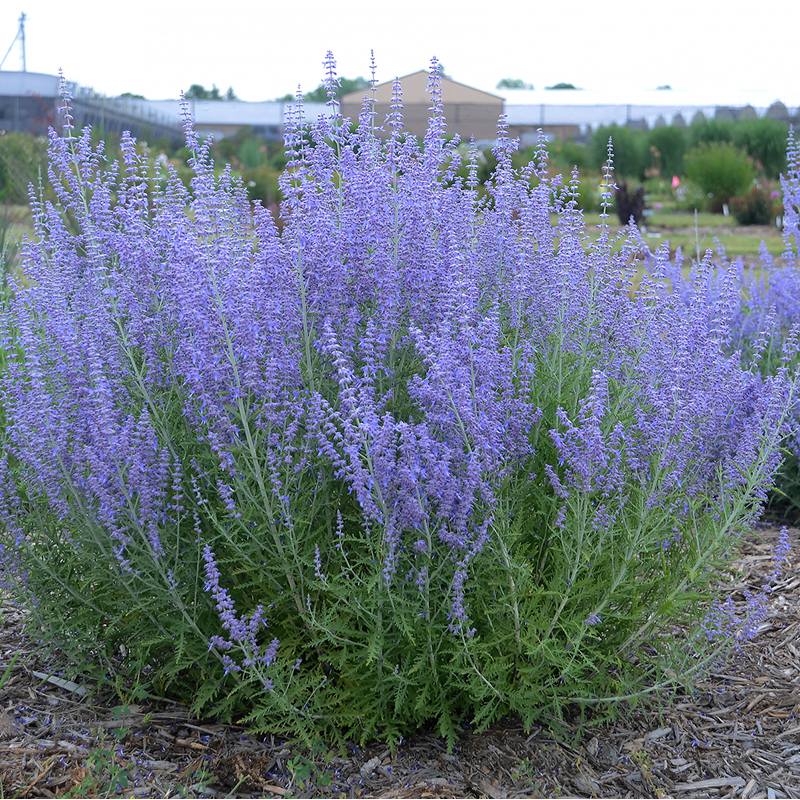
Russian sage gives a hazy, lavender-blue cloud in late summer. Iowa State University describes it as 3 to 4 feet tall and wide, with fine, silvery-grey leaves. The foliage smells pleasantly aromatic when brushed.
It thrives in full sun and well-drained soil. The grey stems also add winter interest. Popular varieties include ‘Blue Spire’ and ‘Longin’.
Cut the plant back to within several inches of the ground each spring. This keeps it neat and full of flowers. Protect young plants during their first couple of winters.
4. Yarrow (Achillea)
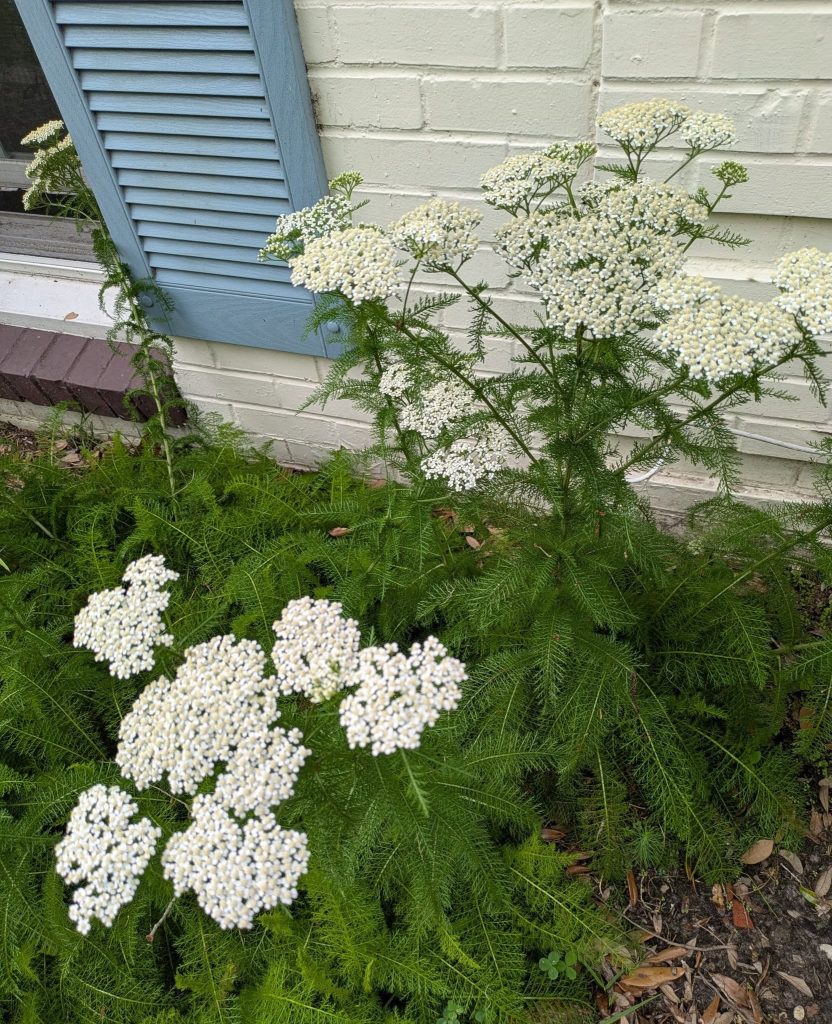
Yarrow has flat, tightly packed flower heads above soft, fern-like leaves. Fernleaf yarrow bears large yellow blooms from late spring to mid-summer, says Iowa State University. It reaches 3 to 4 feet in height. Common yarrow comes in white, red and orange.
It prefers full sun and dry soil. Nebraska experts note that yarrow likes low fertility, so skip the rich compost. Too much food makes it floppy.
The blooms also work well as cut or dried flowers. Cut them before the pollen develops to keep the colour. I like ‘Moonshine’ for its clean, bright yellow.
5. Black-Eyed Susan (Rudbeckia)
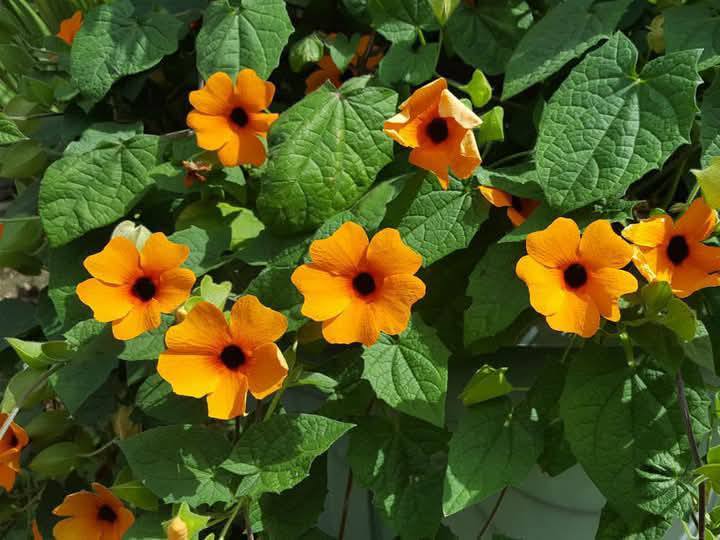
Black-eyed Susan is cheerful and dependable. Golden-yellow petals surround a dark centre. ‘Goldsturm’ reaches about 24 inches and blooms from July to September, according to Nebraska Extension.
Oklahoma State University adds that it attracts butterflies. Birds visit the flower stalks after the bloom season ends. So the plant gives value long after the petals fade.
It grows in full sun and tolerates dry soil once settled. It will self-seed in good conditions. Pull up extra seedlings in spring if the patch spreads too far.
ALSO READ: 35 Best Flowers for Hanging Baskets (With Pictures)
6. Threadleaf Coreopsis (Coreopsis verticillata)
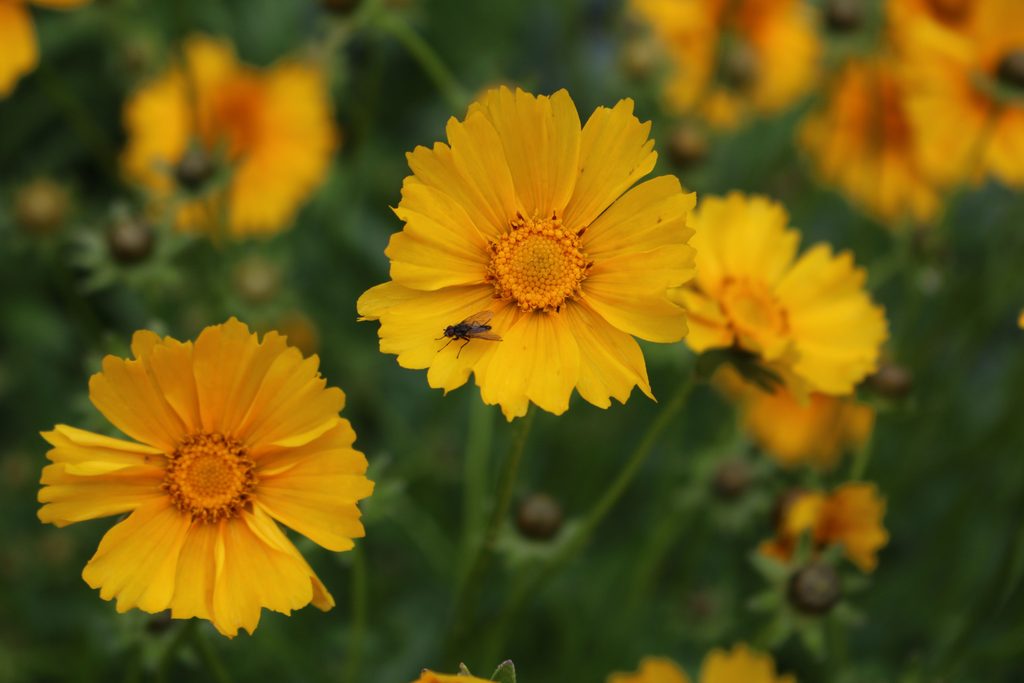
Threadleaf coreopsis has fine, lacy foliage and small star-shaped flowers. Iowa State University says it blooms from late spring through late summer. That is a very long show for such a light plant.
It grows best in a dry, sunny spot. ‘Moonbeam’ has creamy-yellow flowers on plants 18 to 24 inches tall. ‘Zagreb’ bears bright yellow blooms on shorter plants of 12 to 18 inches.
It works well in borders and naturalised areas. Avoid soggy ground, as wet soil is its main enemy. I find it a graceful partner for coneflowers.
7. Butterfly Weed (Asclepias tuberosa)
Butterfly weed carries flat clusters of bright orange flowers in early summer. Nebraska Extension lists it as a native plant, about 24 inches tall, blooming in June and July. Oklahoma State University gives a taller height of up to 4 feet.
As the name suggests, butterflies love it. Interesting seed pods follow the flowers. They add shape to the garden well into autumn.
Plant it in full sun and leave it alone. It dislikes being moved because of its deep root. I suggest choosing the final spot with care.
8. Stonecrop (Sedum)
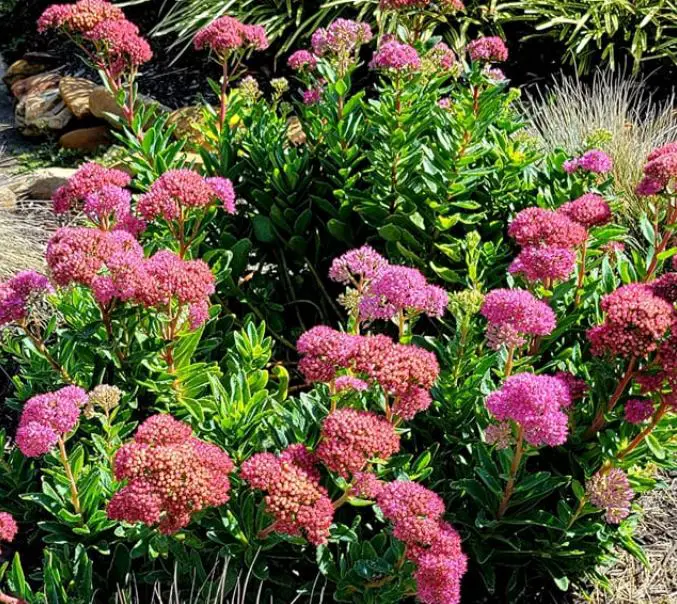
Stonecrop is a slow-growing, creeping succulent. North Carolina Cooperative Extension says it adapts to many soils and does especially well in poor or rocky ground. Small star-shaped flowers appear all summer in white, red, pink or yellow.
Its thick leaves store water. That is why it copes so well with dry weather. Oklahoma State University notes there are about 400 species, and it even works on green roofs.
Nebraska Extension lists both low and tall types, blooming from June to October. Choose low types for edging and tall types for the middle of the bed. Bees and butterflies visit the flowers often.
9. Lavender (Lavandula angustifolia)
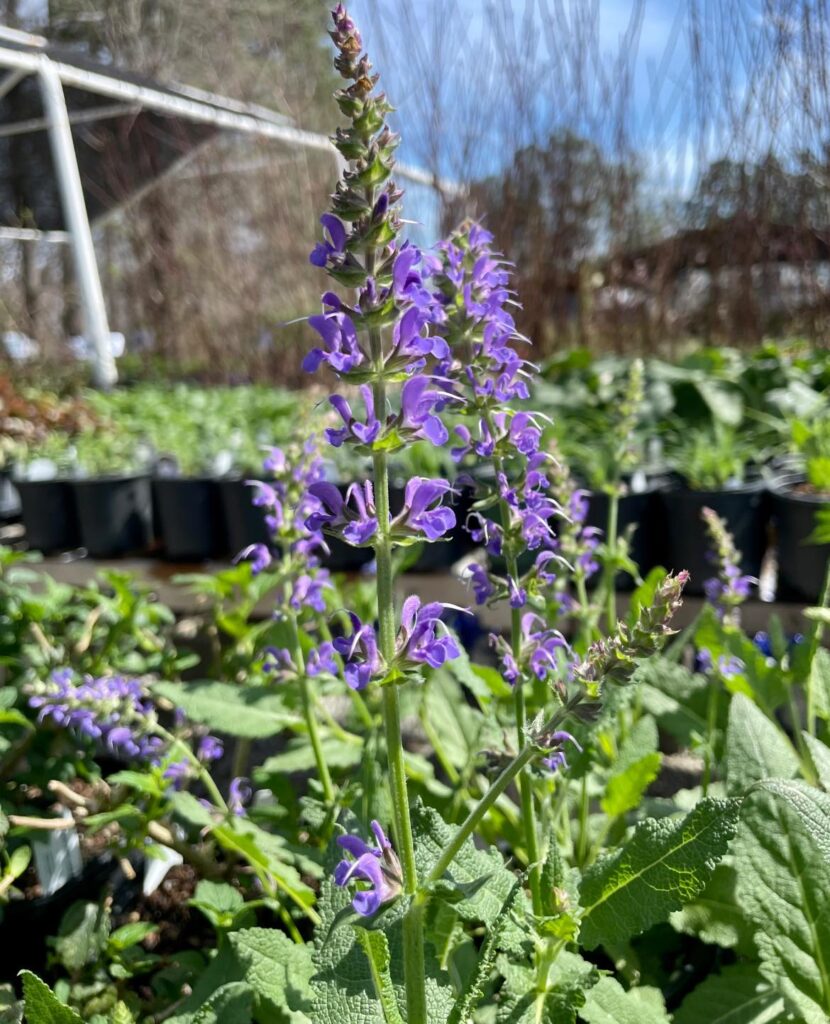
Lavender needs little introduction. Its silvery foliage and lavender-blue flower spikes are loved for their fragrance. Nebraska Extension lists it at about 18 inches, flowering in June and July.
It wants full sun and well-drained soil. The experts describe it as semi-woody, so it needs gentle shearing for the best shape. Popular varieties include ‘Hidcote’, ‘Munstead’ and ‘Provence’.
I recommend planting it near a path. Brushing past the leaves releases the scent. Avoid heavy clay that stays wet in winter.
READ MORE ON: 35 Types of Lavender Plants (Different Varieties Explained, With Pictures)
10. Catmint (Nepeta × faassenii)
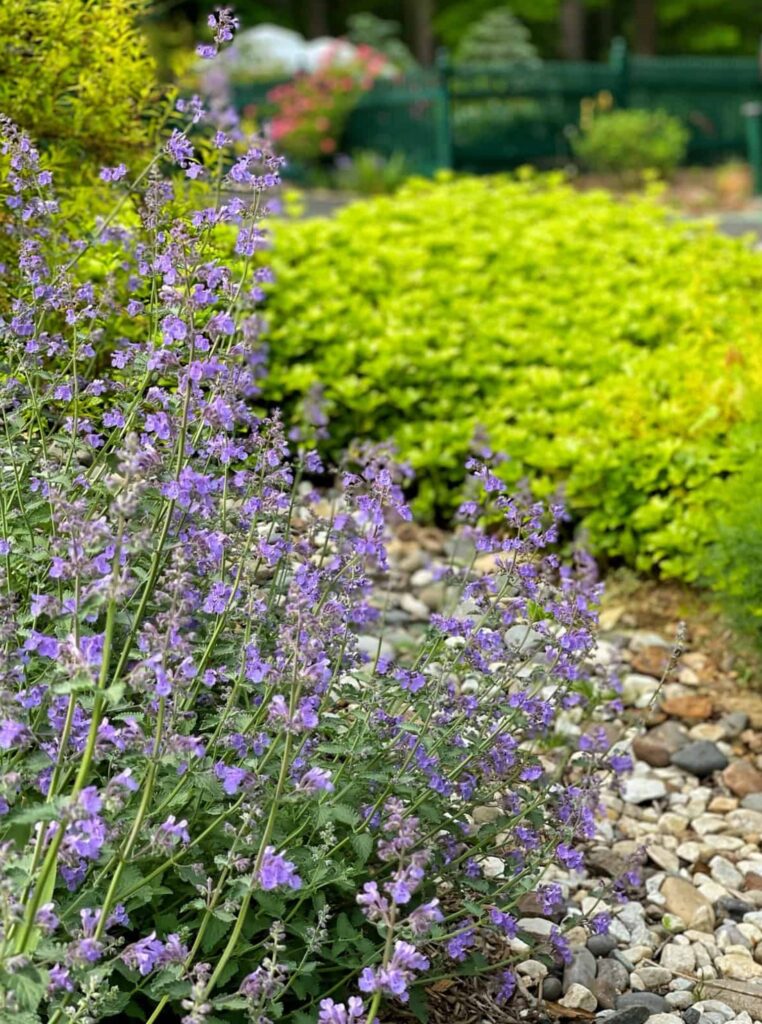
Catmint is one of the most generous flowers on this list. It produces soft blue blooms from May to September, according to Nebraska Extension. The foliage is grey-green and aromatic.
Oklahoma State University says it thrives in heat and drought once established. It grows about 24 inches tall and 30 inches wide. Bees adore it.
Shear the plant after the first flush of flowers. This encourages a second round of bloom. It is a very easy plant for beginners.
11. Daylily (Hemerocallis)
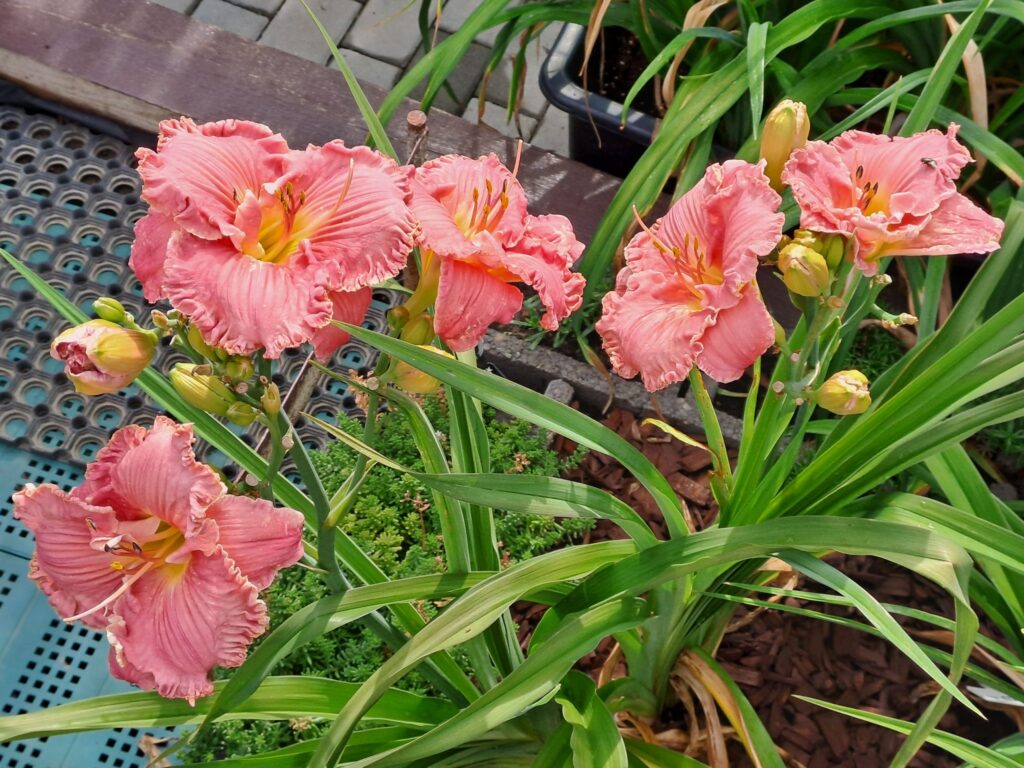
Daylilies come in hundreds of varieties. Oklahoma State University points out that you can choose from many colours, and foliage ranges from deciduous to nearly evergreen. Each flower lasts a day, but plants produce many buds.
Nebraska Extension lists a bloom time from June to October. It also notes that many daylilies rebloom. They grow in sun or part shade.
Remove spent blooms to encourage more flowers. Daylilies cope with dry spells, but a little extra water in a heatwave keeps buds fat. I find them ideal for slopes and borders.
12. Blazing Star (Liatris)
Blazing star sends up tall spikes of rose-purple flowers. Unusually, the blooms open from the top down. Nebraska Extension lists spike gayfeather (Liatris spicata) at about 30 inches, flowering in June and July.
Oklahoma State University says prairie blazing star has good tolerance for drought, heat and humidity. Its height ranges from 24 to 48 inches. It is native to prairies, so it feels at home in dry gardens.
One warning: it dislikes wet soil in winter. Plant it where water drains away. The flowers are excellent for cutting.
13. Globe Thistle (Echinops ritro)
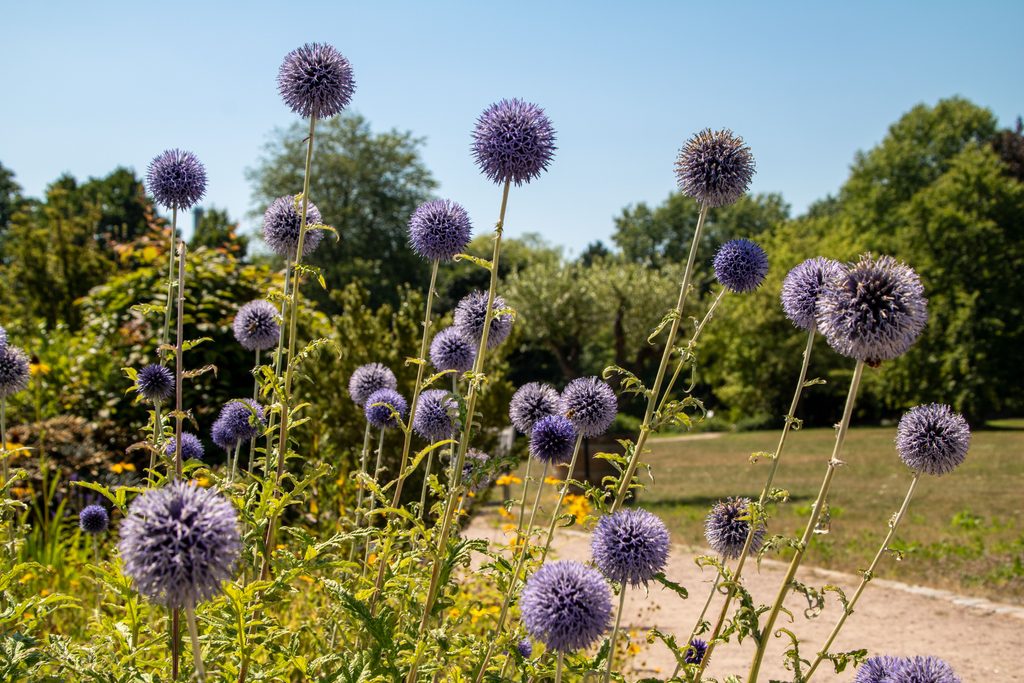
Globe thistle looks like a tiny steel-blue planet on a stem. The round flower heads add strong shape to a border. Nebraska Extension lists the variety ‘Taplow Blue’ at about 24 inches, blooming from June to September.
The spiky, silvery leaves help the plant lose less water. It enjoys full sun and lean, well-drained soil. Iowa State University includes it among perennials that tolerate dry soils.
I like it as a contrast to soft, feathery plants. Bees visit the globes in large numbers. The dried heads also look lovely indoors.
14. Sea Holly (Eryngium)
Sea holly is unusual and striking. Its blue, thistle-like flowers sit on spiny collars. Nebraska Extension lists Eryngium amethystinum at about 24 inches, blooming in July and August.
Both the foliage and flowers are interesting. The tough, waxy texture helps the plant resist drying out. Connecticut Extension also lists sea holly among drought-tolerant perennials.
Give it sun and sharp drainage. Do not feed it. Sea holly looks best when it grows a little hungry.
ALSO READ: 40 Best Flowers for Cutting Garden (Names, With Pictures)
15. Blue False Indigo (Baptisia australis)
Blue false indigo grows into a large, shrub-like plant. In late spring, it carries tall spikes of deep blue flowers. Nebraska Extension lists it at about 48 inches tall, blooming in May.
Oklahoma State University notes the showy flowers are followed by seed pods that last into winter. This gives the garden structure in the cold months. It suits the back of a border.
Be patient. Baptisia takes a few seasons to settle, but it can live for decades. It resents being moved, so choose its home carefully.
16. Penstemon (Penstemon digitalis)
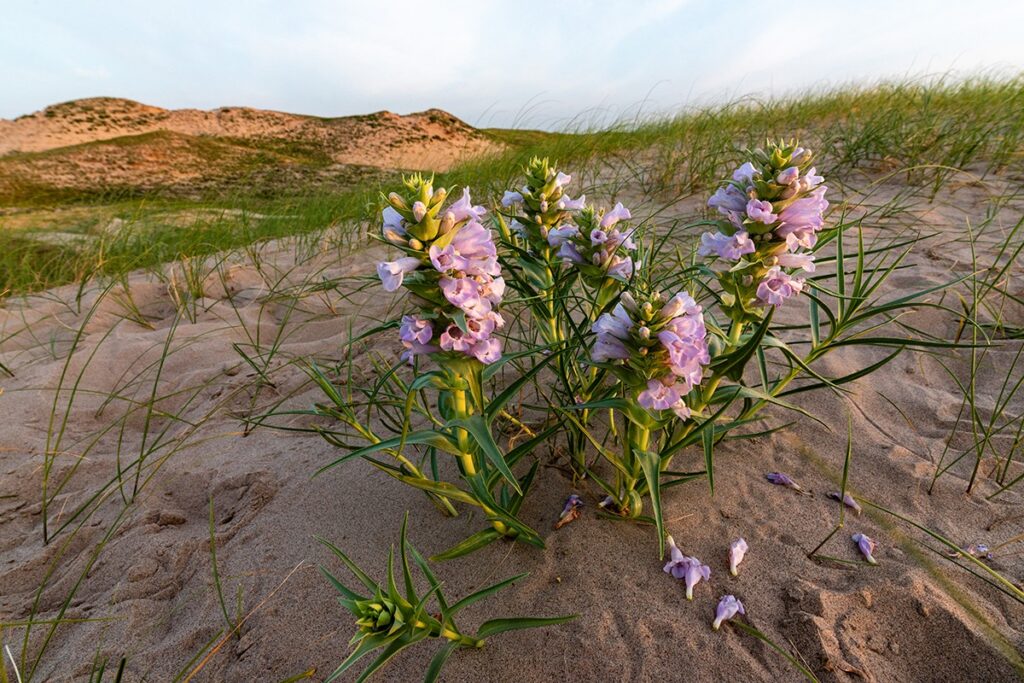
Penstemon, or beardtongue, bears tubular flowers on tall stems. Oklahoma State University describes foxglove beardtongue at 36 to 48 inches. It blooms in summer and attracts hummingbirds.
Nebraska Extension lists the variety ‘Husker Red’, with purple foliage and pink-white flowers in May and June. The seed heads are attractive too. Both sources agree it needs full sun.
The main rule is drainage. Avoid wet, poorly drained soils. If your ground is heavy, plant on a slight mound.
17. Autumn Sage (Salvia greggii)
Autumn sage is a compact shrubby perennial. Oklahoma State University lists it at about 18 inches tall and wide. It attracts both hummingbirds and butterflies.
The plant flowers over a long season and thrives in full sun. Its small leaves reduce water loss. Oklahoma State University Extension also includes it among drought-tolerant perennials for the home garden.
Trim lightly in spring to keep it tidy. I like it in containers, too. It brings movement and wildlife to a patio.
18. Cosmos (Cosmos spp.)
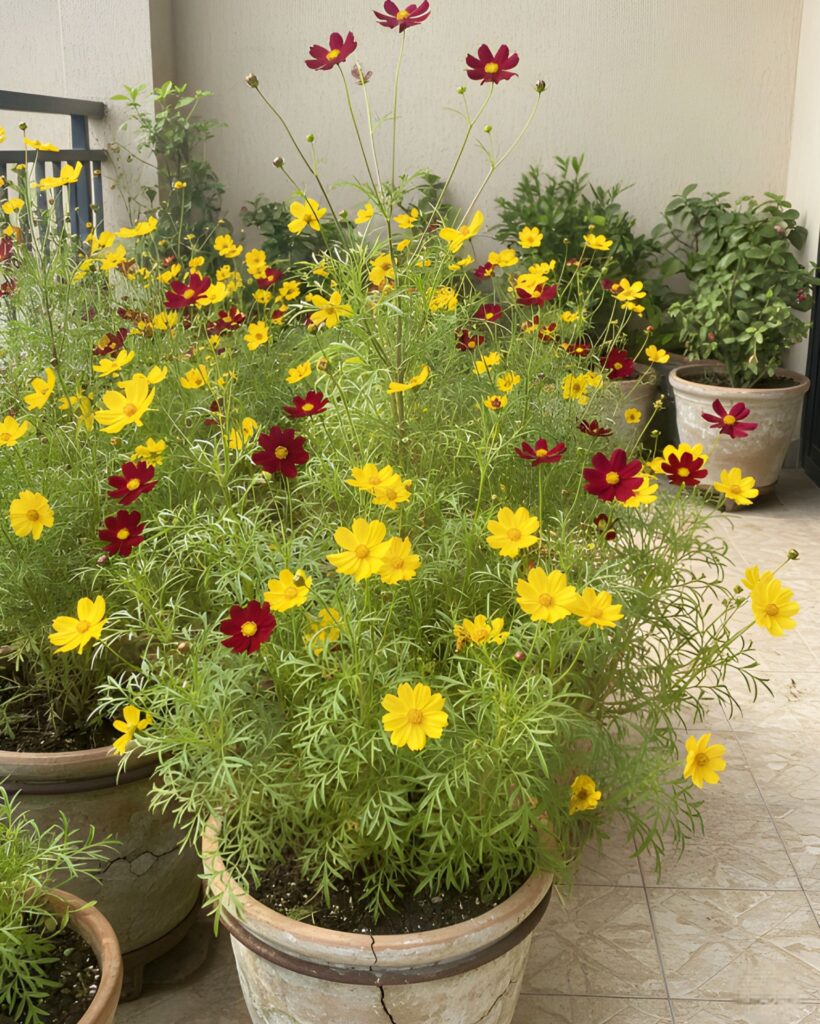
Cosmos is our first annual. Its delicate, daisy-like flowers float above feathery foliage. Oklahoma State University lists it at about 18 inches tall and 24 inches wide, with many colours and heights available.
Here is a surprising tip from the same source. Over-fertilising and overwatering lead to fewer flowers. Cosmos blooms best when it is treated a little rough.
Sow seeds directly in full sun after frost. They germinate quickly. In my view, cosmos is one of the easiest ways to fill a gap in the garden.
19. Mexican Zinnia (Zinnia angustifolia)
Mexican zinnia is smaller and tougher than common zinnias. Oklahoma State University lists it at about 12 inches tall and wide. Flower colours include white, yellow, pink, red and orange.
It thrives in full sun and heat. It also does well in containers and borders. This makes it very flexible for small spaces.
Deadhead spent flowers for continuous bloom. Water at the base, not over the leaves. This reduces the risk of mildew in humid weather.
20. Marigold (Tagetes)
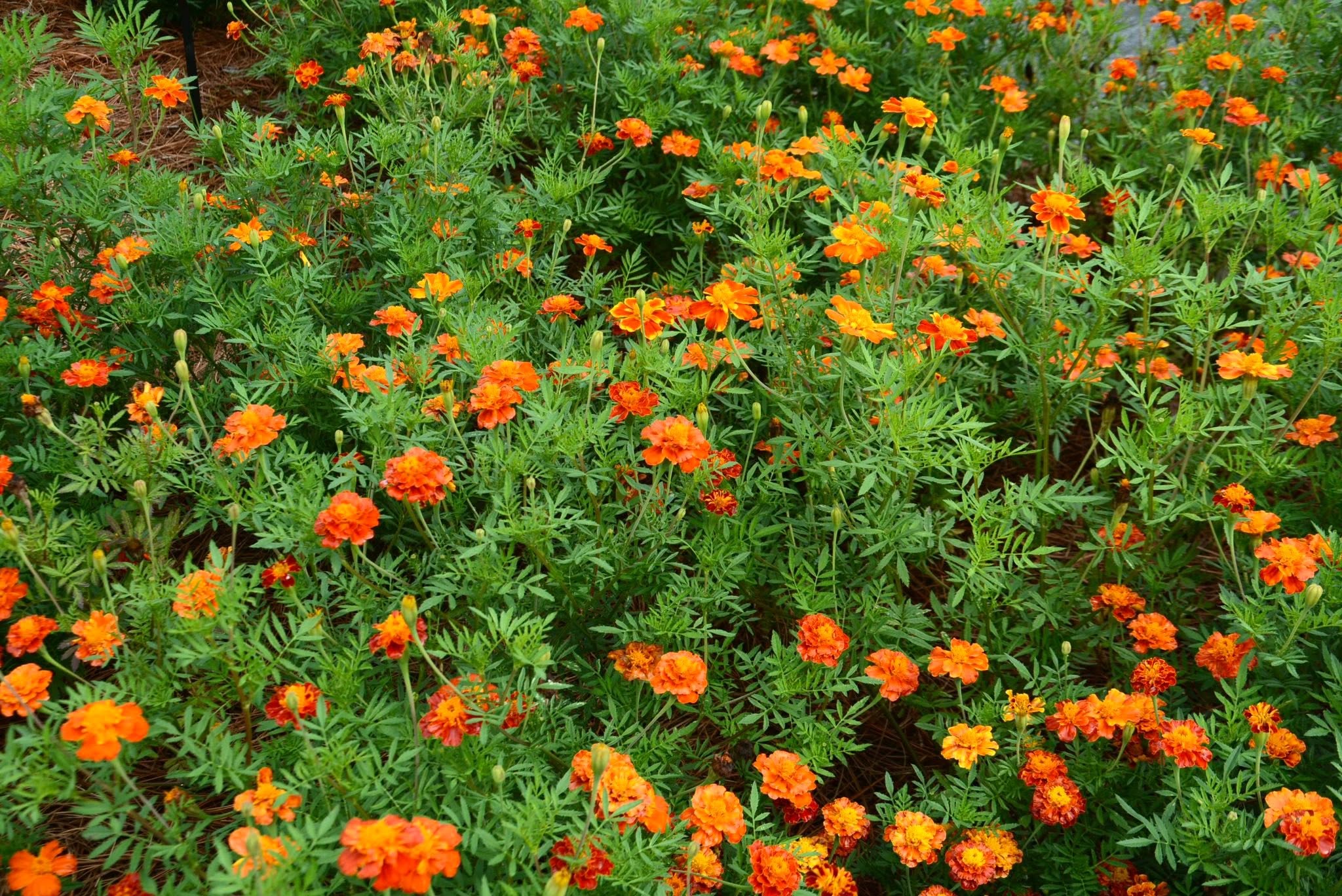
Marigolds bring bold gold, orange and rust colours. Oklahoma State University lists them at about 24 inches tall and 36 inches wide, in both dwarf and tall forms. They bloom through summer.
They are famous for their toughness in full sun. The same source notes they are a popular choice for companion planting in vegetable gardens. So they can earn their place twice.
Pick dwarf types for edging and tall types for the back. Pinch off faded flowers to keep them blooming. They are cheap, cheerful and very hard to kill.
21. Moss Rose (Portulaca grandiflora)
Moss rose is a low, spreading annual with fleshy leaves. The silky flowers come in bright pink, red, yellow and orange. Oklahoma State University lists it at only 6 inches tall and 12 inches wide.
The thick leaves store water, which is why it handles heat so well. The source adds that some varieties keep their flowers open all day. Connecticut Extension also lists portulaca among drought-tolerant annuals.
It is not hardy in cold winters, but it may self-seed for next year. I think it is perfect for hot rock gardens and pots. Just give it full sun and lean soil.
22. Globe Amaranth (Gomphrena globosa)
Globe amaranth produces round, clover-like blooms in purple, pink and white. Oklahoma State University lists it at about 12 inches tall and 18 inches wide. It is described as both drought and heat tolerant.
Flower heads appear from summer until the first frost. That gives you months of colour. The blooms are easy to dry, so they make lovely “everlasting” bouquets.
Sow or plant in full sun after the last frost. Water lightly in the first weeks, then ease off. It also attracts bees and butterflies.
23. Lantana (Lantana camara)
Lantana is a heat lover. Its small flowers form tight clusters that change colour as they age. Oklahoma State University says it performs excellently in hot conditions and attracts butterflies.
It grows about 24 inches tall and 40 inches wide, with many flower colours available. Treat it as an annual in cooler climates. In warm regions, it can behave like a shrub.
Plant in full sun and water deeply but rarely once settled. Keep in mind that lantana can be harmful to pets if eaten. Place it where animals will not nibble.
24. Verbena (Verbena)
Verbena offers small, jewel-toned flower clusters over a long season. Oklahoma State University lists Verbena canadensis at just 4 inches tall and 12 inches wide. It comes in many colours. Tall verbena on a stick (Verbena bonariensis) reaches 36 inches.
The source gives a clear warning: overwatering or poor air circulation will harm the plant. Dry-leaning care keeps it healthy. Connecticut Extension also lists verbena among drought-tolerant annuals.
Space plants well so air can move between them. Tall verbena reseeds profusely, so plan for it. I like it as a see-through filler in a mixed border.
25. California Poppy (Eschscholzia californica)
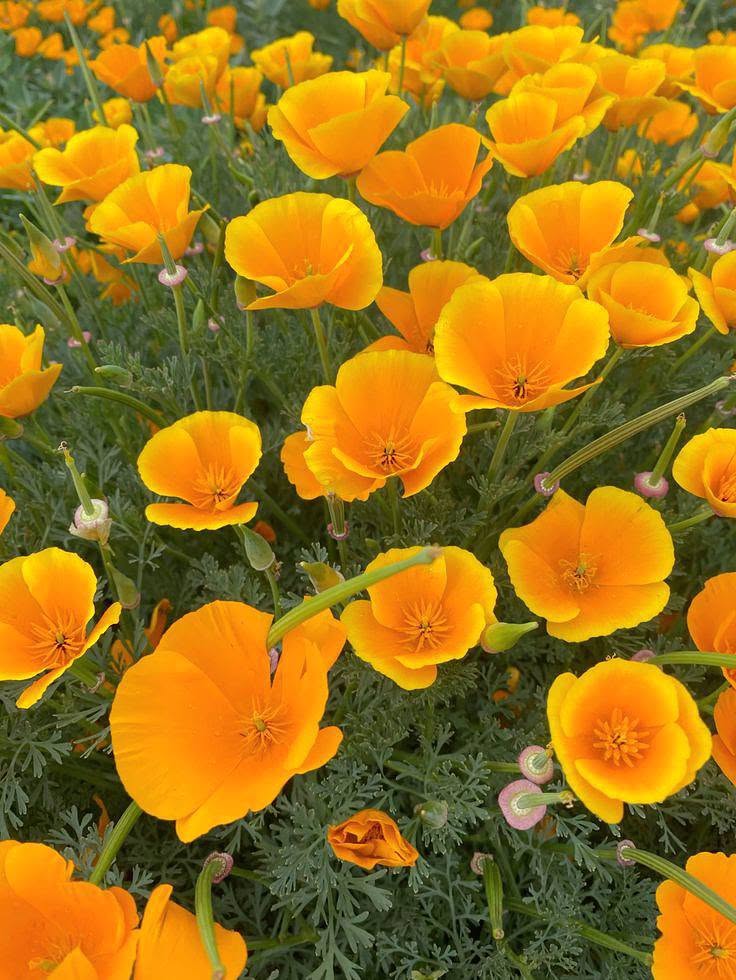
California poppy has satiny orange blooms and finely cut, blue-green leaves. Connecticut Extension lists it among drought-tolerant annuals. The flowers close at night and on cloudy days, then open again in the sun.
It grows best in poor, well-drained soil and full sun. Rich soil and extra feeding lead to leafy plants with fewer flowers. This is a plant that rewards neglect.
Sow the seeds directly where they will grow, because poppies dislike transplanting. They often self-seed for the following year. It is a lovely, low-effort way to end this list.
How to Care for Drought Tolerant Flowers
Good results start with the soil. The University of Nebraska–Lincoln advises loosening soil to at least 12 inches deep. Then mix in organic matter at about one part to four parts of soil. In practice, that means 3 inches of compost for 12 inches of loosened soil.
The EPA adds that compost and similar soil amendments can reduce irrigation water use by about 20 percent each year. That is a big gain for a small job.
Water carefully while plants establish. Nebraska Extension recommends one-half inch to 1 inch of water weekly, including rainfall. Then reduce the amount gradually, but keep watching the plants.
Mulch helps a lot. Spread 1 to 2 inches of organic material, such as shredded bark or chopped leaves. Nebraska experts warn that rock or gravel mulch can hold heat and reflect light, which may damage plants.
Group plants with similar needs. The EPA calls this hydrozoning. Water early in the morning or in the evening to limit evaporation. If you use drip irrigation, the EPA says it can use 20 to 50 percent less water than sprinklers.
Finally, go easy on fertiliser. Feed only when plants look weak or leaves turn yellow. Most of these flowers prefer lean soil.
Frequently Asked Questions
What is the most drought tolerant flower?
There is no single winner, because climate and soil matter. Nebraska Extension marks several as most drought tolerant, including blanket flower, yarrow, daylily, stonecrop and pale coneflower. For annuals, I would pick globe amaranth or moss rose.
Do drought tolerant flowers need any water?
Yes. All plants need water to establish. Connecticut Extension states that these plants still need water to survive, but they tolerate periods of little water. Water new plants regularly, then reduce.
Can I grow them in pots?
Yes, many do well in containers. Oklahoma State University suggests zinnia, moss rose and autumn sage for pots. Use a gritty, fast-draining mix and a pot with drainage holes.
When is the best time to plant?
Spring and early autumn are both good, because roots can settle in mild weather. Nebraska Extension also suggests dividing perennials in early spring or from late August to early September.
Final Thoughts
A beautiful garden does not have to be a thirsty one. These 25 flowers prove that colour, wildlife and low water use can go together. Start with three or four that suit your sun and soil.
Prepare the soil, mulch well and water deeply while plants settle. After that, step back and enjoy the show. My advice is to begin small and add more each season.
References
- University of Nebraska–Lincoln Extension. Perennials in Water-Wise Landscapes (G1214). https://extensionpubs.unl.edu/publication/g1214/na/html/view
- Iowa State University Extension and Outreach. Perennials Tolerant of Dry Conditions. https://yardandgarden.extension.iastate.edu/how-to/perennials-tolerant-dry-conditions
- Oklahoma State University Extension. Drought-Tolerant Plant Selections for Oklahoma. https://extension.okstate.edu/fact-sheets/drought-tolerant-plant-selections-for-oklahoma
- University of Connecticut Home & Garden Education Center. Drought Tolerant Annuals and Perennials. https://homegarden.cahnr.uconn.edu/factsheets/drought-tolerant-annuals-and-perennials/
- UMass Amherst Extension. Drought Tolerant Perennials. https://www.umass.edu/agriculture-food-environment/landscape/fact-sheets/drought-tolerant-perennials
- N.C. Cooperative Extension (NC State University). Flora Fridays: Drought Tolerant Plants. https://montgomery.ces.ncsu.edu/news/florafriday-07122024/
- U.S. Environmental Protection Agency (WaterSense). Water Efficiency Management Guide: Landscaping and Irrigation. https://www.epa.gov/sites/default/files/2017-12/documents/ws-commercialbuildings-waterscore-irrigation-landscape-guide.pdf

Tim M Dave is a gardening expert with a passion for houseplants, particularly cacti and succulents. With a degree in plant biology from the University of California, Berkeley, he has vast experience in gardening. Over the years, he has cultivated a vast collection of desert plants and learned a great deal about how to grow and care for these unique companions.