25 Mushrooms That Grow on Trees (Identification, With Pictures)
Have you ever walked past a tree and noticed a strange shelf, a cluster of caps or a golden crust on the bark? I have, and it always makes me stop. These growths are mushrooms, and each one tells a small story about the tree.
This guide covers 25 mushrooms that grow on trees. For each one, you will learn what it looks like, which trees it prefers and what it may mean for tree health.
A Safety Note Before You Read On
This article is for identification, not for foraging advice. The CDC reports that about 7,500 poisonous mushroom ingestions are logged each year at U.S. poison control centres. In 2016 alone, there were an estimated 1,328 emergency department visits and 100 hospitalisations.
In one CDC analysis, 48 of 556 patients (8.6 percent) had a serious adverse outcome. The CDC concludes that wild mushrooms should not be eaten unless an expert has identified them. I strongly agree. When in doubt, leave it out.
25 Mushrooms That Grow on Trees
The list starts with the easiest ones to spot. Common names vary by region, so I give the scientific name too. Remember, size and colour can change with age and weather.
1. Turkey Tail (Trametes versicolor)
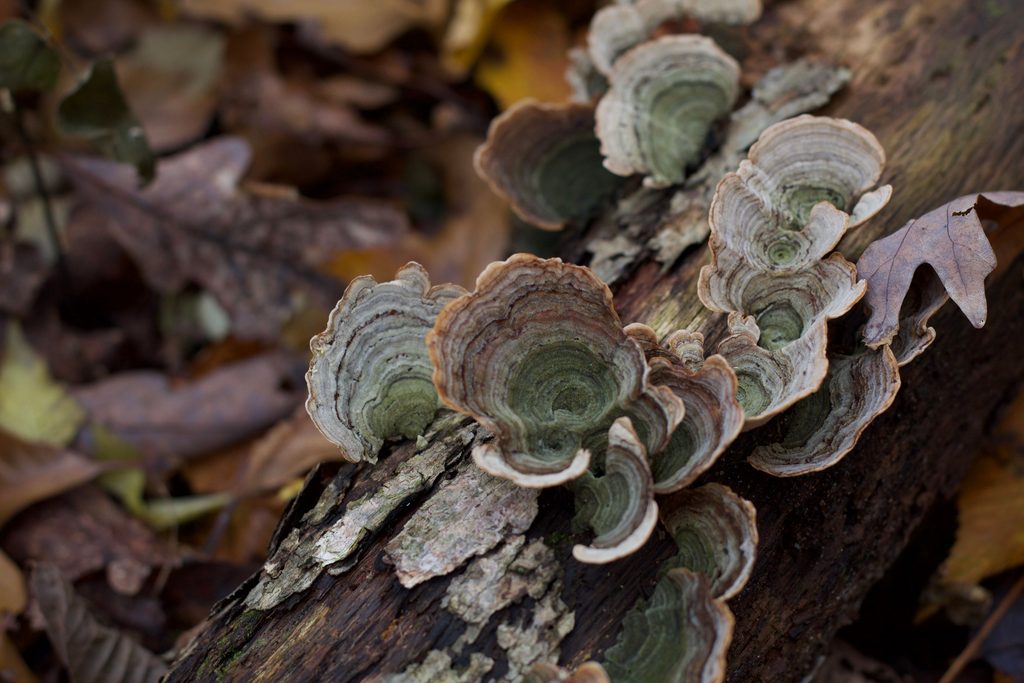
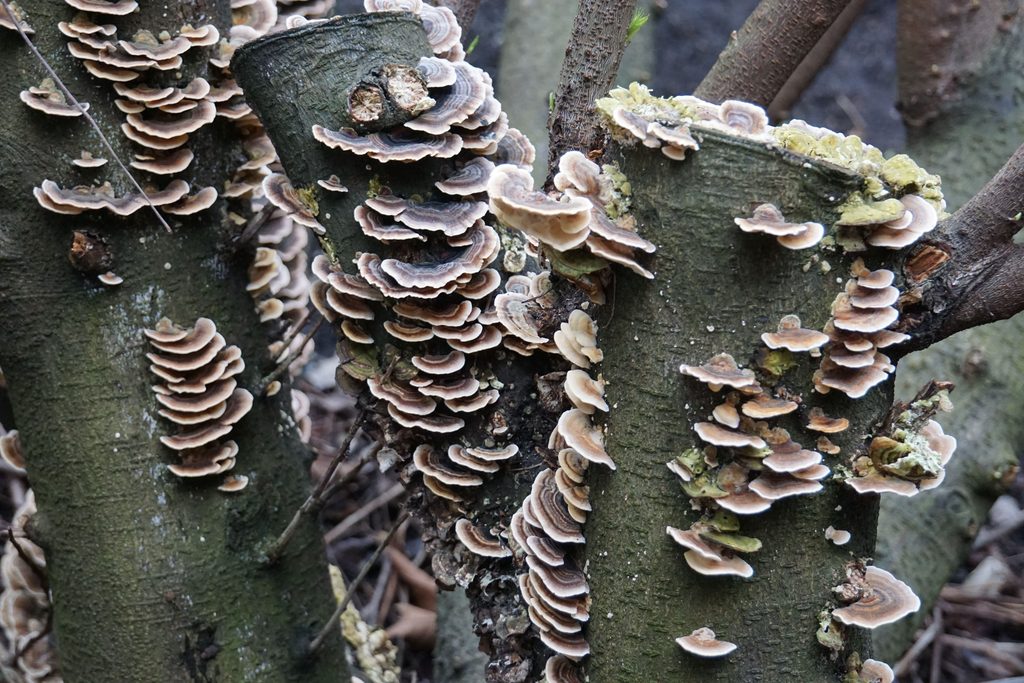
Turkey tail is one of the most common tree mushrooms in the world. The caps are thin, flat and fan-shaped. They show concentric bands of brown, tan, grey and blue, like the tail of a wild turkey.
It grows in overlapping rows on dead logs, stumps and fallen branches, mostly on hardwoods. University of Minnesota Extension lists it among the fungi linked to heart rot in trees such as basswood.
Look underneath for tiny pores. Many look-alikes have a smooth underside instead. I always flip a cap over before I name it.
2. Chicken of the Woods (Laetiporus sulphureus)
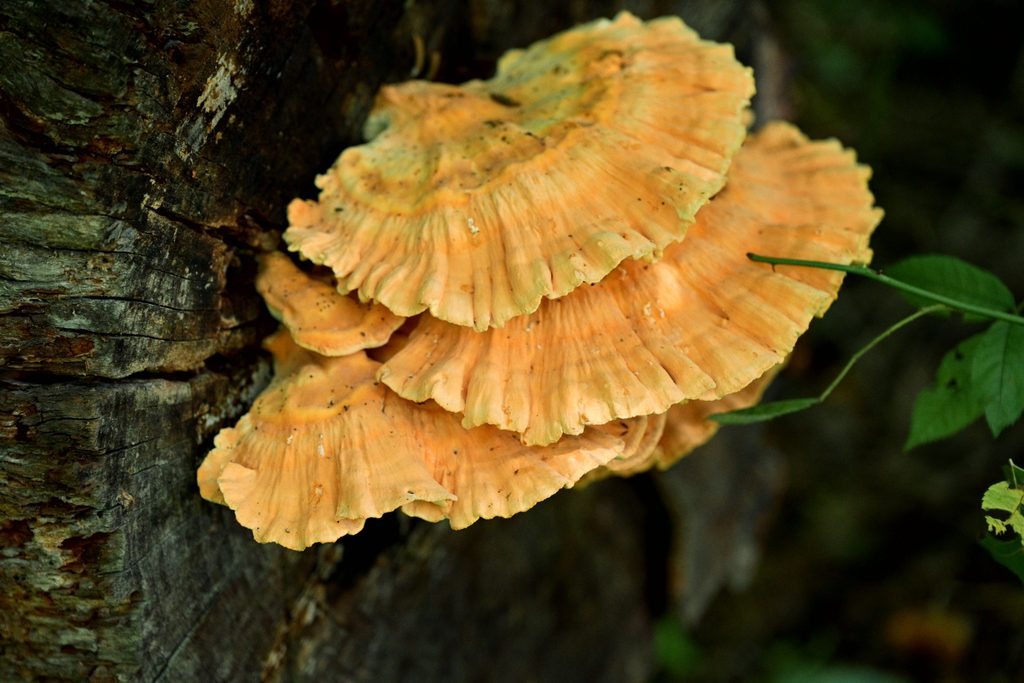
This one is hard to miss. It forms large, shelf-like clusters in bright yellow and orange. The USDA Forest Service describes the conks as shelving in clusters, usually on the lower trunk.
It causes brown cubical rot. In a USDA study of oak stands, this fungus caused more butt rot and more decay than any other species. So a large cluster at the base of an oak is a serious sign.
People do eat young specimens, but some report stomach upset. The reaction can depend on the host tree. Only an experienced expert should judge it.
3. Oyster Mushroom (Pleurotus ostreatus)
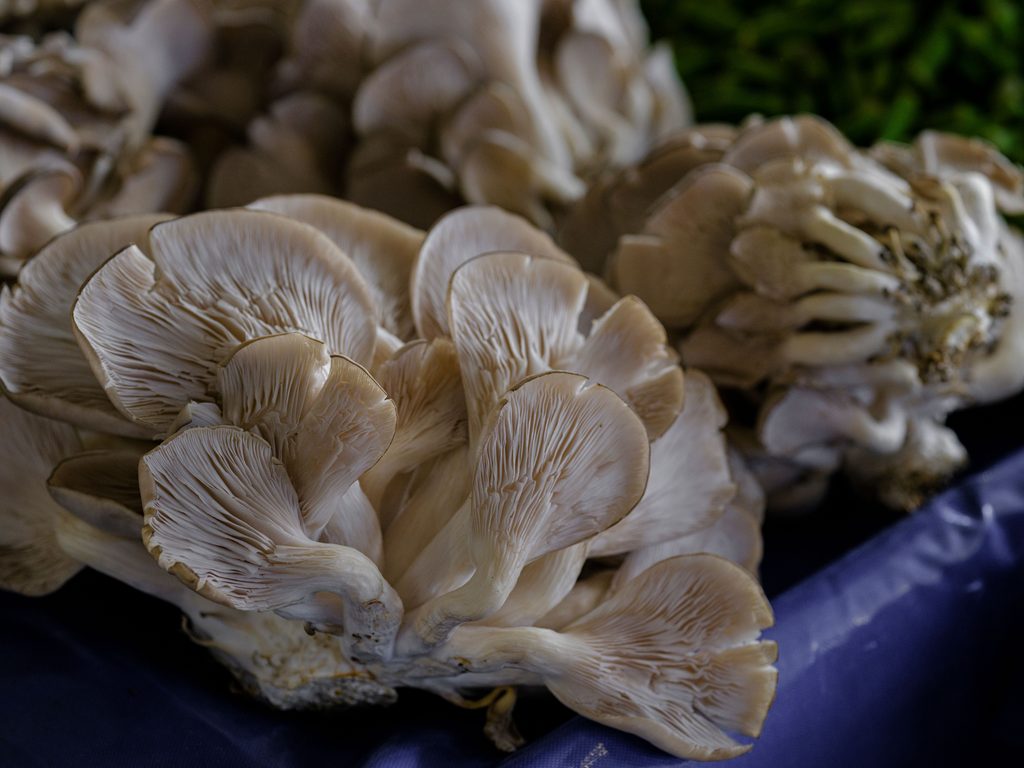
Oyster mushrooms grow in shelves of smooth, shell-shaped caps. Colours range from white and cream to grey and brown. The gills run down the short, off-centre stem.
They usually grow on dead or dying hardwoods, often in cool, damp weather. They cause white rot, which fits with WSU’s note that most decay on deciduous trees is white rot.
A spore print helps with identification. It is white to pale lilac-grey. Oyster mushrooms also have dangerous look-alikes, so do not rely on shape alone.
4. Lion’s Mane (Hericium erinaceus)
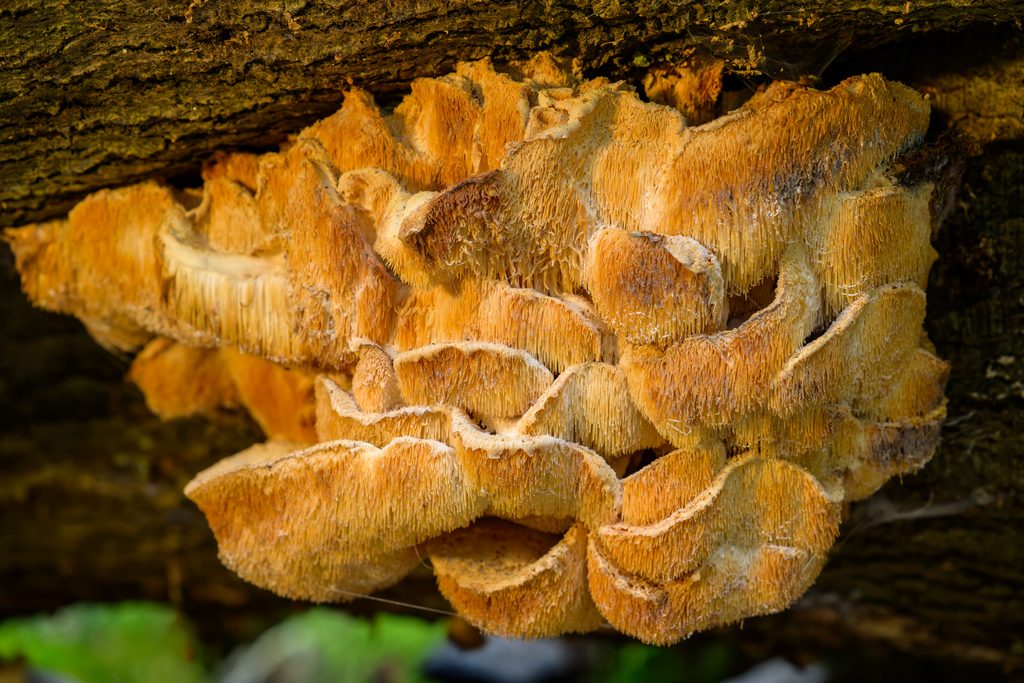
Lion’s mane looks like a white waterfall of soft spines. It forms a single round mass with long, hanging teeth and no cap. Young ones are pure white and turn yellow-brown with age.
It grows on living or dead hardwoods, often at a wound or scar. A close relative on conifers, the coral fungus (Hericium abietis), is listed by the USDA Forest Service as causing white rot with small pockets.
It is easy to recognise because few fungi look like it. I find it one of the most beautiful finds in the woods.
5. Reishi (Ganoderma lucidum group)
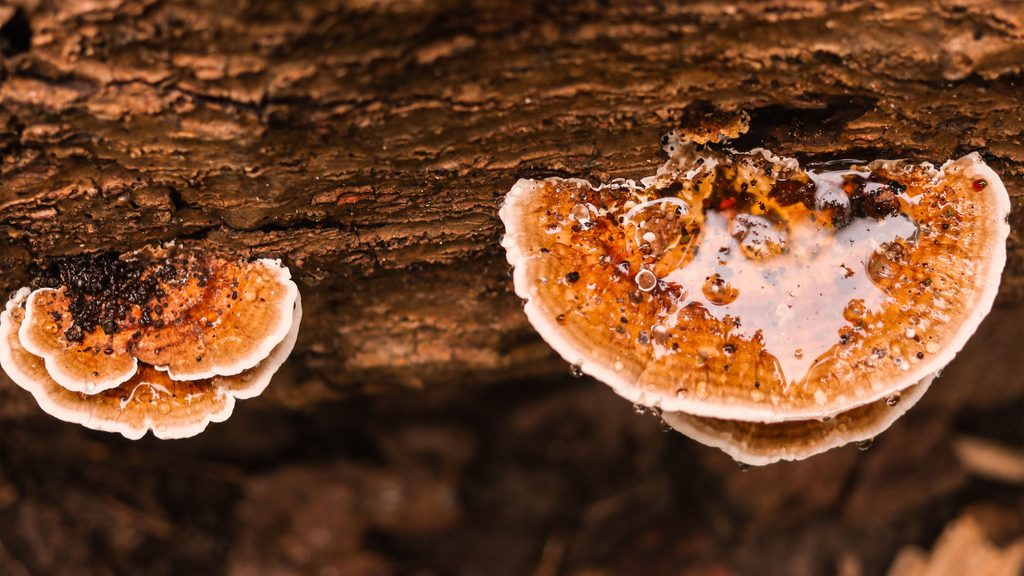
Reishi has a glossy, varnished cap in deep red-brown. The cap often grows on a short stalk. The underside is white and covered in tiny pores. University of Minnesota Extension describes similar Ganoderma conks as reddish brown and shiny on top.
The fungus causes white rot. The USDA Forest Service lists the related lacquer conk (Ganoderma tsugae) on hemlock logs. In basswood, Ganoderma root and butt rot can make trees fall in storms.
The flesh is tough and woody. Reishi is used in traditional practice, but I make no health claims here.
6. Artist’s Conk (Ganoderma applanatum)
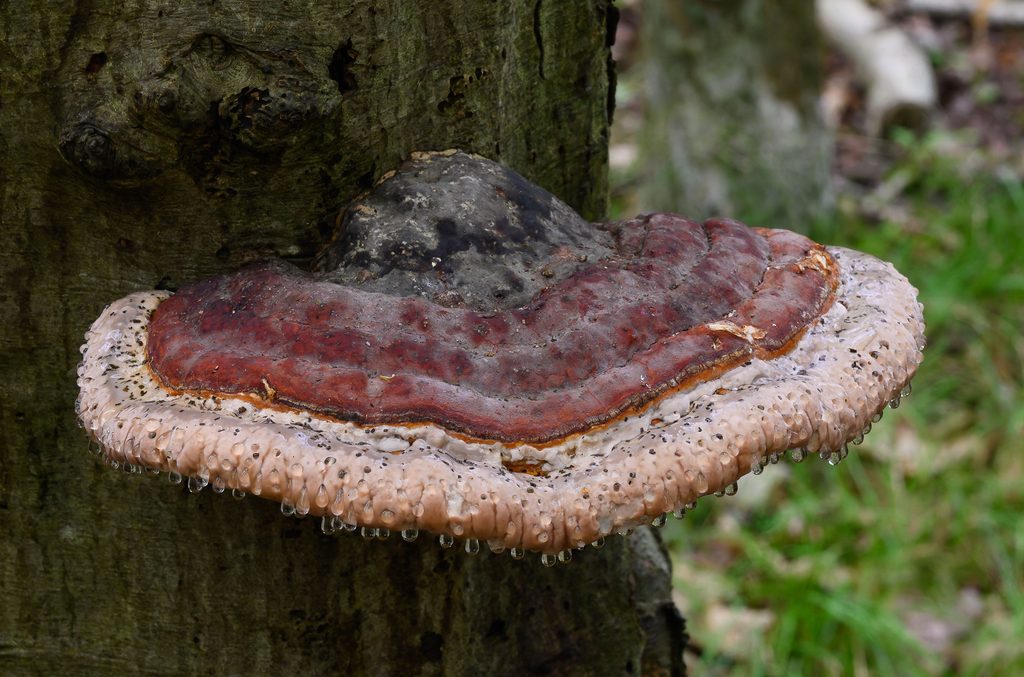
The artist’s conk is a large, hard, shelf-shaped bracket. The top is grey-brown and often dusty with orange-tan spores. It can live for many years, adding a new layer each season.
The USDA Forest Service says the underside is white and turns dark brown when touched. It causes white rot. The name comes from the fact that artists can draw on the scratched pore surface.
It often appears on the trunks of fallen trees. Test the scratch trick yourself, and you will see why it is famous.
7. Red-Belted Conk (Fomitopsis pinicola)
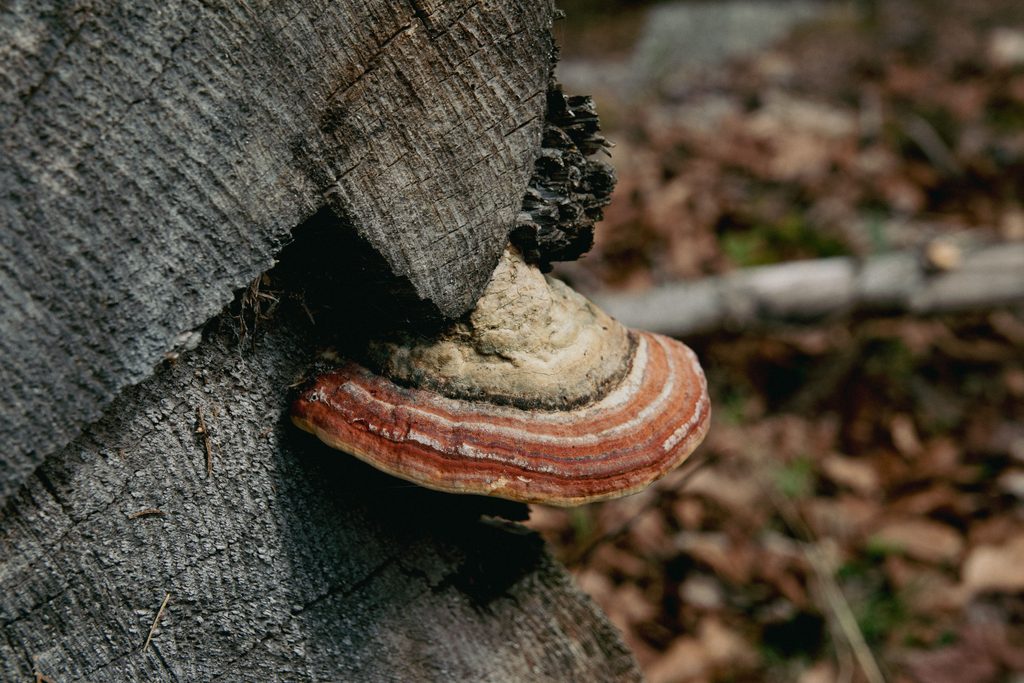
The red-belted conk is a woody, hoof-like bracket. The top is black or grey, often with a red or orange band along the growing edge. The underside is creamy white.
The USDA Forest Service calls it abundant and notes that it causes brown cubical rot. In spruce, it usually attacks dead sapwood and is often linked to old, large basal wounds.
It grows on conifers and some hardwoods, including birch and maple. It is a good example of a fungus that is both a decomposer and, at times, a tree pest.
8. Hen of the Woods (Grifola frondosa)
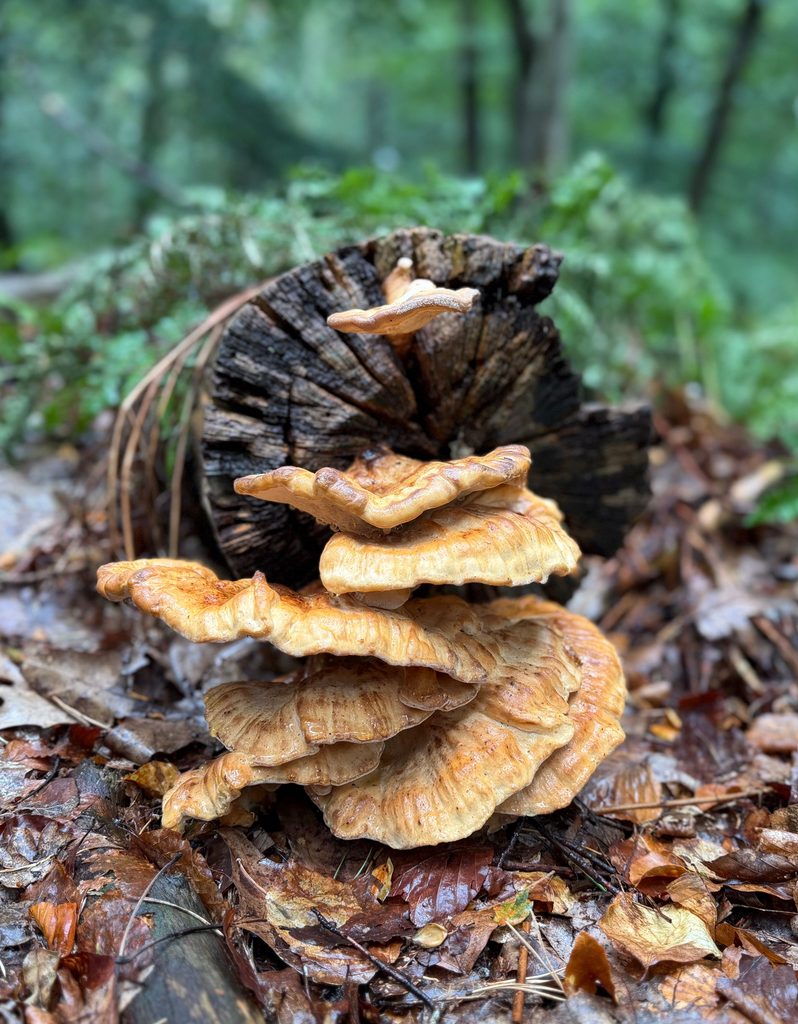
Hen of the woods forms a big, ruffled rosette of grey-brown fronds. It looks like a sitting hen with fluffed feathers. A single cluster can be very large and heavy.
It grows at the base of trees, most often oaks, and appears in autumn. It feeds on the roots and lower trunk and causes white rot. The underside of each frond has tiny white pores, not gills.
If you see one, note the tree. It often returns to the same spot year after year. I treat it as a sign that the roots of that tree are decaying.
9. Shiitake (Lentinula edodes)
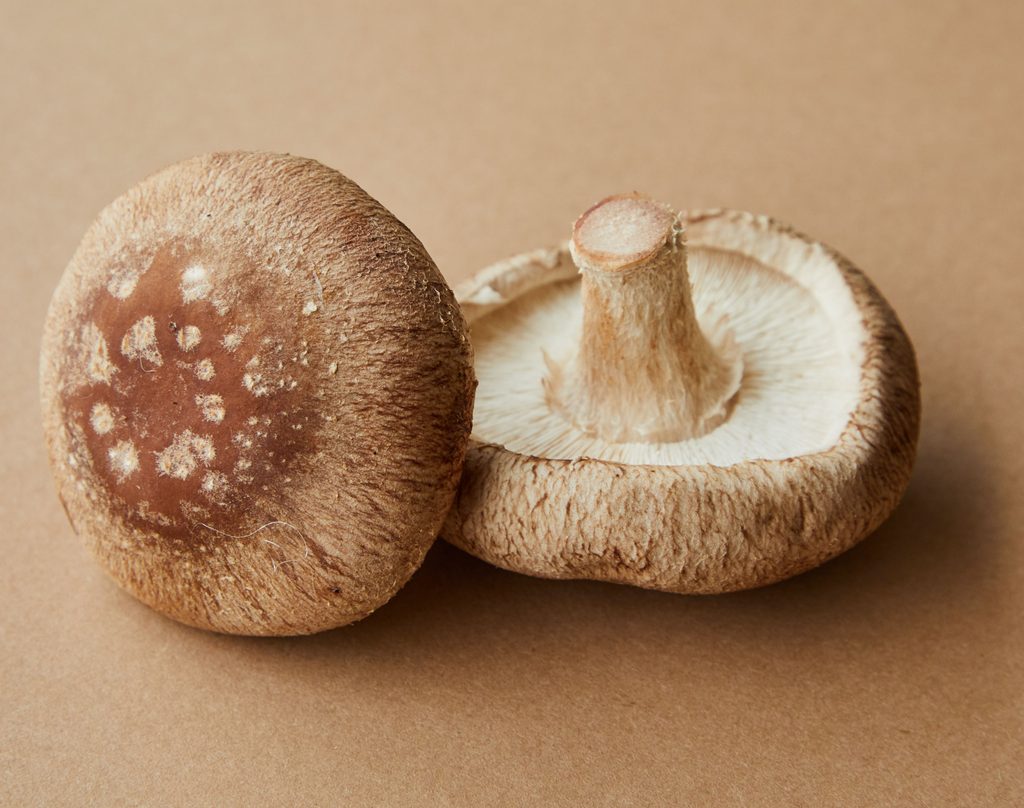
Shiitake is famous in the kitchen, but it is also a true wood-decay mushroom. The cap is brown, often with pale cracks or white flecks. The gills are white, and the stem is tough.
In the wild, it grows on dead hardwood logs in parts of East Asia. In many other countries, you will mostly see it on cultivated oak logs rather than in the forest. It causes white rot.
This makes it a useful mushroom to learn from. It shows how growers copy nature by placing spores in fresh-cut logs.
10. Honey Mushroom (Armillaria species)
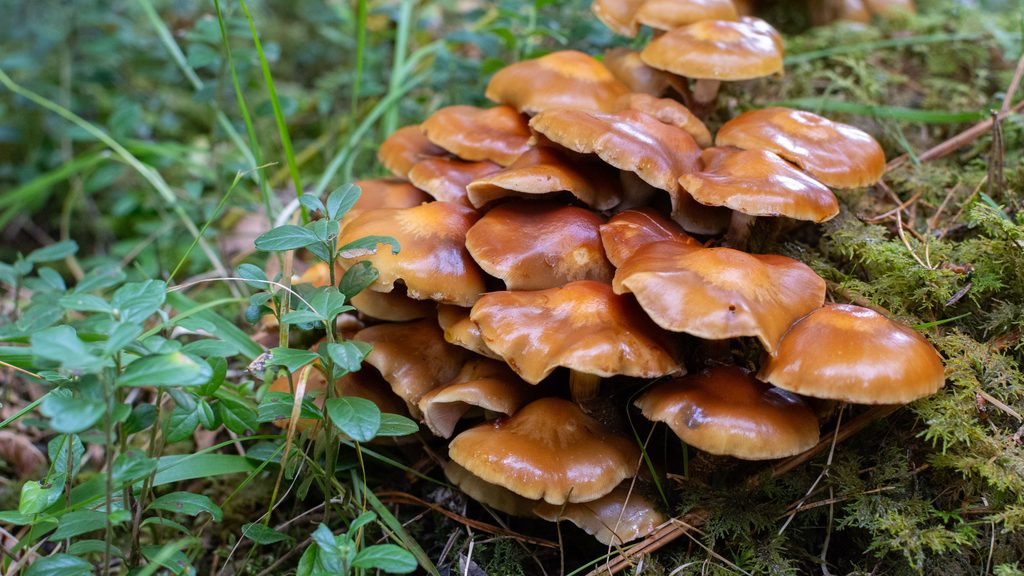
Honey mushrooms grow in tight clusters at the base of trees. The caps are honey-yellow to tan with a ring on the stem. Under the bark, look for black, shoestring-like threads called rhizomorphs.
The USDA Forest Service names Armillaria solidipes as possibly the most important and widespread cause of death in spruce-fir forests. It causes a spongy or stringy white rot. Mushrooms themselves are not always present.
A warning is needed. Deadly look-alikes, such as the funeral bell (Galerina marginata), also grow on wood. Many cases of poisoning come from mistaken identity.
11. Tinder Fungus (Fomes fomentarius)
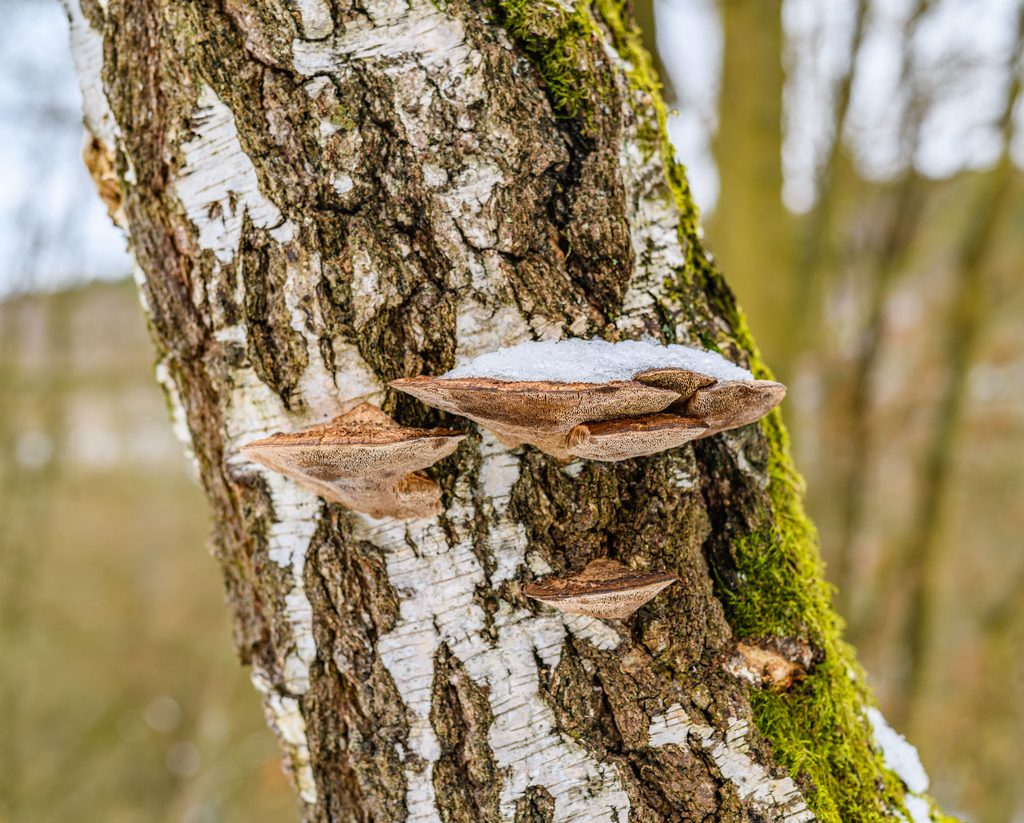
Tinder fungus is a hard, hoof-shaped bracket in grey to silver-brown. The surface shows ridges, like the growth rings of a tree. It is very tough and can last for years.
It grows mainly on birch and beech and causes white rot. It often shows up on weakened or dying trees, or on dead standing ones.
The name comes from its old use. People carried and used it to start and carry fire. The pale inner flesh catches a spark easily.
12. Birch Polypore (Fomitopsis betulina)
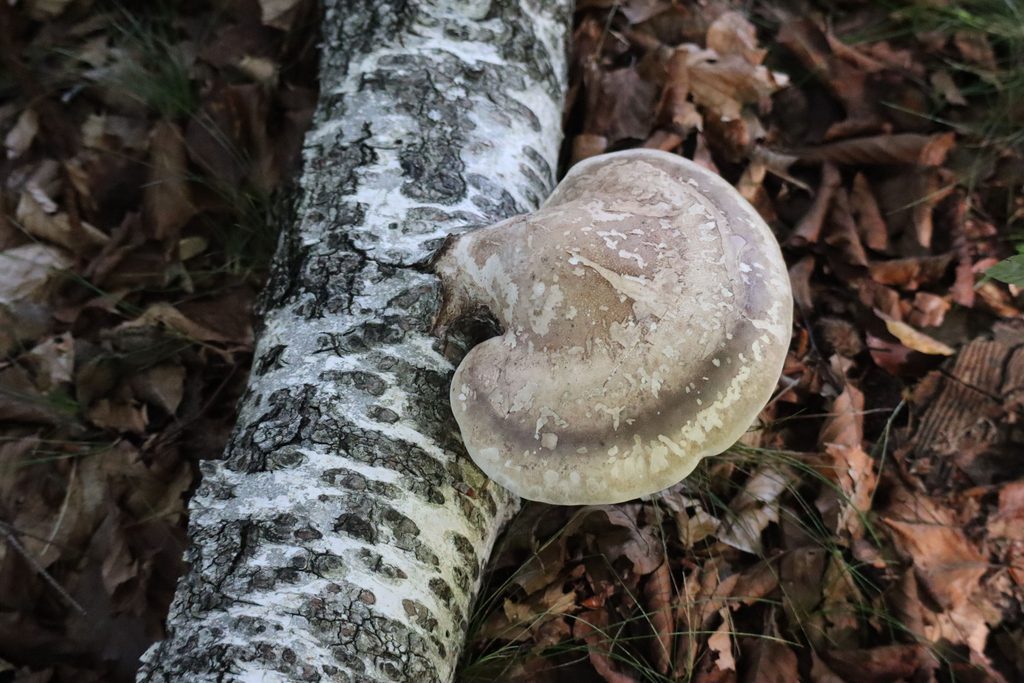
Birch polypore is easy to identify because it grows almost only on birch. The bracket is rounded or kidney-shaped, pale brown to cream, with a smooth, rubbery surface. The underside is white and finely pored.
It causes brown rot, which crumbles the wood into cubes. The fruiting body often appears on dead or dying birches. A tree with several brackets is usually past saving.
People used it long ago as a razor strop and to stop small bleeds. I find it amazing how many uses our ancestors found for a simple bracket.
13. Dryad’s Saddle (Cerioporus squamosus)
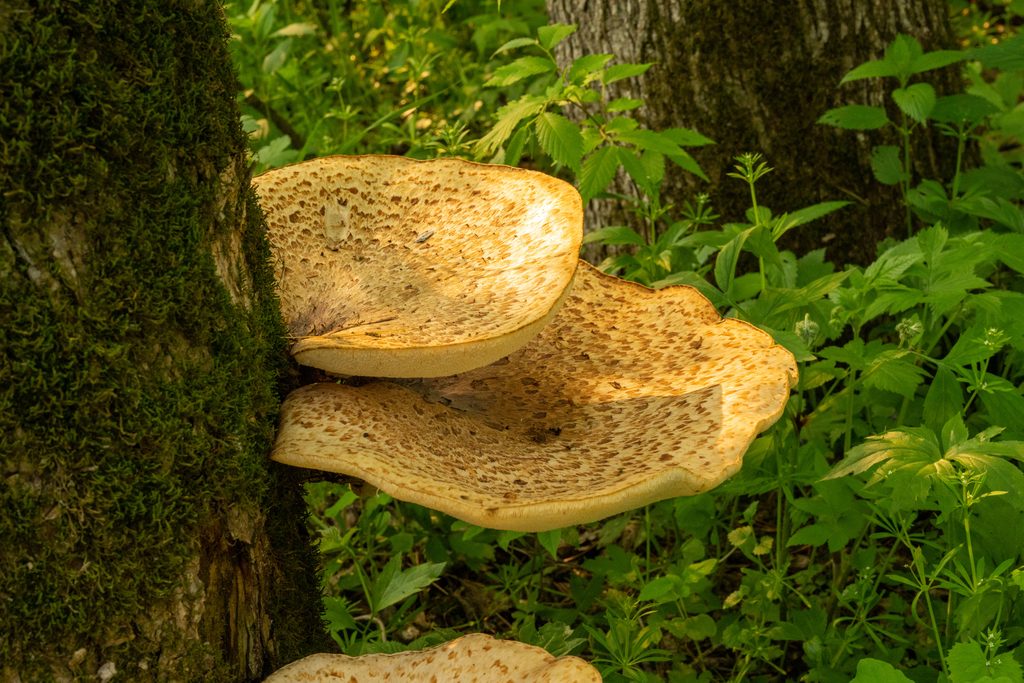
Dryad’s saddle is a big, fan-shaped bracket with brown, feathery scales on a pale cap. It can grow wider than a dinner plate. The underside has large, angular pores.
University of Minnesota Extension lists it as one of the fungi associated with heart rot in basswood and other trees. It often grows near wounds, cracks or pruning cuts, on trees such as elm, maple and ash.
It appears in spring and early summer. A fresh specimen smells like cucumber or watermelon rind. That smell is a handy clue.
14. Jack-O’-Lantern Mushroom (Omphalotus illudens)
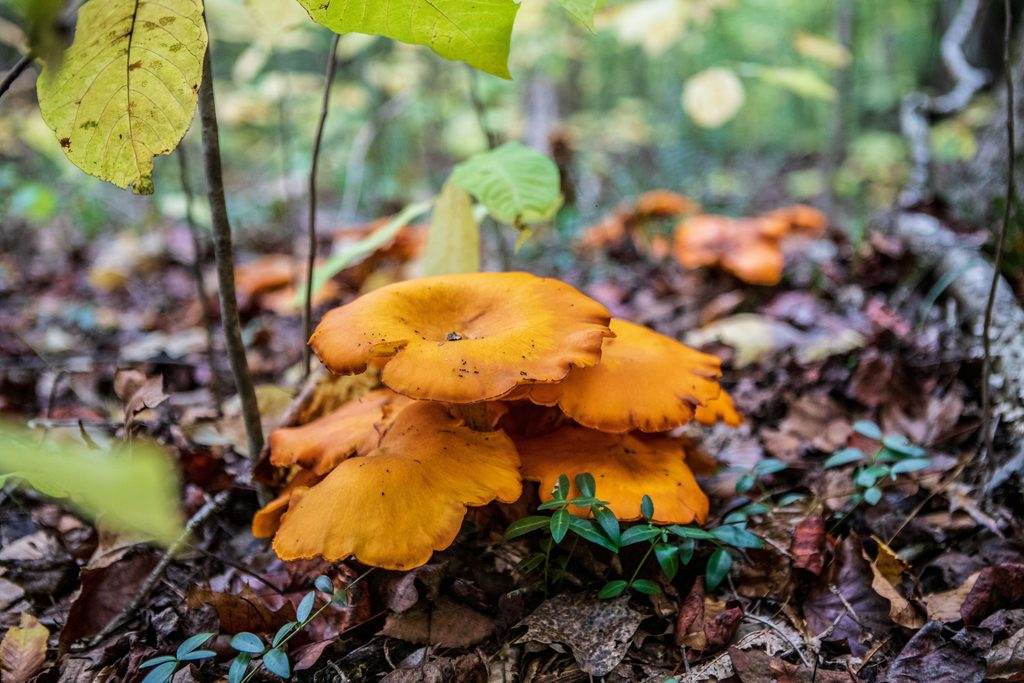
The jack-o’-lantern is toxic, and it deserves a clear warning. It grows in bright orange clusters at the base of stumps and buried roots. The gills run down the stem.
Experts at Rutgers New Jersey Medical School have noted that it is often mistaken for edible mushrooms, such as chanterelles. Eating it causes severe stomach illness, with vomiting and cramps.
The fungus lives on hardwood roots and stumps. Its fresh gills are said to glow faintly in the dark. I enjoy spotting it, but I never pick it for the table.
15. Wood Ear (Auricularia auricula-judae)
Wood ear is a jelly fungus with a shape just like a human ear. It is brown to reddish-brown, soft and rubbery. The outer surface has fine, velvety hairs, while the inner surface is smooth.
It grows on dead and dying branches of hardwoods, especially elder. It appears in damp weather and can dry into a hard, wrinkled crust. After rain, it swells back to life.
This ability to dry out and revive is one of my favourite fungal tricks. It makes wood ear easy to find in mild, wet seasons.
16. Velvet Shank (Flammulina velutipes)
Velvet shank has a glossy, orange-brown cap that feels slightly sticky. The stem is the clue. It is dark brown and velvety, especially near the base. It grows in clusters on stumps and dead wood.
It is one of the few mushrooms that fruit in cold weather, even in winter. The USDA Forest Service lists it among minor butt-rot fungi on spruce. It is the wild form of the pale enoki sold in shops.
Be careful. The deadly funeral bell (Galerina marginata) also grows on wood. A spore print is essential: velvet shank is white, while Galerina is rusty brown.
17. Split Gill (Schizophyllum commune)
Split gill is small, white and fuzzy. The cap grows like a tiny fan, usually less than 2 inches wide. The “gills” on the underside are actually split lengthwise.
University of Minnesota Extension lists it as a cause of sapwood rot. It appears in groups or rows along dead branches or on trunks, and is common on trees with an open wound or crack. The bark near the shelves often dies and falls off.
It is found on every continent except Antarctica. Its fuzzy white caps shrivel in dry weather and swell again in rain. A tree with lots of split gill is usually already in trouble.
18. Beefsteak Fungus (Fistulina hepatica)
The beefsteak fungus looks uncannily like a raw tongue or slice of liver. It is red to reddish-brown, moist and fleshy. When cut, it can ooze a red, blood-like juice.
It grows on living oak and sweet chestnut, often near the base of the trunk. It causes a brown rot in the heartwood. The wood sometimes turns a rich dark brown, which timber workers call “brown oak.”
The underside has tiny separate tubes, not a layer of pores. I think it is the most dramatic-looking fungus on this list.
19. Sulphur Tuft (Hypholoma fasciculare)
Sulphur tuft grows in dense bunches of sulphur-yellow caps with greenish gills. The centre of the cap is often orange-brown. Clusters cover old stumps and buried dead wood.
It grows on both hardwoods and conifers, and can fruit almost all year in mild climates. It breaks down dead wood and is rarely a threat to living trees.
It is poisonous and tastes very bitter. It can be mistaken for edible tuft-forming mushrooms. Treat it as a look-but-do-not-touch species.
20. Chaga (Inonotus obliquus)
Chaga does not look like a mushroom at all. It forms a black, crusty, cracked mass on living birch trees. It resembles a lump of burnt charcoal. Inside, the flesh is soft and rusty orange.
The black mass is a sterile growth, not the true fruiting body. The real one forms under the bark only after the tree dies. The fungus causes white rot in the heartwood.
Chaga is sold in powders and teas. I make no health claims. It grows very slowly, so heavy harvesting can harm wild populations.
21. Cinnabar Polypore (Pycnoporus cinnabarinus)
Cinnabar polypore is bright orange-red from top to bottom. The small, tough brackets look as if someone painted them. The pores on the underside are red too.
It grows on dead hardwoods such as beech, birch and cherry, and causes white rot. You can find it nearly year-round. It is common on fallen logs in open woods.
Its colour is a quick identification tool because few bracket fungi are so vivid. The brackets are tough and not suited to eating.
22. Violet-Toothed Polypore (Trichaptum biforme)
This small bracket grows in thin, overlapping rows. The top is hairy, with zones of grey, brown and white. Young specimens show a purple-violet edge and violet pores underneath.
The pores break into small teeth as the fungus ages. The violet colour fades to brown over time. It grows in large numbers on dead hardwood logs and stumps and causes white rot.
I like it because it is a great beginner species. The purple tint is a quick clue that sets it apart from turkey tail.
23. King Alfred’s Cakes (Daldinia concentrica)
King Alfred’s cakes are hard, black, rounded lumps. They look like burnt buns stuck to a branch. The surface is shiny and smooth, with a texture like hardened charcoal.
It grows mostly on dead ash wood and sometimes on beech. Cut one open and you will see rings of silver-grey and black, like the cross-section of a tree. The ring pattern is the best clue.
The common name comes from a legend about King Alfred and burnt cakes. Another nickname, “cramp balls,” comes from an old folk belief. I would not rely on either story.
24. Dyer’s Polypore (Phaeolus schweinitzii)
The dyer’s polypore, or velvet top fungus, grows at the base of conifers. The conk is large, flat and rosette-shaped. It has a velvety brown top with a yellow to olive edge, and it can reach a foot across.
The USDA Forest Service says it causes brown cubical rot in the lower trunk and that it can arise from roots near the tree. The conk is annual and turns dark brown when dead.
This fungus weakens the base of a tree, making it prone to windthrow. As the name suggests, it has long been used to dye wool in shades of yellow, green and brown.
25. Witches’ Butter (Tremella mesenterica)
Witches’ butter is a bright yellow-orange jelly fungus. It forms soft, wavy, brain-like blobs on dead hardwood branches. The surface is glossy and wet after rain.
In dry weather, it shrinks into a thin, hard crust and looks like a stain on the bark. It swells and regains its colour when the rain comes back. It is often found on fallen oak and beech twigs.
It does not feed on the wood directly. It lives on another fungus growing in the dead wood. I like to end the list with it as a reminder that the forest has many hidden layers.
READ MORE ON: 50 Different Types of Mushrooms (Edible, Medicinal, and Wild Varieties)
Why Do Mushrooms Grow on Trees?
Trees are food. Most tree mushrooms are the fruiting bodies of fungi that feed on wood. The mushroom is only the visible part. The main body of the fungus, called mycelium, lives hidden inside the trunk or roots.
Washington State University Extension explains that nearly all wood decay in living trees is caused by fungi. Spores travel by wind, insects or pruning tools to a wound. Branch stubs, cracks and dead limbs are common entry points.
How to Identify Mushrooms on Trees
Good identification is a habit, not a guess. WSU Extension says that finding the cause of decay requires knowing the rot type, the fruiting body and the location of the rot in the tree. You can use the same approach.
Start with the tree. Note the species, and whether it is alive, dying or dead. Then note where the fungus grows: the base, the trunk or a branch. Many species prefer only one host.
Next, study the fungus itself. Look at the underside. Does it have pores, gills, spines or a smooth surface? Check the colour, texture and shape. Take clear photos from above, below and the side.
Finally, take a spore print if you have a cap with gills. Place the cap, gills down, on paper for a few hours. The colour of the print helps separate safe species from dangerous look-alikes.
What to Do if You Find a Mushroom on Your Tree
Do not panic, but do not ignore it. WSU says that if conks or mushrooms are visible, further inspection is needed to judge the extent of decay and any loss of strength. A certified arborist can do this safely.
Utah State University suggests removing affected branches. If the trunk is affected, the tree may need to be removed. This matters most when the tree stands near a house, road or play area.
There is no cure for wood decay, according to WSU. The best approach is prevention. Avoid wounding trunks and roots, and prune young trees properly. WSU also advises against wound dressings, because they do not stop the fungus.
Frequently Asked Questions
Are mushrooms on a tree always a sign it is dying?
No. Many grow on dead wood and are harmless. But a conk on a living tree often means internal decay. WSU says a conk generally means rot several feet above and below it. Utah State University adds that a tree can also be rotten inside with no conks showing.
Which tree mushrooms are poisonous?
Two on this list are toxic: the jack-o’-lantern and sulphur tuft. Deadly look-alikes, such as the funeral bell, also grow on wood. Colour and shape are unreliable clues, so never judge a mushroom by looks alone.
Can I eat mushrooms that grow on trees?
Only if an expert has identified them. The CDC states that wild mushrooms should not be consumed unless they are identified by an expert. Many edible species have toxic twins.
What should I do if someone eats a wild mushroom?
Act quickly. In the United States, call Poison Help at 1-800-222-1222. If you live elsewhere, contact your local poison centre or emergency service. Keep a sample or a photo of the mushroom for identification.
Final Thoughts
Tree mushrooms are far more than strange growths. They recycle wood, feed insects and give shelter to wildlife. They can also warn us when a tree is becoming unsafe.
Use this guide to learn and observe. Take photos, note the host tree and enjoy the hunt with your eyes, not your plate. When a mushroom raises a doubt about a tree’s safety, call a qualified arborist.
References
- Washington State University Extension. Wood Decay: One of the Most Common Types of Diseases in Trees. https://wpcdn.web.wsu.edu/extension/uploads/sites/57/2014/03/Wood-Decay-Common-Disease-in-Trees.pdf
- Utah State University Extension. Wood Decay Fungi (Integrated Pest Management). https://extension.usu.edu/planthealth/ipm/ornamental-pest-guide/diseases/wood-decay-fungi
- University of Minnesota Extension. Basswood/Linden: Fungi on Trunk or Branches. https://apps.extension.umn.edu/garden/diagnose/plant/deciduous/linden/branchesfungi.html
- USDA Forest Service. Forest Insect & Disease Leaflet 150: Decays of Engelmann Spruce and Subalpine Fir in the Rocky Mountains. https://www.fs.usda.gov/foresthealth/docs/fidls/FIDL-150-DecaysinRockyMtns.pdf
- USDA Forest Service, Alaska Region. Decay Fungi: Indicators of Tree Defect in Southeast Alaska. https://fs.usda.gov/Internet/FSE_DOCUMENTS/stelprdb5322503.pdf
- USDA Forest Service, Northeastern Forest Experiment Station. Basidiomycetes Associated with Decay of Living Oak Trees (Res. Pap. NE-413). https://research.fs.usda.gov/treesearch/14669
- Centers for Disease Control and Prevention (CDC). Health Care Utilization and Outcomes Associated with Accidental Poisonous Mushroom Ingestions, United States, 2016–2018 (MMWR). https://stacks.cdc.gov/view/cdc/104783

Tim M Dave is a gardening expert with a passion for houseplants, particularly cacti and succulents. With a degree in plant biology from the University of California, Berkeley, he has vast experience in gardening. Over the years, he has cultivated a vast collection of desert plants and learned a great deal about how to grow and care for these unique companions.