15 Weeds That Look Like Raspberry Plants (And How to Tell Them Apart)
Raspberry plants are a rewarding addition to any garden. Their arching canes, serrated leaves, and sweet summer fruit make them worth the effort of growing.
But raspberries belong to a large and thorny plant family, and several weeds share the same general look. Confusing the two can mean pulling out canes you actually wanted to keep.
I have mistaken a wild bramble for an escaped raspberry cane more than once, only to realize later it had spread from a hedgerow instead of my own patch. The two can be genuinely hard to separate.
This guide covers 15 weeds that look like raspberry plants. Each one has small but telling differences, once you know what to check.
Weeds That Resemble Raspberries
Raspberries belong to the Rubus genus, part of the rose family, Rosaceae. This genus alone contains over 250 recognized species, many of which grow as thorny, cane-forming brambles.
Because raspberries share this genus with blackberries, dewberries, and countless wild brambles, mix-ups are common. Leaf shape, thorny canes, and white flowers repeat across the entire group.
A few unrelated weeds also mimic raspberry foliage closely enough to fool a quick glance. Both categories appear in this list, along with the details that set true raspberries apart.
Let’s walk through them.
1. Wild Blackberry (Rubus fruticosus)
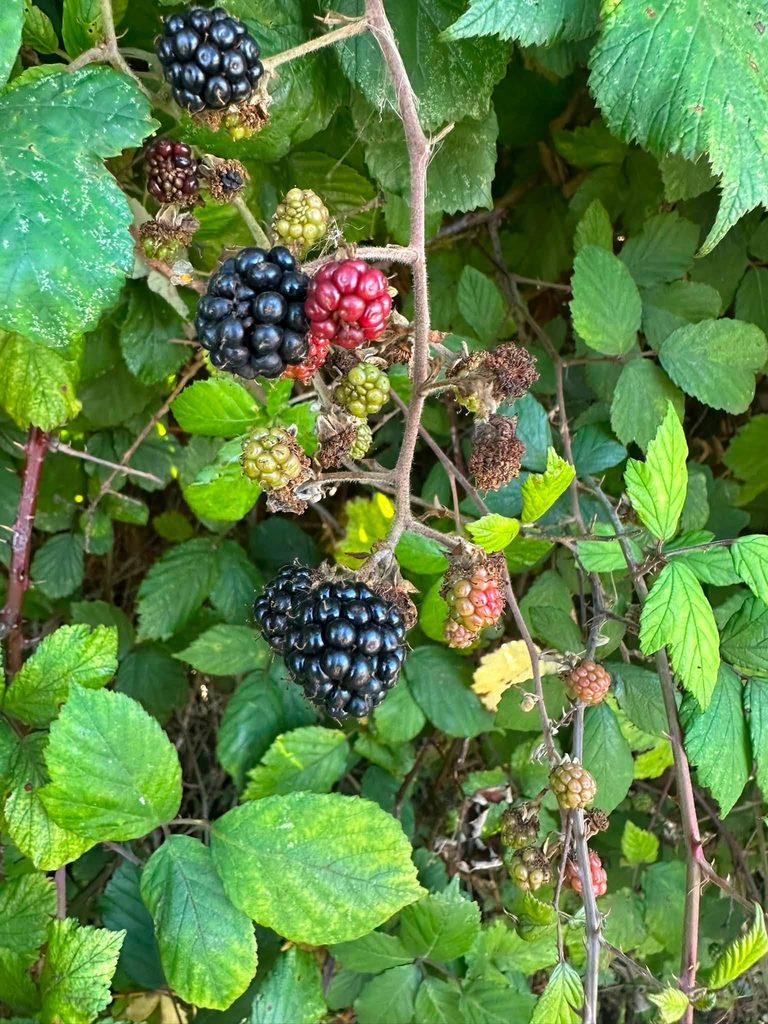
Wild blackberry is the most common raspberry lookalike, since both plants share the same Rubus genus. Their leaves, thorns, and cane structure overlap closely enough to confuse most gardeners.
I have spent entire afternoons trying to trace a bramble back to its root, unsure whether I was dealing with a wild blackberry or an escaped raspberry cane gone rogue.
The clearest difference is the fruit core. Blackberries stay attached to a white core when picked, while raspberries separate cleanly, leaving a hollow center behind on the cane.
2. Dewberry (Rubus caesius and related species)
Dewberry is a low-growing, trailing relative of both raspberries and blackberries. Instead of arching upright canes, dewberry vines spread flat along the ground, often rooting wherever they touch soil.
I find this growth habit the fastest way to rule dewberry out. True raspberry canes stand upright or arch gently, but they never sprawl flat across open ground the way dewberry does.
The berries look similar to small blackberries, with a slight waxy coating. This dusty, blue-gray bloom on the fruit surface is another useful clue that separates it from raspberries.
3. Salmonberry (Rubus spectabilis)
Salmonberry is native to the Pacific Northwest and produces orange to salmon-colored fruit. Its leaves and thorny canes closely resemble raspberry foliage, especially before the fruit ripens and reveals its unusual color.
I remember spotting this plant along a hiking trail and assuming it was simply a raspberry with unripe fruit. The color difference only became obvious once the berries fully matured.
Salmonberry canes are often smoother and less thorny than true raspberries. The flowers are also a deep pink to magenta, quite different from the white blooms typical of cultivated raspberries.
4. Thimbleberry (Rubus parviflorus)
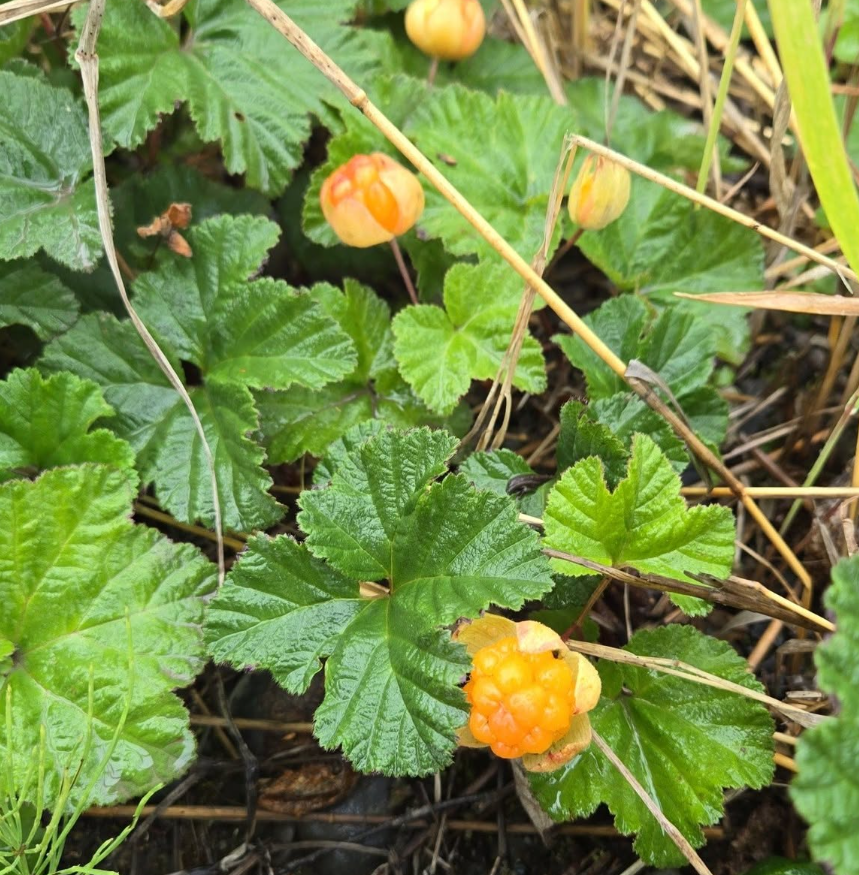
Thimbleberry stands out because it lacks thorns entirely, unlike most raspberry canes. Its large, maple-shaped leaves are also noticeably broader and softer than typical raspberry foliage.
I actually find this plant easier to identify than most on this list, once the leaf shape is compared directly. The lobed, velvety texture rarely gets confused with true raspberry leaves up close.
The berries are flat and dome-shaped rather than the classic raspberry thimble shape. White flowers, several inches wide, are also considerably larger than typical raspberry blooms.
5. Wineberry (Rubus phoenicolasius)
Wineberry is an invasive species in parts of North America, originally introduced from East Asia. Its canes are covered in distinctive reddish, bristly hairs that set it apart from smooth raspberry canes.
I have found this plant spreading aggressively along woodland edges. It is listed as invasive in several U.S. states, where it outcompetes native raspberry and blackberry populations in disturbed habitats.
The bright red, glossy berries closely resemble raspberries in shape and separation from the core. The reddish, fuzzy stem coating remains the most reliable way to identify wineberry correctly.
ALSO READ: 15 Weeds That Look Like Pepper Plants (Identify Them, With Pictures)
6. Black Raspberry (Rubus occidentalis)
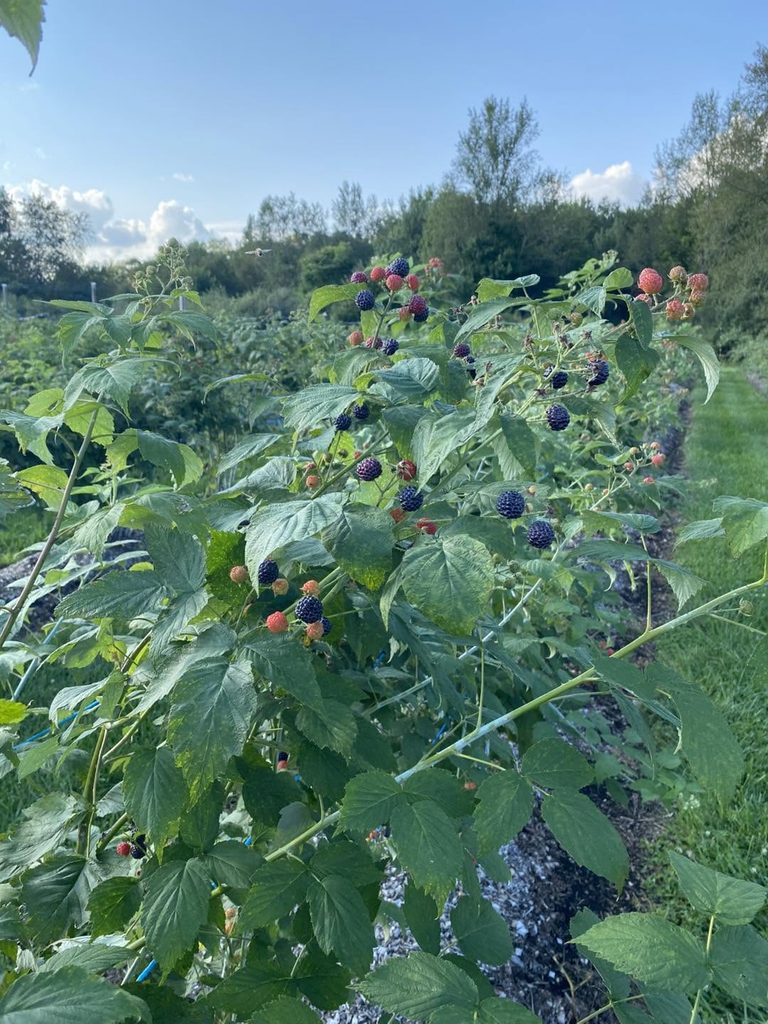
Black raspberry is a true raspberry species, but its dark purple-black fruit often gets mistaken for blackberry instead. This confusion runs in the opposite direction from most entries on this list.
I have grown both black and red raspberries side by side, and the leaf shape is nearly identical between them. Only the fruit color and slightly waxy cane coating differ noticeably.
Like true raspberries, black raspberry fruit separates cleanly from its core when picked. This detail confirms it belongs to the raspberry side of the Rubus family, despite its darker color.
7. Multiflora Rose (Rosa multiflora)
Multiflora rose is a thorny, arching shrub that can resemble raspberry canes before either plant flowers. Both produce compound leaves and sprawling, cane-like growth that spreads through garden edges.
This shrub is classified as a noxious invasive species in over 45 U.S. states, according to USDA data. It spreads rapidly through bird-dispersed seed and can quickly overtake untended land.
The flowers are small, white, and clustered, quite different from a raspberry’s simple blooms. Multiflora rose also produces small red hips rather than the soft, aggregate raspberry fruit.
8. Japanese Barberry (Berberis thunbergii)
Japanese barberry is a compact, thorny shrub with small oval leaves. While not a close relative of raspberries, its dense, spiny growth habit can create visual confusion from a short distance.
I have seen this shrub planted ornamentally in many suburban yards, often without homeowners realizing how invasive it can become in nearby wooded areas once birds spread its seeds.
The leaves are smaller and smoother-edged than raspberry foliage, without the serrated margins typical of the Rubus genus. Bright red berries appear in fall, quite unlike raspberry fruiting season.
9. Wild Rose (Rosa species)
Wild roses share several traits with raspberry canes, including thorns, compound leaves, and an arching growth habit. Both plants often grow tangled together along fence lines and forest edges.
I find the thorn pattern the easiest distinguishing feature here. Wild rose thorns tend to be broader and more hooked, while raspberry thorns are generally thinner and more evenly spaced.
Wild roses produce hips instead of aggregate berries, and their flowers have a distinctly different structure, with five broad petals surrounding a prominent yellow center.
ALSO READ: 35 Weeds With White Flowers (Names, With Pictures)
10. Poison Ivy (Toxicodendron radicans)
Poison ivy rarely gets compared to raspberries directly, but young poison ivy shoots can sometimes grow alongside brambles, creating dangerous confusion for anyone reaching in to harvest fruit.
I always tell new gardeners to check carefully before grabbing any bramble by hand. Poison ivy’s “leaves of three” growth pattern is the clearest warning sign, unlike raspberry’s typically five-leaflet structure.
Unlike raspberry canes, poison ivy stems lack true thorns. The plant instead relies on urushiol oil, which causes allergic skin reactions in an estimated 85 percent of people who come into contact with it.
11. Virginia Creeper (Parthenocissus quinquefolia)
Virginia creeper is a climbing vine with compound leaves made up of five leaflets. While it lacks thorns, its sprawling growth habit can tangle with raspberry canes along fences and trellises.
I have found this vine winding through raspberry patches more than once, using the canes as a natural climbing support. Untangling the two without damaging the raspberry stems takes patience.
The leaves turn a brilliant red in autumn, quite unlike raspberry foliage. Small dark berries also appear, though these are toxic to humans despite resembling wild fruit clusters.
12. Bittersweet Nightshade (Solanum dulcamara)
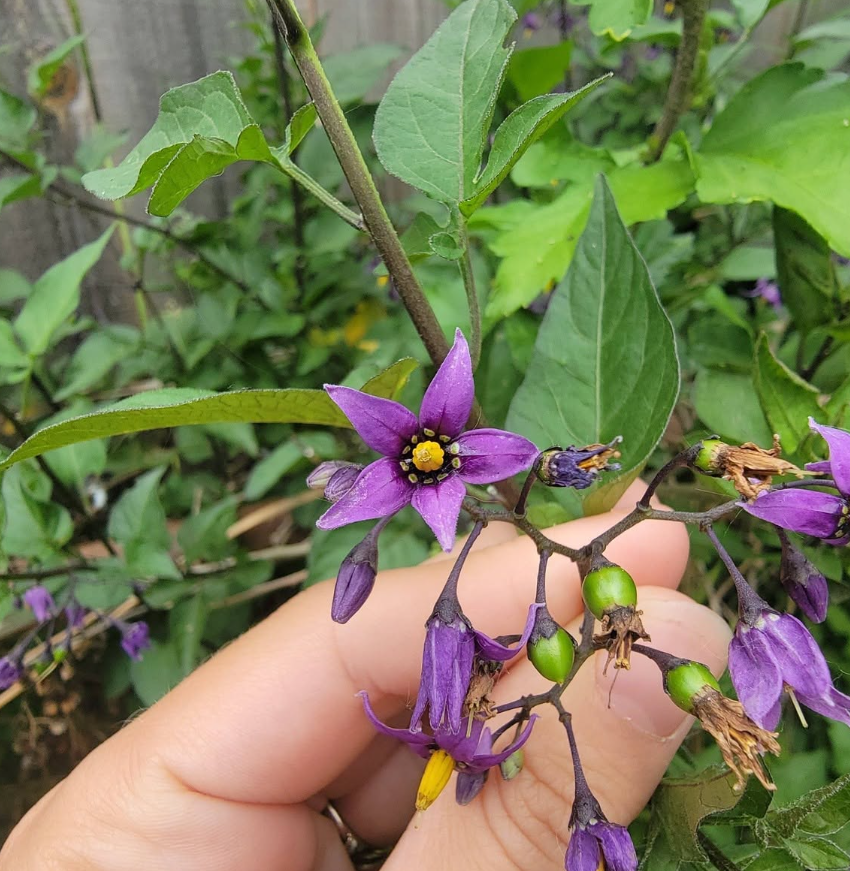
Bittersweet nightshade is a sprawling, semi-woody vine that sometimes climbs through raspberry canes in untended garden corners. Its leaves are simpler and less deeply lobed than typical raspberry foliage.
I have pulled this vine out of raspberry patches during midsummer weeding sessions. It tends to wind through the canes rather than growing independently upright, which helps with quick identification.
The purple, star-shaped flowers and bright red berries are distinctive once they appear. These berries are toxic, making correct identification especially important around fruit-bearing raspberry plants.
13. Common Blackberry Seedlings (Wild Rubus hybrids)
Wild blackberry-raspberry hybrids occur naturally where the two species grow near each other. These hybrid seedlings often blend traits from both parents, making identification genuinely difficult even for experienced gardeners.
I have encountered volunteer canes in my own garden that never quite matched either parent plant cleanly. Fruit color, thorn density, and leaf shape all fell somewhere between the two.
Testing the fruit core remains the most reliable method. A hollow center after picking suggests raspberry lineage, while a solid, attached core points toward stronger blackberry genetics in the hybrid.
14. Elderberry Seedlings (Sambucus species)
Elderberry seedlings produce compound leaves that can superficially resemble young raspberry canes before either plant matures fully. Both grow multiple leaflets arranged along a central stem.
I find the stem texture the quickest way to tell these apart. Elderberry stems are smooth and somewhat pithy inside, lacking the thorns and woody texture found on established raspberry canes.
Elderberry eventually produces clusters of small, dark purple berries rather than raspberry’s soft, aggregate fruit structure. The flower clusters are also flat-topped, unlike raspberry’s simple, scattered blooms.
ALSO READ: 15 Weeds That Look Like Hollyhocks (Spot The Difference)
15. Himalayan Blackberry (Rubus armeniacus)
Himalayan blackberry is one of the most aggressive invasive brambles in North America and parts of Europe. Its thick, thorny canes and serrated leaves closely mirror raspberry growth patterns at first glance.
This species has become a serious problem in the Pacific Northwest specifically. Land management reports estimate it now covers hundreds of thousands of acres across Oregon and Washington combined, often crowding out native plants.
The canes grow far thicker and more aggressively than typical raspberry canes, often reaching 10 feet or more. Fruit clusters are also noticeably larger and denser than cultivated raspberry harvests.
How to Tell Raspberry Plants and Lookalike Weeds Apart
The clearest identifier is the fruit core. True raspberries separate cleanly from their white core when picked, leaving a hollow center, while most lookalikes keep their core attached to the fruit.
Cane texture matters too. Raspberry canes are typically thinner and less aggressively thorny than many wild brambles, which often grow thicker, tougher stems built for sprawling widely.
Finally, check leaf underside color. Raspberry leaves usually show a pale, silvery-green underside, a detail many lookalike species do not share as consistently across their foliage.
Managing Lookalike Weeds Near Your Raspberry Patch
If you suspect a wild bramble has crept into your raspberry bed, trace the cane back to its root before pulling. This helps confirm whether it connects to your planted rows or a separate source.
I recommend checking fruit color and core structure during harvest season specifically. This is the easiest time of year to confirm identity, since flowering and fruiting traits are most visible then.
Regular pruning around the edges of your raspberry patch also helps. Removing unidentified canes early prevents invasive brambles from tangling permanently with your intended raspberry rows.
Final Thoughts
Raspberry plants share their genus with an entire world of thorny, fruit-bearing lookalikes, some helpful and some genuinely invasive. From wild blackberries to Himalayan brambles, these 15 weeds each carry small clues that separate them from true raspberry canes.
Paying attention to fruit core structure, cane texture, and leaf undersides makes identification far easier over time. I hope this guide helps you protect your raspberry patch with a bit more confidence this season.

Tim M Dave is a gardening expert with a passion for houseplants, particularly cacti and succulents. With a degree in plant biology from the University of California, Berkeley, he has vast experience in gardening. Over the years, he has cultivated a vast collection of desert plants and learned a great deal about how to grow and care for these unique companions.