25 Best Plants for a North-Facing Window (Low Light, High Reward)
I used to think a north-facing room was a dead zone for houseplants. Then I filled one with cast iron plants, ferns, and a peace lily, and watched them all thrive without a single hour of direct sun. A north-facing window is not a limitation — it is simply a different set of rules.
This guide covers 25 plants that genuinely succeed in low, steady north light, drawn from university extension research, botanical garden records, and NASA’s own indoor plant studies. Every entry is kept short and useful, so you can start choosing plants right away.
Whether you are furnishing a shaded hallway, a north-facing bedroom, or a home office that never sees direct sun, this list has options suited to your space. Some of these plants are practically unkillable, while others reward slightly more attentive care with striking foliage patterns or reliable blooms.

Why North-Facing Light Behaves Differently
A north-facing window never receives direct sunlight, since the sun tracks across the southern sky throughout the year in the northern hemisphere. What it does offer is consistent, glare-free brightness all day long.
University of Illinois Extension measured this difference in practical terms. Low light levels, sometimes referred to as 75 foot-candles, come from windows with no direct light, such as a north-facing window or a spot eight feet or more from any other light source. That is roughly a quarter of what a south-facing window can provide.
Colorado State University Extension frames the comparison slightly differently. High light intensity occurs near south, east, or west glass, while north-facing windows sit in the low-light category for most of the year, generally under 50 foot-candles at a distance from the glass.
None of this means a north window is a bad choice. It means you must choose plants bred by evolution to live beneath a forest canopy, where filtered, indirect brightness is the norm rather than the exception.
The 25 Best Plants for a North-Facing Window
1. Cast Iron Plant (Aspidistra elatior)
The Missouri Botanical Garden describes this plant as best sited in bright indirect light, though it tolerates full shade and should be kept out of direct sun entirely. It earned its common name for surviving genuine neglect, including irregular watering and low light for months at a time. I inherited one from a relative years ago, and it has outlived nearly every other plant I own.
2. Snake Plant (Dracaena trifasciata)
Upright, sword-like leaves give this plant a sculptural presence in any dim corner. It stores water in its thick foliage, so infrequent watering suits it perfectly. Few houseplants tolerate genuine neglect this gracefully.
3. ZZ Plant (Zamioculcas zamiifolia)
Glossy, waxy leaflets and a rhizome root system make the ZZ plant nearly indestructible in low light. It continues growing steadily even where other plants would stall. Water only when the soil is fully dry to avoid root rot.
4. Pothos (Epipremnum aureum)
Pothos adapts to a wide range of conditions, including low north light, though its golden variegation may fade to a deeper green without brighter exposure. This does not harm the plant in any way. Let the vines trail from a shelf or hanging basket for a soft, cascading look.
5. Peace Lily (Spathiphyllum spp.)
Clemson Cooperative Extension notes there are more than 40 distinct species of peace lily, and nearly all share similar low-light care needs. Its white blooms and glossy leaves thrive in the shade a north window provides. This was the very first houseplant I ever owned, and it taught me that low light does not mean low reward.
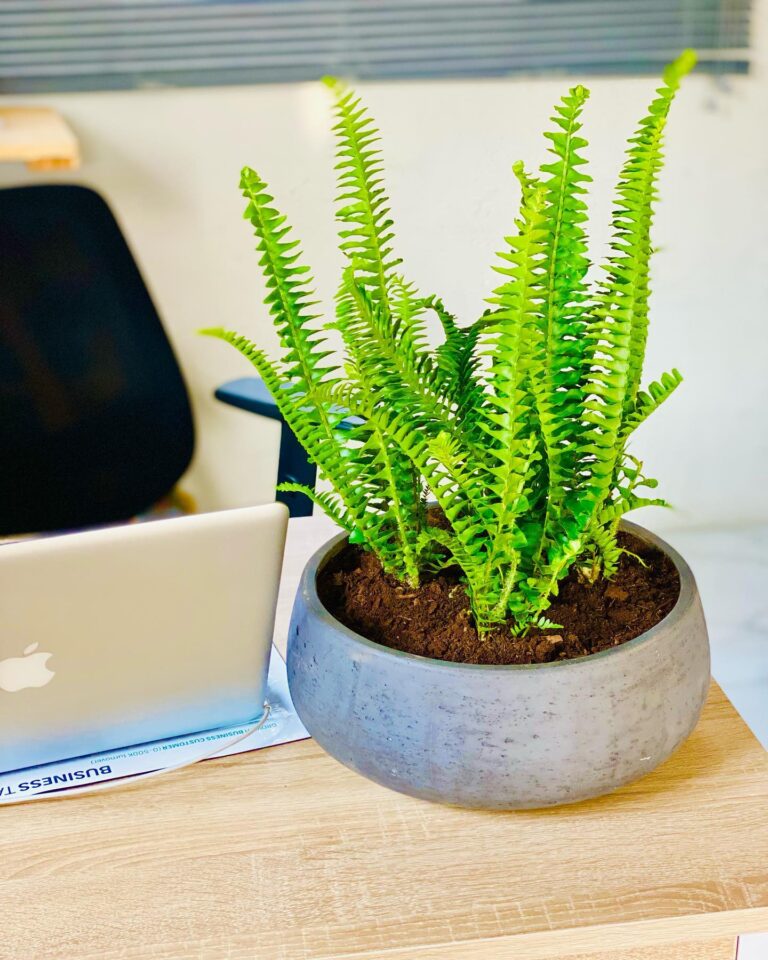
6. Boston Fern (Nephrolepis exaltata ‘Bostoniensis’)
Ferns evolved on the forest floor, so filtered, indirect brightness suits them naturally. Regular misting or a nearby humidifier keeps the fronds from drying at the tips. A north-facing bathroom window is often an ideal spot.
7. English Ivy (Hedera helix)
Trailing stems and lobed leaves give English ivy a classic, timeless look. It tolerates low light comfortably and grows steadily when kept slightly moist. Trim it back occasionally to prevent bare, leggy stems.
8. Chinese Evergreen (Aglaonema spp.)
North Carolina State Extension notes that Chinese evergreens prefer temperatures above 70 degrees Fahrenheit and adapt well to indoor conditions. Green-leaved cultivars handle low light better than variegated types, though both perform reasonably well close to a north window. This is a genuinely forgiving plant for anyone new to indoor gardening.
9. Parlor Palm (Chamaedorea elegans)
This small, elegant palm has been a houseplant favorite since the Victorian era, largely because it tolerates dim, shaded rooms so well. Its feathery fronds bring a soft, tropical texture without demanding bright light. Keep the soil lightly moist rather than soggy.
10. Philodendron Heartleaf (Philodendron hederaceum)
Heart-shaped leaves and fast, trailing growth make this philodendron rewarding to watch develop, even in modest light. It adapts easily and rarely sulks over inconsistent watering. Train it along a shelf or let it spill from a hanging pot.
11. Maidenhair Fern (Adiantum spp.)
Delicate, fan-shaped fronds give this fern an almost lace-like appearance. It prefers the gentle, even brightness of a north window over the harsher light found elsewhere. Consistent humidity is essential, since dry air causes the fine fronds to crisp quickly.
12. Moth Orchid (Phalaenopsis spp.)
The University of Maryland Extension notes that moth orchids adapt well to a variety of growing conditions, including lower light, and a north-facing window can still provide enough brightness for reliable blooming. Water weekly by soaking the roots, then allow complete drainage. Watching the first spike emerge after months of patience remains one of the most satisfying moments in houseplant care.
13. Nerve Plant (Fittonia albivenis)
Ovate leaves lined in red, pink, or white veins make the nerve plant instantly recognizable. It appreciates high humidity and frequent watering, along with the soft, filtered brightness a north window provides. A terrarium setting suits this plant especially well.
14. Aluminum Plant (Pilea cadierei)
Named for the silvery, metallic streaks across its leaves, this plant brings unusual texture to a low-light shelf. It grows quickly and becomes bushy with regular pinching. Some owners simply propagate fresh cuttings every year rather than nursing an older plant.
15. Prayer Plant (Maranta leuconeura)
Leaves fold upward each evening in a motion that genuinely resembles praying hands, a small daily performance I never tire of watching. It thrives in indirect, filtered brightness and consistently moist soil. Avoid letting it dry out completely between waterings.
16. Dracaena (Dracaena fragrans and related species)
Tall, strappy leaves on a woody stem give dracaena real presence as a floor plant. It tolerates low light admirably, though growth slows compared to brighter rooms. Water only once the top inch or two of soil feels dry.
17. Peacock Plant (Calathea makoyana)
Bold, patterned foliage in silver and deep green makes this calathea a striking accent piece. Direct sun will scorch its delicate leaves, so the shade of a north window is genuinely protective rather than limiting. Keep humidity steady to prevent curling edges.
18. Never-Never Plant (Ctenanthe oppenheimiana)
This evergreen perennial enjoys the partial shade a north-facing window naturally provides. Its long, ovate leaves display striking variegation depending on the cultivar. Keep the soil evenly moist without letting the pot sit in standing water.
19. Peperomia (Peperomia obtusifolia and related species)
Thick, fleshy leaves store moisture efficiently, making peperomia forgiving of occasional missed waterings. It stays compact, which suits smaller windowsills and shelves. Low, indirect light keeps its rounded leaves looking full and healthy.
20. Spider Plant (Chlorophytum comosum)
Arching, striped foliage and dangling plantlets make this a rewarding plant to propagate and share. It tolerates a wide light range, including the dimmer conditions of a north room. New gardeners often choose it first for exactly this flexibility.
21. Rex Begonia (Begonia rex-cultorum)
Grown almost entirely for its dramatic, multicolored leaves rather than its small flowers, rex begonia adds real visual interest to shaded corners. According to the University of Connecticut, this plant does still produce blooms, though most owners value the foliage far more. Avoid direct sun, which can fade its rich coloring.
22. Peacock Fern (Selaginella spp.)
Also known as spike moss, this low-growing plant forms a dense, mossy carpet in humid, shaded conditions. It suits terrariums and closed containers particularly well. Keep the soil consistently damp, since this plant dislikes drying out even briefly.
23. Bird’s Nest Fern (Asplenium nidus)
Wavy, ribbon-like fronds emerge from a central rosette, giving this fern an unusual, sculptural form. It tolerates low light far better than many other ferns, making it well suited to a shaded room. Mist occasionally and avoid touching the delicate new fronds as they unfurl.
24. Lucky Bamboo (Dracaena sanderiana)
Despite the name, this plant is not a true bamboo but a member of the dracaena family, prized for its architectural, stalk-like stems. It grows happily in water or soil, needing only indirect light to thrive. Many people keep it purely for the symbolic good fortune it is believed to represent.
25. Swiss Cheese Vine (Monstera adansonii)
A smaller relative of the more famous Monstera deliciosa, this vine develops the same signature leaf perforations on a more compact scale. It tolerates lower light than its larger cousin, though growth will be slower and leaves smaller. Give it a moss pole or trellis to climb for the fullest look.
North vs. East, South, and West: A Quick Comparison
Seeing how north light compares to the other three exposures makes plant selection much easier.
South-facing windows receive the strongest and longest light of the day, often exceeding 500 foot-candles right at the glass. This intensity suits cacti, succulents, and citrus, but it can quickly scorch shade-adapted foliage.
East-facing windows catch a few hours of gentle morning sun before settling into medium, indirect brightness for the rest of the day. Many popular tropical houseplants list this exposure as their ideal spot.
West-facing windows collect the afternoon sun, which tends to run hotter than morning light because the surrounding air has already warmed. Plants here need slightly more heat tolerance than those in a north or east room.
North-facing windows, by contrast, never receive direct sun at all. What they lack in intensity, they make up for in consistency, since the light level barely changes from morning to evening. This steady, glare-free environment is precisely why understory and forest-floor plants perform so well here.
How to Confirm Your Window Faces North
Open a compass app on your phone and stand at the window. If the arrow points toward the glass, you have a true north exposure.
A slightly angled window, such as northeast or northwest, will bring a touch of gentle morning or evening sun. That small addition of light expands your plant options even further, though every plant on this list will still perform well in a straight north room.
ALSO READ: 25 Best Plants for a West-Facing Window (Afternoon Sun Lovers)
Choosing Plants by Confidence Level
If You Are New to Houseplants
Start with snake plant, ZZ plant, pothos, or cast iron plant. These four are widely regarded as some of the most forgiving low-light plants available, tolerating irregular watering without serious harm.
If You Want Texture and Drama
Consider bird’s nest fern, peacock plant, rex begonia, or nerve plant. These varieties bring bold patterns and unusual leaf shapes into a shaded room, without needing bright light to display their best colors.
If You Want Something That Blooms
Peace lily and moth orchid are the two plants on this list most likely to flower reliably in a true north exposure, offering a welcome burst of color in an otherwise foliage-heavy room.
Care Habits That Matter Most in Low Light
Water less often than you think. Plants in dim rooms use water more slowly, and overwatering remains the leading cause of houseplant decline in shaded spaces.
Keep leaves dust-free. A layer of dust can meaningfully reduce the small amount of light reaching the leaf surface, so wipe foliage gently every few weeks with a damp cloth.
Rotate for even growth. Even in low light, plants lean toward the brightest available source, so a quarter turn every couple of weeks keeps growth balanced.
Watch for stretching. Long, thin stems with widely spaced leaves signal a plant is reaching for more light than it currently receives, and may need to move closer to the glass.
Consider supplemental light in winter. Daylight hours shrink considerably during colder months, and a simple grow light can bridge the gap without much expense or effort.
A Note on Indoor Air Quality
Many people ask whether shade-loving houseplants offer any real air-quality benefit. NASA’s original research, conducted in partnership with the Associated Landscape Contractors of America, evaluated the leaves, roots, soil, and associated microorganisms of common indoor plants for their ability to reduce pollutants such as benzene, formaldehyde, and trichloroethylene in sealed chambers.
Later independent reviews suggest the effect is far smaller in an average home than in a sealed laboratory environment, since normal air exchange with the outdoors already removes many of these compounds. Even so, a shaded room filled with healthy foliage brings a calm, grounding quality that numbers alone cannot fully capture.
Common Mistakes to Avoid in a North-Facing Room
Choosing sun-loving plants out of habit. Succulents, cacti, and most flowering plants purchased at a garden center are bred for bright light and will slowly decline in a true north exposure, no matter how carefully you water them.
Overwatering to compensate for slow growth. Lower light naturally slows a plant’s metabolism, so it uses less water than it would in a sunnier room. Sticking to a rigid weekly watering schedule is one of the fastest ways to cause root rot here.
Placing plants too far from the glass. Light intensity drops sharply with distance, even in a bright-feeling room. Keep low-light plants within a few feet of the window rather than pushing them into a dim back corner.
Skipping leaf cleaning. Dust buildup matters more in low light than in bright light, since every available unit of brightness counts. A quick wipe every few weeks keeps foliage working at full capacity.
Expecting fast growth. Plants in low light simply grow more slowly, and that is normal rather than a sign of poor health. Patience, not more water or fertilizer, is usually the right response.
Frequently Asked Questions
Can any plant truly survive with zero direct sunlight? Yes. Plants such as cast iron plant, ZZ plant, and snake plant evolved as understory species and are genuinely adapted to indirect, filtered brightness rather than direct sun.
Is a north-facing window bad for plants? Not at all. It simply supports a different category of plant, generally shade-tolerant foliage species rather than flowering or succulent varieties that need intense light.
How close to the window should low-light plants sit? Most plants on this list perform best within two to four feet of the glass, based on the foot-candle ranges documented by University of Illinois Extension and Colorado State University Extension.
Do north-facing plants need less water than others? Generally yes. Slower growth in lower light means these plants use water at a reduced rate, so the soil should be checked before each watering rather than following a fixed schedule.
Can I add a grow light to boost a north-facing room? Absolutely. A simple LED grow light on a timer can supplement natural brightness, particularly through the shorter days of winter.
Final Thoughts
A north-facing window rewards patience rather than intensity. The plants on this list were shaped, over countless generations, to live beneath a forest canopy where bright, direct sun rarely reaches the ground.
Choose two or three to begin with, watch how they settle in, and let your collection grow from there. In my experience, a well-planted north room ends up feeling calmer and more restful than any sun-drenched windowsill ever could.
There is a particular kind of satisfaction in watching a plant thrive in a spot most people would have written off as too dim. It challenges the assumption that more light always means better growth, and it rewards a slower, more observant style of care.
Give these twenty-five plants a fair chance, and your north-facing room may well become the most peaceful corner of your home.
References
- University of Minnesota Extension. Lighting for Indoor Plants and Starting Seeds. https://extension.umn.edu/planting-and-growing-guides/light-requirements-houseplants
- University of Illinois Extension. Make Sure Houseplants Get Enough Light This Winter. https://extension.illinois.edu/blogs/over-garden-fence/2021-12-20-make-sure-houseplants-get-enough-light-winter
- Colorado State University Extension / PlantTalk Colorado. Interior Plants and Light. https://planttalk.colostate.edu/topics/houseplants/1352-interior-plants-light/
- Missouri Botanical Garden. Plant Finder: Aspidistra elatior. https://www.missouribotanicalgarden.org/PlantFinder/PlantFinderDetails.aspx?kempercode=b579
- New York Botanical Garden. Houseplant Basics Research Guide. https://libguides.nybg.org/houseplantbasics
- NASA Spinoff. Toxin-Eating Plants. https://spinoff.nasa.gov/Toxin_Eating_Plants
- NASA Technical Reports Server. A Study of Interior Landscape Plants for Indoor Air Pollution Abatement. https://ntrs.nasa.gov/citations/19930072988

Tim M Dave is a gardening expert with a passion for houseplants, particularly cacti and succulents. With a degree in plant biology from the University of California, Berkeley, he has vast experience in gardening. Over the years, he has cultivated a vast collection of desert plants and learned a great deal about how to grow and care for these unique companions.