20 Trees Native to Maine (With Growing Details)
Maine earns its nickname (Pine Tree State) honestly. About 89% of the state is covered in forest — roughly 17.4 million acres — making it the most heavily wooded state in the entire country. That is more forest cover than any other U.S. state can claim, and it is why I always tell people that in Maine, the trees are not scenery. They are the state.
Maine’s forests are not just pretty. They support a $8 billion-plus forest products economy, according to state forestry data, and provide habitat for moose, black bear, and hundreds of bird species.
Nearly 92% of that forestland is privately owned, which means everyday landowners play a direct role in keeping these species healthy.
Understanding which trees are truly native — as opposed to planted ornamentals or invasive newcomers — also helps with conservation. Native species support local insects, birds, and soil systems in ways that imported trees simply cannot replicate.
Now, let’s look at the list of 20 trees native to maine.
Native Conifers of Maine
1. Eastern White Pine
The eastern white pine is Maine’s official state tree, a title it has held since 1945. It is also the tallest tree species in eastern North America, historically reaching over 200 feet before colonial-era logging removed most of the old-growth giants.
You can identify it by its soft, bluish-green needles bundled in groups of five — a nice memory trick, since “white” has five letters. The bark is smooth and gray when young, developing deep, dark ridges with age.
This pine appears on Maine’s state flag, seal, and quarter. Its cone and tassel were adopted as the official state flower back in 1895, which is a rare honor for a conifer rather than a flowering plant.
Today it still dominates much of southern Maine, often reaching 100 feet with trunks over two feet wide in managed stands.
2. Red Spruce
Red spruce thrives in Maine’s cooler, higher-elevation forests and along the coast, where salt spray and fog do not bother it much. The needles are short, stiff, and four-sided, and they tend to curve slightly upward on the twig.
I find red spruce easiest to spot by its reddish-brown bark, which flakes off in small, thin scales. It is a slow grower, but that slow growth produces dense, resonant wood — the same wood prized for acoustic guitar tops and piano soundboards.
Red spruce forms much of the classic “spruce-fir” forest type that blankets Maine’s interior and northern regions, working alongside balsam fir as one of the state’s most important pulpwood species.
3. Balsam Fir
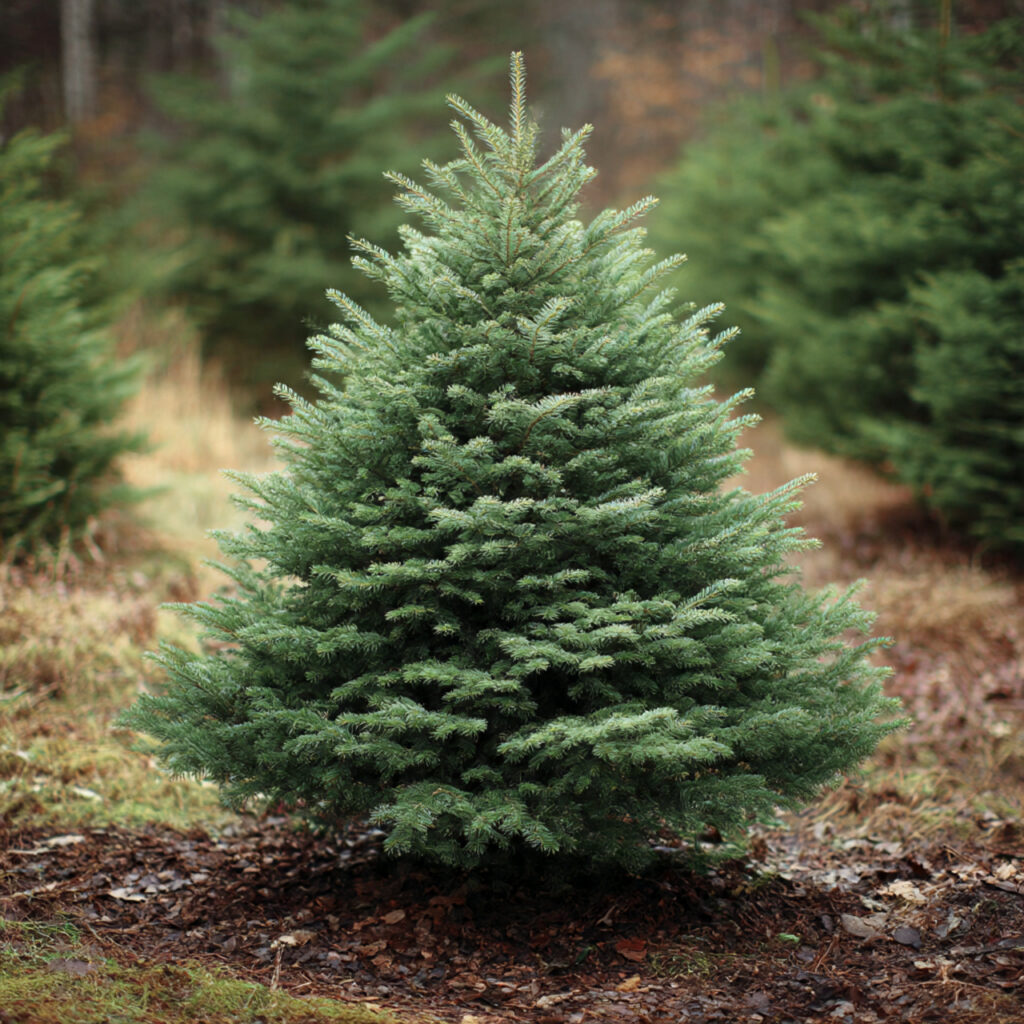
If you have ever bought a Christmas tree, there is a good chance it was a balsam fir. Maine remains one of the top Christmas tree-producing states in the country, and balsam fir is the industry’s backbone thanks to its fragrance and excellent needle retention.
The needles are flat, soft, and dark green with two pale stripes underneath. Crush one and you will get that unmistakable “Christmas tree” scent instantly.
Balsam fir has smooth gray bark dotted with resin blisters. Squeeze one gently and sticky sap oozes out — a trait kids especially love discovering on a forest walk.
4. Eastern Hemlock
Eastern hemlock is a shade-loving conifer that often grows in cool ravines and along stream banks. It can live for over 500 years, and some Maine specimens are believed to be among the oldest trees in the Northeast.
Its needles are short, flat, and arranged in flat sprays, with two white lines running underneath each one. The tips of hemlock branches droop gracefully, giving the whole tree a soft, feathery silhouette.
Sadly, hemlock woolly adelgid, an invasive insect, now threatens hemlock stands in southern Maine. Foresters and university researchers are actively monitoring its spread northward.
5. White Spruce
White spruce prefers cooler climates and is common along Maine’s northern and coastal edges, often mixed with balsam fir and red spruce. Its needles have a distinctive, somewhat unpleasant odor when crushed, which locals sometimes call “cat spruce” or “skunk spruce” because of it.
The needles are blue-green, four-sided, and stiff, radiating around the twig in every direction. Cones are light brown and hang downward, usually two to two-and-a-half inches long.
This tree tolerates poor, rocky soil better than most conifers, which is part of why it thrives along Maine’s rugged coastline and islands.
6. Black Spruce
Black spruce is the tree of Maine’s bogs and wetlands. It grows in dense, stunted stands in peatlands where few other trees can survive, sometimes reaching maturity at barely 20 feet tall despite being decades old.
Its needles are short, stiff, and blue-green, similar to white spruce but generally shorter. The cones are small, round, and often stay on the branches for years, giving mature trees a somewhat cluttered look.
Black spruce wood is valued for pulp and paper production, and the tree plays an outsized role in Maine’s wetland carbon storage.
7. Northern White Cedar
Also called arborvitae, northern white cedar grows in swamps, along riverbanks, and on limestone-rich soils across Maine. Its flattened, scale-like foliage forms fan-shaped sprays rather than individual needles.
The bark is thin, reddish-brown, and peels in narrow vertical strips. This is one of the most rot-resistant native woods in Maine, historically used for fence posts, canoe ribs, and log cabin construction by both Wabanaki communities and early settlers.
White-tailed deer rely heavily on cedar stands for winter shelter and browse, making these groves important wildlife habitat during Maine’s harsh winters.
8. Tamarack (American Larch)
Tamarack is Maine’s only native conifer that loses its needles every fall — a trait that surprises a lot of visitors. Before dropping, the soft needles turn a striking golden yellow, lighting up wetland edges across the state each October.
Needles grow in soft clusters along short spur shoots, giving the branches a slightly fuzzy appearance in summer. The bark is scaly and grayish-brown.
Tamarack favors wet, boggy ground, often growing alongside black spruce. Its wood is exceptionally durable, historically used for boat framing and railway ties.
Native Hardwoods of Maine
9. Sugar Maple
Sugar maple is the tree behind Maine’s maple syrup industry, which produced roughly 709,000 gallons in a recent record season, ranking Maine third in the nation behind Vermont and New York. Maine sugarmakers also recorded the highest yield per tap of any state that year, at .375 gallons per tap.
You can identify sugar maple by its classic five-lobed leaf, the same shape featured on the Canadian flag. Fall color runs from brilliant orange to deep red.
The bark is gray and develops long, irregular vertical plates as the tree ages. Sugar maples can live over 300 years and are often the centerpiece of Maine’s autumn tourism.
10. Red Maple
Red maple is arguably Maine’s most adaptable native tree, thriving in swamps and dry uplands alike. It is often the very first tree to show fall color, sometimes turning brilliant red in late August while everything else is still green.
Its leaves have three main lobes with reddish stems, and the tree produces small red flowers in early spring — one of the first blooms of the season in Maine woodlands.
Red maple wood, sometimes called “soft maple,” is used for flooring, furniture, and pulpwood, and the tree is a major source of nectar for early pollinators.
11. Paper Birch
Paper birch, Maine’s iconic “canoe birch,” is instantly recognizable by its bright white, papery bark that peels in thin horizontal strips. Wabanaki peoples historically used its bark to build canoes, containers, and wigwam coverings.
The leaves are oval with a pointed tip and doubly toothed edges. In fall they turn a clear, golden yellow that stands out beautifully against dark evergreen backdrops.
Paper birch is relatively short-lived compared to other Maine natives, often reaching only 80 to 100 years, but it regenerates quickly after fire or logging disturbance, making it an important pioneer species.
12. Yellow Birch
Yellow birch is the largest of Maine’s native birches and can live for over 300 years. Its bark starts out shiny and bronze-yellow, peeling in thin curls, then darkens and roughens into plates as the tree matures.
Crush a twig and you will notice a faint wintergreen scent — a handy identification trick that separates it from paper birch.
Yellow birch often germinates on rotting logs or “nurse stumps,” so mature trees in old forests sometimes appear to stand on stilted, exposed roots where the original log has long since decayed away.
13. American Beech
American beech has smooth, silvery-gray bark that stays smooth even on old, mature trees, unlike most hardwoods. Unfortunately, beech bark disease, caused by a combination of insect and fungal invaders, has damaged many Maine beech stands over recent decades.
Its leaves are oval, sharply toothed, and turn a warm golden bronze in fall, often clinging to young trees well into winter — a trait called marcescence.
Beechnuts are an important fall food source for black bear, deer, and wild turkey, which is part of why healthy beech stands matter so much to Maine’s wildlife populations.
14. White Ash
White ash grows tall and straight in Maine’s rich, well-drained forest soils, historically valued for tool handles, baseball bats, and Wabanaki basket-making traditions. Its compound leaves are made up of five to nine leaflets arranged opposite each other on the stem.
Fall color runs through shades of yellow, purple, and maroon, sometimes on the same tree at once.
Emerald ash borer, an invasive beetle, now threatens white ash across Maine, and state agencies actively track its spread. This makes documenting and protecting healthy stands more urgent every year.
15. Northern Red Oak

Northern red oak is Maine’s most common native oak, typically found in the state’s warmer southern and central regions. Its leaves have seven to eleven pointed, bristle-tipped lobes, distinguishing it from the rounder lobes of white oak species farther south.
The bark features distinctive shiny, vertical stripes running down darker ridges, sometimes described as looking like ski trails.
Red oak acorns take two years to mature and are a critical fall food source for deer, turkey, and squirrels. The wood is prized for furniture and flooring throughout New England.
16. Quaking Aspen
Quaking aspen gets its name from leaves that tremble in even the lightest breeze, thanks to flattened leaf stems that let them twist freely. The bark is smooth and pale greenish-white, often marked with dark horizontal scars.
This fast-growing pioneer species is usually among the first trees to colonize open or burned land in Maine, sometimes in dense, genetically identical clonal groves that all sprout from a single shared root system.
Ruffed grouse and beavers rely heavily on quaking aspen for food, making it a quiet but essential player in Maine’s wildlife food web.
17. Bigtooth Aspen
Bigtooth aspen closely resembles its cousin, quaking aspen, but its leaves have larger, more irregular teeth along the edges. It also tends to grow slightly taller and live a bit longer than quaking aspen.
Like its relative, bigtooth aspen colonizes disturbed and open ground quickly, often appearing in old fields and recently logged areas across Maine.
Its soft wood is commonly used for pulp, particleboard, and matchsticks, and its early spring catkins provide one of the first pollen sources for native bees each year.
18. Black Cherry
Black cherry grows scattered throughout Maine’s hardwood forests, prized commercially for its rich, reddish-brown wood used in fine furniture and cabinetry. It is one of the more valuable native hardwoods per board foot in the entire Northeast.
The bark on mature trees is famously described as looking like “burnt potato chips” — dark, scaly, and rough. Younger bark is smoother with distinct horizontal lines called lenticels.
Small white flowers bloom in drooping clusters each spring, followed by dark red-to-black cherries that songbirds and small mammals eat eagerly through late summer.
19. American Elm
American elm once lined streets across Maine towns before Dutch elm disease devastated the species starting in the mid-20th century. Wild native elms still persist, particularly in floodplains and river valleys, though large specimens are now uncommon.
Its leaves are oval, sharply toothed, and slightly asymmetrical at the base — a small but reliable identification clue.
Disease-resistant elm varieties are now being reintroduced in parts of Maine through conservation programs, offering hope that this once-dominant native shade tree can slowly return to more landscapes.
20. Striped Maple (Moosewood)
Striped maple, often called moosewood, is a small understory tree common in Maine’s cool, shaded forests. Its bark shows unmistakable green and white vertical stripes, making it one of the easiest native trees in the state to identify at a glance.
The large, three-lobed leaves resemble a goose foot in outline, and they turn a clear pale yellow in autumn.
As the name “moosewood” suggests, moose and deer browse heavily on its twigs and bark in winter, making this small tree a quietly important food source in Maine’s northern forests.
Where to See Native Maine Trees in Person
If you want to see many of these species in one place, the Eastern Maine Native Plant Arboretum in Bangor, run through University of Maine Cooperative Extension, displays 24 native tree and shrub species in a managed landscape setting. It is a genuinely useful stop before heading out on a longer hike.
Acadia National Park, Baxter State Park, and the vast North Maine Woods also offer excellent, accessible opportunities to see these species growing in their natural range.
Final Thoughts
Learning to identify these 20 trees native to Maine changed how I look at every drive through the state. What used to be a green blur out the car window now reads like a story — spruce-fir stands giving way to sugar maple ridges, paper birch marking old disturbances, cedar swamps signaling wet ground ahead.
Maine’s forests are not static. Invasive pests, changing climate patterns, and shifting land use all affect which species thrive where. Getting familiar with these native trees now is one small way to notice those changes as they happen.
References
- Maine Department of Agriculture, Conservation and Forestry — Eastern White Pine Fact Sheet: https://www.maine.gov/dacf/mfs/publications/handbooks_guides/forest_trees/pdf/eastern_white_pine.pdf
- Maine Secretary of State — State Tree: White Pine: https://www.maine.gov/sos/kids/about/symbols/tree
- USDA Forest Service — Forests of Maine, 2021 Resource Update: https://www.fs.usda.gov/nrs/pubs/ru/ru_fs366.pdf
- University of Maine Cooperative Extension — Gardening to Conserve Maine’s Native Landscape (Bulletin #2500): https://extension.umaine.edu/publications/2500e/
- University of Maine Cooperative Extension — Native Trees and Shrubs for Maine Landscapes: https://extension.umaine.edu/publications/natural-resources/
- University of Maine System — The Economic Contribution of Maine’s Maple Products Industry: https://www.maine.edu/multi-institution/wp-content/uploads/sites/88/2024/09/Maple-Impact-Final-1.pdf
- USDA National Agricultural Statistics Service — Northeastern Region Maple Syrup Report: https://www.nass.usda.gov/Statistics_by_State/New_England_includes/Publications/Current_News_Release/2023/Northeast-2023-Maple-Syrup-Report.pdf

Tim M Dave is a gardening expert with a passion for houseplants, particularly cacti and succulents. With a degree in plant biology from the University of California, Berkeley, he has vast experience in gardening. Over the years, he has cultivated a vast collection of desert plants and learned a great deal about how to grow and care for these unique companions.