Fall Fiesta Maple Pros and Cons (With Care Tips)
The Fall Fiesta maple is a patented cultivar of the sugar maple, scientifically named Acer saccharum ‘Bailsta’, and sold under the trademark Fall Fiesta®. It carries U.S. Plant Patent PP 11119, developed and introduced by Bailey Nurseries.
It is not a hybrid of red and silver maple, despite what some retail listings imply. Purdue University’s arboretum database and the Missouri Botanical Garden both classify it plainly as a sugar maple selection.
I think this distinction matters. Sugar maples behave differently from red maples, especially with soil pH and salt tolerance, and buyers deserve to know which family they are actually planting.
Quick snapshot of the tree:
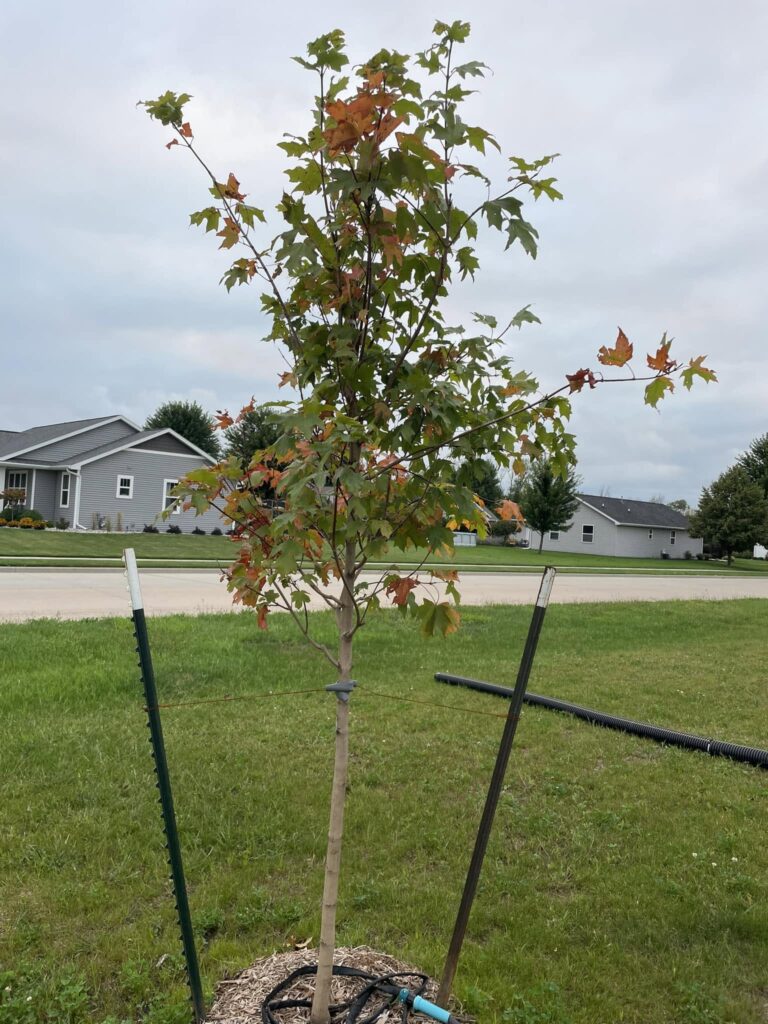
- Mature height: roughly 50 to 75 feet
- Mature spread: roughly 30 to 45 feet
- Hardiness zones: 3 through 8, tolerating temperatures down to about -30°F
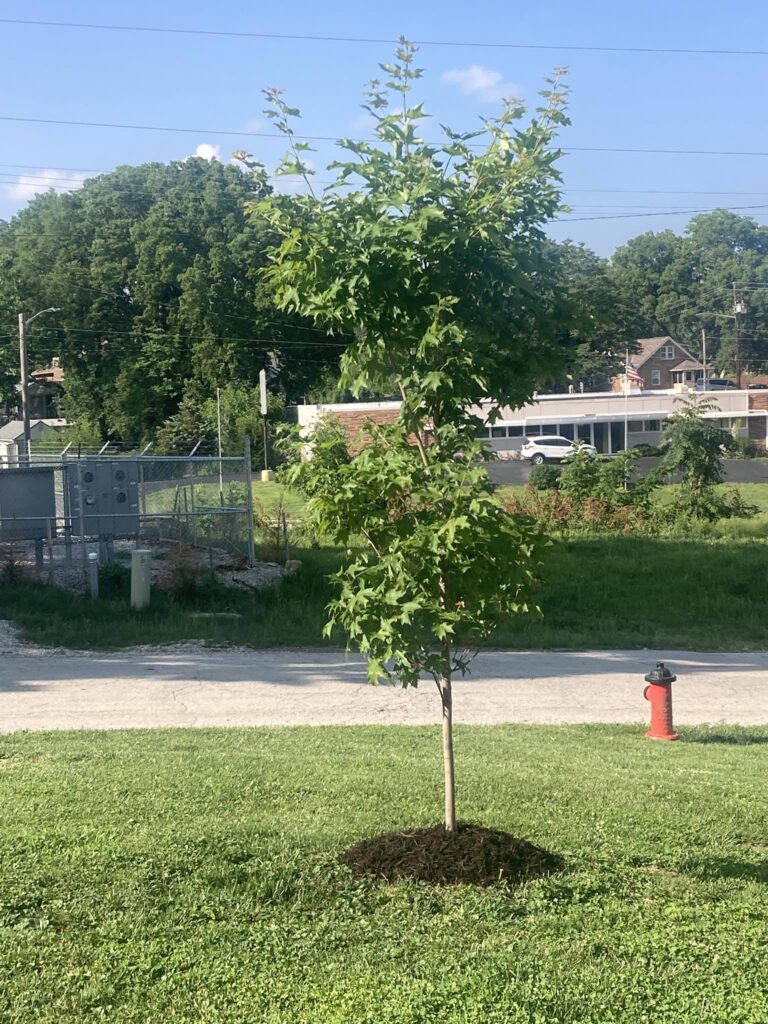
- Growth habit: upright, broadly oval, and symmetrical
- Fall color: brilliant orange-red, sometimes with yellow mixed in
Now let’s get into whether those numbers translate into a good fit for your property.
The Pros of Planting a Fall Fiesta Maple
1. The Fall Color Is Genuinely Spectacular
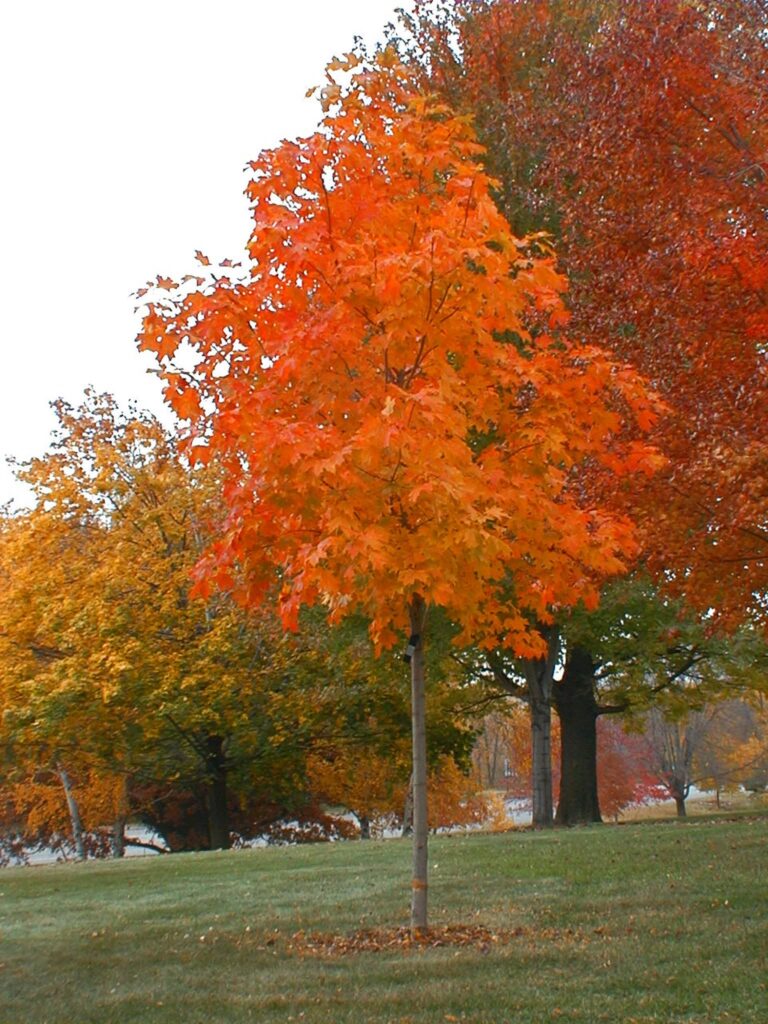
This is the entire reason the tree exists. Breeders selected ‘Bailsta’ specifically because it produces more orange and red tones than a typical sugar maple, which usually leans more yellow.
Nursery sources describe the color as long-lasting compared to other sugar maple cultivars. I have seen it hold color for close to three weeks in good autumn conditions, which is longer than many street trees manage.
Sugar maples as a species are largely responsible for New England’s reputation for fall foliage tourism, according to the Missouri Botanical Garden’s plant database. Fall Fiesta simply concentrates that trait into a more reliable package.
2. Faster Growth Than a Standard Sugar Maple
Regular sugar maples have a reputation for being slow growers. Fall Fiesta breaks that pattern.
One municipal parks department fact sheet lists its growth rate at about 24 inches per year, which is considered fast for this species. That means less waiting for shade compared to a typical seedling-grown sugar maple.
I find this one of the most underrated advantages. Homeowners often want shade within a decade, not within thirty years, and this cultivar actually delivers on that timeline.
3. Strong Resistance to Heat, Drought, and Leaf Scorch
Multiple nursery and horticultural sources note that Fall Fiesta shows resistance to summer heat, wind, and drought stress once it is established. It also resists leaf scorch, a common problem where maple leaves brown and curl at the edges during hot, dry summers.
That resilience matters more each year. Summers have been getting hotter across much of the maple’s native range, and a tree that can shrug off heat stress is a safer long-term investment.
4. A Symmetrical, Low-Maintenance Shape
The tree naturally grows into an upright, broadly oval crown with balanced branching. This symmetry reduces the need for corrective pruning compared to trees that grow lopsided or leggy.
I appreciate this because a naturally well-shaped tree saves money over its lifetime. Fewer pruning visits mean lower long-term maintenance costs for homeowners and municipalities alike.
ALSO READ: Japanese Maple Bonsai: History, Styling, and Caring for Acer palmatum in Miniature
5. Strong Branch Structure Reduces Storm Damage
Some nursery sources highlight the tree’s resistance to breakage, crediting its strong branching pattern. This is a real safety consideration, since falling limbs from weak-wooded trees are a leading cause of storm-related property damage.
Compared to fast-growing but brittle species like silver maple, Fall Fiesta’s combination of speed and structural strength is a rare pairing.
6. Excellent Winter Hardiness
Fall Fiesta tolerates temperatures as low as -30°F, according to nursery hardiness data, placing it comfortably in USDA zone 3. It also shows resistance to sun scald and frost cracking, two common winter injuries on thin-barked young trees.
This makes it a realistic choice for colder northern states and Canadian border regions, not just moderate climates.
7. Wildlife and Ecological Value
Sugar maples support a wide range of wildlife. The USDA Forest Service notes that sugar maple stands cover roughly 31 million acres, about 9 percent of hardwood forest land in the United States, making it one of the most ecologically significant hardwoods on the continent.
Its seeds, called samaras, feed birds and small mammals. The dense canopy also provides nesting cover, something I always mention to clients who care about backyard biodiversity.
8. A Genuine Connection to Maple Syrup Heritage
Sugar maples are the backbone of the North American maple syrup industry. While Fall Fiesta is grown mainly as an ornamental rather than a syrup producer, it still carries the sap sugar content typical of the species.
There is something satisfying about planting a tree with that kind of cultural history, even if you never plan to tap it yourself.
The Cons of Planting a Fall Fiesta Maple
1. It Struggles in Alkaline or Compacted Soil
This is the biggest limitation, and I think it gets buried in most sales listings. Sugar maples strongly prefer acidic to neutral, well-drained soil.
A parks department fact sheet is blunt about this: in high-pH soil, the tree can develop chlorosis, where leaves turn yellow with green veins from poor iron uptake. Adding iron will not fix it, since the real cause is the soil chemistry itself.
If your yard has heavy clay, poor drainage, or alkaline soil common in arid regions, this tree may fight you for its entire life.
2. Poor Tolerance for Road Salt and Urban Pollution
Municipal reference sheets list Fall Fiesta as not very tolerant of road salt, soil compaction, or pollution. That rules it out as a good street tree in northern climates where winter de-icing salt is standard practice.
I would steer anyone living along a heavily salted road or a compacted urban lot toward a different species, even though the fall color is tempting.
3. Cultivars May Have Shorter Lifespans Than Wild Sugar Maples
Straight species sugar maples commonly live over a hundred years, with some documented specimens surviving more than four centuries, based on regional forestry references. Extension horticulturists have noted that named cultivars like Fall Fiesta, bred partly for faster growth, may not match that longevity, with estimates sometimes closer to 80 years.
Faster growth and long life are often a trade-off in trees, and this cultivar seems to lean toward speed.
ALSO READ: Red Maple vs Japanese Maple: Identification, Size, Growth Rate, and More
4. It Still Needs Deep, Undisturbed Root Space
Sugar maples generally dislike restricted root zones and heavy foot or vehicle traffic near the base. Extension databases specifically flag this species as sensitive to compacted soils.
If you are planting near a driveway, sidewalk, or frequently mowed lawn area with compacted subsoil, expect slower establishment and possible decline over time.
5. Susceptible to Common Maple Pests and Diseases
Like most Acer species, Fall Fiesta can face pressure from aphids, scale insects, borers, and leafhoppers. Verticillium wilt, a serious soil-borne fungal disease affecting the vascular system, is also a documented risk across maple species generally, and there is no cure once a tree is infected.
Good site selection and cultural care reduce this risk substantially, but no maple, including this one, is pest-proof.
6. It Needs Patience Before the Show Truly Begins
Even with above-average growth speed, sugar maples are still fundamentally a long-lived, slower-maturing species compared to trees like red maple or silver maple. Missouri Botanical Garden notes that sugar maples grow relatively slowly overall, just somewhat faster in their first 35 years.
Don’t expect a full, dramatic canopy in year two or three. This is a tree for people planting with the next decade or two in mind.
7. Availability and Cost Can Be Higher Than Generic Maples
Because it is a patented cultivar (PP 11119), Fall Fiesta trees are typically sold as licensed nursery stock rather than grown freely from seed. That usually means a higher price tag than an unnamed sugar maple seedling, and availability can vary by region and season.
If budget is tight, this is worth factoring in before falling for the fall photos.
8. Not Ideal for Every Region
While hardy down to -30°F, sugar maples as a species are not well suited to hot, humid coastal or deep southern climates. University of Florida’s tree fact sheets on maple cultivars focus almost entirely on red maple selections for southern landscapes, which is a strong hint about where sugar maples like Fall Fiesta perform best: the northern and midwestern United States and similar temperate zones.
Fall Fiesta Maple: Quick Pros and Cons Summary
Pros:
- Outstanding, long-lasting orange-red fall color
- Faster growth rate than typical sugar maples
- Strong drought, heat, and leaf scorch resistance
- Naturally symmetrical, low-maintenance shape
- Sturdy branching that resists storm breakage
- Excellent cold hardiness down to zone 3
- High wildlife and ecological value
- Cultural link to the maple syrup tradition
Cons:
- Poor performance in alkaline or compacted soil
- Low tolerance for road salt and pollution
- Possibly shorter lifespan than wild sugar maples
- Sensitive root zone requirements
- Vulnerable to common maple pests and Verticillium wilt
- Still a patient, long-term planting project
- Higher price due to patented status
- Best suited to northern and midwestern climates, not the deep south
Fall Fiesta Maple vs. Other Popular Maple Cultivars
People often compare Fall Fiesta against other named maple selections before buying. I think this context helps put its pros and cons in perspective.
Fall Fiesta vs. October Glory (Acer rubrum): October Glory is a red maple cultivar, not a sugar maple. It tolerates wetter, more acidic soils and handles urban stress better, but its fall color, while reliable, tends to arrive later and is generally more red than the mixed orange-red-yellow display of Fall Fiesta.
Fall Fiesta vs. Red Sunset (Acer rubrum ‘Red Sunset’): University of Florida’s fact sheet describes Red Sunset as a fast-growing red maple with showy orange and red fall color, and it also attracts birds and squirrels through its fruit. It adapts to a wider range of soil pH than Fall Fiesta, making it a better fit for regions with alkaline ground.
Fall Fiesta vs. Sun Valley Maple: Sun Valley is another red maple cultivar known for resistance to Japanese beetles and a symmetrical crown. Nursery comparisons place it alongside Fall Fiesta as a strong performer, though Sun Valley again benefits from red maple’s broader soil tolerance.
Fall Fiesta vs. straight-species Sugar Maple: The wild-type sugar maple is slower growing but arguably longer-lived, with some individual trees documented at well over a century old, and a handful of extreme cases exceeding four hundred years according to regional forestry references. Fall Fiesta trades some of that longevity for faster establishment and a more consistent, richer fall color.
The pattern that emerges is simple. Red maple cultivars tend to be more soil-forgiving, while Fall Fiesta and other sugar maple selections reward you with arguably the more classic, richer autumn palette, provided the soil chemistry cooperates.
ALSO READ: The Japanese Maple Tree (Acer palmatum): History, Varieties, Problems and Care
Common Mistakes People Make When Planting Fall Fiesta Maple
I have seen the same few mistakes repeated often enough that they are worth listing directly.
Skipping the soil test. Many buyers fall for the fall color photos and plant first, test later. By the time chlorosis symptoms appear, the tree has already been stressed for a season or more.
Planting too close to pavement. Sidewalks, driveways, and patios compact the soil nearby and restrict root expansion. Sugar maples are particularly sensitive to this, based on extension horticulture guidance, and struggling roots often show up later as canopy dieback.
Over-mulching against the trunk. Piling mulch directly against the bark, sometimes called a mulch volcano, traps moisture against the trunk and invites rot and pests. Mulch should form a flat ring several inches away from the trunk, not a mound touching it.
Ignoring winter salt exposure. Homeowners in snowy climates sometimes plant this tree near a driveway or street without accounting for salt spray and runoff. Given its documented low salt tolerance, this single decision can shorten the tree’s healthy lifespan considerably.
Expecting instant shade. Even with an above-average growth rate for a sugar maple, this is still not a poplar or willow. Realistic expectations save a lot of frustration in year one and two.
Where Fall Fiesta Maple Fits Best in a Landscape
This tree performs best as a specimen or shade tree in open lawns, parks, and larger residential yards where its 30 to 45 foot spread has room to develop without crowding structures or other trees.
It also works well lining wider streets or boulevards in regions where winter salting is minimal, since its symmetrical form and strong branch structure suit formal, uniform plantings. I would avoid narrow tree lawns beside heavily salted roads, for the reasons already covered above.
Because of its wildlife value, it pairs nicely with native shrub borders or naturalized landscape edges, giving birds and small mammals both canopy cover and a seasonal seed source from its samaras.
How to Help a Fall Fiesta Maple Thrive
If you have decided the pros outweigh the cons, a bit of preparation goes a long way. Soil testing before planting is the single most useful step, since it tells you upfront whether your pH will cause chlorosis problems later.
Choose a site with well-drained, slightly acidic soil and enough open space for the roots to spread without competing against a driveway or sidewalk. Avoid areas next to roads that get heavy winter salt treatment.
Water deeply and consistently during the first two to three years while the root system establishes. After that, this cultivar’s drought tolerance should carry it through most dry spells with minimal fuss.
Keep mulch a few inches away from the trunk itself, but spread it generously over the root zone. This protects surface roots from compaction, something extension horticulturists repeatedly flag as a risk for sugar maples.
Is the Fall Fiesta Maple Right for You?
I will be honest: if you live somewhere with alkaline soil, heavy road salt exposure, or very limited planting space, I would look at a different species. The tree’s own limitations are specific and well documented, not vague marketing caveats.
But if you have decent soil, room to grow, and patience for a tree that rewards you more each passing year, Fall Fiesta is one of the more reliable ornamental sugar maples on the market. Its combination of faster growth, strong branching, and reliably brilliant fall color is genuinely hard to beat among sugar maple cultivars.
Plant it where it can thrive, give it a few seasons to settle in, and that October fire I described earlier becomes something you get to see from your own window every single year.
Frequently Asked Questions
Is Fall Fiesta maple the same as a red maple? No. It is a cultivar of sugar maple, Acer saccharum ‘Bailsta’, confirmed by Purdue University’s arboretum records and the Missouri Botanical Garden plant database.
How fast does a Fall Fiesta maple grow? Around 24 inches per year according to municipal parks department data, which is considered fast for a sugar maple cultivar.
Does Fall Fiesta maple tolerate poor soil? Not well. It prefers well-drained, slightly acidic soil and can develop chlorosis in alkaline or compacted ground.
How cold hardy is this tree? It tolerates temperatures down to about -30°F, placing it in USDA hardiness zone 3 through 8.
References
- Purdue University Arboretum Explorer – Acer saccharum ‘Bailsta’ [Fall Fiesta Sugar Maple] https://www.arboretum.purdue.edu/explorer/plants/21289/
- USDA Forest Service, Research and Development – Silvics of North America: Sugar Maple https://research.fs.usda.gov/silvics/sugar-maple
- USDA Forest Service, Fire Effects Information System – Acer saccharum Species Review https://research.fs.usda.gov/feis/species-reviews/acesac
- Clemson Cooperative Extension, Home & Garden Information Center – Maple Fact Sheet https://hgic.clemson.edu/factsheet/maple/
- North Carolina State Extension Gardener Plant Toolbox – Acer rubrum https://plants.ces.ncsu.edu/plants/acer-rubrum/
- Pennsylvania State University Extension – Native Plants of PA: Red Maple (Acer rubrum) https://extension.psu.edu/native-plants-of-pa-red-maple-acer-rubrum
- Virginia Tech Department of Forest Resources and Environmental Conservation – Dendrology Fact Sheet: Sugar Maple https://dendro.cnre.vt.edu/dendrology/syllabus/factsheet.cfm?ID=2

Tim M Dave is a gardening expert with a passion for houseplants, particularly cacti and succulents. With a degree in plant biology from the University of California, Berkeley, he has vast experience in gardening. Over the years, he has cultivated a vast collection of desert plants and learned a great deal about how to grow and care for these unique companions.