15 Types of Dandelion (Real Species and the Look-Alikes)
I used to think a dandelion was just a dandelion. Then I spent one spring afternoon pulling what I was sure was an infestation, only to realize half of it wasn’t dandelion at all.
The genus Taraxacum contains hundreds of species and microspecies worldwide, and several unrelated plants mimic its yellow flower and fluffy seed head so closely that even experienced gardeners mix them up.
This guide covers 15 types of dandelion, including the true species you’ll actually encounter and the closest look-alikes that borrow the name “dandelion” without earning it botanically.
What Actually Makes a Plant a “True” Dandelion
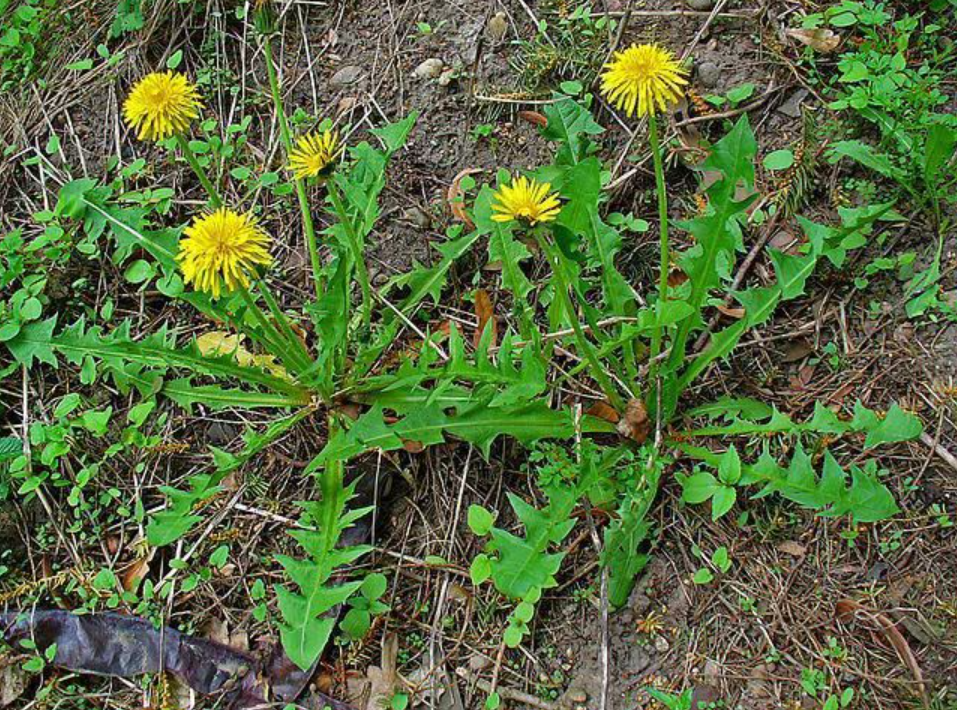
True dandelions belong to the genus Taraxacum, part of the aster family, Asteraceae. The name itself comes from the French dent de lion, meaning “tooth of lion,” a nod to the sharply toothed leaves.
Genuine dandelions share a specific set of traits: a single flower head on a hollow, leafless, unbranched stalk, a basal rosette of leaves, and milky sap when any part is broken.
Globally, there are around 250 recognized dandelion varieties, though some taxonomists count well over 2,000 microspecies once regional variation is factored in. Most reproduce through apomixis, a form of asexual seed production that locks small genetic differences in place across generations.
That reproductive quirk is exactly why so many local “types” exist. Each population can drift slightly from its neighbors without ever needing to cross-pollinate.
True Dandelion Species
These first nine entries are genuine members of the Taraxacum genus, confirmed by botanical sources rather than just common naming habits.
1. Common Dandelion (Taraxacum officinale)
Common dandelion is the species almost everyone pictures: bright yellow flower, hollow stem, and that unmistakable seed-head puffball. It’s the most widespread dandelion on the planet.
Originally from Eurasia, it’s believed to have crossed the Atlantic with early settlers, arriving in North America centuries ago. It now grows on every continent except Antarctica.
Its leaves show erratic, irregular lobing, which is one of the clearest ways to separate it from its closest lookalike relative.
2. Red-Seeded Dandelion (Taraxacum erythrospermum)
Red-seeded dandelion is the species most often confused with the common dandelion, since the two overlap heavily in range and appearance.
The giveaway is in the seed. Its achenes turn reddish-brown to purplish, compared to the duller olive or brown seeds of common dandelion.
Its leaves also tend to have consistently triangular lobes running the full length of the leaf, unlike the more random lobing seen on common dandelion.
It’s most frequently documented across the northern United States and southern Canada, often in lawns, roadsides, and disturbed soil.
3. Rock Dandelion (Taraxacum laevigatum)
Rock dandelion is closely related to red-seeded dandelion. In fact, some botanists classify red-seeded dandelion as a variety of this very species.
Its leaves show deeper cuts and narrower lobes than most other Taraxacum species, a trait useful for quick field identification even before flowering.
Its seed bodies run purple-red to brown-red, and the inner bracts surrounding the flower head carry small, dark, horn-like appendages near the tip.
It tends to favor fields, waste areas, and roadsides rather than densely maintained lawns.
4. Horned Dandelion (Taraxacum ceratophorum)
Horned dandelion is a genuinely native North American species, unlike the European common dandelion most people know. It thrives in alpine and subalpine meadows, often above 9,000 feet in elevation.
Some botanists classify it as a subspecies of common dandelion, while others maintain it as fully distinct. Either way, its high-elevation habitat sets it apart from typical lawn dandelions.
In California, it’s considered rare and seriously threatened, even though it remains more common in other parts of its range.
5. California Dandelion (Taraxacum californicum)
California dandelion is a genuine rarity: an endangered species found only in the San Bernardino Mountains of Southern California.
It grows specifically in mountain meadow habitat, a far cry from the roadside and lawn settings where most dandelion species thrive.
Its endangered status makes it a useful reminder that not every member of this genus is a weed. Some are conservation priorities.
6. Russian Dandelion / Rubber Dandelion (Taraxacum kok-saghyz)
Russian dandelion, often abbreviated TKS, is famous for something no lawn dandelion can claim: it produces commercially useful natural rubber in its roots.
Native to Kazakhstan, Kyrgyzstan, and Uzbekistan, it was cultivated at scale in the Soviet Union during World War II as an emergency rubber source when tropical supply lines were disrupted.
It’s distinguished from common dandelion by smaller, grayish-green leaves and small horn-like structures on the bracts surrounding the flower bud.
Modern researchers are actively re-examining TKS as an alternative rubber crop, since its roots can also yield inulin, a valuable industrial carbohydrate, at up to 40% of dry root weight.
7. Taraxacum brevicorniculatum
This species is worth knowing specifically because it’s so often mistaken for the rubber-producing kok-saghyz, despite being a poor rubber producer itself.
Like TKS, it has horned bracts around the flower bud, which is exactly why the two get confused in both wild collection and early cultivation programs.
Genetically, it’s a distinct triploid apomict, reproducing asexually rather than through the sexual reproduction seen in true TKS populations.
Researchers studying rubber dandelions have to genetically confirm which species they’re actually working with, since visual identification alone isn’t always reliable.
8. Japanese Dandelion (Taraxacum japonicum)
Japanese dandelion is native to Japan and represents one of many regional Taraxacum species that developed largely in isolation from the European common dandelion.
One identifying trait: it lacks the ring of small, downward-turned bracts beneath the flower head that appears on many other dandelion species.
It occupies a similar ecological niche to common dandelion in its native range, growing in disturbed soils, fields, and roadsides across Japan.
9. Korean Dandelion (Taraxacum platycarpum)
Korean dandelion is native to Korea, though it also grows naturally in several neighboring countries as part of its regional range.
It belongs to the same tribe within Asteraceae as other dandelions but represents a geographically distinct lineage that evolved separately from European populations.
Like its Japanese counterpart, it fills a similar role in local ecosystems: an early, resilient bloomer that provides nectar before many other plants flower.
ALSO READ: 15 Weeds That Look Like Grass: How to Identify and Deal With Each One
Dandelion Look-Alikes: The “False” Types People Often Mistake for the Real Thing
These next six aren’t true Taraxacum species, but they get called “dandelion” so often in casual conversation that leaving them out would miss half of what people are actually searching for.
10. Cat’s Ear / False Dandelion (Hypochaeris radicata)
Cat’s ear is the single most common dandelion impostor. It’s even nicknamed “false dandelion” directly because of how closely its flower resembles the real thing.
The clearest tell is the stem. Cat’s ear has wiry, branching stems, often carrying multiple flowers, while true dandelion stems are hollow, unbranched, and carry exactly one flower each.
Its leaves are also noticeably hairier and more deeply notched than the smoother, sharply toothed leaves of genuine dandelion.
Originally from Eurasia, it has now naturalized on every continent except Antarctica, much like its true dandelion cousin.
11. Smooth Cat’s Ear (Hypochaeris glabra)
Smooth cat’s ear is the less hairy sibling of common cat’s ear, distinguished mainly by its silky rather than hairy leaves.
It shares the same branching stem structure that separates all cat’s ear species from true dandelions, along with the papery scales found between individual florets when a flower head is pulled apart.
It’s less prized for culinary or medicinal use compared to hairy cat’s ear, and it tends to be less aggressive as a lawn invader overall.
12. Autumn Hawkbit / Fall Dandelion (Scorzoneroides autumnalis)
Autumn hawkbit, commonly called fall dandelion, blooms exactly when its name suggests, filling fields with dandelion-like yellow flowers in late summer and early autumn.
Its flower stems branch and support multiple flower buds, unlike the single unbranched stalk of a true dandelion. The stems are also solid rather than hollow.
True dandelions do occasionally rebloom in fall, which is exactly why this species causes so much seasonal confusion for casual observers.
13. Rough Hawkbit (Leontodon hispidus)
Rough hawkbit is prized in wildflower meadows for its nectar value, but it’s frequently mistaken for dandelion at a quick glance.
Its stem is tough, wiry, and solid, not hollow like true dandelion, and its leaves carry distinctly forked hairs visible under a hand lens.
It typically produces a single flower per stem, which actually makes it slightly harder to distinguish from real dandelion than its branching relatives.
14. Narrowleaf Hawksbeard (Crepis tectorum)
Narrowleaf hawksbeard is considered an invasive weed across North America and Europe, capable of producing tens of thousands of wind-dispersed seeds from a single plant.
Unlike dandelion, its basal rosette withers away as the plant matures, and its stems branch to form clusters of up to twenty individual flowers.
Its leaves grow directly along the stem, another clear departure from the leafless, unbranched flower stalk of a genuine dandelion.
15. Sow Thistle (Sonchus oleraceus)
Sow thistle rounds out this list as the tall, stately look-alike. It can reach several feet in height, far taller than any true dandelion.
Like dandelion, it produces milky latex sap when broken, which is part of why the two get lumped together in casual identification.
Its leaves grow up the flowering stalk with spiny, prickly edges, and its stems branch into multiple flowers rather than the dandelion’s single, solitary bloom.
ALSO READ: 10 Best Weed Killers That Won’t Kill Grass: Safe Selective Herbicides for Lawn
Quick Comparison Table
| Type | Category | Key Identifying Trait |
| Common Dandelion | True Taraxacum | Hollow stem, single flower, erratic leaf lobing |
| Red-Seeded Dandelion | True Taraxacum | Reddish-brown seeds, triangular leaf lobes |
| Rock Dandelion | True Taraxacum | Deeply cut, narrow leaf lobes |
| Horned Dandelion | True Taraxacum | Native, high-elevation alpine habitat |
| California Dandelion | True Taraxacum | Endangered, San Bernardino Mountains only |
| Russian/Rubber Dandelion | True Taraxacum | Produces natural rubber in roots |
| T. brevicorniculatum | True Taraxacum | Horned bracts, poor rubber yield |
| Japanese Dandelion | True Taraxacum | No downturned bract ring beneath flower |
| Korean Dandelion | True Taraxacum | Native to Korea and neighboring regions |
| Cat’s Ear | Look-alike | Wiry branching stems, hairy leaves |
| Smooth Cat’s Ear | Look-alike | Silky leaves, branching stems |
| Autumn Hawkbit | Look-alike | Blooms in fall, branching solid stems |
| Rough Hawkbit | Look-alike | Solid wiry stem, forked leaf hairs |
| Narrowleaf Hawksbeard | Look-alike | Withering rosette, leafy branched stems |
| Sow Thistle | Look-alike | Tall, prickly leaves along the stem |
A Few Numbers Worth Knowing
Dandelions are among the most important early spring nectar sources for pollinators, providing food before many other plants have even begun to bloom.
A single dandelion flower head typically contains well over a hundred individual florets, each capable of producing its own wind-dispersed seed once pollinated or self-fertilized through apomixis.
The genus’s near-total reliance on apomictic, asexual reproduction in many populations is exactly why regional variation runs so high, with some estimates placing microspecies counts in the thousands once every local population is counted separately.
Rubber dandelion research has found that TKS roots can yield rubber content alongside up to 40% inulin by dry weight, a figure that keeps this once-obscure species relevant to modern agricultural science.
How to Tell a True Dandelion From an Impostor in Under a Minute
Check the stem first. A true dandelion stem is hollow, unbranched, and carries exactly one flower. Nearly every look-alike on this list branches or supports multiple blooms.
Feel the leaves. Genuine dandelion leaves are smooth and sharply toothed. Cat’s ear, hawkbit, and hawksbeard all carry noticeably hairy or fuzzy foliage.
Look at the timing. A dandelion-like flower blooming heavily in September is far more likely to be autumn hawkbit than a true dandelion rebloom.
Break the stem. True dandelion and sow thistle both release milky sap, but sow thistle’s tall, branching, leafy stalk makes the two easy to tell apart once you look past the sap.
Why Dandelions Matter Beyond the Lawn
It’s easy to write dandelions off as a nuisance, but the plant carries a longer resume than most weeds ever get credit for.
Every part of the true common dandelion is edible. Young leaves work raw or cooked, the taproot can be boiled or roasted into a coffee substitute, and the flowers have long been used to make wine.
Traditional medicine has used dandelion for centuries to address liver, kidney, and lung complaints, credited to compounds with anti-inflammatory, antimicrobial, and antioxidant properties.
Pollinators depend on it too. Dandelions bloom earlier than most competing flowers each spring, making them one of the first reliable nectar sources bees and other insects encounter after winter.
That ecological role is part of why some land managers now recommend tolerating a modest dandelion population rather than eliminating it entirely, particularly in areas without heavy pesticide use.
Even the genus’s more obscure members carry real economic weight. Russian dandelion’s rubber and inulin content has drawn renewed research interest as manufacturers look for alternatives to traditional rubber tree plantations vulnerable to disease.
A Brief Word on Regional Variation
Not every dandelion you’ll encounter fits neatly into one of these 15 categories. Regional botanical surveys, particularly in the British Isles, have documented well over 200 distinct microspecies in a single country alone.
That level of local variation exists because most dandelion populations reproduce asexually through apomixis, locking in small genetic quirks from generation to generation without the genetic mixing that sexual reproduction would normally provide.
The practical result is that a dandelion growing in one county can look subtly different from one growing two counties over, even though both would likely be lumped under “common dandelion” by most casual observers.
For everyday identification purposes, though, the fifteen types covered here represent the species and look-alikes you’re genuinely likely to encounter, whether in a backyard lawn, a mountain meadow, or a research greenhouse.
Frequently Asked Questions
Is it true there are over 200 dandelion species? Yes. Roughly 250 recognized varieties exist worldwide, and some taxonomic treatments count well over 2,000 microspecies once fine regional differences are included, largely a result of the genus’s asexual reproduction.
Are cat’s ear and hawkbit actually dandelions? No. They belong to different genera entirely, Hypochaeris and Leontodon or Scorzoneroides, within the same broader daisy family. They’re commonly called “false dandelions” precisely because they aren’t true Taraxacum species.
Can you eat all 15 of these plants? Most are edible in some form, including cat’s ear, sow thistle, and true dandelion, but always confirm identification carefully before eating any wild plant, since look-alikes can vary in taste, texture, and digestibility.
Why does my lawn have dandelions again every year even after pulling them? Because seeds already in the soil, plus any taproot fragments left behind after pulling, can regenerate a new plant. Removing the entire taproot is essential for effective hand control.
Is the rubber-producing dandelion the same as the one in my yard? No. Russian dandelion (Taraxacum kok-saghyz) is a distinct species native to Central Asia, genetically and visually different from the common lawn dandelion found across North America and Europe.
Do dandelion look-alikes serve the same ecological purpose as true dandelions? Largely yes. Cat’s ear, hawkbit, and hawksbeard all produce nectar-rich yellow flowers that pollinators readily visit, even though botanists classify them in entirely separate genera from true Taraxacum species.
Final Thought
Fifteen types is really just scratching the surface of a genus this large, but it covers the species and look-alikes you’re actually likely to run into, whether you’re weeding a lawn or hiking an alpine meadow.
If you’re ever unsure which yellow flower you’re looking at, a local cooperative extension office or university herbarium can usually confirm the species from a clear photo, often faster and more reliably than any general field guide or phone app.
References
- University of Minnesota Extension. Dandelions. https://extension.umn.edu/weeds/dandelions
- NC State Extension Gardener Plant Toolbox. Hypochaeris radicata (False Dandelion, Cat’s Ear). https://plants.ces.ncsu.edu/plants/hypochaeris-radicata/
- Montana State University Extension. Hairy Cat’s Ear (Hypochaeris radicata). https://www.montana.edu/extension/invasiveplants/extension/monthly-weed-posts/202001mwp-january-hairy-cats-ear.html
- Cornell Cooperative Extension. Master Gardener Volunteer Weed Series: Dandelion (Taraxacum officinale). https://allegany.cce.cornell.edu/gardening/master-gardener-blog/master-gardener-volunteer-weed-series-dandelion-taraxacum-officinale
- Oregon State University Extension Service. How Can I Naturally Kill Dandelions? https://extension.oregonstate.edu/ask-extension/featured/how-can-i-naturally-kill-dandelions
- Flora of the Southeastern United States, University of North Carolina Herbarium. Taraxacum erythrospermum (Red-Seeded Dandelion). https://fsus.ncbg.unc.edu/cust/2025/main.php?pg=show-taxon-detail.php&taxonid=6537
- National Library of Medicine, National Institutes of Health (PMC). Bioactive Compounds from Vegetal Organs of Taraxacum Species (Dandelion) with Biomedical Applications: A Review. https://www.ncbi.nlm.nih.gov/pmc/articles/PMC11764760/

Tim M Dave is a gardening expert with a passion for houseplants, particularly cacti and succulents. With a degree in plant biology from the University of California, Berkeley, he has vast experience in gardening. Over the years, he has cultivated a vast collection of desert plants and learned a great deal about how to grow and care for these unique companions.