25 Stunning Types of Grass for Your Lawn (Names with Pictures)
I still remember the first house I helped landscape. We picked a grass because it “looked nice in the photo,” and it was dead by August. Wrong grass, wrong climate, wrong lesson learned the hard way.
Choosing a lawn grass isn’t really about looks first. It’s about matching a grass to your climate, your soil, your sunlight, and how much work you’re willing to put in.
There are roughly 7,500 grass species on Earth, and only about 50 are cultivated for turf. This guide narrows that down further, to the 25 types you’re actually likely to consider for a home lawn.
I’ve split them into cool-season grasses, warm-season grasses, and a few native and alternative options that don’t fit neatly into either group. Let’s go through them one by one.
Cool-Season Grasses (Best for Northern and Transition Climates)
Cool-season grasses grow best when temperatures sit between 60°F and 75°F. They stay green through winter but can struggle in intense summer heat.
1. Kentucky Bluegrass
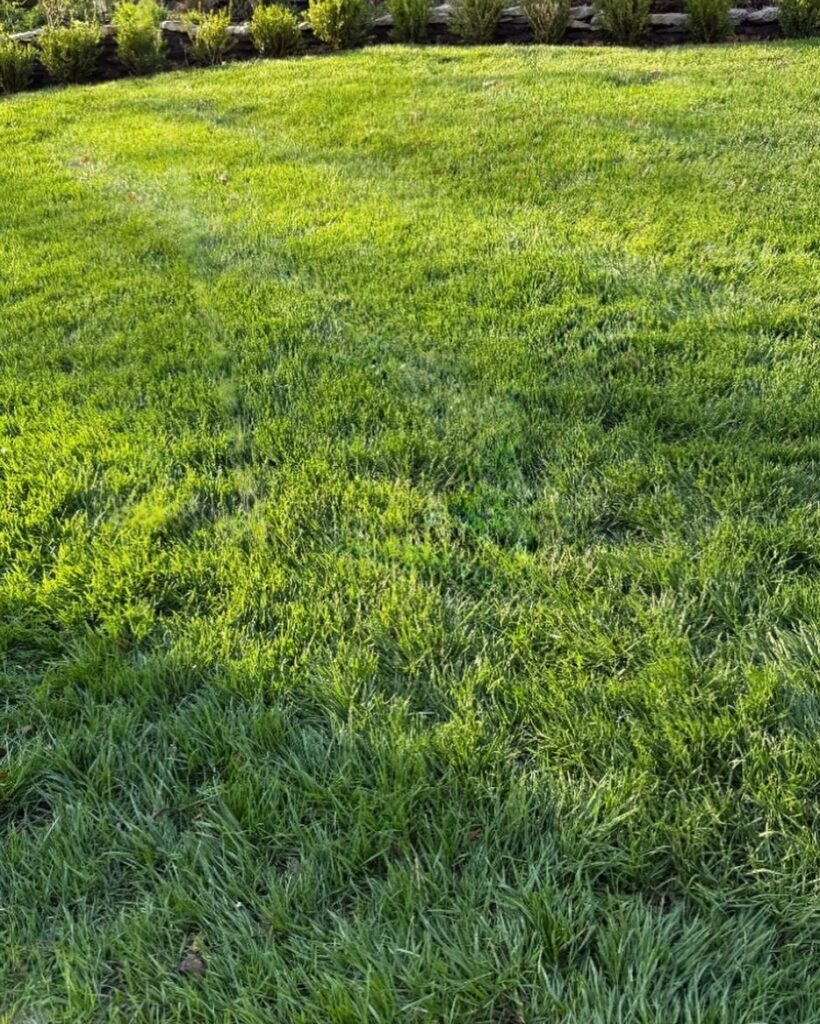
Kentucky bluegrass is the classic northern lawn grass, known for its rich color and soft, dense texture. It’s the most widely planted lawn grass across the northern two-thirds of the continental United States.
It spreads by rhizomes, which means it can repair small bare patches on its own over time. That self-healing trait is a big reason it remains a top pick for family lawns.
The tradeoff is water. Bluegrass needs consistent moisture and can go semi-dormant during a hot, dry summer stretch.
2. Perennial Ryegrass
Perennial ryegrass germinates faster than almost any other cool-season grass, often within a week under good conditions. That’s why it shows up in so many quick-fix seed mixes.
It has a fine texture and a rich green color that blends well with bluegrass. Many homeowners use it as a nurse grass, protecting soil while slower species like bluegrass establish underneath.
It handles moderate foot traffic well, which makes it a solid choice for lawns with kids or pets.
3. Annual Ryegrass
Annual ryegrass, sometimes called Italian ryegrass, is the temporary cousin of perennial ryegrass. It grows fast, covers bare soil quickly, and then dies off within a year.
It’s commonly used to overseed dormant warm-season lawns in fall, giving a green look through winter months when Bermuda or zoysia have gone brown.
Construction sites also use it for erosion control since it establishes so quickly on disturbed soil.
4. Tall Fescue
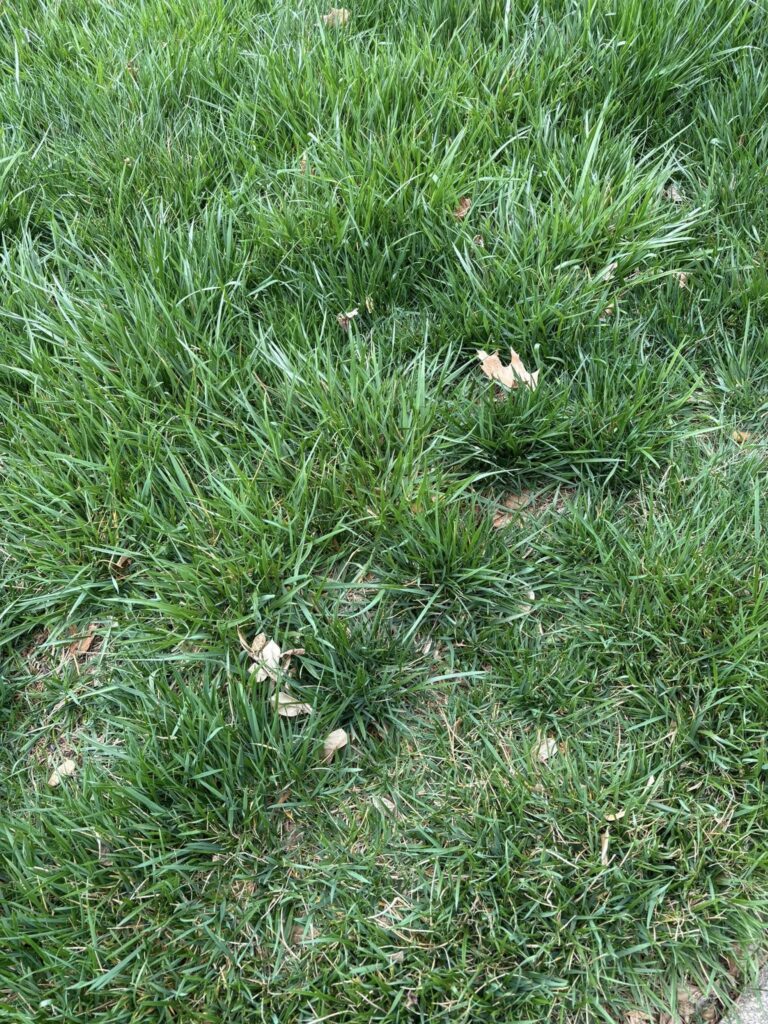
Tall fescue, once widely known by the older cultivar name Kentucky 31, is the workhorse of the transition zone. It tolerates heat better than bluegrass and cold better than bermudagrass.
It’s noted for having the deepest root system among common cool-season grasses, letting it pull water from deeper soil layers during dry spells.
This grass grows in a clumping habit, so it doesn’t spread and repair bare spots the way bluegrass does. Overseeding thin areas is usually necessary.
5. Fine Fescue (Creeping Red Fescue)
Fine fescue is the shade specialist of the cool-season group. If your lawn sits under mature trees, this is likely one of the grasses already in your seed mix.
It has very fine, almost thread-like blades and needs less fertilizer than most other lawn grasses. Some homeowners even let it grow long as a “no-mow” lawn on steep or hard-to-reach slopes.
Its weakness is foot traffic. Fine fescue struggles on lawns that see heavy daily use from kids or pets.
6. Chewings Fescue
Chewings fescue is a bunch-type fine fescue, meaning it grows in small clumps rather than spreading by rhizomes. It’s often blended into shade-tolerant seed mixes alongside creeping red fescue.
It handles low fertility and slightly acidic soils better than most cool-season grasses. That’s part of why it turns up so often in “low-input” lawn blends.
Like other fine fescues, it does best with minimal foot traffic and light shade.
7. Hard Fescue
Hard fescue is another member of the fine fescue family, prized for being exceptionally low-maintenance. It needs less mowing, less water, and less fertilizer than almost any other cool-season turf option.
It’s a popular choice for roadside plantings, slopes, and low-traffic areas where appearance matters less than durability with minimal input.
Its slow growth rate means it won’t recover quickly if damaged, so it’s best kept away from high-use zones.
8. Creeping Bentgrass
Creeping bentgrass is the grass most associated with golf greens, mowed extremely short and bred for a very specific, tightly managed environment.
It does occasionally appear in older home lawns, particularly in cooler regions. But its demanding maintenance schedule, frequent mowing, careful watering, and disease monitoring, makes it a poor fit for most households.
I’d only recommend it if you genuinely enjoy lawn care as a hobby rather than a chore.
9. Rough Bluegrass (Poa trivialis)
Rough bluegrass, sometimes called Poa trivialis, thrives in cool, damp, shaded conditions where few other grasses perform well.
It has a bright, almost yellow-green color that can look out of place mixed with darker Kentucky bluegrass, so it’s usually kept to specific shaded, moist patches rather than the whole yard.
It doesn’t tolerate heat or drought at all, so it tends to die back and thin out once summer arrives.
10. Canada Bluegrass
Canada bluegrass is a tougher, less refined relative of Kentucky bluegrass. It tolerates poor, acidic, and infertile soils where regular bluegrass would struggle.
It’s rarely planted on purpose for a manicured lawn look, since its texture and color are coarser. You’ll more often find it holding down soil on roadsides, pastures, and reclaimed land.
For homeowners with genuinely difficult soil and low expectations for a “perfect” lawn, it’s a resilient backup option.
ALSO READ: Kentucky Bluegrass vs Tall Fescue: Which Grass Is Right for Your Lawn?
Warm-Season Grasses (Best for Southern and Hot Climates)
Warm-season grasses thrive when temperatures run between 80°F and 95°F and typically go dormant, turning brown, for three to five months in winter.
11. Common Bermudagrass
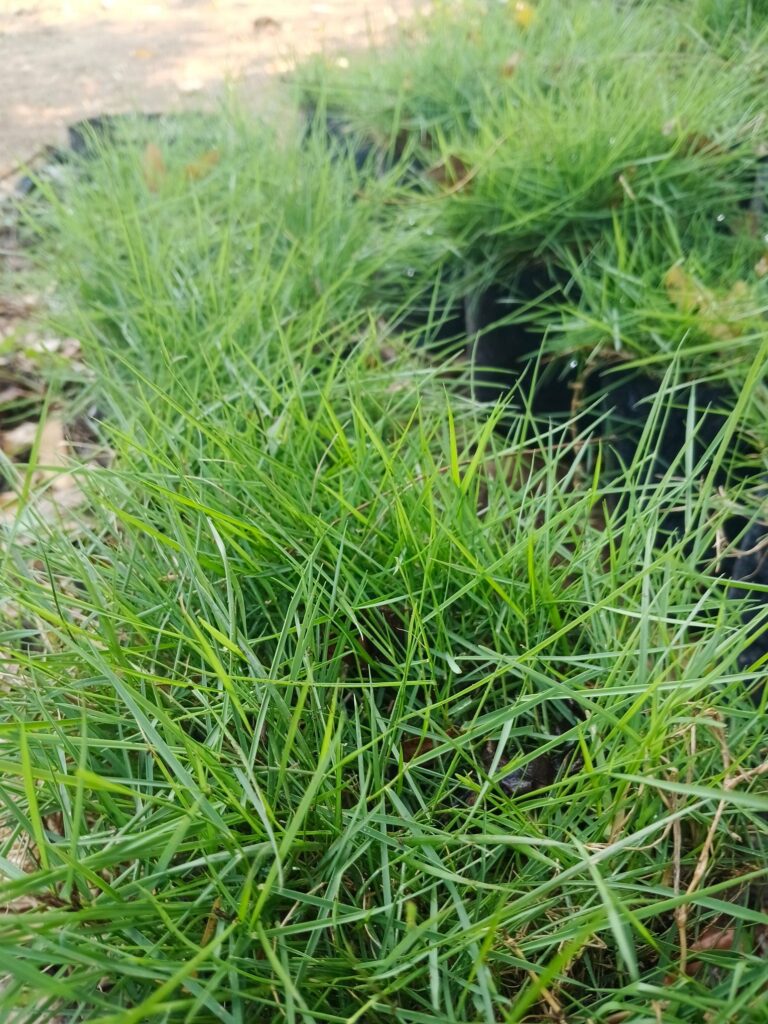
Bermudagrass is the default lawn grass across the South, valued for its heat and drought tolerance and its ability to recover fast from damage.
It spreads aggressively through both stolons and rhizomes, which is exactly why it’s been called both a top turfgrass and one of the world’s most troublesome weeds, depending on where it ends up growing.
It needs full sun and frequent mowing to stay in check, since it grows quickly once established.
12. Hybrid Bermudagrass
Hybrid Bermudagrass cultivars, like those developed at university turf programs, offer a finer texture and higher density than common bermudagrass.
These hybrids are popular on golf courses and sports fields, but many are also sold for premium home lawns, sodded rather than seeded since most hybrids don’t produce viable seed.
They demand more precise mowing, often with a reel mower, and more frequent fertilization to maintain that tighter, more manicured look.
13. Zoysiagrass (Zoysia japonica)
Zoysiagrass has become a favorite for homeowners who want a dense, soft, low-maintenance lawn. Its thick growth naturally crowds out many weeds before they can establish.
It has excellent cold tolerance for a warm-season grass, letting it grow further north than bermudagrass in many regions.
Its biggest downside is slow establishment. A new zoysia lawn can take a full season or more to fill in completely.
14. Manila Grass (Zoysia matrella)
Manila grass is a finer-textured cousin of common zoysia, often used where a more refined, golf-course-like appearance is the goal.
It has excellent shade tolerance for a warm-season grass and forms a dense, resistant turf that stands up well to foot traffic once established.
Like other zoysias, it’s slow to establish and best planted by sod or plugs rather than seed.
15. St. Augustinegrass
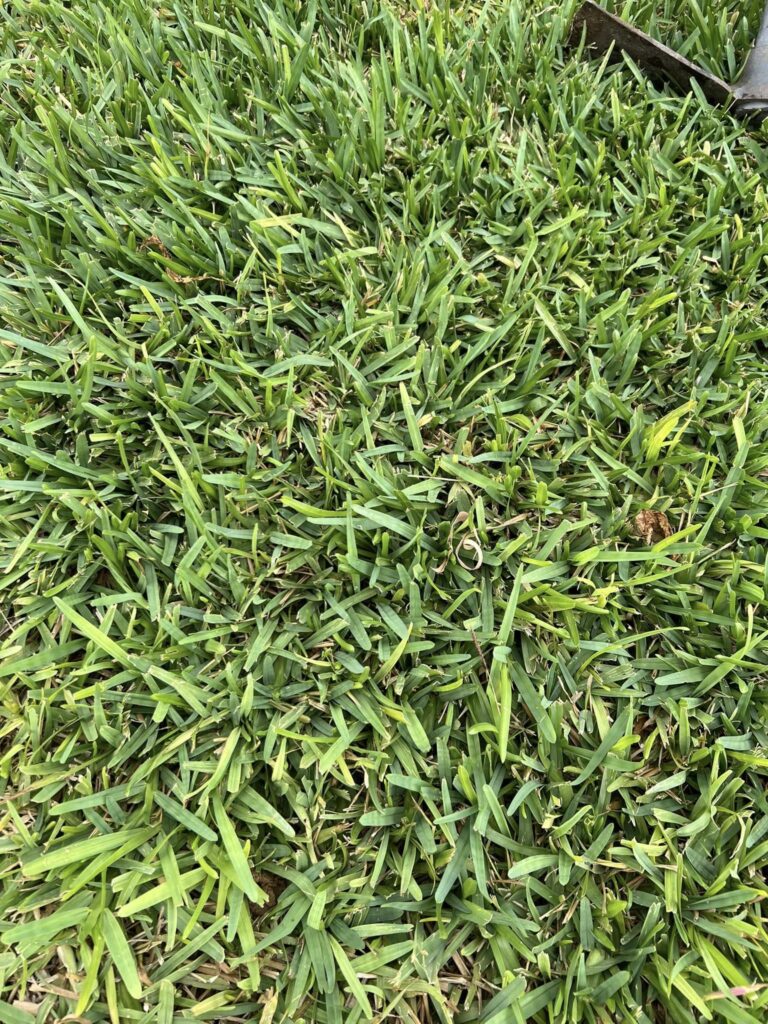
St. Augustinegrass is the most shade-tolerant warm-season lawn grass commonly grown in the U.S., which makes it the default pick for lawns under heavy tree cover in the Gulf Coast region.
It has broad, flat, blue-green blades and spreads by above-ground stolons, forming a thick, carpet-like turf.
It’s sensitive to cold and to certain herbicides, so care needs to be more deliberate than with tougher grasses like bermuda.
16. Centipedegrass
Centipedegrass is nicknamed the “lazy man’s grass” for good reason. It needs minimal fertilizer, minimal mowing, and resists most common lawn pests without much intervention.
It spreads slowly through surface runners only, which makes it easy to contain around flower beds and walkways compared to more invasive spreaders.
It prefers acidic soil and doesn’t handle heavy foot traffic or drought as well as bermudagrass.
17. Bahiagrass
Bahiagrass is common in the Deep South’s sandy, low-fertility soils, especially near the coast. It’s rarely anyone’s dream lawn, since it produces tall, unsightly seedheads and has an open growth habit.
Turf researchers generally don’t recommend it for a manicured home lawn, but it remains widespread on roadsides and low-maintenance properties where appearance matters less than erosion control.
Its deep root system does give it strong drought tolerance, which is its main redeeming quality.
18. Buffalograss
Buffalograss is a native North American prairie grass, historically grazed by bison across the Great Plains before it became a lawn option. It’s remarkably drought and cold tolerant for a warm-season grass.
Its roots can reach depths of several feet, though most of the root mass stays concentrated in the top foot of soil, which is part of why it survives extended dry periods so well.
It has low density and a soft, curly texture, giving lawns a more relaxed, natural look rather than a tightly manicured one.
19. Carpetgrass
Carpetgrass thrives in wet, poorly drained soils where many other lawn grasses would struggle or rot. It’s common in low-lying areas of the Gulf Coast and Southeast.
It forms a dense mat through creeping stolons, which is where its name comes from, and needs relatively little fertilizer to stay green.
Its main downside is poor drought tolerance. It needs consistently moist soil, which limits where it makes sense to plant it.
20. Seashore Paspalum
Seashore paspalum stands out for one specific trait: extreme salt tolerance. It’s the grass of choice for lawns and golf courses right along the coast, where salty irrigation water or sea spray would kill most other turf.
It spreads by both rhizomes and stolons and has a fine texture similar in appearance to bermudagrass.
It has good shade tolerance for a warm-season grass but weaker cold tolerance, which limits its use to the warmest coastal regions.
21. Kikuyugrass
Kikuyugrass is a coarse, extremely vigorous warm-season grass found mainly in south coastal regions, particularly in parts of California. It spreads so aggressively that many turf programs actually classify it as a weed rather than a desirable lawn species.
Where it’s intentionally grown, it forms a thick, wear-resistant turf that handles heavy foot traffic well.
Its invasive tendencies mean it’s rarely recommended outside its narrow regional niche.
22. Blue Grama
Blue grama is another native shortgrass prairie species, often grown alongside buffalograss in low-water lawn mixes across the Great Plains and Southwest.
It tolerates heat, drought, and alkaline soil with very little irrigation or fertilizer, making it a genuine low-input option for arid regions.
It has a fine texture and a distinctive curled seed head, giving lawns a soft, prairie-like appearance rather than a formal, manicured one.
ALSO READ: Centipede Grass vs Bermuda Grass: A Complete Comparison for Southern Lawn Owners
Native and Alternative Lawn Covers
These last few options round out the list. Some are true native grasses suited to specific regions, and two are technically not grasses at all but are commonly grouped into “lawn grass” lists anyway.
23. Crested Wheatgrass
Crested wheatgrass is a cold-hardy, drought-resistant species originally introduced for erosion control and forage across the northern Great Plains and Intermountain West.
It’s occasionally used for low-water, low-traffic lawns in regions where irrigation is limited or expensive.
Its coarse texture and clumping growth habit mean it looks more like a meadow than a manicured lawn, which suits some properties better than others.
24. Microclover
Microclover isn’t a grass. It’s a legume, but it’s increasingly blended into lawn seed mixes as a low-maintenance, nitrogen-fixing ground cover.
It stays green with less water and fertilizer than most turfgrasses, since it pulls nitrogen from the air rather than relying entirely on added fertilizer.
It also attracts pollinators when allowed to flower, which some homeowners see as a feature and others see as a drawback near play areas.
25. Dichondra
Dichondra is another non-grass sometimes used as a lawn substitute, particularly in mild, frost-free climates like coastal California. It forms a low, dense mat of small, rounded leaves instead of blades.
It creates a soft, almost carpet-like surface but doesn’t tolerate heavy foot traffic or cold winters well.
It’s best suited to ornamental lawns viewed more than walked on.
ALSO READ: 10 Types Of Grass To Use Weed Stop For Lawns On (And 3 That Aren’t)
How to Actually Choose Among These 25
Start with your climate zone. Cool-season grasses dominate the North, warm-season grasses dominate the South, and the transition zone in the middle often needs a blend or a compromise grass like tall fescue.
Check your sunlight. Fine fescue and St. Augustinegrass handle shade far better than bermudagrass or buffalograss, which need full sun to perform.
Be honest about maintenance tolerance. Bentgrass and hybrid bermudagrass look stunning but demand serious time. Buffalograss and centipedegrass ask for very little.
Think about water. Turfgrass irrigation is a real budget line. One xeriscape comparison found homes landscaped with drought-tolerant plants used 54% less water than homes with nearly all-turf landscaping.
Consider your soil. Bahiagrass tolerates sandy, poor soil. Carpetgrass tolerates wet, poorly drained soil. Buffalograss and blue grama handle alkaline, heavy clay soil in dry regions.
Why Grass Choice Matters More Than People Think
Lawns aren’t a small detail in the American landscape. Turfgrass covers an estimated 46.5 million acres nationwide, more land than the country’s cotton, sorghum, barley, and oats combined.
That scale carries real environmental weight. Watering the lawn commonly accounts for a large share of a home’s outdoor water use during summer months, so the grass species chosen directly affects a household’s water bill and regional water demand.
The turfgrass industry itself is sizable too, with U.S. lawn and turf maintenance spending estimated in the range of $60 to $75 billion annually across sod farms, lawn care companies, and retail suppliers.
Getting the grass choice right at the start saves money, water, and a lot of frustration later. It’s a decision worth slowing down for, even if the garden center display makes it tempting to just grab whatever looks green in the bag.
Frequently Asked Questions
What’s the difference between cool-season and warm-season grass? Cool-season grasses grow best at 60°F to 75°F and stay green through winter but can thin out under intense summer heat. Warm-season grasses prefer 80°F to 95°F, thrive through summer, and go dormant, turning brown, for several months in winter.
Can I mix cool-season and warm-season grasses in one lawn? It’s uncommon and rarely recommended, since the two groups need different mowing heights, watering schedules, and fertilizer timing. Most transition-zone homeowners instead pick a single versatile grass like tall fescue, or overseed a warm-season lawn with ryegrass for winter color.
Which grass needs the least water? Native prairie grasses like buffalograss and blue grama are the most drought-tolerant options on this list, developed to survive with minimal rainfall across the Great Plains. Centipedegrass and bahiagrass are also relatively low-water choices in warmer regions.
What’s the best grass for a shaded yard? Fine fescue and Chewings fescue lead the cool-season group for shade tolerance, while St. Augustinegrass and Manila grass are the strongest warm-season options for lawns under tree cover.
Is seed or sod better for starting a new lawn? It depends on the grass. Many hybrid bermudagrass and zoysia cultivars don’t produce reliable seed, so sod or plugs are the only practical option. Cool-season grasses like bluegrass and fescue are usually seeded successfully at a fraction of sod’s cost.
How do I know which grass is already growing in my lawn? Look at the blade shape, spreading pattern, and seasonal color change. A local cooperative extension office can usually identify a grass from a clear photo, often faster and more accurately than a guess from an online chart.
Final Thought
Twenty-five options is a lot to weigh, but the decision usually narrows fast once you’re honest about your climate, your sunlight, and how much time you actually want to spend on a mower.
If you’re still unsure, your local cooperative extension office can usually recommend the best-adapted grasses for your exact county, often for free. That’s a smarter starting point than picking based on a bag’s cover photo, which is exactly the mistake I made all those years ago.
References
- NC State Extension. Extension Gardener Handbook — Chapter 9: Lawns. https://content.ces.ncsu.edu/extension-gardener-handbook/9-lawns
- Oklahoma State University Extension. Selecting a Lawn Grass for Oklahoma. https://extension.okstate.edu/fact-sheets/selecting-a-lawn-grass-for-oklahoma
- University of Arkansas Division of Agriculture Cooperative Extension. FSA2112 — Choosing a Grass for Arkansas Lawns. https://www.uaex.uada.edu/publications/PDF/FSA-2112.pdf
- Texas A&M AggieTurf. Buffalograss and Seashore Paspalum Species Profiles. https://aggieturf.tamu.edu/texas-turfgrasses/buffalograss/
- University of Minnesota Extension / Bell Museum. Turfgrass and Lawn Grasses — The 10 Plants That Changed Minnesota. https://top10plantsmn.umn.edu/10-plants/turfgrass-and-lawn-grasses
- U.S. Environmental Protection Agency, WaterSense Program. Outdoor Water Use in the United States — Turfgrass Report. https://www.epa.gov/sites/default/files/2017-01/documents/ws-outdoor-home-turfgrass-report.pdf
- NASA Earth Observatory. Lawn Surface Area in the United States. https://earthobservatory.nasa.gov/images/6019/lawn-surface-area-in-the-united-states

Tim M Dave is a gardening expert with a passion for houseplants, particularly cacti and succulents. With a degree in plant biology from the University of California, Berkeley, he has vast experience in gardening. Over the years, he has cultivated a vast collection of desert plants and learned a great deal about how to grow and care for these unique companions.