20 Best Trees to Plant for Privacy (Names, With Pictures)
A yard without privacy can feel like a stage. You sit down with a cup of tea, and suddenly you notice every window and every passing car. I know that feeling, and I know it spoils a good evening.
A fence solves the problem quickly, but it stays flat and lifeless. A row of well-chosen trees does more. It blocks views, softens noise, breaks the wind, and gives birds a place to live.
This guide covers the 20 best trees to plant for privacy. For each one, you will find size, spacing, climate needs, and honest warnings. Some are fast. Some are slow but worth the wait.
20 Best Trees to Plant for Privacy
1. Green Giant Arborvitae (Thuja standishii × plicata ‘Green Giant’)
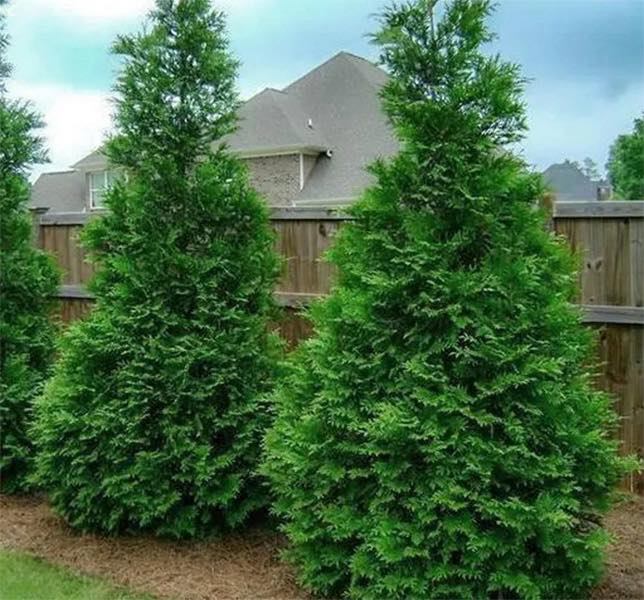
Green Giant is the most popular privacy tree in many countries, and for good reason. It grows in a tall, dense pyramid with rich green foliage that stays dark through winter. It is also very fast.
NC State Extension reports that it can grow 3 to 4 feet per year in good conditions. Mature trees reach 40 to 60 feet tall and 12 to 18 feet wide. That is a lot of tree.
Plant it in full sun with moist but well-drained soil. It suits roughly zones 5 to 8. The University of Georgia suggests a spacing of about 15 feet for best screening, though many gardeners plant closer for speed.
ALSO READ: Thuja Green Giant Arborvitae Spacing: How to Get It Right When Planting
2. Emerald Green Arborvitae (Thuja occidentalis ‘Smaragd’)
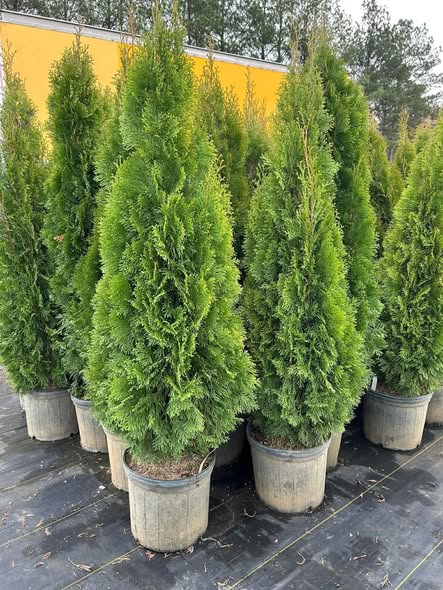
Emerald Green is the smaller cousin. It grows narrow and upright, so it fits tight spaces. NC State’s Sampson County guide lists a height of 8 to 12 feet and a width of only 3 to 4 feet.
That narrow shape is perfect for small yards and side boundaries. You can plant it two to five feet apart, and it fills in gradually. The foliage keeps good colour in winter.
It is hardy in cold climates, roughly zones 3 to 7. It dislikes wet feet and hot, dry wind. Deer love it, so protect young plants if deer visit your area.
ALSO READ: Emerald Green vs Green Giant Arborvitae: Which One Should You Choose?
3. Leyland Cypress (Cupressus × leylandii)
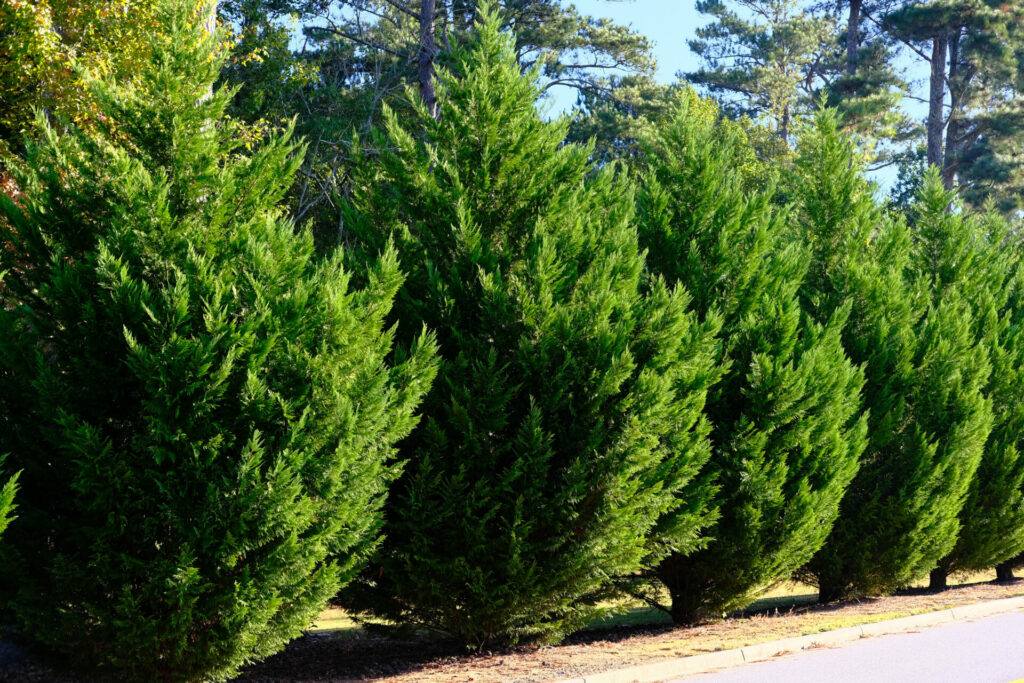
Leyland cypress is the classic fast hedge. It can grow more than two feet a year, and it makes a soft, feathery wall. Many people choose it for speed alone.
I need to be fair here, because this tree has a bad reputation. Clemson Extension says that Leyland cypress screens are prone to disease and death when planted too close. It matures at 60 to 70 feet tall and 12 to 15 feet wide.
If you plant it, give each tree at least 12 feet, and 15 to 20 feet is better. Mix it with other species so one disease cannot destroy the whole screen. It suits zones 6 to 10 in full sun.
4. Eastern Red Cedar (Juniperus virginiana)
Eastern red cedar is a tough native of eastern North America. It grows in poor soil, drought, wind, and cold. Few privacy trees are as forgiving.
The dense foliage gives good year-round cover. Birds love the blue berries and the shelter. Most trees reach 30 to 50 feet tall and 8 to 15 feet wide.
It grows in a huge range, roughly zones 2 to 9. There is one catch. It hosts cedar-apple rust, a disease that harms apple and crabapple trees. Avoid planting it near an orchard.
5. Western Red Cedar (Thuja plicata)
Western red cedar is a majestic native of the Pacific Northwest. Its drooping, flat sprays of foliage create a dense, natural wall. The scent is lovely after rain.
It prefers moist soil and tolerates part shade better than many conifers. The City of Seattle describes the related Green Giant as dense and pyramidal, and as tolerant of damp soils. Species trees can grow 50 feet or more.
Give it room and moisture. It suits roughly zones 5 to 7, in cool, humid climates. In hot, dry places, it struggles and browns. Choose another tree there.
6. American Holly (Ilex opaca)
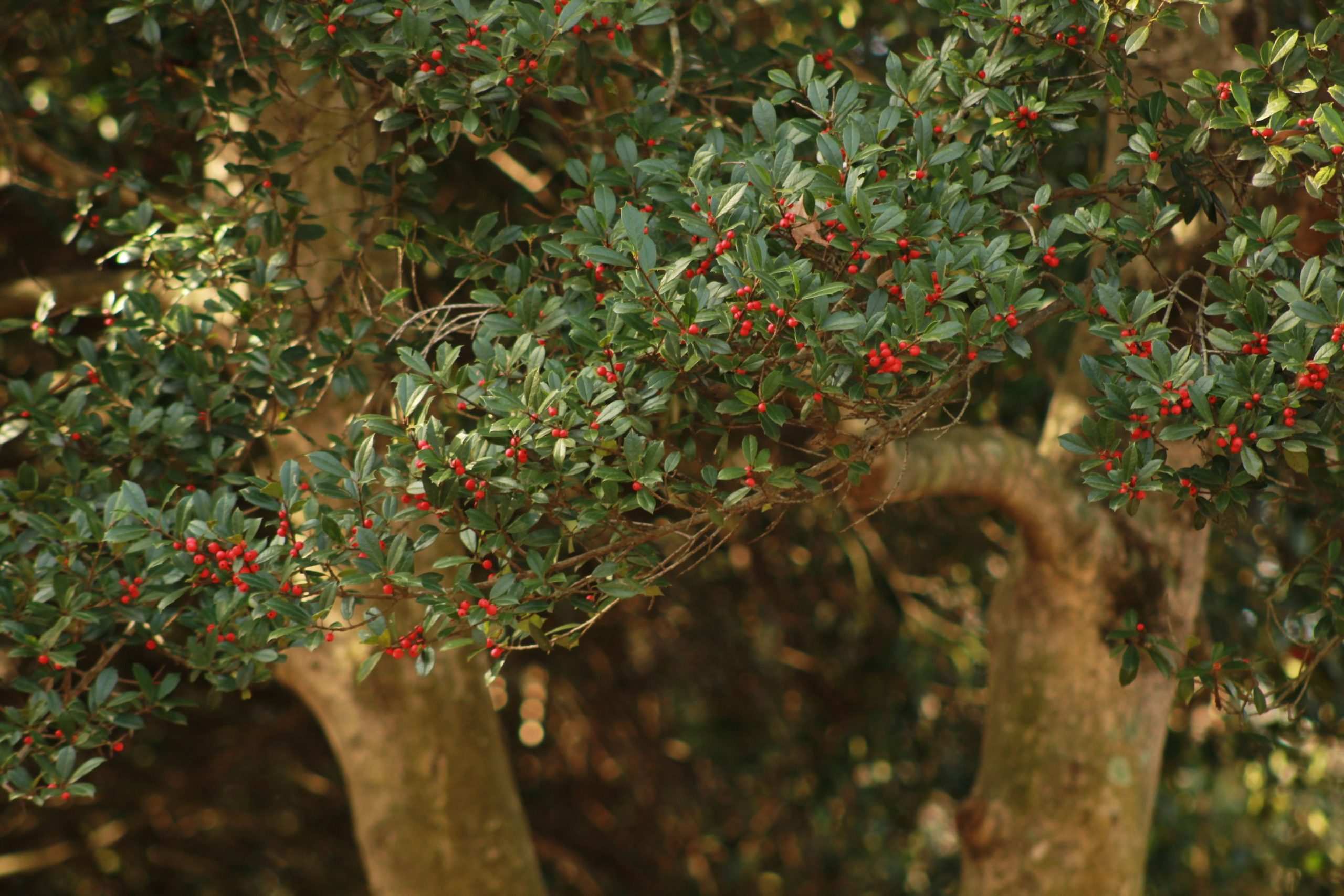
American holly is a slow but beautiful native evergreen. It has glossy, spiny leaves and bright red berries on female trees. It looks festive and works hard as a screen.
It grows in a neat pyramid and can reach 15 to 50 feet. The thorny leaves also discourage people from walking through. That is a real advantage for security.
For berries, you need both a female and a male tree nearby. It prefers acidic, moist, well-drained soil in zones 5 to 9. Be patient, because it may grow only about a foot per year.
7. Nellie Stevens Holly (Ilex × ‘Nellie R. Stevens’)
Nellie Stevens is a faster holly with thick, dark green leaves. It forms a dense, upright screen and handles heat and drought well. It is a favorite in the southern United States.
NC State’s Sampson County guide lists it at 15 to 20 feet tall and 8 to 10 feet wide. The suggested spacing is four to six feet. That is tighter than many large conifers.
It likes full sun to part shade and grows in roughly zones 6 to 9. Birds enjoy the red berries. The leaves are sharp, so wear gloves when you prune.
8. Eastern White Pine (Pinus strobus)
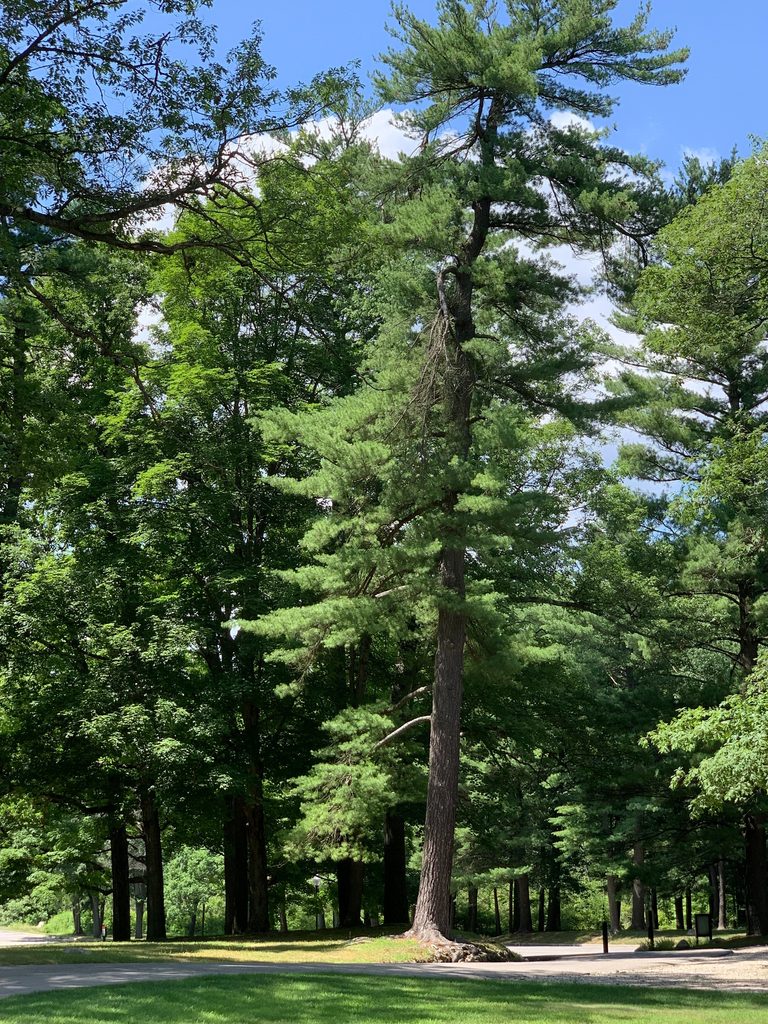
Eastern white pine is one of the fastest native conifers. It has soft, long needles in bundles of five. The texture is gentle, and it moves nicely in the wind.
It can grow 2 feet or more per year when young. Mature trees often reach 50 to 80 feet. That makes it excellent for large properties and big windbreaks.
It is hardy in cold zones, roughly 3 to 8. Over time, lower branches thin out with age. Plant a shrub layer in front to keep the screen full at eye level.
9. Norway Spruce (Picea abies)
Norway spruce is a classic windbreak and privacy tree in cold regions. Its dense, drooping branches create a thick, dark wall. It handles snow and strong wind well.
Most trees grow 40 to 60 feet tall, with a spread of 25 feet or so. It suits large rural lots rather than small suburban gardens. Plan the space carefully.
It thrives in zones 3 to 7, in full sun and moist soil. It dislikes hot, humid summers. Check local advice, because spruce pests vary by region.
10. Cryptomeria ‘Radicans’ (Cryptomeria japonica ‘Radicans’)
Cryptomeria, or Japanese cedar, is a softer alternative to arborvitae. It has fine, feathery foliage with a graceful pyramid shape. The texture looks more natural than a stiff green wall.
It grows quickly, often 2 to 3 feet a year. It also tolerates more shade than Green Giant. That makes it useful on the north side of a house.
Expect mature heights of 25 to 40 feet. It does well in zones 6 to 9, with moist, well-drained soil. Protect it from harsh winter wind, as the foliage may bronze in cold.
11. Italian Cypress (Cupressus sempervirens)
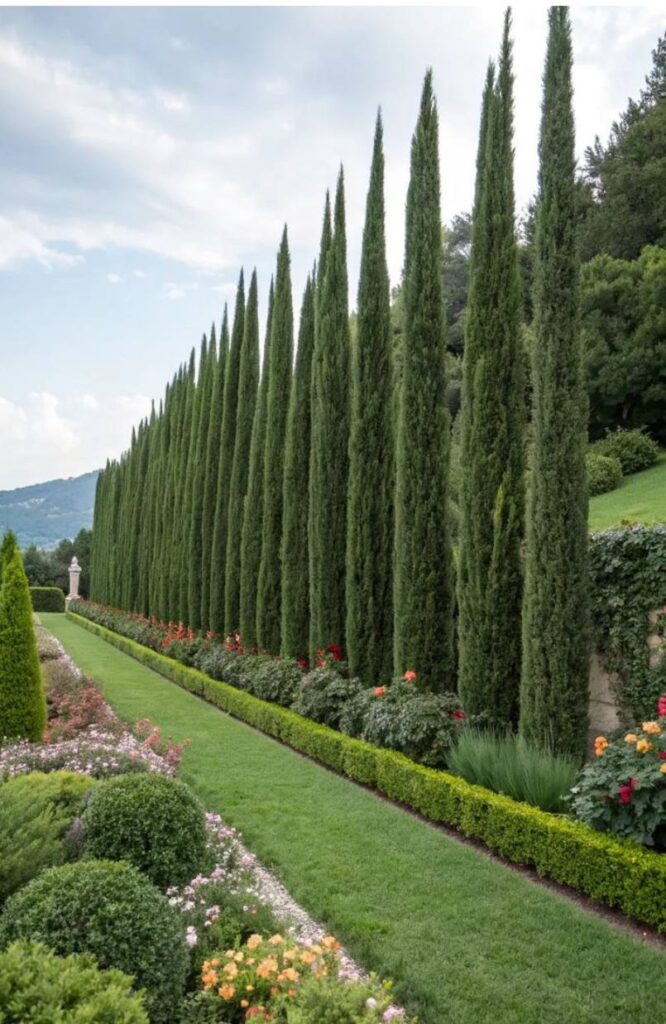
Italian cypress gives a Mediterranean look. It is tall, very narrow, and elegant. A line of these looks like green columns.
It can reach 40 to 60 feet but stays only 3 to 6 feet wide. That is perfect for a narrow strip between houses. It needs full sun and excellent drainage.
It suits warm, dry climates, roughly zones 7 to 10. It dislikes cold, wet winters and can suffer from canker. Avoid it in humid regions, because it may fail within a few years.
12. Skyrocket Juniper (Juniperus scopulorum ‘Skyrocket’)
Skyrocket juniper is an extremely narrow evergreen with blue-gray foliage. It grows straight up like a pencil. Few trees use so little horizontal space.
Expect about 15 to 20 feet in height and only 2 to 3 feet in width. You can plant it close together for a tight, formal wall. It grows slowly, so buy larger plants if you want fast results.
It needs full sun and well-drained soil, and it handles drought well. It is hardy from roughly zones 4 to 9. Avoid planting near apple trees because of cedar-apple rust.
13. Southern Wax Myrtle (Morella cerifera)
Southern wax myrtle is a fast, native evergreen of the southeastern United States. The leaves are aromatic when crushed. Birds eat the waxy gray berries in winter.
NC State’s guide lists it at 15 to 20 feet tall and 15 feet wide. Spacing is five to ten feet. It handles drought, sandy soil, and salt air better than most.
It suits roughly zones 7 to 10. Full sun gives the densest growth. It also fixes nitrogen, so it tolerates poor soil. Light pruning keeps it neat.
14. Cherry Laurel (Prunus laurocerasus)
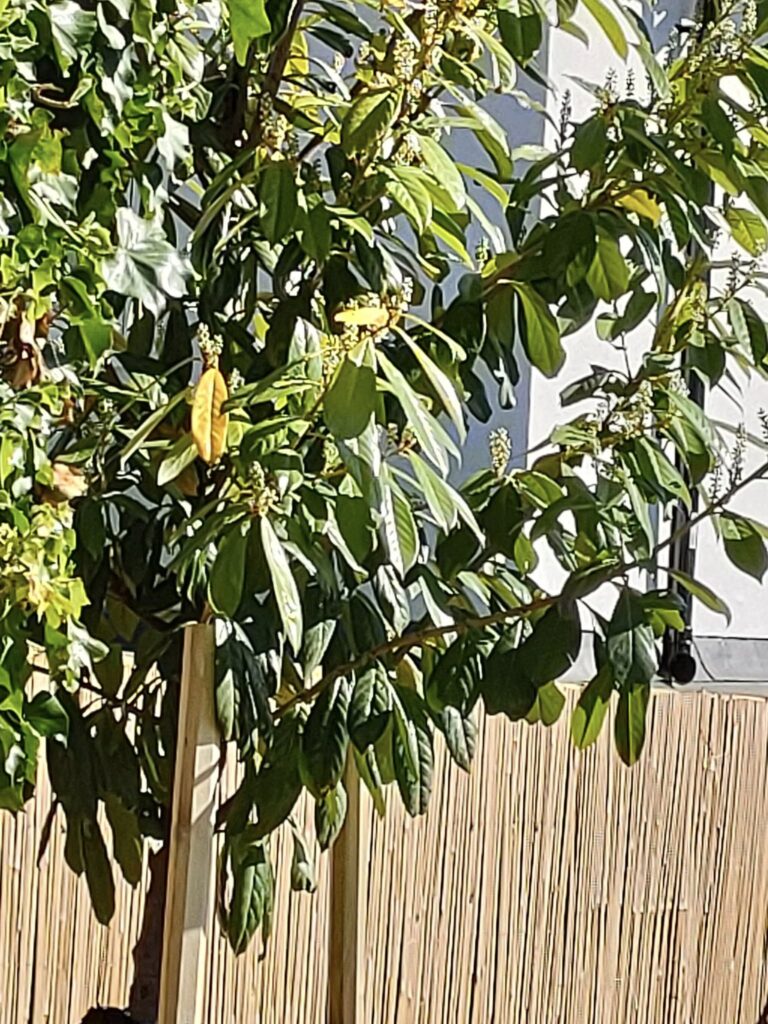
Cherry laurel has large, glossy, dark green leaves. It forms a thick wall that blocks both views and some noise. The leaves give a lush, almost tropical look.
It grows 10 to 25 feet tall, depending on the variety. It tolerates shade, which is rare among fast screening plants. It also accepts hard pruning.
It suits roughly zones 6 to 9. All parts are toxic if eaten, so think about pets and children. Also check whether your region lists any laurel species as invasive.
15. Little Gem Magnolia (Magnolia grandiflora ‘Little Gem’)
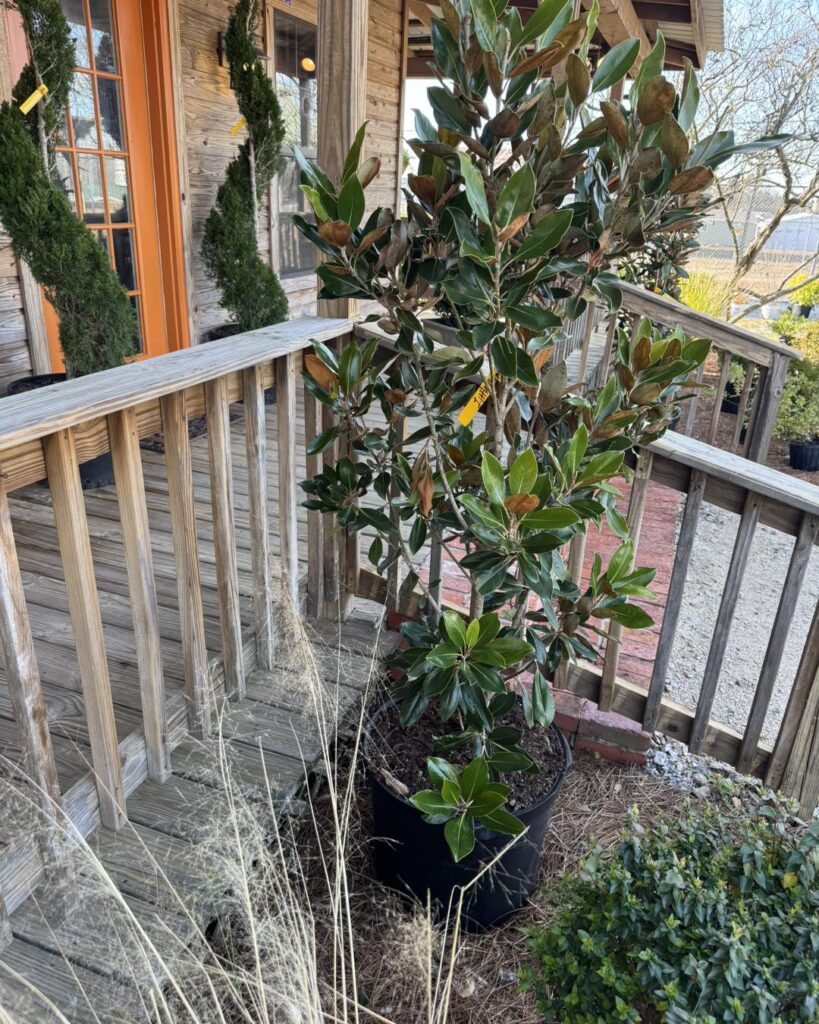
Little Gem is a compact southern magnolia. It has shiny leaves with a rusty underside and fragrant white flowers. It feels grand yet fits a regular yard.
It reaches about 20 to 25 feet tall and 10 feet wide. It grows at a moderate pace, so it will not give instant privacy. But the beauty is hard to match.
It prefers full sun and rich, moist soil in zones 7 to 10. Space it about eight to ten feet apart for a continuous hedge. Leaf drop is steady through the year, so expect some raking.
ALSO READ: 8 Common Little Gem Magnolia Problems: Causes, and Solutions
16. Podocarpus (Podocarpus macrophyllus)
Podocarpus, also called yew pine or Buddhist pine, is a narrow evergreen with long, glossy leaves. It looks refined and holds its shape well. It is popular in warm regions.
It can reach 20 to 40 feet, though it grows slowly and responds well to shearing. That makes it useful both as a tall hedge and a clipped screen. It handles partial shade.
It suits roughly zones 8 to 11. It dislikes hard frost and poorly drained soil. In very warm climates, it is a reliable, low-maintenance choice.
17. Chindo Viburnum (Viburnum awabuki ‘Chindo’)
Chindo viburnum is a large evergreen shrub that can be grown as a small tree. It has big, shiny leaves and grows fast. It is a favorite for quick hedges in the South.
NC State’s Sampson guide lists it at 12 to 20 feet tall and 8 to 10 feet wide. It offers white flowers and red berries. That seasonal interest makes it more than a plain green wall.
Space plants about four to six feet apart. It prefers full sun to part shade in roughly zones 7 to 9. Watch for viburnum leaf beetle and scale in some regions.
18. Cleyera (Ternstroemia gymnanthera)
Cleyera is a quiet, elegant evergreen with glossy, red-tinged new growth. It grows in a dense, upright form. The leaves resist most pests.
The Sampson County guide lists it at 10 to 15 feet tall and 6 to 8 feet wide, with four to six feet of spacing. That suits narrow side yards. It tolerates drought once established.
It prefers part shade and acidic soil in roughly zones 7 to 9. It can be slow at first. Choose it when you want a refined look rather than speed.
19. Sasanqua Camellia (Camellia sasanqua)

Sasanqua camellia is a privacy plant that also blooms. In autumn and early winter, it covers itself with pink, white, or red flowers. Few screens give you that much colour.
The Sampson County guide lists a height of about 10 feet and a width of 6 to 8 feet. It is a slow grower, so patience is necessary. The glossy leaves stay on all year.
It prefers part shade and acidic, well-drained soil in roughly zones 7 to 9. Mulch it well to protect the shallow roots. It is a good choice for woodland edges and shady corners.
20. European Hornbeam (Carpinus betulus ‘Fastigiata’)
European hornbeam is a deciduous choice that behaves almost like an evergreen. Many trees hold their dry, tan leaves through winter. You keep some cover when other deciduous trees stand bare.
It grows in a neat, upright oval, often 30 to 40 feet tall. It tolerates shearing, so it works well in formal hedges and pleached screens. The structure is strong and clean.
It adapts to many soils in roughly zones 4 to 8. Growth is moderate, perhaps 1 to 2 feet a year. In summer, it gives full green cover and good shade.
How to Choose a Privacy Tree Before You Buy
Start with your hardiness zone. The USDA Plant Hardiness Zone Map is the standard tool for this. The 2023 update uses 13,412 weather stations, compared with 7,983 in the 2012 version, and about half of the country moved to a warmer half zone. Check your zone again, even if you checked years ago.
Next, think about size. A tree sold in a small pot may grow to 60 feet. Always plan for the mature width, not the size at purchase. Crowded trees lose their lower branches and leave gaps.
Light matters too. Most fast evergreens want full sun. The University of Georgia advises full sun and well-drained soil for the popular Green Giant arborvitae.
Finally, decide what you need the screen to do. If you want to block noise, density matters most. The USDA Natural Resources Conservation Service states that a noise screen should be at least 65 percent dense during the noisy season.
ALSO READ: 15 Privacy Trees for a Garden Fence Line: A Complete Planting Guide
How to Plant a Privacy Screen That Works
Remove the grass first. The NC State Sampson County guide notes that turf competes strongly with young trees for water. Clear a wide strip of lawn, and mulch it well.
Follow the spacing rule. Space trees according to their mature width, not their size at purchase. Crowded trees compete, and the lower branches die. Gaps then appear exactly where you need cover.
Use staggered double rows for faster, thicker screens on large properties. Stagger the second row so that trees fill the gaps in the first. It costs more, but it works well.
Mix species when you can. Clemson Extension advises a mixed hedge rather than a single row of one tree. If one species gets sick, the rest stay standing. A mixed screen also looks more natural.
Check local rules before planting. Many towns limit the height of fences, and some limit trees near property lines. Also look for overhead wires and underground pipes. A quick call can prevent costly mistakes.
Water deeply during the first two years. Roots need time to spread, and young trees suffer in dry spells. After that, most of the trees on this list become quite independent.
ALSO READ: 15 Tall Ornamental Grasses for Privacy: A Complete Screening Guide
Evergreen or Deciduous? A Quick Comparison
Evergreens keep their leaves all year. They give privacy in winter, when you most need walls against bare neighbors. Most trees on this list are evergreen for that reason.
Deciduous trees drop leaves in autumn. They give seasonal privacy and bring colour, flowers, or shade. A few, such as hornbeam, hold their leaves through winter and work as a compromise.
The USDA Forest Service describes high-density windbreaks as 60 to 80 percent dense. That is a useful benchmark. A tree that blocks most of the view needs thick branches from the ground up.
Final Thoughts
The best privacy tree is the one that suits your climate, your space, and your patience. There is no single winner for every yard. A tall fast screen suits a big lot, while a slim column suits a narrow one.
My advice is simple. Choose two or three species from this list and plant them together. You get speed, resilience, and beauty at once.
Give the trees time. In a few seasons, the quiet, green wall you planted will be there to protect your evenings. I have never regretted planting a tree.
References
- NC State Extension. “Thuja ‘Green Giant’.” Plant Toolbox. https://plants.ces.ncsu.edu/plants/thuja-green-giant
- University of Georgia, College of Agricultural and Environmental Sciences. “Fast-growing, pest-free Green Giant draws acclaim.” https://newswire.caes.uga.edu/story/2802/23-green-giant-arborvitae.html
- Washington State University Extension. “Living Privacy Screens.” https://wpcdn.web.wsu.edu/extension/uploads/sites/57/2014/03/Living-Privacy-Screens.pdf
- USDA Forest Service, National Agroforestry Center. “Windbreaks: An Agroforestry Practice.” https://www.fs.usda.gov/nac/assets/documents/agroforestrynotes/an25w01.pdf
- USDA Natural Resources Conservation Service. “Windbreak/Shelterbelt Establishment (Code 380), Ohio.” https://efotg.sc.egov.usda.gov/api/CPSFile/20607/380_OH_CPS_Windbreak-Shelterbelt_Establishment_2017
- NC State Extension, Sampson County Center. “Plants for Screening and Privacy.” https://sampson.ces.ncsu.edu/wp-content/uploads/2023/03/Screening-Plants-for-Sampson-County.pdf?fwd=no
- USDA Agricultural Research Service. “USDA Plant Hardiness Zone Map.” https://planthardiness.ars.usda.gov/

Tim M Dave is a gardening expert with a passion for houseplants, particularly cacti and succulents. With a degree in plant biology from the University of California, Berkeley, he has vast experience in gardening. Over the years, he has cultivated a vast collection of desert plants and learned a great deal about how to grow and care for these unique companions.