50 Different Types of Cherries (Sweet, Tart, and Ornamental Varieties)
The first time I bit into a Rainier cherry fresh off the stem, I understood why growers fuss so much over cherry varieties. It was nothing like the dark, jammy cherries I grew up eating. It was golden, crisp, and almost floral.
That single bite sent me down a long path of learning just how many cherry varieties actually exist. Depending on how you count wild and cultivated types, some estimates put the number of cherry varieties worldwide well over 1,000.
For this guide, I have narrowed things down to 50 varieties that matter most, whether you are shopping at a farmers market, planting a backyard orchard, or simply trying to identify the pink blossoms outside your window each spring.
Cherries generally fall into three broad groups: sweet cherries for fresh eating, tart (sour) cherries for baking and processing, and ornamental cherries grown purely for their spring blossoms. I have organized this list the same way.
A Quick Word on Cherry Production
Before the list, a few numbers help set the stage.
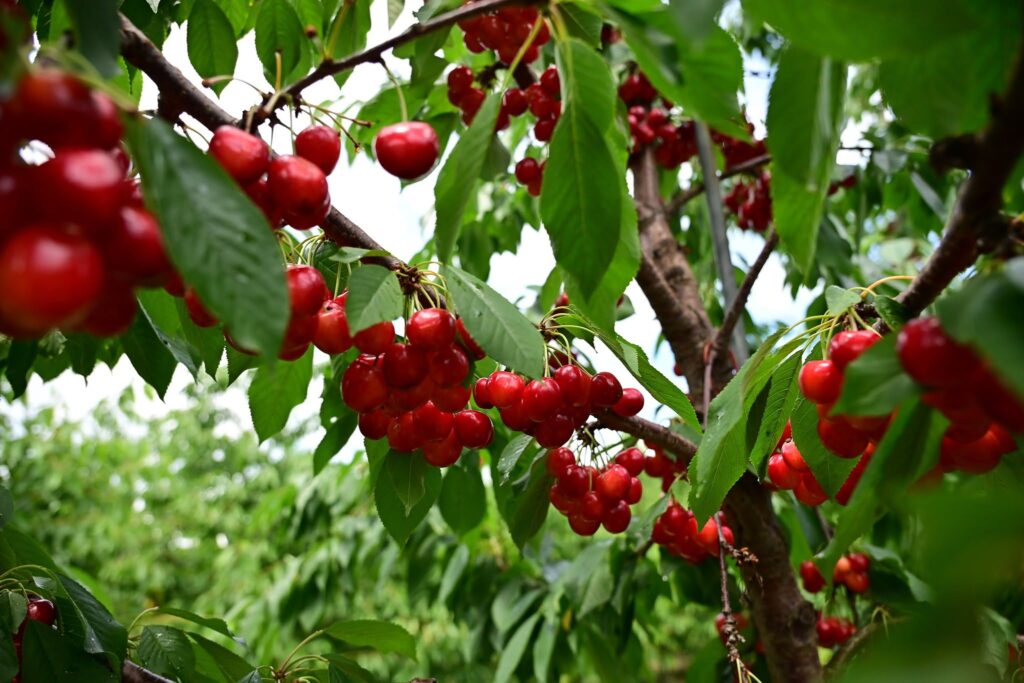
Cherries are a significant American crop. In 2024, U.S. sweet cherry production value totaled more than $817 million, ranking sixth among noncitrus fruits, behind grapes, strawberries, apples, cultivated blueberries, and peaches, according to USDA’s Economic Research Service.
Fresh eating dominates. Most sweet cherries never see a can or a jar. Fresh-market sweet cherry production reached 286,440 tons in a recent season, accounting for about 80 percent of volume and 93 percent of value, per the same USDA report.
Tart cherries go a different direction. Roughly 99 percent of U.S. tart cherry production is destined for processing, including canned pie filling, juice concentrate, and dried fruit, based on USDA outlook data.
Three states grow most sweet cherries. Washington, California, and Oregon together account for almost 90 percent of the sweet cherries grown nationwide, according to the Agricultural Marketing Resource Center.
Michigan owns tart cherries. Michigan alone accounts for close to 74 to 75 percent of the nation’s tart cherry production in most recent seasons, per USDA and industry reporting.
Now, let’s get into the varieties.
Part One: Sweet Cherry Varieties (For Fresh Eating)
1. Bing
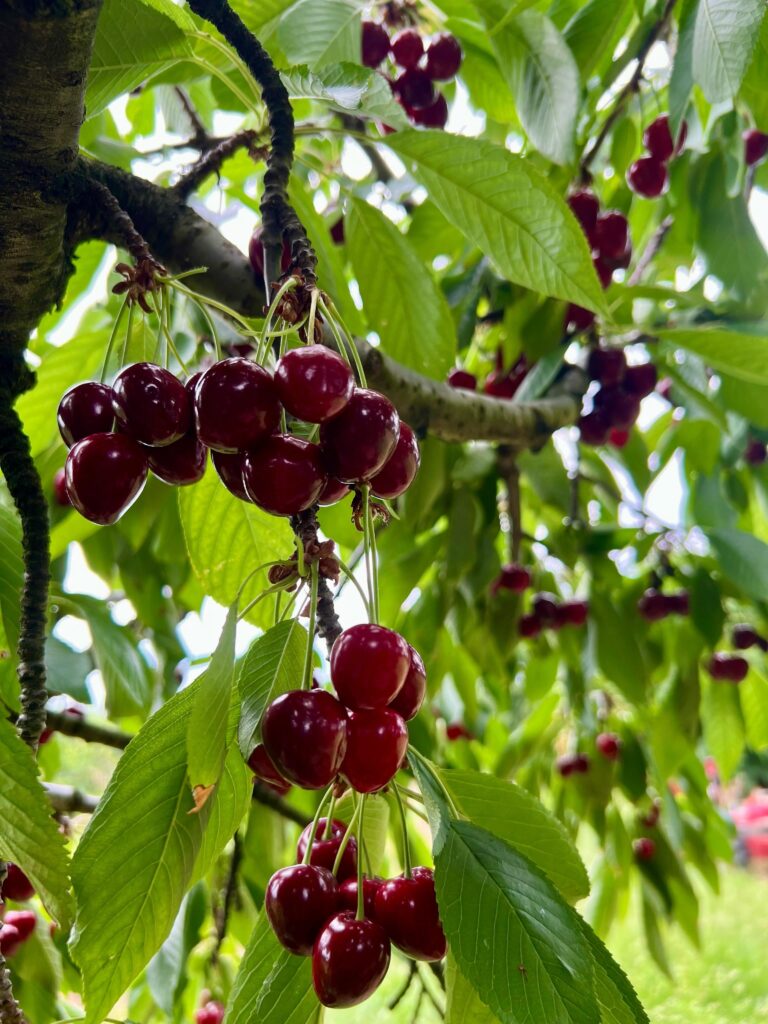
Bing is the cherry most people picture when they hear the word “cherry.” It is exceptionally large, with dark burgundy skin that turns almost black at full ripeness, and firm, sweet, juicy flesh. Utah State University Extension notes it is the leading commercial sweet cherry of the western United States.
Part of Bing’s dominance comes down to shelf life. Its firm flesh holds up well during shipping, which is exactly why grocery stores across the country lean on it as their default cherry from late spring through midsummer.
I have found Bing works best eaten cold, straight from the fridge. The chill sharpens the sweetness and firms up the bite, which is probably why it became the standard against which every other sweet cherry gets measured.
2. Rainier
Rainier cherries have golden-yellow skin with a red blush and a crisp, sweet-tart bite. They are crack-resistant and carry higher sugar with lower acid than Bing, according to Utah State University Extension. This is the variety that converted me.
Because bruises show up so clearly on its pale skin, Rainier tends to cost more at market. Growers and pickers have to handle it with extra care, and that labor gets reflected in the price tag.
Rainier also needs a nearby pollinator variety to fruit reliably, since it does not self-pollinate well. Orchardists often plant it alongside Bing or Van, both of which bloom at a compatible time.
3. Royal Ann
Royal Ann is a large, crack-resistant cherry with golden-yellow skin and a red blush. Its crisp, sweet-tart flesh makes it excellent for eating fresh, canning, and preserving.
This variety carries a long commercial history in the Pacific Northwest, and it remains one of the parent lines behind several modern blush-type cherries, including Rainier itself.
Because Royal Ann holds its shape well under heat, it is a favorite for maraschino cherry production, where the fruit is bleached, dyed, and preserved in sugar syrup.
4. Lambert
Lambert is a very large, firm, heart-shaped cherry with black skin and dark, sweet flesh. It is one of the best-known commercial sweet cherries, though it will not cross-pollinate with Bing or Royal Ann.
Its dense flesh makes it a strong candidate for canning and freezing, since it holds its structure better than some softer sweet varieties once it has been processed.
Lambert trees also tend to grow quite large and vigorous, which means home growers need more space and a longer wait before the tree settles into steady production.
5. Van
Van is a medium to large, dark, nearly black cherry with firm, semi-sweet flesh. It is hardy, vigorous, and a prolific bearer, and it works well as a pollinator for other sweet cherry varieties.
Because it blooms at a convenient, compatible time with several other popular cultivars, commercial orchards often plant a row of Van trees specifically to support the pollination of Bing or Rainier nearby.
Van’s semi-sweet profile also makes it a versatile all-purpose cherry, equally suited to fresh snacking and to baking, where its slightly lower sugar content balances well against other sweeter ingredients.
6. Stella
Stella is a large, heart-shaped, dark red cherry with excellent flavor and texture. It is self-fruitful, meaning it does not need a separate pollinator tree, which makes it popular with home gardeners.
This self-fruitful trait was actually a breakthrough when Stella was introduced, since most sweet cherries before it required two different varieties planted close together just to set fruit.
For anyone with a single backyard tree and limited space, Stella remains one of the simplest ways to get a full crop of sweet cherries without planning a second tree purely for pollination.
7. Lapins
Lapins is a very large, dark purple to black cherry with firm, sweet flesh. It is self-fertile, bears heavy crops, and serves as an excellent universal pollinator for many other sweet cherry varieties.
Its resistance to rain cracking is another reason growers favor it, particularly in regions where a late-season shower can otherwise ruin an entire harvest overnight.
Because Lapins blooms early and fertilizes itself reliably, commercial growers frequently use it as insurance alongside less dependable varieties in the same orchard block.
8. Chelan
Chelan produces large, firm, round fruit with dark mahogany skin and juicy red flesh. It resembles Bing but ripens about two weeks earlier, giving growers an earlier start to the season.
That early ripening window matters commercially, since the first cherries of the season on grocery shelves typically fetch a higher price than fruit arriving at the height of summer supply.
Chelan trees are also fairly vigorous and upright, which makes them a practical choice for growers looking to establish an early-harvest block without dramatically altering their orchard layout.
9. Black Tartarian
Black Tartarian is a medium-sized, firm, sweet cherry with purplish-black skin. Vigorous trees bear fruit early in the season, and it is used mostly as a pollinator for other varieties.
This is one of the older heirloom sweet cherry cultivars still in cultivation, valued by home orchardists partly for its history and partly for its reliably early harvest.
Because the fruit itself is smaller than modern commercial cherries, Black Tartarian rarely appears in grocery stores today, though it remains popular in home orchards and heritage fruit collections.
10. Utah Giant
Utah Giant is more flavorful, sweeter, and larger than Bing or Lambert. Its dark red flesh holds color well when processed, though the tree needs a pollinator such as Van or Stella.
Bred specifically with intermountain West growing conditions in mind, it tends to perform especially well in regions with cold winters and dry summers, such as Utah’s cherry-growing valleys.
Its disease resistance is another selling point for home growers, since it needs less intensive spraying and management compared to some older commercial cultivars.
11. Sweetheart
Sweetheart is a self-fertile sweet cherry, meaning it can pollinate itself and also serve as a universal pollinator for many self-unfruitful varieties, according to horticultural extension guidance.
It ripens later in the season than most sweet cherries, which extends the harvest window for growers and gives shoppers fresh sweet cherries well after the main summer rush has ended.
Sweetheart’s fruit also tends to be smaller and firmer than Bing, with a bright red color that stands out distinctly on the tree and in the produce aisle.
12. Skeena
Skeena is a firm, dark, late-season sweet cherry that also functions as a self-fruitful universal pollinator. It blooms early, which growers use strategically when planning orchard layouts.
Its firm texture holds up especially well during long-distance shipping, which has made it a popular choice among growers exporting cherries to overseas markets.
Skeena’s dark color and dense flesh also make it a strong pick for home bakers who want a sweet cherry that keeps its shape when baked into pies or tarts.
13. Index
Index is another self-fruitful sweet cherry variety used commercially as a reliable pollen source for varieties that cannot pollinate themselves.
Because it blooms particularly early, it is often planted specifically to support early-blooming, self-unfruitful varieties that would otherwise struggle to find a compatible pollination partner nearby.
Index is grown far less often for its own fruit quality and mostly serves this functional role within a mixed commercial orchard, rather than appearing as a standalone market variety.
14. Sonata
Sonata is a self-fertile sweet cherry variety, valued in commercial orchards for both its fruit quality and its usefulness as a pollinator for other cultivars.
Growers appreciate that a single Sonata tree can fruit reliably on its own, reducing the planning complexity that comes with matching bloom times across multiple varieties.
Its fruit quality is generally considered solid rather than exceptional, which is why it tends to serve a supporting role in mixed plantings rather than headlining a commercial block on its own.
15. Symphony
Symphony rounds out the group of self-fruitful sweet cherries that orchardists rely on as universal pollen sources, alongside Sunburst and BlackGold.
Like its counterparts in this group, Symphony was developed with orchard flexibility in mind, letting growers mix and match varieties without worrying as much about compatible bloom timing.
For home gardeners choosing between these newer self-fruitful cultivars, the differences often come down to regional performance, so checking with a local extension office before planting is worthwhile.
16. Early Robin
Early Robin is a high-quality blush cherry with excellent flavor, sharing the sub-acid taste of Rainier. It ripens 10 to 14 days earlier but is more prone to rain cracking, per Oregon State University Extension.
Its earlier harvest window gives growers a chance to reach the market before Rainier arrives, which can command a premium price for the first blush cherries of the season.
The tradeoff is real, though. Its susceptibility to cracking means growers in wetter regions often think twice before committing significant acreage to Early Robin.
17. Kristin
Kristin is an early- to early-mid-blooming sweet cherry, often paired strategically with self-fruitful varieties like Sweetheart or WhiteGold to ensure good pollination timing.
Its main commercial value lies less in standalone fruit sales and more in its role supporting the pollination needs of an orchard’s overall bloom schedule.
Growers planning a new orchard often consult bloom-timing charts specifically to decide where a variety like Kristin fits best within their broader planting plan.
18. Somerset
Somerset is an early-blooming sweet cherry variety, typically paired with self-fertile pollinators like Lapins or Skeena in commercial orchard planning.
Its early bloom period places it among the first varieties to flower each spring, which also means it carries some added frost risk in regions with unpredictable late-season cold snaps.
Because of this timing, growers in colder climates weigh Somerset’s early bloom against the practical risk of losing blossoms to an unexpected frost event.
19. Cavalier
Cavalier is an early-season dark sweet cherry with medium fruit and good flavor, though yields run below average. Michigan State University Extension notes it suits early fresh-market sales but not large-scale processing.
Its moderate crack resistance gives it some advantage over other early varieties in regions prone to spring rain, though it still requires careful monitoring during ripening.
Given its lower yield, Cavalier tends to appear more often in smaller diversified orchards rather than large commercial operations focused purely on volume.
20. Merchant
Merchant is an early sweet cherry originating in the United Kingdom, with fairly large fruit for its season and good quality. It hangs well on the tree but cracks quite badly in wet weather.
Its origins trace back to British fruit breeding programs, and it remains more commonly grown in European orchards than in the commercial cherry regions of the United States.
Growers considering Merchant for a wetter climate should weigh its strong flavor against the real risk of losing a portion of the crop to cracking after a rainy stretch.
21. Gold
Gold is a light sweet cherry with very small fruit but good productivity and fair crack resistance. Its flavor is mediocre for fresh eating but well suited to brining, according to Michigan State University Extension records.
Its late bloom period requires careful pollinator matching, since Gold needs a mid- to late-blooming variety nearby to set a reliable crop each year.
Despite its unremarkable fresh-eating flavor, Gold’s crack resistance and hardiness have kept it in cultivation for growers focused specifically on the brining and processing market.
22. Emperor Francis
Emperor Francis is a nice-quality red blush cherry, medium to large, good for both brining and fresh eating. It survives better in harsh climates than Napoleon-type cherries.
Its blush coloring and balanced flavor make it a versatile dual-purpose cherry, appealing both to fresh-market buyers and to processors looking for a reliable brining variety.
Compared to older European blush cultivars, Emperor Francis offers improved cold hardiness, which has helped it persist in colder growing regions where more delicate varieties often struggle.
23. Hartland
Hartland is a dark-fleshed sweet cherry grown mainly for canning and freezing. It ripens reliably and produces high tonnage, though its pits can shatter during processing in some years.
Processors value Hartland specifically for its consistency, since a dependable, high-volume crop matters more to a canning operation than any single standout flavor trait.
The pit-shattering issue, while a known drawback, has not been severe enough to push most processors away from Hartland, given how well it performs on the other metrics that matter most to them.
24. Attika
Attika is another dark-fleshed processing cherry, similar in commercial role to Hartland, though its oblong pit makes it prone to shattering in punch pitters during processing.
Because its shape complicates mechanical pitting more than round-pitted varieties, some processors prefer to reserve Attika for products where whole, unpitted fruit is acceptable.
Despite this processing quirk, Attika’s dark color and dependable yield have kept it in rotation among growers supplying canners and freezers in the Eastern United States.
25. Sam
Sam is a dark sweet cherry commonly referenced in Eastern U.S. cherry breeding programs, valued as a genetic base even though newer varieties compatible with it are still being tested.
Its main significance today lies in cherry breeding research, where Cornell University and Michigan State University have both used it as a comparison point for newer canning and freezing cultivars.
Because pollination compatibility with Sam has historically been tricky, breeders continue evaluating new sweet cherry selections specifically to find varieties that pair well with it in commercial plantings.
ALSO READ: 15 Drought Resistant Fruit Trees: Identification and Growth Details
Part Two: Tart (Sour) Cherry Varieties (For Baking and Processing)
26. Montmorency
Montmorency is the standard sour cherry grown in the United States, used for pies, preserves, and juice. Its skin is bright red while the flesh stays clear, and it makes up the vast majority of America’s tart cherry crop, mostly grown in Michigan.
This variety traces its roots back to France, where it was originally cultivated before being brought to North America and eventually becoming the backbone of the entire American tart cherry industry.
Its bright, tangy flavor is precisely why bakers reach for it. Unlike sweet cherries, Montmorency’s acidity holds up under heat, sugar, and long baking times without turning flat or overly sweet.
27. Balaton
Balaton is a Hungarian tart cherry variety introduced to the U.S. in the 1980s by a Michigan State University horticulture professor. Unlike Montmorency, its dark burgundy color runs through both skin and flesh, giving it a richer, sweeter-tart flavor.
Balaton trees also tend to grow more vigorously than Montmorency and reach a larger mature size, which growers need to account for when planning orchard spacing.
Because it behaves more like a sweet cherry in terms of winter hardiness requirements, Balaton needs a growing site similar to what a sweet cherry variety would require, rather than a typical tart cherry location.
28. North Star
North Star is a genetically dwarf tree, excellent for home gardens, with red fruit and flesh that resists cracking. It is self-fruitful, so a single tree can bear fruit without a pollinator.
Its compact size makes it one of the most practical tart cherry choices for small suburban yards, where a full-sized cherry tree simply would not fit comfortably.
Beyond its size, North Star’s cold hardiness allows it to thrive in colder northern regions where many other fruit trees struggle to survive harsh winter temperatures.
29. Meteor
Meteor is a genetic dwarf sour cherry reaching about 10 feet tall, with large red fruit and yellow flesh. Its hardiness makes it a reliable choice for home orchards in colder zones.
Like North Star, its reduced size makes routine maintenance easier, since pruning, netting against birds, and hand-harvesting all become simpler tasks on a shorter tree.
Meteor’s fruit ripens somewhat earlier in the season than many tart cherry varieties, giving home gardeners an earlier start on pie-making each summer.
30. English Morello
English Morello is a late-ripening sour cherry, medium-sized and dark red, with tart, firm flesh well suited for cooking and canning. It ripens later than most other sour cherry varieties.
Its later harvest window makes it a useful companion tree for gardeners who already grow Montmorency or North Star, extending the tart cherry season by several weeks.
Because its flesh holds its structure so well under heat, English Morello is especially popular for cherry brandy and liqueur production across parts of Europe.
31. Early Richmond
Early Richmond is an older, self-fruitful sour cherry variety, historically popular for home orchards before Montmorency became the commercial standard.
Its early ripening date once made it a valuable variety for growers wanting the first tart cherries of the season, well before Montmorency trees came into fruit.
Though it has largely been replaced commercially, Early Richmond still appears in heritage orchards and among home gardeners interested in preserving older American fruit varieties.
32. Vic
Vic is a late-season tart cherry, ripening around the same time as Windsor. It has historically been grown in cooler northern climates alongside other cold-hardy sour varieties.
Its late ripening pairs well with earlier tart cherry varieties in a mixed home orchard, stretching the harvest season from early summer well into its later weeks.
Vic is less commonly available through commercial nurseries today, making it more of a regional or heritage variety kept alive by dedicated home growers.
33. Windsor
Windsor is a late-ripening sour cherry variety, often grown alongside Vic in regions where a longer harvest window helps spread out labor and processing needs.
For small-scale processors and home canners, having a late-season variety like Windsor available means preserving work can be spread across a longer stretch of summer.
Windsor’s flavor profile is considered solidly tart and traditional, making it well suited to classic pie recipes rather than fresh eating.
34. Hansen Bush Cherry
Hansen Bush Cherry is a self-fruitful, cold-hardy shrub-type cherry, often planted in home gardens for its compact size and reliable fruiting without a second pollinator tree.
Its shrub form, rather than a standard tree shape, makes it useful for gardeners looking to create informal hedges that also produce edible fruit each summer.
Because of its exceptional cold tolerance, Hansen Bush Cherry can be grown successfully in far northern regions where standard tart cherry trees would not reliably survive winter.
35. Nanking Cherry
Nanking Cherry is another self-fruitful, shrub-forming variety valued for cold hardiness and ease of home cultivation, frequently used in hedges as well as fruit production.
Its small, bright red fruit ripens earlier than most tart cherry trees, giving gardeners an early-summer harvest well before other cherry varieties are ready.
Nanking Cherry is also prized ornamentally, since its spring blossoms are attractive on their own, making the shrub a dual-purpose planting for both fruit and visual appeal.
36. Morello (European)
Morello, the broader European tart cherry category, includes darker, more acidic cultivars distinct from Montmorency and Balaton, commonly grown across parts of Central Europe.
These cultivars typically carry a deeper, almost black-red color and a more intensely sour flavor, which suits traditional European desserts like cherry strudel and Black Forest cake.
Because “Morello” functions more as a category than a single named variety, the exact flavor and size can vary noticeably depending on the specific regional cultivar involved.
37. Marasca
Marasca is a small, dark, intensely sour European cherry variety, historically used to produce maraschino liqueur before the term “maraschino” came to describe candied cherries in the U.S.
Its origin lies along the Dalmatian coast, where the wild Marasca cherry has been cultivated for centuries specifically for its role in the traditional maraschino liqueur-making process.
The confusion between authentic Marasca-based maraschino liqueur and the bright red candied cherries sold under the same name in American stores is a common point of curiosity for cherry enthusiasts.
38. Vista
Vista is an early Ontario-bred sour cherry selection with good-quality fruit for its season, though it is highly susceptible to cracking in wet conditions, according to Michigan State University Extension trial notes.
Its Canadian breeding origin reflects a broader effort by Ontario horticultural programs to develop tart cherry varieties suited to the cooler growing conditions found across the Great Lakes region.
Given its cracking sensitivity, Vista tends to perform best in drier growing seasons and locations, which limits its broader commercial adoption compared to more weather-tolerant varieties.
ALSO READ: 15 Dwarf Fruit Trees for Garden Beds: A Complete Growing Guide
Part Three: Wild, Native, and Specialty Cherry Species
39. Black Cherry (Prunus serotina)
Black Cherry is a native North American species, valued more for its wood and wildlife value than fresh eating, though the fruit is edible once fully ripe and often used in preserves.
Its timber is highly prized by furniture makers, and mature Black Cherry wood is known for a rich reddish-brown color that deepens further with age.
The fruit itself also plays an important ecological role, feeding songbirds and other wildlife throughout late summer, long before most people ever notice the tree producing anything at all.
40. Chokecherry (Prunus virginiana)
Chokecherry is a native shrub species with astringent fruit, rarely eaten raw but commonly made into jellies, syrups, and wine after cooking mellows its sharp tartness.
Indigenous communities across North America have used chokecherry for generations, both as a food source and in traditional preparations that combine the dried fruit with other ingredients.
Its dense clusters of small, dark fruit also make it a valuable wildlife plant, supporting birds and small mammals throughout its native range across much of the continent.
41. Western Sand Cherry
Western Sand Cherry is one of three sand cherry types recognized by USDA, native to parts of the American West, with small, tart fruit historically used by Indigenous communities.
Its low, spreading growth habit makes it well suited to dry, sandy soils where many other fruiting shrubs would struggle to establish themselves.
Because of its drought tolerance, some western landscapers have started using Western Sand Cherry in xeriscaping projects, valuing it for both its hardiness and its modest ornamental appeal.
42. Eastern Sand Cherry
Eastern Sand Cherry is a low-growing native shrub found along the U.S. East Coast, producing small fruit and now considered threatened or endangered in some states.
Its natural habitat along coastal dunes has shrunk considerably due to development pressure, which is part of why conservation status varies so much from state to state.
Botanical gardens and native plant societies in several East Coast states now actively work to propagate and protect remaining populations of this increasingly uncommon native cherry.
43. Great Lakes Sand Cherry
Great Lakes Sand Cherry grows along dune habitats near the Great Lakes, forming the third USDA-recognized sand cherry type, and is similarly protected in parts of its native range.
Like its eastern counterpart, it plays an important role stabilizing sandy dune ecosystems, where its root system helps prevent erosion along vulnerable shorelines.
Conservation groups working around the Great Lakes region often include this species in dune restoration projects specifically because of its ecological value beyond its edible fruit.
44. Duke Cherry
Duke cherries are naturally occurring hybrids between sweet and tart cherry species, offering a flavor and texture that sits between the two parent types, popular with home orchardists seeking versatility.
Their balanced flavor makes Duke cherries genuinely dual-purpose, working well both for fresh eating and for baking without the extreme sweetness of a Bing or the sharp tartness of a Montmorency.
Because Duke cherries occurred naturally through cross-pollination long before modern breeding programs existed, they represent one of the older examples of hybrid cherry cultivation still grown today.
45. Sour Cherry Rootstock Types (Mahaleb and Mazzard)
Mahaleb and Mazzard are not fruiting varieties themselves but standard rootstocks used across the cherry industry, chosen by growers for their compatibility, vigor, and disease resistance with grafted fruiting varieties.
Mahaleb tends to suit drier soils and produces a somewhat smaller tree, while Mazzard generally performs better in heavier, wetter soils and produces a larger, more vigorous tree.
Choosing the right rootstock matters enormously for long-term orchard success, since it affects everything from ultimate tree size to disease resistance and eventual fruit yield.
Part Four: Ornamental Flowering Cherry Varieties
Not every cherry tree is grown for its fruit. Ornamental, or flowering cherries are cultivated purely for their spring blossoms, and Washington, D.C.’s Tidal Basin is the most famous showcase in the country.
46. Yoshino Cherry (Prunus x yedoensis)
Yoshino makes up approximately 70 percent of the cherry trees in Washington, D.C.’s Tidal Basin, according to the National Park Service. It produces white, almond-scented single blossoms in clusters of two to five, and the hybrid was first noticed in Tokyo around 1872.
Its wide, rounded canopy can eventually reach 30 to 50 feet across, which is why Yoshino trees are so often planted along wide walkways and open park spaces rather than tight residential yards.
Beyond Washington, D.C., Yoshino cherries have been planted extensively across university campuses and public parks throughout the U.S., largely because of their reliable bloom and pleasant fragrance each spring.
47. Kwanzan Cherry (Prunus serrulata “Kwanzan”)
Kwanzan makes up about 13 percent of the Tidal Basin’s cherry trees and blooms roughly two weeks after Yoshino. Its double blossoms, with around 30 petals each, cluster in showy pink groups of three to five.
Because it blooms later than Yoshino, Kwanzan effectively extends the cherry blossom viewing season each year, giving visitors a second wave of color after the Yoshino peak has passed.
Its upright, vase-like growth habit also makes Kwanzan a popular choice for residential landscaping, since it takes up less horizontal space than the wide-spreading Yoshino.
48. Akebono Cherry
Akebono is a mutation of Yoshino with single, pale pink blossoms, introduced by W. B. Clarke of California in 1920. It flowers at the same time as Yoshino, adding a soft pink tint to the peak bloom.
Its subtler pink coloring makes it easy to overlook among a sea of Yoshino blossoms, though a careful eye can spot the difference once you know what to look for.
Some nurseries have begun favoring newer pink-toned Yoshino mutations over Akebono, meaning it may become somewhat less common in future plantings compared to decades past.
49. Weeping Japanese Cherry (Higan Cherry)
The Weeping Japanese Cherry, also called Higan Cherry, features cascading branches and flowers that range from single to double blooms, in colors from dark pink to white. It typically flowers about a week before Yoshino.
Its dramatic, drooping branch structure makes it a favorite for ornamental garden design, often planted near water features or entryways where its cascading form can be fully appreciated.
Because several distinct cultivars fall under the Higan Cherry name, bloom color and branch habit can vary noticeably from one specific variety to another within this broader group.
50. Fugenzo and Shirofugen Cherries
Fugenzo blossoms with double, rosy pink flowers, while Shirofugen opens white and gradually ages to pink. Both varieties grow in East Potomac Park and were part of the original cherry tree plantings gifted from Japan in the early 1900s.
Fugenzo is considered one of the older cultivated cherry varieties in Japan, with a cultivation history that predates many of the more commonly planted modern ornamental cultivars.
Shirofugen’s gradual color shift from white to pink as its blossoms age gives it a distinctive, ever-changing appearance throughout its relatively short but memorable bloom period each spring.
Sweet vs. Tart: A Side-by-Side Comparison
I find it easiest to remember the difference this way. Sweet cherries are bred and selected for eating fresh, out of hand, with low acid and high sugar. Tart cherries are bred for cooking, since their sharp acidity mellows beautifully with heat and sugar.
Sweet cherry trees, per University of Illinois Extension, generally need less severe annual pruning than most fruit trees but still require yearly maintenance.
Tart cherries, by contrast, are almost entirely self-fruitful, meaning a single backyard tree can produce fruit without needing a second variety nearby for pollination.
How to Choose the Right Cherry for Your Purpose
- If you want fresh eating: Bing, Rainier, and Stella offer the classic sweet, juicy experience most people expect.
- If you want pie and baking: Montmorency remains the gold standard, with Balaton as a richer, sweeter alternative.
- If you have limited garden space: North Star and Meteor are genetic dwarfs bred specifically for small home orchards.
- If you want only one tree with no pollinator hassle: Stella, Lapins, or any tart cherry variety will fruit on their own.
- If you want spring blossoms rather than fruit: Yoshino and Kwanzan remain the two most widely planted ornamental cherries in the United States.
A Note on Cherry Growing Zones
Most sweet and tart cherry varieties thrive in USDA Hardiness Zones 5 through 7, though some ornamental types tolerate Zone 8 or 9 depending on region. Chill hour requirements vary by cultivar, so checking local extension recommendations before planting matters more than following generic advice.
Cherry trees, unlike some fruit trees, can take three to five years before producing a meaningful harvest. That waiting period is part of why choosing the right variety from the start saves years of frustration later.
What Makes Tart Cherries Different Nutritionally
Tart cherries have earned a reputation as “America’s super fruit,” and the science behind that label is worth a closer look.
Anthocyanins are the key compound. Research published in the Journal of Agricultural and Food Chemistry found Montmorency cherries contain specific anthocyanin compounds that have been extensively studied for antioxidant capacity and their potential role in modulating the body’s inflammatory response.
Balaton carries more total anthocyanins per unit weight, reflected in its darker color, though the exact mix of compounds differs from Montmorency. Most published clinical research to date has used Montmorency specifically, which matters if you are comparing supplement labels.
Cherries are technically stone fruit. They belong to the same family as plums, apricots, nectarines, and peaches, and remain the smallest members of that group by fruit size, according to University of Wyoming Extension nutrition education materials.
I mention this because “tart cherry” supplements on store shelves do not always specify variety. If the research you are interested in used Montmorency, checking the label for that exact name gives you a more reliable connection to the studies behind the claims.
Final Thoughts
Fifty varieties is a lot to take in, and I would not expect anyone to memorize them all. What I hope stays with you is the bigger picture: cherries are not one fruit, but a whole family of them, each bred for a different purpose, climate, or plate.
Whether you are picking a Bing cherry at the grocery store, baking a pie with Montmorency, or standing under a canopy of Yoshino blossoms in early spring, you are experiencing centuries of careful breeding and selection behind a fruit that looks deceptively simple.
That, to me, is the real charm of cherries. Something this small carries this much history, science, and regional pride packed into every bite or every bloom.
References
- USDA Economic Research Service. “Fruit and Tree Nuts Outlook.” https://ers.usda.gov/sites/default/files/_laserfiche/outlooks/113001/FTS-382.pdf
- USDA National Agricultural Statistics Service. “Noncitrus Fruits and Nuts Summary.” https://www.nass.usda.gov/Publications/Todays_Reports/reports/ncit0525.pdf
- Oregon State University Extension Service. “Sweet Cherry Cultivars for the Fresh Market.” https://extension.oregonstate.edu/catalog/pnw-604-sweet-cherry-cultivars-fresh-market
- Utah State University Extension, Box Elder County. “Sweet Cherry Varieties for Box Elder County.” https://extension.usu.edu/boxelder/agriculture/fruit-trees/sweet-cherries
- Utah State University Extension, Box Elder County. “Tart Cherries.” https://extension.usu.edu/boxelder/agriculture/fruit-trees/tart-cherries
- University of Illinois Extension. “Cherries — Fruit Trees for Home Gardens.” https://extension.illinois.edu/fruit-trees/cherries
- U.S. National Park Service. “Types of Trees — Cherry Blossom Festival.” https://www.nps.gov/subjects/cherryblossom/types-of-trees.htm

Tim M Dave is a gardening expert with a passion for houseplants, particularly cacti and succulents. With a degree in plant biology from the University of California, Berkeley, he has vast experience in gardening. Over the years, he has cultivated a vast collection of desert plants and learned a great deal about how to grow and care for these unique companions.